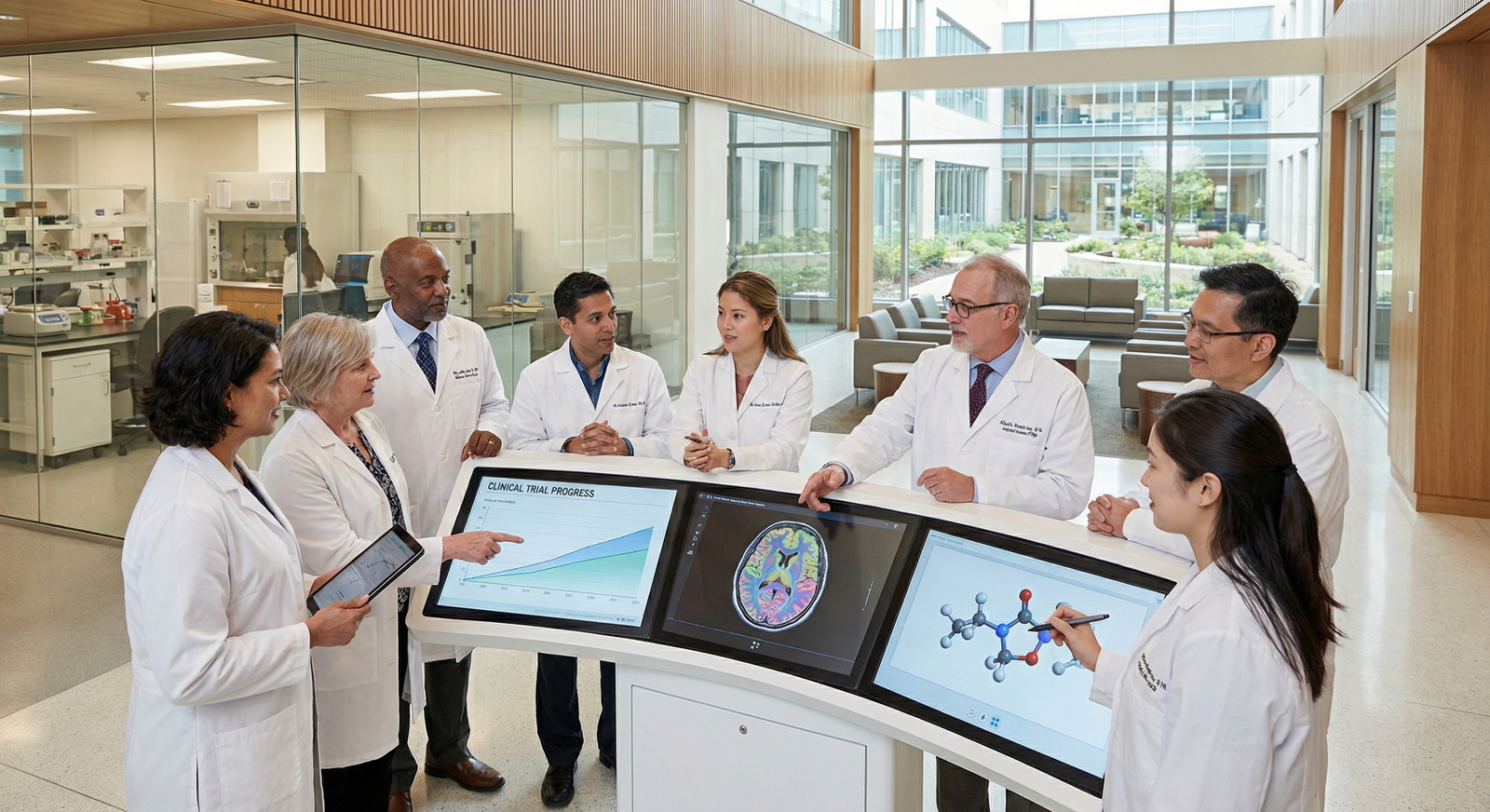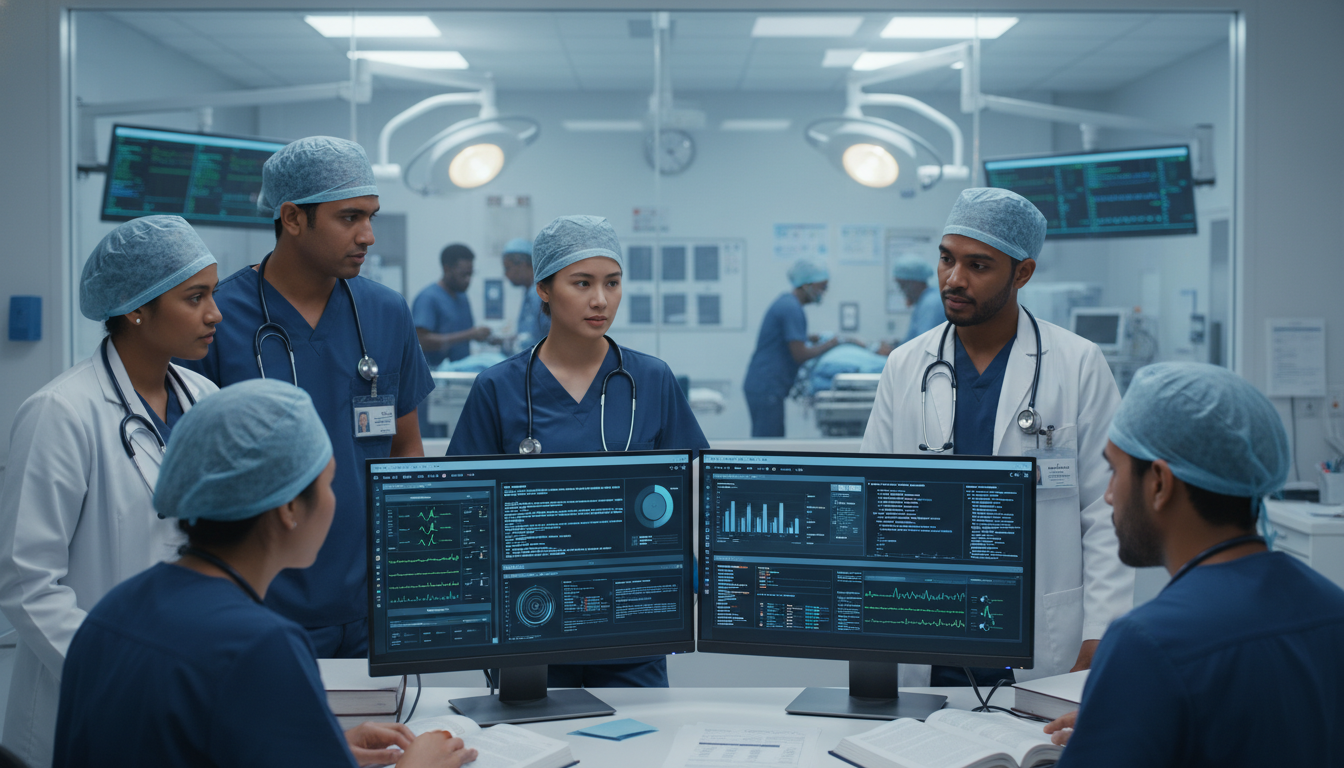
Why Research During Residency Matters for Non‑US Citizen IMGs in Emergency Medicine
For a non-US citizen IMG pursuing emergency medicine residency, research during residency is more than a “nice-to-have.” It can:
- Strengthen your CV for fellowship or academic positions
- Improve your odds in the EM match if you are considering a transfer or re-application
- Support future visa options by demonstrating academic productivity
- Differentiate you from peers when pursuing competitive leadership roles or academic residency tracks
Emergency medicine is uniquely positioned for impactful, feasible resident research projects. The clinical environment is fast-paced, data-rich, and full of operational and quality-improvement questions that can be translated into research.
This article breaks down how you, as a foreign national medical graduate in EM, can strategically approach research during residency—starting from PGY-1 and progressing through graduation.
Understanding the Role of Research in Emergency Medicine Training
How Program Directors View Resident Research
In emergency medicine, most residency programs now include some form of scholarly activity requirement. Program leadership looks for residents who:
- Show curiosity about how systems and care can be improved
- Contribute to the department’s academic productivity
- Are reliable and capable of completing long-term projects
- Can present and publish work under the institution’s name
For a non-US citizen IMG, evidence of research productivity can help “de-risk” you in the eyes of EM leadership who may be less familiar with your prior training system. It shows you can:
- Navigate US institutional requirements (IRB, data privacy, authorship standards)
- Work collaboratively in multidisciplinary teams
- Communicate clearly in written and spoken English in an academic setting
How Research Aligns with EM Career Paths
Research during residency opens doors across four broad career pathways:
Academic EM faculty
- Core faculty at a teaching hospital
- Directors of ultrasound, EMS, global health, simulation, or quality improvement
- Many of these positions expect ongoing scholarly activity
Subspecialty fellowships
- Examples: Ultrasound, critical care, EMS, medical education, toxicology
- Competitive fellowships favor applicants with a track record of resident research projects and presentations
Leadership and administration
- ED medical director, operations director, quality/safety roles
- Quality improvement and operations research is highly relevant preparation
Non-clinical or combined careers
- Health policy, industry, medical education leadership, global health
- Research experience shows you can think systematically and manage complex projects
If your long-term goal is an academic residency track or a hospital-employed academic position, your research productivity during residency will be reviewed and compared with peers. You do not need dozens of publications, but you should aim to demonstrate a clear trajectory of engagement and at least some completed, disseminated work.
Practical Barriers and Unique Considerations for Non‑US Citizen IMGs
Visa and Employment Status
Your visa status (e.g., J-1, H-1B) typically does not prevent you from doing research, but it can shape:
- Whether you can receive additional payment (usually no; most resident research is unpaid)
- Your ability to do extra-mural research (outside your institution), which may require separate contracts or credentialing
- How much “extra” time you realistically have if you are managing immigration-related tasks and travel
Actionable advice:
- Clarify with GME and HR what is allowed under your visa before taking on external research roles.
- Focus your early projects within your home institution to avoid administrative complications.
Time Pressure and Cultural Differences
Non-US citizen IMGs frequently juggle:
- Adapting to a new healthcare system and documentation style
- Transitioning to a different medical culture and team dynamics
- Board exam prep (e.g., USMLE Step 3, in-training exams)
- Family responsibilities, sometimes across countries/time zones
Research should not compromise your clinical performance. Program directors prioritize solid clinical training. Aim for:
- Small, well-defined, feasible projects early on
- Gradual increase in research complexity as you become more efficient clinically
Credentialing and IRB Familiarity
US institutions may have complex:
- Institutional Review Board (IRB) processes
- Data security requirements (HIPAA)
- Authorship and conflict-of-interest policies
As a foreign national medical graduate, you may be unfamiliar with these systems. Many residents lose months just trying to navigate the bureaucracy.
Action steps:
- Ask your program to connect you with your department’s research coordinator or biostatistician early.
- Complete any institution-required research or compliance training in your intern year (often via online modules).
- Save all certificates; some journals and conferences may ask for them later.
How to Start: Building a Research Foundation from PGY‑1
Step 1: Clarify Your Goals Early
In the first 3–6 months, define what you want research to do for your career:
- Are you aiming for a fellowship (e.g., EM-critical care, ultrasound, EMS)?
- Do you want an academic residency track pathway?
- Are you primarily trying to strengthen your CV as a non-US citizen IMG for future job searches or immigration options?
Your goals help you choose between:
- Depth: One or two major projects that go from idea to publication
- Breadth: Several smaller projects, case reports, or quality-improvement initiatives
For EM, a strong profile often combines:
- 1–2 meaningful, hypothesis-driven or high-impact QI projects
- 2–5 smaller outputs (case reports, education materials, brief reports, poster presentations)
Step 2: Map Your Local Research Landscape
Each EM program has its own research culture. In your first months:
Identify key people
- Research director or vice chair for research
- Faculty whose names appear frequently on published papers
- Fellows (ultrasound, EMS, global health, critical care) who often drive resident research projects
Learn what the department does well
- Clinical trials (e.g., sepsis, stroke, trauma)
- Operational research (throughput, crowding, triage)
- Simulation and medical education
- Ultrasound research
- Prehospital/EMS research
Ask for examples
- Recent resident projects that successfully led to publication or national presentations
- Ongoing resident research projects that could use help right now
Step 3: Start Small, Then Scale
As an EM intern, your main priority is to become a safe, competent emergency physician. Start with low-risk, low-complexity projects:
- Case reports or small case series (interesting tox cases, rare presentations)
- Chart review for an existing project led by a senior resident or faculty
- Educational projects (simulation scenario design, procedural curriculum development)
- Short quality-improvement projects focused on process changes or documentation
These early projects:
- Teach you basic research language (hypothesis, methods, outcomes, limitations)
- Familiarize you with data collection tools (REDCap, EHR reports, Excel, etc.)
- Give you early wins—poster presentations or institutional talks
As you approach late PGY-1 or early PGY-2, you can move into:
- Prospective observational studies
- Larger QI initiatives involving multiple stakeholders (nursing, administration, IT)
Choosing Feasible and Impactful EM Research Projects
Common, High-Yield Themes in Emergency Medicine
For resident research projects in EM, consider areas where you have daily exposure and can easily collect data:
Quality Improvement and Patient Safety
- Reducing time to antibiotics for sepsis
- Improving door-to-needle time for stroke or door-to-balloon for STEMI
- Improving discharge documentation quality
- Reducing unnecessary lab or imaging use
ED Operations and Throughput
- Boarding and crowding
- Triage accuracy and fast-track pathways
- Left-without-being-seen (LWBS) rates
- Time to pain control for specific diagnoses
Clinical Decision-Making
- Use of clinical decision rules (PERC, HEART score, Wells score)
- Overuse or underuse of CT, ultrasound, or lab testing
- Variation in practice patterns across attending physicians
Point-of-Care Ultrasound (POCUS)
- Accuracy and reliability of POCUS in specific conditions
- Implementation of ultrasound protocols in trauma, shock, or dyspnea
- Education outcomes from POCUS training
Education and Simulation
- Effectiveness of a new curriculum (airway, trauma, communication)
- Simulation-based team training and its impact on code performance
- Assessment tools and milestone-based evaluations
Matching Project Scope to Your Capacity
A realistic match between your project and your schedule is crucial.
Good PGY‑1 project examples:
- A case report of a rare toxicologic emergency, with brief literature review.
- A retrospective chart review looking at documentation of smoking status and brief counseling in ED notes.
- A QI project to improve adherence to a sepsis bundle in one part of the ED over 3–6 months.
Good PGY‑2/3 project examples:
- A prospective observational study comparing POCUS vs. chest X-ray detection of pneumothorax in trauma patients (with faculty PI support).
- Multi-phase QI project: introduction of a new triage tool and measurement of ED length of stay and LWBS rates before vs. after implementation.
- Education research on an innovative curriculum for EM interns, with pre- and post-intervention testing and follow-up.
The Importance of Faculty Mentorship
For a non-US citizen IMG, mentorship is critical. You may not have the same informal network that US graduates built during medical school.
To find a mentor:
- Ask: “Which faculty regularly works with residents on publishable projects?”
- Review faculty profiles on the department website and look for those who publish in your areas of interest.
- Schedule a brief (15–20 minute) meeting to introduce yourself and your goals.
When you meet, come prepared with:
- A short summary of your background, including any previous research—even if outside EM or outside the US.
- One or two rough ideas for resident research projects, or a request to join an existing project.
- A clear statement of your time constraints (rotation schedule, exam prep).
A good mentor will:
- Help you refine your question into something IRB-feasible
- Guide you through study design and statistics resources
- Advocate for you when authorship decisions are made
- Connect you to collaborators (nursing, pharmacy, EMS, other departments)

Navigating the Research Process Step by Step
1. Formulating a Research Question
Use the FINER criteria: Feasible, Interesting, Novel, Ethical, Relevant.
For EM, a solid question often looks like:
- “Among adult ED patients with suspected sepsis, does a new triage protocol decrease time to antibiotics compared with standard triage?”
- “In our ED, how accurately does POCUS detect cholelithiasis compared to radiology ultrasound?”
Before committing:
- Do a quick literature search (PubMed, Google Scholar) to see what has already been published.
- Make sure your question either fills a gap or adapts proven interventions to your local context.
2. Study Design and IRB Approval
Identify your project type:
- Quality Improvement (QI): Often exempt or expedited, but still may require institutional QI review.
- Retrospective chart review: Typically minimal risk but needs IRB approval and a data management plan.
- Prospective observational or interventional: Requires more detailed protocol and possibly more IRB review time.
Work with your mentor and, if available, a departmental research coordinator to:
- Draft a protocol (background, methods, outcomes, sample size, timeline)
- Prepare an IRB application with all required forms and data protection measures
- Identify necessary approvals from ED leadership, nursing, pharmacy, or IT
For a foreign national medical graduate, this process can feel unfamiliar. Many institutions offer:
- IRB office “drop-in hours”
- Short online modules on human subjects research (e.g., CITI training)
Complete these early to avoid delays.
3. Data Collection and Management
Efficient, reliable data collection is crucial, especially with a busy EM schedule.
Practical tips:
- Use structured data collection tools (REDCap, secure forms, or standardized Excel sheets) approved by your institution.
- Break tasks into small, regular blocks: 30–45 minutes on off days or before shifts instead of long, infrequent sessions.
- If possible, involve junior residents or medical students in data collection and organization.
As a non-US citizen IMG, be particularly careful with:
- Protected Health Information (PHI) handling; ensure all data is de-identified when taken off clinical systems.
- Avoid using personal cloud services (e.g., personal Google Drive) unless explicitly allowed by policy.
4. Analysis and Interpretation
You do not need to be a full biostatistician, but understand:
- Which tests are appropriate for your data (chi-square, t-test, logistic regression, etc.)
- The meaning of p-values and confidence intervals
- Common biases (selection bias, information bias, confounding)
Resources:
- Institutional biostatistics consult services (often free for resident projects)
- Online courses (Coursera, edX, YouTube) on basic medical statistics
- Workshops at national EM conferences (SAEM, ACEP, AAEM often hold educational sessions)
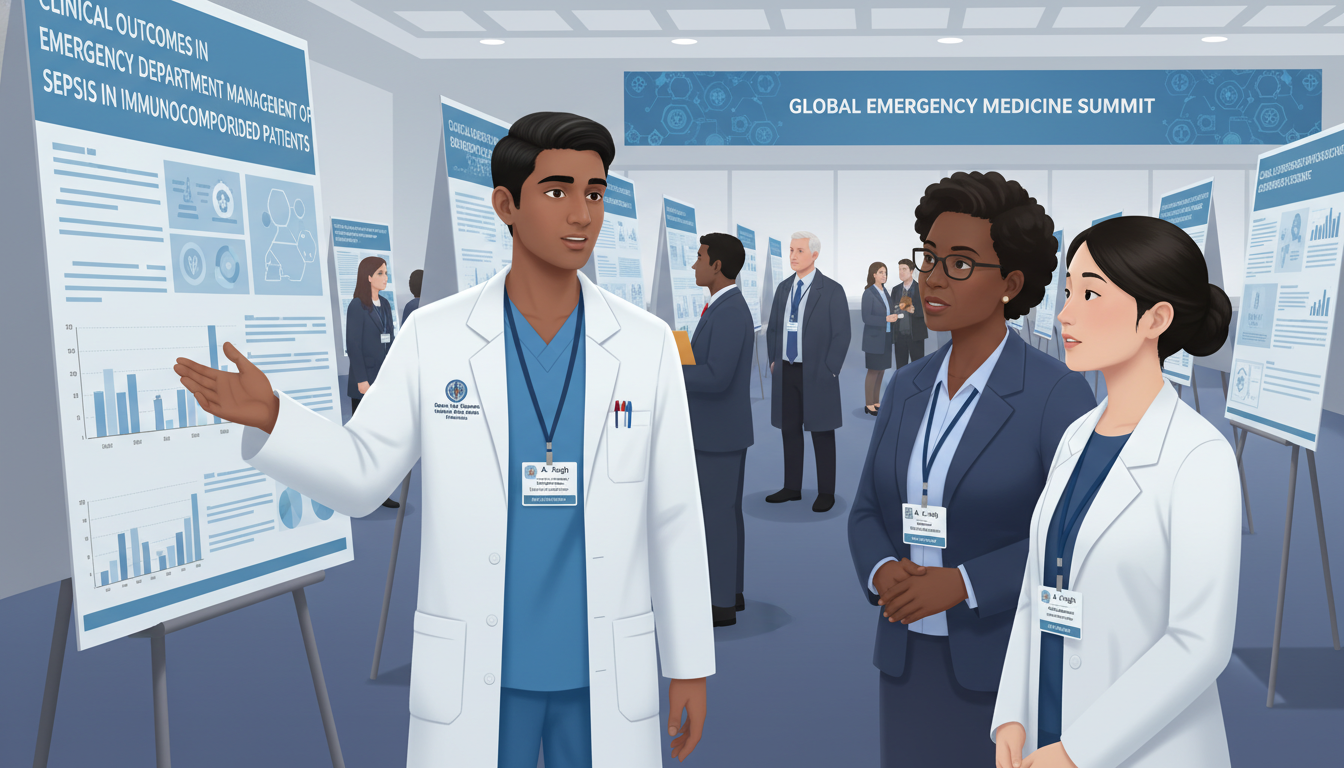
5. Dissemination: Posters, Presentations, and Publications
Your EM match or future employers will value tangible outcomes:
- Abstracts accepted at national or regional conferences
- Poster or oral presentations
- Peer-reviewed publications (even as co-author)
- Institutional or regional awards
Target venues:
- EM-specific conferences: SAEM, ACEP, AAEM
- Subspecialty societies: SCCM (for critical care), NAEMSP (for EMS), AIUM (for ultrasound)
- Regional or state EM meetings
As a non-US citizen IMG, presentations at US-based meetings can:
- Expand your professional network
- Build relationships with leaders in your field who can later write letters of recommendation
- Provide visible evidence of your role in US-based research during residency
Strategically Leveraging Research for Your Long-Term Career
Building an Academic Portfolio
If you’re aiming for an academic residency track, fellowship, or faculty role, keep a running portfolio that includes:
- Structured CV with a dedicated “Research and Scholarly Activity” section
- List of resident research projects, including:
- Role (PI, co-investigator, data collector, etc.)
- Status (in progress, under review, accepted, published)
- Copies or links to abstracts, posters, and publications
- Evidence of teaching or mentoring others in research
Consider supplementary activities:
- Serving as a peer reviewer for a journal (with mentor supervision)
- Helping redesign a resident research curriculum or journal club
- Participating in multi-center research networks if your program is involved
Using Research to Strengthen EM Match or Fellowship Applications
If you might re-enter the EM match (e.g., after prelim training, transferring specialties) or apply for fellowship:
- Emphasize the US-based research experience in your personal statement and ERAS application.
- Ask your research mentor for a letter of recommendation highlighting your:
- Reliability and follow-through
- Ability to work within US regulatory and institutional systems
- Intellectual contribution to project design and interpretation
For fellowship applications:
- Align your resident research projects with your fellowship area (e.g., ultrasound, critical care, global health).
- Demonstrate continuity: show how your resident research projects lay the foundation for your intended fellowship.
Considering Research in the Context of Immigration and Visas
While research alone does not guarantee immigration advantages, it can:
- Strengthen future O-1 (extraordinary ability) or EB-1/EB-2 NIW petitions, if you later pursue them, by contributing to:
- Publications and citations
- Conference presentations
- Recognition by US-based peers
- Make you more attractive to academic employers who may be more willing to sponsor visas for residents with strong scholarly profiles.
Keep thorough documentation of:
- Every abstract, presentation, and publication
- Any awards or special recognitions
- Evidence of your unique contributions to projects
These details can be critical later when assembling legal or hiring documents.
Frequently Asked Questions (FAQ)
1. Do I need published research before starting emergency medicine residency as a non‑US citizen IMG?
No. Many residents start EM residency with little or no prior research experience. However, for a non-US citizen IMG, even modest research exposure can strengthen your application. Once in residency, focus on building US-based research during residency that can be documented and disseminated (posters, presentations, publications).
2. How many publications do I need to be considered “competitive” for an academic emergency medicine career?
There is no fixed number. Quality and trajectory matter more than raw count. A reasonable target by the end of a 3–4 year EM residency might be:
- 1–2 meaningful projects where you had a major role (first or second author), and
- Several smaller contributions (co-authorships, case reports, or education-related publications).
More importantly, show that you can initiate, execute, and complete a project.
3. I’m overwhelmed by clinical work. Is it okay to delay research until PGY‑2?
Yes—with conditions. Your primary obligation is to become a competent emergency physician. Many residents, especially non-US citizen IMGs adjusting to a new system, wait until the second half of PGY‑1 or early PGY‑2 to take on significant research. Just avoid waiting so long that you cannot realistically design, implement, and publish anything before graduation. Even starting with small, low-effort contributions (data collection, a case report) in intern year keeps you engaged.
4. What if my program has limited research infrastructure or no strong EM research culture?
You still have options:
- Focus on quality improvement and educational projects, which require less infrastructure.
- Seek cross-department collaborations (e.g., with internal medicine, trauma surgery, ICU, radiology) that involve ED patients.
- Use national and regional EM organizations to find virtual mentors and multi-center projects.
- Document and disseminate what you do—even a strong QI project can become a poster or short publication.
For a non-US citizen IMG, even modest but well-executed resident research projects can stand out, especially when clearly framed in your CV and personal statements.
By approaching research during residency thoughtfully—starting small, leveraging mentors, understanding institutional processes, and aligning projects with your career goals—you can turn your years in emergency medicine training into a powerful academic launching pad, even as a non-US citizen IMG navigating a new system.