Why Research During Residency Matters for Non-US Citizen IMGs in Family Medicine
For a non-US citizen IMG in family medicine residency, research is far more than an academic checkbox. It can:
- Strengthen your visa and job prospects
- Differentiate you for fellowships and academic positions
- Help you build a network of US mentors and sponsors
- Give you tools to improve patient care and lead quality initiatives
In family medicine, where the scope of practice is broad and community-oriented, residents often underestimate the value of scholarship. But program directors, hospital leadership, and fellowship committees increasingly expect residents to contribute to resident research projects, QI initiatives, and scholarly work.
This article will break down how a non-US citizen IMG or foreign national medical graduate in a family medicine residency can strategically use research to advance their career—whether you’re aiming for an academic residency track, community practice with leadership roles, or competitive fellowships in geriatrics, sports medicine, addiction, or maternal-child health.
Understanding Research in Family Medicine Residency
Research during residency in family medicine is broader and more practical than many IMGs initially assume. You do not need a PhD or a bench lab. Scholarship in family medicine often focuses on:
- Clinical research – e.g., outcomes of diabetes management in a resident clinic
- Quality improvement (QI) – e.g., increasing colorectal cancer screening rates
- Practice-based research – e.g., interventions in primary care workflows
- Educational research – e.g., evaluating a new resident curriculum
- Community-based or public health projects – e.g., vaccine uptake in underserved communities
- Chart reviews and database studies – using EMR or large datasets
Each of these fits under “research during residency,” and many are very achievable within a busy family medicine residency schedule.
How Family Medicine Research Differs from Other Specialties
- Patient population: All ages, multiple conditions, often lower-resource settings.
- Focus: Prevention, chronic disease management, health systems, health equity, and behavioral health.
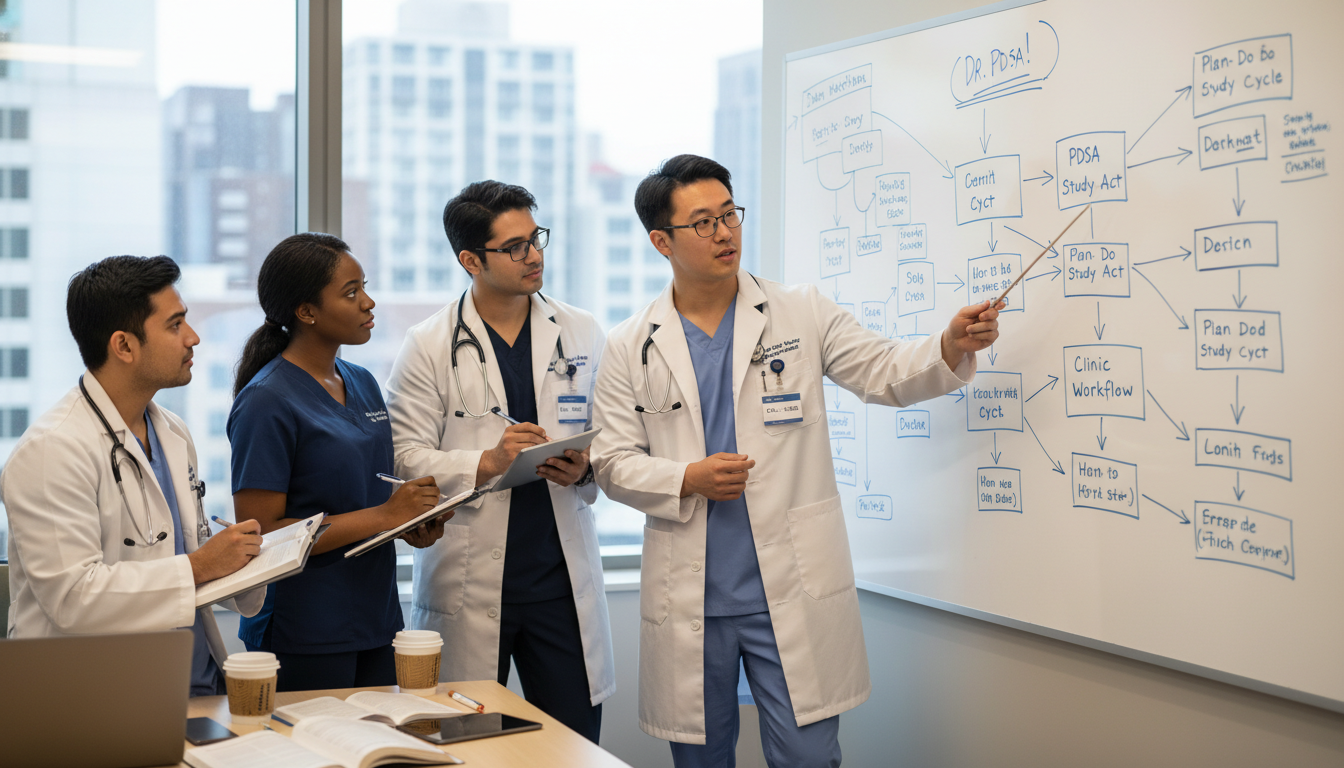
- Designs: QI cycles (PDSA), observational studies, surveys, implementation science, and pragmatic trials.
You’re less likely to be doing bench research and more likely to examine real-world care: “How can we deliver better care in a realistic primary care environment?”
How Research Impacts Your Career as a Non-US Citizen IMG
For a non-US citizen IMG in family medicine, research has some specific strategic advantages.
1. Strengthening Your Profile After the FM Match
Before the FM match, research helps you stand out as an applicant. After you’ve matched, it continues to:
- Build your CV for future steps: jobs, fellowships, and academic positions.
- Demonstrate initiative, leadership, and critical thinking.
- Provide evidence of your integration into US clinical and academic culture.
If you are already in residency, don’t assume research is “too late.” Scholarship during residency often weighs more heavily for future employers and fellowship directors than older projects from your home country.
2. Improving Visa and Job Competitiveness
As a non-US citizen IMG or foreign national medical graduate, you may face:
- Limited employer options for H-1B sponsorship
- Geographic restrictions after J-1 waiver obligations
- Extra scrutiny from hiring committees
Research can help you:
- Become more attractive for academic institutions, which more commonly sponsor visas.
- Stand out in competitive J-1 waiver and H-1B job markets.
- Develop a niche (e.g., diabetes care, women’s health, addiction medicine) that justifies recruitment.
A track record of resident research projects signals that you bring more than clinical service—you bring scholarly value, potential grant participation, and leadership in QI.
3. Access to Academic and Leadership Roles
If you hope to:
- Join an academic residency track
- Become a core faculty member after graduation
- Pursue a fellowship (sports medicine, geriatrics, hospice & palliative, addiction, maternal-child health, etc.)
then research and scholarship become even more important. Academic institutions want physicians who can:
- Supervise residents on QI and research
- Publish or present regularly
- Contribute to grants or educational innovations
As an IMG, this is also one of the best ways to build a local reputation and create mentors who will advocate for your career.
4. Becoming a Better Clinician
Research doesn’t just look good on paper. It helps you:
- Read and appraise literature more critically
- Apply evidence-based medicine in a nuanced way
- Understand health systems and workflows
- Design and evaluate interventions that actually work in real clinics
These skills are highly valued for future leadership roles—medical director, residency site director, or QI lead.
Finding and Creating Research Opportunities in Family Medicine
You may worry: “My program is small,” or “We don’t have a big research culture.” As a non-US citizen IMG in family medicine, you can still find or create meaningful opportunities.
1. Understand Your Program’s Research Culture
Early in PGY-1 (or even before you start):
- Ask about research requirements:
- Is a QI or scholarly project mandatory?
- Is there a scholarly activity director?
- Are there protected research electives?
- Review your program’s website and ACGME data to see:
- Recent publications by faculty and residents
- Conference presentations (STFM, AAFP, NAPCRG, state Academy meetings)
If the culture is strong, plug into existing structures. If it’s weak, small projects and QI are still very possible.
2. Identify Research-Minded Mentors
Mentors are essential, especially if you are new to US research structures.
Look for:
- Core or adjunct faculty with recent publications in PubMed
- Faculty titles like Director of Research, QI Lead, or Academic Track Director
- Hospital or system-level leaders (e.g., population health, quality, analytics)
Tactics to connect:
- Email a concise introduction:
- Who you are (non-US citizen IMG in FM residency)
- Your interests (e.g., chronic disease, health equity, medical education)
- Availability and willingness to work hard
- Attend department meetings or grand rounds and approach speakers afterward.
- Ask seniors: “Who is the best person to talk to about resident research projects?”
3. Join Existing Projects First
For PGY-1s, especially those still adjusting to a new system, a practical starting point is to join ongoing work rather than initiating a large original study.
Options:
- Help with data collection in an ongoing QI project (e.g., hypertension control).
- Assist with a chart review already IRB-approved.
- Take on a sub-analysis (e.g., gender differences in outcomes).
- Join a multi-site practice-based research network project.
Benefits:
- Lower barrier to entry
- Faster path to authorship or presentations
- Built-in mentorship
4. Start with Achievable Project Types
As a resident with limited time, prioritize projects that are:
- Feasible with your clinic schedule
- Aligned with program priorities (population health metrics, PCMH goals)
- Likely to produce a presentable or publishable product within 12–18 months
High-yield, realistic examples:
QI Project:
- Aim: Increase diabetic foot exam documentation from 40% to 80% in 6 months.
- Methods: PDSA cycles, EMR alerts, staff training.
- Outcome: Poster at state AAFP meeting plus potential manuscript.
Retrospective Chart Review:
- Aim: Describe depression screening rates and follow-up in your resident clinic.
- Methods: EMR query, predefined inclusion criteria.
- Outcome: Abstract for a primary care research conference.
Educational Project:
- Aim: Assess the impact of a new osteopathic manipulative medicine (OMM) workshop or ultrasound training on resident competence.
- Outcome: Education-focused publication or MedEdPORTAL submission.
Community-based Study:
- Aim: Evaluate a food insecurity screening tool in your clinic population.
- Outcome: Poster, talk, and potential collaboration with public health partners.

Practical Steps to Design and Complete a Resident Research Project
Step 1: Clarify Your Research Question
Use a focused framework like PICO:
- Patient/Problem: Adults with type 2 diabetes in a resident clinic
- Intervention: Implementation of a group-visit model
- Comparison: Standard individual visits
- Outcome: A1C control at 12 months
For QI, define a SMART aim:
“Increase influenza vaccination rates among eligible adults in our resident clinic from 55% to 75% over the next 9 months.”
Step 2: Check Requirements and Approvals (Including IRB)
Don’t skip this—especially as a foreign national medical graduate, you must be careful to follow institutional policies.
- Ask early: “Does this need IRB approval or is this exempt QI?”
- Consult your institution’s IRB office or the research coordinator.
- Complete any mandatory research ethics training (e.g., CITI Program).
Documentation is key; it protects you and your mentors and ensures your work is shareable beyond the institution.
Step 3: Build a Small, Reliable Team
Most successful resident research projects have:
- 1 primary faculty mentor
- 1–3 resident co-investigators
- Possibly a statistician or data analyst
As a non-US citizen IMG, teaming up with co-residents can also help you navigate language or cultural barriers when presenting and publishing.
Step 4: Choose Methods That Match Your Resources
Common methods manageable for residents:
- Chart review using EMR
- Pre–post intervention analysis (e.g., before and after a new workflow)
- Survey-based studies (patients or providers)
- Short QI cycles (Plan–Do–Study–Act)
Avoid overly complex designs (large randomized trials, multi-year cohorts) unless you’re clearly joining an existing funded study with strong mentorship.
Step 5: Plan Data Management Up Front
Before collecting anything:
- Decide on variables and create a simple data collection sheet (Excel, REDCap).
- Plan for de-identification to protect patient privacy.
- Clarify who will be responsible for data cleaning, coding, and analysis.
- Consider early consultation with a biostatistician (often free for residents at academic centers).
Step 6: Turn Your Work into Presentations and Publications
Don’t stop at “We did the project.” Convert it into tangible outputs:
- Abstracts for:
- AAFP National Conference
- STFM Annual Spring Conference
- NAPCRG (North American Primary Care Research Group)
- State Academy of Family Physicians meetings
- Posters and oral presentations at institutional research days
- Manuscripts for:
- Family Medicine
- Journal of the American Board of Family Medicine
- Annals of Family Medicine (for higher-impact work)
- Quality improvement or education journals
Even if you don’t reach a major journal, local or regional publications still strengthen your CV and demonstrate follow-through.
Balancing Clinical Work, Research, and Visa Realities
Handling Time Constraints as a Busy Resident
Family medicine residency is demanding—continuity clinic, inpatient medicine, OB, night float, electives. As a non-US citizen IMG, you might also be navigating:
- Cultural and language adaptation
- Immigration paperwork
- Family separation or relocation stress
To make research sustainable:
- Start small and focused; a solid small project is better than a large unfinished one.
- Use elective blocks strategically for project work.
- Block 2–4 hours every week dedicated to research (protected on your calendar).
- Use tools like checklists, project trackers (Trello, Notion), and shared folders.
Navigating Visa and Employment Considerations
Your status (J-1 vs H-1B) won’t usually limit your ability to do research during residency, but it can shape your motivation and strategy:
J-1:
- Plan research that aligns with underserved care or public health, which can position you well for J-1 waiver jobs.
- Build relationships with academic or large health systems that may later hire you in underserved areas.
H-1B:
- Research and publications can support applications for academic positions that are more experienced with H-1B sponsorship.
- If you consider a green card-sponsored path, a strong academic profile can be helpful, especially for certain employment-based categories.
Always keep immigration documentation up to date and consult your GME office’s international office or legal resources if needed.
Choosing an Academic Residency Track (If Available)
Some family medicine programs offer an academic residency track or “scholarly track,” which may include:
- Protected academic time
- Seminars on research methods and teaching skills
- Required scholarly projects and presentations
For a non-US citizen IMG, this track is often a strong investment if you’re interested in:
- Long-term academic roles
- Leadership in education or research
- Subspecialty fellowships
Even if your program doesn’t have a formal track, you can often create an “informal” academic focus by:
- Selecting electives like research electives, population health, or medical education.
- Volunteering to teach medical students or lead journal clubs.
- Taking additional online courses (e.g., Coursera, edX) in research methods or biostatistics.
Strategically Leveraging Research After Residency
Your goal is not just to “have done some research,” but to use that experience to open doors.
1. For Community or Hospital-Based Jobs
When applying for jobs:
- Highlight QI and research projects in your CV and interviews.
- Emphasize skills in:
- Data-driven decision-making
- Workflow redesign
- Leadership in population health metrics
- Many practices are under pressure for quality metrics (HEDIS, MIPS). Your experience can be marketed as a direct financial and clinical asset.
If you are a non-US citizen IMG needing sponsorship, show how your skills go beyond routine clinical care to justify investment in you.
2. For Academic Positions
For an academic career:
- Maintain an updated portfolio: publications, presentations, teaching activities.
- Keep in touch with mentors who can write letters and invite you to ongoing projects.
- Attend regional and national meetings as often as feasible; networking is critical.
If you did substantial research during residency, you may be competitive for:
- Assistant professor positions
- Hybrid roles (50–70% clinical, 30–50% teaching and research)
- Academic hospital positions that value scholarship
3. For Fellowship Applications
In fellowships such as:
- Sports medicine
- Geriatrics
- Addiction medicine
- Maternal-child health
- Hospice & palliative care
your scholarly work can:
- Demonstrate authentic commitment to the field (e.g., a project on fall prevention for geriatrics).
- Prove that you can complete longitudinal projects and work in teams.
- Make your letters of recommendation stronger, as mentors can speak to both clinical and academic strengths.
Common Pitfalls and How to Avoid Them
Pitfall 1: Overambitious Projects
Planned a multicenter RCT in PGY-1? That’s usually unrealistic.
Solution: Scale down. Aim for a feasible project that is fully completed, presented, and ideally published.
Pitfall 2: Poor Communication with Mentors
Residents sometimes disappear when rotations get busy, and projects die.
Solution: Agree on regular check-ins (monthly), send brief updates, and be honest about time constraints. As an IMG, this reliability also combats biases some faculty may hold about international grads.
Pitfall 3: Ignoring Authorship and Credit Discussions
Unspoken expectations can cause tension later.
Solution: Early conversation:
- Who is first author?
- Who else will be included?
- What contributions are expected for authorship?
Pitfall 4: Not Converting Work into Scholarship
Many residents do impressive QI work that never leaves the clinic.
Solution: From the start, plan for abstract submission and poster or manuscript. Ask: “At which meeting do we want to present this?”
FAQs: Research During Residency for Non-US Citizen IMGs in Family Medicine
1. I matched into a community family medicine residency without a strong research culture. Is it still possible to do meaningful research?
Yes. Focus on practical QI projects and small-scale chart reviews linked to your clinic’s priorities (vaccinations, chronic diseases, screening rates). Seek mentors not only in your department, but also in:
- Hospital QI or Population Health offices
- Affiliated academic institutions
- Regional research networks (e.g., practice-based research networks)
Even in community settings, these projects can lead to posters and publications if methodically designed.
2. Do I need publications before finishing residency to be competitive for academic jobs or fellowships?
They help, but quality and trajectory matter more than sheer numbers. A few well-conducted projects with:
- Clear contributions
- Presentations at recognized meetings
- At least one or two manuscripts accepted or submitted
can significantly strengthen your application. Programs and hiring committees look for evidence that you can see projects through and that you understand basic research methods.
3. My English and presentation skills are not perfect. Will that hurt my chances in research?
Strong communication certainly helps, but it doesn’t exclude you. Many non-US citizen IMGs improve rapidly with practice. Strategies:
- Co-present with a co-resident or mentor at first.
- Ask a mentor or native English-speaking colleague to review your drafts.
- Use institutional writing centers or online tools for editing.
- Start with posters, which are less demanding than oral presentations.
Over time, your confidence and fluency will grow, and your research experience will reinforce your communication skills.
4. How early should I start planning resident research projects?
Ideally:
- Late MS4 / pre-residency: explore your program’s website and research culture.
- PGY-1 (first 6–9 months): identify mentors and join at least one existing project.
- PGY-2: lead your own project or co-lead something more substantial.
- PGY-3: focus on completing projects, submitting abstracts, and publishing.
Starting early gives you enough time to complete the research cycle and show outcomes on your CV by graduation.
By approaching research during residency strategically, you—as a non-US citizen IMG in family medicine—can turn scholarship into a powerful tool for career advancement. You don’t need a massive lab or a long list of publications. What you need is a focused question, a realistic plan, reliable mentorship, and the persistence to see your project through to completion.
Used wisely, research will not only enhance your FM match story and future opportunities but also make you a more thoughtful, effective, and influential family physician.