Why Research During Residency Matters for Non‑US Citizen IMGs in Global Health
For a non‑US citizen IMG interested in global health, research during residency is not just a “nice-to-have”—it is a strategic asset that can influence:
- Visa security and program value (programs are more invested in research-active residents)
- Fellowship opportunities (global health, infectious diseases, epidemiology, health policy)
- Academic and NGO career options (universities, WHO, CDC, MSF, large global NGOs)
- Return-home leadership roles (ministries of health, academic departments, national programs)
Global health is inherently multidisciplinary. Strong research skills allow you to:
- Measure disease burden and outcomes across countries
- Evaluate interventions (vaccination campaigns, task shifting, telemedicine)
- Analyze health systems and policies
- Generate evidence that shapes guidelines in low- and middle-income countries (LMICs)
For a foreign national medical graduate, research experience in the US also demonstrates:
- Ability to work in US academic settings
- Comfort with IRB regulations and research ethics
- Proficiency in English scientific writing
- Adaptability to diverse populations and cross-cultural teams
All of these are highly valued in academic residency tracks, global health residency tracks, and international medicine-focused fellowships.
Understanding the Landscape: Types of Research Residents Can Do in Global Health
Research during residency does not have to mean bench science or large randomized trials. As a resident—especially as a non‑US citizen IMG—you should focus on feasible, high-yield projects. Common categories include:
1. Clinical Research
Clinical research involves data collected from patient care:
- Retrospective chart reviews
- Example: Outcomes of tuberculosis patients co-infected with HIV in an urban safety-net hospital.
- Prospective observational studies
- Example: Tracking follow-up adherence among refugees with chronic diseases managed in a resident clinic.
- Diagnostic or therapeutic evaluations
- Example: Comparing different screening strategies for latent TB in recent immigrants.
These projects are practical for busy residents and can often be completed using existing electronic medical records (EMR) data.
2. Health Systems & Implementation Science
Global health is as much about systems as it is about diseases. Implementation research asks: “What works, for whom, under what conditions, and how do we scale it?”
Examples:
- Evaluating the impact of a new language interpretation system on no-show rates in a clinic serving immigrants.
- Studying how task shifting (EMT or nurse-led protocols) affects emergency room wait times for undocumented or uninsured patients.
- Assessing the implementation of a community health worker (CHW) program for migrant farmworkers.
These projects are ideal for a global health residency track and can be highly publishable.
3. Global Epidemiology and Public Health Research
If your program has international medicine partnerships, you may engage in:
- Disease surveillance projects (e.g., malaria trends, COVID-19 outcomes, maternal mortality)
- Population health analyses using large datasets (Demographic and Health Surveys, WHO databases)
- Outbreak investigations in collaboration with local ministries of health or NGOs.
Even if you are physically in the US, you can work on de-identified international datasets with faculty who have global health collaborations.
4. Education and Curriculum Research
As a global health–oriented resident, you can also contribute to:
- Designing and evaluating global health curricula for residents or medical students
- Creating simulation-based training for low-resource settings (e.g., POCUS, neonatal resuscitation)
- Studying outcomes of pre-departure training for residents who go abroad
These are highly relevant for academic residency tracks and for those interested in future teaching roles.
5. Qualitative Research
Global health often requires understanding lived experiences, social determinants, and cultural context. Qualitative methods include:
- Semi-structured interviews with patients, community health workers, or migrants
- Focus groups with caregivers or community leaders
- Thematic analysis of narratives from refugees or minority populations
Qualitative projects are powerful but require mentorship for study design, interviewing techniques, and analysis.

Finding and Choosing Research Opportunities as a Non‑US Citizen IMG
Your biggest constraints will be time, mentorship, and visa rules—not interest. You need to be intentional in how you choose projects.
Step 1: Clarify Your Global Health Focus
Global health is broad. Narrow your interests into themes; for example:
- Infectious diseases & HIV/TB
- Refugee and migrant health
- Maternal and child health
- Noncommunicable diseases in LMICs
- Health equity, structural racism, and social determinants
- Health systems strengthening / quality improvement
Pick 1–2 themes that align with your long-term plans (e.g., ID fellowship, academic global health, health policy, work with NGOs).
Step 2: Map the Research Ecosystem in Your Program
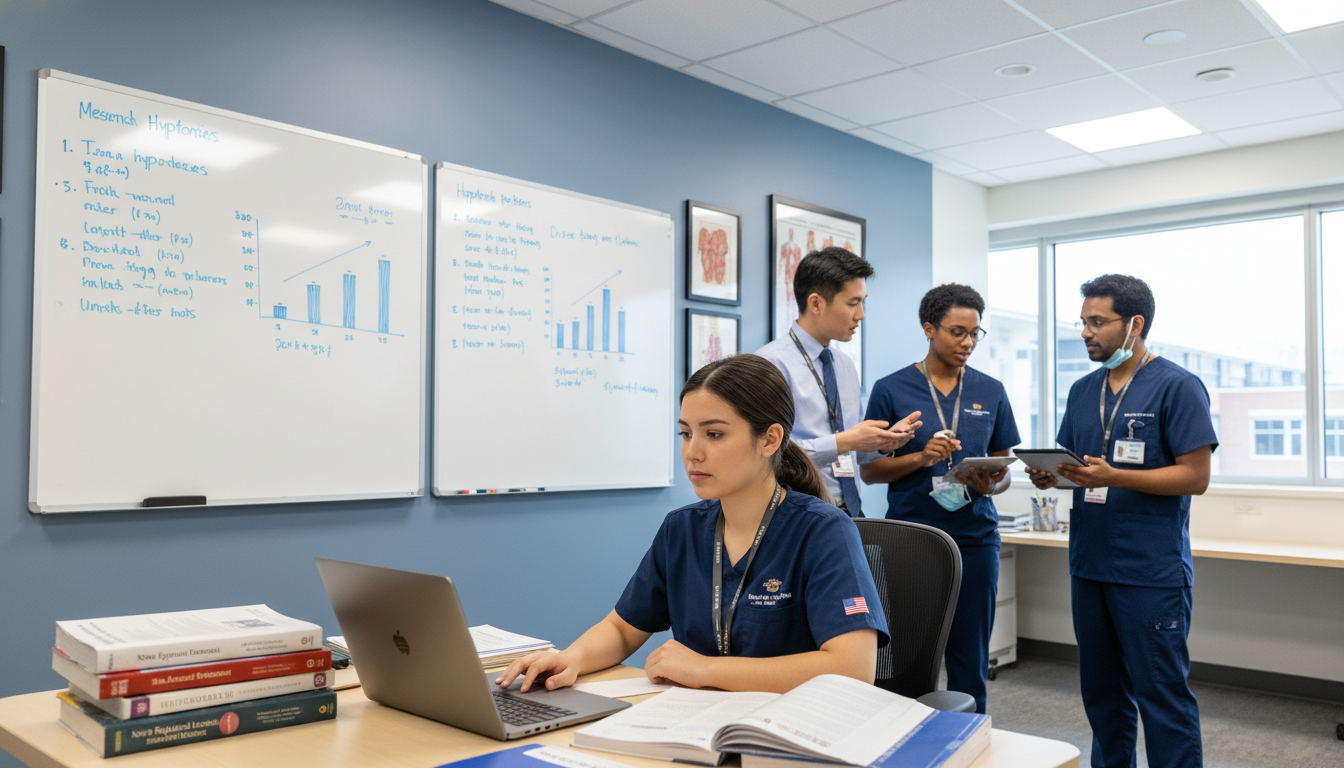
As early as your intern year (PGY-1):
Identify faculty with global health or international medicine experience
- Check your department’s website for:
- “Global Health,” “International Health,” “Tropical Medicine,” “Refugee Health,” or “International Medicine” profiles
- Faculty with appointments in Schools of Public Health or global health centers
- Ask chief residents: “Who is doing meaningful global health research here?”
- Check your department’s website for:
Look for structured tracks and resources
- Global health residency track
- Academic residency track
- Resident research office or scholarly activity committee
- Institutional global health centers or university-wide global health institutes
Review past resident research projects
- Program research day abstracts
- Department newsletters
- Posters in hallways or conference rooms
Patterns will show you where mentorship and infrastructure are strongest.
Step 3: Address Visa and Status Considerations Early
As a non‑US citizen IMG, you must understand:
- Your visa category (J-1 via ECFMG, H-1B, or other status)
- Any travel restrictions (e.g., need for advance travel authorization, visa stamping risks)
- How global health electives abroad may affect your:
- Visa status
- Malpractice coverage
- Salary and benefits
Before committing to international fieldwork:
- Discuss with your program director (PD) and GME office
- Ask if your institution has pre-approved partner sites and standardized agreements
- Clarify:
- Whether you remain an employee while abroad
- Who covers insurance, housing, and travel
- How long you can be away (often 4–8 weeks per year for global health tracks)
You can still do high-quality global health–related research without leaving the US, especially in communities with large immigrant or refugee populations.
Step 4: Select Projects That Fit Your Time and Career Goals
Ask yourself:
- How many hours per week can I realistically commit? (Start with 2–4 hours)
- What do I want from this project?
- A first-author publication?
- A poster/oral presentation at a conference?
- A strong letter of recommendation from a global health mentor?
- Specific skills (stats, qualitative methods, implementation science)?
Prefer projects that are:
- Already partially developed (data collected or IRB approved)
- Supported by an experienced mentor with a publication record
- Achievable within 12–24 months
Building Your Research Skills During Residency
To be competitive in global health as a foreign national medical graduate, you need concrete skills—beyond enthusiasm.
Core Skills to Develop
Research Question Formulation
- Use the PICO framework for clinical/implementation questions:
- Population, Intervention, Comparison, Outcome
- Example: Among asylum seekers with type 2 diabetes (P), does a multidisciplinary care model (I) compared to usual primary care (C) improve HbA1c and appointment adherence (O)?
- Use the PICO framework for clinical/implementation questions:
Study Design and Methods
- Cohort, case-control, cross-sectional, pre-post, RCT, mixed methods, quality improvement (QI)
- For global health: implementation science frameworks (RE-AIM, CFIR) are useful.
Research Ethics and IRB Navigation
- Complete CITI training (usually required for all residents doing research).
- Understand additional protections for:
- Refugees and undocumented patients
- Prisoners and children
- International sites and vulnerable populations
Data Management and Basic Statistics
- Learn one core analysis tool well: R, Stata, or SPSS; plus Excel for simple tasks.
- Understand:
- Descriptive statistics
- t-tests, chi-square tests
- Linear and logistic regression basics
Scientific Writing
- Structure of an original article: Introduction, Methods, Results, Discussion, Conclusion
- How to write an abstract and respond to peer reviewer comments
- How to tailor a manuscript to specific journals (global health vs general medicine vs subspecialty)
Presentation and Communication
- Poster presentations (departmental research day, ACP, IDSA, CUGH, ASTMH, etc.)
- 10–15 minute oral presentations with clear slides and key messages
- Brief “elevator pitch” to describe your project in 1–2 minutes
Finding Training Opportunities
- Institutional workshops
- Research bootcamps, stats workshops, manuscript writing courses
- Global health fellowships and short courses
- Short courses in implementation science, tropical medicine, or epidemiology
- Online resources
- Coursera/edX courses in biostatistics, epidemiology, global health
- NIH or WHO training modules
Even if your program is not strongly research-focused, you can build skills with external courses, then apply them to small resident research projects.

Designing a Feasible Global Health Research Plan During Residency
Balancing clinical duties and research during residency requires a realistic plan.
Year-by-Year Strategy
PGY-1 (Intern Year)
- Priorities:
- Explore mentors and areas of interest
- Join an ongoing project at a small but meaningful level
- Concrete actions:
- Attend research and global health conferences within your institution
- Ask senior residents: “What projects did you do? Who helped you?”
- Set a goal: identify one primary mentor and one project by the end of PGY-1.
PGY-2
- Priorities:
- Take ownership of a project component (e.g., data collection and initial analysis)
- Begin drafting an abstract or manuscript
- Concrete actions:
- Negotiate dedicated research elective time if available
- Submit an abstract to:
- A national/global health meeting (CUGH, ASTMH, IDWeek, APHA)
- Refine skills in statistics and writing
PGY-3 and Beyond
- Priorities:
- Publish at least 1–2 papers or high-quality abstracts
- Build a coherent narrative for fellowship or job applications
- Concrete actions:
- Lead a project as first author
- Collaborate on additional projects as co-author
- Request strong recommendation letters emphasizing your research and global health focus
Choosing the Right Scope
Aim for a portfolio of work across residency:
- 1–2 major projects (possible publications, first author)
- 2–4 smaller contributions (co-authorships, QI projects, case series, educational research)
Common examples appropriate for residents:
- Retrospective chart review of outcomes in a specific immigrant or refugee population
- Quality improvement project focused on vaccine uptake in a safety-net clinic
- Descriptive study of delays in TB diagnosis among foreign-born patients
- Mixed-methods project interviewing community health workers with quantitative outcomes data
Collaborations Across Borders
If your institution has global partnerships (e.g., in sub-Saharan Africa, South Asia, Latin America):
- Work with local investigators as equal partners, not simply “data sources.”
- Ensure:
- Shared authorship decisions
- Local capacity building (training, workshops, joint data analysis)
- Ethical data use agreements and IRB approval in both countries when required
As a non‑US citizen IMG, your bicultural or multilingual background can be a strength in building these collaborations.
Maximizing the Career Impact of Resident Research as a Non‑US Citizen IMG
Building a Strong Academic and Global Health Identity
When you apply for fellowships or junior faculty positions, your application should show a clear thread:
- Clinical Interest: e.g., HIV and TB in migrant populations
- Research Interest: implementation research on improving linkage to care
- Global Health Focus: partnerships with LMIC sites and domestic high-risk communities
Use your research during residency to support this narrative:
- Emphasize your role as a bridge between settings (US and your home country, or US and partner sites).
- Highlight language skills, cultural understanding, and ability to navigate different health systems.
Leveraging an Academic Residency Track or Global Health Residency Track
If your program offers:
Academic residency track – Often includes:
- Protected research time
- Formal mentorship committees
- Scholarship milestones (abstracts, manuscripts)
Global health residency track – Often includes:
- Curriculum in global health ethics, policy, and health systems
- Supervised international or domestic fieldwork
- Opportunities for global health resident research projects
As a foreign national medical graduate, being selected into these tracks strengthens:
- Your CV for post-residency positions
- Your network (mentors, collaborators)
- Your chances for funding in the future (K awards, foundation grants, global health fellowships)
Presenting and Publishing Strategically
Target venues that value global health and international medicine:
Conferences
- Consortium of Universities for Global Health (CUGH)
- American Society of Tropical Medicine and Hygiene (ASTMH)
- IDWeek, APHA, SGIM, regional society meetings
Journals
- Global Health: Science and Practice
- BMJ Global Health
- The Lancet Regional Health series
- Journal of Immigrant and Minority Health
- BMC Global and Public Health, PLOS Global Public Health
Make sure you:
- Follow each journal’s author guidelines closely
- Acknowledge your visa status only when relevant (e.g., in fellowship essays, not manuscripts)
- Highlight cross-border collaboration and capacity building
Planning for the Future: Beyond Residency
Resident research projects can directly lead to:
Fellowship positions in:
- Infectious diseases, pulmonary/critical care, maternal-fetal medicine
- Global health fellowships, health equity tracks, implementation science fellowships
Academic positions focused on:
- Global health research and teaching
- Leadership in global health centers or international medicine programs
Roles in international organizations
- NGOs (e.g., Partners In Health, MSF, International Rescue Committee)
- UN agencies and multilateral organizations (WHO, UNICEF, UNHCR)
- Global health policy roles in your home country’s ministry of health
When you interview, be prepared to discuss your research in non-technical language, focusing on:
- The global health problem
- Your specific contribution
- The impact on patients or health systems
- Future directions you want to pursue
Practical Tips and Common Pitfalls for IMGs in Research During Residency
Practical Tips
- Start small, finish something. A completed small project is better than a huge unfinished study.
- Invest in one or two core mentors. Regular meetings, clear expectations, written timelines.
- Track your work. Keep a spreadsheet of projects, roles, timelines, and outputs.
- Protect time. Use research elective blocks efficiently; schedule 1–2 fixed research hours weekly.
- Communicate. Update mentors regularly, especially when clinical duties affect your progress.
- Use your IMG background as an asset. Propose questions that reflect cross-cultural insights, health disparities, and comparisons between systems.
Common Pitfalls
- Overcommitting to multiple projects without bandwidth.
- Underestimating how long IRB approval, data collection, and analysis will take.
- Choosing mentors without time or track records in publishing or resident mentorship.
- Ignoring authorship expectations until late in the project—address this early and transparently.
- Neglecting documentation, resulting in lost data or irreproducible analyses.
If you feel overwhelmed, discuss with your mentor and program leadership; sometimes reducing the scope of a study is the smartest move.
Frequently Asked Questions (FAQ)
1. Do I need prior research experience before residency to succeed in research during residency?
No. Many non‑US citizen IMGs start serious research during residency. Prior experience helps, but is not mandatory. What matters more is your willingness to learn, access to good mentorship, and consistent effort. Begin with smaller roles (data collection, literature reviews), then progress to designing and leading your own resident research projects as you gain confidence.
2. Can I do international field research abroad on a J-1 or H-1B visa?
Often yes, but it depends on your institution and visa specifics. You must:
- Get approval from your program director and GME office
- Confirm that your salary, malpractice, and benefits continue during your time abroad
- Understand any visa implications for re-entry to the US (especially for J-1 holders needing consular processing)
If travel is complicated, focus on US-based global health research (e.g., immigrant/refugee health) or work on data from partner sites remotely in collaboration with local teams.
3. How many publications should I aim for by the end of residency?
Quality and relevance matter more than raw numbers, but a competitive portfolio for global health–oriented fellowships or academic positions might include:
- 1–2 first-author papers (or equivalent substantial scholarly products)
- Several abstracts or posters at respected conferences
- A few co-authorships from collaborative work
Even a single strong, well-executed study in international medicine or health systems research can be impactful if it aligns with your long-term career goals.
4. How do I explain my IMG and non‑US citizen status in relation to my research?
In research manuscripts, your status usually does not need to be mentioned. In personal statements, interviews, and career discussions, you can:
- Frame your background as a strength—you understand multiple health systems, languages, and cultural contexts.
- Describe how your experiences as a foreign national medical graduate motivate your focus on equity and global health.
- Emphasize your role as a bridge between regions and your commitment to building sustainable, respectful partnerships between institutions.
This narrative can make your application memorable and reinforce the value you bring to any global health or academic residency track.
For a non‑US citizen IMG, research during residency in global health is both achievable and transformative. With strategic project selection, thoughtful mentorship, and steady effort, you can build a research portfolio that advances patient care globally while opening doors to fellowships, academic roles, and impactful leadership positions in international medicine.