Why Research During Residency Matters for US Citizen IMGs
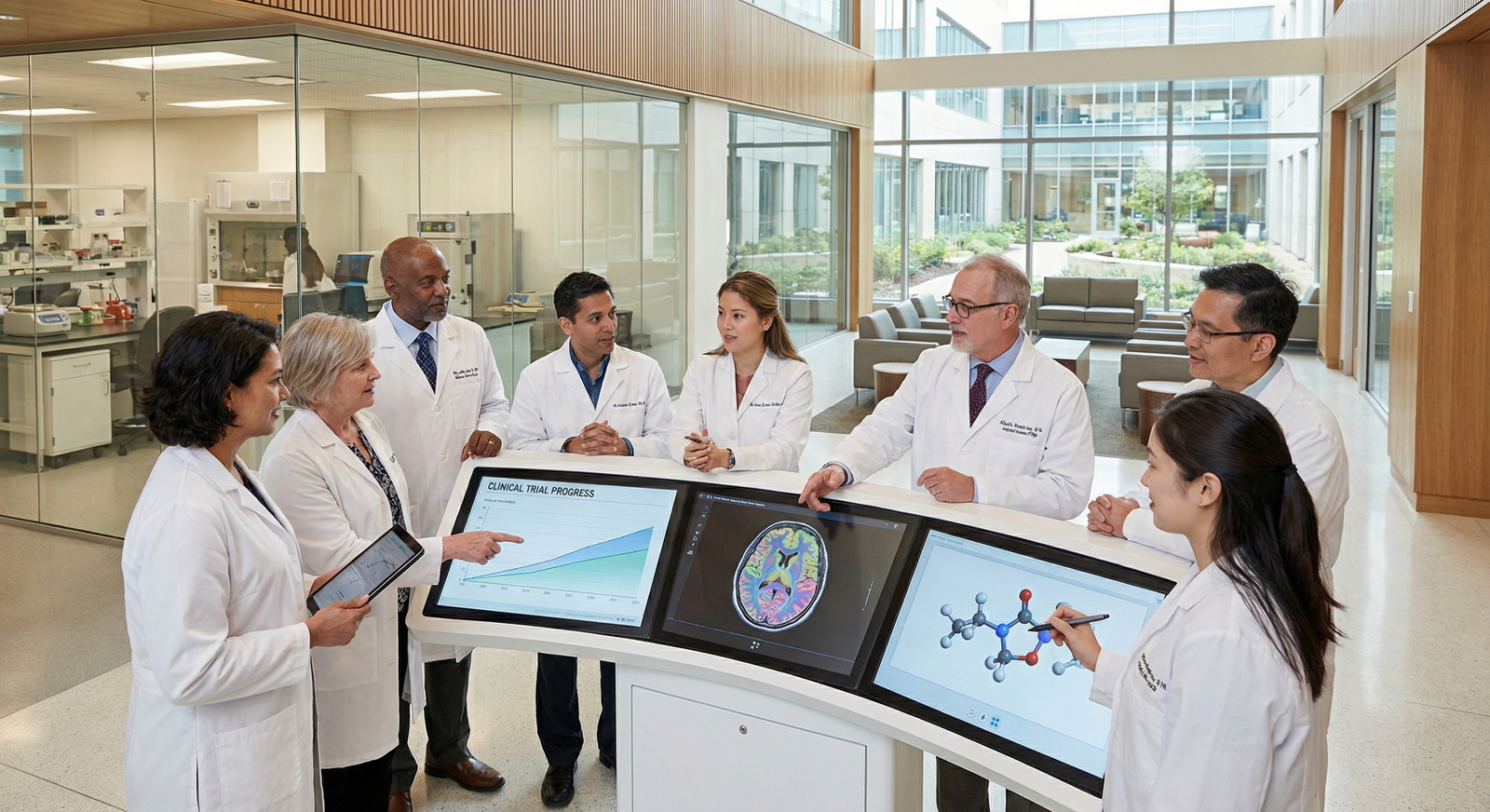
For a US citizen IMG in internal medicine, residency can feel like a race: learning a new system, proving yourself clinically, and planning for fellowship or academic careers. In that race, research during residency is one of the most powerful ways to differentiate yourself—especially if you’re an American studying abroad who may already feel a step behind US MD seniors.
Research isn’t just for future physician-scientists. It influences:
- Fellowship competitiveness (cardiology, GI, heme/onc, pulm/crit, etc.)
- Academic career opportunities (hospitalist educator, clinician-researcher)
- Leadership roles (quality-improvement director, program leadership)
- Your ability to understand evidence, evaluate guidelines, and improve care
For US citizen IMGs, especially those who matched into internal medicine with limited pre-residency research, residency is often the best and most realistic window to build a research portfolio—if you approach it intentionally.
This guide will walk you through how to leverage resident research projects, pick the right academic residency track, and strategically use your 3 years of internal medicine training to build a research foundation that actually helps your career.
Understanding the Landscape: Research in Internal Medicine Residency
Internal medicine programs vary widely in their research expectations and opportunities. As a US citizen IMG, your first job is to understand where your program fits on the research spectrum and how that affects your choices.
Types of Research Activities Residents Commonly Do
You do not need to be a bench scientist to be “productive.” Most internists build research portfolios with:
Case Reports and Case Series
- Single-patient or small-group descriptions of novel or educational clinical scenarios.
- Best for: early PGY-1 and PGY-2, especially when you have minimal prior research.
- Advantages: Fast, feasible with limited time; great way to learn writing and publication steps.
- Example: A rare autoimmune condition presenting as new-onset heart failure in a 32-year-old woman.
Retrospective Chart Reviews
- Use existing EMR data to answer a focused clinical question.
- Best for: residents with moderate time and a mentor who knows the data systems.
- Example: Outcomes of patients admitted with acute COPD exacerbations before and after a new order set.
Quality Improvement (QI) Projects
- Designed to change a process and track outcomes.
- Often required for graduation; many programs accept these as “scholarly activity.”
- Example: Reducing inappropriate telemetry use on the general medicine floor.
Prospective Clinical Studies
- More complex but higher-impact if designed well.
- Best for: residents in research-heavy or academic residency tracks, or those aiming for serious academic careers.
- Example: A pilot trial testing a new structured discharge checklist to reduce readmissions.
Systematic Reviews / Meta-Analyses
- Particularly good if you’re not at a large research center but can work remotely with a mentor.
- Example: Meta-analysis of early vs delayed DVT prophylaxis in patients with intracerebral hemorrhage.
Medical Education Research
- Studying curricula, simulation, feedback, or assessment methods.
- Ideal if you’re interested in future teaching and academic roles.
- Example: Evaluating whether a new intern boot camp improves cross-cover performance.
Health Services / Outcomes Research
- Uses large datasets, often with statisticians or epidemiologists.
- Example: Readmission rates and social determinants of health in heart failure patients.
As an American studying abroad who has now returned for internal medicine residency, you may feel less connected to US research networks. These areas—especially case reports, QI, and systematic reviews—are often the most accessible starting points.
Setting Realistic Research Goals as a US Citizen IMG
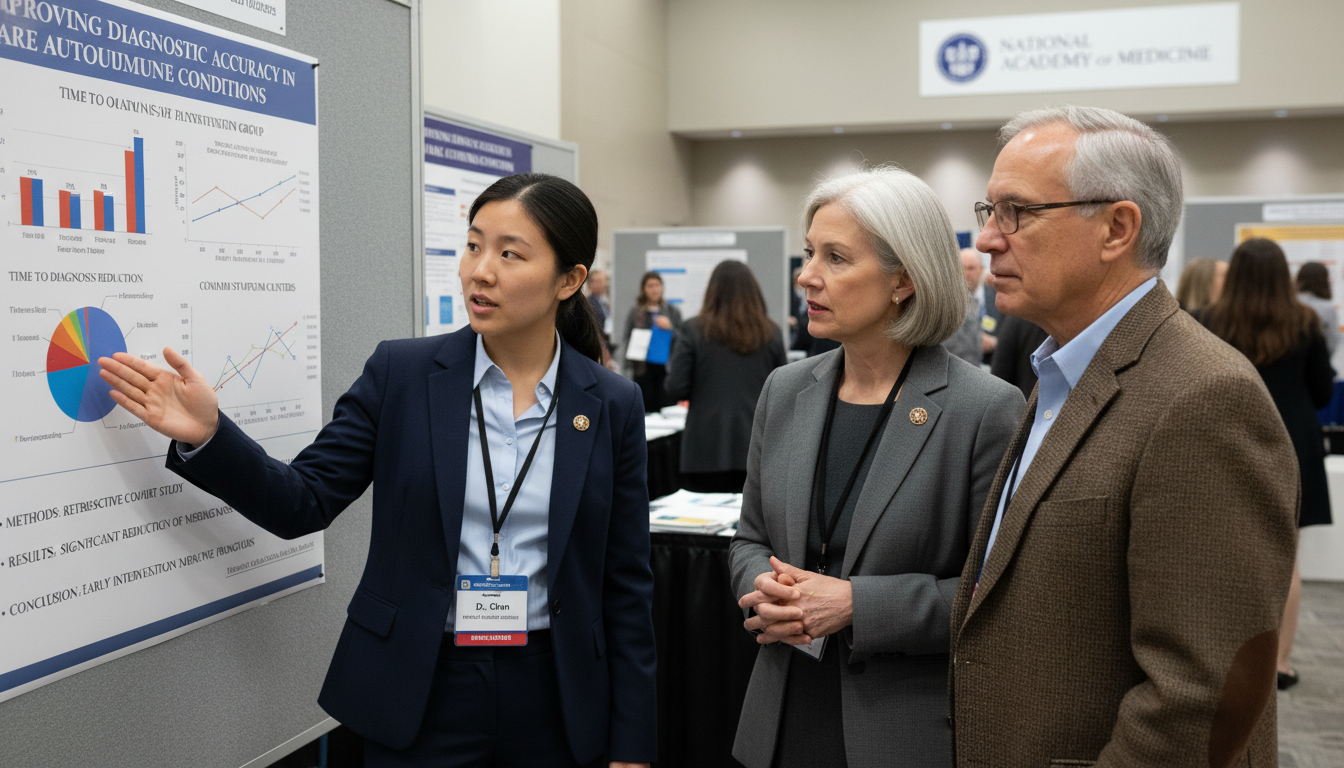
Your research strategy should be goal-driven. Before jumping into projects, decide what you actually need from research during residency.
Step 1: Clarify Your Long-Term Path
Ask yourself:
Do I want a competitive fellowship?
- Examples: cardiology, GI, heme/onc, pulm/crit, nephrology.
- These specialties strongly favor residents with multiple abstracts and at least some peer-reviewed publications.
Do I want a primarily clinical career (hospitalist, outpatient IM)?
- A small portfolio of QI projects, 1–2 posters, or a publication is usually enough.
- Focus is more on clinical strength and professionalism, but research helps you stand out for leadership jobs.
Do I want to pursue an academic career or a physician-scientist track?
- You’ll need stronger, more sustained involvement: multiple projects, often first-author publications, and evidence of scholarly growth.
Your answers determine whether you should just “check the box” of scholarly activity or actively seek an academic residency track or research-heavy path.
Step 2: Inventory Your Starting Point
Be honest about:
Previous research experience
- None: start with case reports, QI, or structured projects with heavy mentorship.
- Some posters / student projects: aim for small retrospective studies or systematic reviews.
- Prior publications: you can target more ambitious clinical or outcomes research.
Skills you already have
- Literature search? Basic stats? Study design? Academic writing?
- If weak, plan to learn—there are many free courses, workshops, and online resources (e.g., Coursera, institution-provided workshops).
Time constraints
- Heavy call schedules, family responsibilities, or visa situations can limit time.
- As a US citizen IMG, you may not have visa constraints, but you might be catching up clinically—be realistic.
Step 3: Define Concrete Goals by PGY Year
A sample timeline for a US citizen IMG interested in fellowship:
PGY-1
- At least 1–2 case reports or case series submitted.
- Join 1 ongoing project (QI, retrospective chart review, or systematic review).
- Present at 1 local or regional poster session.
PGY-2
- At least 1 completed project leading to a submitted manuscript.
- 2–3 conference abstracts (regional or national).
- Take on a more leading role in a project (design, data analysis, or first author).
PGY-3
- At least 1–2 accepted publications (case reports count, but aim for at least one original research or review).
- Present at a major national meeting (ACP, CHEST, AHA, ASH, etc., depending on your interest).
- Position yourself for resident research awards or departmental recognition if possible.
Align this timeline with your IM match and fellowship application visibility:
- Work done in PGY-1 and early PGY-2 appears on your ERAS application for fellowship.
- Late PGY-2 and PGY-3 work helps for interviews, ranking, and early-career jobs.
Finding and Working With Mentors: The Key to Effective Resident Research
For US citizen IMGs, especially those without a strong US academic network, finding the right mentor is more important than finding the “perfect” project.
Where to Look for Research Mentors
Program Leadership
- Associate Program Directors and the Program Director often know which faculty are active mentors.
- Ask directly: “I’m a US citizen IMG very interested in research during residency, potentially aiming for fellowship. Who in our department enjoys mentoring residents?”
Division Chiefs & Fellowship Directors
- If you already know your interest (e.g., cardiology, GI, pulm/crit), meet with that division’s leadership.
- Let them know early: they often prioritize motivated residents for research opportunities.
Departmental Research Office or Scholarly Activity Committee
- Many internal medicine programs have coordinators or committees matching residents to ongoing resident research projects.
- Ask about:
- Existing datasets you can work with
- On-going multi-resident projects you can join
- Faculty who are consistently productive with residents
National or Regional Societies
- As an American studying abroad originally, you may already know some networks; if not, join:
- American College of Physicians (ACP)
- Subspecialty societies (e.g., ACC, AASLD, ATS)
- Attend meetings, volunteer for committees, and connect with mentors who are open to multi-center or remote collaboration.
- As an American studying abroad originally, you may already know some networks; if not, join:
Prior Medical School Contacts
- Even if your medical school was abroad, some faculty may collaborate with US institutions.
- They may connect you to US-based researchers or offer remote systematic review projects.
What to Look for in a Good Mentor
You want someone who:
- Has a track record of publications with residents
- Provides timely feedback (not in 3-month intervals)
- Involves you meaningfully (not just as a “data mule”)
- Understands your constraints as a resident (call schedules, rotations)
- Is willing to support you as a US citizen IMG (letters, networking, advocacy)
Don’t underestimate “junior” faculty. Early-career attendings often have energy, funded projects, and a strong need to be productive—they may give you more responsibility and attention than a very senior, overcommitted researcher.
How to Approach Potential Mentors
Send a concise email or talk after rounds. Example email:
Subject: PGY-1 Resident Interested in Research Opportunities in [Field]
Dear Dr. [Name],
My name is [Your Name], and I’m a PGY-1 internal medicine resident. I am a US citizen IMG with strong interest in [subspecialty] and in developing my research skills during residency. I read your work on [specific paper or topic], and I’m very interested in getting involved in ongoing or new projects in this area.
I have [briefly describe prior experience or skills—e.g., experience with literature reviews, data entry, or basic statistics]. I’d be grateful for the opportunity to meet briefly to discuss how I might contribute to your work as a resident.
Thank you for your time and consideration.
Sincerely,
[Name]
PGY-1, Internal Medicine
Prepare a one-page research CV highlighting prior projects, abstracts, or even relevant coursework.

Balancing Clinical Work and Research: Practical Strategies
Internal medicine residency is busy. For research to be sustainable, you need systems, not just good intentions.
Choose Projects That Match Your Reality
As a US citizen IMG, you may be adjusting to:
- New EMR systems
- US-style documentation
- Different hierarchy and communication norms
During your intern year, start with:
- Case reports / case series
- QI projects tied to your rotation
- Small roles on larger projects (data entry, chart abstraction, literature search)
Avoid launching a massive prospective trial in PGY-1 unless you have strong prior experience and protected time.
By PGY-2, as you gain efficiency:
- Take on more complex projects (retrospective cohort studies, systematic reviews).
- Aim for at least one project where you are first author or clearly leading the analysis and writing.
Time Management Tactics That Actually Work
Micro-blocking
- Schedule 30–60 minute research blocks 3–4 times per week, even on busy rotations.
- Use this time strictly for research: literature search, editing, data, or emails.
Use Lighter Rotations Strategically
- Ambulatory blocks, electives, and night-float often have more predictable hours.
- Plan ahead: meet with mentors a month before these blocks to define clear tasks and milestones.
Define Weekly “Deliverables”
- Instead of vague goals like “work on the paper,” set:
- “Write Introduction section, first draft”
- “Extract data from 25 charts”
- “Create first version of data table”
- Instead of vague goals like “work on the paper,” set:
Leverage Tools
- Reference managers: Zotero, Mendeley, or EndNote.
- Writing collaboration: Google Docs, Overleaf, or institution-approved platforms.
- Project tracking: Simple Trello board, Notion, or a shared Google Sheet.
Learn to Say No Thoughtfully
- Especially for US citizen IMGs eager to “prove themselves,” it’s easy to overcommit.
- Before accepting a project, ask:
- What is my role?
- What is the expected timeline?
- Is a manuscript or abstract an explicit goal?
- It’s better to do 2–3 projects well than half-finish 8.
Protected Time and Academic Residency Tracks
Some internal medicine programs offer an academic residency track or designated research blocks:
- 1–3 months of protected research time
- Formal mentorship programs and coursework in study design and statistics
- Expectations of clear scholarly outputs (abstracts, publications)
As a US citizen IMG, applying for or joining an academic track can be particularly valuable:
- It signals to fellowship programs that you’re serious about scholarship.
- It often provides built-in support you may not have had during medical school abroad.
- It can help compensate for a thinner pre-residency research history.
If your program has this option:
- Express interest early in PGY-1.
- Ask what makes a successful applicant (prior productivity? performance?).
- Prepare a brief research plan or interest statement as requested.
If your program does not have a formal academic track, ask:
- “Are there research electives available?”
- “Can I do a month of research with Dr. [Mentor] during PGY-2?”
- “Are there institutional resources for resident research projects?”
Making Your Research Count for the IM Match, Fellowship, and Beyond
You’re already matched into internal medicine, but your choices now still affect future doors, especially for fellowships and academic jobs.
Building a Cohesive Scholarly Narrative
Even if you do a mix of project types, try to build a theme around:
- A subspecialty: e.g., cardiology, nephrology, oncology, pulmonology
- A domain: e.g., quality improvement, patient safety, medical education, health disparities
Example for a US citizen IMG aiming for heme/onc:
- PGY-1: Case report of an unusual lymphoma presentation
- PGY-2: Retrospective review of venous thromboembolism in cancer patients at your institution
- PGY-2/3: Systematic review on risk models for neutropenic fever
- QI Project: Improving adherence to neutropenic fever protocols
On your CV and in fellowship interviews, this becomes a coherent story: “I’ve consistently pursued research in hematology/oncology with a focus on inpatient complications and evidence-based management.”
Documenting and Presenting Your Work
Be meticulous with documentation:
Keep a running list (spreadsheet or CV file) with:
- Project title
- Your role
- Status (idea, data collection, analysis, abstract submitted, paper submitted, published)
- Presentations and conferences
Target progressive levels of presentation:
- Local (departmental, hospital-wide research days)
- Regional (state ACP chapter, regional subspecialty meetings)
- National (ACP, subspecialty societies, national QI meetings)
For each event, save:
- Final abstract
- Poster or slides
- Program listing (for proof and CV details)
This evidence is valuable when:
- Updating ERAS or applying for fellowships
- Discussing your research during interviews
- Requesting strong letters of recommendation focused on your scholarly activity
Letters of Recommendation Emphasizing Research
For fellowship or academic jobs, ask at least one mentor who knows your research well to write a letter. Ask them (politely) if they can:
- Comment on your intellectual curiosity and ability to understand literature.
- Describe your initiative and ownership in resident research projects.
- Highlight your work ethic and growth as a scholar, particularly as a US citizen IMG building your career in the US system.
Provide them with:
- Updated CV
- List and brief descriptions of your projects
- Your personal statement or career goals
Common Pitfalls for US Citizen IMGs—and How to Avoid Them
Waiting Too Long to Start
- Intern year feels overwhelming, but if you wait until late PGY-2, your work won’t mature in time for fellowship applications.
- Do at least 1–2 small, achievable projects in PGY-1.
Overcommitting Without Clear Roles
- Agreeing to many projects where your role is vague often leads to burnout and no tangible outcomes.
- Always clarify authorship expectations and scope early.
Neglecting IRB and Institutional Requirements
- Even QI projects may need documentation or exemption letters.
- Engage your mentor and the IRB office early—this protects you and ensures your work is publishable.
Ignoring Statistical and Methodologic Support
- Poor design = wasted effort.
- Before you collect data, get feedback from:
- A biostatistician
- A methodologist
- Someone experienced in your type of study
Underestimating the Value of “Small” Projects
- Case reports, letters, and QI projects are not trivial, especially if you’re starting with little background.
- For US citizen IMGs, early small wins can build confidence, skills, and momentum.
Not Communicating When You’re Stuck
- If you’re drowning in clinical duties or feel lost, tell your mentor.
- Proactive communication preserves trust and allows adjustment of timelines or responsibilities.
FAQs: Research During Residency for US Citizen IMGs in Internal Medicine
1. I’m a US citizen IMG with no prior research. Is it too late to start during residency?
No. Residency is a very common starting point, especially for US citizen IMGs and other non-traditional applicants. Begin with:
- Case reports and small QI projects in PGY-1
- Join an ongoing chart review or systematic review with a mentor With consistent effort, you can build a solid research profile by the end of PGY-3.
2. How much research do I need for a competitive internal medicine fellowship?
There is no fixed number, but a strong profile often includes:
- 2–4 abstracts/posters at regional or national meetings
- At least 1–2 peer-reviewed publications (case reports count, but aim for at least one original research or review)
- Clear theme aligned with your fellowship interest
Programs also value quality and ownership: being first author, designing parts of the study, and demonstrating understanding of methods during interviews.
3. Can quality improvement count as research during residency?
Yes, many programs and fellowships count well-designed QI projects as scholarly activity, especially if:
- You used structured methods (e.g., PDSA cycles, root cause analysis)
- You measured outcomes before and after the intervention
- You presented your work (posters, presentations, or manuscripts)
QI is often the most accessible route to meaningful resident research projects, particularly in community or smaller programs.
4. My program is not very research-heavy. How can I still be productive?
Even if your internal medicine residency is not academically focused, you can:
- Identify at least one faculty member interested in scholarship (often a recent graduate or fellowship-trained specialist).
- Focus on case reports, chart reviews, QI, and systematic reviews that do not require complex infrastructure.
- Collaborate with mentors at other institutions (via virtual meetings) for literature-based or multi-center projects.
- Use free or low-cost training resources for research skills (online courses, webinars from ACP or specialty societies).
As a US citizen IMG, these efforts show initiative and can significantly strengthen your future fellowship or academic applications.
By approaching research during residency with clear goals, the right mentors, and realistic project choices, you can transform your three years of internal medicine training into a powerful scholarly foundation—one that supports not only a strong fellowship and IM match trajectory for advanced training, but also a fulfilling, evidence-driven career in internal medicine.