
Understanding Research During Ophthalmology Residency
For an MD graduate entering ophthalmology residency, research can feel both exciting and intimidating. Between call, clinic volume, and learning surgical skills, it’s easy to wonder how research will realistically fit into your training—and whether it truly matters for your future career.
In ophthalmology, it matters a lot.
Because the field is small, innovation-driven, and increasingly subspecialized, resident research projects often play an outsized role in shaping your trajectory. Whether you’re aiming for an academic residency track, a competitive fellowship, or a data‑savvy private practice career, what you do with research during residency can significantly influence your options.
This article breaks down how to think strategically about research during residency as an MD graduate in ophthalmology, especially if you come from an allopathic medical school match background and are now navigating the realities of postgraduate training.
We’ll cover:
- Why research is uniquely important in ophthalmology
- How to get started in PGY-2 (and even PGY-1)
- Types of projects feasible for busy residents
- How to choose mentors and join productive teams
- Balancing research with clinical and surgical training
- Positioning your work for fellowships and future jobs
Throughout, the focus is practical: what you can actually do in a real residency schedule.
Why Research Matters in Ophthalmology Residency
1. The Nature of Ophthalmology: Small Field, Big Data
Ophthalmology is a data-rich and technology-heavy specialty. From OCT and widefield imaging to AI-based screening tools and gene therapy, evidence drives rapid changes in practice. Residents who understand research methods are better equipped to:
- Critically appraise new treatments (e.g., MIGS devices, new anti-VEGF agents)
- Interpret clinical trial results that guide practice patterns
- Implement evidence-based care in their clinics and ORs
- Engage with industry and innovation in a thoughtful, ethical way
Even if you’re not aiming for a pure academic career, you will constantly encounter new technologies and studies. Understanding study design, statistics, and bias helps you navigate those decisions confidently.
2. Competitive Fellowships and the “Research Signal”
For subspecialty fellowships (e.g., retina, cornea, glaucoma, pediatrics, oculoplastics), research output during residency is often a key differentiator among applicants with otherwise similar surgical numbers and letters. Fellowship directors look closely at:
- Peer-reviewed publications (especially first-author work)
- Abstracts and posters at ARVO, AAO, ASCRS, subspecialty meetings
- Evidence of continuity (multiple related projects in one niche)
- Clear mentorship under reputable faculty
Even one or two solid, completed resident research projects can significantly strengthen your ophtho match-adjacent fellowship applications.
3. Foundations for an Academic Residency Track
If your goal is an academic residency track after graduation—faculty positions, clinician–scientist roles, or program leadership—establishing your research identity early is essential. During residency, you can:
- Identify an area of focus (e.g., diabetic retinopathy, dry eye, glaucoma progression, uveitis outcomes)
- Build a small body of work in that domain
- Learn the logistics of IRB, data collection, and publishing
- Demonstrate persistence in moving projects from idea to publication
These experiences are the raw material for your CV, your future grant applications, and your academic brand.
4. Professional Development and Critical Skills
Research during residency also develops transferable skills:
- Project management and time management
- Collaboration and communication (with statisticians, coordinators, co-authors)
- Scientific writing and presentation skills
- Understanding of ethics, consent, and regulatory frameworks
For an MD graduate from an allopathic medical school match pathway, residency is often the first time you’re given independent responsibility for projects with real outcomes. Research is one of the safest spaces to practice that responsibility.

Getting Started: First Steps in PGY-1 and Early Ophthalmology Residency
Clarifying Your Research Goals
Before you sign up for every project in sight, spend some time clarifying your goals:
Ask yourself:
- Do I see myself in an academic career, a hybrid model, or mostly private practice?
- Am I leaning toward a specific subspecialty (even if tentatively)?
- What do I want my CV to look like by the end of residency?
- Do I enjoy bench research, clinical outcomes work, imaging, AI, or education research?
Your answers don’t need to be final, but they can guide which opportunities you prioritize.
Example:
- If you’re strongly considering retina or glaucoma, projects involving imaging analysis, disease progression, or surgical outcomes may align better with future fellowship applications.
- If you’re drawn to education or global ophthalmology, projects on curriculum design, surgical simulation, or international outreach outcomes may be more appropriate.
PGY-1 (Preliminary/Transitional Year): Laying the Groundwork
If your PGY-1 year is not fully integrated into ophthalmology, you can still prepare:
Reconnect with mentors from your allopathic medical school match
- Let prior mentors know you’re entering ophthalmology.
- Ask if there are ophtho-related spin-off projects, secondary analyses, or reviews you can help with remotely.
Introduce yourself to your future department
- Attend grand rounds or virtual conferences if allowed.
- Email the residency program director or research director to ask:
- “Are there existing databases I might help analyze when I start?”
- “Is there a department-wide resident research requirement I should know about?”
Build basic skills
- Take short online courses in:
- Biostatistics basics (p-values, confidence intervals, regression)
- Epidemiology and study design
- R or Python (optional but valuable for data-heavy fields like retina and glaucoma)
- Read landmark trials in areas you’re interested in (e.g., DRCR, CATT, OHTS, AGIS).
- Take short online courses in:
This preparation makes you a more attractive collaborator when you land in PGY-2 and begin full ophthalmology training.
Early PGY-2: Surveying the Landscape
When you start ophthalmology residency:
Meet the research leadership early
- Schedule brief meetings with:
- Vice Chair for Research or Director of Research
- Residency Program Director
- Potential subspecialty mentors (e.g., retina, cornea, glaucoma faculty)
- Ask to see:
- Ongoing resident projects
- Existing databases (retina clinic, cataract outcomes, glaucoma registries, etc.)
- Expectations for resident research (e.g., required project or presentation)
- Schedule brief meetings with:
Attend research meetings or journal clubs
- Many departments have:
- Monthly research conferences
- Departmental journal clubs
- IRB or protocol review sessions
- These give you a sense of who is active and productive in your area of interest.
- Many departments have:
Start small but strategic
- Don’t immediately jump into a massive prospective trial as your first project.
- Aim for one or two modest, feasible projects you can complete in 12–18 months with a reasonable time investment.
Types of Research Projects Feasible for Ophthalmology Residents
1. Retrospective Chart Reviews
Often the most practical entry point for resident research projects.
Characteristics:
- Uses existing clinical data from EMR or institutional databases
- Typically minimal risk; may qualify for expedited IRB review
- Timeframe: ~6–18 months from concept to submission, depending on complexity
Examples in Ophthalmology:
- Visual outcomes after MIGS combined with cataract surgery in moderate glaucoma
- Complication rates and visual outcomes of resident-performed cataract surgery
- Real-world outcomes of intravitreal injections for DME in a specific population
- Association between systemic risk factors (e.g., HbA1c) and diabetic retinopathy severity
Actionable tips:
- Pick clear, focused primary and secondary outcomes early.
- Confirm data availability before writing your protocol (e.g., are key variables reliably documented?).
- Collaborate with a statistician from the design phase, not after data collection.
2. Case Reports and Case Series
These are lower-hanging fruit but still valuable, especially for rare entities or complex surgical cases.
Best use cases:
- Unique presentations (e.g., rare uveitis etiologies, unusual retinal vascular anomalies)
- Novel surgical techniques or complications and their management
- New associations (e.g., systemic disease with ocular manifestations)
Pros:
- Faster turnaround
- Good introduction to medical writing and the publication process
- Can be done early in residency with faculty guidance
Cons:
- Lower impact than original research
- Less weight for highly competitive academic positions if done alone
3. Prospective Clinical Studies
More challenging for residents, but highly rewarding and impactful.
Examples:
- Prospective evaluation of a new dry eye treatment protocol
- Surgical trial of different techniques for small pupil management in cataract surgery
- Validation of a new scoring instrument for ocular surface disease
Considerations:
- Regulatory: IRB, consent forms, data safety monitoring
- Timeline: May outlast your residency; you’ll need clear role definition
- Feasibility: Can you realistically enroll enough patients with your schedule?
Residents usually do these successfully when:
- Embedded in an existing faculty project
- Part of a research team with coordinators and infrastructure
- Taking responsibility for a defined component (e.g., enrollment, data collection, interim analysis)
4. Imaging, AI, and Big Data Projects
Ophthalmology is ideal for imaging and machine learning due to the structured nature of retinal and anterior segment images.
Examples:
- Using OCT or OCT-A metrics to predict disease progression in glaucoma or AMD
- Deep learning models for DR screening using fundus photos
- Automated segmentation of anterior chamber angles in UBM or AS-OCT
If you have prior coding or data science experience (or the interest to learn), this is a high-yield area for building an academic identity.
Practical advice:
- Partner early with biostatistics, data science, or engineering departments.
- Ensure de-identification and IRB compliance for image/data use.
- Start with smaller, well-scoped questions rather than ambitious end-to-end clinical tools.
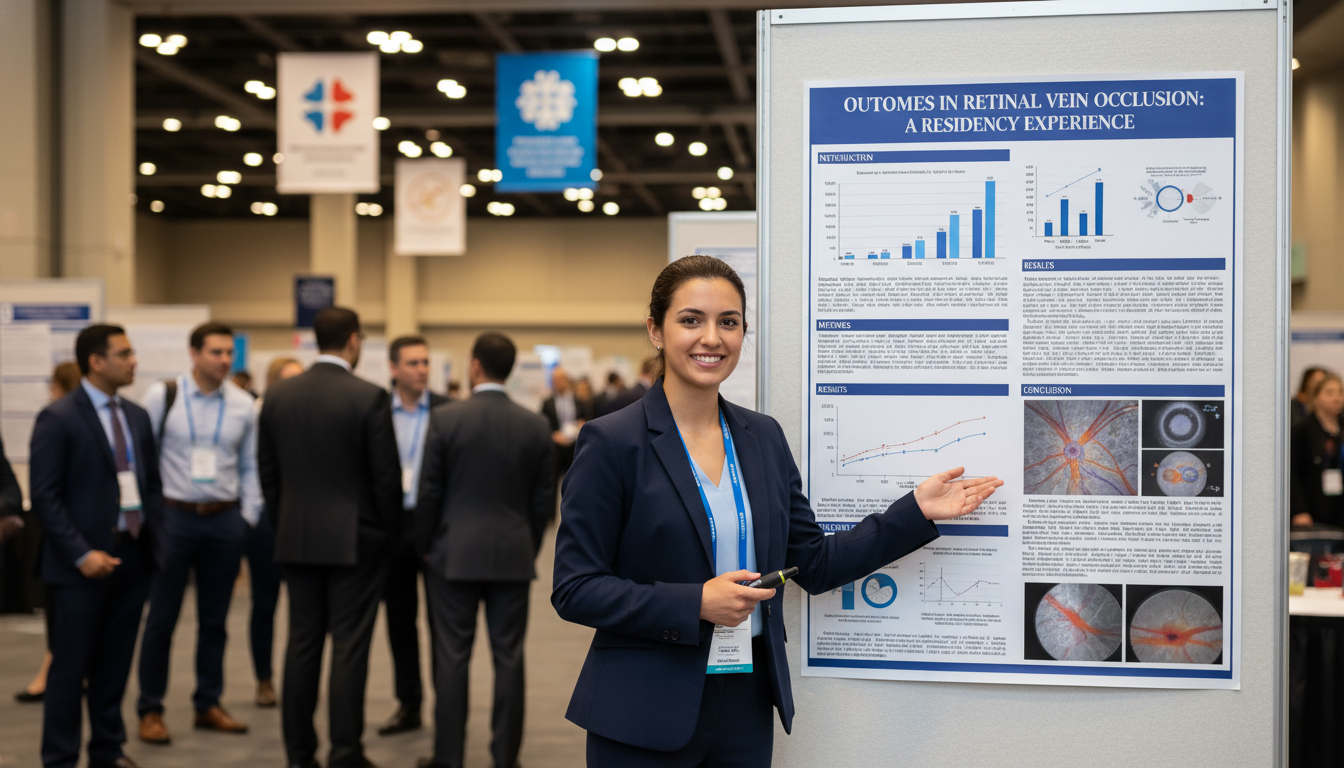
5. Education and Quality Improvement (QI) Research
Not every resident needs to work with OCT or intravitreal injections to do meaningful research.
Examples in Ophthalmology:
- Impact of wet lab curriculum on resident cataract complication rates
- Implementation of surgical simulation before live cataract cases
- Improving diabetic retinopathy screening rates in primary care settings
- Standardizing handoff protocols for inpatients with acute ocular issues
QI and education projects can often be completed within residency and yield tangible improvements in your own program.
Finding Mentors, Joining Teams, and Avoiding Common Pitfalls
Identifying Strong Research Mentors
In ophthalmology, the right mentor is often more important than the specific project.
Look for faculty who:
- Have an established track record of publications and presentations
- Regularly include residents as first or co-authors
- Have ongoing, active projects (not just ideas)
- Respond to emails and are accessible during clinic or conference
- Are honest about expectations and timelines
Red flags:
- Vague or overly ambitious project descriptions (“We’ll do a huge prospective study of all glaucoma patients…” with no infrastructure)
- Long delays in communication
- No recent publications or completed projects with residents
Joining a Productive Research Team
Beyond a single mentor, it helps to plug into a group:
- Retina research group
- Glaucoma outcomes team
- Cornea and refractive surgery registry
- Oculoplastics tumor database
Advantages:
- Shared infrastructure (data managers, coordinators, biostats support)
- Templates for IRB submissions and consent forms
- Peer support from other residents and fellows
- More consistent publication output
Setting Expectations Early
When starting a project, clarify:
- Your role (concept, data collection, analysis, writing)
- Who will be first author (and under what conditions)
- Expected timeline for:
- IRB submission
- Data collection
- Abstract submission (e.g., ARVO deadlines)
- Manuscript drafting and submission
Put this in writing (even as a simple email summary) after your initial meeting.
Common Pitfalls to Avoid
Overcommitting to too many projects
- Two to four well-executed projects are better than eight half-finished ones.
- Prioritize depth and completion over sheer number of citations.
Underestimating IRB and data cleaning time
- IRB approval can take weeks to months.
- Chart reviews often involve more manual data cleaning than expected.
Neglecting communication
- Long gaps in email responses can derail momentum.
- Schedule standing check-ins (monthly or every 6–8 weeks) to stay on track.
Not considering authorship early
- Misaligned expectations about first vs. middle authorship can cause frustration.
- Clarify before major work begins.
Balancing Research with Clinical Duties and Surgical Training
Time Management Strategies
Block Scheduling
- Treat research time like a clinic or OR block:
- 1–2 half-days a month protected (if your program allows)
- Early mornings or post-call afternoons for focused work
- Treat research time like a clinic or OR block:
Micro-Work Sessions
- Use 20–30 minute windows to:
- Clean small chunks of data
- Draft parts of methods or introduction
- Review proofs or respond to co-author comments
- Use 20–30 minute windows to:
Align Research with Your Clinical Rotations
- If you’re on retina, push forward your retina project.
- On cornea, collect data for your corneal outcomes study.
- This minimizes context switching and maximizes synergy.
Prioritizing Without Sacrificing Training
Your primary responsibility as a resident is to become an excellent clinician and surgeon. Research should support—not compromise—that goal.
Guiding principles:
- Do not skip essential surgical or clinic experiences for non-urgent research tasks.
- Use less intense rotations (e.g., consults, electives) to push research forward.
- If you find research consistently interfering with patient care, re-evaluate your project load.
Working Smarter with Support Systems
Take advantage of:
- Research coordinators for patient enrollment and follow-up
- Medical students interested in ophthalmology for:
- Chart review
- Data entry (under supervision)
- Literature review
- Fellows who can:
- Provide subspecialty insight
- Co-mentor on more advanced analyses
- Help shape conference abstracts and posters
Delegating responsibly and involving juniors is both efficient and educational.
Leveraging Resident Research for Your Future Career
For Fellowship Applications
Your research record helps you:
- Stand out in competitive subspecialty ophtho match processes
- Demonstrate sustained interest in a particular subspecialty
- Show that you can complete projects and work well on teams
To maximize impact:
- Aim for projects aligned with your fellowship interests (e.g., retina, glaucoma).
- Present at national meetings (ARVO, AAO, subspecialty societies).
- Ask mentors to highlight your research work in letters of recommendation.
For an Academic Residency Track or Faculty Career
If you’re targeting a long-term academic path:
- Build a coherent research theme (e.g., “outcomes of MIGS,” “pediatric retinal disease,” “ocular surface disease and systemic immunity”).
- Try to have at least one first-author peer-reviewed paper by graduation, ideally more.
- Learn the basics of:
- Grant writing (even small department or foundation grants)
- Collaborative cross-disciplinary projects (e.g., with neurology, rheumatology, radiology)
You don’t need a massive portfolio, but you do need evidence of potential.
For Private Practice and Industry Engagement
Even if you’re eyeing private practice:
- Resident research experience can:
- Make you attractive to groups engaged in clinical trials
- Prepare you for roles as site PI or sub-investigator
- Improve your ability to discuss evidence-based care with patients
Ophthalmology practices often participate in device or pharmaceutical trials; your background in clinical research makes you a natural fit.
Practical Roadmap: What to Aim for Each Residency Year
PGY-2 (Ophthalmology Year 1)
- Identify 1–2 core mentors.
- Join at least one realistic resident research project.
- Submit 1 abstract to a local or regional meeting if possible.
- Complete IRB for a retrospective or QI project.
PGY-3
- Collect and complete data for your main project(s).
- Draft and submit at least 1–2 abstracts to national meetings (e.g., ARVO, AAO).
- Take a more independent role in analysis (with statistical guidance).
- Start a second project only if the first is clearly on track.
PGY-4
- Convert accepted abstracts to full manuscripts.
- Finalize and submit outstanding papers before graduation.
- Use your research narrative in personal statements and interviews for fellowships or jobs.
- Consider mentoring a PGY-2 or medical student on a smaller, related project.
This staged approach helps ensure you don’t leave residency with many unfinished projects and limited tangible output.
FAQs: Research During Ophthalmology Residency for MD Graduates
1. I matched into ophthalmology from an allopathic medical school with minimal prior research. Is it too late to build a meaningful research profile?
No. Many residents with limited pre-residency research still develop strong records. Focus on:
- Choosing 1–2 well-scoped, feasible projects early in PGY-2
- Working with high-yield, supportive mentors
- Prioritizing completion and publication over sheer numbers
A few completed resident research projects—especially with first authorship—can be more impressive than scattered medical school efforts.
2. How many publications should I aim for during residency?
There is no magic number; quality and relevance matter more than quantity. Rough benchmarks:
- Academically oriented resident targeting competitive fellowships or academic residency track:
- 2–4 peer-reviewed publications (with at least one first-author) plus abstracts/posters
- Resident planning mostly clinical/private practice career:
- 1–2 solid projects (published or in submission) is often sufficient
Ultimately, meaningful, completed work that tells a coherent story about your interests is more valuable than a random collection of minor contributions.
3. What if my program has limited research infrastructure?
You still have options:
- Collaborate with:
- Nearby academic centers or regional institutions
- Prior mentors from your allopathic medical school match institution
- Focus on:
- Case reports and small retrospective series
- QI and education projects within your clinic or OR
- Use online statistical and research design resources, and seek remote statisticians where possible
You may have to be more proactive, but you can still create a respectable research portfolio.
4. How do I choose between multiple interesting project offers?
Ask these questions:
- Is the project feasible within my schedule and residency length?
- Is there clear mentorship and a track record of completion?
- Does it align with my subspecialty interests or long-term goals?
- What is my role and likelihood of first authorship?
If you’re torn, prioritize projects that are already partially built (e.g., existing databases) and have a clear, achievable analysis plan. You can always add more ambitious work once you’ve proven you can complete a first project.
Research during ophthalmology residency is not just about building a CV—it’s about learning to think like an investigator, to question assumptions, and to use data to improve patient care. For the MD graduate entering an ophtho match residency, engaging thoughtfully with research can unlock opportunities across academia, fellowship, and practice. With strategic choices, strong mentorship, and realistic planning, you can integrate research into your residency in a way that enhances—not competes with—your growth as a clinician and surgeon.