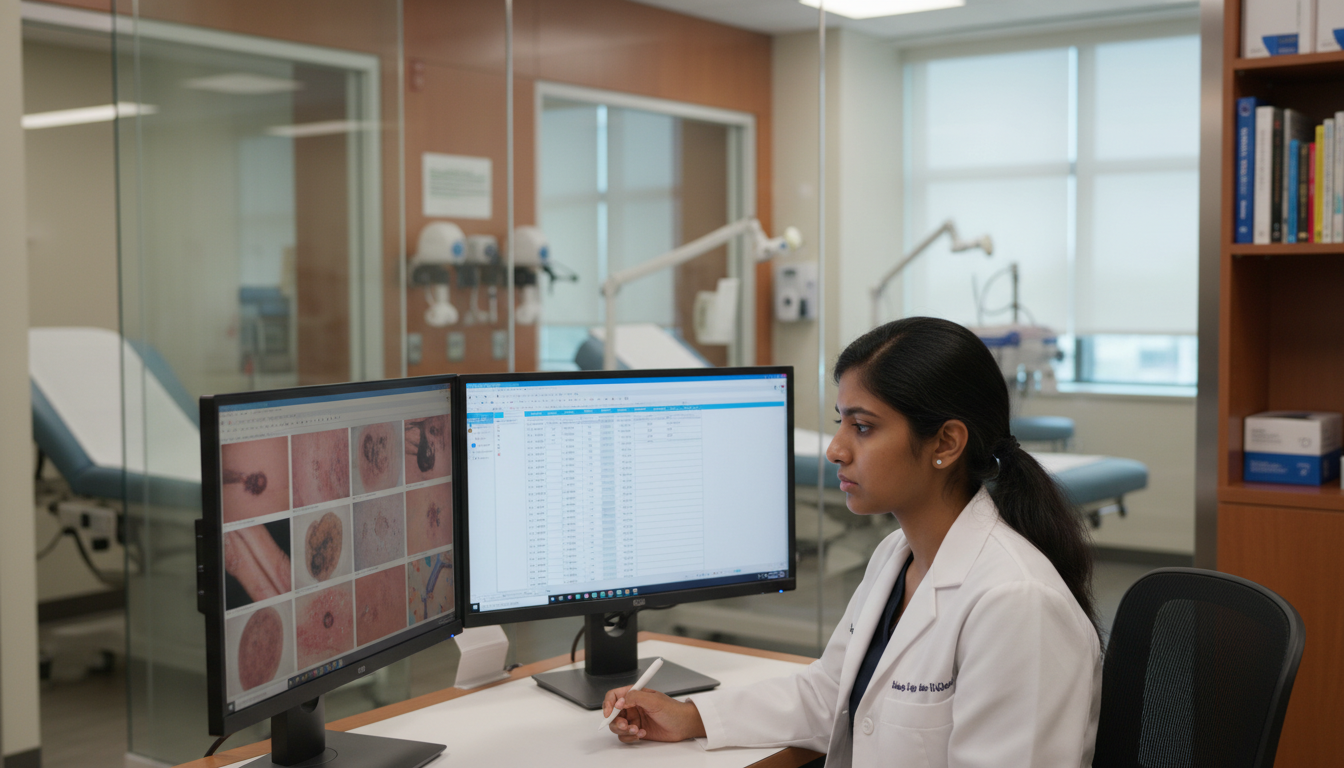
Why Research During Residency Matters for DO Medicine-Pediatrics Graduates
As a DO graduate entering a Medicine-Pediatrics (Med-Peds) residency, you’re uniquely positioned at the intersection of two worlds: internal medicine and pediatrics, prevention and intervention, inpatient and outpatient care. Research during residency can significantly amplify that advantage.
For DO graduates, engaging in meaningful resident research projects is more than a CV booster. It can:
- Strengthen your credibility in academic and competitive practice environments
- Help bridge any perceived gap between DO and MD training in the eyes of some academic programs
- Enhance your ability to critically appraise literature and practice evidence-based medicine
- Open doors to fellowships, leadership roles, and academic medicine careers
Whether you’re aiming for an academic residency track, a community-based career with a scholarly niche, or a fellowship in areas like cardiology, pulmonology, endocrinology, or pediatric subspecialties, research experience during your Med-Peds residency can be a differentiator.
This article will walk you through:
- How research fits into a Med-Peds residency, especially for DO graduates
- How to get started and choose feasible projects
- Strategies for balancing research with clinical duties
- Ways to leverage research for the osteopathic residency match and beyond
Throughout, we’ll focus explicitly on the perspective and needs of a DO graduate in Medicine-Pediatrics.
Understanding Research Pathways in Med-Peds Residency
Med-Peds residency offers rich opportunities for research because you touch both adult and pediatric populations. Before you dive in, you need to understand the research landscape you’re entering.
Types of Research Available to Med-Peds Residents
Most Med-Peds programs support a range of research modalities:
Clinical Research
- Examples: Comparing outcomes of adults with congenital heart disease transitioning from pediatric to adult care; studying asthma readmission rates in adolescents; evaluating telehealth for young adults with diabetes.
- Why it fits Med-Peds: You can follow conditions across the age spectrum, giving you unique questions and datasets.
Quality Improvement (QI) and Patient Safety Projects
- Examples: Reducing 30-day readmissions for children with sickle cell disease transitioning to adult hematology; improving vaccination rates in young adults with chronic disease; standardizing handoff for patients transitioning from pediatric to adult inpatient services.
- Many programs now require QI projects, and these can be framed and published as research.
Health Services, Outcomes, and Population Health Research
- Examples: Examining healthcare utilization of young adults with complex chronic conditions; evaluating disparities in preventive care access for adolescents and young adults.
- Med-Peds is naturally aligned with population health and transitions of care, particularly for vulnerable populations.
Medical Education Research
- Examples: Studying the impact of simulation curriculum on Med-Peds residents’ performance in codes; evaluating the effectiveness of integrated DO and MD teaching rounds.
- Particularly valuable if you’re considering an academic path.
Basic and Translational Science (Less Common but Possible)
- May be feasible in research-heavy academic centers, especially if you have prior lab experience or plan a physician–scientist career path.
- Usually requires dedicated research blocks or an extended track.
The Academic Residency Track for Med-Peds DO Graduates
Some Med-Peds programs offer an academic residency track with formal research training components, such as:
- Protected research electives or longitudinal scholarly time
- Research methods or biostatistics coursework
- Formal mentorship committees
- Requirements for presentation or publication
If you’re still in the medicine pediatrics match process and have a strong interest in research, look for Med-Peds programs advertising:
- “Scholarly concentration” or “academic track”
- Physician–scientist pathway
- Affiliation with a major research institution or children’s hospital
- History of residents presenting at national conferences (e.g., ACP, AAP, SGIM, APA, COMSEP, specialty-specific meetings)
For DO graduates coming from schools with variable research infrastructure, the presence of a clearly structured academic track can be especially helpful to build a robust scholarly portfolio during residency.

Getting Started: First-Year Strategy for DO Med-Peds Residents
The first year of residency is intense. But even as you’re learning how to admit, staff, and discharge safely, you can begin laying a foundation for meaningful research.
Step 1: Clarify Your Goals
Ask yourself:
- Are you aiming for a fellowship (e.g., adult cardiology, pediatric infectious disease, hospital medicine, med-peds primary care leadership)?
- Are you considering academic medicine, clinician–educator roles, or a community-based practice that values QI and innovation?
- Do you want your research to directly impact patients, your training environment, or your long-term niche (e.g., transition medicine, complex care, adolescent medicine)?
Write down 2–3 goals such as:
- “Present a research or QI project at a national meeting by PGY-3.”
- “Have at least one peer-reviewed publication before graduation.”
- “Develop a scholarly focus on transitions of care for youth with chronic illness.”
These goals will guide which resident research projects you choose.
Step 2: Assess Your Prior Experience as a DO Graduate
Many DO graduates worry that they have “less research” compared to MD peers. In reality, DO backgrounds often include:
- Community-oriented projects
- QI initiatives
- Osteopathic manipulative medicine (OMM) studies or case reports
- Strong clinical exposure and holistic patient care experiences
Inventory what you already have:
- Any abstract, poster, or oral presentation (even if at school)
- Ongoing projects you can carry forward in residency
- Skills you already possess: data collection, chart review, basic statistics, literature review, manuscript drafting
This self-assessment helps you pitch yourself realistically to potential mentors and identify gaps you want to fill (e.g., formal statistics training).
Step 3: Identify Mentors Early
In your first 3–6 months:
Scan your program’s website and publications
- Look for Med-Peds faculty and dual-appointed internist–pediatricians
- Note who publishes in areas that interest you: transitions of care, chronic disease management, health equity, hospital medicine, etc.
Ask your program leadership
- Program director, associate program director, or Med-Peds chief residents can connect you with “resident-friendly” researchers.
- Ask: “Who has a track record of working successfully with residents on projects that actually finish?”
Schedule short meetings
Prepare a brief pitch:- Who you are (DO Med-Peds intern)
- Your interests and long-term goals
- Your time constraints and what you can realistically contribute
- Ask what projects are already ongoing and where you might plug in
Good mentors understand the demands of residency and can help you scope a realistic project.
Step 4: Start with Feasible, High-Yield Projects
For PGY-1 and early PGY-2, prioritize projects that can realistically be completed in 12–18 months, such as:
- Retrospective chart reviews (e.g., asthma ED utilization across pediatric and adult populations)
- QI projects that are already supported by hospital infrastructure
- Secondary data analysis using existing datasets or registries
- Case reports or case series (especially unique Med-Peds scenarios like adult presentations of childhood-onset disease, or transition issues)
These are ideal entry points for busy residents and can quickly generate abstracts and presentations.
Designing and Executing Resident Research Projects in Med-Peds
Once you’ve identified a mentor and a project idea, you need a concrete plan that fits your schedule and training requirements.
Choosing a Research Question: Leverage the Med-Peds Edge
Use the unique vantage point of Med-Peds to identify questions:
- Cross-age care:
- How do outcomes differ when adolescents with complex chronic conditions remain in pediatric care versus transition to adult medicine?
- Continuity issues:
- What factors predict successful transition from pediatric to adult-oriented primary care?
- Disease trajectories:
- Compare disease management in childhood vs adulthood for conditions like diabetes, sickle cell, cystic fibrosis, congenital heart disease.
- Systems of care:
- Evaluate clinic models that integrate pediatric and adult providers in one setting.
As a DO graduate, you can also integrate osteopathic principles:
- Holistic approaches to chronic pain in adolescents and young adults
- Impact of OMM on symptom burden or function in specific patient populations (where feasible and ethically sound)
Structuring a Project That Can Actually Finish
Break every research project into phases with approximate timelines:
Concept & Feasibility (1–2 months)
- Clarify the question, population, setting, and outcome
- Confirm data availability
- Identify needed collaborators (statistician, QI office, data analyst)
IRB and Administrative Approvals (1–4 months)
- Work with your mentor to submit IRB protocols
- For QI, determine if IRB review is required or if it’s exempt/expedited
Data Collection (3–6 months)
- Set realistic weekly goals (“Review 25 charts per week”)
- Use nights/clinic half-days/electives strategically
Analysis and Interpretation (2–3 months)
- Even basic statistics (t-tests, chi-square, regression) often require help from a statistician
Dissemination (3–6 months)
- Abstract submission to local, regional, and national meetings
- Manuscript drafting and journal submission
Example: Feasible Resident Project for a DO Med-Peds Resident
Project idea: “Impact of a structured transition clinic on missed appointments among adolescents with type 1 diabetes moving to adult endocrinology.”
- Design: Retrospective cohort study
- Population: Patients aged 17–22 transitioning from pediatric to adult diabetes care over a 5-year period
- Outcomes: Missed appointments, A1c levels, hospitalization rates
- DO-specific value: Highlights holistic care and continuity; aligns with Med-Peds’ focus on adolescence and young adulthood.
- Outputs: Abstract for AAP or ACP, potential Med-Peds-specific meeting; manuscript for a transitions-of-care or diabetes journal.
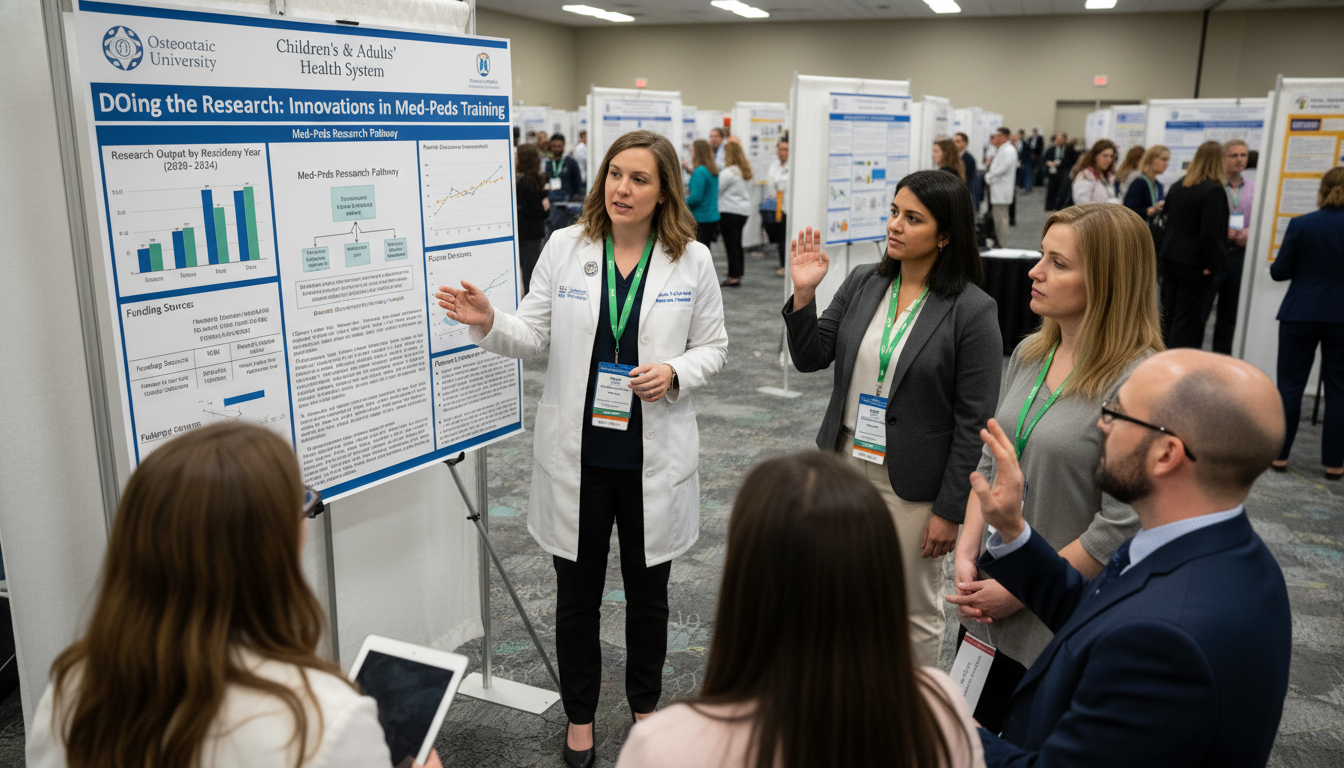
Balancing Research with Clinical Duties in Med-Peds
The biggest challenge for research during residency is time. Med-Peds schedules involve toggling between medicine and pediatrics, inpatient and outpatient, with frequent transitions that disrupt continuity of projects.
Time Management Strategies
Create a Longitudinal Research Rhythm
- Reserve a consistent weekly time block (e.g., Sunday afternoon, one post-call evening) dedicated to research tasks.
- Use a task manager (Notion, Trello, simple spreadsheet) to track micro-tasks: “Run literature search,” “Draft abstract background,” etc.
Use Elective and Ambulatory Blocks Wisely
- Front-load project planning and data collection into less intense rotations.
- Consider one or two dedicated research electives if your program allows; negotiate this with your program director early.
Negotiate Clear Expectations with Your Mentor
Be honest about:- How many hours/week you can realistically commit
- Call schedules and heavy rotations (ICU, wards, night float)
- Your target deadlines (e.g., abstract due date)
Work in Sprints Around Deadlines
Aim for conference abstracts or internal scholarly days as natural timepoints to “sprint” on analysis and writing. Deadlines create structure.
Protecting Your Well-Being
Research is only beneficial if it doesn’t jeopardize your physical or mental health:
- Avoid adding research to an already unsustainable schedule; instead, rebalance other commitments if necessary.
- Collaborate with co-residents so tasks are shared.
- If you feel overwhelmed, talk to your mentor or program leadership; it’s better to scale down a project than to burn out.
Maximizing the Career Impact of Research: From Residency to Match and Beyond
Research during residency isn’t just about publications; it’s about strategic career development.
Strengthening Your Profile as a DO Graduate
As a DO in Med-Peds, research experience can:
- Demonstrate your ability to perform in academic environments, addressing any lingering bias regarding DO training
- Showcase skills in critical appraisal and evidence-based medicine to future employers
- Highlight your fit for subspecialty fellowships, especially research-intensive ones
You can explicitly frame your research in your CV and personal statements as:
- Evidence of your ability to identify clinical problems and generate solutions
- A reflection of your commitment to lifelong learning
- Proof that you can contribute meaningfully to an academic team
Positioning for the Osteopathic Residency Match and Medicine Pediatrics Match
If you are still in the med peds residency or osteopathic residency match process (e.g., doing a research year or applying after a preliminary year):
- Prior research—even if small—helps your application stand out.
- Emphasize research linked to Med-Peds-relevant topics: transitions of care, adolescent medicine, chronic disease management, health equity.
- Highlight roles where you showed ownership: developing the question, leading data collection, drafting the manuscript.
During interviews, articulate:
- What you learned from research (teamwork, perseverance, handling setbacks)
- How you plan to expand your research during residency
- How your DO training shaped your clinical questions and holistic perspective
Using Research to Access Fellowships and Academic Roles
If you’re eyeing a fellowship (adult or pediatric subspecialty, or combined med-peds fellowships when available):
- Many competitive fellowships expect evidence of scholarship—abstracts, posters, or publications.
- Resident research projects can form the foundation of your fellowship research portfolio.
- Develop at least one coherent theme (e.g., sickle cell disease, complex care, transitions, asthma, diabetes, health disparities) instead of completely unrelated one-off projects.
If you’re considering an academic residency track or a clinician–educator path:
- Pursue opportunities to present at grand rounds, resident conference, and regional/national meetings.
- Collaborate on education research (e.g., DO vs MD learner outcomes, curriculum innovations in Med-Peds).
- Seek feedback on teaching and scholarly products from faculty known for medical education expertise.
Building a Scholarly Brand as a Med-Peds DO Physician
Think of your projects as parts of a larger narrative:
- “I’m a Med-Peds DO physician focused on improving transitions of care for adolescents with chronic disease.”
- “My scholarly interest is in reducing disparities in preventive care and chronic disease management in young adults.”
Over residency:
- Aim for multiple outputs around a theme: QI project, retrospective study, case series, and perhaps an educational intervention.
- Use these to pitch yourself for early-career positions or advanced training.
Practical Tips, Common Pitfalls, and How to Avoid Them
Practical Tips for Success
Join Existing Projects First
- It’s often more efficient to plug into an ongoing project than to start from scratch.
- You can still carve out first-author roles (e.g., leading a sub-analysis, writing the manuscript).
Learn Basic Research Skills Early
- Ask if your institution offers short courses on statistics, REDCap, or research methods.
- Online platforms (e.g., Coursera, edX) have free or low-cost courses you can complete flexibly.
Document Everything
- Keep organized folders with protocols, data dictionaries, IRB approvals, and codebooks.
- This helps when you return to a project after a busy rotation.
Aim for Multiple End-Products from One Project
From a single project, you can generate:- Poster or oral presentation at local residency research day
- Regional society or national conference abstract
- Peer-reviewed manuscript
- Brief clinical pearl or commentary article
Network at Conferences
- As a DO Med-Peds resident, conferences are prime places to connect with potential fellowship mentors and future collaborators.
- Practice a short “elevator pitch” about your research and career interests.
Common Pitfalls and How to Avoid Them
Overly Ambitious Projects
- Pitfall: Planning a multi-center prospective trial with limited time and resources.
- Fix: Scale down to a single-center or retrospective design, or join a multi-center consortium with support infrastructure.
Lack of Clear Roles and Authorship Expectations
- Pitfall: Disagreements later about who is first author or which tasks each person owns.
- Fix: Clarify expectations early, ideally via email, with your mentor and team.
Ignoring IRB/Compliance Issues
- Pitfall: Collecting data without proper IRB approval or misunderstanding QI vs research status.
- Fix: Always consult with a mentor and institutional review resources before starting.
Losing Momentum During Busy Rotations
- Pitfall: Project stalls during ICU/night float months and never recovers.
- Fix: Break tasks into smaller steps you can tackle even when busy (e.g., read 1–2 articles, revise a single figure, email co-authors).
Not Finishing Projects
- Pitfall: Great ideas never become abstracts or papers.
- Fix: Plan backward from target deadlines, prioritize fewer projects, and work closely with mentors who have a track record of getting projects across the finish line.
Frequently Asked Questions (FAQ)
1. I’m a DO graduate and feel behind in research compared to my MD peers. Is it too late to catch up during residency?
No. Residency—especially Med-Peds—is an excellent time to build your research portfolio. Many residents begin serious research efforts only after starting residency. Focus on:
- Choosing 1–2 feasible, mentored projects
- Targeting abstracts and presentations early (within the first 1–2 years)
- Developing a consistent theme in your projects
Your clinical performance and professionalism remain the primary metrics; research is an important, but not exclusive, part of your profile.
2. How much research do I need during residency if I’m considering a fellowship after Med-Peds?
Requirements vary by specialty and program. As a general guide:
- At least one meaningful scholarly product (e.g., first- or second-author abstract) is highly beneficial.
- A peer-reviewed publication, while not mandatory in every field, is increasingly common among fellowship applicants in competitive subspecialties.
- Fellowship selection committees value depth and ownership: they want to see that you played a substantial role and can speak about your project in detail.
Talk to recent graduates from your Med-Peds program who matched into the fellowships you’re considering; ask what level of scholarship they had.
3. Can quality improvement (QI) projects count as research for my CV and career goals?
Yes—if structured properly. Many QI projects:
- Address meaningful clinical questions
- Use rigorous methodology (e.g., PDSA cycles, run charts, statistical process control)
- Can be presented at conferences and even published in peer-reviewed journals
For QI to function as research on your CV:
- Clarify the project’s design, data collection, and analysis plan
- Determine IRB requirements early
- Work toward dissemination (poster, oral presentation, or manuscript)
4. I’m worried about balancing research with my clinical responsibilities and exams (e.g., COMLEX/USMLE, in-training exams). How should I prioritize?
Clinical performance and board passage always come first. To balance:
- Avoid committing to large, complex projects early in PGY-1.
- Use elective or lighter rotations for concentrated research work.
- Integrate reading for research with exam preparation, focusing on topics relevant to your clinical and scholarly interests.
If you face major exam or remediation needs, it may be appropriate to temporarily scale down research commitments and re-engage once your core responsibilities are stabilized.
Engaging in research during your Med-Peds residency as a DO graduate is entirely achievable—and can significantly shape your future career. With thoughtful planning, strong mentorship, and realistic projects, you can emerge from residency not only as a skilled clinician across the age spectrum, but also as a physician capable of asking—and answering—the important questions that move our field forward.