
Understanding Research During Pediatrics-Psychiatry Residency
Pediatrics-psychiatry—often pursued via triple board programs (pediatrics, general psychiatry, and child & adolescent psychiatry)—sits at the intersection of brain, behavior, and child health. Research during residency in this combined field is not just a CV booster; it is a powerful way to shape your career, deepen your understanding of complex developmental and behavioral conditions, and open doors to academic medicine, leadership, and subspecialty paths.
This guide will walk you through:
- Why research matters in peds psych residency and triple board training
- The types of resident research projects that fit this unique pathway
- How to get started and find mentorship
- How to balance clinical demands with scholarly productivity
- How to leverage research for fellowships, academic residency track positions, and future jobs
Whether you’re a medical student considering a peds psych residency or a current resident looking to structure your scholarly work, this is meant to be a practical, step-by-step resource.
Why Research Matters in Pediatrics-Psychiatry and Triple Board Programs
1. Strengthening Your Clinical Reasoning in Two Worlds
Pediatrics-psychiatry residents must think like pediatricians and psychiatrists simultaneously. Research helps you:
- Learn to formulate clear questions about diagnostic complexity (e.g., “How often is ADHD misdiagnosed in children with trauma exposure?”)
- Understand epidemiology and risk factors across developmental stages
- Critically appraise evidence that crosses both medical and psychiatric domains
Example:
A resident working on a quality improvement (QI) project about screening for suicidality in pediatric diabetes clinic will quickly appreciate how physical health, mood, family dynamics, and health system processes intersect.
2. Gaining a Competitive Edge for Fellowships and Jobs
If you envision:
- A child & adolescent psychiatry faculty position
- A role in integrated pediatric behavioral health
- A leadership position in hospital-based child psychiatry consult services
- An academic residency track role, or clinician-educator with scholarship expectations
…having meaningful research during residency is a major advantage. Fellowship and junior faculty selection committees often look for:
- Evidence of sustained scholarly interest in a specific area
- Participation in resident research projects with outputs (posters, presentations, manuscripts)
- Mentorship relationships and letters describing your research potential
3. Building a Career Niche in a Highly Interdisciplinary Field
Peds psych residency and triple board training naturally position you to work at interfaces:
- Pediatrics and psychiatry
- Inpatient and outpatient care
- Medical and educational systems
Research lets you define a niche, for example:
- Integrated behavioral health in primary care pediatrics
- Early identification of autism or developmental delay in mental health settings
- Psychotropic prescribing in medically complex children
- Systems of care and transitions from pediatric to adult mental health services
When you consistently pursue projects in a theme, you begin to build a recognizable scholarly identity early in your career.
4. Enhancing Your Teaching and Leadership Skills
Research skills translate directly into:
- Better journal club leadership
- Clearer teaching about evidence-based practice to medical students and junior residents
- Stronger participation in hospital committees, QI initiatives, and protocol development
Being comfortable discussing methodology, statistics basics, and limitations of evidence makes you a more authoritative and effective educator.
Types of Research and Scholarly Projects in Peds Psych Residency
You don’t need a PhD or years of bench research to be productive. Research during residency can take multiple forms that fit within clinical demands.
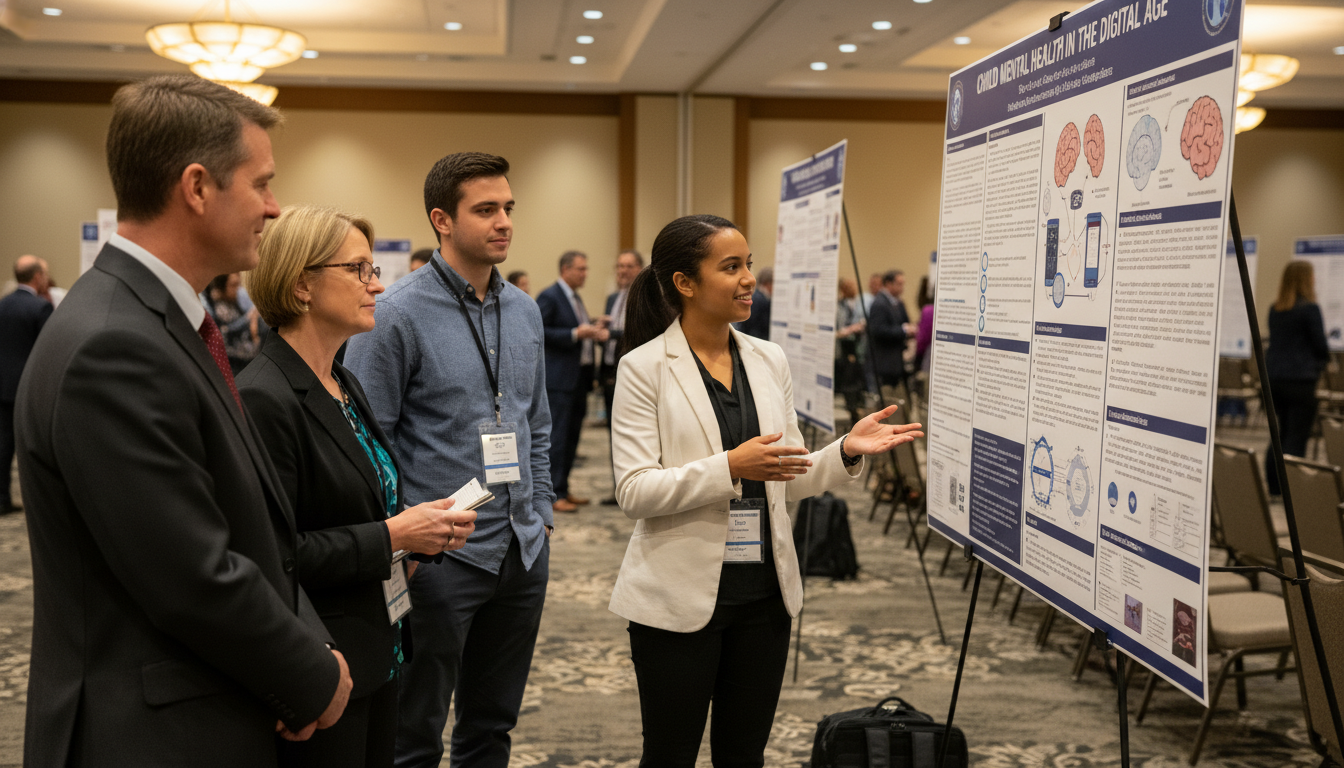
1. Clinical Research
Clinical research is common among peds psych residents because it arises naturally from day-to-day patient encounters.
Examples:
- Retrospective chart review of psychotropic medication use in children with chronic medical conditions (e.g., cystic fibrosis, sickle cell disease)
- Study of diagnostic patterns in children referred from pediatric primary care to child psychiatry
- Comparative analysis of depression screening tools in adolescents with chronic illness
Advantages:
- Uses existing clinical data
- Often feasible with short timelines
- Directly translatable to clinical practice
Typical outputs:
- Poster at a national meeting (e.g., AACAP, APA, PAS, SPR)
- Short journal article or letter to the editor
2. Quality Improvement (QI) and Implementation Projects
QI work is especially relevant to peds psych residency because:
- You work across services (pediatrics, psychiatry, child psychiatry), where communication gaps are common
- Many triple board programs emphasize systems-based practice and integrated care
Examples:
- Increasing rates of suicide risk screening in pediatric primary care clinics
- Reducing no-show rates for child psychiatry follow-up after hospitalization
- Implementing and evaluating a collaborative care model for pediatric anxiety and depression
- Improving metabolic monitoring for antipsychotic use in youth
Many residencies explicitly count QI as scholarly work, especially when:
- The project has a clear methodology (Plan-Do-Study-Act cycles, run charts, process measures)
- Results are shared as posters, presentations, or manuscripts
3. Educational Research and Curriculum Development
As residents, you’re instructors for:
- Medical students
- Pediatric and psychiatry interns
- Nurses and interprofessional staff
You can turn educational innovations into scholarly work.
Examples:
- Designing and evaluating a simulation-based curriculum for managing pediatric agitation on the medical floor
- Creating a teaching module on trauma-informed care for pediatric residents
- Assessing the impact of an integrated pediatrics-psychiatry rotation on knowledge and attitudes
If you’re drawn to teaching and an academic residency track (or future clinician-educator roles), educational research is a highly relevant path.
4. Health Services and Policy Research
Peds psych and triple board residents are uniquely suited to examine:
- Access to child mental health services
- Insurance coverage issues for developmental testing or long-term therapy
- Care coordination between pediatricians, psychiatrists, and schools
Examples:
- Evaluating wait times and referral patterns from pediatric clinics to child psychiatry
- Studying hospitalization rates for children with co-occurring medical and psychiatric diagnoses
- Analyzing outcomes after implementation of a school-based mental health partnership
This type of work can be particularly attractive if you’re considering policy, advocacy, or public-sector career paths.
5. Case Reports and Case Series
While lower on the research hierarchy, case reports can:
- Highlight rare or unusual presentations (e.g., autoimmune encephalitis presenting as psychiatric symptoms in a teenager)
- Emphasize diagnostic pitfalls at the interface of pediatrics and psychiatry
- Be a gateway project to learn about the publication process
They’re often the first manuscripts residents complete and can lead to conference presentations.
Getting Started: Finding Mentors, Topics, and Feasible Projects
1. Identify Your Interests and Constraints
Start by asking:
- What patient populations energize me? (e.g., medically complex youth, neurodevelopmental disorders, adolescents with substance use, eating disorders)
- Which clinical settings do I enjoy most? (inpatient pediatrics, child psychiatry consults, outpatient integrated clinics, emergency psychiatry)
- How much time realistically can I give to research during residency? (1–2 hours/week vs. a dedicated academic track with protected time)
Be honest about your bandwidth. A focused, feasible project is better than an overly ambitious study that never finishes.
2. Find the Right Mentors
Good research mentors in pediatrics-psychiatry may come from:
- Triple board or combined training program leadership
- Child & adolescent psychiatry division
- General pediatrics or adolescent medicine faculty
- Integrated behavioral health programs
- Psychology or social work researchers embedded in your hospital
Look for mentors who:
- Have active projects and a track record of publication or funded work
- Are responsive and willing to meet regularly
- Understand residency demands and can help you scope an achievable project
Practical tip:
Ask program directors or senior residents, “Who here is known for involving residents in research during residency?” A short list of names is easier to start with than scrolling through faculty profiles alone.
3. Join Existing Resident Research Projects
Instead of reinventing the wheel, consider:
- Joining a team that already has IRB approval (Institutional Review Board)
- Contributing to data collection, chart reviews, or analysis
- Taking ownership of a sub-question that can become your own abstract or manuscript
This approach:
- Shortens the ramp-up time
- Gives you exposure to experienced co-investigators
- Allows you to learn the process before leading your own project
4. Crafting a Feasible Project Plan
Once you’ve picked a topic and mentor, define:
Research Question
- Example: “Does routine PHQ-9 screening in a pediatric sickle cell clinic increase identification of depressive symptoms compared to usual care?”
Study Design
- Retrospective chart review? Prospective data collection? QI cycle?
Population and Setting
- Age range, clinic/hospital site, inclusion/exclusion criteria
Timeline
- Months 1–3: IRB and protocol finalization
- Months 4–9: Data collection
- Months 10–12: Analysis, abstract writing, poster preparation
Outputs
- At least one of:
- Abstract submission to a national meeting
- Manuscript draft
- Presentation at local or institutional symposium
- At least one of:
People often underestimate time for IRB approval and data cleaning. Build in buffer.
Balancing Clinical Training with Research Productivity
One of the biggest challenges in peds psych residency and triple board programs is balancing three broad training areas: pediatrics, psychiatry, and child psychiatry—on top of research.

1. Use Rotation Structure Strategically
Many combined programs have:
- Pediatrics-intensive years (often PGY-1 and PGY-2)
- Psychiatry and child psychiatry-focused years (later PGY years)
- Elective blocks or scholarly time
Strategies:
- During busy inpatient pediatric or psychiatry rotations:
- Keep research tasks light—emails, literature review, small data entry
- During elective or outpatient-heavy months:
- Schedule dedicated research blocks (e.g., half-day per week)
- Focus on data analysis and writing
If your program offers an academic residency track or designated research pathway:
- Apply early (often PGY-1 or PGY-2)
- Clarify the amount of protected time
- Ensure expectations (e.g., a completed project, abstracts, manuscripts) are realistic
2. Time Management Techniques
Practical methods that work well for residents:
Time blocking:
- Reserve recurring weekly slots (e.g., Friday afternoon 1–3 pm) as “research only” time
- Treat it like a clinic session—reschedule only for true emergencies
Task chunking:
- Break projects into 30–60-minute tasks (e.g., “extract data for 5 patients,” “read 2 articles and summarize,” “draft results section outline”)
- This fits better into erratic resident schedules
Use dead time:
- On call or slow nights, if appropriate: read articles, write introduction sections, or work on presentations
- Protect your rest first; research is secondary to safety and well-being
3. Collaborate and Delegate
If you’re on a larger research team:
- Share data extraction or chart review with co-residents or students
- Involve medical students looking for structured projects
- Coordinate through shared spreadsheets and clear timelines
This is especially helpful in triple board programs where rotations may scatter co-investigators across services.
4. Protect Your Well-Being
Burnout is real, and research should not come at the cost of mental health.
Set boundaries:
- Know when to say no to new projects
- Choose quality over quantity—1–2 completed projects are better than 5 half-finished ideas
- Discuss with your mentor if expectations feel unsustainable
If mental health or fatigue is impacting your ability to work on scholarship, be honest about your limits and adjust the project scope.
Turning Resident Research into a Long-Term Career Asset
Research during residency becomes most valuable when it builds toward your broader trajectory, not just a set of disconnected bullet points on a CV.
1. Develop a Coherent Narrative
When you apply for:
- Child & adolescent psychiatry fellowships
- Hospital-based leadership positions
- Academic positions on an academic residency track
You’ll often be asked:
- “Tell us about your scholarly interests.”
- “How do your resident research projects align with your career goals?”
Examples of coherent narratives:
- “Across residency, I’ve been focused on integrated behavioral health in pediatric primary care, including QI work on depression screening and a clinical study on treatment engagement. I hope to run a collaborative care clinic and lead research on scalable models of pediatric mental health care.”
- “My research during residency has centered on neurodevelopmental disorders—specifically early identification of autism, diagnostic overlap with ADHD, and systems-level barriers to care. I’m interested in an academic career working with multidisciplinary teams on improving access and diagnostic accuracy.”
Even if your projects are small, a thematic link gives them impact.
2. Aim for Tangible Products
Try to convert your work into:
- Abstracts at national or regional meetings
- Peer-reviewed publications (even brief reports or case series)
- Educational materials or curricula that can be shared with other programs
Visibility matters. A modest project presented at AACAP, APA, or PAS can:
- Expand your network
- Yield mentoring relationships beyond your home institution
- Strengthen your future applications
3. Seek Additional Training and Resources
If you’re strongly research-oriented, consider:
- Short courses or workshops on research design and statistics
- Institutional resources: clinical and translational science centers, biostatistics consult services
- Formal research electives during PGY-3 or PGY-4
Some residents pursue:
- Master’s degrees (e.g., MPH, MS in Clinical Investigation) during or after residency
- Funded research fellowships after clinical training
If you’re in a triple board program with limited research infrastructure, external resources (online courses, multi-site collaborations) can be especially valuable.
4. Maintain and Grow Mentoring Relationships
After residency:
- Stay in touch with key mentors
- Continue projects as a fellow or junior faculty
- Ask for guidance on grant applications, promotions, and long-term planning
Mentorship is often the most important predictor of continued scholarly productivity.
Frequently Asked Questions (FAQ)
1. Do I need research to match into a peds psych residency or triple board program?
Research is not strictly required, but it is increasingly common among competitive applicants. For combined programs, experiences that show:
- Genuine interest in pediatrics and psychiatry
- Curiosity about developmental, behavioral, or systems-of-care questions
…are very helpful. This can include:
- Resident research projects in medical school
- QI initiatives in child health or mental health settings
- Community-based program evaluations
Programs typically value quality and relevance over sheer quantity.
2. How early in residency should I start research?
Ideally:
- Use PGY-1 to explore interests, identify mentors, and get oriented to your program’s resources
- Begin planning and IRB submissions by late PGY-1 or early PGY-2
- Launch data collection or QI interventions by mid-PGY-2
That timeline allows you to:
- Present something by PGY-3–4
- Potentially submit a manuscript before graduation
However, starting later is still possible; you may just focus on more contained projects (e.g., chart reviews, case series, brief QI cycles).
3. Is an academic residency track necessary if I want an academic career?
No, it’s not strictly necessary, but an academic residency track can offer:
- Structured protected time
- Formal expectations for scholarship
- Built-in mentorship and support
You can still pursue academic careers from non-research or community-focused programs, especially if you:
- Complete solid research during residency
- Seek out mentors
- Present and publish your work
What matters most is demonstrating consistent scholarly engagement and potential for growth.
4. How can I choose between multiple research offers or mentors?
Consider:
- Alignment with your interests (pediatrics vs. psychiatry vs. systems-level vs. education)
- Feasibility within your schedule
- Mentor’s track record (publications, prior resident mentees, responsiveness)
- Opportunities for authorship and presenting at conferences
If possible, talk with senior residents who have worked with the same mentors. Ask explicitly about:
- How often they met
- Whether projects were completed and published
- Workload expectations
Choose the path where you feel:
- Supported and respected
- Able to finish something meaningful
- Aligned with your long-term goals
Research during residency in pediatrics-psychiatry and triple board training can be an energizing, career-shaping part of your journey. With careful planning, the right mentorship, and realistic expectations, you can produce scholarly work that not only strengthens your applications and CV, but also improves care for the children, adolescents, and families you serve.