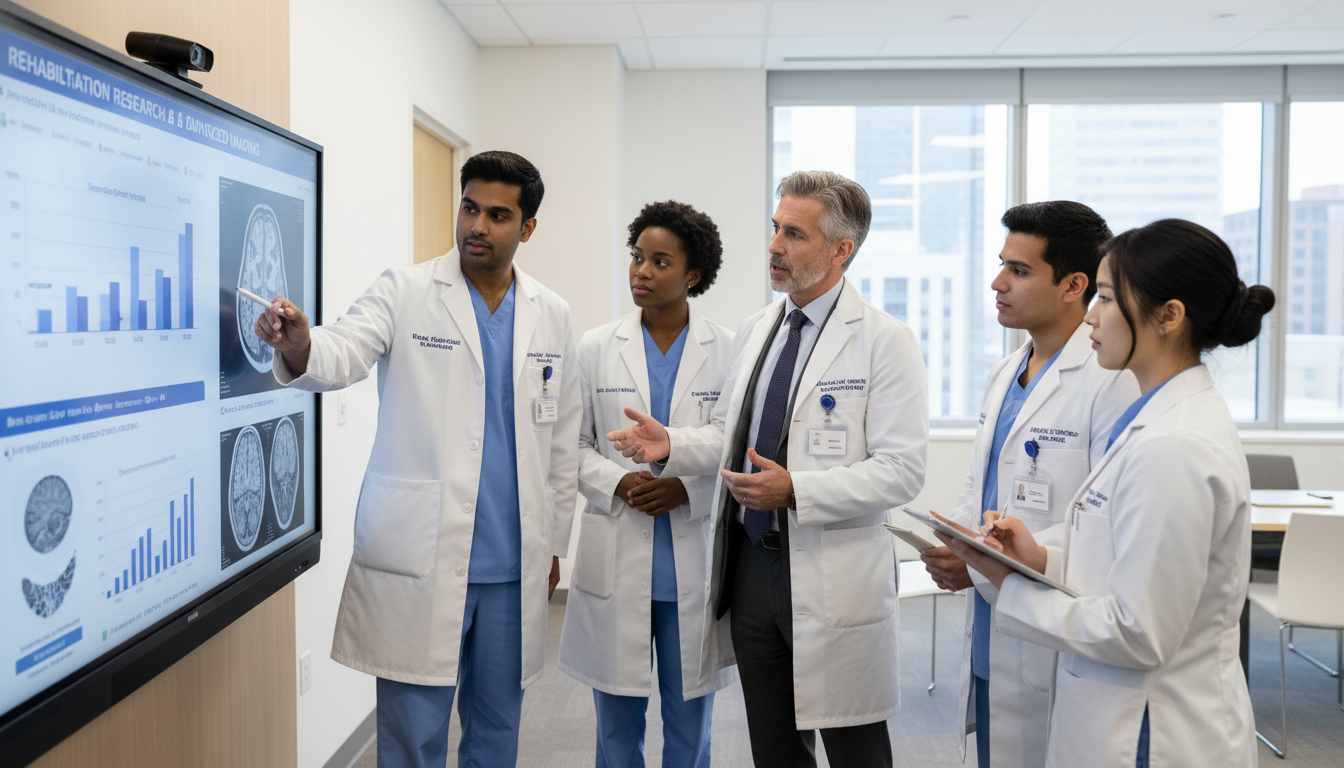
Why Research During Residency Matters for Non-US Citizen IMGs in PM&R
For a non-US citizen IMG in Physical Medicine & Rehabilitation (PM&R), research during residency is far more than an optional extra. It can:
- Strengthen your CV for fellowships and academic positions
- Differentiate you as a foreign national medical graduate in a competitive market
- Build long-term mentorship and networking ties in the US system
- Help with visa-contingent career paths (especially if you later pursue an academic residency track or university-based position that can sponsor H‑1B or O‑1 visas)
PM&R is evolving rapidly with advances in neurorehabilitation, musculoskeletal ultrasound, pain medicine, regenerative therapies, and technology (exoskeletons, brain-computer interfaces, virtual reality, etc.). Being involved in resident research projects positions you at the forefront of this change.
For non-US citizen IMGs, research carries additional strategic value:
- You may arrive with limited US clinical experience; research offers another way to demonstrate your understanding of the US healthcare system.
- Program directors may worry about visa logistics; strong research output can reassure them that investing in you benefits the program.
- If you aim for an academic residency track, early research success is often expected.
This article explains, in depth and with practical steps, how to navigate and leverage research during residency as a non-US citizen IMG in PM&R.
Understanding the Research Landscape in PM&R Residency
Research in PM&R spans a wide range of designs and topics, many of which are very accessible to busy residents.
Common Types of Research in PM&R
Clinical research
- Prospective or retrospective cohort studies (e.g., outcomes after inpatient stroke rehab)
- Chart review studies (e.g., predictors of functional gain in spinal cord injury)
- Clinical trials (e.g., botulinum toxin for spasticity, regenerative injections for tendinopathy)
Quality improvement (QI) and patient safety projects
- Reducing inpatient falls on rehab units
- Improving follow-up rates in EMG clinics
- Standardizing spasticity assessment documentation
QI can often be turned into posters or papers and may be more feasible within residency timelines.
Educational research
- Evaluating a new ultrasound curriculum for residents
- Assessing impact of simulation-based training for procedures
- Studying burnout and wellness interventions among PM&R trainees
Basic science / translational research
- Neuroplasticity and motor recovery after stroke
- Stem cell or regenerative medicine models
- Biomechanics of gait, orthotics, and prosthetics
More common in research-heavy academic centers; often requires long-term commitment and lab time.
Health services and outcomes research
- Cost-effectiveness of inpatient vs skilled nursing facility rehab
- Disparities in access to rehab care among immigrant populations
- Tele-rehabilitation outcomes post-COVID-19
Each type can be part of resident research projects. As a non-US citizen IMG, you should select projects that are feasible within your visa constraints, schedule, and long-term goals.
Where Research Happens in PM&R Residency
University-based academic programs
Typically have robust infrastructure: IRB offices, biostatistics support, established faculty labs, resident research curriculum, and sometimes protected research time.Affiliated VA or rehabilitation hospitals
Veterans Affairs facilities often host QI, outcomes, and health services research, especially on conditions like spinal cord injury, TBI, and chronic pain.Community-based programs
May have less formal infrastructure but still offer case reports, QI, small clinical studies, and multi-center collaborations. Motivation and creativity often matter more than location.
Actionable Tip:
When ranking programs for the physiatry match, non-US citizen IMGs should directly ask:
- “What percentage of residents present at national conferences each year?”
- “Is there structured support for resident research projects?”
- “Do you have an academic residency track or additional support for residents pursuing research careers?”
Getting Started: First Year Strategy for Non-US Citizen IMGs
Your first residency year (PGY‑1 transitional/prelim or PGY‑2 PM&R, depending on structure) should lay the foundation.
Step 1: Clarify Your Goals Early
Decide how central research will be to your career:
“Research as a career pillar” (Academic track)
You want to be faculty, apply for NIH or foundation funding, and lead labs or clinical trials. Aim for multiple substantive projects, first-author papers, and perhaps a dedicated academic residency track if your program has one.“Research as a differentiator” (Balanced clinical-academic)
You want strong clinical skills plus enough research to secure competitive fellowships (sports, pain, SCI, TBI, pediatric rehab). Target 1–3 solid projects and at least a few abstracts or co-authorships.“Research as basic literacy” (Clinician-focused)
You mainly want to understand evidence and participate occasionally. One meaningful project or a couple of case reports/QI projects is sufficient.
Your path as a non-US citizen IMG may be constrained by visa type (J‑1 vs H‑1B), time in the US, and family responsibilities. Be realistic but ambitious.
Step 2: Map the Local Research Ecosystem
During your first 3–6 months:
Identify research-active faculty
- Check departmental website profiles and PubMed for recent PM&R faculty publications.
- Ask senior residents: “Who is approachable and productive in research?”
Learn the program’s expectations
- Is there a mandatory scholarly project or research requirement?
- Is there protected research time in PGY‑3/PGY‑4?
- Are there departmental research days or local conferences?
Connect with research infrastructure
- IRB office and processes
- Biostatistics or clinical research units
- Medical library and reference managers (EndNote, Zotero, Mendeley)
Actionable Script (Email to Potential Mentor):
Dear Dr. [Name],
My name is [Your Name], a PGY‑[Year] PM&R resident and a non-US citizen IMG with an interest in [e.g., musculoskeletal ultrasound and regenerative medicine]. I have some prior experience with [briefly mention any research, even from abroad]. I am eager to get involved in ongoing or new resident research projects in your area of expertise.
Would you have 15–20 minutes to meet and discuss potential opportunities and how I might contribute?
Sincerely,
[Your Name]
Send targeted messages like this rather than broad emails to the entire department.
Step 3: Start Small but Start Now
Early on, be pragmatic:
Case reports or case series
- A rare complication post–spinal cord injury
- An unusual movement disorder after TBI
- Novel application of ultrasound-guided injection
Small QI projects
- Improving discharge summary documentation for inpatient rehab
- Streamlining pain assessment tools for chronic pain clinic
These often lead to:
- Poster presentations at AAP (Association of Academic Physiatrists), AAPM&R, or subspecialty meetings
- Short manuscripts in PM&R journals or institutional bulletins
This helps you learn the process (IRB/QI approval, abstract submission, drafting) with a manageable scope.
Choosing the Right Projects and Mentors as a Foreign National Medical Graduate
Choosing wisely is critical, especially when you have limited time and visa-bound training periods.
Criteria for Selecting Good Projects
Feasibility within your training timeline
- Can the project reasonably be submitted as an abstract within 6–12 months?
- Will data collection fit within call schedules and rotation demands?
Clear, focused question
- “Does early inpatient rehab after spinal surgery reduce length of stay?”
- “What factors predict return to driving after moderate TBI?”
Mentor track record
- Publications in recognized journals
- Past resident mentees with successful projects
- Responsive and organized communication style
Alignment with your career goals
- Pain medicine: projects on interventional spine, opioids, neuromodulation
- Sports & musculoskeletal: ultrasound, regenerative medicine, biomechanical studies
- Neurorehab: stroke, SCI, TBI, neuroplasticity, cognitive rehab
- Pediatric rehab: CP, neuromuscular disorders, childhood brain injury
Authorship clarity
Discuss authorship early: your role, expected position (first author vs middle), and concrete responsibilities.
Evaluating and Approaching Mentors
As a non-US citizen IMG, mentorship also helps you understand unspoken norms in US academia.
Red flags in potential mentors:
- Vague timelines (“We’ll see how it goes”) with no milestones
- Large number of unfinished resident projects
- Poor email response or frequent last-minute cancellations
- No clear plan for conference submissions or publications
Green flags:
- Provides templates (IRB protocols, data sheets, manuscript outlines)
- Invites you to join existing teams with defined roles
- Has residents or fellows regularly presenting at national meetings
When meeting mentors, bring:
- A one-page CV/resume highlighting any prior research (even from your home country)
- A short list of topics you’re curious about
- Questions about expected time commitment and deliverables
This shows professionalism and seriousness—valuable signals for faculty deciding whether to invest in a foreign national medical graduate.
Practical Logistics: IRB, Data, Time Management, and Visa Considerations
Beyond ideas and enthusiasm, successful research during residency requires navigating systems—especially for non-US citizen IMGs.
Understanding IRB and QI Distinctions
- IRB (Institutional Review Board) approval is required for human subjects research that aims to produce generalizable knowledge.
- QI projects aimed purely at internal process improvement might be exempt from full IRB review, but many institutions still require a QI determination.
As a resident:
- Ask your mentor: “Is this research or QI, and what level of IRB review is needed?”
- Learn to use your institution’s IRB submission system (often online portals).
Common components you’ll help with:
- Study protocol and objectives
- Inclusion/exclusion criteria
- Data collection variables and forms
- Consent processes (if prospective)
Early familiarity with IRB is particularly valuable if you later pursue an academic residency track or research-heavy fellowship.
Data Collection and Basic Statistics
You likely won’t be a full-time statistician, but you should be able to:
- Use Excel or REDCap for structured data entry
- Understand basic concepts: p-values, confidence intervals, regression, odds ratios, effect sizes
- Communicate clearly with a biostatistician:
- “Our primary outcome is change in FIM score from admission to discharge.”
- “We are comparing two groups: early vs delayed rehab start.”
Ask your department if there is:
- Access to biostatistical support
- Short workshops on clinical research methods
- Free access to statistical software (SPSS, R, STATA)
Time Management as a Busy PM&R Resident
Your call schedule, inpatient rehab duties, and clinics will compete with research. Non-US citizen IMGs may also need time for immigration paperwork, licensing exams (USMLE Step 3, etc.), and adaptation to US culture.
Practical strategies:
- Block scheduling: Reserve 2–4 hours on a predictable day each week specifically for research; treat it as you would a clinic.
- Micro-tasks: When very busy, do 10–15 minute tasks: responding to coauthor emails, updating references, checking data quality.
- Project triage: Limit yourself to 1–2 primary projects where you are a major contributor; additional co-authorships are fine if they don’t derail your primary work.
Use simple project management tools (Trello, Notion, Google Sheets) to track:
- Deadlines (abstract submissions, conference dates)
- IRB status
- Data collection progress
- Writing tasks and assigned coauthors
Visa-Related Considerations for Research
As a non-US citizen IMG, your visa status (J‑1, H‑1B, others) rarely restricts your ability to conduct research itself, but there are nuances:
Paid research vs unpaid scholarly activity
Your primary duty is clinical training. Funded research positions or moonlighting require strict compliance with visa regulations and training program policies. Always discuss with your program director and GME office.Travel for conferences
- Ensure visa and reentry documentation are in order before international travel.
- Some J‑1 or H‑1B holders may face additional questioning at border control; carry a letter from your program confirming your training and conference attendance.
Future visa categories (O‑1, academic H‑1B)
Strong research output (publications, citations, invited talks) can later support O‑1 “extraordinary ability” petitions or academic H‑1B roles. Start building this record now.
If you have doubts, consult your institution’s international office or legal counsel before accepting paid research roles or extensive off-site research activities.
Maximizing Impact: Conferences, Publications, and Building a Research-Focused Career
Producing work is only half the story; dissemination matters for your career as a non-US citizen IMG in PM&R.
Presenting at Conferences
Key PM&R-related conferences:
AAPM&R (American Academy of Physical Medicine and Rehabilitation)
Major annual meeting with broad topics and strong networking.AAP (Association of Academic Physiatrists)
More research- and education-focused; ideal if you’re considering an academic residency track.Subspecialty meetings
- Spine Intervention Society (SIS)
- American Academy of Neurology (AAN) for neurorehab-related projects
- Pediatric rehab, pain, sports medicine societies
Steps to present:
- Track abstract deadlines (often 6–9 months before the meeting).
- Work with your mentor to identify which conference best suits your project.
- Draft a structured abstract (background, methods, results, conclusions).
- Confirm funding support: Will your department cover registration, travel, lodging for residents?
Networking benefits:
- Meeting fellowship directors informally
- Learning about multi-center resident research projects
- Finding collaborators who are supportive of foreign national medical graduates
At poster sessions, practice a 2–3 minute summary of your work—this is often what people remember.
Writing and Publishing Manuscripts
Writing is often the most challenging step for residents.
Typical manuscript structure:
- Abstract
- Introduction (why this study matters)
- Methods (enough detail to replicate)
- Results (tables, figures, statistics)
- Discussion (interpretation, limitations, future directions)
- Conclusion
As a resident:
- Volunteer to draft the introduction and discussion; these sections build logic and narrative.
- Use reference managers and journal templates.
- Ask coauthors for concrete feedback timelines (“Please send comments by next Friday”).
Aim for reputable peer-reviewed journals. “Predatory” journals often target early-career researchers; discuss journal selection with your mentor.
Metric to aim for by graduation (if research-focused):
- 1–3 first-author abstracts at national meetings
- 1–2 first-author or co-first-author peer-reviewed publications
- 1–3 additional co-authorships
This record is strong for an IMG applying to research-oriented fellowships or junior faculty positions.
Transitioning to an Academic or Research-Heavy Path
If you discover that research excites you:
- Ask if your program offers an academic residency track with additional research time.
- Seek out mentors outside PM&R as needed (e.g., radiology for advanced imaging, neurology for TBI, orthopedics for sports research).
- Consider optional research electives in PGY‑3/PGY‑4 (e.g., 4–8 weeks).
Post-residency pathways that value your research credentials:
- Clinical fellowships with guaranteed research time (e.g., SCI, TBI, pain medicine at academic centers)
- Combined clinical-research positions (“clinician-investigator” roles)
- Postdoctoral research fellowships in rehabilitation science or related fields
As a non-US citizen IMG, these routes often intersect with visa sponsorship and longer-term career stability within the US.
Common Pitfalls and How to Avoid Them
Even motivated residents encounter obstacles. Being aware of them helps you strategize better.
Pitfall 1: Overcommitting to Too Many Projects
Symptoms:
- Multiple unfinished abstracts, each 20–40% complete
- Missed deadlines for conferences or IRB submissions
- Burnout and frustration
Solution:
- Prioritize 1–2 high-yield projects with reliable mentors.
- Explicitly decline additional projects if your bandwidth is exceeded:
- “I’m honored by the opportunity but currently fully committed to two active projects. I want to ensure I can deliver on any work I take on.”
Pitfall 2: Passive Involvement
Simply being a “data collector” without deeper involvement results in:
- Limited learning
- Weaker authorship positions
- Difficulty explaining projects during interviews or faculty meetings
Solution:
- Ask to participate in study design, IRB writing, data analysis discussions, and manuscript drafting.
- Take ownership of at least one clearly defined portion of the project (e.g., methods section, patient recruitment workflow).
Pitfall 3: Poor Communication with Mentors
Missed emails or unclear expectations can derail projects.
Solution:
- Summarize action items after meetings (“I will finish data extraction for 50 charts by next Friday and send you a draft of the results table”).
- Use shared documents with timestamps and checklists.
- Update mentors regularly, especially if delays occur.
Pitfall 4: Underestimating Cultural and System Differences
As a foreign national medical graduate, you may:
- Be unfamiliar with US patient privacy laws (HIPAA)
- Misunderstand IRB expectations
- Hesitate to ask for clarification or disagree respectfully
Solution:
- Attend institutional training on research ethics and HIPAA.
- Ask colleagues how they phrase questions or clarifications in emails and meetings.
- Remember: asking early prevents larger errors later.
FAQs: Research During PM&R Residency for Non-US Citizen IMGs
1. Do I need prior research experience from my home country to succeed in resident research projects?
No. Prior experience helps but is not essential. Many residency programs expect to teach the basics of research during residency. As a non-US citizen IMG, highlight any analytic coursework, thesis projects, or even small audits or QI activities from your home institution. Then emphasize your willingness to learn US-based research standards (IRB, HIPAA, etc.). Motivation, reliability, and curiosity matter more than your starting skill level.
2. Will research help me match into PM&R or only matter for fellowship and jobs?
Research can help at all stages:
- Before the physiatry match: Solid research on rehabilitation-related topics strengthens your application, particularly if your US clinical experience is limited.
- During residency: Research enhances your internal reputation, helps you compete for chief resident roles, and may create leadership opportunities.
- For fellowship and jobs: Especially for competitive fellowships (pain, sports, SCI, TBI), evidence of research during residency—abstracts, publications—signals that you will advance the field, not just practice clinically.
3. How much research output is considered “good” for a foreign national medical graduate planning an academic career?
There is no strict number, but as a guideline for someone targeting an academic track:
- 2–4 first- or co-first-author abstracts presented at national or major regional meetings
- 2–4 peer-reviewed publications (some may be co-authored)
- Participation in at least one project where you contributed substantially to study design or analysis
Equally important is your ability to discuss these projects clearly during interviews, letters of recommendation from research mentors, and a coherent long-term research interest (e.g., “functional outcomes after stroke,” “ultrasound-guided interventions,” “technology in neurorehab”).
4. Does being on a J‑1 or H‑1B visa limit my ability to do research?
In most cases, no. Your primary constraint is time, not permission. J‑1 and H‑1B regulations focus more on your employment and training site than on scholarly activities. You are generally allowed—even encouraged—to publish, present at national conferences, and collaborate on resident research projects. Where you must be careful is:
- Accepting separate paid research employment outside your training program
- Extensive off-site or non-clinical roles that may be interpreted as different from your visa-sponsored activity
Always coordinate with your program director and graduate medical education office to ensure compliance.
Research during residency can be one of the most transformative parts of your PM&R training—especially as a non-US citizen IMG or foreign national medical graduate building a career in a new healthcare system. With thoughtful mentor selection, realistic project choices, and disciplined time management, you can turn residency into the foundation of a meaningful, academically rich career in physiatry.