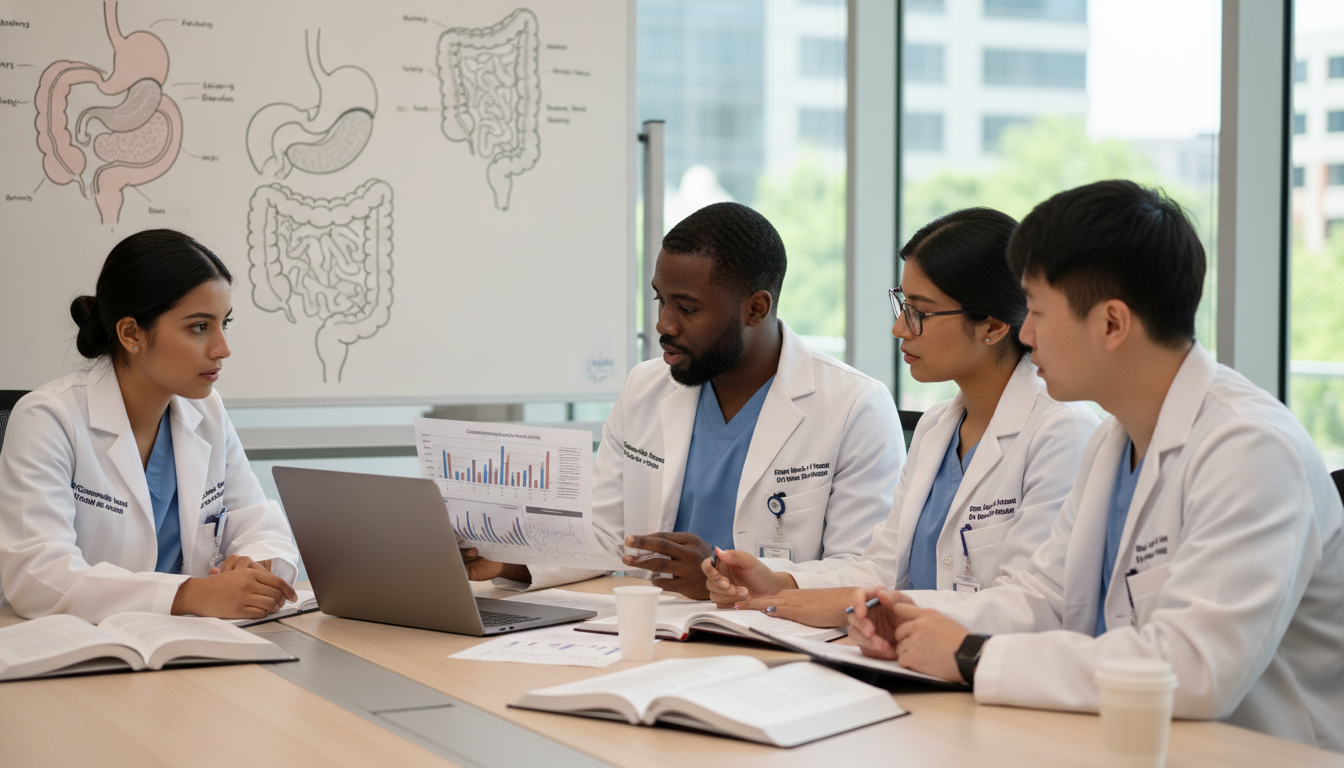
Why Research During Residency Matters for US Citizen IMG in Pulmonary & Critical Care
As a US citizen IMG or American studying abroad who wants a pulm crit fellowship (PCCM fellowship), research during residency can dramatically change your trajectory. For many program directors, your research record is one of the clearest signals that:
- You can handle the academic side of pulmonary & critical care medicine
- You are capable of independent learning and scholarly work
- You are serious about a competitive fellowship path
Because US citizen IMG applicants are often viewed through a more skeptical lens in competitive subspecialties, resident research projects can help counter concerns about training background and demonstrate you belong in an academic environment.
Pulmonary and critical care is inherently research-heavy: ventilator strategies, ARDS phenotypes, sepsis bundles, ECMO outcomes, post-ICU syndrome, and longitudinal COPD and ILD care all rely on a strong evidence base. Showing that you can contribute to that evidence—at any level—makes you more attractive to an academic residency track, PCCM fellowship, and eventually an academic career.
In this guide, you’ll learn how to:
- Choose the right residency environment as a US citizen IMG targeting PCCM
- Find realistic, high-yield resident research projects even at less research-heavy programs
- Build a track record that fellowship committees respect
- Manage time and avoid common research pitfalls during residency
- Leverage your work for an academic residency track or PCCM fellowship application
Choosing a Residency That Supports Research as a US Citizen IMG
Even if you’ve already matched, understanding what to look for (and what you might be missing) will help you maximize your opportunities. If you’re still applying, these factors can help you prioritize programs.
1. Signal: Does the Program Have an Academic Culture?
For a US citizen IMG interested in a pulm crit fellowship, programs differ greatly in how they support research during residency. Look for concrete indicators of an academic environment:
- Affiliation with a medical school (especially one with a PCCM division)
- In-house PCCM fellowship with core faculty on site
- Protected research time listed in the curriculum (even 2–4 weeks is valuable)
- Research track or academic residency track for interested residents
- Regular scholarly conferences (journal club, morbidity & mortality, research conferences)
If you’re already in a smaller community program without these features, it’s still possible to do meaningful research, but you may need to:
- Collaborate with outside institutions
- Focus more on quality improvement (QI) and retrospective chart reviews
- Be proactive about identifying mentors beyond your home program
2. Specific to Pulmonary & Critical Care: Is There PCCM Faculty Who Publish?
For PCCM-focused research during residency, faculty availability matters more than the presence of a formal research office. Ask or investigate:
- How many full-time PCCM attendings does the program have?
- Do any of them have recent PubMed-indexed publications?
- Are they involved in clinical trials, registries, or multicenter studies?
- Does the ICU or pulmonary clinic participate in national databases (e.g., ARDS or sepsis registries)?
Programs where ICU and pulmonary attendings are publishing—even a few papers a year—usually have accessible projects that a motivated US citizen IMG can join.
3. Resident Track Options: Academic Residency Track vs Traditional Track
Some internal medicine residencies offer an academic residency track, research pathway, or “physician-scientist” track. For US citizen IMG residents:
- These tracks often come with guaranteed research blocks each year
- You may receive structured mentorship and research curriculum
- Participation signals to fellowship programs that you have intentionally pursued scholarship
Even if you’re not formally in the track, you can often access similar opportunities by aligning with the same mentors and conferences that track residents use.

Types of Research Projects That Fit a Busy Resident Schedule
Research during residency must be realistic. Pulmonary and critical care rotations are intense, and as a US citizen IMG you’re often juggling clinical performance, exam prep, and visa/credential logistics (if relevant for foreign schools). The key is to choose projects where the scope matches your time and experience.
1. Retrospective Chart Reviews (High Yield, Feasible)
Retrospective chart reviews are the workhorse of resident research projects. In PCCM, examples include:
- Outcomes of patients with ARDS treated with prone positioning in your ICU
- Association between early mobilization in the ICU and length of stay
- Predictors of readmission for COPD exacerbations after discharge from your hospital
- Use and outcomes of high-flow nasal cannula versus non-invasive ventilation in hypoxemic respiratory failure
Why they work well:
- Use existing data in the EMR
- Can be done with limited funding
- Usually feasible within a 6–18 month window
- Often acceptable as abstracts/posters at major meetings (ATS, CHEST, SCCM)
2. Quality Improvement (QI) Projects with Scholarly Output
QI projects sit at the intersection of clinical care and scholarship. Many residencies require at least one QI project; the difference is whether you package it for presentation or publication.
PCCM-focused QI project ideas:
- Improving ICU ventilator bundle compliance (head-of-bed elevation, sedation vacation)
- Increasing appropriate VTE prophylaxis among ICU patients
- Reducing unnecessary chest X-rays in stable mechanically ventilated patients
- Standardizing COPD discharge education to reduce 30-day readmissions
For a QI project to count as meaningful research during residency:
- Use formal methodology (e.g., PDSA cycles, run charts, before-and-after comparison)
- Define clear pre-specified outcomes
- Aim to present at a regional or national conference
- Work with someone experienced in QI scholarship
3. Case Reports and Case Series: A Good Starting Point
Case reports alone won’t get you a competitive PCCM fellowship, but they are:
- A great on-ramp to basic research skills: literature review, writing, and submission
- Useful if you’re in a low-volume or less academic setting
- Often the first publication type for US citizen IMG trainees
Target unusual or educational cases:
- Rare interstitial lung disease presentations
- Uncommon ICU complications
- Challenging ventilator management scenarios
Aim to:
- Present as a case at local or regional meetings
- Publish in case report journals or society-sponsored case venues (CHEST, ATS)
4. Multicenter Studies and Registries (High Impact, Needs Strong Mentor)
If your program participates in a multicenter ICU registry or pulmonary trial:
- Ask if you can help with data collection, database cleaning, or sub-analyses
- These collaborations can lead to co-authorship on larger papers
- Even if your role seems small, multicenter research looks strong on your CV
For example, a multicenter project on:
- Outcomes of COVID-19 ARDS patients across ICUs
- ECMO candidacy and resource allocation during a surge
- Implementation of sepsis bundles and mortality trends
As a US citizen IMG, being able to show involvement in serious, collaborative work helps counter any bias about training background.
5. Basic Science or Translational Research (Selective, Time-Intensive)
Basic science is harder to integrate into residency, especially without a prior PhD or bench experience. But it can be valuable if:
- You are at a research-heavy academic center
- You have a clear interest in becoming a physician-scientist
- You’re considering an academic residency track or later NIH funding
Typical PCCM-related topics:
- Inflammatory pathways in ARDS
- Molecular mechanisms of pulmonary fibrosis
- Biological markers of ICU-related delirium and brain injury
For most US citizen IMG residents, a well-executed clinical or QI project will carry more practical weight than an overly ambitious bench project that never finishes.
How to Actually Get a Project: Step-by-Step for US Citizen IMG Residents
Knowing the types of resident research projects is not enough—you need an actionable plan. As a US citizen IMG, you may feel less plugged into the informal networks that domestic graduates lean on. Use a systematic approach.
Step 1: Clarify Your Goals Early (Ideally PGY‑1)
Ask yourself:
- Do I want an academic PCCM fellowship, community PCCM, or generalist path with ICU work?
- Am I aiming for R01-level research eventually, or strong clinical scholarship with some publications?
- How many first-author projects can I realistically aim for during residency? (Common target: 1–2 solid projects + a few smaller contributions)
Write down a simple 2–3 sentence personal goal statement. Use this when talking to potential mentors. It signals seriousness and direction.
Step 2: Identify Potential Mentors in Pulmonary & Critical Care
Effective mentorship is the most important factor in successful research during residency.
Look for:
- PCCM faculty who have recently published in areas that interest you
- Attendings who seem engaged in teaching and approachable during ICU or pulmonary rotations
- Faculty listed as “Research Director,” “Director of Quality Improvement,” or “Scholarly Activity Coordinator”
As a US citizen IMG, you’ll benefit from mentors who also understand or support your fellowship application strategy. Don’t restrict yourself to just one mentor—many successful residents have a primary research mentor plus 1–2 secondary topic or methods mentors.
Step 3: Ask for Specific, Bounded Opportunities
Instead of saying, “I want to do research,” try:
- “I’m a PGY‑1 really interested in a future PCCM fellowship. I’d like to get involved in a small project first, maybe a retrospective ICU study or QI project. Do you have any ongoing work where I could help with data collection or chart review?”
Or:
- “I read your paper on ARDS phenotypes and would love to learn how you designed that study. Are there any follow-ups or related questions a resident could help explore?”
This shows that you understand what is realistic for resident research projects and makes it easier for the mentor to plug you into something active.
Step 4: Protect Time and Establish a Structure
Many resident research projects fail not because of bad ideas, but because of poor structure and time management.
Strategies that work:
- Schedule recurring research time:
- Example: Every Thursday afternoon post-call is your standing “research block” (even if it’s only 2–3 hours).
- Use project management tools:
- Simple shared documents (Google Docs, OneNote) and a task list can help keep you accountable.
- Break the project into milestones:
- IRB submission
- Data extraction
- Analysis
- Abstract submission
- Manuscript drafting
If your residency has elective time, aim for at least 2–4 weeks of research elective by PGY‑2 or early PGY‑3. For US citizen IMG applicants to PCCM fellowship, having a dedicated research block on your CV plus concrete product (poster, paper) is a strong combination.
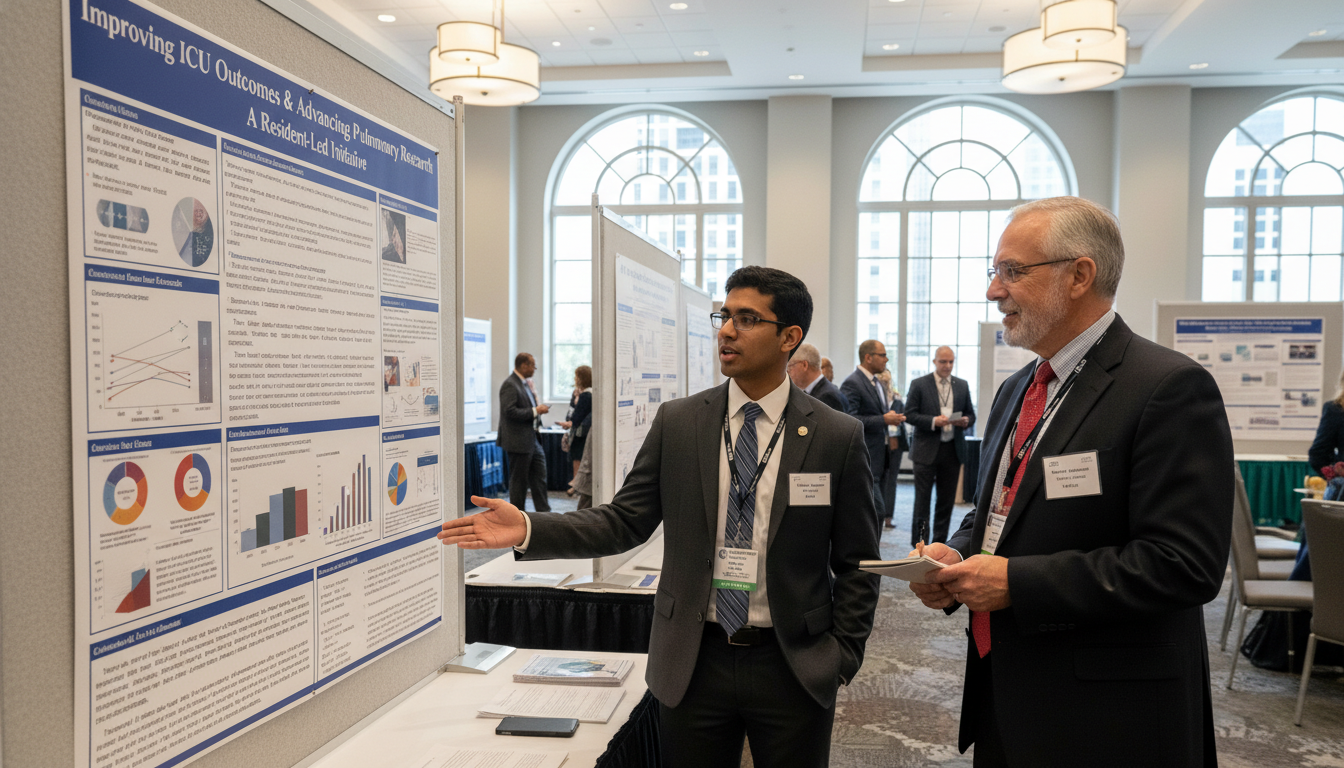
Turning Projects into Fellowships: How PCCM Programs Evaluate Your Research
Your goal is not just to “do research” during residency, but to build a record that convinces PCCM fellowship directors you’re ready for an academic, research-engaged career.
How Fellowship Selection Committees Think About Resident Research
Programs vary, but common questions include:
- Has this applicant completed at least one meaningful project?
- Do they show follow-through (not just “in progress” forever)?
- Is there evidence of first-author work or clear leadership on at least one project?
- Are they able to present and explain their methods and results?
- Is there alignment between the applicant’s stated interests and their CV?
For a US citizen IMG, research productivity helps in two ways:
- Objective evidence of academic performance that doesn’t depend on medical school pedigree
- Signals that you can navigate US systems, IRBs, and multicenter collaborations successfully
What “Counts” on Your Application
Strong signals:
- First-author peer-reviewed publication in a pulmonary, critical care, or general medicine journal
- First-author poster or oral presentation at ATS, CHEST, SCCM, or a major regional meeting
- Co-authorship on multicenter or high-impact studies, even if not first-author
- Completion of a formal research or academic residency track with defined outputs
Medium signals (helpful but not sufficient alone):
- Multiple case reports or small case series
- Local institutional posters or internal presentations only
- Projects listed as “in progress” without submitted abstracts or manuscripts
Packaging Your Research Story
During fellowship interviews, you will almost certainly be asked:
- “Tell me about your research.”
- “What was your role in this project?”
- “If you had more time, how would you improve or expand this study?”
Prepare concise, 1–2 minute explanations for your main project(s) that include:
- The clinical question (e.g., “We wanted to know whether early mobilization in our ICU impacted hospital length of stay and ventilator days.”)
- The study design (retrospective cohort, QI before-and-after, etc.)
- Your personal contribution (e.g., IRB submission, data collection, analysis, writing)
- The key findings and implications
For US citizen IMG applicants, being able to clearly articulate these points—without jargon, but with conceptual understanding—demonstrates the kind of academic maturity fellowship programs need.
Common Pitfalls and How to Avoid Them as a US Citizen IMG
Even highly motivated residents run into predictable problems. Being aware of them can save you months of frustration.
Pitfall 1: Taking on Too Much, Too Soon
Many PGY‑1 residents overcommit:
- 3–4 projects simultaneously
- Projects dependent on data or collaborators at other institutions
- Complex study designs requiring advanced statistics, with no biostatistics support
Solution:
- Start with one primary project that is clearly feasible within 12–18 months
- Add smaller, supporting roles (e.g., co-author on someone else’s project) later
- Ensure your mentor agrees the scope is realistic for a resident
Pitfall 2: No Clear Mentor or Ownership
Projects fail when:
- You wait for someone to “give you” a project but there’s no clear leader
- Your role is vague (e.g., “help with whatever is needed”)
- There’s no timeline or regular check-in
Solution:
- Before starting, clarify:
- Who is the principal investigator / project lead?
- What is your specific role (e.g., 200-chart data extraction, first draft of introduction)?
- How often will you meet (e.g., monthly progress reviews)?
Pitfall 3: Poor Documentation of Your Work
As a busy resident, you may forget details by the time you’re writing the abstract or discussing the project on fellowship interviews.
Solution:
- Keep a running project notebook or digital log:
- Search terms used for literature review
- Inclusion/exclusion criteria you applied
- Key decisions made during team meetings
- Preliminary results and versions
- Save versions of the dataset, code (if any), and drafts with dates
Pitfall 4: Ignoring “Academic Branding”
Your research is one of the key tools to define your academic identity.
For a pulm crit–bound US citizen IMG, try to keep at least some coherence:
- If possible, cluster projects around broadly related themes:
- ARDS and ventilator management
- COPD/asthma and chronic disease management
- ICU outcomes, sedation, delirium, or post-ICU syndrome
You don’t need all your research during residency in exactly one niche, but some thematic overlap helps you tell a clear story: “I’m developing into a clinician-scholar interested in X.”
Practical Timeline: From PGY‑1 to Fellowship Application
Here is a sample timeline for a US citizen IMG aiming for a competitive PCCM fellowship with meaningful research during residency.
PGY‑1
- First 3–6 months
- Explore: talk to 2–3 PCCM or research-oriented faculty
- Attend research or QI meetings; observe projects in motion
- Complete basic online research ethics (CITI) training, if required
- 6–12 months
- Commit to one feasible project with a clear mentor
- Aim to submit IRB by end of PGY‑1
- Start data collection or QI implementation if approved
PGY‑2
- Early PGY‑2
- Continue data collection and begin preliminary analysis
- Schedule a research elective block if possible
- Draft an abstract for a regional or national conference
- Late PGY‑2
- Present a poster or oral presentation at a conference
- Begin drafting the manuscript
- If interested, formally join an academic residency track if your program has one
- Consider taking on a second, smaller project or case series
PGY‑3 (Before Fellowship Application Submission)
- Early PGY‑3
- Submit at least one manuscript; have at least 1–2 accepted abstracts or posters
- Ensure your mentor is prepared to write a strong letter detailing your research contributions
- Update your CV to clearly list: role, conference name, and publication status
- Fellowship Application Season
- Be prepared to discuss each project in depth
- Highlight how your research during residency aligns with your future goals in pulmonary & critical care medicine
For many US citizen IMG applicants, following this timeline leads to at least:
- 1–2 first-author posters
- 1 manuscript (submitted or accepted)
- 1–3 additional co-authorships or case reports
This is extremely competitive for PCCM fellowship applications.
FAQs: Research During Residency for US Citizen IMG in Pulmonary & Critical Care
1. I’m an American studying abroad and matched at a community program with limited research. Can I still be competitive for PCCM fellowship?
Yes, but you must be intentional:
- Focus on feasible projects: retrospective chart reviews or QI projects on ICU and pulmonary topics
- Seek external mentors via email—consider contacting faculty at nearby academic centers, especially if your hospital refers patients to them
- Present at regional meetings or specialty conferences (CHEST, ATS, SCCM) to show engagement with the specialty
- Document strong clinical evaluations and letters to complement your research efforts
Fellowship programs recognize variability in residency resources; they care more about how effectively you used what was available.
2. Does the type of research matter more than the number of publications?
Both matter, but for a PCCM fellowship:
- Quality and depth matter more than sheer quantity
- One or two well-designed PCCM-relevant projects where you played a major role—especially if published or presented nationally—carry more weight than many superficial case reports
- However, a baseline of multiple scholarly activities (e.g., posters, QI projects, case reports) shows consistent engagement
Aim for a mix: 1–2 substantial projects plus several smaller contributions.
3. I started research late in PGY‑2. Is it too late to make an impact?
It’s not too late, but you need a focused strategy:
- Choose a project with a shorter timeline—retrospective or QI, not long prospective cohorts
- Aim for at least an abstract or poster before you apply for fellowship
- Show strong momentum: IRB approved, data collected, analysis underway, manuscript draft in progress
- Have your mentor explicitly mention your trajectory and rapid progress in their letter
Selection committees understand that some trainees discover their interest in PCCM later; evidence of fast and focused engagement still helps.
4. Do I need formal biostatistics training to do resident research projects?
No, but basic understanding helps:
- Most institutions have biostatistics support for residents; ask your mentor or GME office
- For simpler projects, you can use basic statistical approaches (t-tests, chi-square, simple regression) with guidance
- Learn enough to explain:
- Why you chose the design
- What your primary outcome was
- What your main statistical test measured
If you are aiming for a long-term academic career, consider short courses or online modules in clinical research methods or biostatistics during residency.
By choosing realistic projects, finding the right mentors, and aligning your work with your long-term PCCM goals, you can turn research during residency into a powerful advantage—as a US citizen IMG, it may be one of your strongest tools to secure a competitive pulmonary and critical care fellowship and build an academically engaged career.