Why Research During Residency Matters for Caribbean IMGs in Medical Genetics
For a Caribbean IMG entering medical genetics, research during residency is not optional “extra credit”—it is one of the most powerful ways to differentiate yourself, build a sustainable academic career, and strengthen your long‑term competitiveness in both clinical and research‑oriented roles.
As a Caribbean medical school graduate, you may already be familiar with concerns about bias, questions about the rigor of Caribbean medical school residency outcomes, and the need to “over‑perform” to match into competitive programs. The same realities apply after you match. Research productivity during residency can:
- Build your credibility as an academic physician, especially if you are a graduate of a Caribbean program such as SGU, Ross, or AUC.
- Open doors to subspecialty training (e.g., biochemical genetics, cancer genetics, translational genomics).
- Position you for an academic residency track or junior faculty position.
- Strengthen your profile if you later pursue a medical genetics residency match at top institutions for fellowship, or consider physician‑scientist pathways.
This article focuses on how Caribbean IMGs in medical genetics can strategically integrate research during residency—even with busy schedules, fewer built‑in connections, and sometimes less initial institutional support.
Understanding the Landscape: Research in Medical Genetics Residency
Medical genetics residency is inherently research‑rich. The field sits at the intersection of clinical care, molecular biology, genomics, bioinformatics, and public health. Program structures vary, but most medical genetics residencies (whether categorical or combined, such as pediatrics–genetics or internal medicine–genetics) offer multiple entry points for scholarship.
Types of Research Common in Medical Genetics
Clinical Research
- Retrospective chart reviews (e.g., outcomes of patients with specific chromosomal microdeletions).
- Prospective cohort studies (e.g., follow‑up of patients starting a new metabolic therapy).
- Natural history studies of rare genetic diseases.
- Diagnostic yield studies after the introduction of exome or genome sequencing.
Translational / Bench Research
- Functional characterization of variants of uncertain significance (VUS) in model systems.
- Gene expression, proteomics, or metabolomics projects.
- Development or validation of new molecular assays.
Bioinformatics / Data‑Driven Projects
- Analyzing large genomic datasets.
- Studying variant classification trends and their impact on clinical decision‑making.
- Evaluating clinical implementation of polygenic risk scores.
Educational Research
- Evaluating a new genetics curriculum for residents or medical students.
- Studying patient understanding and satisfaction with genetic counseling.
- Assessing the impact of telehealth genetics clinics.
Quality Improvement (QI) and Implementation Science
- Streamlining genetic test ordering processes.
- Reducing turnaround time for genetic test results.
- Increasing referral rates for appropriate genetic evaluations (e.g., hereditary cancer, cardiomyopathy).
For a Caribbean IMG, clinical, QI, and educational projects are often the most accessible entry points, especially early in residency, and they can be just as impactful for your CV if designed and executed well.
How Programs View Resident Research
In most academic centers, the expectation is that genetics residents will engage in scholarly work that leads to:
- At least one poster or oral presentation at a regional or national meeting (e.g., ACMG, ASHG).
- A publication in a peer‑reviewed journal, case report, or review article.
- Participation in institutional projects (e.g., resident research projects in genomics).
Programs with strong records in SGU residency match and other Caribbean medical school residency outcomes often explicitly highlight their research infrastructure. When comparing programs, look for:
- Protected research time during PGY‑3/PGY‑4.
- Access to a genomics core or bioinformatics support.
- Track records of residents presenting at conferences.
- Faculty with active grants (NIH, foundation funding).

Getting Started: Laying the Foundation in PGY‑1 and Early PGY‑2
Your first year (and early second year) sets the tone for your entire residency. If you wait until your final year to “start thinking about research,” you will miss out on many opportunities.
1. Clarify Your Career Goals Early
Ask yourself:
- Do I see myself in academic medicine, with an academic residency track or future faculty role?
- Am I drawn to bench or translational science, or more to clinical and educational scholarship?
- Do I want to pursue a physician‑scientist pathway or competitive post‑residency fellowships?
For a Caribbean IMG in medical genetics, clarifying this early helps you:
- Choose mentors aligned with your goals.
- Select projects appropriate to your time and skill set.
- Decide how heavily to invest in research vs. other scholarly activities.
2. Map the Research Ecosystem at Your Institution
In your first 3–6 months, do a “research reconnaissance”:
- Ask your Program Director (PD):
- “Which faculty are most involved in genetics research?”
- “Which residents recently had strong research productivity? What did they work on?”
- Identify key departments and centers:
- Clinical genetics division, biochemical genetics lab, molecular diagnostic lab.
- Genomics or precision medicine institute.
- Cancer center, neurology, cardiology, or pediatrics divisions with genetics overlap.
- Look for structured resident research programs:
- Resident research seminars.
- Protected research blocks.
- Institutional grant programs for resident research projects.
Create a simple list of 3–5 potential mentors and 2–3 labs or clinical research teams that align with your interests.
3. Start Small and Feasible
Your first project does not need to be a multi‑year, grant‑funded study. In fact, as a Caribbean IMG who may need to first build trust and familiarity with the local system, a small, well‑executed project is often smarter.
Early possibilities:
- Case report or short series:
Example: A rare chromosomal rearrangement with novel phenotype seen in your clinic.
Advantage: Fast timeline, low barrier, good first publication. - Chart review with a narrow question:
Example: “Characteristics and outcomes of patients referred for evaluation of Marfan syndrome over the last 5 years.”
Advantage: Doable with limited resources; good introduction to study design and IRB. - Educational or QI project:
Example: Evaluate the effect of a new genetics referral checklist for pediatricians on appropriate referrals.
These early wins build confidence and credibility, helping you secure more ambitious projects later.
Designing and Executing High‑Impact Resident Research Projects
Once you’ve oriented yourself and built relationships, aim for one or two substantial resident research projects that can yield publications and presentations.
1. Choosing the Right Project: Impact vs. Feasibility
Use a simple 2x2 framework:
- High impact / high feasibility: Ideal.
- High impact / low feasibility: Good to collaborate on, but not as your primary first‑author project.
- Low impact / high feasibility: Acceptable if it leads to quick output early in residency.
- Low impact / low feasibility: Avoid.
For medical genetics residents, examples of high‑impact / high‑feasibility resident research projects include:
- Diagnostic Yield Studies
- “Diagnostic yield of exome sequencing in children with unexplained developmental delay at our institution.”
- Potential output: Poster at ACMG, manuscript in a clinical genetics journal.
- Variant Reclassification Impact Studies
- “Clinical impact of VUS reclassification in cardiomyopathy genes over 5 years.”
- Potential output: High relevance to clinical practice and guidelines.
- Implementation of New Genetic Testing Pathways
- “Effect of implementing a reflex gene panel for hereditary cancer risk in the oncology clinic.”
2. Building a Strong Methodology (Even Without a PhD)
You don’t need advanced biostatistics training to contribute meaningfully, but you must understand basics:
- Study Design: Are you doing retrospective, prospective, cross‑sectional, or case‑control work?
- Primary Outcome: What exactly are you measuring (e.g., diagnostic yield, time to diagnosis, number of clinic visits avoided)?
- Inclusion/Exclusion Criteria: Be precise to avoid bias and confusion.
- Data Sources: EMR, lab databases, registries, survey responses.
To strengthen your skills:
- Attend your institution’s clinical research workshops.
- Use free resources like the NIH Clinical Research Training materials.
- Partner with a biostatistician early, especially for anything beyond descriptive statistics.
3. Understanding IRB and Regulatory Requirements
Every research during residency project that involves patient data will intersect with your institution’s Institutional Review Board (IRB).
Key principles:
- Case reports: Often exempt if limited to 1–3 cases and non‑generalizable, but policies vary—confirm locally.
- Retrospective chart reviews: Almost always require at least expedited review.
- Prospective trials or interventions: Require full IRB review.
As a Caribbean IMG, showing that you handle IRB submissions professionally and efficiently builds trust:
- Use templates from previous resident research projects.
- Ask co‑residents for sample approved protocols.
- Leverage research coordinators when available.
4. Time Management: Protecting Your Research Time
Medical genetics residency can be intense—clinic, inpatient consults, call, multidisciplinary meetings—so structured time management is essential.
Practical strategies:
- Negotiate protected research blocks with your PD (e.g., 4–8 weeks per year).
- Block off 2–3 hours per week consistently (e.g., Friday afternoons) for data analysis or writing.
- Break projects into micro‑tasks:
- This week: finish IRB draft.
- Next week: finalize data abstraction form.
- Following week: pilot test on 10 charts.
Use simple tools like Trello, Notion, or even a spreadsheet to track tasks, deadlines, and co‑author responsibilities.
Maximizing Visibility: Presentations, Publications, and Networking
Publishing and presenting your work is where research during residency converts into long‑term career value.
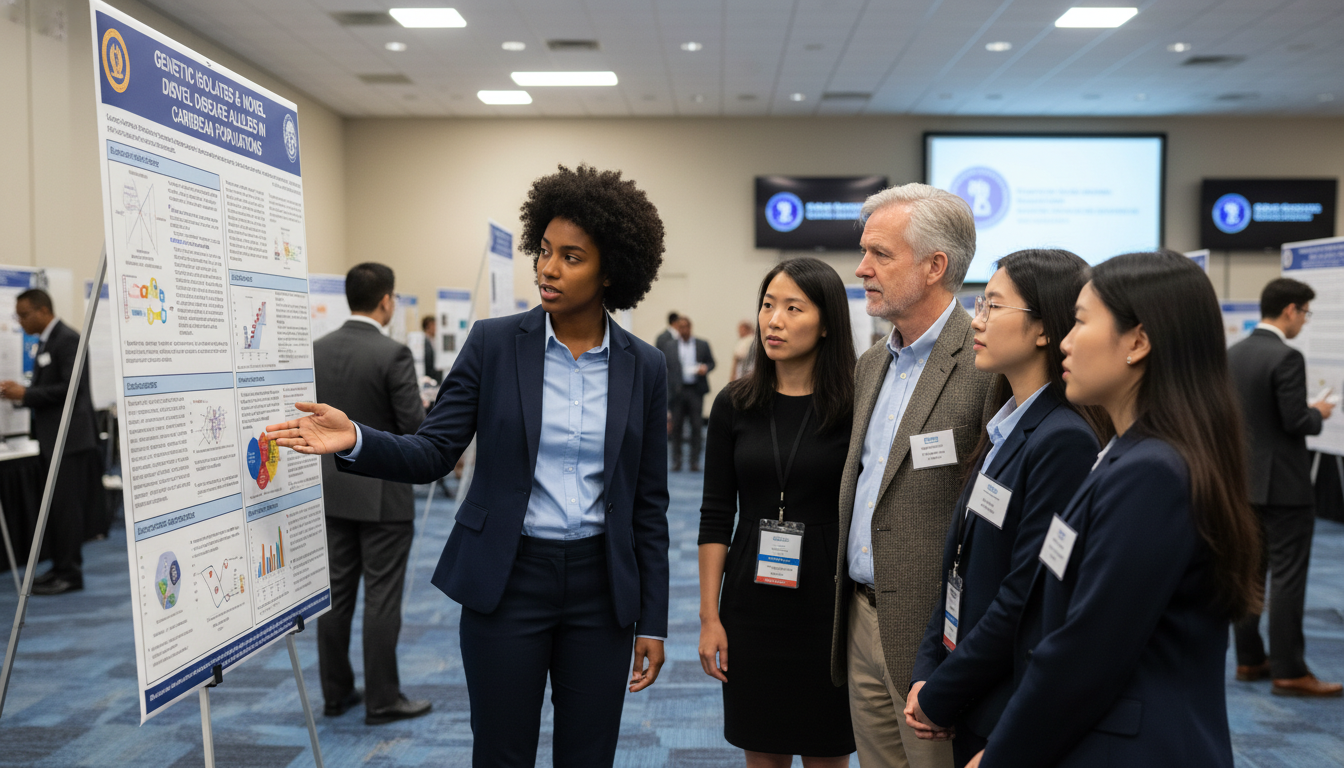
1. Aim for at Least One National or International Presentation
For medical genetics, important venues include:
- American College of Medical Genetics and Genomics (ACMG) Annual Meeting
- American Society of Human Genetics (ASHG)
- Society for Inherited Metabolic Disorders (SIMD)
- Relevant subspecialty conferences (cardiology, oncology, neurology, pediatrics with genetics sessions)
Benefits for a Caribbean IMG:
- Demonstrates you can compete on a national stage despite having a Caribbean medical school background.
- Provides networking opportunities with leaders who may later support your fellowship or faculty applications.
- Strengthens your CV beyond basic clinical performance.
Actionable steps:
- Ask your mentor for the abstract deadlines early each year.
- Plan your project timelines backward from those deadlines.
- Even preliminary data is often enough for a poster abstract.
2. Convert Projects Into Manuscripts
The SGU residency match and similar Caribbean medical school residency outcomes consistently show that residents with peer‑reviewed publications are more likely to secure strong academic positions and fellowships. For you, this is especially crucial in a niche field like medical genetics.
To increase your publication chances:
- Draft the manuscript structure early (Introduction, Methods, Results, Discussion).
- Use your abstract and poster text as a foundation.
- Start with realistic journals:
- Specialty journals in genetics or metabolism.
- Clinical genetics journals with shorter format options (Brief Reports, Clinical Communications).
If English is not your first language—or if you’re concerned about how your Caribbean medical school writing training will be perceived—ask:
- Your mentor to review for clarity.
- Your institution’s writing center or a trusted senior resident for editing.
3. Networking Strategically as a Caribbean IMG
You may feel less connected than US grads, but research gives you a bridge.
Tactical networking:
- Introduce yourself to authors of similar work at conferences.
- Join ACMG and ASHG committees or trainee groups.
- Ask your mentor for email introductions to collaborators at other institutions.
- If you are planning a future genetics match for fellowship or academic positions at another institution, let mentors know; they may advocate for you.
Resident Research Projects and the Academic Residency Track: Building an Academic Career
For many Caribbean IMGs in medical genetics, research is a primary pathway to academic residency track positions and long‑term careers in teaching hospitals or research institutes.
1. What Is an Academic Residency Track?
An academic residency track may include:
- Increased emphasis on research and teaching.
- Additional protected time for resident research projects.
- Formal mentorship committees.
- Opportunities to co‑teach genetics to medical students or other residents.
Some programs have explicit academic tracks; others informally support residents with strong scholarly interests. Either way, your research productivity is your “application” for these opportunities.
2. Aligning Research During Residency With Future Goals
Possible directions:
- Physician‑Scientist
- Emphasis: translational or bench research, grants, NIH K‑type awards.
- Strategy: Seek out PIs with active labs; commit to multi‑year projects; consider additional research years or combined training pathways.
- Clinical Academic Geneticist
- Emphasis: patient care, clinical research, education, guidelines.
- Strategy: Focus on clinical outcomes studies, guideline development projects, educational research.
- Genomics / Bioinformatics Specialist
- Emphasis: data science, variant interpretation, informatics tools.
- Strategy: Collaborate with bioinformatics teams; learn R or Python; work on database or algorithm‑based projects.
3. Overcoming Unique Challenges as a Caribbean IMG
You may face additional hurdles:
- Implicit bias about your training:
Research productivity demonstrates rigor, persistence, and intellectual curiosity—qualities that quickly counter shallow assumptions about Caribbean graduates. - Limited pre‑existing network:
Conferences, multi‑institutional collaborations, and co‑authorships build a network that transcends where you went to medical school. - Visa or funding issues (if applicable):
Early research engagement can help you build a record that supports future visa petitions (e.g., O‑1, EB‑1) if you pursue academic positions in the U.S.
Practical Examples: Research Project Ideas Tailored to Caribbean IMGs in Medical Genetics
Here are concrete project concepts that balance feasibility and impact, suitable for a resident new to research but motivated to build a strong record.
Example 1: Diagnostic Yield of Exome Sequencing in a Diverse Population
- Question: What is the diagnostic yield of exome sequencing in neurodevelopmental disorders in a racially and ethnically diverse cohort?
- Why it fits you:
Many Caribbean IMGs bring a deep understanding of diversity and underrepresented populations. You can leverage this perspective to study disparities in genomics. - Outputs:
- Abstract to ACMG or ASHG.
- Manuscript in a clinical genetics journal.
- Bonus: Opportunity to analyze variants of uncertain significance (VUS) patterns by ancestry.
Example 2: Quality Improvement in Genetic Test Ordering for Inpatient Consults
- Question: Does introducing a standardized genetic test ordering checklist reduce inappropriate or redundant genetic tests for hospitalized patients?
- Methods:
- Baseline data on inappropriate test orders.
- Implement checklist in consultation workflow.
- Compare outcomes (cost, turnaround time, correct test selection).
- Appeal:
- Very feasible.
- Highlights your ability to improve systems of care.
Example 3: Educational Intervention for Pediatric Residents on Genomic Medicine
- Question: Does a brief, case‑based teaching module improve pediatric residents’ ability to identify patients who need genetics referral?
- Design:
- Pre‑ and post‑intervention surveys and knowledge tests.
- Track change in accuracy of referral decisions.
- Outcome:
- Abstract to an education or pediatrics meeting.
- Potential MedEd publication.
- Relevance:
- Shows your commitment to teaching and educational leadership—important for academic residency track roles.
Frequently Asked Questions (FAQ)
1. As a Caribbean IMG in medical genetics, how early should I start research during residency?
Ideally, begin exploring opportunities within the first 3–6 months of PGY‑1. You don’t need to commit to a major project immediately, but you should:
- Identify potential mentors.
- Attend research meetings or seminars.
- Start a small, feasible project (case report, short chart review, or QI project).
This early action gives you time to develop at least one substantial project that can yield a publication or national presentation before graduation.
2. Will research during residency really help me if I already matched into medical genetics?
Yes. Matching into a medical genetics residency is only the beginning. Research during residency:
- Differentiates you when applying for fellowships, junior faculty, or physician‑scientist roles.
- Strengthens your CV for competitive institutions, especially if you are a Caribbean graduate.
- Facilitates mentorship, networking, and letters of recommendation that can shape your entire career.
Even one or two well‑executed projects can make a meaningful difference.
3. What if my program doesn’t have a strong research culture?
You still have options:
- Seek mentors in other departments (oncology, neurology, pediatrics, cardiology) that intersect with genetics.
- Collaborate remotely with research‑active institutions, especially if a faculty member has cross‑institutional appointments.
- Focus on clinical, QI, or educational projects, which often require fewer institutional resources.
- Use online courses and institutional workshops to build your own research skills.
Caribbean IMGs have successfully produced impactful work from programs with modest infrastructure by being proactive and willing to collaborate widely.
4. I’m interested in research but not in a full physician‑scientist career. How much is “enough”?
For a resident who wants to be primarily a clinician but remain competitive for academic clinical roles:
- Aim for:
- 1–3 posters at national or regional meetings.
- 1–2 peer‑reviewed publications (case reports, clinical studies, or educational research).
- Focus on projects that:
- Directly improve patient care or training in your institution.
- Are realistically completable during residency.
This level of involvement demonstrates scholarly engagement without requiring a full research‑track commitment.
Research during residency is one of the most powerful levers you control as a Caribbean IMG in medical genetics. It validates your clinical insights, amplifies your influence beyond individual patient encounters, and builds a durable professional identity that transcends where you went to medical school. By starting early, choosing feasible and meaningful projects, and sharing your findings widely, you position yourself for an impactful, sustainable career in the rapidly evolving world of genomic medicine.