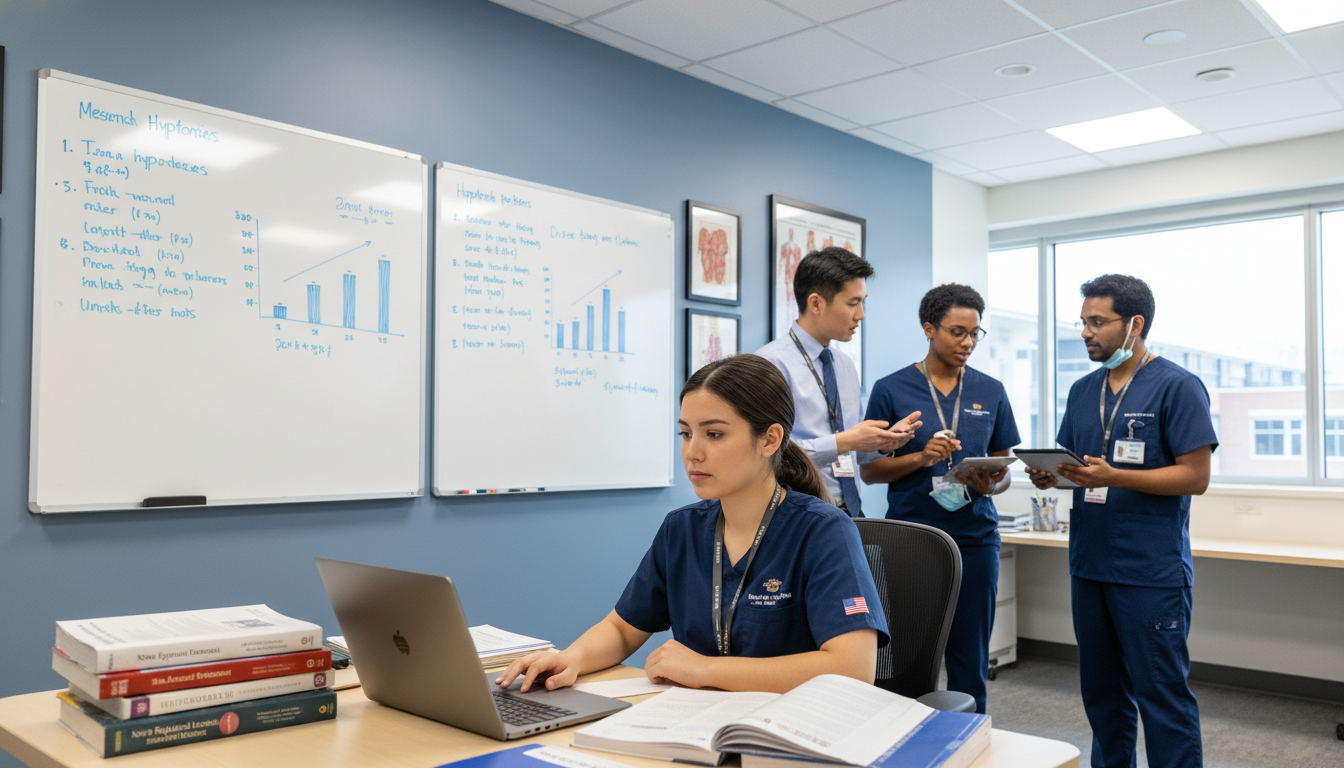
Why Research During a Preliminary Medicine Year Matters for Caribbean IMGs
For a Caribbean medical school graduate pursuing a Preliminary Medicine (prelim IM) year, research can be a powerful differentiator. As an IMG, you are often competing with U.S. graduates for categorical positions in Internal Medicine, Neurology, Anesthesiology, Radiology, PM&R, or other specialties. Demonstrating productivity in resident research projects signals that you can compete academically, handle complex tasks, and contribute beyond direct patient care.
Even if your ultimate specialty is not Internal Medicine, your preliminary medicine year is your U.S. clinical and academic “showcase.” Well-planned research during residency helps in several ways:
- Strengthens applications for categorical positions or advanced specialties after prelim year
- Shows program directors you can think critically and contribute scholarly work
- Compensates, in part, for weaker metrics (older Step scores, attempts, or gaps)
- Positions you for an academic residency track later on
- Builds relationships with faculty who can write strong letters of recommendation
For Caribbean IMG graduates, such as those from SGU, AUA, Ross, Saba, and others, structured research can also complement strong institutional match outcomes. If you’re coming from a school like SGU, the SGU residency match statistics highlight that research and scholarly activity correlate with more competitive placements—especially for those aiming to transition from a prelim to a categorical or advanced spot.
The challenge is that preliminary medicine year is fast, clinically intense, and often not designed with abundant protected research time. Yet, with early planning and tactical choices, you can still build a meaningful scholarly portfolio.
This guide will walk you through:
- The realities of doing research during a busy prelim IM year
- How to identify and join feasible projects
- Practical strategies to stay productive with limited time
- How to use resident research projects to position yourself for the next match
Understanding Your Prelim IM Year: Constraints and Opportunities
Before designing your research plan, you must be realistic about what a prelim IM year actually looks like for a Caribbean IMG in the U.S.
Typical Clinical Demands
Most preliminary medicine programs share characteristics:
- Heavy inpatient workload: Long days on ward teams, admitting, discharging, and following complex patients
- Frequent call or night float: Rotating nights or 24-hour shifts, especially at community or mid-acuity centers
- Limited autonomy over schedule: Rotations assigned in advance, with vacation distributed across the year
- Administrative learning curve: New EMR systems, hospital policies, U.S. healthcare culture
As a Caribbean IMG, you may also simultaneously be:
- Navigating visa requirements (J-1/H-1B)
- Adjusting to a new city, new healthcare system, and potentially cultural differences
- Preparing for future specialty applications (letters, ERAS personal statement, interviews)
This is why you can’t rely on “I’ll just do research in my free time” without a structured plan. You must match your research during residency ambitions to the time and resources you actually have.
What “Counts” as Research During Residency?
“Research” is broader than original bench work or large randomized trials. During a prelim year, the most realistic and valuable scholarly work often includes:
- Case reports – Single or small series of interesting patients
- Clinical vignettes/posters – For local or national conferences (ACP, SGIM, specialty societies)
- Retrospective chart review projects – Using existing hospital data on a defined clinical question
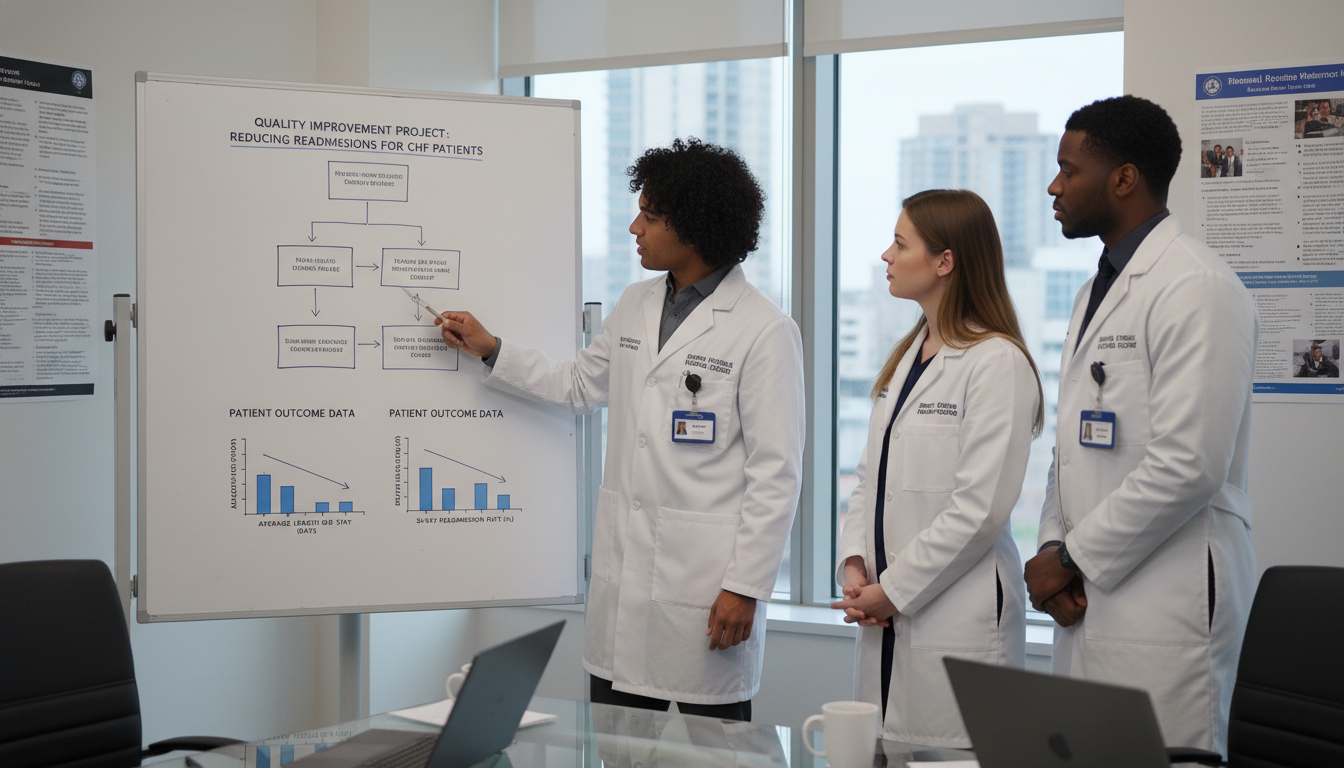
- Quality improvement (QI) projects – Improving patient outcomes, safety, or process efficiency
- Narrative reviews or mini-reviews – Literature-based projects with a focused theme
- Educational projects – Curriculum design, teaching tools, or learning modules
All of these can be listed under “resident research projects” or “scholarly activity” in ERAS and are respected by program directors. Aim for at least one substantial project that generates a:
- Conference poster or oral presentation
- Manuscript draft (ideally submission or acceptance)
- Formal QI project with documented outcomes
How Research Helps You Move Beyond a Preliminary Year
Most Caribbean IMGs in a preliminary medicine slot fall into one of these groups:
Prelim as a bridge to an advanced specialty
- Example: You matched advanced Neurology, Anesthesiology, or Radiology and need a PGY-1 year.
- Research can be IM-related, specialty-related, or both. Specialty-focused work helps you build credibility in your chosen field.
Prelim with goal to convert to categorical Internal Medicine
- Some start as prelim IM to prove themselves and re-apply to IM categoricals.
- For these applicants, IM-focused research and glowing IM letters are critical.
Prelim while re-applying in another specialty (e.g., Dermatology, Ophthalmology)
- Research in your target specialty is ideal, but strong IM scholarly work still shows academic rigor and persistence.
In all scenarios, you can leverage research during residency to demonstrate:
- Academic potential
- Commitment to continuous learning
- Ability to execute projects from idea to completion
Finding and Joining Research Opportunities as a Caribbean IMG
Many Caribbean IMGs start prelim year believing “my program has no research.” Often, the issue is not the absence of projects but the absence of clarity and proactive networking. You’ll need a deliberate strategy, especially if your program is community-based or less academically oriented.
Step 1: Map the Research Landscape Early
During orientation or your first month:
Identify key people:
- Program Director (PD) and Associate PDs
- Chief residents
- Hospitalist leaders
- Subspecialty attendings (cardiology, nephrology, ICU, oncology)
- Any “Director of Research” or QI lead
Ask structured questions:
- “Are there ongoing resident research projects I can join?”
- “Is there a formal QI requirement or track?”
- “Do residents present at ACP, CHEST, ASH, or other societies regularly?”
Review institutional resources:
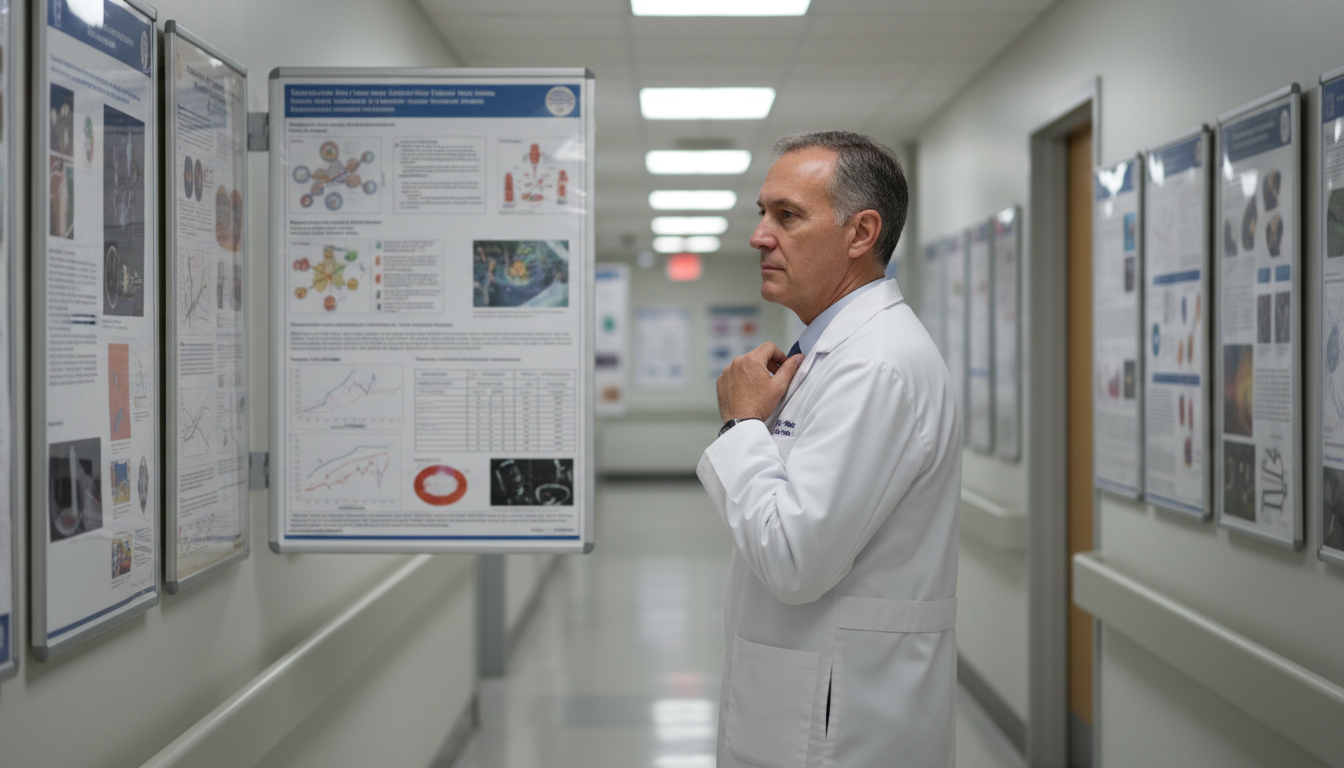
- Past resident posters displayed in hallways or common areas
- Residency website “Scholarly Activity” section
- IRB office or online portal listing active projects
The goal is to identify low-friction entry points rather than starting something entirely from scratch.
Step 2: Leverage Your Caribbean Medical School Network
Caribbean schools—especially the larger ones like SGU—often maintain robust alumni networks. The SGU residency match data and alumni registry can help you find:
- Faculty or fellows at your hospital who are SGU (or other Caribbean) graduates
- Alumni in your target specialty who are research-active at other institutions
Actionable ways to use this:
Email alumni at your institution:
“I’m a PGY-1 prelim IM resident and Caribbean IMG interested in [field]. I’m motivated to engage in research or QI work that can realistically be completed during my prelim year. Would you be open to a short meeting to discuss possible roles on ongoing projects?”Ask your medical school’s career services or research office if they know of alumni-run projects open to current residents.
This can link you to multicenter projects or manuscript collaborations that are more feasible than starting a full IRB project at a small hospital.
Step 3: Choose the Right Type of Project for a Prelim Year
As a prelim resident, prioritize:
- Timeline: You have 12 months, and realistically 6–9 months for a project to show visible output before the next application cycle.
- Feasibility: Minimal new data collection; use existing data, single cases, or institutional QI metrics.
- Mentorship: At least one engaged mentor who responds to emails and can help navigate institutional barriers.
High-yield project types:
Case reports and clinical vignettes
- Ideal when you encounter rare presentations, unusual complications, or teaching cases.
- Fastest route to abstract submission and conference posters.
QI projects
- Align with hospital priorities (sepsis bundles, readmission rates, anticoagulation safety, handoff improvements).
- Often pre-approved or supported by QI committees, making IRB easier or not required.
Retrospective chart reviews
- Moderate level of work but can produce a more robust manuscript.
- Best if you join an existing dataset or ongoing project under a fellow or faculty member.
Review articles or narrative summaries
- Especially useful if your program has limited data infrastructure.
- Requires strong literature synthesis and writing skills.
For a Caribbean IMG in a prelim IM slot, a realistic goal might be:
- 1–2 case reports or vignettes submitted as abstracts
- 1 poster presentation at a regional or national meeting
- 1 QI or retrospective project with at least a draft manuscript
Time Management: Balancing Research with a Busy Prelim IM Schedule
The main barrier is not opportunity—it’s time and fatigue. To make research during residency sustainable, you must systematize your approach.
Build a Personal Research Schedule
- Identify lower-intensity rotations
- Electives (e.g., outpatient, consult services)
- Ambulatory blocks
- Night float (sometimes daytime hours free)
Block these times mentally as your research sprints. Plan in advance to make maximal progress during these windows.
- Set predictable weekly blocks
- 1–2 evenings per week (e.g., Tuesday and Thursday 7–9 pm)
- 2–4 hours on one weekend day
Treat these slots as non-negotiable appointments with yourself. Communicate with your support system so they understand this is “work time,” not optional.
- Use micro-time effectively
- 15–20 minutes between admissions or during downtime: skim articles, update references, outline a section.
- Commutes (if not driving): listen to relevant podcasts or recorded notes.
Practical Workflow for a Busy Resident
For a single project, break your work into manageable chunks:
Week 1–2: Define the question and team
- Refine your research or QI question into something answerable and specific.
- Clarify roles: who handles data, writing, IRB, statistics.
Week 3–6: Data strategy or literature review
- For QI or chart review: identify data elements, create a data collection sheet.
- For reviews or case reports: compile 20–40 core articles and read abstracts first.
Week 6–10: Draft the abstract or outline
- Start with the skeleton: Background, Methods, Results, Conclusion.
- Don’t wait for “perfect” data before writing.
Week 10–16: Submission and revision
- Target a regional or national conference early (know deadlines).
- Factor in mentor review time; send drafts at least 1–2 weeks before deadlines.
This structured approach prevents the common failure mode: scrambling in March to create last-minute research before ERAS in September.
Example: A Realistic Case Report Timeline
Suppose you encounter a rare adverse reaction to a common medication:
- Week 1: Discuss with attending; confirm novelty and appropriateness for a report.
- Week 2: Perform literature search; collect key clinical data with HIPAA compliance.
- Week 3–4: Draft case report and short review of the condition.
- Week 5: Obtain attending’s feedback and finalize.
- Week 6: Submit to a journal or prepare as a poster/ACP vignette submission.
By month 2 of residency, you could already have a submission out—big psychological and CV boost early in the year.

Maximizing Impact: From “Line on CV” to Career-Leveraging Scholar
Simply listing “research” is not enough. For Caribbean IMGs, every project should be leveraged to enhance your trajectory from preliminary medicine year to your ultimate goal.
Aim for Tangible, Presentable Outputs
Try to transform each project into at least one of the following:
Poster or oral presentation at:
- ACP (American College of Physicians)
- SGIM (Society of General Internal Medicine)
- Specialty-specific conferences (ACC, ASN, ATS, AHA, etc.)
Manuscripts:
- Case report in a reputable case journal
- Short communication, letter to the editor, or full-length original article
QI portfolio:
- Documented PDSA (Plan-Do-Study-Act) cycles
- Measurable outcomes (e.g., 15% reduction in medication errors on your unit)
When you later apply for categorical IM or an advanced specialty, these outputs become:
- Evidence of your ability to finish what you start
- Talking points for interviews
- Foundations for a future academic residency track if that interests you
Positioning Yourself for an Academic Residency Track
Even if your prelim program is not highly academic, you can still signal interest in an academic residency track by:
- Working closely with any research-active faculty you can find
- Asking for roles in:
- Writing case-based teaching materials
- Contributing to morbidity & mortality (M&M) conference prep
- Helping collect data for existing faculty protocols
You can frame your interests to mentors:
“I’m a Caribbean IMG in my preliminary medicine year, and I’m interested in a future academic residency track if possible. I’d like to build a portfolio of resident research projects and QI work that demonstrates I can contribute to an academic environment. How would you recommend I prioritize projects this year?”
This clarity helps mentors guide you to projects with the highest academic visibility.
Leveraging Research for the Next Match Cycle
Whether you are transitioning from:
- Prelim IM → Categorical IM
- Prelim IM → Advanced specialty (e.g., Neuro, Rads, Anesthesia)
- Prelim IM → Re-application after a SOAP or unmatched cycle
Use your research strategically in your application:
ERAS Application
- Accurately list roles: co-investigator, first author, data analyst, etc.
- Be honest about status: “submitted,” “under review,” or “accepted.”
- Highlight presentations, not just manuscripts.
Personal Statement
- Integrate a brief story: what you learned from a particular project or QI initiative.
- Emphasize skills: critical thinking, teamwork, systems-based practice.
Letters of Recommendation
- Ask research mentors (especially attendings in your target specialty) to comment on:
- Your intellectual curiosity
- Reliability in completing tasks
- Initiative in driving the project forward
- Ask research mentors (especially attendings in your target specialty) to comment on:
Interviews
- Prepare concise “research stories”:
- Your role and contributions
- What the project showed clinically or operationally
- How this changed your practice or goals
- Prepare concise “research stories”:
This framing transforms your research during residency from a checklist item into compelling evidence that you are ready for the next level.
Common Pitfalls and How Caribbean IMGs Can Avoid Them
Pitfall 1: Overcommitting to Too Many Projects
As a prelim resident, you have finite bandwidth. Taking on four or five projects “to look good” often leads to:
- Missed deadlines
- Frustrated mentors
- No finished products
Solution:
- Commit deeply to 1–2 core projects and see them through.
- Only add new work after you have a submitted abstract or manuscript.
Pitfall 2: Choosing Projects Without Engaged Mentors
A great idea with a disengaged mentor is often worse than a modest project with a responsive, supportive faculty member.
Red flags:
- Mentor frequently cancels meetings
- Long delays in answering emails
- Unclear authorship expectations
Prioritize mentors who:
- Set clear timelines and division of labor
- Have a track record of publishing or presenting with residents
- Show genuine interest in helping a Caribbean IMG advance
Pitfall 3: Ignoring Authorship and Credit Issues
Clarify early:
- Who is first author?
- Who is corresponding author?
- What are expectations for your level of involvement?
As a PGY-1, you may not always be first author, but if you are doing substantial work (data collection, drafting, revising), ask mentors explicitly:
“Given my anticipated contributions, would it be reasonable for me to be considered for first or second authorship?”
This protects your effort and avoids misunderstandings later.
Pitfall 4: Waiting Too Long to Start
If you wait until January or February to begin, you will have little to show by ERAS submission time. For a preliminary medicine year, your timeline is compressed.
Aim for:
- First project idea and mentor relationship: by Month 1–2
- First abstract submission: by Month 4–6
- At least one accepted or presented poster: by the time you’re applying again
Starting early is especially crucial for Caribbean IMGs who may need to overcome biases or highlight growth since graduation.
Frequently Asked Questions (FAQ)
1. I’m in a small community prelim IM program with almost no active research. What can I realistically do?
You can still build a strong scholarly profile:
- Focus on case reports, clinical vignettes, and QI projects tied to your hospital’s immediate needs.
- Seek remote collaborations via your Caribbean medical school alumni network or faculty from your clinical rotations.
- Explore writing narrative reviews or letters to the editor with a motivated mentor, even if data-heavy projects are limited.
The goal is not to replicate a major academic center but to demonstrate scholarly curiosity and follow-through.
2. How important is research compared to clinical performance during my prelim year?
Clinical performance comes first. As a Caribbean IMG, your evaluations, professionalism, and reliability are non-negotiable. However:
- Strong clinical performance + zero scholarly activity can limit your competitiveness for academic or competitive categorical programs.
- Modest but consistent research output (posters, QI, a case report) often distinguishes you from other prelims when PDs choose who to rank for categorical spots.
Ideally, prioritize clinical excellence and layer research on top, in a realistic and sustainable way.
3. Will research during residency help me if I ultimately want a non-academic, community-based career?
Yes, for several reasons:
- Research and QI experience improves your understanding of evidence-based practice and systems-level care.
- Many community programs and hospitals now value physicians who can lead QI projects, standardize protocols, and interpret data.
- Having scholarly activity on your CV can open doors to leadership roles, committee work, and teaching opportunities, even in non-academic settings.
You don’t need to pursue a full academic residency track to benefit from research skills.
4. I’m an SGU graduate with decent scores but no publications from medical school. Is it too late to start during my prelim year?
It’s not too late. In fact, many SGU residency match successes come from graduates who built their research and QI portfolios during residency, not only in medical school.
Focus on:
- 1–2 well-executed projects with clear roles and outputs
- Early engagement with research-active mentors in your institution
- Quick wins like case reports and conference vignettes, while also working on one slightly larger project (QI or chart review)
Program directors care more about what you have done recently than a lack of early publications—especially if your trajectory is clearly upward.
Research during a preliminary medicine year as a Caribbean IMG is challenging but absolutely achievable with structure, realistic goals, and strategic mentorship. Use your prelim IM year not just as a clinical requirement, but as a launchpad: to build your scholarly identity, strengthen your candidacy for the next match, and demonstrate the academic potential that many programs are looking for in their future residents.