Why Research During Residency Matters for Caribbean IMGs in Pathology
For a Caribbean IMG pursuing pathology, research during residency is not just “nice to have”—it can be a strategic differentiator that shapes your entire career. Whether you trained at SGU or another Caribbean medical school, residency is often your most powerful chance to:
- Build a scholarly portfolio that compensates for earlier gaps (limited U.S. research, fewer publications, or a non-U.S. MD).
- Prepare for an academic residency track or future fellowship (hematopathology, cytopathology, molecular pathology, etc.).
- Strengthen your CV for jobs in academia, large hospital systems, or industry.
- Position yourself for leadership roles, quality improvement projects, and teaching opportunities.
Pathology as a specialty is uniquely research-friendly. You routinely handle tissue, data, and diagnostics that are deeply connected to translational science, molecular medicine, and clinical outcomes. If you are a Caribbean IMG, investing in resident research projects can help you stand out from peers who may have trained at more “name-brand” institutions.
In this article, you’ll learn:
- How research fits into a typical pathology residency
- How Caribbean IMGs can leverage their background—especially if you came from a Caribbean medical school residency pipeline like SGU residency match pathways
- Types of research projects realistic for busy residents
- How to get started, find mentorship, and avoid common pitfalls
- How to use research to advance toward an academic residency track or subspecialty fellowship
Understanding the Role of Research in Pathology Residency
Research during residency means structured, scholarly work that aims to generate new knowledge or meaningfully analyze existing data. In pathology, this can range from case reports and morphologic studies to high-level molecular research.
How Research is Built Into Pathology Training
Most pathology residencies (AP/CP or AP-only/CP-only) incorporate research in one of these ways:
- Elective research rotations (often 1–3 months): Time specifically allocated for a research project.
- Longitudinal scholarly projects: 1–3 years working on a topic alongside clinical duties.
- Departmental initiatives: Quality improvement (QI), lab utilization studies, or correlation projects (e.g., pathology–radiology).
- Fellow-linked work: Senior residents collaborating with fellows and faculty in subspecialties.
Program directors—especially at academic centers—pay attention to whether residents:
- Engage with the scientific basis of pathology
- Contribute to the department’s scholarly output
- Enhance the program’s visibility through abstracts and publications
For Caribbean IMGs, robust research during residency can signal that you can perform at the same scholarly level as U.S. MD/DO colleagues.
Why Research Matters More for Caribbean IMGs
If you are a Caribbean graduate from schools such as SGU, AUC, Ross, or others, you may face:
- Extra scrutiny on academic metrics (USMLE scores, clinical evaluations)
- Program directors’ concerns about prior exposure to rigorous research
- More competition for top fellowships and academic jobs
By taking research seriously during residency, you can:
- Offset stigma: Peer-reviewed publications and national presentations demonstrate objective achievement.
- Show progression: Even if your pre-residency research was limited, growth during residency is highly valued.
- Distinguish yourself in the pathology match and beyond: When applying for fellowships, a strong research record can outweigh the disadvantage of being a Caribbean IMG.
If you matched from a Caribbean medical school residency pathway—such as an SGU residency match to a U.S. pathology program—your next step is to leverage residency research to build on that momentum.
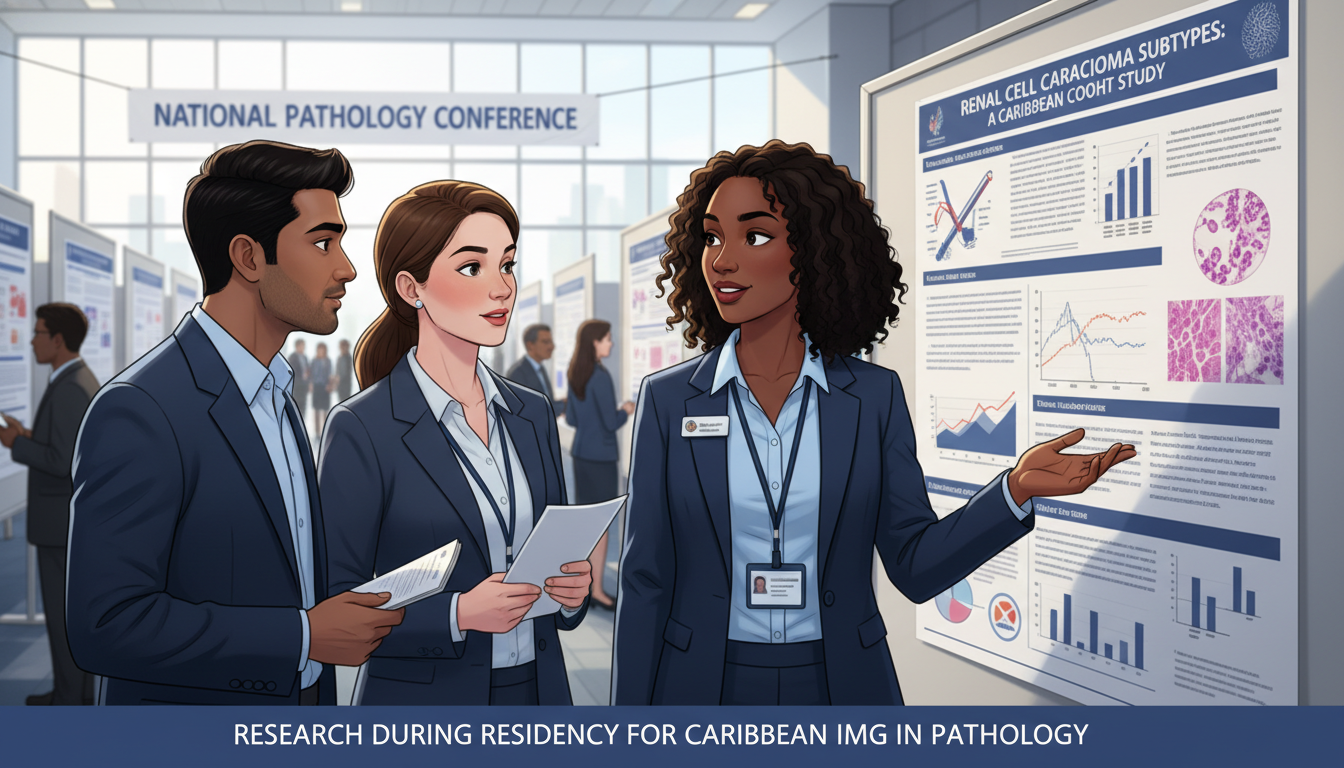
Types of Research Projects Pathology Residents Can Realistically Do
You don’t need a PhD or a full-time lab to do meaningful research during residency. The key is to choose projects that are:
- Feasible within your schedule
- Supported by available data and mentorship
- Capable of leading to posters, abstracts, or publications
1. Case Reports and Case Series
Best for: Interns and junior residents, or those just starting out.
Examples:
- A rare lymphoma variant seen in your AP service
- An unusual infectious organism in bone marrow or lung
- An unexpected immunohistochemical or molecular profile in a tumor
Why it’s good for Caribbean IMGs:
- Low barrier to entry
- Shorter timelines
- Good way to learn the process of literature review, writing, and submission
- Helps you get first-author experience quickly
Tips:
- Ask attendings, “Is this case publishable?” when you encounter something unusual.
- Partner with a senior resident who has published before.
- Use templates from your department or previous published case reports.
2. Retrospective Chart or Slide Reviews
Best for: Residents with an interest in a specific subspecialty (e.g., GI, heme path, derm path).
Examples:
- Clinicopathologic features of a certain tumor type at your institution over 5–10 years.
- Correlation of biopsy findings with specific clinical outcomes (recurrence, survival).
- Evaluation of diagnostic performance of a stain, molecular test, or biomarker.
Advantages:
- Uses existing material (slides, reports, EMR).
- Often publishable in mid-impact pathology journals.
- Excellent for building a theme in your CV (e.g., multiple heme path papers if you want a hematopathology fellowship).
Practical steps:
- Find a mentor in your target subspecialty.
- Start with a narrowly-defined question (“What are the clinical and morphologic features of X at our center over Y years?”).
- Work with your institution’s IRB early; retrospective chart reviews usually qualify for expedited review.
3. Quality Improvement (QI) and Laboratory Management Projects
Best for: Residents balancing busy CP responsibilities or those aiming for leadership or community practice.
Examples:
- Reducing unnecessary repeat lab tests.
- Improving turnaround time for frozen sections or STAT CBCs.
- Standardizing reporting for a certain type of biopsy.
- Implementing reflex molecular testing workflows.
While not always “traditional research,” well-designed QI projects can lead to:
- Poster presentations at CAP, ASCP, or institutional research days.
- Peer-reviewed manuscripts in practice-oriented journals.
- Recognition from hospital administration.
QI work also aligns well with academic residency track goals if your institution values healthcare systems improvement and lab operations.
4. Basic Science or Translational Research
Best for: Residents at research-heavy centers or those considering hardcore academic careers.
Examples:
- Studying molecular drivers of a tumor subtype using tissue microarrays.
- Evaluating new biomarkers or sequencing technologies.
- Collaborating with a PhD lab on immunology, genetics, or cancer biology.
Challenges:
- Requires more time and often protected research blocks.
- Often depends on grant funding or existing lab infrastructure.
- Longer path to publication.
Why it’s strategic:
- Strongly valued for academic careers and top-tier fellowships.
- Can position you for a physician–scientist track, especially if your CV already shows some research foundation from medical school.
5. Educational Research
Pathology is evolving as a core part of medical school and residency education. Educational projects might include:
- Developing a digital pathology teaching module for medical students.
- Evaluating the impact of virtual slide sets on learner performance.
- Studying how residents learn grossing skills over time.
Educational research is ideal if:
- You enjoy teaching and see yourself in academic residency track positions.
- Your department has an education chief or vice chair who can mentor you.
Getting Started: A Step-by-Step Roadmap for Caribbean IMGs
Step 1: Honestly Assess Your Starting Point
Ask yourself:
- Did you have prior research in medical school (e.g., from a Caribbean medical school residency pipeline program or SGU research electives)?
- Do you have basic familiarity with statistics, study design, and literature review?
- What are your time constraints (PGY level, call schedule, board prep)?
Your goal is to choose a project that fits where you are now, not where you think you “should” be. A well-executed, modest project is better than an overambitious one that never finishes.
Step 2: Identify the Right Mentor
Especially as a Caribbean IMG, mentorship is crucial. The right mentor can:
- Help define a realistic research question.
- Navigate IRB, collaborators, and data access.
- Coach you through writing, revising, and presenting.
Look for:
- Attendings or fellows with consistent publications in your area of interest.
- Faculty who are known to be supportive of residents (ask senior residents for names).
- People with a track record of helping residents present at major meetings (USCAP, CAP, ASCP).
Red flags:
- Investigators who are frequently “too busy” to meet.
- Promised co-authorship without clear guidance or structure.
- Projects that have been stagnant for years with many prior residents attached.
As a Caribbean IMG, demonstrating initiative and a strong work ethic can quickly build trust with busy faculty.
Step 3: Choose a Focus Area That Aligns With Your Career Goals
If you’re aiming for:
- Hemepath, transfusion, or molecular: Focus on blood cancers, coag disorders, or genomics data.
- Dermatopathology: Pigmented lesions, inflammatory dermatoses, or correlation with clinical features.
- Cytopathology: FNA performance, correlation with histology, or diagnostic algorithms.
- Lab leadership or community practice: QI, test utilization, and lab workflow projects.
Consistency in your resident research projects helps create a narrative that is compelling to fellowship directors and future employers.

Balancing Research With Residency: Time Management and Productivity
A common fear among residents—especially those new to U.S. training—is: “How do I find time for research during residency?”
Work With Your Program’s Structure
Ask explicitly:
- Are there dedicated research rotations or elective months?
- Does the program support funded conference travel?
- Are there expectations for a scholarly project for graduation?
If you know an elective research block is available in PGY-3, start your project early in PGY-2 so that:
- IRB is approved before your research month.
- Data collection is underway.
- You can use the elective to analyze data, write, and prepare an abstract.
Use a Longitudinal Micro-Work Strategy
Break projects into small, consistent tasks:
- 30–60 minutes at the end of 2–3 days per week:
- Review 3–5 charts.
- Enter data into your spreadsheet.
- Read 1–2 related articles.
- Draft 1–2 paragraphs of your introduction.
This micro-work approach is especially useful on heavy AP or CP services where you can’t commit whole days to research.
Leverage Collaborators Wisely
Other residents and fellows can:
- Split data collection.
- Cross-check entries for accuracy.
- Help with figures or tables.
- Share conference deadlines and submission tips.
For Caribbean IMGs, collaboration has the added benefit of embedding you in the program’s academic culture and building professional relationships.
Protect Your Board Preparation
Never compromise board preparation for research. Instead:
- Align your research with board-relevant topics (e.g., reviewing cases deepens your understanding).
- Use reading for your project to reinforce your overall pathology knowledge.
- Be strategic about heavier research phases during lighter rotations or after in-service exams.
Turning Resident Research Into Tangible Career Capital
Doing the work is just the first step. You need to convert your research into outputs that will appear on your CV and strengthen your future applications.
1. Abstracts and Poster Presentations
Target:
- USCAP, CAP, ASCP, subspecialty meetings (e.g., ASH for heme-related work).
- Institutional research days or GME symposia (good stepping stones).
Benefits:
- Networking with pathology leaders.
- Feedback to refine your project.
- A clear, citable entry on your CV.
As a Caribbean IMG, presenting at national meetings visually and directly proves that you belong in the broader academic community.
2. Manuscripts and Publications
Aim for:
- Reputable pathology journals (e.g., American Journal of Surgical Pathology, Modern Pathology, Human Pathology, etc.).
- Practice-oriented journals for QI/lab management (e.g., Archives of Pathology & Laboratory Medicine, American Journal of Clinical Pathology).
Key tips:
- Discuss authorship expectations early with your mentor.
- Draft early and revise iteratively.
- Don’t let a “revise and resubmit” request sit—respond systematically.
Even 2–3 solid publications from residency can exert a powerful impact on fellowship applications and academic job prospects, especially for those with a Caribbean medical school background.
3. Building an Academic Residency Track Profile
If your program offers a formal academic residency track, you may need:
- A defined scholarly focus area.
- Regular presentations (journal clubs, departmental conferences).
- At least one or more first-author publications.
Position yourself by:
- Taking initiative on journal clubs: choose articles aligned with your research area.
- Volunteering for teaching roles (med student small groups, gross room teaching).
- Aligning your research with departmental priorities (e.g., precision oncology, digital pathology).
When fellowship and job application time arrives, your research portfolio should tell a coherent story:
“I am a pathology resident with a consistent focus on X, demonstrated through Y projects, Z presentations, and peer-reviewed papers.”
For Caribbean IMGs, that narrative can counterbalance early doubts about training background and demonstrate real value to academic departments.
Special Considerations for Caribbean IMGs and Caribbean Medical School Graduates
Leveraging Your Unique Background
Your path—from a Caribbean medical school to a U.S. pathology residency—already shows resilience and adaptability. Use it to your advantage in research:
- Study populations underrepresented in major datasets (e.g., tropical infections, hemoglobinopathies, or cancer patterns in Caribbean-origin communities).
- Partner with global health or infectious disease teams if your institution sees diverse patients.
- Propose cross-institutional projects if you maintain relationships with your Caribbean medical school faculty.
This can help distinguish your work and open doors to global pathology and public health collaborations.
If You Had Minimal Pre-Residency Research Experience
Don’t hide it; fix it.
- Start with manageable projects early in PGY-1 or PGY-2.
- Seek workshops in basic biostatistics and research methods (many institutions provide free GME-level training).
- Ask your mentor, “What is the smallest publishable unit we can realistically complete in 12–18 months?”
Program directors and fellowship committees care more about your trajectory than your starting baseline—especially for Caribbean IMGs who show clear growth.
Highlighting Research in Your Future Applications
When applying for:
- Pathology fellowships (hemepath, cytology, derm, etc.)
- Academic positions or advanced training
- Roles involving lab directorship or test development
Emphasize:
- Project outcomes (posters, papers, awards).
- Skills gained (study design, data analysis, leadership of a small team).
- How your research aligns with the department’s strengths.
Mention your SGU residency match or other Caribbean medical school residency pathway briefly as part of your broader journey, but shift the center of gravity to what you’ve done during residency—especially in research.
Frequently Asked Questions (FAQ)
1. I’m a PGY-1 Caribbean IMG in pathology with no prior research. Is it too late to start?
No. PGY-1 is an excellent time to start small. Begin with:
- A case report or small case series.
- Helping a senior resident collect data for an ongoing retrospective project.
- Attending departmental research meetings to learn about active projects.
Within 6–12 months, you can move toward an independent project as you gain confidence and find a mentor.
2. How many research projects should I aim for during residency?
Quality beats quantity. For most residents, a realistic goal over a 4-year AP/CP program might be:
- 1–2 first-author case reports or short communications
- 1 substantial retrospective or QI project that leads to at least:
- 1 national poster
- 1 manuscript submission (accepted or under review)
- Participation as co-author on a mentor’s larger project
For Caribbean IMGs, this level of activity can strongly enhance your fellowship competitiveness and mitigate concerns about your medical school background.
3. Can I still do meaningful research if my program is community-based and not heavily academic?
Yes, but the mode may be different:
- Focus on QI, test utilization, and workflow optimization in the lab.
- Create case series from interesting or rare cases you encounter.
- Partner remotely with academic centers (e.g., via former attendings, SGU contacts, or virtual collaborations).
Community-based pathology residency programs can still produce impactful resident research projects, especially in practice-based areas.
4. How does research during residency affect my long-term career options in pathology?
Research experience:
- Increases your competitiveness for subspecialty fellowships (hemepath, dermpath, cytopath, molecular, etc.).
- Opens doors to academic positions where teaching and scholarship are expected.
- Prepares you for roles in industry (pharma, diagnostics) that require comfort with data and study design.
- Enhances your credibility when leading lab committees, QI initiatives, or new test implementations.
For Caribbean IMGs, strong research during residency is often a key stepping stone from “just another applicant” to a clearly distinguished candidate for high-impact career paths in pathology.
By strategically integrating research during residency into your training, you can transform your status as a Caribbean IMG from a perceived disadvantage into a compelling story of resilience, scholarly growth, and specialized expertise in pathology.