Understanding Research During Residency as a Caribbean IMG in Pediatrics-Psychiatry
Caribbean international medical graduates (IMGs) entering a combined Pediatrics-Psychiatry (often called “peds psych residency”) or Triple Board pathway face a unique landscape. You are balancing rigorous clinical training, adapting to a new system, and often carrying the pressure of “proving” yourself in the U.S. graduate medical education environment.
Research during residency can feel like “one more thing” on a very full plate—but for a Caribbean IMG in Pediatrics-Psychiatry, it is also one of the most powerful levers you have to build credibility, future opportunities, and a long-term academic or subspecialty career.
This article walks through why research matters for you specifically as a Caribbean IMG, when and how to engage in resident research projects, and practical strategies to build a strong research portfolio even in a time‑pressured residency schedule. The focus is on combined Pediatrics-Psychiatry/Triple Board training, but much of the advice applies across child psychiatry and pediatrics pathways.
Why Research Matters for Caribbean IMGs in Pediatrics-Psychiatry
1. Levelling the Playing Field After a Caribbean Medical School Path
If you attended a Caribbean medical school, you already know some program directors view Caribbean medical school residency applicants with extra scrutiny. Even if you matched into a strong Pediatrics-Psychiatry program or Triple Board slot, you may continue to feel that you have to outperform expectations.
Strategic research during residency helps:
- Demonstrate that you can compete academically with U.S. MD/DO graduates
- Counter any bias that a Caribbean medical school background equals weaker training
- Show initiative, curiosity, and long‑term commitment to your specialty
For example, an SGU residency match in Pediatrics-Psychiatry or Triple Board is already a success, but pairing that with peer‑reviewed publications or presentations from residency can open doors to:
- Child and adolescent psychiatry fellowships
- Developmental-behavioral pediatrics or other peds subspecialties
- Academic faculty positions
- Leadership roles in clinical innovation or quality improvement
2. The Pediatrics-Psychiatry and Triple Board Advantage
Combined Pediatrics-Psychiatry and Triple Board residents are uniquely positioned to ask research questions that cut across disciplines:
- How do early childhood mental health interventions affect chronic disease management (e.g., asthma, diabetes)?
- What are effective models of integrated pediatric primary care and behavioral health?
- How do neurodevelopmental conditions like autism manifest with co-occurring psychiatric disorders?
- What are the social determinants of mental health in children from immigrant or underserved communities?
Programs know that residents who can bridge pediatrics and psychiatry bring value. When you do research in this space, you:
- Position yourself as a future thought leader in integrated care
- Create a distinct “brand” that differentiates you from categorical peds or psych residents
- Make yourself more competitive for academic residency track and fellowship roles
3. Long-Term Career Benefits
Research during residency can support you in multiple ways over the course of your career:
- Fellowship applications – Child psychiatry, pediatric subspecialties, developmental-behavioral peds, consult-liaison psychiatry, etc.
- Academic jobs – University hospitals often want candidates with a record of scholarship.
- Clinical innovation – Quality improvement (QI) and implementation science projects can evolve into funded work.
- Visa considerations – For IMGs on visas, research productivity may help when you pursue academic positions or waiver jobs interested in scholarly activity.
For Caribbean IMG residents, research is not just “nice to have”—it is one of the clearest and most objective ways to show excellence.

Finding Your Research Niche in Peds-Psych and Triple Board
1. Map Your Interests to Feasible Questions
You do not need to start with a fully formed “research program.” Instead, think in terms of problem areas that you see repeatedly during rotations:
- Children with complex medical conditions and comorbid depression or anxiety
- ADHD and disruptive behavior disorders in underserved populations
- Eating disorders in adolescents with chronic illnesses
- Suicide risk assessment and safety planning in pediatric populations
- Autism and intellectual disability with challenging behaviors
- Trauma and adverse childhood experiences (ACEs) among immigrant families
From there, ask:
- Is this a clinical question (e.g., “What works best?”)?
- A systems question (e.g., “How can we organize care differently?”)?
- A population question (e.g., “Who is being missed?”)?
Examples of resident‑friendly project types:
- Retrospective chart reviews (e.g., characteristics of pediatric patients referred to psych consult service)
- QI projects (e.g., improving screening rates for depression in adolescents with chronic illness)
- Brief survey studies (e.g., provider attitudes or patient/family experience)
- Case series or single interesting cases with educational value
- Secondary analysis of existing institutional datasets
2. Leverage Your Caribbean and IMG Perspective
Your background is an asset. You may have:
- Experience with resource-limited settings
- Familiarity with cultural variations in mental health stigma, family dynamics, or help‑seeking behavior
- Insight into immigrant or diaspora communities in the U.S.
Sample project ideas that build on this:
- Comparing attitudes toward child mental health services among Caribbean-origin families vs. non-Caribbean families in your clinic
- Reviewing documentation of language access or culturally adapted care in consultation charts
- QI projects focused on improving access or engagement for immigrant or minority families
This not only generates meaningful research during residency but also gives you a distinct scholarly identity: someone who brings cross‑cultural, integrated pediatric-psychiatry expertise.
3. Align with Program and Mentor Strengths
Look at your training program’s existing strengths:
- Does your institution have a strong child psychiatry division, developmental-behavioral pediatrics group, or integrated care clinic?
- Are there ongoing projects on suicide prevention, trauma, neurodevelopmental disorders, or psychopharmacology?
- Is there an existing academic residency track or scholars program?
When you align your interests with what mentors are already funded or experienced in, you:
- Reduce the amount of start‑up work
- Increase your chances of publication or presentation
- Get better access to data, IRB support, and infrastructure
Ask your chief residents or program leadership for a list of faculty actively doing research and introductory meetings with them early in PGY‑1 or PGY‑2.
Practical Strategies to Start Research During Residency
1. Start Small, Start Early
Especially as a Caribbean IMG working to solidify your reputation, the earlier you start, the better. But “starting” doesn’t have to mean designing a randomized controlled trial. It can mean:
- Attending your institution’s research-in-residency orientation or workshops
- Meeting with 2–3 potential mentors for 20–30 minutes each
- Asking: “What projects do you have that a resident could realistically contribute to within the next 6–12 months?”
- Volunteering for discrete tasks: data collection, chart review, literature review, or drafting sections of a manuscript
One of the easiest ways to build early momentum is to join an existing project that is “mid‑stream” rather than trying to create your own from scratch.
2. Understand the Forms Research Can Take
Not all scholarship looks the same, and many residents underestimate what “counts”:
Traditional research projects
- Retrospective chart reviews
- Prospective observational studies
- Survey-based research
- Secondary data analysis
Quality improvement (QI)
- Plan-Do-Study-Act (PDSA) cycles to improve screening, follow-up, or coordination between pediatrics and psychiatry
- Example: Increasing routine anxiety screening in adolescents with chronic pain on the pediatric inpatient service
Educational scholarship
- Designing a curriculum on pediatric mental health for pediatric residents and evaluating its impact
- Simulation scenarios for pediatric emergencies involving psychiatric crises
Case reports and case series
- Unique presentations at the interface of pediatrics and psychiatry (e.g., autoimmune encephalitis misdiagnosed as first-episode psychosis; somatic symptom disorders in medically complex children)
From a residency and career standpoint, presentations and publications across any of these categories add value—especially when they are first‑authored.
3. Time Management and Protecting Research Time
Carving out research time is challenging in a combined program that already merges Pediatrics and Psychiatry requirements. Strategies:
- Identify rotations with lighter call or more predictable schedules (e.g., outpatient clinics, elective blocks, certain psychiatry rotations).
- Block 2–4 hours per week as non‑negotiable research time, just as you would for didactics.
- Use micro‑tasks when you have only 15–30 minutes (e.g., formatting references, scanning new articles, annotating PDFs).
- Learn to use reference managers (Zotero, EndNote, Mendeley) and simple data tools (Excel, REDCap) early to avoid wasted time later.
If your program has formal research time or an academic residency track, apply for it. Even a half day per week during certain years can significantly accelerate your progress.
4. Choosing and Working With Mentors
Your choice of mentor often matters more than the specific topic. Look for someone who:
- Has a track record of publishing regularly
- Has mentored residents before (ask senior residents who actually helps them get across the finish line)
- Is responsive and can meet regularly
- Is comfortable working with IMGs and understands your visa or career needs
When you meet a potential mentor, bring:
- A 1‑page summary of your interests and background (including your Caribbean medical school and any prior research)
- A couple of ideas or questions, but stay open to their suggestions
- A clear ask: “By the end of residency, I would like to have at least one first‑author publication and 2–3 conference presentations. How can we structure a project that makes that realistic?”
Clarify expectations early about:
- Authorship order
- Who will handle IRB submissions
- Timelines for specific deliverables
Turning Resident Research Projects Into Real Products
1. Set Concrete, Output-Focused Goals
Vague goals like “get involved in research” don’t translate into tangible achievements. Instead, think in terms of products:
- First‑author original article or brief report
- Co‑authored manuscripts
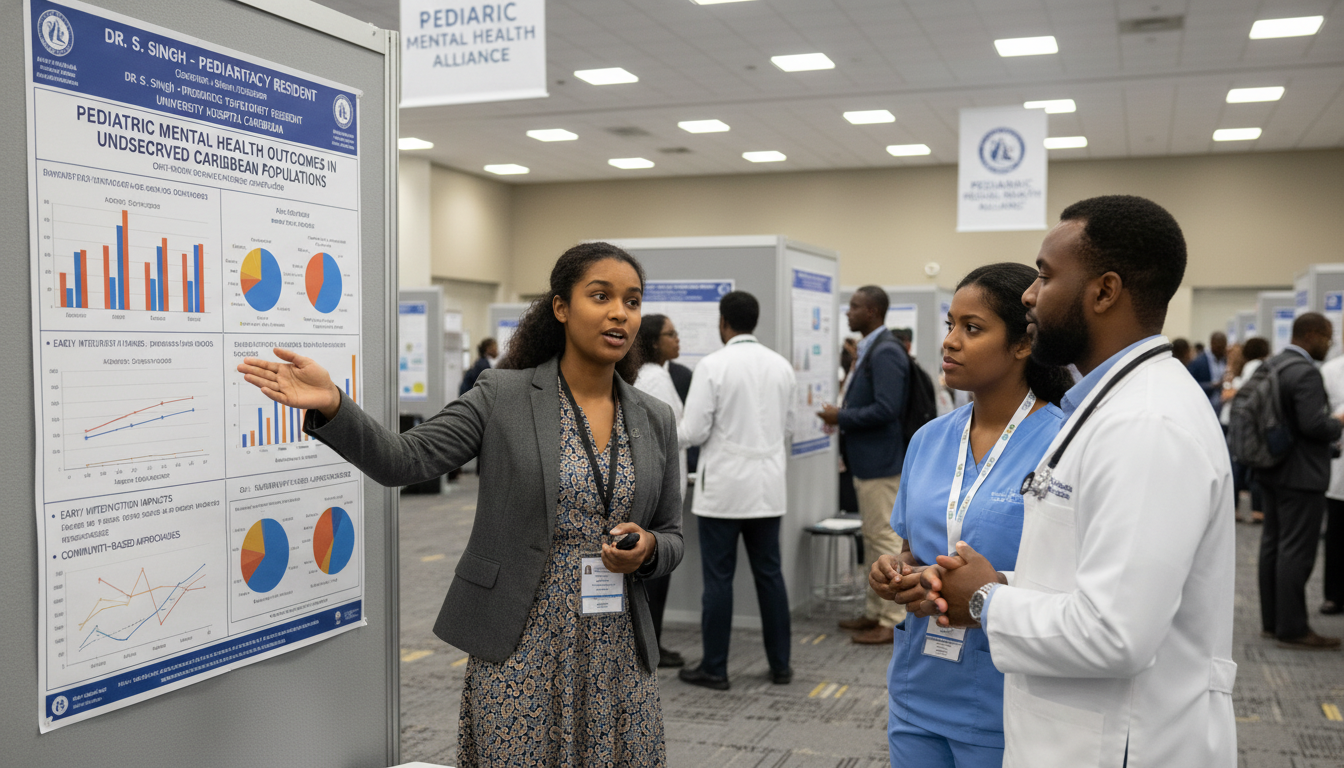
- Posters or oral presentations at national meetings (AACAP, APA, PAS, AAP, etc.)
- Local or regional conference presentations
- QI project with a formal “write‑up” and possible publication
At the start of a project, ask: “What is the minimum publishable unit here?” Aim for:
- 1–2 posters in PGY‑2
- At least one manuscript submitted by mid‑PGY‑3 or PGY‑4 (depending on program length and structure)
These outputs will be especially valuable if you plan to pursue:
- An academic residency track
- Child and adolescent psychiatry fellowship
- Research‑heavy roles post‑residency
2. Selecting the Right Venues
As a Caribbean IMG, visibility and credibility matter. Consider:
National specialty meetings
- American Academy of Child and Adolescent Psychiatry (AACAP)
- American Psychiatric Association (APA)
- Pediatric Academic Societies (PAS)
- American Academy of Pediatrics (AAP), especially the Sections on Developmental and Behavioral Pediatrics or Child Abuse, etc.
Journals
- Child and Adolescent Psychiatry journals
- General pediatrics journals focusing on behavioral health
- General psychiatry journals with child and adolescent sections
- Education or QI journals if your work is in those domains
Be realistic—high‑impact journals are competitive—but aim for peer‑reviewed outlets where your work genuinely fits.
3. Building a Coherent Story Across Projects
Try to connect your research during residency under a common theme. For example:
- Integrated care: studies on depression screening in pediatric clinics, outcomes of psych consults on the pediatric floor, QI to improve referral follow‑through
- Trauma and adversity: projects on ACEs screening, PTSD symptoms in medically ill children, immigrant family stressors
- Neurodevelopmental disorders: chart reviews on autism with comorbid anxiety, psychotropic prescribing patterns in children with intellectual disability
This will help you later when you:
- Write personal statements
- Apply for fellowships and academic jobs
- Articulate your “academic identity”
Interviewers often ask: “Tell me about your research interests and how they have evolved.” A coherent narrative helps you stand out beyond being “a Caribbean IMG who did some research.”
4. Documentation and CV Building
Keep meticulous track of:
- Project titles and mentors
- Dates of submission, acceptance, and presentation
- Your role (e.g., first author, data analyst, curriculum designer)
- Any awards or travel grants
Update your CV every 3–4 months. This matters for:
- Mid‑residency reviews
- Fellowship applications
- Academic residency track applications
- Potential in‑house promotions or chief resident roles
Remember: Many SGU residency match and other Caribbean IMG success stories include a strong CV with clearly documented research and scholarly activity.
Planning Beyond Residency: How Research Shapes Your Next Steps
1. Fellowship and Early Career
If you plan on:
- Child and adolescent psychiatry fellowship
- Developmental-behavioral pediatrics
- Consultation-liaison psychiatry with a pediatric focus
- Other pediatric subspecialties involving mental health
Then your research portfolio is a key differentiator. Programs want fellows who will:
- Contribute to ongoing projects
- Help sustain grant‑funded work
- Teach and mentor future trainees
Highlight, in your fellowship applications:
- How your resident research projects prepared you for specialized training
- Your interest in continuing research during fellowship (and how you would build on your existing work)
2. Academic vs. Community Career Paths
Even if you are uncertain about an academic career, research experience gives you options. It allows you to:
- Compete for positions at university hospitals
- Pursue protected time for scholarship
- Engage in ongoing resident research projects as a junior faculty member
If you opt for a primarily community‑based career, your research skills are still useful:
- Leading local QI initiatives
- Improving integration of behavioral health in pediatric practices
- Collaborating on community mental health or school‑based projects
3. Visa and Job Market Considerations for IMGs
For many Caribbean IMG physicians, visa status (J‑1, H‑1B, etc.) adds another layer. Research productivity can:
- Make you more attractive to academic institutions willing to sponsor visas
- Support applications for J‑1 waiver jobs at academic or hybrid sites interested in building child behavioral health programs
- Provide leverage for negotiating protected time or titles (e.g., “Clinical Instructor,” “Assistant Professor”) earlier in your career
Keep in mind: Programs that value research often have institutional experience navigating visa processes.
Common Pitfalls and How to Avoid Them
Overcommitting too early
- Join 1–2 well‑defined projects instead of 5 vague ones.
- Ask mentors about realistic time expectations.
Not clarifying authorship
- Discuss author order early, especially on resident research projects with multiple trainees.
Letting projects stall during busy rotations
- Use small windows of time to keep momentum: reply to emails, edit a paragraph, or clean data.
Perfectionism that prevents submission
- A completed, decent manuscript is more valuable than an unfinished “perfect” study.
Ignoring QI and educational scholarship
- Many residents assume only randomized trials or complex studies matter. Well‑done QI and educational projects are highly publishable and relevant to pediatric-psychiatry practice.
FAQs: Research During Residency for Caribbean IMG in Pediatrics-Psychiatry
1. I’m a Caribbean IMG in a busy peds psych or Triple Board program. Is it realistic to do research during residency?
Yes—if you are strategic. You likely cannot lead multiple large projects, but you can:
- Join an existing study as a co‑author
- Lead a manageable chart review or QI project
- Aim for 1–2 posters and at least one manuscript before graduation
Start early, choose a supportive mentor, and use elective or lighter rotations to push projects forward.
2. Does my Caribbean medical school background hurt my chances of getting involved in research?
Not necessarily. While some institutions may be more familiar with U.S. schools, faculty are usually more interested in your current performance and initiative. Emphasize:
- Strong clinical evaluations
- Reliability and follow‑through
- Prior experiences (even small research tasks or presentations in medical school)
Many successful SGU residency match and other Caribbean IMG alumni have built robust academic careers by demonstrating productivity during residency.
3. What if my program doesn’t have a formal academic residency track?
You can still:
- Identify individual research‑active mentors in Pediatrics, Psychiatry, or Child Psychiatry
- Use elective time to work on projects
- Collaborate across departments (e.g., with psychology, social work, or public health)
- Present at regional or national conferences
You don’t need a formal academic track to produce meaningful resident research projects; you just need structure and mentorship.
4. How important is research if I just want to be a clinician and not an academic?
Even if you plan on a primarily clinical career, research experience is still valuable:
- Demonstrates that you can critically appraise evidence
- Helps you lead QI and innovation in your future practice
- Strengthens fellowship or job applications
- Gives you flexibility if you later decide to pursue academic roles
For a Caribbean IMG in Pediatrics-Psychiatry, research during residency is an investment in credibility, flexibility, and long‑term opportunity, regardless of your final career setting.
By approaching research deliberately—choosing feasible projects, aligning with strong mentors, and building a coherent story around your interests—you can turn residency into a powerful springboard. As a Caribbean IMG in Pediatrics-Psychiatry or Triple Board training, your unique background and dual‑discipline skillset position you perfectly to ask the integrated, cross‑cultural questions the field urgently needs.