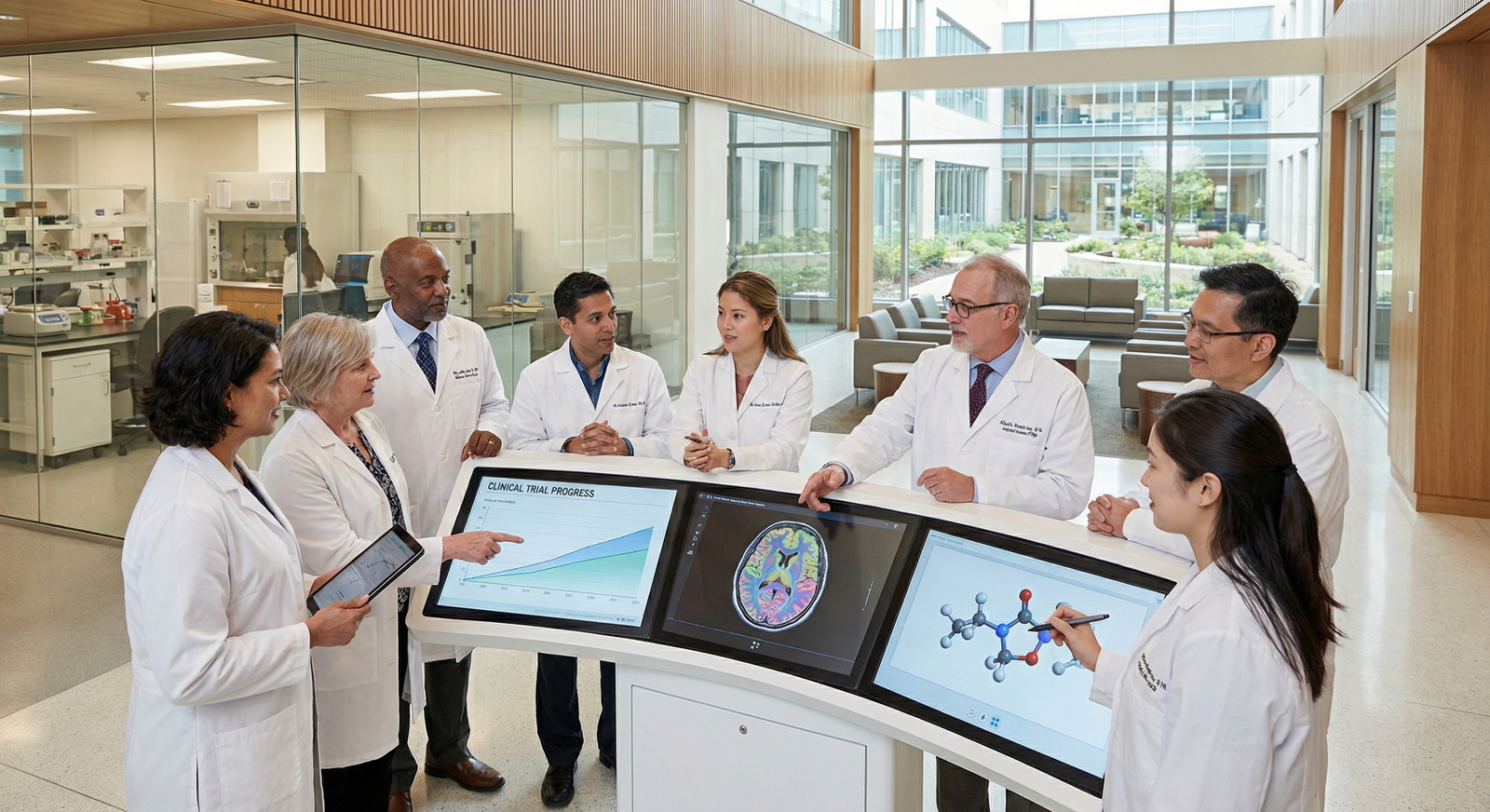
Understanding the Role of Research During Residency in Radiation Oncology
For a Caribbean IMG in radiation oncology, research during residency is not just a “nice-to-have”—it can be a key differentiator for fellowships, academic jobs, and even leadership roles in community practice. While your path to residency may have already been less traditional, strategically building a research portfolio during residency can help close perception gaps, highlight your strengths, and show that you can compete at the highest academic level.
In radiation oncology, the culture is particularly research-oriented. Many programs emphasize resident research projects, publication productivity, and scholarly output as a core component of training. If you trained at a Caribbean medical school, residency program directors and future employers will look closely at your trajectory since graduation. Demonstrating consistent, high-quality research during residency directly addresses any doubts about your academic rigor and commitment.
This article will walk you through:
- How research fits into a rad onc residency structure
- Unique challenges and advantages for a Caribbean IMG
- Concrete strategies to initiate and sustain resident research projects
- How to align your research during residency with an academic residency track or future career goals
- Practical tips for publishing, presenting, and networking as a trainee
Throughout, we’ll keep the perspective laser-focused on a Caribbean IMG in radiation oncology.
Why Research Matters So Much in Radiation Oncology
Radiation oncology is one of the most academic of all clinical specialties. Even in community practice, you’ll be expected to interpret new data, evaluate trial results, and understand advanced technologies. Your research experience helps you develop these skills.
1. Competitive Field, Research-Driven Culture
Radiation oncology residency and the rad onc match have historically been competitive, with a strong emphasis on:
- Publications (especially first-author work)
- Conference presentations (ASTRO, ASCO, RSNA, etc.)
- Ongoing research involvement (clinical, physics, translational, or outcomes)
Even if overall competitiveness fluctuates, the specialty’s culture remains heavily data- and research-driven. As a Caribbean IMG, you’ll be held to the same scholarly expectations—sometimes more.
Programs may ask:
- Has this resident published or presented during residency?
- Do they demonstrate curiosity, initiative, and follow-through?
- Are they capable of an academic residency track or subspecialty fellowship?
2. Balancing Caribbean IMG Background with Strong Residency Performance
If you come from a Caribbean medical school (e.g., SGU, Ross, AUC, Saba), you may have already experienced skepticism in the application process. A strong SGU residency match or other Caribbean medical school residency success is often built on two pillars:
- Excellent clinical performance and evaluations
- A track record of meaningful research
During residency, you have a powerful chance to change your narrative. Faculty may initially see “Caribbean IMG” and assume limited prior exposure to rigorous academic environments. You can counter this by:
- Engaging in substantive research during residency
- Taking on projects that lead to abstracts, posters, and manuscripts
- Demonstrating reliability and academic maturity in every step of a study
3. Career Paths That Depend on Resident Research
Research during residency can open specific doors:
- Academic radiation oncology positions
- Subspecialty fellowships (e.g., brachytherapy, proton therapy, global oncology, informatics)
- Physician–scientist tracks in larger academic centers
- Health services/outcomes research roles in big health systems
- Leadership in clinical trials units or quality initiatives
Even if you plan a community practice career, research experience helps you:
- Evaluate literature and adopt new technologies thoughtfully
- Lead local quality improvement (QI) or clinical trial participation
- Develop a niche that distinguishes you from colleagues

Navigating Research Opportunities as a Caribbean IMG Resident
As a Caribbean IMG, you may start residency with less pre-existing research infrastructure or fewer contacts than a U.S. MD student from a home program. That’s not a permanent disadvantage—if you’re strategic.
Understand How Your Program Handles Resident Research
Your first step in a radiation oncology residency is to learn how research is structured:
- Is protected research time required or elective?
- Is there a formal scholarly project requirement to graduate?
- Which faculty routinely mentor resident research projects?
- Are there ongoing trials, registries, or databases you can join?
- Does the department have a dedicated research coordinator, statistician, or data manager?
Practical action:
- Ask your chief residents:
- “Which faculty are most active in publishing with residents?”
- “Which prior residents have had successful resident research projects—can I see examples?”
- Attend departmental research meetings or tumor boards early and often.
Leverage Your Unique Background
Being a Caribbean IMG can actually be an asset if you frame it correctly:
- You may have strong global health interests and perspectives—valuable for global radiation oncology or health equity projects.
- You’ve already navigated complex systems and visas, making you adaptable to multi-institutional or international collaborations.
- You may speak multiple languages—useful for patient-reported outcome studies in diverse populations.
Possible research angles that highlight this:
- Access to radiation therapy for underserved or international patients
- Disparities in cancer outcomes among immigrant or Caribbean populations
- Telemedicine and remote contouring for resource-limited settings
Position yourself as someone who brings a valuable perspective to research questions on equity, access, and global care.
A Realistic Research Mindset for PGY-2 to PGY-5
Your research strategy will evolve over residency:
Early PGY-2 (or your first rad onc year):
- Observe, learn, and join existing projects instead of creating something from scratch.
- Do small, manageable tasks: chart review, data entry, protocol review.
- Aim for a case report, letter to the editor, or small retrospective project.
Mid-residency (PGY-3/PGY-4):
- Take ownership of one or two primary projects where you are first author.
- Focus on realistic timelines—projects that can be finished before graduation.
- Present at major meetings (ASTRO, ASCO) at least once.
Late residency (PGY-4/PGY-5):
- Wrap projects to completion and submit manuscripts.
- Focus on research that aligns with your post-residency path (academic vs community, subspecialty interest).
- If an academic track is possible, develop a cohesive “story” across your projects.
Choosing and Executing Resident Research Projects in Radiation Oncology
Not all projects are created equal—especially when time and resources are limited. As a Caribbean IMG in a busy residency, your research during residency must be strategic, feasible, and publishable.
Types of Resident Research in Radiation Oncology
You don’t need a wet lab to be productive. Common categories:
Retrospective clinical outcomes studies
- Using your department’s existing patient data
- Examples:
- Comparing toxicities between IMRT and VMAT for head and neck cancers
- Outcomes after hypofractionated versus conventional breast radiation
- Pros: feasible, no intervention, faster IRB process
- Key skill: data cleaning and basic biostatistics
Dosimetric and planning studies
- Comparing different planning techniques for organs at risk
- Example:
- Comparing VMAT vs 3D-CRT for lung SBRT plans in terms of normal lung dose
- Pros: doesn’t require patient outcomes; often faster to complete
- Great for learning treatment planning and collaborating with physicists
Quality improvement (QI) and workflow projects
- Reducing contouring variability, improving documentation, optimizing on-treatment visit processes
- Often easier IRB pathways; can result in abstracts and sometimes publications
- Shows leadership and systems-based practice for milestones
Prospective clinical or translational trials
- More complex; often too long for a single resident to see from start to finish
- You can still contribute by helping design protocols, consent patients, or manage databases
- Better suited if your program has a strong clinical trials infrastructure
Health services, disparities, and outcomes research
- Ideal for Caribbean IMGs with an interest in equity and global oncology
- Example:
- Analyzing wait times for radiotherapy in underserved populations
- Evaluating differences in survival by insurance or geographic region
Educational research
- Curricular changes for rad onc residents, contouring education tools, simulation-based learning
- Publishable in medical education journals if methodologically sound
Selecting Projects Wisely: A Practical Checklist
When a faculty member proposes a project, ask:
- Is there clear, answerable question with a testable hypothesis?
- Is there an accessible data source (database, treatment planning system) already in place?
- Is the timeline compatible with residency? (12–24 months from start to publication is ideal)
- Who are the co-investigators? Are they known for actually finishing projects with residents?
- Is there support from a statistician or research coordinator?
As a Caribbean IMG, you may feel pressure to say “yes” to everything. That’s risky. Instead:
- Pick 1–2 anchor projects where you are first author.
- Then add 2–4 supporting projects where you are a middle author and contribute meaningfully but with limited time commitment.
Concrete Example: A Feasible Resident Project
Scenario: You’re a PGY-3 Caribbean IMG interested in thoracic oncology.
Possible study:
- Question: In patients with early-stage NSCLC treated with SBRT, what is the pattern of failure and survival based on lesion size and location?
- Design: Retrospective chart review of patients treated over 10 years.
- Methods:
- Extract baseline characteristics, tumor size/location, dose/fractionation, local/distant failure, survival, and toxicities.
- Perform Kaplan–Meier analysis for local control and OS; Cox modeling if feasible.
- Outcome:
- Abstract submitted to ASTRO
- Manuscript submitted to a mid-tier rad onc journal
This project is achievable, clinically relevant, and builds skills that translate to many future studies.

Building Skills and Systems to Sustain Research Productivity
Research during residency is less about one big project and more about learning how to be consistently productive. That’s especially important if you’re interested in an academic residency track or academic career.
Core Skills to Develop Early
Literature search and critical appraisal
- Use PubMed, Google Scholar, and specialty journals (IJROBP, Practical Radiation Oncology, Radiotherapy and Oncology).
- Learn to quickly assess study design, bias, statistical methods, and applicability to practice.
Basic biostatistics and software
- Familiarize yourself with:
- Descriptive stats, t-tests, chi-square, logistic regression, survival analysis
- Tools: R, SPSS, Stata, or even Excel + institutional statistician support.
- Many programs offer resident-targeted statistics workshops—take them seriously.
- Familiarize yourself with:
Data management
- Learn to build clean, de-identified databases using REDCap or similar tools.
- Establish consistent variable naming, data dictionaries, and backup systems.
Scientific writing
- Practice writing structured abstracts, introductions, and discussion sections.
- Use templates from prior departmental manuscripts as models.
- Aim to draft at least the abstract and introduction early in the project—this clarifies your aims.
IRB and regulatory awareness
- Understand when you need full IRB review vs exemption vs QI designation.
- Know the basics of HIPAA and patient privacy for research data.
Time Management: Protecting Research Amid Clinical Demands
During a busy rotation, research can vanish from your life if you’re not intentional. Protect it by:
- Scheduling fixed weekly research blocks (e.g., 2–4 hours on a consistent afternoon or weekend morning).
- Using an “80/20” rule during research time:
- 80% of the time on writing and analysis
- 20% on reading, planning, and emails
- Breaking projects into very small tasks (e.g., “extract data for 10 patients,” “write methods section paragraph on inclusion criteria”).
As a Caribbean IMG, you may also be navigating visa issues, family separation, or financial pressure. Recognize that you might not be able to out-publish peers with fewer constraints—but you can absolutely be organized, reliable, and productive relative to your resources.
Mentorship and Collaboration: Your Multiplier
Strong mentorship is especially critical if you did not train in a U.S. MD research environment.
Types of mentors to seek:
- Primary research mentor: Oversees your main projects; ideally publishes regularly with residents.
- Methodology mentor: Statistician or outcomes researcher who can guide study design and analysis.
- Career mentor: Senior faculty who can advise on academic vs community pathways, including how your Caribbean background fits into your long-term plan.
Practical steps:
- Ask chiefs or junior faculty, “Who is productive and good with residents on research?”
- Come to potential mentors with concrete ideas or at least defined interests (e.g., “I’d like to do a dosimetric planning study in head and neck for my main project.”)
- Be clear about timelines and expectations from the start.
Aligning Resident Research With Long-Term Career Goals
Your research during residency should not be random. It should gradually form a coherent narrative that supports your next steps—whether you aim for an academic residency track (or academic job) or a high-level community practice.
Building an Academic Residency Track Profile
Some programs have a formal academic track; others just expect you to behave like an academic resident. Indicators include:
- Multiple first-author publications
- Regular presentations at national meetings
- Involvement in multi-institutional studies or cooperative group trials
- Contributions to protocol development or trial leadership roles (appropriate to your level)
As a Caribbean IMG, you can absolutely pursue an academic path if:
- You show sustained research productivity
- You develop expertise in a niche area (e.g., CNS tumors, proton therapy, palliative RT, disparities research)
- You network actively at conferences and within cooperative groups
Strategies:
- Choose projects that are thematically related (e.g., 2–3 studies on GI cancers or on disparities in access to radiation).
- Volunteer for roles in national resident sections (e.g., ARRO committees).
- Seek secondary mentors at other institutions through conference introductions or email.
Preparing for Fellowship or Subspecialty Focus
While not all rad onc positions require fellowship, focused expertise can be helpful. If you are considering brachytherapy, proton therapy, global oncology, or informatics:
- Align your resident research projects with those interests.
- Example: If you’re interested in brachytherapy, pursue dosimetric or outcomes studies in gynecologic interstitial brachy.
- If global oncology attracts you, work on projects involving access, resource-appropriate protocols, or international collaborations (your Caribbean and international background can be a major advantage here).
Strengthening Your Future Job Applications
When you eventually apply for faculty or community positions, your research portfolio can:
- Demonstrate analytic and critical thinking skills
- Show your ability to complete complex tasks on time
- Highlight your special interests (e.g., lung SBRT, palliative care, survivorship, etc.)
For Caribbean IMGs, it’s particularly powerful to show a trajectory:
- Limited or moderate research as a Caribbean medical student
- Clear growth and productivity during residency
- Emerging niche and vision for future practice
This makes your SGU residency match or other Caribbean medical school residency story less about “where you started” and more about “what you did with the opportunities once you got there.”
Maximizing Visibility: Presenting, Publishing, and Networking
Doing research during residency is only half the battle. You also need to disseminate your work.
Conferences: ASTRO and Beyond
Target conferences:
- ASTRO (American Society for Radiation Oncology)
- ASCO (for systemic-therapy–oriented work)
- RSNA (for imaging or physics-heavy studies)
- Specialty or disease-site meetings (e.g., SNO for neuro-oncology, GI or GU symposia)
Benefits for a Caribbean IMG:
- You meet potential future colleagues and employers.
- You show that you are an active contributor to the field.
- You may connect with mentors outside your home institution.
Practical tips:
- Start abstract drafts early and know the deadlines.
- Work with your mentor to refine the abstract structure.
- Apply for travel grants or diversity scholarships if eligible—many organizations support underrepresented or international physicians.
Publishing: Getting Your Work into Journals
Not every project will land in a top-tier journal—and that’s okay. More important are:
- Timely submission once a project is mature
- Responsiveness to reviewer comments
- Consistency in output over time
Target journals by project type:
- Clinical outcomes: IJROBP, Radiotherapy and Oncology, Practical Radiation Oncology, Adv Radiat Oncol
- Dosimetric studies/physics: Medical Physics, JACMP, BJR
- Education/QI: journals in medical education or quality improvement fields
If English is not your first language or you trained outside the U.S., get help with:
- Proofreading
- Clear, concise phrasing
- Formatting according to journal guidelines
Networking With an Eye on Future Collaborations
Radiation oncology is a relatively small specialty; your reputation spreads quickly.
- Introduce yourself to authors whose work you admire at conferences.
- Follow up with brief, focused emails:
- “I’m a PGY-3 at XYZ, originally a Caribbean IMG, interested in global thoracic radiation. I appreciated your talk on…”
- Consider multi-institutional resident research projects—these can be powerful CV builders and make use of your cross-cultural and cross-system experience.
FAQs: Research During Residency for Caribbean IMG in Radiation Oncology
1. I’m overwhelmed as a PGY-2 and still adjusting to U.S. training. When should I realistically start research?
You don’t need to launch a large project on day one. In your first 3–6 months, focus on:
- Understanding your department’s research culture
- Attending research meetings and tumor boards
- Joining an already ongoing project in a small role (data collection, literature review)
By 6–12 months into your rad onc rotations, aim to have one clearly defined project where you’ll be first author, with realistic scope and timelines.
2. I had minimal research in my Caribbean medical school. Will that hurt me long-term?
Not necessarily. What matters more is trajectory. If your pre-residency CV had limited research but you demonstrate strong research during residency—abstracts, publications, well-executed resident research projects—you show that you can grow and succeed in an academic setting. Programs and employers care deeply about what you do with the opportunities you have now.
3. How many publications do I need for an academic job or fellowship in radiation oncology?
There is no strict number, but a general frame for someone interested in an academic residency track or academic career might be:
- 2–3 first-author publications during residency
- Several co-authorships on collaborative projects
- At least one national conference presentation (ideally more)
Quality and coherence matter more than raw count. A small number of well-designed studies that align with your niche is better than a dozen minor, unrelated case reports.
4. I’m on a visa as a Caribbean IMG. Does that affect my ability to do research?
Visas mainly affect employment and funding, not your ability to participate in research during residency. Still, be mindful of:
- Any restrictions related to grant-funded positions (if planning a post-residency research fellowship)
- Timing for abstract presentations and international travel (ensure visa and institutional approval)
Within residency, you can fully engage in research—retrospective studies, QI projects, resident research projects, and even clinical trials participation—just like any other resident.
Research during residency is one of the most powerful ways for a Caribbean IMG in radiation oncology to shape their professional identity, close perceived gaps, and open doors in both academic and community practice. With thoughtful project selection, consistent effort, and strong mentorship, your research portfolio can become a defining strength of your career.