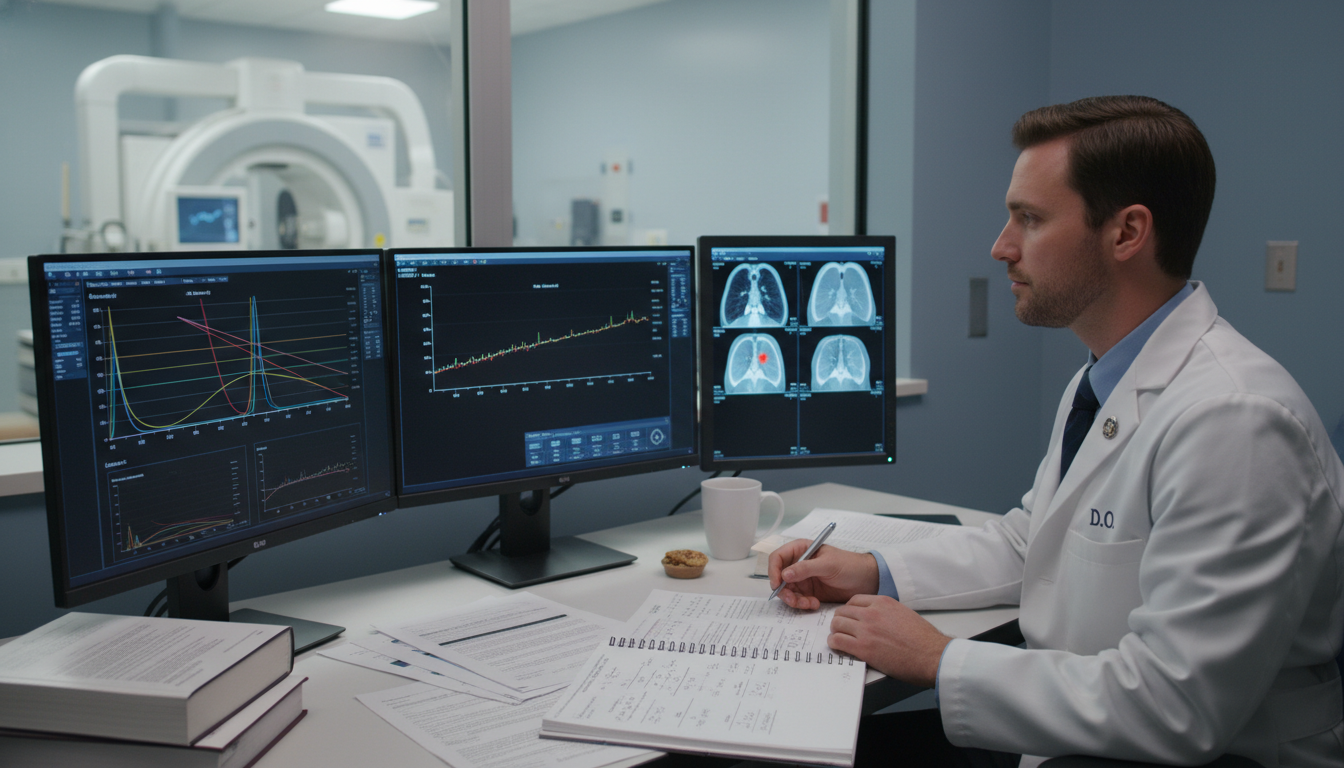
Why Research During Residency Matters for DOs in Radiation Oncology
Research during residency is no longer optional in radiation oncology—especially for a DO graduate aiming for an academic or highly competitive clinical career. Whether you’re thinking about a future faculty role, a private practice position with a strong clinical trials program, or even a leadership path in quality and safety, your resident research projects will shape how program directors, future employers, and collaborators perceive you.
For a DO graduate, research productivity can be especially valuable in:
- Demonstrating parity with MD peers in an academic field
- Strengthening your profile for the rad onc match if you are early in training or planning future fellowships
- Positioning yourself for an academic residency track, chief resident roles, or early-career grants
Radiation oncology is highly data-driven: treatment decisions rely on outcomes research, clinical trials, imaging studies, physics innovations, and informatics. A strong research foundation during residency trains you to critically evaluate evidence, design better treatments, and contribute meaningfully to the field.
This article walks through how a DO graduate in radiation oncology can strategically build a research portfolio during residency: what to expect, how to get started, how to balance research with clinical duties, and how to position your work for long-term career benefit.
Understanding the Landscape: Research in Radiation Oncology Residency
Radiation oncology residencies—both MD and DO graduate pathways—commonly integrate research into their structure, but the intensity and form vary widely.
Typical Research Expectations in Radiation Oncology
Most ACGME-accredited radiation oncology programs expect residents to:
- Complete at least one substantive research project during residency
- Present at local or national meetings (e.g., ASTRO, ARRO, ASCO, RSNA)
- Contribute to manuscripts or abstracts
- Learn basic principles of clinical trial design and interpretation
Some programs offer:
- Dedicated research blocks (3–12 months)
- Formal research mentorship programs
- A defined academic residency track with increased protected research time
As a DO graduate, you may have had fewer research opportunities in medical school or may feel you’re “catching up.” Residency is your chance to close that gap—and radiation oncology is one of the best specialties for this because:
- There is a strong culture of clinical and translational research
- Outcomes (local control, toxicity, survival) are often quantifiable and trackable
- Residents have access to large patient datasets, imaging archives, and treatment planning data
How Research Experience Helps Your Career
Even if you’re unsure whether you want an academic career, research during residency offers tangible benefits:
- Academic roles: Publications and grants are key for faculty positions.
- Competitive fellowships: Brachytherapy, proton therapy, palliative, or global oncology fellowships often prioritize applicants with solid research records.
- Private practice jobs: Practices value residents who can interpret literature, lead quality improvement initiatives, run clinical trials, and enhance the group’s profile.
- Leadership positions: Division chiefs, program directors, and department chairs typically have a history of scholarly productivity.
For DO graduates, a well-documented research track record directly counters any lingering bias and shows that your training and scholarship are on par with MD colleagues.

Getting Started: Finding Your Niche and Setting Goals
Starting research during residency can feel overwhelming, especially when you’re adjusting to contouring targets, learning treatment planning, and managing on-treatment visits. A structured approach makes it manageable and strategic.
Step 1: Clarify Your Career Direction (Even If Tentative)
Your research choices should loosely align with probable career paths, even if they evolve:
Interested in academic practice?
Aim for projects that can lead to first-author publications, multi-institutional collaborations, or grant opportunities.Leaning toward community or private practice?
Focus on clinically relevant questions, quality improvement, workflow optimization, or toxicity/outcomes research.Considering subspecialization?
If you’re drawn to, say, genitourinary, thoracic, or pediatric radiation oncology, focus early projects in that disease site to build expertise.
Set 2–4 overarching goals for residency research, for example:
- Publish 2–3 peer-reviewed manuscripts (at least one as first author).
- Present at ASTRO or another major national meeting once per year (PGY-3 to PGY-5).
- Participate meaningfully in at least one prospective trial (e.g., patient accrual, data collection, or protocol development).
Step 2: Assess Your Program’s Research Infrastructure
Early in PGY-2 (or even as an intern if you know your rad onc home program), learn the following:
Who are the research-active faculty?
Identify attendings with multiple recent publications, clinical trials, or funded grants.What kinds of projects are common?
- Retrospective chart reviews
- Clinical trials (cooperative group or institutional)
- Physics/dosimetry or planning technique comparisons
- Imaging, AI, or informatics projects
- Outcomes and toxicity studies
- Health services research, disparities, and access to care
What supports exist?
- Biostatistics support
- Institutional Review Board (IRB) office
- Research coordinators or data managers
- Departmental databases, registries, or REDCap platforms
Ask senior residents what has worked for them, what pitfalls to avoid, and which mentors are particularly supportive of DO graduates and resident-led work.
Step 3: Choose a Feasible, High-Yield Starter Project
For your first project, aim for something:
- Feasible within 6–12 months
- Well-scoped—not a registry of 1,500 patients when you have no data support
- Guided by a predictable path to an abstract or manuscript
Good starter project examples:
Retrospective single-institution study
Example: Outcomes of hypofractionated radiation for early-stage breast cancer with regional nodal irradiation in older patients.Toxicity/QA analysis
Example: Incidence and predictors of radiation pneumonitis in stage III NSCLC patients treated with concurrent chemoradiation and consolidation immunotherapy.Workflow/quality improvement project with scholarly output
Example: Implementing a standardized template for OAR (organs at risk) contouring in head and neck patients and its effect on interobserver variability.
These are realistic for a busy resident and can often lead to a first abstract (e.g., ASTRO) within a year.
Types of Research Opportunities for Radiation Oncology Residents
Radiation oncology offers diverse research modalities. Understanding each helps you choose wisely and balance ambition with practicality.
1. Retrospective Clinical Outcomes Studies
These are the most common resident projects.
Pros:
- Frequently low-cost
- Data usually available in the EMR and treatment planning systems
- Timeline is relatively predictable
Typical workflow:
- Refine a narrow research question (e.g., “What factors predict need for PEG tube placement in HPV-positive oropharyngeal cancer patients receiving chemoradiation?”).
- Submit IRB protocol (often expedited or exempt for retrospective chart reviews).
- Create a data collection template (Excel or REDCap).
- Extract data from charts, imaging, and RT planning systems.
- Work with a biostatistician for analysis.
- Draft abstract/manuscript.
Tips for DO graduates:
- Ensure your question is novel enough—search PubMed and ASTRO journals early.
- Avoid over-complicated endpoints; start with clear, clinically meaningful outcomes.
2. Prospective Clinical Trials and Cooperative Group Studies
Participating in trials is central to academic radiation oncology.
You may:
- Help design or refine protocols (less common for junior residents)
- Assist with patient accrual, consent, and follow-up
- Lead correlative sub-studies (e.g., imaging biomarkers, toxicity analyses)
Examples:
- A phase II trial of SBRT for oligometastatic disease in lung cancer
- A cooperative group trial examining de-escalation of therapy in HPV-positive oropharyngeal cancers
For a DO graduate, contributing significantly to trial implementation—especially if you’re listed as a co-investigator or lead a substudy—strongly signals academic potential.
3. Physics, Dosimetry, and Technology-Focused Projects
Radiation oncology intersects deeply with physics, imaging, and technology. Residents can:
- Compare rival planning techniques (IMRT vs VMAT, proton vs photon, SBRT strategies)
- Optimize planning constraints and dose distributions
- Study automation and AI-based contouring
Example project:
- “Automated vs manual contouring in prostate radiotherapy: dosimetric and time-efficiency comparison.”
These projects are attractive if you enjoy quantitative analysis and collaboration with medical physicists.
4. Informatics, Imaging, and AI/ML
Rapidly expanding frontiers include:
- Radiomics: extracting imaging features from CT, MRI, or PET
- AI-based segmentation and treatment planning
- Predictive modeling of toxicity or local control
For a resident with coding or data science interest, this can be a powerful niche. As a DO graduate, familiarity with AI/ML approaches positions you well for the evolving landscape of radiation oncology.
5. Health Services, Outcomes, and Disparities Research
This area is increasingly valued, with high impact and policy relevance:
- Evaluating geographic or socioeconomic disparities in access to radiation therapy
- Examining time-to-treatment initiation and outcomes across populations
- Studying differences in utilization of advanced technologies (e.g., proton therapy)
Example:
- “Racial and socioeconomic disparities in the use of SRS for brain metastases at a large academic center.”
Such projects also align well with institutional and national calls for equity in cancer care.
6. Educational and Quality Improvement (QI) Research
Residents can turn local educational or QI initiatives into publishable work:
- New approaches to contouring education for residents
- Standardized toxicity reporting instruments
- Implementation of peer-review systems for treatment plans
Practical angle: these projects are inherently feasible because they’re built off what you are already improving in your own department.
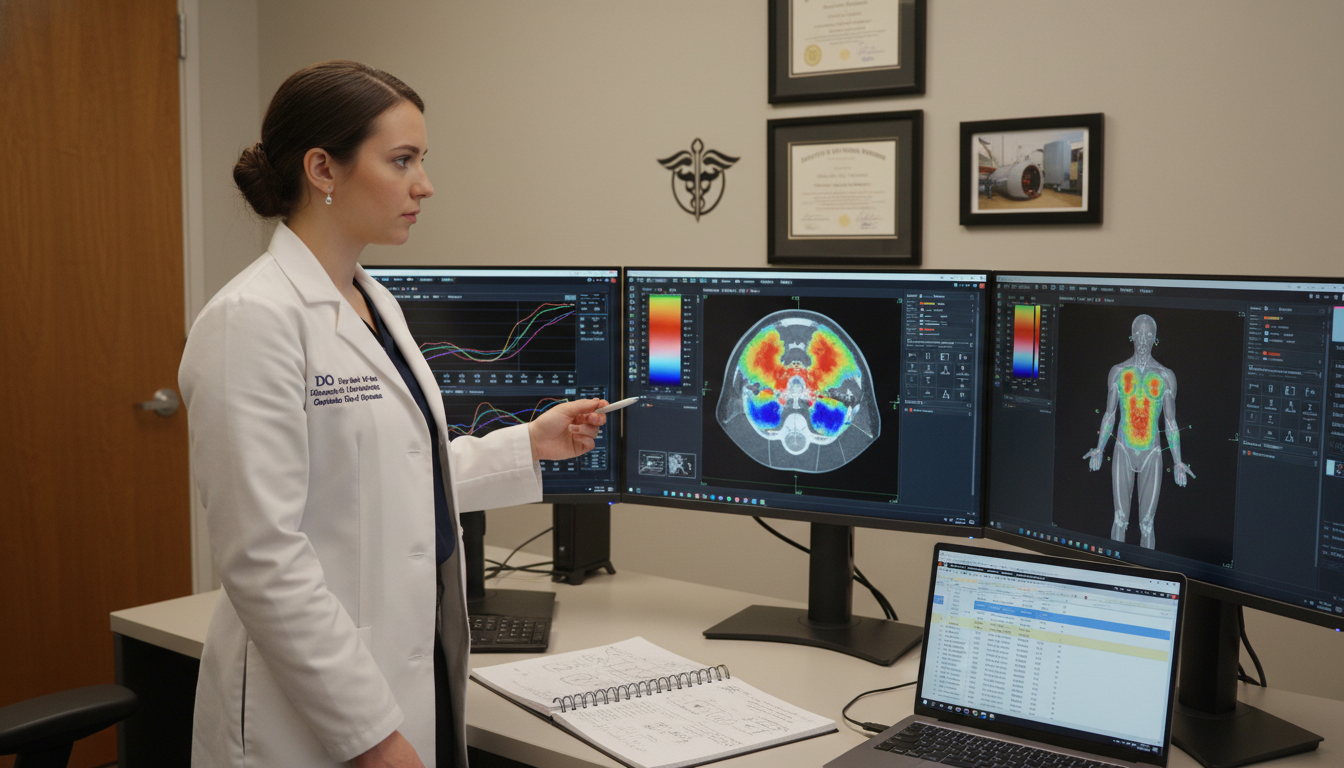
Practical Strategies: Balancing Clinical Duties and Research
One of the biggest challenges is execution: how to maintain productive research output while managing consults, simulations, on-treatment visits, and call responsibilities.
Build a Structured Research Timeline
By PGY level, a reasonable progression might look like:
PGY-2 (early):
- Identify mentors and choose 1–2 starter projects
- Submit IRB protocols
- Learn basics of data abstraction and analysis
PGY-2 (late) – PGY-3:
- Complete primary data collection for at least one project
- Submit your first abstract to a regional/national meeting
- Draft a manuscript with mentor support
PGY-3–PGY-4:
- Take on more complex projects (e.g., multi-institutional, prospective components, AI-based work)
- Aim for at least one national presentation per year
- Mentor junior residents or medical students on their projects
PGY-4–PGY-5:
- Consolidate your publication record
- If aiming for an academic residency track or faculty position, explore grant opportunities (ARRO/ASTRO, foundations)
- Develop and articulate a coherent academic niche (e.g., GU, CNS, palliative, global oncology, AI-based planning)
Time Management Tactics
Block “research hours” into your weekly schedule.
Treat 2–4 hours/week as an immovable appointment—early morning or evenings when clinical volume is lowest.Use micro-time efficiently.
- 15 minutes: update reference manager (Zotero, EndNote) or draft a figure legend.
- 30 minutes: revise a section of your introduction or methods.
Batch tasks.
Do all chart extractions for a subset of patients in a single block; do all figure-making in another.Limit active projects.
2–3 projects in different stages (data collection, analysis, manuscript writing) is ideal. More than that becomes unwieldy for most residents.
Collaboration and Mentorship: Keys to Success
As a DO graduate, strong, visible mentorship can be especially powerful.
How to choose a mentor:
- Consistently publishes in reputable journals
- Has a track record of supports residents on papers and presentations
- Communicates clearly and promptly
- Willing to advocate for you (e.g., letters of recommendation, introductions at conferences)
Expectations to clarify early:
- Authorship order and roles
- Realistic timelines and deadlines
- Resources available (statistics, data managers, funding for conference travel)
Consider building a network:
- Primary disease-site mentor (e.g., GU, thoracic)
- Methodological mentor (e.g., statistician, data scientist, physicist)
- Career mentor (helps with long-term planning, job search, or fellowship decisions)
Building a Cohesive Academic Identity as a DO Graduate
You don’t need to “do everything.” Instead, focus on developing a recognizable narrative that will be clear to fellowship directors, division chiefs, and hiring committees.
Choosing an Area of Focus
By the middle of residency, you should begin to see a pattern in your work. Examples:
Disease-site focused:
- Several projects in prostate cancer SBRT, focal boosts, or post-prostatectomy radiation.
- Multiple CNS projects on SRS/surgical integration or cognitive toxicity mitigation.
Method-focused niche:
- Radiomics or AI-based planning applications for multiple sites.
- Toxicity modeling across different disease sites.
Population or systems-focused niche:
- Disparities in access to radiation technologies.
- Value-based care, cost-effectiveness, and delivery models.
Tie this niche to your identity as a DO graduate:
- Emphasize holistic, patient-centered aspects of your work.
- Highlight interest in functional outcomes, quality of life, symptom management, or integrative care along with high-tech treatments.
Using Resident Research to Position Yourself for the Next Step
1. Academic Residency Track or Junior Faculty
If your program offers an academic residency track, interest is often demonstrated by:
- Multiple first-author publications
- Experience presenting at national meetings (e.g., ASTRO oral presentations, not just posters)
- Initiative in starting or leading projects
Keep a well-organized portfolio:
- CV updated every 3–6 months
- PDF copies of publications and abstracts
- One-page “research statement” summarizing your focus and future directions
2. Competitive Job Market or Fellowship
When applying for jobs or fellowships:
- Tailor your cover letter to highlight your cohesive body of work, not just a list of papers.
- Clearly state how your experience with resident research projects will translate into contributions in your future position—new trials, local databases, QI initiatives, or collaborative programs.
3. Long-Term Leadership Potential
Radiation oncology departments increasingly look for leaders who can:
- Drive high-quality research programs
- Run multi-institutional trials or registries
- Integrate AI and data science into clinical practice
Your residency research is the starting point for that trajectory.
Frequently Asked Questions (FAQ)
1. I’m a DO graduate with minimal prior research. Is it too late to build a strong record during residency?
No. Radiation oncology residency is an ideal time to ramp up. Many residents—MD and DO—enter with limited prior research. If you:
- Start early (PGY-2),
- Choose feasible projects, and
- Work with productive mentors,
you can still publish multiple papers and present at major meetings by graduation. Program directors and employers care more about your trajectory and productivity during residency than what you did as a medical student.
2. How many publications should I aim for in radiation oncology residency?
There is no magic number, but general benchmarks often cited for residents headed toward academic roles:
- 2–5 peer-reviewed publications, ideally with at least one as first author
- 1–2 national meeting presentations (e.g., ASTRO, ASCO)
Quality and relevance matter more than quantity. A few well-executed, thematically consistent studies can be more impressive than many minor case reports or low-impact projects.
3. How can I balance rad onc call, clinic duties, and research without burning out?
- Protect small, consistent research blocks each week (even 2–3 hours).
- Work on tasks that match your energy—data abstraction on lower-focus days, writing when you’re fresher.
- Collaborate: share data collection with medical students, or split sections of the manuscript with co-authors.
- Set realistic goals with your mentor and adjust as rotations change (e.g., heavy inpatient vs lighter outpatient blocks).
Most importantly, be honest with yourself and your mentors about limits. Sustainable productivity beats short bursts that lead to burnout.
4. Do I need a formal research year or dedicated block to be successful?
Helpful, but not mandatory. Many residents build strong research profiles without a dedicated year by:
- Starting early
- Efficiently choosing and executing projects
- Utilizing small windows of time consistently
If your program does offer a dedicated research block and you’re strongly leaning toward an academic residency track or major research career, it can be extremely valuable—especially for more ambitious projects (prospective trials, large datasets, AI/ML applications) and grant applications.
Research during residency is one of the most powerful levers you have as a DO graduate in radiation oncology to define your future career. By choosing the right projects, partnering with strong mentors, and structuring your time strategically, you can graduate not only as a skilled clinician but also as a contributor to the evidence that will guide how radiation oncology is practiced for years to come.