Why Research During Residency Matters for IMGs in General Surgery
For an international medical graduate (IMG) in general surgery, residency is not only about learning operative skills and perioperative care. It is also a pivotal time to build a foundation in clinical and translational research. This is especially true if you are interested in an academic residency track, a fellowship at a competitive institution, or a long‑term career in academic surgery.
In the U.S. system, research during residency is increasingly viewed as a marker of:
- Intellectual curiosity and motivation
- Ability to critically appraise evidence and practice evidence‑based surgery
- Potential to contribute to quality improvement and patient safety
- Future success as faculty, educator, or surgeon‑scientist
For IMGs, strong research engagement can also help offset perceived disadvantages in the surgery residency match and later fellowship applications by:
- Demonstrating familiarity with U.S. health systems and research standards
- Building relationships with influential mentors who can write compelling letters
- Producing objective achievements (publications, presentations, grants) that are easily recognized by selection committees
This IMG residency guide will help you understand what “research during residency” really means in a U.S. general surgery program, how to navigate barriers specific to international medical graduates, and how to strategically build a research portfolio while still becoming an excellent surgeon.
Understanding the Landscape: Types of Research in General Surgery Residency
General surgery training offers a wide spectrum of research opportunities. You do not need a PhD or advanced statistics background to be productive. You do need to understand the basic categories and what they demand in terms of time, skills, and mentorship.
1. Clinical Outcomes and Health Services Research
This is the most common form of resident research in general surgery.
Typical projects include:
- Retrospective chart reviews (e.g., outcomes after laparoscopic vs. open colectomy)
- Database studies using NSQIP, NIS, or institutional registries
- Quality improvement (QI) projects (e.g., reducing surgical site infections, optimizing ERAS pathways)
- Health disparities and access to surgical care
- Cost‑effectiveness analyses
Why it’s ideal for residents—especially IMGs:
- Often uses existing data; no need to recruit new patients
- Can be completed on a resident’s schedule with flexible timelines
- Frequently results in conference abstracts and peer‑reviewed publications
- Directly connected to clinical practice and patient care
Example:
An IMG PGY‑2 collaborates with a faculty mentor on a retrospective review of emergency general surgery cases comparing outcomes before and after a new triage protocol. Within 12 months, they submit an abstract to the American College of Surgeons (ACS) Clinical Congress and prepare a manuscript for a surgical journal.
2. Basic Science and Translational Research
Basic science surgical research is laboratory‑based: animal models, molecular biology, tissue engineering, immunology, cancer biology, etc. Translational research aims to bridge basic science and clinical application.
Characteristics:
- Often requires protected research time (1–3 dedicated years)
- Demands specialized lab skills and close mentorship
- Outcomes can be high‑impact publications and strong academic credentials
When it suits an IMG:
- You are strongly interested in an academic surgeon‑scientist career
- You can commit to at least 1–2 research years (often between PGY‑2 and PGY‑3)
- You are in, or can transfer to, a program with strong funded labs and infrastructure
Important note for IMGs:
Securing funded basic science positions can be harder without U.S. visa security or prior research experience. However, a motivated IMG who builds early relationships with research‑active faculty can absolutely succeed here.
3. Education Research and Simulation
Surgical education and simulation research focuses on how surgeons are trained.
Examples:
- Evaluating a new laparoscopic simulation curriculum
- Studying feedback strategies for technical skill development
- Research on competency‑based milestones and assessment tools
Advantages:
- Often more flexible and less resource‑intensive than lab work
- Ideal for residents interested in program leadership, education, or future DIO/PD roles
- Can yield publishable results relatively quickly
4. Quality Improvement (QI) and Patient Safety Projects
Many residency programs require some form of QI project. These often intersect with research and can lead to:
- Peer‑reviewed articles on protocol implementation or outcome changes
- Regional or national presentations at QI‑focused meetings
For an IMG, QI work is also a powerful way to show you understand U.S. systems‑based practice.

Getting Started: First Steps for IMGs in General Surgery Residency
1. Clarify Your Career Goals Early
Before jumping into projects, ask yourself:
- Do I see myself in academic surgery, community practice, or a hybrid role?
- Am I interested in a research‑heavy fellowship (e.g., surgical oncology, pediatric surgery, cardiothoracic surgery, transplant)?
- Would I consider an academic residency track with dedicated research time?
Your answers shape your strategy:
Academic track / research‑heavy fellowship aspirant
- Aim for multiple projects, at least one substantial first‑author paper
- Consider 1–2 years of dedicated research
- Seek mentors with national reputations and strong publication records
Primarily clinical/community practice
- Focus on meaningful but manageable projects (QI, clinical outcomes)
- Aim for a few abstracts and 1–2 publications
- Emphasize how research improved your understanding of evidence‑based practice
2. Learn the Research Culture of Your Program
U.S. general surgery programs vary widely in research emphasis.
Questions to explore:
- Is there a formal academic residency track with built‑in research time?
- What proportion of residents take research years?
- Which faculty have active resident research projects?
- Are there regularly scheduled:
- Research conferences or works‑in‑progress meetings?
- Journal clubs with a strong EBM focus?
- Departmental research days?
As an IMG, also clarify any visa limitations related to extended research time or non‑ACGME clinical duties (more on this below).
3. Build Relationships with Research‑Active Faculty
Mentorship is the single most important determinant of success.
How to identify good mentors:
- Check faculty profiles on your department website
- Look for recent publications involving residents
- Pay attention to who presents at M&M, grand rounds, or institutional symposia
- Ask senior residents: “Who is good about involving residents in research?”
Approach strategy for an IMG PGY‑1:
- Attend departmental conferences consistently so faculty learn your name.
- Email a potential mentor:
- Introduce yourself briefly (IMG background, residency year).
- Express specific interest (e.g., trauma outcomes, colorectal surgery, cancer disparities).
- Ask to meet for 15–20 minutes to discuss ongoing projects.
- At the meeting, come prepared:
- Have 2–3 ideas or questions.
- Be clear about your availability and time constraints.
- Ask what skills you should learn (e.g., REDCap, basic statistics).
4. Start Small and Finish Something Early
An early, completed project builds confidence and credibility.
Good “starter” projects for IMGs:
- Case report + brief literature review (if your program supports these)
- Small retrospective series (e.g., 1–2 years of data)
- QI audit with simple pre‑/post‑intervention comparison
Finishing an early project shows mentors that you:
- Respect deadlines
- Can handle IRB paperwork and data collection
- Are worth involving in larger, more competitive projects
Balancing Clinical Training and Research: Time Management for IMGs
One of the main concerns about research during residency is the impact on operative experience. This is magnified for IMGs, who may also be adapting to a new healthcare system, culture, and sometimes a second language.
1. Be Realistic About Time and Energy
On busy general surgery rotations (trauma, acute care surgery, transplant), your bandwidth will be limited. Plan accordingly:
- Use light rotations (endoscopy, SICU, elective services, night float) to push research forward.
- Avoid overcommitting early; 1–2 active projects done well are better than 5 poorly managed ones.
2. Use Structured Weekly Planning
Set aside fixed, protected research time each week—even 2–3 hours can add up.
Example schedule for a PGY‑2 IMG:
- Sunday evening: 1 hour updating data collection sheets
- Wednesday post‑call afternoon: 1 hour revising a manuscript draft
- Friday evening: 1 hour literature review for an upcoming project
Treat these blocks like mandatory appointments.
3. Leverage Tools and Systems
- Reference managers: Zotero, Mendeley, or EndNote for organizing literature
- Data tools: REDCap or Excel for data collection; SPSS, R, or Stata for analysis
- Project management: Simple shared documents (Google Docs, OneDrive) to track tasks
If you lack prior research training, ask whether your institution has:
- A clinical research office
- Biostatistics support
- Free workshops on study design, IRB, and statistics
4. Communicate Transparently with Your Team
Always prioritize patient care and clinical responsibilities. Communicate clearly:
- Inform your chief resident if you’re on a tight deadline and may need help swapping a call night.
- Let your mentor know your current rotation intensity and realistic timelines.
Programs that value research expect residents to be busy; what matters is that you communicate issues early and behave professionally.
Choosing and Executing Projects Strategically as an IMG
Not all projects are equal in educational value or career impact. Think strategically, especially if you are entering general surgery as an international medical graduate seeking to stand out.
1. Prioritize Projects that Align with Your Desired Path
If you aim for:
Surgical oncology fellowship:
- Seek projects in GI cancers, HPB, or breast surgery outcomes
- Try to join multi‑institutional studies or tumor registries
Trauma/acute care surgery:
- Focus on trauma registries, ICU outcomes, massive transfusion protocols
Pediatric surgery:
- Join projects on congenital anomalies, pediatric tumors, NICU surgical outcomes
Tailored research makes your future applications more coherent and persuasive.
2. Understand Your Role and Authorship
Clarify expectations early:
- What exactly are your responsibilities? (IRB, data collection, manuscript drafting?)
- Who will be first author? Second author?
- What is the target journal or conference?
As an IMG, do not shy away from asking directly. This shows professionalism, not arrogance.
3. Master the Core Steps of a Clinical Research Project
a. Ask a focused question
Use frameworks like PICO (Population, Intervention, Comparison, Outcome).
b. Design the study
- Retrospective vs. prospective
- Single‑center vs. multi‑center
- Inclusion/exclusion criteria
- Primary and secondary outcomes
c. Obtain IRB approval
- Learn your institution’s IRB portal early
- Complete required human subjects training (CITI modules)
d. Collect data systematically
- Create a clear data dictionary
- Pilot test your abstraction form on a small sample
- Ensure de‑identification and HIPAA compliance
e. Analyze and interpret results
- Work with a statistician when possible
- Learn basic concepts: p‑values, confidence intervals, effect sizes
f. Disseminate your work
- Abstracts to regional/national meetings (ACS, AAS, SAGES, specialty societies)
- Manuscripts to peer‑reviewed journals (start with realistic targets)
4. Common Pitfalls for IMGs—and How to Avoid Them
Overcommitting due to enthusiasm
- Solution: Limit active projects, insist on clear timelines and roles.
Language or writing challenges
- Solution: Co‑author with English‑proficient colleagues; use institutional writing centers; read high‑quality surgical journals regularly.
Underestimating IRB and regulatory complexity
- Solution: Get early guidance from research coordinators and your mentor.
Lack of follow‑through
- Solution: Schedule regular check‑ins; break tasks into smaller steps; keep a running project log.
Dedicated Research Time, Visas, and the Academic Residency Track for IMGs
Many U.S. general surgery programs offer residents 1–3 years of dedicated research, often between PGY‑2 and PGY‑3. For ambitious IMGs, this can be career‑transforming—but it requires careful planning.
1. Models of Dedicated Research Time
- One “academic” year (most common in mid‑tier programs)
- Two lab years (more common at research‑intensive, university‑based programs)
- Funded T32 or similar training grants supportive of developing surgeon‑scientists
During these years, residents may:
- Work full‑time in a basic science or translational lab
- Perform clinical outcomes or health services research
- Complete graduate degrees (MPH, MS, sometimes PhD)
2. Visa Considerations for IMGs
Visa status can limit or shape research options:
J‑1 Visa:
- Managed by ECFMG; research years are sometimes allowed but must be approved.
- You generally must remain in an ACGME‑accredited training track or ECFMG‑sponsored position.
H‑1B Visa:
- May have more flexibility but dependent on institutional policy.
- Changing roles (e.g., from clinical resident to research scholar) might require an amendment.
Always:
- Discuss your research plans with your program director early (PGY‑1 or PGY‑2).
- Involve your institution’s international office and GME office before committing to a research year.
3. Maximizing a Research Year as an IMG
If you secure a dedicated research period:
Set clear goals:
- Number and type of projects (e.g., “2 first‑author manuscripts, 3 co‑author papers, 2 national presentations”).
- Skills to acquire (e.g., advanced statistics, grant writing, animal models).
Treat it like a full‑time job:
- Maintain regular “lab hours.”
- Continue to attend conferences and M&M to keep your clinical knowledge fresh.
Network nationally:
- Present at major meetings.
- Attend career‑development workshops for trainees.
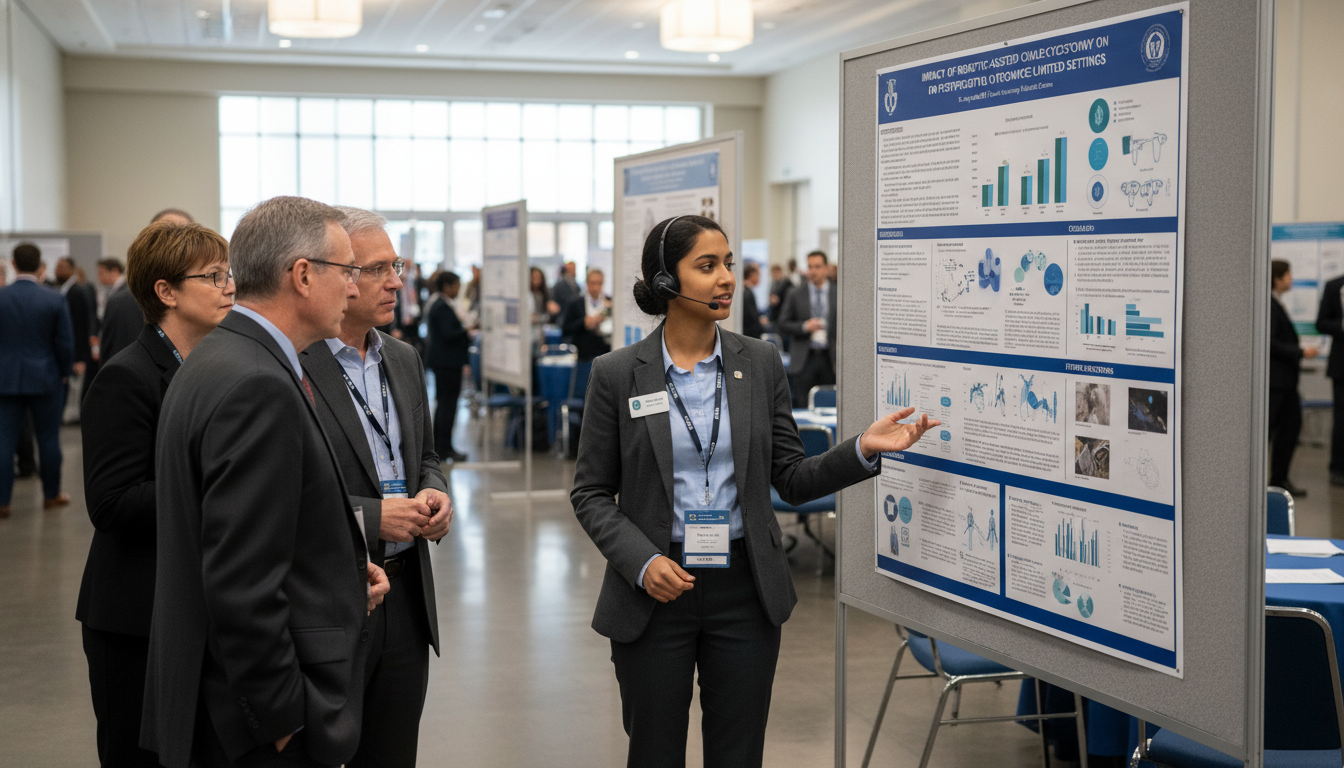
- Meet potential fellowship directors at poster sessions and panels.
4. Transitioning Back to Clinical Training
Returning to full‑time clinical work after a research hiatus can be challenging.
Strategies to ease the transition:
- Moonlight in supervised clinical roles if allowed during your research years.
- Maintain simulation and skills lab practice.
- Re‑read key surgical textbooks and operative manuals in the months before you return.
Turning Resident Research into Long‑Term Career Capital
Research during residency is not just a CV‑filler. For an international medical graduate, it can become the backbone of your professional narrative.
1. Building a Coherent Academic Identity
Over time, try to develop a recognizable theme:
- “Trauma quality improvement and resuscitation strategies”
- “Colorectal cancer outcomes and disparities in minority populations”
- “Minimally invasive foregut surgery and bariatric outcomes”
This makes you more attractive to:
- Fellowship programs looking for focused, motivated candidates
- Future employers who value niche expertise
- Potential collaborators who recognize your niche
2. Crafting a Competitive Surgery Residency Match or Fellowship Application
If you are an IMG still applying to U.S. general surgery (e.g., via a preliminary position) or planning for fellowship after categorical training, highlight research strategically:
Emphasize specific skills:
- Study design, IRB process, data analysis, manuscript preparation
- Familiarity with U.S. health systems and quality metrics
Quantify your outputs:
- “5 peer‑reviewed publications (3 first‑author), 7 national conference presentations”
Connect research to clinical goals:
- “My work on ERAS protocols directly influenced our service’s postoperative care pathway and reduced LOS.”
3. Sustaining Productivity as an Attending Surgeon
Habits formed during residency often persist:
- Maintain one or two ongoing resident research projects as junior faculty.
- Build a small research group: students, residents, data analysts.
- Apply for pilot grants or institution‑level funding as you gain experience.
For an IMG in academic surgery, ongoing research productivity can help:
- Progress from assistant to associate to full professor
- Obtain leadership roles in departments and professional societies
- Secure protected academic time and research support
Frequently Asked Questions (FAQ)
1. As an IMG, do I need research during residency to be successful in general surgery?
You do not strictly “need” research to become a competent, board‑certified general surgeon. Many excellent community and private‑practice surgeons have minimal research output. However, if you are an international medical graduate, research can:
- Strengthen your profile for competitive fellowships and academic positions
- Demonstrate mastery of U.S. healthcare systems and evidence‑based practice
- Provide objective achievements that counteract bias or unfamiliarity with your medical school
Even 1–2 solid projects during residency can be highly beneficial.
2. I have no prior research experience from my home country. Can I still succeed?
Yes. Many IMGs start residency with little to no formal research background. To catch up:
- Take advantage of institutional workshops on research fundamentals
- Ask mentors to assign you tasks that build skills progressively (literature review → data collection → drafting sections of a paper)
- Learn basic statistics and how to read methods/results sections critically
Motivation, reliability, and willingness to learn matter more than prior experience.
3. Will doing a research year hurt my operative log or surgical skills?
A research year temporarily reduces your operative exposure, but most residents catch up quickly when they return to full‑time clinical work. Programs that incorporate dedicated research time usually monitor case logs to ensure residents graduate with adequate experience. To minimize skill decay:
- Maintain occasional OR observation or assisting when feasible
- Use simulation labs for basic and laparoscopic skills
- Keep studying clinical material through conferences and self‑study
The long‑term academic and fellowship benefits often outweigh this temporary dip in operative case volume.
4. How many publications should an IMG aim for during residency?
There is no absolute number. Aim for quality and relevance over volume. Some rough benchmarks:
For a primarily clinical/community career:
- 1–3 peer‑reviewed publications, a few conference abstracts or posters
For an academic residency track or competitive fellowship (e.g., surgical oncology, pediatric surgery):
- Multiple publications, ideally with several first‑author papers in your area of interest
- Evidence of sustained involvement (multi‑year projects, national presentations, maybe a degree like MPH/MS if feasible)
Discuss realistic targets with your mentors, considering your program’s structure and your visa status.
By approaching research during residency with strategic planning, strong mentorship, and disciplined time management, an international medical graduate in general surgery can transform research from a stressful obligation into a powerful engine for personal growth, academic advancement, and improved patient care.