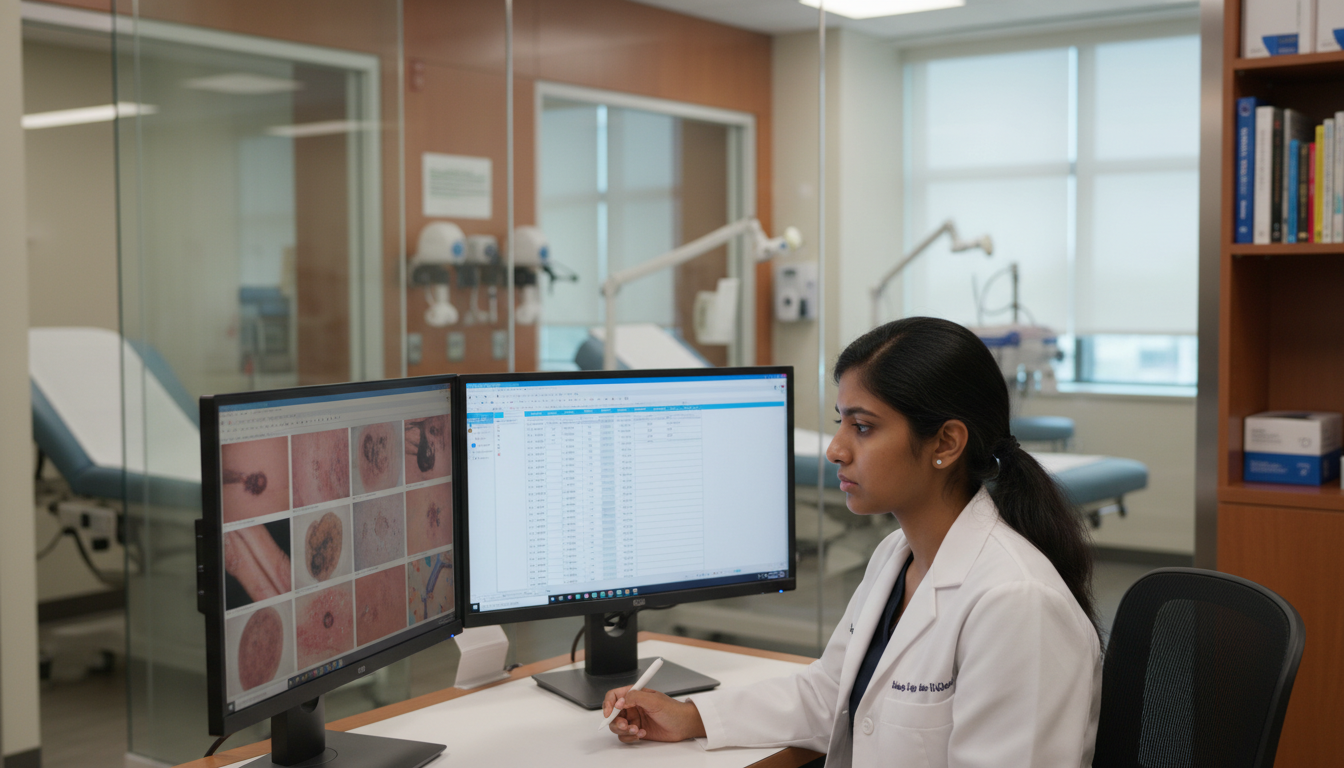
Understanding the Value of Research During Residency for IMGs in Gastroenterology
For an international medical graduate (IMG) who dreams of a gastroenterology (GI) fellowship, research during residency is not optional—it is a critical differentiator. U.S. gastroenterology fellowship programs are highly competitive, and program directors consistently prioritize evidence of scholarly activity when building their rank lists.
Research plays several roles for an IMG residency guide in GI:
- Demonstrates your ability to succeed in an academic environment
- Signals persistence, curiosity, and initiative
- Compensates, in part, for disadvantages such as visa needs, school unfamiliarity, or fewer home‑program connections
- Builds relationships with mentors who can advocate for you in the gastroenterology fellowship match
You do not need a PhD or multiple first‑author New England Journal of Medicine papers. You do need a thoughtful strategy, consistent effort, and tangible products—abstracts, posters, manuscripts, quality improvement (QI) projects—that show you can complete what you start.
This article walks you step‑by‑step through how an international medical graduate in internal medicine can design, execute, and showcase research during residency with a specific eye toward a future GI fellowship.
How GI Fellowship Directors View Research (Especially for IMGs)
Why research matters more for IMGs
For any applicant, research is valuable. For an international medical graduate aiming for gastroenterology, it’s closer to essential:
You start with less “home-field advantage”
U.S. MD seniors often have home GI divisions and mentors who can call colleagues. IMGs may enter residency without an established U.S. academic network.Program directors need evidence you can handle complex academic work
Many GI fellowships have strong research components, and PDs want to know you won’t struggle with data, critical appraisal, or writing.Research helps offset other perceived gaps
Modest Step scores, less known medical schools, or visa requirements can all be partially mitigated by clear academic productivity.
From an IMG residency guide standpoint, your research portfolio becomes part of your core narrative—not just a side activity.
What GI programs specifically look for
GI fellowship programs differ in how research‑heavy they are, but most care about:
Evidence of sustained involvement
- Not just a two‑week “shadow research” experience
- Preferably involvement over 1–2+ years of residency
Completed scholarly products
- Published manuscripts (original research > review > case reports)
- Regional/national meeting abstracts and posters
- Oral presentations
- Well‑documented resident research projects or QI/clinical initiatives
Relevance to gastroenterology or hepatology
- Direct GI/hepatology projects are ideal
- But any well‑executed internal medicine or outcomes research still has value
Strong letters describing your role
- “This resident designed the protocol, analyzed data, and drafted the manuscript” is far more powerful than “helped with data collection.”
Progression and increasing responsibility
- Starting with data entry or literature reviews
- Moving into protocol design, data analysis, and manuscript writing
- Possibly leadership of a small research team by PGY‑3

Types of Research You Can Do During Residency (GI-Focused and Beyond)
You don’t need access to a large NIH‑funded lab to build an impressive research profile. For an IMG in an internal medicine residency, especially at smaller programs, the most realistic and high‑yield options fall into a few categories.
1. Clinical research in gastroenterology
Definition: Studies using existing or prospectively collected patient data to answer clinical questions.
Examples for a future GI fellowship:
- Outcomes of patients with upper GI bleed treated with early vs delayed endoscopy
- Predictors of hospital readmission in cirrhosis or inflammatory bowel disease (IBD)
- Association between obesity and non‑alcoholic fatty liver disease severity in your patient population
- Analysis of colon cancer screening uptake in different demographic groups in your hospital system
Why this is ideal for IMGs:
- Feasible within 1–2 years if the dataset already exists
- Highly relevant to gastroenterology fellowship match committees
- Often publishable in mid‑tier GI or general medicine journals
- Builds skills in study design and data handling
2. Retrospective chart reviews
This is the bread‑and‑butter of resident research projects.
- Uses data already in the electronic medical record
- Generally faster to get IRB approval than prospective interventional studies
- Well‑suited to time‑limited residency schedules
GI‑focused examples:
- Characteristics of patients with small bowel bleeding at your hospital
- Outcomes of patients with alcoholic vs non‑alcoholic steatohepatitis admitted over a 5‑year period
- Appropriateness of proton pump inhibitor (PPI) prescribing in inpatient vs outpatient settings
3. Quality improvement (QI) projects with a GI angle
Many programs now require at least one QI project. With planning, you can align QI work with your GI interests and convert it into scholarship.
Examples:
- Improving colon cancer screening rates in your clinic
- Increasing hepatitis B/C screening among high‑risk populations
- Reducing inappropriate Clostridioides difficile testing
- Enhancing adherence to variceal bleeding prophylaxis guidelines
These can produce:
- Conference abstracts and posters
- Manuscripts in QI or general medicine journals
- A compelling story for your GI fellowship interviews about impact on patient care
4. Case reports and case series
Case reports alone rarely determine who matches into GI, but they are:
- A manageable first project for a busy resident
- Good practice in literature reviewing and manuscript writing
- Useful CV fillers, especially early (PGY‑1)
High‑yield GI case ideas:
- Unusual presentations of inflammatory bowel disease or celiac disease
- Rare complications of cirrhosis or portal hypertension
- Interesting endoscopic findings with clear teaching points
Aim to progress from single case reports to case series or small retrospective analyses as you advance.
5. Systematic reviews or narrative reviews
For residents with strong reading and writing skills, especially IMGs who may not have easy access to large datasets, reviews can be powerful:
- Systematic review on efficacy of various non‑invasive markers of liver fibrosis
- Narrative review on emerging therapies for NASH (nonalcoholic steatohepatitis)
- Review of diagnostic algorithms for obscure GI bleeding
These are particularly feasible if:
- You have a motivated GI mentor
- You start early (PGY‑1 or early PGY‑2)
- You are comfortable with structured searching and citation management
6. Basic or translational research (when available)
Not every institution has GI labs, but if yours does:
- You might join projects involving gut microbiome, liver fibrosis models, or cancer biology
- This is more time‑intensive and may require protected research time or an academic residency track
For an IMG, lab work can be a plus, especially if it leads to strong publications, but it is not mandatory for a successful gastroenterology fellowship match. Clinical research is usually more feasible within residency constraints.
How to Get Started: Building a Research Roadmap as an IMG Resident
Step 1: Clarify your GI career goals early
Before saying yes to the first research offer:
- Decide if you are aiming for:
- A research‑heavy academic GI fellowship, or
- A clinically focused fellowship with some scholarly activity
This will influence:
- The depth and type of projects you prioritize
- Whether you seek out an academic residency track or extra research time
- How many and what kind of publications you realistically need
Step 2: Identify GI‑interested faculty and research environments
Within your residency program and hospital system:
- Look for:
- Gastroenterologists or hepatologists with recent publications
- Internal medicine faculty involved in outcomes or population health research
- Established resident research projects where you can join
Practical steps:
Talk to your program director and associate program directors upfront as an IMG:
“I am very interested in a future gastroenterology fellowship and in developing a strong portfolio of research during residency. Who are the best people to connect with?”Attend:
- GI grand rounds
- Research in medicine seminars
- Departmental research days
These are often rich networking environments.
Step 3: Have a structured “research ask” conversation
When you meet a potential mentor, show that you respect their time and have thought ahead:
- Prepare a 1–2 minute “pitch”:
- Your background as an international medical graduate
- Prior research experience (even if from your home country)
- Your interest in gastroenterology
- Your availability and willingness to work
Example script:
“I am a PGY‑1 international medical graduate in internal medicine with strong interest in gastroenterology. I have some prior experience with data collection and manuscript writing in my home country, and I’m eager to be involved in resident research projects here. I can commit 3–5 hours per week consistently. Are there any GI‑related projects where I could contribute meaningfully and learn?”
Step 4: Start small but aim for completion
Early on, favor projects with a high likelihood of completion during residency over overly ambitious trials.
Good starter roles:
- Helping with data collection for a defined retrospective study
- Conducting a focused literature review for an ongoing GI project
- Drafting parts of a case report or review article
Insist gently on clarity:
- What is the scope?
- What are concrete deliverables (abstract, paper, presentation)?
- Who is the first author, and what will your authorship order likely be?
For IMGs, completed scholarship matters more than theoretical involvement.

Balancing Clinical Load, Exams, and Research: A Realistic Strategy
Research during residency is rewarding but demanding—especially for IMGs juggling visas, board exams, and often family responsibilities.
Time management principles
Front‑load research in lighter rotations
- Use outpatient, elective, and night‑float blocks to make major progress.
- Protect time on ICU/inpatient months primarily for survival and learning.
Set weekly research “appointments” with yourself
- 2–5 fixed hours/week, e.g., Sunday afternoon literature review, Wednesday evening data entry.
- Treat these as non‑negotiable, like continuity clinic.
Always know your next small actionable step
Ambiguous tasks stall projects. Convert “work on paper” into specifics:- Extract data for 10 more patients
- Draft the methods subsection on data collection
- Re‑format references to journal style
Prioritizing projects: depth over breadth
Avoid saying “yes” to every offer. For gastroenterology fellowship competitiveness:
- It is better to have:
- 1–2 meaningful GI‑related projects where your role is substantial
- 1–3 additional smaller contributions (case reports, QI abstracts)
Than to have:
- 7 ongoing projects, all incomplete, with no publishable output
Questions to ask before joining a new project:
- Is there a clear timeline?
- Is the mentor known to finish projects?
- Is the project realistically completable during my residency?
- Does it align with my GI narrative or core research skills?
Using the academic residency track (if available)
Some internal medicine programs offer an academic residency track or “research pathway”:
- Additional protected time for research
- Formal research mentorship and seminars
- Sometimes a built‑in link to subspecialty fellowships
For an IMG in GI:
- If your program has such a track, consider applying early (PGY‑1).
- Highlight:
- Your prior research experiences
- Clear GI‑oriented goals
- The specific projects you plan to advance
Even without a formal track, you can create an “academic mini‑track” by:
- Concentrating electives around GI and research
- Planning one major longitudinal project across PGY‑2 and PGY‑3
- Using vacation selectively for final manuscript pushes or conference presentations
Turning Resident Research into a Strong GI Fellowship Application
What you should ideally have by the time you apply
A realistic but competitive research profile for an IMG applying to gastroenterology fellowship often includes:
1–2 GI‑relevant publications
- Could be clinical research, QI, or solid reviews
- Ideally at least one with you as first or second author
Several abstracts/posters or oral presentations
- Institutional research day
- Regional ACP or GI society meetings
- National GI meetings (ACG, AGA, DDW) if possible
Evidence of leadership in at least one project
- As primary resident investigator, or
- As coordinator of a resident research group
Letters of recommendation highlighting your research abilities
- At least one from a GI or hepatology faculty who can speak to:
- Your analytic skills
- Reliability and initiative
- Potential as an academic gastroenterologist
- At least one from a GI or hepatology faculty who can speak to:
Building your “research story” for personal statements and interviews
Your GI fellowship application should clearly communicate:
Why research matters to you
- Perhaps you saw gaps in GI care in your home country
- Maybe you developed a fascination with liver diseases during clinical rotations
What specific questions you are drawn to
- Example: “I am particularly interested in health disparities in colon cancer screening in immigrant populations.”
How your resident research projects reflect that interest
- “My QI project on improving colorectal cancer screening in our safety‑net clinic allowed me to test practical interventions for exactly this problem.”
Where you see your future research niche
- Even if vaguely defined, show a trajectory: IBD outcomes, hepatology, endoscopy quality metrics, microbiome, etc.
Showcasing research during interviews
During interviews for the gastroenterology fellowship match:
Be ready to discuss:
- Study design rationale
- Key limitations of your projects
- How the findings could change practice (if at all)
- What you would do differently with more time/resources
Practice concise, non‑technical 2–3 minute summaries of each major project:
- Background
- Methods
- Results
- Why it matters for GI care or systems improvement
This demonstrates not only research knowledge, but the maturity and communication skills needed for an academic gastroenterology career.
Common Pitfalls for IMGs and How to Avoid Them
1. Overcommitting and under‑delivering
- Agreeing to many projects to impress faculty but not completing them damages your reputation.
- Instead:
- Start with 1–2 focused commitments
- Gradually expand if you consistently meet deadlines
2. Being “stuck” in low‑impact roles
- Only doing data entry or chart review indefinitely, without chances to write or present.
- To move up:
- After demonstrating reliability, ask directly:
- “Could I draft the introduction or methods of the manuscript?”
- “Would there be an opportunity for me to present this as a poster?”
- After demonstrating reliability, ask directly:
3. Poor documentation of contributions
For the ERAS application, you must accurately represent your role:
- Keep a simple log:
- Project title
- Mentor
- Your specific tasks
- Dates of involvement
- Outcome (submitted/published/presented)
This helps you describe your work clearly and ethically.
4. Waiting too long to start
If you begin serious research only in late PGY‑2:
- You may struggle to produce completed work by the time applications open.
- Ideal timeline:
- Late PGY‑1: Join at least one project
- PGY‑2: Lead or co‑lead at least one GI‑focused project
- Early PGY‑3: Convert outputs to abstracts/manuscripts and highlight them in your application
Frequently Asked Questions (FAQ)
1. Is research absolutely required for an IMG to match into a GI fellowship?
Not officially, but in practice it is highly important. Many IMGs who successfully match into gastroenterology have at least some meaningful scholarly output—especially those applying to academic programs. Community‑based fellowships may weigh clinical performance more heavily, but even there, research or QI experience strengthens your application and letters.
2. Does my research have to be directly related to gastroenterology?
GI‑related work is ideal, but not mandatory. Solid, methodologically sound research in general internal medicine, hospital medicine, or outcomes research still counts. However, at least one or two projects with a clear GI or hepatology focus help anchor your GI narrative and are especially persuasive to program directors.
3. I’m at a smaller community program with limited GI faculty. What can I do?
You still have options:
- Seek remote collaborations with academic centers (through alumni, conferences, or cold emails).
- Focus on feasible resident research projects like QI initiatives, retrospective chart reviews, and case series.
- Work with non‑GI faculty on methodology‑heavy projects to build general research skills, then connect them later to GI questions in your personal statement and interviews.
4. How many publications do I need to be competitive for GI as an IMG?
There is no fixed number, and quality matters more than quantity. As a rough benchmark for a strong IMG residency guide in GI:
Very competitive academic applicants:
- Multiple GI‑related abstracts/posters
- 2–5 publications (not all first‑author)
Solid, realistic target for many IMGs:
- 1–2 GI‑relevant publications (first or second author preferred)
- Several additional abstracts/posters or case reports
Focus on completing projects, not chasing arbitrary numbers.
Research during residency is one of the most powerful tools an international medical graduate can use to shape a future in gastroenterology. By starting early, choosing projects strategically, nurturing strong mentorship, and following through to completion, you can build a research record that not only helps you in the gastroenterology fellowship match, but also sets you up for a lifelong career of inquiry and improvement in GI patient care.