Understanding the Role of Research During Residency in Hematology-Oncology
For an MD graduate interested in hematology-oncology, research during residency is not just a “nice-to-have” line on your CV—it is a key differentiator for the allopathic medical school match into competitive programs, and later, for a successful heme onc fellowship application. Hematology-oncology is a rapidly evolving field, with new therapeutics, diagnostic tools, and clinical pathways emerging constantly. Residency is your best opportunity to develop the research skills and portfolio that will position you for an oncology fellowship match and an academic or hybrid career.
This article breaks down how to think strategically about resident research projects, how to choose the right academic residency track, and how to build a coherent body of work that will support your long-term goals in hematology-oncology.
Why Research During Residency Matters for Hematology-Oncology
1. Competitive Edge for Heme Onc Fellowship
Hematology-oncology fellowships are highly competitive. Program directors reviewing applicants consistently value:
- Demonstrated scholarly activity (abstracts, posters, publications)
- Clear interest in hematology-oncology, supported by targeted research
- Letters of recommendation commenting on academic potential
- Evidence you can complete projects, meet deadlines, and work in teams
When committees sort applicants, those who have strong research during residency related to hematology-oncology often stand out for top-tier oncology fellowship match outcomes, especially at academic centers.
What PDs look for specifically:
- Consistency: Multiple projects, not a single isolated experience
- Relevance: Heme/onc topics (e.g., leukemia, lymphoma, solid tumors, thrombosis, transplant, cellular therapy)
- Impact: Abstracts at national meetings (ASH, ASCO, ACCP, etc.), peer-reviewed publications
- Role: Your contribution (first author > middle author > “acknowledged only”)
2. Foundation for an Academic Career
If you are considering an academic residency track or future faculty position, residency is where you learn:
- How to generate a research question from a clinical problem
- Basics of study design and biostatistics
- Critical appraisal of the literature
- How grant funding, IRB review, and research operations work
- Effective scientific communication (manuscripts, oral presentations)
Hematology-oncology is especially research-driven: clinical trials, translational science, outcomes research, health services research, and quality improvement are all tightly integrated into practice. Early exposure makes you a better clinician and a more credible future applicant for research-focused heme onc fellowship positions.
3. Intellectual Growth and Patient Impact
Even if you ultimately choose a more clinically focused career, research during residency:
- Sharpens your reasoning and evidence assessment
- Exposes you to cutting-edge treatments and evolving guidelines
- Helps you counsel patients using best available data
- Builds networks with faculty who are leaders in the field
For example, working on a project about thrombosis in cancer patients may change how you risk-stratify your own patients on the wards, or spark interest in a niche such as cancer-associated thrombosis or survivorship care.
Choosing a Residency Pathway That Supports Hematology-Oncology Research
1. Internal Medicine vs. Other Routes
Most MD graduates aiming for hematology-oncology pursue Internal Medicine residency as the primary pathway. A few may come from pediatrics (for pediatric heme/onc), but for adult hematology-oncology, Internal Medicine is the standard route.
When evaluating Internal Medicine programs with the goal of a heme onc fellowship:
- Look for strong hepatology, oncology, and bone marrow transplant services
- Assess the program’s research infrastructure (clinical trials unit, biostat support)
- Investigate how many residents match into hematology-oncology fellowships annually
- Ask about an academic residency track or research track
2. Academic Residency Track vs. Categorical Track
Many Internal Medicine programs now offer an academic residency track (sometimes called a physician-scientist track, research track, or clinician-investigator pathway). These are particularly advantageous for residents targeting competitive fellowships such as heme onc.
Features to look for:
- Protected research time:
- 3–6 months of research electives
- Dedicated research blocks in PGY-2 and PGY-3
- Formal mentorship structure:
- Assigned research mentor plus secondary advisor
- Regular scholarly oversight committee meetings
- Research curriculum:
- Workshops or seminars in statistics, epidemiology, or clinical trial design
- Optional advanced degrees (e.g., MPH, MS in Clinical Research)
An academic residency track can help you build a stronger, more cohesive research portfolio than a purely clinical track, especially if you are eyeing top-tier oncology fellowship match programs at research-intensive institutions.
3. Evaluating Programs for Research Fit in Heme-Onc
As a new MD graduate evaluating training sites, dig beyond generic “we support research” statements. Practical questions:
- Faculty strength:
- Are there multiple hematology-oncology attendings with active research portfolios?
- Do they publish regularly in reputable journals (e.g., Blood, JCO, Leukemia, Lancet Oncology)?
- Research domains:
- Are there opportunities in your areas of interest?
- Leukemia/MDS, lymphoma, myeloma
- Solid tumors (breast, lung, GI, GU)
- Thrombosis, coagulation, transfusion medicine
- Cellular therapy (CAR-T), bone marrow transplant
- Outcomes, disparities, palliative and survivorship research
- Are there opportunities in your areas of interest?
- Collaborative environment:
- Is there an affiliated cancer center or NCI-designated comprehensive cancer center?
- Are there existing resident research projects in heme/onc?
You want a place where a resident can realistically get involved in oncology research early, not one where all the major trials are “locked down” to fellows and faculty only.

Types of Research Projects Suitable for Residents in Hematology-Oncology
You do not need to run a Phase III randomized trial during residency to be competitive. Resident research projects can be highly impactful yet feasible within 2–3 years.
1. Retrospective Chart Reviews
What they are:
Studies using existing data from the electronic medical record (EMR) to answer questions about outcomes, risk factors, or practice patterns.
Examples in heme-onc:
- Outcomes of elderly patients with diffuse large B-cell lymphoma treated with attenuated regimens
- Predictors of chemotherapy-related hospital readmissions in solid tumor patients
- Patterns of anticoagulation use in cancer-associated thrombosis
Why they work for residents:
- Faster IRB process (often minimal risk)
- Data already exists—no need to recruit patients prospectively
- Can lead to abstracts and manuscripts within resident timeframes
2. Quality Improvement (QI) and Patient Safety Projects
Many residency programs require QI projects; these can be tailored to hematology-oncology and still count as meaningful scholarship.
Examples:
- Increasing appropriate VTE prophylaxis in hospitalized oncology patients
- Reducing time to antibiotic administration in febrile neutropenia
- Improving documentation of chemotherapy-related adverse events
If designed rigorously, QI projects can:
- Lead to presentations at ASH/ASCO Quality-focused sessions or institutional symposia
- Be written up for publication in QI-focused or clinical education journals
3. Clinical Trials Involvement (Sub-Projects)
As a resident, you usually will not be the principal investigator, but you can still be actively involved:
- Assisting with data collection and analysis for an ongoing trial
- Conducting subgroup analyses for secondary manuscripts
- Working on correlative science (e.g., biomarkers, genomic data) under supervision
Heme-onc clinical trial sub-project examples:
- Exploring quality-of-life outcomes in patients receiving a new targeted therapy
- Evaluating real-world toxicity vs. trial-reported toxicity in an off-protocol cohort
- Analyzing disparities in trial enrollment by race/ethnicity or socioeconomic status
4. Systematic Reviews and Meta-Analyses
If your institution lacks robust heme onc clinical databases, literature-based projects can still be high-yield.
Potential topics:
- Efficacy and toxicity of CAR-T therapy in older adults
- Optimal anticoagulation strategies in cancer patients with atrial fibrillation
- Outcomes of reduced-intensity transplant conditioning in high-risk AML
You’ll gain skills in:
- Search strategy design (PubMed, Embase, Cochrane)
- Data extraction and quality assessment
- Statistical pooling methods (if meta-analysis)
5. Translational / Bench Research
If you have prior basic science experience or are in a research-intensive academic residency track, consider joining a lab focused on:
- Leukemia or lymphoma genomics
- Microenvironment and immunology of solid tumors
- Resistance mechanisms to targeted therapies
- Novel biomarkers for minimal residual disease
Bench research is time-intensive; for residency it works best if:
- You have protected time (e.g., research blocks)
- You can join a well-established project with a realistic 2–3-year arc
- There is clear mentorship and support for MD trainees
6. Educational and Curriculum Research
Academic hematology-oncology also values medical education scholarship, especially if you might later teach or lead fellowship programs.
Examples:
- Designing a new resident curriculum on transfusion medicine and evaluating its impact
- Creating an OSCE focused on oncologic emergencies and studying performance outcomes
- Evaluating how simulation-based training improves confidence in managing neutropenic sepsis
Such work can lead to publications in education journals and demonstrates versatility as an educator-clinician-investigator.
How to Get Started: Step-by-Step Strategy for Resident Research
1. Define Your Long-Term Goals Early
Before diving into any project, clarify your broad goals:
- Do you aim for a highly academic heme onc fellowship with a large research component?
- Are you more interested in a mixed clinical-research career or primarily clinical practice but in an evidence-driven environment?
- Do you gravitate to malignant hematology, benign hematology, or solid tumors?
Your answers shape the type and intensity of research you should pursue.
2. Find the Right Mentors
Strong mentorship is the single most important component of success in research during residency.
How to identify good mentors:
- Look at the heme-onc faculty directory and search their recent publications
- Ask senior residents which attendings are “resident-friendly” and successful in getting residents on papers
- Attend tumor boards and heme-onc conferences to observe faculty dynamics and interests
What to ask a potential mentor:
- “What ongoing projects could realistically include a resident as an author?”
- “What is the typical timeframe from project start to abstract/manuscript?”
- “How have your prior resident mentees done in terms of publications and fellowship match?”
Ideal mentors are engaged, have active projects, and understand the constraints of residency schedules.
3. Start Small, Then Build a Cohesive Portfolio
In PGY-1 or early PGY-2, start with a feasible project that can reach completion:
- Case series or small retrospective study
- QI project related to inpatient oncology care
- Participation in data analysis for an existing clinical project
Once you have a first abstract or manuscript under review, expand into:
- A larger retrospective cohort or multi-center study
- More methodologically complex projects (e.g., time-to-event analyses, propensity matching)
- A longitudinal research theme (e.g., VTE in cancer, lymphoma outcomes, supportive care)
Program directors appreciate a coherent narrative (“I have systematically studied thrombosis in cancer patients over multiple projects”) more than scattered, unrelated one-off projects.
4. Learn the Basics of Methods and Stats
You do not need to be a biostatistician, but you must understand:
- Study designs: cohort, case-control, cross-sectional, randomized trial
- Basic statistics:
- t-tests, chi-square tests, logistic regression
- Survival analysis (Kaplan-Meier, Cox proportional hazards)
- Confounding and bias
Take advantage of:
- Institutional research courses or workshops
- Online modules (Coursera, edX) in epidemiology and biostatistics
- Resident journal clubs focusing on heme onc articles
This baseline knowledge makes you a much more effective collaborator and manuscript writer.
5. Protect Time and Set Realistic Milestones
Residency is demanding, and it is easy for research to drift if you do not structure your time.
Practical tips:
- Block research time in your calendar, even on busy rotations (1–2 hours weekly for reading + writing)
- Use slower rotations (e.g., ambulatory, electives) for concentrated work (data analysis, drafting manuscripts)
- With your mentor, set explicit milestones:
- IRB submission by Month X
- Data collection completed by Month Y
- Abstract submitted to ASH/ASCO by Date Z
Track progress monthly and adjust deadlines if needed, but avoid letting projects stall indefinitely.
6. Aim for Tangible Outputs
For the heme onc fellowship application, tangible outputs matter:
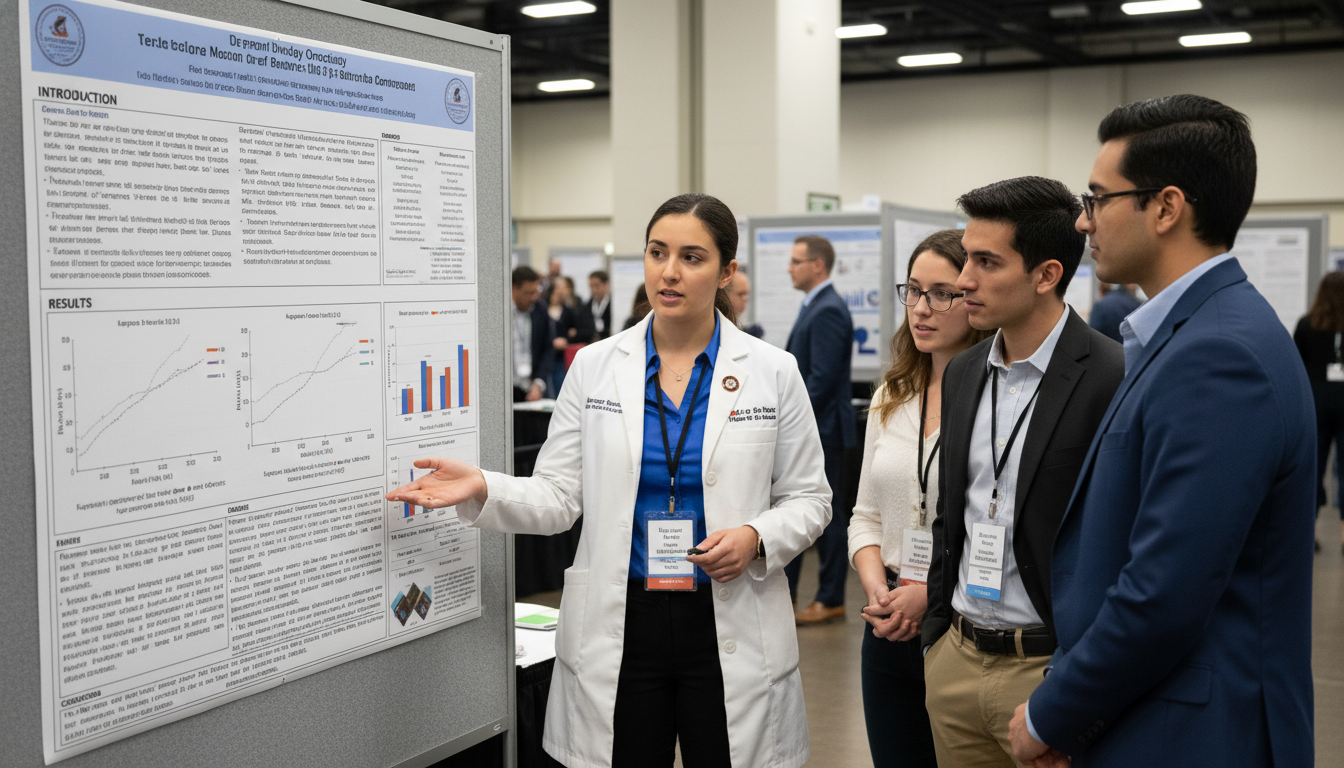
- Abstracts and posters at:
- American Society of Hematology (ASH)
- American Society of Clinical Oncology (ASCO)
- American Association for Cancer Research (AACR)
- Disease-specific meetings (e.g., TCT, EHA, SABCS)
- Peer-reviewed manuscripts:
- Even case reports or brief communications can be useful early on
- Aim to have at least 1–2 first-author or co-first-author papers if possible
- Local and regional presentations:
- Institutional research days
- Regional ACP or subspecialty meetings
List these clearly in your CV under “Publications” and “Presentations.” During interviews, be prepared to succinctly explain your role and what you learned from each project.
Positioning Your Research for a Successful Oncology Fellowship Match
1. Aligning Your Story
Residency research should support a coherent, believable narrative in your heme onc fellowship application:
- Personal statement:
- Describe how specific research experiences shaped your interest in hematology-oncology
- Highlight a key project as an example of your curiosity, persistence, and impact
- CV:
- Organize your publications/presentations clearly, with heme-onc–relevant work prominent
- Interview discussions:
- Be ready to discuss your most significant project in lay terms and in more technical detail
- Explain what you would like to explore in future heme onc fellowship research
Program directors want to see that your past behavior (resident research projects) predicts future success as a fellow and beyond.
2. Leveraging Letters of Recommendation
Ask mentors who know your research well to emphasize:
- Your intellectual engagement and critical thinking
- Your independence and ability to move projects forward
- Your resilience when studies encounter obstacles
- Your writing and presentation skills
- Your potential for an academic or hybrid career
A mentor’s letter saying, “This resident led a complex retrospective study and produced a first-author manuscript in a high-quality journal” carries substantial weight in oncology fellowship match decisions.
3. Bridging to Future Heme Onc Fellowship Research
During fellowship interviews, programs will assess:
- Do you have a track record of productivity?
- Can you identify clear research interests moving forward?
- Are you likely to enhance the program’s academic output?
Be prepared to discuss:
- How your residency projects give you technical skills or domain knowledge for future work
- e.g., “My QI project on febrile neutropenia helped me understand systems barriers, and I now want to study how care delivery models affect survival in AML.”
- What types of projects you hope to join as a fellow:
- Clinical trials, translational lab research, population science, health disparities, etc.
- How you plan to use fellowship to refine your niche and potentially secure early-career grants or an academic faculty position
Your trajectory should appear deliberate and upward, building on research during residency as a launchpad.
Common Pitfalls and How to Avoid Them
1. Overcommitting to Too Many Projects
Enthusiastic residents often say “yes” to every opportunity, leading to:
- Fragmented involvement in multiple projects
- Incomplete manuscripts
- Burnout and missed deadlines
Solution: Prioritize 1–3 substantial projects where you have meaningful authorship potential, rather than 8–10 minor roles that never fully materialize.
2. Poor Communication With Mentors
Silence is interpreted as disinterest or lack of reliability.
Solution:
- Schedule recurring check-ins (e.g., monthly 30-minute meetings)
- Send agendas beforehand and summary emails after
- Inform mentors early if you anticipate delays due to clinical workload or personal issues
3. Underestimating Time for IRB and Data Cleaning
Ethics review and data preparation often take as long as analysis and writing.
Solution:
- Start IRB work as early as possible
- Ask prior residents about typical IRB timelines at your institution
- Anticipate that data cleaning may be iterative, requiring several passes with your mentor or statistician
4. Ignoring Authorship Discussions
Assumptions about authorship order can cause conflict later.
Solution:
- Clarify roles at project start: “If I do X, Y, and Z, would that qualify me for first authorship?”
- Revisit authorship if project scope changes
- Be transparent and professional; document key agreements in email
5. Not Finishing Projects Before Graduation
Many residents start strong but leave manuscripts unfinished when they graduate.
Solution:
- Aim to submit at least one paper by early PGY-3
- For ongoing projects, ensure:
- Data is fully collected and analyzed well before graduation
- Drafts are advanced enough that you can finalize them remotely if needed
- Negotiate a continued role post-residency with your mentor (using institutional email if possible)
FAQs: Research During Residency for MD Graduates in Hematology-Oncology
1. How much research do I need during residency to match into a heme onc fellowship?
There is no absolute number, but quality and relevance matter more than quantity. As a broad benchmark for a strong applicant to an academic program:
- 1–3 first-author or co-first-author publications (case report, retrospective study, review, or clinical/translational work)
- Several abstracts and posters at regional or national meetings
- Clear heme onc focus in at least some of your projects
Community-oriented or clinically focused programs may require less, but research is still a significant advantage.
2. Is it better to do heme onc–specific research or any kind of research during residency?
If you are targeting hematology-oncology, heme onc–specific research is ideal, as it clearly demonstrates commitment and provides relevant experience. However, high-quality research in related fields (e.g., general internal medicine outcomes, hospital medicine QI, palliative care) is still valuable—especially if you can articulate how those skills and insights apply to oncology (e.g., management of complex, critically ill patients, end-of-life care, systems-based practice).
3. Can I still be competitive for oncology fellowship if my residency program has limited research infrastructure?
Yes, but you must be strategic:
- Seek external mentors at affiliated institutions or cancer centers
- Take advantage of multi-center collaborative projects and online research networks
- Consider systematic reviews or meta-analyses if local patient data are limited
- Present at regional and national conferences to build visibility
Your fellowship application should highlight your initiative in creating opportunities even in a resource-limited setting.
4. How early should I start research during residency if I plan on a heme onc career?
Ideally, begin exploring research options in PGY-1:
- Meet potential mentors within the first 6–9 months
- Join an ongoing project or design a small retrospective or QI project
- Aim for your first abstract submission by late PGY-2
Because fellowship applications are typically submitted early in PGY-3, you want at least some research outputs (or clearly progressing projects) by then to showcase in your CV and personal statement.
By approaching research during residency with intention—selecting the right projects, mentors, and academic residency track—you can substantially strengthen your allopathic medical school match into Internal Medicine, and most importantly, your later oncology fellowship match prospects. For an MD graduate committed to hematology-oncology, these years are your opportunity to lay a solid foundation as a clinician-investigator and shape a career that blends patient care with meaningful contributions to the science of cancer and blood disorders.