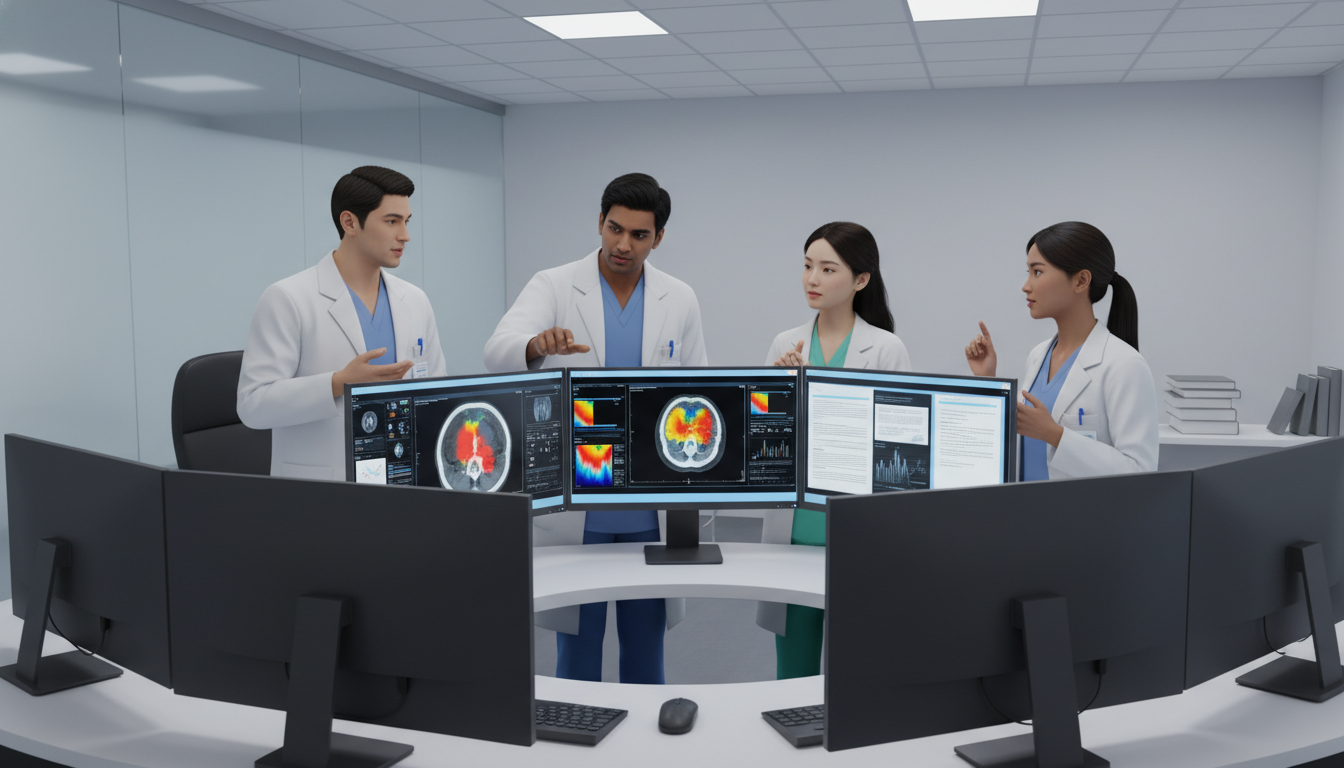
Why Research During Residency Matters So Much for Non‑US Citizen IMGs in Nuclear Medicine
For a non‑US citizen IMG in nuclear medicine, research during residency is not just a “nice‑to‑have” activity—it is often a strategic necessity. You are competing in a small, highly specialized field where your visa status, foreign medical degree, and unfamiliarity with the US system may all be seen as additional “risks” by future employers and fellowship directors.
Strong resident research projects help you:
- Demonstrate academic potential beyond exam scores and your medical school name
- Build a track record that offsets bias against foreign national medical graduates
- Gain US-based mentors who can advocate for you in the nuclear medicine match (for fellowships or combined programs) and for future jobs
- Qualify for academic residency track positions, junior faculty roles, or research fellowships
- Stand out when applying for competitive positions in hybrid imaging (PET/CT, PET/MR), theranostics, or academic nuclear medicine departments
In nuclear medicine specifically, the field is driven by innovation—radiopharmaceutical development, theranostic agents, AI in image analysis, and quantitative imaging. Residents who contribute to this innovation become highly attractive, regardless of passport.
The rest of this article will walk you through how to use research during residency strategically as a non‑US citizen IMG: how to choose a project, find mentors, work within visa constraints, and turn your work into publications and career opportunities.
Understanding the Research Landscape in Nuclear Medicine Residency
Nuclear medicine residency programs vary widely in their research expectations and infrastructure. As a non-US citizen IMG, you must understand the environment you’re entering so you can plan realistically.
Types of Research Common in Nuclear Medicine
You do not need a basic science PhD or prior lab experience to do meaningful work. In nuclear medicine, residents commonly engage in:
Clinical research
- Retrospective chart and image reviews (e.g., evaluate the diagnostic performance of a new PET tracer for a specific cancer)
- Comparison of imaging protocols or interpretation methods
- Outcomes research (e.g., how PSMA PET findings changed management decisions)
Translational/theranostic research
- Early evaluation of new radiopharmaceuticals
- Dosimetry projects for therapeutic agents (e.g., I‑131, Lu‑177, Y‑90)
- Studies linking imaging biomarkers to molecular or genetic markers
Physics and quantitative imaging research
- Image reconstruction techniques and optimization
- Quantification of standardized uptake values (SUV)
- Noise reduction, motion correction, or attenuation correction studies
- Phantom studies for quality assurance
AI, informatics, and workflow
- Machine learning algorithms for lesion detection or quantification
- Tools for structured reporting and decision support
- Workflow optimization and radiation dose tracking
Educational and quality improvement (QI) research
- Evaluating the impact of a new teaching curriculum or assessment system
- Initiatives to reduce reporting discrepancies
- Projects improving patient preparation, dose protocols, or turnaround time
For many non-US citizen IMGs, retrospective clinical studies, dosimetry projects, and QI research are the easiest entry points—they require fewer resources, no animal or wet lab work, and are often compatible with visa and IRB constraints.
How Much Research Is Expected?
Expectations differ:
- Purely clinical programs: Research is optional but supported if you’re motivated. Output is often case reports, small retrospective series, or QI projects.
- Hybrid or academic nuclear medicine residency programs: Often encourage or require at least one substantial research project, abstract, or publication during training.
- Programs with dedicated academic residency track: These may provide protected research time, structured mentorship, funding, and expectations for multiple manuscripts and presentations.
As a foreign national medical graduate, it is wise to seek programs that:
- Have a track record of publications/abstracts by residents
- Provide access to statisticians or research coordinators
- Explicitly mention research opportunities and mentorship on their websites
- Host or participate in nuclear medicine, radiology, or oncology research groups
If you’re already in residency, early in PGY‑2 or PGY‑3 is the time to map your research opportunities—before clinical demands fully peak.

Strategic Project Selection for the Non‑US Citizen IMG
Choosing the right project may be the single most important decision you make about research during residency. You have limited time, and you need work that is both feasible and impactful.
Aim for the Intersection of Feasible, Publishable, and Career‑Relevant
When evaluating potential resident research projects, use a three‑question filter:
Feasibility
- Can this be done in 12–18 months with my current skills?
- Are the data accessible? (e.g., PACS, EMR, dose records)
- Do I have a mentor actively engaged in this area?
Publishability
- Is there a clear, answerable question?
- Are there enough patients or studies to power the project?
- Does it build on but not duplicate existing literature?
Relevance to my long‑term goals
- Does this align with areas growing in nuclear medicine (e.g., theranostics, PSMA, FDG in immunotherapy response, neurodegenerative imaging, AI)?
- Will this support applications for fellowships or junior faculty roles in academic centers?
A non-US citizen IMG might, for example, choose:
- Project 1 (Core clinical): “Impact of PSMA PET/CT on management decisions in high‑risk prostate cancer patients at our institution”
- Project 2 (Theranostics/dosimetry): “Correlation between Lu‑177 PSMA absorbed dose and hematologic toxicity”
- Project 3 (Short QI/educational): “Standardized reporting template for thyroid cancer I‑131 whole body scans and its effect on report completeness”
Collectively, these show clinical depth, quantitative analysis skills, and an interest in cutting‑edge nuclear medicine.
Start Small, Then Scale
You do not need to start with a large multi‑institutional study. As an IMG navigating a new system, a well‑executed small project is far better than a large unfocused one. A common step‑up path:
Case reports and small case series
- Use rare or illustrative nuclear medicine findings
- Combine unusual imaging patterns with biopsy or outcome correlation
- Good for first publications and networking with mentors
Retrospective cohort studies
- Pull 50–200 patients who underwent a specific imaging study
- Evaluate diagnostic performance, staging impact, or outcome prediction
- Typically publishable in specialty or subspecialty journals
Prospective or interventional projects (optional, more ambitious)
- Implement a new imaging protocol or structured report template
- Collect data forward‑looking to assess diagnostic accuracy, report quality, or workflow impact
Aligning with Available Data and Resources
Non-US citizen IMGs may face extra hurdles accessing certain types of research (e.g., basic science labs, animal work, or externally funded grants) due to visa restrictions or security policies. To minimize friction:
- Focus on de‑identified imaging and clinical data that are easily accessible from PACS/EMR with IRB approval.
- Consider multidisciplinary projects with oncology, urology, endocrinology, neurology, or radiation oncology—these departments often welcome imaging collaborators and may already have IRB approvals you can join.
- Use existing databases and registries when possible (e.g., internal dose records, PET/CT utilization logs, theranostic clinic databases).
Example:
If your institution runs a theranostics clinic, you might join a pre‑existing database project on Lu‑177 DOTATATE therapy outcomes instead of creating a new study from scratch.
How to Build a Research Career During Residency: Step‑by‑Step
Step 1: Find the Right Mentor(s)
Mentorship is especially crucial for a foreign national medical graduate who may not know the US academic culture. Try to identify:
- Primary research mentor: A nuclear medicine attending with active publications in your topic area.
- Secondary content mentor: A specialist from a collaborating field (e.g., oncology, urology, neurology, radiation oncology, medical physics).
- Career mentor: Someone (often but not always your PD) who understands visa, job market, and academic pathways for non-US citizen IMG residents.
How to approach a potential mentor:
- Review their recent PubMed listings and conference abstracts.
- Send a concise email: who you are, your visa status (optional but sometimes helpful context), your interest in nuclear medicine research, and 1–2 specific ideas or willingness to join an existing project.
- Ask to meet for 20–30 minutes to discuss potential research directions.
Be clear that you are willing to do the groundwork—data collection, chart review, image analysis, dose calculations—and want guidance on methodology and publication strategy.
Step 2: Clarify Expectations and Timeline
One of the biggest causes of stalled projects is unclear expectations. At the start, agree on:
- Target question and study design (case series, retrospective cohort, QI study)
- Data source and size (e.g., “all PSMA PET/CTs from 2019–2023”)
- Your responsibilities (data collection, image review, analysis) versus the mentor’s (IRB, stats consultation, final edits)
- Timeline: target dates for IRB submission, data extraction, first draft, conference submission, manuscript submission
As a non-US citizen IMG, you must also consider visa timelines:
- If on a J‑1 or H‑1B, when does your visa end relative to residency?
- Can you realistically complete the project, submit a manuscript, and list it on fellowship applications in time?
Work backwards from your key milestones: fellowship applications, job search, or visa transitions.
Step 3: Secure IRB Approval and Learn the Basics of Research Ethics
Research during residency almost always requires:
- Institutional Review Board (IRB) approval (or at least a determination that the project is exempt or QI)
- HIPAA compliance and secure handling of patient data
Ask to be included in the IRB application so you:
- Learn how to frame a research question in IRB language
- Understand risk assessment and data protection requirements
- Gain experience you can cite in future applications
Many IMGs are initially unfamiliar with the US IRB process. Seek out:
- Institutional research orientation sessions or online modules
- Guidance from your department’s research coordinator or clinical research office
Step 4: Data Collection and Analysis—Be Systematic
Resident research projects often fail at the data stage due to inconsistency or poor organization. Use best practices:
- Define inclusion and exclusion criteria clearly.
- Use standardized data collection sheets (e.g., REDCap, Excel with locked fields).
- For imaging variables, create a clear protocol: which SUV to record, lesion selection, how to handle multi-lesion disease.
- Keep an up‑to‑date log of patient IDs, data completeness, and any special notes.
If you lack statistical training:
- Seek help from a biostatistics core early.
- Ask mentors what tests or models they want to use (e.g., ROC analysis, Kaplan–Meier curves, logistic regression).
- Take advantage of free online resources (e.g., Coursera biostatistics courses, institutional workshops).
Step 5: Write, Revise, Submit—and Present
Transform your work into concrete outputs:
Abstracts and posters/oral presentations
- Target nuclear medicine or radiology conferences (e.g., SNMMI, RSNA, EANM, regional nuclear medicine societies).
- Presenting at conferences is crucial for building your network—particularly as a non-US citizen IMG.
Manuscripts
- Start with a clear outline, align it with your abstract, and follow journal author instructions strictly.
- Ask a co‑author with strong English writing skills to review—especially if English is your second language.
- Expect at least one round of revision or resubmission to another journal.
Online academic presence
- Create or update your Google Scholar, ORCID, and possibly ResearchGate profiles.
- Keep your CV updated with abstracts, posters, and publications.
Each accepted abstract or article significantly strengthens your profile for academic residency track positions, fellowships, and future academic jobs.
Navigating Visa, Funding, and Academic Track Realities as a Non‑US Citizen IMG
Visa Considerations and Research
Your immigration status can influence the research opportunities open to you, but it rarely prevents meaningful work:
J‑1 visa
- Usually permits standard clinical research during residency.
- External funding or extended research-only years may be more complex; involve your program and GME office early.
H‑1B visa
- Also usually compatible with clinical research, but employers may be conservative about unpaid additional roles or research years outside your contracted duties.
F‑1 with OPT (less common for residency)
- Needs careful alignment between research scope and employment authorization.
Always:
- Discuss plans for additional research time or academic residency track positions with your GME and visa office early.
- Ensure all work fits within the scope of your approved position (resident physician) and institutional policies.
Funding and Protected Time
Most nuclear medicine residents do research without dedicated salary support, simply as part of their regular duties or elective time. However, you can still:
- Ask for research electives (e.g., 4–8 weeks) once your project is clearly defined and IRB-approved.
- Apply for small internal grants (e.g., departmental seed funding, trainee research grants) that cover:
- Statistician time
- Data extraction costs
- Conference travel for accepted abstracts
Be aware that some external grants may have citizenship or permanent residence requirements. Focus on:
- Institutional trainee awards open to all residents
- Travel awards from societies like SNMMI that may be less restrictive
Positioning Yourself for an Academic Residency Track or Academic Career
If your goal is to remain in academia, an academic residency track or research‑heavy training path can be invaluable. Indicators you are building a strong academic profile:
- Multiple abstracts accepted to national/international society meetings
- At least one or two first‑author peer‑reviewed papers
- Experience in multi‑disciplinary research (e.g., co‑authored with oncology, neurology, radiation oncology)
- Clear thematic focus (e.g., theranostics, neuroimaging, AI quantification) rather than many unrelated one‑off projects
Discuss with your program leadership whether:
- Your department offers an academic residency track or additional research time in senior years.
- There is a path to a chief resident, clinical instructor, or research fellow role that strengthens your CV and allows more research output while visa options are considered for long‑term employment.
Using Resident Research to Shape Your Long‑Term Nuclear Medicine Career
Research during residency is not only about publications—it’s a way to design your future in nuclear medicine.
Building a Network as a Foreign National Medical Graduate
Conferences and collaborative projects allow you to:
- Meet potential fellowship directors and future employers
- Introduce yourself as “the resident working on X”—a recognizable niche
- Demonstrate reliability and communication skills in an academic setting
Practical tips:
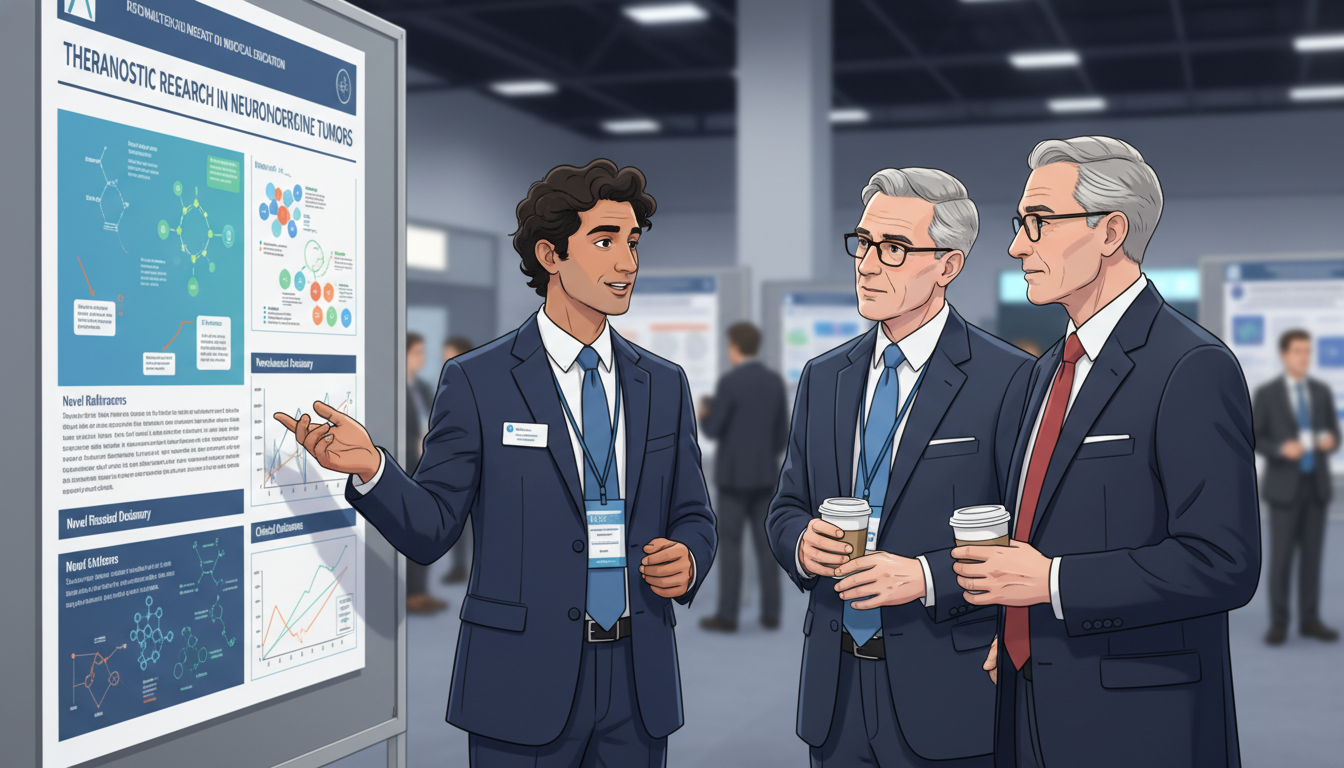
- When presenting a poster, proactively invite questions from those who stop by.
- Ask your mentor to introduce you to colleagues in your area of interest.
- Follow up with people who show interest in your work via email and share your abstract or paper.
Choosing a Niche
As residency progresses, your projects can help define a niche that will carry you into fellowship and beyond, such as:
- Theranostics and dosimetry
- Oncologic PET/CT with a focus on specific cancers (e.g., lymphoma, prostate, neuroendocrine)
- Neuroimaging in dementia, movement disorders, or epilepsy
- Pediatric nuclear medicine
- AI and quantitative imaging tools
A coherent research portfolio makes fellowship directors more confident that you are committed and able to contribute academic value, even if you trained abroad.
Transitioning Beyond Residency
Your research track record can support:
- Fellowship applications (e.g., nuclear radiology, PET/CT, body imaging with a nuclear focus)
- Junior faculty positions in academic departments seeking someone to develop clinical theranostics programs or imaging‑based research
- Hybrid roles that combine clinical nuclear medicine with research in oncology, neurology, or radiation oncology departments
Non‑US citizen IMGs with solid research backgrounds are often better positioned to secure institutional support for visas, since academic departments can justify the value of retaining them.
FAQs: Research During Residency for Non‑US Citizen IMGs in Nuclear Medicine
1. I have no prior research experience. Can I still do meaningful research during residency?
Yes. Many residents—especially non-US citizen IMGs—start with zero prior experience. Begin with manageable projects such as case reports, small retrospective studies, or QI initiatives. Find a mentor willing to teach you research basics, and take advantage of institutional research education sessions. Your first project’s main goal is to learn the process; subsequent projects can be more ambitious.
2. How many publications do I need to be competitive for an academic career in nuclear medicine?
There is no fixed number, but for an academic track or academic jobs, having 2–4 publications (with at least 1–2 as first author) by the end of residency is very helpful. Strong abstracts and national conference presentations also carry significant weight. Quality and thematic coherence matter more than raw quantity.
3. Will my visa status limit my ability to do research during residency?
In most cases, standard clinical research during residency is allowed on J‑1 and H‑1B visas. The main considerations are ensuring your work is within your institution’s policies and your approved role. Long, research‑only years or external grants may be more complex and require approval from your GME and immigration office. Always discuss plans early with your program and institutional visa advisors.
4. Is it better to focus on one big project or several small ones?
A balanced approach usually works best. Start with at least one primary, substantial project that can reasonably lead to a publication and one or two smaller projects (e.g., case reports or QI studies). As a non-US citizen IMG, you benefit from having multiple outputs—each successful manuscript or abstract builds your credibility and network. However, avoid spreading yourself so thin that none of your projects reach completion.
By approaching research during residency strategically—choosing feasible, high‑impact projects, building strong mentorship relationships, and aligning your work with long‑term academic goals—you can turn your status as a non‑US citizen IMG in nuclear medicine from a perceived disadvantage into a highly compelling, research‑driven professional story.