Understanding the Role of Research During Radiation Oncology Residency
For a non-US citizen IMG (international medical graduate), research during residency is not just a “nice-to-have”—it is often a core component of thriving in an academic radiation oncology residency program and building a sustainable career in the United States.
Radiation oncology is among the most research-driven clinical specialties. Modern rad onc practice is tightly linked to advances in physics, imaging, radiobiology, AI, and clinical trial methodology. Program directors, especially at academic centers, explicitly look for residents who can contribute to this research ecosystem.
As a foreign national medical graduate, you may have additional challenges: visa limitations, unfamiliarity with US research culture, fewer pre-residency connections, and sometimes implicit bias about research training outside the US. Purposeful, strategic engagement in research during residency can:
- Strengthen your professional identity in a competitive subspecialty
- Broaden your future employment options (academic vs private practice)
- Build a network of mentors who can support your visa and career needs
- Demonstrate your value to departments through scholarship and productivity
This article walks through what “research during residency” really means in radiation oncology, how expectations differ by program, and a step-by-step strategy tailored to the non-US citizen IMG aiming to succeed in an academic or research-oriented career.
How Radiation Oncology Residency Is Structured for Research
Radiation oncology residency in the US is typically four years of clinical training (PGY-2 to PGY-5) after a transitional/preliminary PGY-1. The structure of research time varies by program, but there are common patterns.
Typical Research Opportunities by Year
PGY-2 (First year of rad onc):
- Focus: clinical fundamentals, contouring, treatment planning, basic radiation biology and physics.
- Research expectation: observe ongoing projects, maybe assist with data collection or small retrospective chart review.
- Main goal: learn the workflow and identify potential mentors.
PGY-3:
- Focus: deeper subspecialty exposure (e.g., CNS, GU, breast, GI).
- Research expectation: start at least one structured project; possibly present at a local or institutional conference.
- Main goal: define one or two main research themes you will build on.
PGY-4:
- Often the “research-heavy” year at many academic programs. Some allocate 6–12 months of protected research time.
- Research expectation: primary authorship on at least one manuscript, active participation in clinical trials, possibly involvement in prospective protocol development.
- Main goal: generate concrete, publishable work and define your niche.
PGY-5:
- Focus: leadership, refining expertise, job search, and board preparation.
- Research expectation: finalize manuscripts, present at national conferences, consolidate research portfolio for academic job or fellowship applications.
- Main goal: transition your research work into a recognizable career direction.
Differences Among Programs: Academic vs Community-Heavy
Highly academic residency track programs
- Strong expectation of multiple publications and conference presentations
- Formal research curriculum (biostatistics, clinical trial design)
- Access to PhD collaborators, clinical trial offices, and grant infrastructure
- May offer research electives or post-residency research fellowships
Hybrid or community-based programs
- Less protected research time, heavier clinical volume
- Research projects are often retrospective, quality-improvement (QI), or practice-based
- Fewer dedicated research staff, requiring more self-initiative
For a non-US citizen IMG aiming for an academic residency track, choosing a program with structured research support can be a major advantage, especially if you are navigating visa constraints and unfamiliar systems.

Types of Resident Research Projects in Radiation Oncology
Understanding the landscape of possible resident research projects helps you align your efforts with your skills, interests, and time constraints.
1. Retrospective Clinical Studies
What they involve
- Using existing patient records to answer clinical questions (e.g., “Outcomes of elderly patients with early-stage lung cancer treated with SBRT.”)
- Requires IRB approval, data extraction, statistical analysis.
Why they are ideal for residents
- Feasible within residency timelines
- Often quicker to complete than prospective trials
- Good way to build a publication record and learn fundamentals of study design
Practical example
As a non-US citizen IMG new to a department, you might join a senior resident’s project:
- You handle chart abstraction and help clean data
- The senior resident and faculty mentor handle the statistical model
- You may earn middle authorship and gain experience with data and manuscript writing
Later, you can initiate your own retrospective project as first author.
2. Prospective Clinical Trials and Protocols
What they involve
- Designing or implementing a study where patients are enrolled going forward
- Could be investigator-initiated trials, cooperative group trials (e.g., NRG, RTOG), or departmental protocols.
Resident role
- Helping screen and consent patients
- Collecting prospective data and following outcomes
- Participating in protocol writing and amendments
Value for your career
- Demonstrates understanding of ethical conduct, regulatory requirements, and Good Clinical Practice (GCP)
- Highly valued for an academic residency track or later faculty positions
3. Physics, Dosimetry, and Technology-Based Projects
Radiation oncology is technology-intense, with abundant opportunities involving:
- Novel treatment planning techniques (e.g., VMAT optimization, adaptive radiotherapy)
- Motion management or image guidance (CBCT, MRI-guided RT)
- AI/ML applications: auto-segmentation, outcome prediction models
Example project
- Collaborate with a medical physicist on evaluating a new auto-segmentation tool
- Quantify differences in target volume compared to manual contours, and assess impact on dose distribution
- This can lead to a methods paper or technology evaluation paper
These projects are excellent for non-US citizen IMGs with strong quantitative or engineering backgrounds.
4. Translational and Laboratory Research
Some programs offer access to wet labs or translational research groups:
- Radiobiology: DNA damage, immunogenic cell death, radiosensitizers/radioprotectors
- Tumor microenvironment, genomics, and biomarker development
- Combining radiation with immunotherapy or targeted agents
Considerations for IMGs
- Often require 6–12 months of protected time
- May overlap with your visa status if additional funding or off-cycle time is needed
- Best suited for those pursuing a long-term research-intensive academic career (e.g., physician-scientist roles, K-award trajectory)
5. Quality Improvement (QI) and Safety Projects
Resident research projects can include:
- Reducing unplanned treatment breaks
- Standardizing contouring to reduce variability
- Implementing safety checklists in simulation or treatment
Although QI projects may not always lead to high-impact publications, they are often publishable in practice- or operations-focused journals and highly valued by departments.
6. Educational and Global Oncology Projects
As a foreign national medical graduate, you may have unique insight into cancer care challenges in your home country.
Options include:
- Developing or evaluating training modules for contouring or physics education
- Collaborating on tele-mentoring or telemedicine initiatives
- Survey-based research on resource-limited RT practice globally
These projects can build a bridge between your background and your new academic environment.
Strategically Planning Research During Residency as a Non‑US Citizen IMG
Clarify Your Long-Term Career Direction Early
Your research during residency should not be random. By the end of PGY-3, you should be able to answer:
- Do I want a predominantly clinical career (e.g., 80–90% clinical)?
- Am I aiming for an academic residency track and long-term academic post (e.g., 50–70% research)?
- Do I want to combine clinical work with leadership in clinical trials or education?
For many non-US citizen IMGs, visa considerations influence these decisions:
- Academic positions can be more likely to support H-1B or O-1 visas, especially if you bring clear research value (publications, grants, trials).
- Private practice may prioritize clinical productivity and may have fewer visa options, though this is variable.
Being deliberate about your trajectory helps you choose the right kind of research during residency—for example:
- If you plan a clinical academic job: emphasize prospective trials, clinically relevant retrospective studies, and conference abstracts.
- If you plan a physician-scientist path: invest in translational or lab work and seek dedicated research blocks or a research fellowship.
Choosing the Right Mentors
For a non-US citizen IMG, mentors are not just scientific guides—they can be critical advocates for job searches and visa opportunities.
Look for:
Track record of mentoring residents successfully
- Ask senior residents which faculty consistently help residents publish and present.
- Review faculty PubMed profiles to see if residents are regularly co-authors.
Alignment of research interests
- If you are excited about CNS radiosurgery, an attending with a heavy breast cancer focus may not be ideal as your primary mentor.
Understanding of IMG and visa issues
- Some faculty have long experience supervising IMGs and can be realistic about timelines and documentation for awards or positions.
Collaborative network
- Mentors with multi-institutional collaborations can open doors beyond your home program.
Structuring Your Research Time
Residents often underestimate how fragmented and busy their clinical schedule is. To be productive in research during residency:
Negotiate clear expectations at project start
- Define your role: first author vs co-author
- Outline the timeline: IRB submission, data collection, analysis, drafting
- Clarify how often you will meet (e.g., every 2–4 weeks)
Create a personal research calendar
Map out:- Key conference deadlines (ASTRO, ASCO, ESTRO, specialty sub-meetings)
- Manuscript submission goals
- Board exam periods, which will reduce research capacity
Start with at least one “fast” project
- A small retrospective analysis or QI project that can realistically be submitted within 6–12 months
- Early success builds credibility and trust with mentors
Limit simultaneous major projects
- 1–2 primary projects (where you are first or co-first author)
- 2–4 secondary projects (supporting data collection, minor authorship)
Beyond that, you risk overcommitment and burnout.
Building a Strong Research Portfolio: Practical Steps and Examples
1. Start With a Focused Question
Effective rad onc projects begin with specific, feasible questions. For example:
- “Among patients older than 75 receiving SBRT for early-stage NSCLC, what are the predictors of local control and overall survival?”
- “Does the introduction of daily cone-beam CT reduce inter-fraction variability in prostate radiation, and does it influence acute toxicity rates?”
- “How does an auto-segmentation algorithm perform compared with expert contours in head and neck cancer, and what is the dosimetric impact?”
Work with your mentor to refine the question into something feasible within your available time and data.
2. Learn Basic Research Tools Early
As a non-US citizen IMG, demonstrating comfort with standard tools can quickly increase your perceived value.
Consider becoming proficient in:
- Statistics: basic survival analysis, logistic regression
- Software: R or Python (even basic-level), SPSS or Stata if your institution uses them
- Data management: REDCap for secure data capture
- Citation management: EndNote, Zotero, or Mendeley
- Image analysis tools: contouring platforms, DICOM viewers, and any in-house tools
Even limited but functional knowledge of these tools makes you far more productive and independent.
3. Understand IRB and Regulatory Processes
You will repeatedly encounter:
- Institutional Review Board (IRB) applications
- HIPAA-compliant data handling
- Consent processes (for prospective trials)
- Data Use Agreements (DUAs) for multi-institutional collaborations
Ask to be involved when your mentor or senior resident prepares an IRB application. As a foreign national medical graduate, this experience also helps you understand US expectations around research ethics, which may differ from your home country.
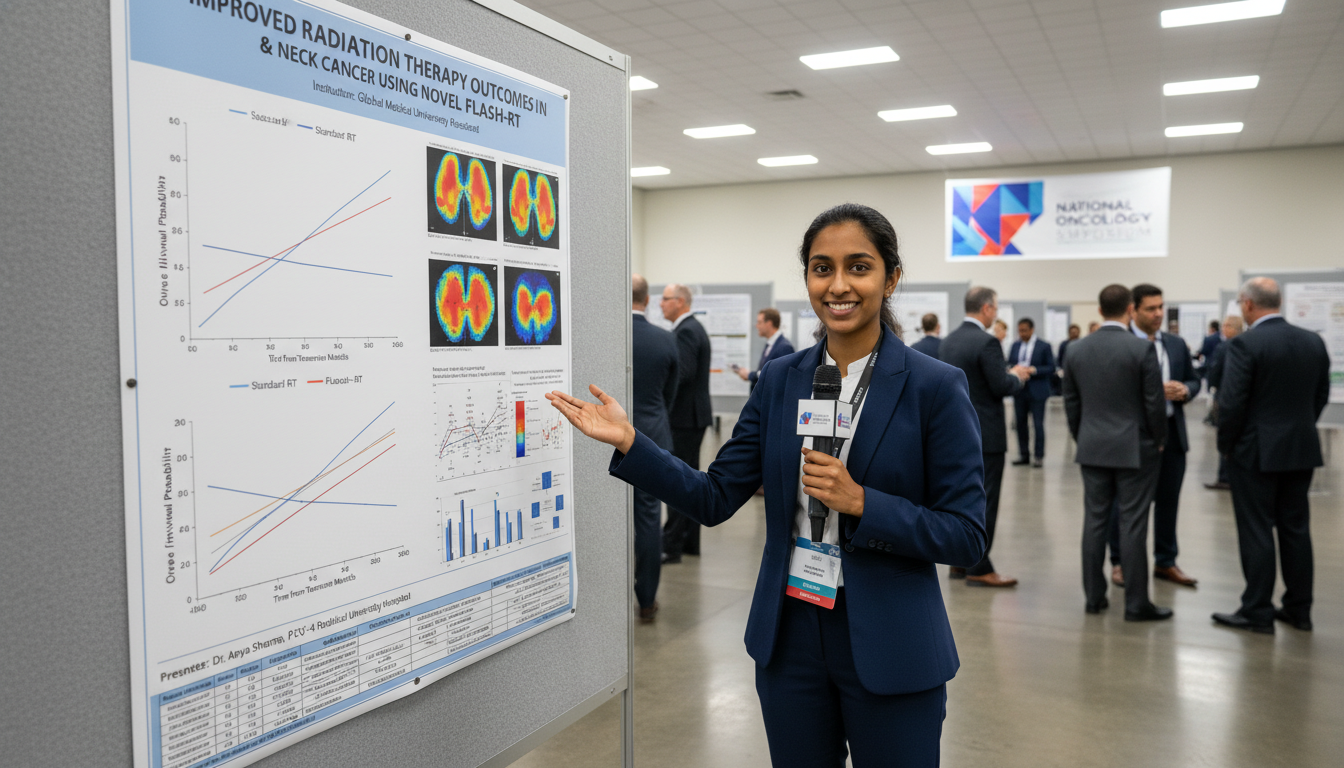
4. Maximize Visibility: Abstracts, Posters, and Presentations
To strengthen your profile in the rad onc match (if you are a student or pre-residency) or for future jobs:
- Aim to submit at least one abstract per year to a major meeting (ASTRO, ASCO, or a disease-specific meeting).
- Volunteer to give departmental or institutional talks—journal clubs, research-in-progress meetings.
- Use posters and presentations to network with faculty from other institutions, particularly those known to support non-US citizen IMG careers.
Example:
You present a poster on “Outcomes of hypofractionated breast RT in elderly patients” at ASTRO. A faculty member from another institution with a strong breast research group notices your work and later becomes a collaborator or even a job contact. This is precisely how many academic relationships begin.
5. Write and Publish Strategically
Not all publications carry the same weight, but consistency matters. A typical strong resident research portfolio might include:
- 2–4 first-author papers (often retrospective or methodologic)
- 4–8 co-author papers (multi-institutional, trials, or senior residents’ projects)
- 4–6 national abstracts/posters
- A few invited reviews or book chapters (often later in residency)
As a non-US citizen IMG, a clear track record of sustained scholarship:
- Supports academic job applications
- Strengthens arguments for visas like H-1B or O-1 (“extraordinary ability” often leverages publications and citations)
- Demonstrates long-term commitment to US academic oncology
Navigating Unique Challenges for Non‑US Citizen IMGs
Visa Status and Research Funding
While resident stipends are generally covered by your training program, certain research-related issues can be affected by visa status:
- Extra research fellowship time (e.g., a dedicated research year before or after residency) may require separate funding and institutional willingness to sponsor your visa.
- Grants and awards: some US federal grants may not be available to non-US citizens, but many foundation, industry, and institutional grants are open regardless of citizenship.
Actionable tips:
- Discuss with your program director early if you plan to pursue an extended research year.
- Ask the research office to help identify grants open to foreign national medical graduates.
- Keep meticulous documentation of your CV, publications, and presentations, as these are often needed for visa petitions.
Cultural and Communication Barriers
Effective research teams rely on communication—lab meetings, manuscript writing, IRB negotiations, conference Q&A. You may need to:
- Adapt to a more direct feedback culture; critical comments are often aimed at improving the project, not criticizing you personally.
- Improve academic writing in English; seek help from mentors or institutional writing resources.
- Practice presenting and defending your findings—in departmental conferences and mock sessions.
Navigating Bias and Proving Reliability
Some non-US citizen IMGs feel they must “overperform” to gain the same trust as US graduates. While unfair, this perception exists in some environments.
Research during residency can be a powerful equalizer if you:
- Deliver consistently on deadlines
- Communicate proactively when obstacles arise
- Share credit generously and act professionally in collaborations
- Build a reputation as “the resident who gets research done”
Over time, your publication list and your collaborators’ trust become hard evidence of your value, independent of your country of origin.
Frequently Asked Questions (FAQ)
1. Is research during residency absolutely required to get a good radiation oncology job as a non‑US citizen IMG?
Not absolutely, but it is strongly advantageous, especially for academic or large network jobs that are more likely to sponsor visas. Without research, you may still secure a clinically focused position, especially if you train in a reputable program and have strong clinical skills. However, research productivity:
- Improves your competitiveness for academic posts
- Expands your professional network
- Strengthens visa applications that require evidence of achievement (e.g., O-1)
For most non-US citizen IMG residents, engaging meaningfully in research during residency is one of the highest-yield ways to expand future options.
2. How many publications should I aim for by the end of residency?
There is no fixed number, but a commonly cited target for a research-oriented, academic-bound resident might be:
- 2–4 first-author papers
- 4–8 co-author papers
- Several abstracts/posters at national meetings
If you are in a very research-heavy academic residency track, your numbers may be higher, especially if you have protected research time. More important than raw counts, however, is the quality and coherence of your work around a few themes (e.g., CNS radiosurgery, GU hypofractionation, AI in treatment planning).
3. Can I still do meaningful research if my program has limited protected time?
Yes. Many residents in community or hybrid programs are productive by:
- Conducting well-defined retrospective studies with clear timelines
- Partnering with academic centers for multi-institutional collaborations
- Focusing on QI or workflow projects that can be done alongside clinical duties
- Using evenings or light rotations to advance writing and analysis
The key is to choose feasible projects and to work closely with mentors who understand your time constraints. Even 2–3 solid publications from a resource-limited environment can be very impressive—especially if you initiate and drive the projects.
4. How should I present my research background as a foreign national medical graduate when applying for academic positions?
Emphasize:
- Continuity: show how your medical school or international research connects logically to your residency projects and your planned academic focus.
- Productivity: highlight first-author work, key abstracts, and any awards.
- Collaboration: describe multi-institutional projects, cross-disciplinary work (e.g., with physics or data science), and your role in them.
- Future plans: articulate clearly how you will continue research as faculty—areas of focus, potential collaborators, and how you will acquire or use funding.
Frame your background as a strength: your global perspective, adaptability, and experience in diverse healthcare settings can enrich a department’s research portfolio, especially in global oncology, health disparities, and implementation science.
Research during residency is one of the most effective levers you have as a non-US citizen IMG in radiation oncology to shape your career trajectory. By choosing the right mentors, planning strategically, and executing feasible projects that align with your long-term goals, you can build a research portfolio that not only enhances your clinical training but also opens doors to academic, leadership, and visa-supported opportunities across the field of radiation oncology.