Why Research During Psychiatry Residency Matters for MD Graduates
For an MD graduate entering a psychiatry residency, research can feel like “one more thing” on an already overwhelming list. Yet for psychiatry in particular, research during residency is increasingly central—not just for those eyeing an academic residency track or fellowship, but for anyone who wants to practice modern, evidence-based psychiatry.
Engaging in research during residency can:
- Strengthen your application for competitive fellowships (e.g., child, addiction, consultation-liaison, geriatric, forensic)
- Open doors to academic careers and leadership roles
- Sharpen critical thinking and appraisal of evolving psychiatric literature
- Provide mentorship and a professional network early in your career
- Build niche expertise (e.g., early psychosis, mood disorders, neuromodulation, health disparities)
This article is designed for the MD graduate starting or preparing for a psychiatry residency who wants a clear, realistic roadmap to incorporate research into training—without burning out.
We’ll walk through how the allopathic medical school match and residency structure shape your options, how to pick projects that fit your goals, and how to execute meaningful resident research projects even with limited time.
Understanding the Landscape: Research in Psychiatry Residency
How Research Fits Into an Allopathic Psychiatry Residency
Most allopathic medical school graduates enter ACGME-accredited psychiatry programs that follow a 4-year structure. While details differ by program, the broad pattern is:
- PGY-1: Mixed psychiatry, medicine, neurology; heavy inpatient and call load
- PGY-2: More psychiatry inpatient and emergency; less medicine; some subspecialty rotations
- PGY-3: Outpatient-heavy; psychotherapy, continuity clinics; generally more predictable schedule
- PGY-4: Electives, leadership roles, advanced subspecialty experiences, and—importantly—protected time for research in many programs
Within this framework, research time and expectations vary widely:
- Some programs offer 0.5–1 day/week protected research time in senior years.
- Others have structured research tracks with more intensive time (e.g., 25–80% FTE research in PGY-3/4).
- A few programs integrate a physician–scientist training program (PSTP) with extended research and sometimes post-residency funding support.
As an MD graduate, your ability to get involved in research will depend less on your degree type and more on:
- The culture of your specific program
- Early communication of your interests
- Initiative in seeking mentors and projects
If you’re still applying, program websites, interview-day questions, and conversations with current residents can reveal how realistic research during residency truly is for that site.
Types of Research Psychiatry Residents Commonly Do
Psychiatry is methodologically diverse. Resident research projects can be tailored to your schedule and interests. Common categories include:
Clinical research
- Chart reviews (e.g., predictors of lithium response, readmission risk factors)
- Prospective clinical studies (e.g., suicide risk assessment tools, early psychosis programs)
- Treatment outcome studies (e.g., CBT groups, telepsychiatry interventions)
Epidemiological and population health research
- Using large datasets (e.g., EHR, claims data) to study trends in depression, overdose, or psychosis
- Evaluating mental health service utilization in specific populations (e.g., veterans, adolescents, marginalized communities)
Neuroscience and translational research
- Neuroimaging studies (MRI, fMRI, PET) in mood disorders or psychosis
- Neurocognitive testing in schizophrenia or ADHD
- Biomarker studies (inflammatory markers, genetics, pharmacogenomics)
Health services and quality improvement (QI)
- Projects improving access, safety, or quality (e.g., clozapine monitoring, suicide safety plans)
- Evaluations of new care models (collaborative care, integrated behavioral health)
- These often start as QI but can evolve into publishable research with proper design
Psychotherapy and educational research
- Studying the outcomes of specific psychotherapies delivered by residents
- Research on teaching methods, simulation training, or supervision models in psychiatry
Forensic, cultural, and social psychiatry research
- Interfaces between law and psychiatry (e.g., competency evaluations, risk assessments)
- Stigma, health disparities, cultural adaptations of therapies
- Structural determinants of mental health, incarceration, homelessness
You do not need to run a randomized controlled trial to have a meaningful psych match–relevant research portfolio. Well-designed chart reviews, secondary analyses, and QI-to-research projects are realistic and impactful for residents.
Getting Started: Setting Research Goals and Finding Mentors
Step 1: Clarify Your Personal Goals
Before you say “yes” to the first project that comes your way, step back and define what you want from research. Ask yourself:
Career trajectory
- Do you plan on an academic career (faculty, clinician–investigator)?
- Are you aiming for a research-heavy fellowship (e.g., neuropsychiatry, addictions, child, psychosis research)?
- Or do you primarily want literacy in research methods for clinical practice?
Time investment
- Are you looking for:
- 1–2 small projects for a stronger CV, or
- A more in-depth, multi-year project for first-author publications and potential K-award trajectory?
- Are you looking for:
Content interests
- Which patient populations or topics resonate with you? (e.g., psychosis, treatment-resistant depression, OCD, PTSD, neuromodulation, public psychiatry, digital psychiatry)
These answers guide choices about mentors, project scale, and whether to pursue an academic residency track or specific research pathways.
Step 2: Map the Resources at Your Program
Upon starting residency (or even after your MD graduate residency match but before Day 1), identify:
Key contacts
- Program director and associate program directors
- Director of research or vice chair for research
- Chief residents, especially research or academic chiefs
Research infrastructure
- Ongoing funded projects and major research centers (e.g., mood disorders center, psychosis clinic, TMS program)
- Access to a biostatistics or clinical research core
- Institutional review board (IRB) support for residents
- Medical school’s research offices and databases
Formal tracks
- Academic residency track (e.g., dedicated research electives, seminars, and mentorship)
- Combined research and clinical tracks (e.g., PSTPs)
- T32-funded research pathways (especially at large academic centers)
Ask explicitly:
- “What models of research during residency have worked well for recent graduates?”
- “If I want to apply to a research-focused fellowship, what level of research involvement do you advise?”
Step 3: Find the Right Mentor(s)
A good mentor in psychiatry should offer more than just a project. Look for someone who:
- Has a track record of mentoring residents or fellows to tangible outcomes (posters, publications, grants)
- Is accessible—realistic about meeting frequency and expectations
- Has alignment with your topic interests and career direction
- Is willing to help you develop as an independent thinker, not just a data collector
Practical strategies:
- Attend departmental grand rounds and research conferences. Note who is actively publishing and presents in your areas of interest.
- Ask senior residents: “Who is supportive and resident-friendly as a research mentor?”
- Request short introductory meetings with 2–4 faculty to “explore fit” before committing.
Do not hesitate to have more than one mentor:
- A primary research mentor (project/content)
- A secondary mentor (career development or methods expert—e.g., a biostatistician or health services researcher)
Choosing and Executing Resident Research Projects That Work
Criteria for a Good Resident Project
As a psychiatry resident with limited time and bandwidth, a good project:
Is feasible within residency timelines
- Ideally, pilot work or data already existing (chart review, dataset)
- Clear, limited data collection steps if prospective
- Realistic about IRB approval time (often 2–6 months)
Has clear and attainable outputs
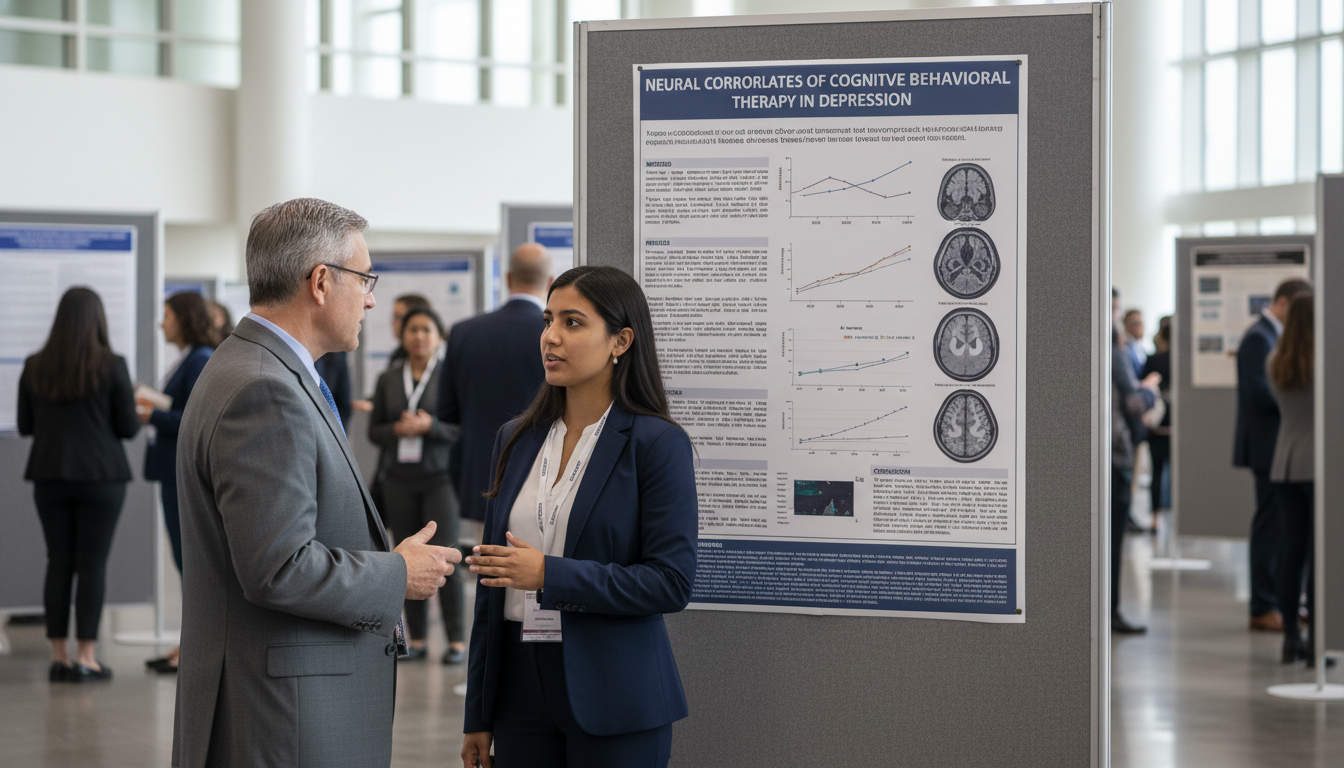
- Conference poster or oral presentation (local, regional, national)
- Manuscript submission to a peer-reviewed journal
- Abstracts or brief reports if larger paper is not realistic
Matches your skills and growth needs
- If you’re new to research: start with chart review, secondary analysis, or structured QI
- If you have prior experience: consider more complex designs, or aim for first-authorship
Leverages existing strengths
- Prior experience in related fields (public health, data science, neuroscience) can accelerate progress
- Your language skills or cultural background can be powerful assets in projects on diverse populations
Example: A Feasible PGY-2/PGY-3 Project
Project type: Retrospective chart review
Topic: “Predictors of readmission among patients with psychotic disorders after first hospitalization”
Rationale: High clinical relevance, accessible in inpatient records, manageable sample size
Steps:
- Join an attending who is interested in psychosis and readmission rates.
- With the mentor, develop:
- A focused research question
- Clear inclusion/exclusion criteria
- A structured chart abstraction form
- Apply to the IRB with departmental support.
- Collect data over several months (spreading it around rotations).
- Work with a statistician for analysis.
- Present at a regional psychiatric society and aim for a manuscript.
Timeline: ~12–18 months from conception to paper submission, flexible enough to fit amid rotations.
Integrating QI and Research
Many programs require QI projects; with planning, you can “double-dip”:
- Design your QI project with research principles:
- Clear hypothesis
- Prospective data collection
- Pre-specified outcomes and analytic plan
- Confirm with your IRB whether the project is exempt, QI-only, or requires full review.
- Example:
- Implement a suicide risk assessment tool in the ED.
- Collect baseline and post-implementation data on:
- Frequency of risk documentation
- Time to psychiatric evaluation
- Referral patterns to outpatient care
- Analyze and disseminate as both a QI report and a research poster.

Balancing Clinical Duties With Research During Residency
Timing Your Research Efforts
Your level of involvement can and should fluctuate:
PGY-1
- Focus: Adjusting to clinical workflow, learning psychiatry basics
- Research: Explore interests, attend research meetings, identify potential mentors
- Action: Read papers, join a project’s periphery (e.g., help with literature review)
PGY-2
- Focus: Inpatient psychiatry, ED, subspecialty rotations
- Research: Secure a mentor, define a project, initiate IRB submissions
- Action: Start data extraction or early analyses when rotations allow
PGY-3
- Focus: Outpatient clinics, psychotherapies; more predictable hours
- Research: Core period for data collection, analysis, and abstract submission
- Action: Submit posters/papers, strengthen your CV ahead of fellowship or job applications
PGY-4
- Focus: Electives and career shaping
- Research: Consolidate projects, finalize manuscripts, possibly initiate a “signature” project
- Action: Use elective time (and any protected research time) strategically to produce tangible outputs
Time-Management Strategies
Protect “research micro-blocks”
- Use 30–60 minute windows for discrete tasks: writing a section, updating a table, or running a statistical script.
- Schedule standing weekly or biweekly research hours as you would clinic.
Set clear expectations with mentors
- Discuss your call schedule and rotation demands.
- Agree on realistic deadlines (e.g., “I can complete the literature review in 6 weeks”).
Break projects into milestones
- IRB complete
- Data collection complete
- Analysis complete
- Abstract submitted
- Manuscript drafted
- Manuscript revised and submitted
Leverage institutional support
- Many academic institutions have:
- Statistician consult clinics
- Grant-writing workshops
- Medical library staff who help with systematic literature searches
- Many academic institutions have:
Avoid overcommitting
- It’s better to be first author on 1–2 strong projects than a minor contributor on 10 unfinished ones.
- Periodically ask: “Will this additional project realistically lead to a presentation or publication before graduation?”
Positioning Research for Your Future Career in Psychiatry
Strengthening a Psych Match–Level Residency Profile (For Those Still in Med School)
If you are pre-residency but reading this to prepare:
- Use allopathic medical school match years to build foundational experience:
- Join a psychiatry department lab or clinical project
- Aim for at least one poster and, if possible, a co-authored paper
- During interviews, highlight:
- What you learned from research (teamwork, problem-solving, scientific thinking)
- How you want to extend that work during residency
Programs looking for academically inclined MD graduate residency applicants in psychiatry pay close attention to:
- Consistency of interest (not just a single unrelated research experience)
- Progress over time (from data entry to designing aspects of a study or writing parts of a manuscript)
Using Research to Access Competitive Fellowships
A focused research portfolio is especially valuable if you aim for:
- Child & Adolescent Psychiatry
- Addiction Psychiatry
- Consultation-Liaison Psychiatry
- Forensic Psychiatry
- Geriatric Psychiatry
- Neuropsychiatry / Behavioral Neurology
- Research-focused Mood or Psychosis Fellowships
To stand out:
- Align at least one major resident research project with your intended subspecialty.
- Present at subspecialty conferences (e.g., AACAP for child, ASAM for addiction, ACLP for CL).
- Seek letters of recommendation highlighting:
- Your role in research
- Your potential as a clinician–scholar
Building an Academic Residency Track and Beyond
If your program offers an academic residency track:
- Enroll early if possible (usually PGY-2/3).
- Take advantage of:
- Research seminars and methods training
- Grant-writing workshops
- Protected time for data analysis and manuscript writing
For those envisioning an NIH-funded career (e.g., K-award pathway):
- Seek mentors with active grants and a track record of trainees moving into faculty roles.
- Consider:
- A research T32 fellowship or postdoctoral research year
- Extra training in statistics, epidemiology, or neuroscience (e.g., MPH, MS in clinical research) if time and funding permit
Even if your primary aim is clinical practice, research skills will:
- Improve your ability to interpret evolving evidence (e.g., psychedelic therapies, neuromodulation techniques)
- Make you more competitive for leadership roles within health systems
- Enable you to run local projects that improve patient care and resident education
Frequently Asked Questions (FAQ)
1. Do I need research to be successful in psychiatry, or only if I want an academic career?
You do not need research to be a successful, compassionate, and competent psychiatrist. Many outstanding psychiatrists focus almost entirely on clinical work and teaching.
However, engaging in at least one or two resident research projects is beneficial even if you plan to be primarily clinical:
- You learn to critically evaluate literature, which directly improves patient care.
- You can contribute to practice improvements and local innovations.
- Your CV becomes more competitive for fellowships and jobs, particularly in large academic centers or systems emphasizing quality and outcomes.
2. I didn’t do much research in medical school. Is it too late to start during residency?
It is absolutely not too late. Many residents begin serious research exposure only after matching into a psychiatry residency. To catch up:
- Early in PGY-1 or PGY-2, identify a supportive mentor and start with a manageable project (e.g., chart review, secondary analysis).
- Be transparent about your experience level; most psychiatry faculty are happy to teach motivated residents.
- Consider attending departmental journal clubs and research seminars to build your vocabulary and understanding.
Starting with smaller, well-defined tasks and showing reliability will make it easier for mentors to involve you in higher-impact projects.
3. How many publications or projects should I aim for during psychiatry residency?
There is no fixed number. Quality and relevance matter more than raw counts. A typical, solid research engagement might look like:
- 1–2 poster presentations (local, regional, or national)
- 1–2 peer-reviewed publications, even if co-authored
- A clear narrative: “I worked on X topic with Y methods, and here’s how it shaped my thinking.”
For residents pursuing an academic or research-intensive career, you might aim for:
- First-author or major co-author role on 1–2 papers
- Additional abstracts, posters, or brief reports
- Involvement in a project that could logically lead to a K-award or other early-career funding after fellowship
4. How can I tell if a mentor or project will be a good fit for me?
Ask yourself and your potential mentor:
- What has happened with their previous resident mentees? Did they get posters, papers, or awards?
- Does the mentor respond to emails and set clear expectations?
- Is the project’s scope realistic for a resident schedule?
- Do you feel comfortable raising concerns or questions with them?
You can also talk to current or former mentees to get candid feedback. If you sense persistent misalignment (e.g., unrealistic deadlines, poor communication), it is reasonable—and often wise—to reassess and pivot early.
Research during residency for an MD graduate in psychiatry is not about checking boxes; it’s about building the habits and skills of a thoughtful, evidence-informed clinician. Whether you see yourself as a future academic psychiatrist or as a community clinician who occasionally leads local improvement projects, a deliberate and well-planned approach to resident research can significantly enrich your training and open doors throughout your career.