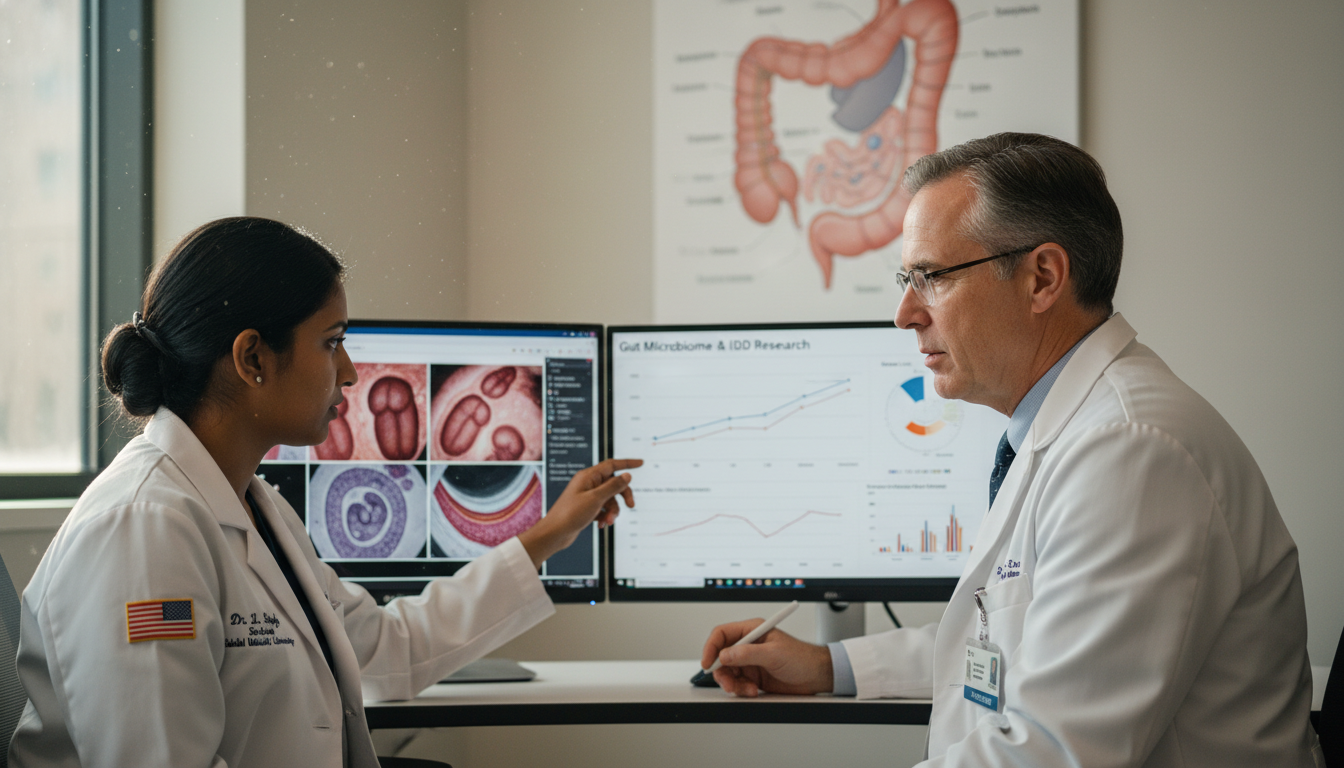
Why Research During Residency Matters for US Citizen IMGs in GI
For a US citizen IMG aiming for a gastroenterology fellowship, research during residency is not optional—it is a major differentiator in the gastroenterology fellowship match.
Gastroenterology is one of the most competitive internal medicine subspecialties. Many successful applicants have:
- Multiple peer‑reviewed publications
- Abstracts and posters at national meetings (ACG, AGA, DDW)
- Strong research mentorship and coherent academic interests
As a US citizen IMG (often an American studying abroad who returns to the US for residency), you may already feel you are “starting from behind” compared with US MD graduates. Strategic, visible resident research projects can:
- Demonstrate academic potential and intellectual curiosity
- Compensate somewhat for school prestige or exam score gaps
- Help you build high‑impact letters of recommendation
- Show selection committees you understand and can contribute to academic gastroenterology
This article walks you through a practical, step‑by‑step approach to research during residency tailored to US citizen IMGs targeting a GI fellowship.
Understanding the Research Expectations in GI Fellowship
What GI Programs Look for Academically
Most competitive GI programs—especially university‑based and academic residency tracks—expect you to show:
Sustained scholarly activity
- Not just a single poster from medical school, but ongoing engagement during residency.
- Evidence you can complete projects despite heavy clinical responsibilities.
Productivity, not just participation
- Abstracts, posters, oral presentations, and ideally peer‑reviewed publications.
- Some programs look favorably at even small retrospective studies or case series if they show initiative and completion.
A clear trajectory toward academic GI
- You do not need to plan a fully research‑heavy career, but showing serious engagement with GI‑related questions is valuable.
- Interest in quality improvement, outcomes research, endoscopy innovation, or hepatology can all fit.
Strong mentored work
- Fellowship directors care about letters from known researchers and GI faculty who can say:
“This resident drives projects forward, understands basic research design, and is reliable.”
- Fellowship directors care about letters from known researchers and GI faculty who can say:
How Expectations Differ for US Citizen IMGs
Compared with US MDs, a US citizen IMG will often be held to at least the same research standards, sometimes higher:
- PDs may look for evidence that you can thrive in an academic environment despite coming from a non‑US school.
- Demonstrated research effort during residency signals you can adapt to the expectations of US academic medicine.
- For American students studying abroad, it also shows you used your internal medicine training years deliberately to position yourself for a gastroenterology fellowship match.
This does not mean you need 20 publications. It means you should aim for consistent, meaningful output and a story that makes sense:
“I became interested in GI, found mentors, and contributed to research throughout residency.”

Finding Research Opportunities as a Resident (Especially as an IMG)
Start Early: PGY‑1 is Not Too Soon
If you want a GI fellowship, you should be thinking about research during residency from the first months of PGY‑1:
- Get to know the GI division at your hospital during early rotations.
- Attend GI grand rounds, journal clubs, and conferences even when you’re not on the GI service.
- Politely ask senior residents which attendings mentor resident research projects and actually help them get published.
Mapping Your Institution’s Research Landscape
As a US citizen IMG, you may not have preexisting relationships with US faculty. Build them systematically:
Identify potential mentors:
- GI attendings who publish regularly (search them on PubMed).
- Hospitalists or general internal medicine faculty doing outcomes or QI work involving GI topics (e.g., GI bleed management, cirrhosis protocols).
- Program leadership connected to an academic residency track or research pathway.
Use institutional resources:
- Department of Medicine research office
- Clinical and Translational Science Institute (CTSI)
- Resident research coordinator or scholarly activity committee
Leverage your status as a motivated IMG:
- Many faculty appreciate a resident who openly says:
“I’m a US citizen IMG very interested in a GI career, and I’m looking for ways to contribute to ongoing projects.” - Reliability and follow‑through are often more valuable than advanced stats skills at the start.
- Many faculty appreciate a resident who openly says:
Approaching Potential Mentors
A simple template for an initial email:
Subject: PGY‑1 resident interested in GI research opportunities
Dear Dr. [Name],
My name is [Your Name], and I am a PGY‑1 internal medicine resident. I am a US citizen IMG with a strong interest in pursuing a gastroenterology fellowship. I’m eager to get involved in clinical or outcomes research related to GI and would be grateful for any opportunity to contribute to your ongoing projects (data collection, chart review, manuscript preparation, etc.).If you have time, I’d appreciate a brief meeting to learn about your current work and discuss how I might help.
Sincerely,
[Your Name]
During the meeting:
- Have a 1–2 sentence “research interest” pitch, even if broad: e.g., GI bleeding, inflammatory bowel disease, hepatology, quality improvement in endoscopy.
- Emphasize your willingness to do time‑consuming but essential tasks: chart review, data cleaning, literature review.
- Ask: “Are there any resident‑appropriate projects that are stuck and need help to move forward?”
Choosing the Right Type of Research During Residency
You will rarely have time for bench research as a busy internal medicine resident. Fortunately, GI fellowship programs value clinical, outcomes, and quality improvement work highly—especially if it results in abstracts and publications.
1. Clinical and Outcomes Research
These projects typically involve patient‑level or system‑level data:
- Retrospective chart reviews (e.g., outcomes of upper GI bleeds, colonoscopy quality indicators).
- Database studies using hospital data or national datasets (e.g., NIS, NRD).
- Predictive models or risk‑score validations for GI conditions.
Benefits for a resident:
- Feasible in evenings and lighter rotations.
- Can lead to abstract(s) and a manuscript within 1–2 years.
- Easy to connect to clinical GI topics you see daily.
Example project idea:
“Predictors of 30‑day readmission among patients hospitalized with decompensated cirrhosis at our teaching hospital.”
You could start with a retrospective chart review and progress to a larger, multicenter study if your mentor has collaborators.
2. Quality Improvement (QI) with GI Focus
QI projects are often required for ACGME accreditation and are highly practical:
- Improving bowel prep quality for colonoscopy using new patient education materials.
- Reducing time to endoscopy in upper GI bleed.
- Standardizing lactulose and rifaximin use in hepatic encephalopathy.
Why QI matters:
- Shows you can identify problems, implement interventions, and measure outcomes.
- Can be presented at local or national meetings and can be written up as a brief report or QI article.
- Excellent for residents at community programs or places with limited formal research infrastructure.
3. Case Reports and Case Series
Case reports alone won’t secure a top‑tier gastroenterology fellowship, but they are valuable entry points, especially in PGY‑1:
- Unusual presentations of common diseases (e.g., atypical Crohn’s flares, rare GI infections).
- Unique endoscopic findings.
- Overlap of systemic disease with GI manifestations.
Benefits:
- Faster to complete and publish than full clinical studies.
- Help you learn basic structure of scientific writing.
- Provide early abstracts or posters to list on your CV.
Aim to build upward from case reports: use them as stepping stones toward more substantial projects, not your only scholarly output.
4. Systematic Reviews and Meta‑Analyses
If your institution has limited clinical data access, systematic work can still be powerful:
- Work with a GI mentor experienced in evidence synthesis.
- Choose narrow, clinically relevant topics (e.g., “Proton pump inhibitor use and risk of hepatic encephalopathy in cirrhotic patients”).
- Learn to use tools like PRISMA guidelines and reference managers.
These projects require discipline but can produce robust publications with international reach—valuable for the gastroenterology fellowship match.

Time Management and Strategy: Integrating Research into a Busy Residency
Building a Realistic Research Timeline
For a typical three‑year internal medicine residency:
PGY‑1 (months 1–12):
- Explore mentors and areas of interest.
- Join 1–2 ongoing projects as a junior collaborator.
- Possibly complete 1–2 case reports or small QI projects.
PGY‑2 (months 13–24):
- Take on more responsibility: data collection, preliminary analyses, drafting abstracts.
- Present at local or regional conferences.
- Design at least one project where you are first author or primary driver.
PGY‑3 (months 25–36):
- Submit manuscripts from earlier work.
- Present posters/oral presentations at national meetings (DDW, ACG, AGA).
- Solidify letters from research mentors supporting your GI fellowship application.
Remember: GI fellowship applications are often submitted in spring of PGY‑2 / early PGY‑3, so substantial work should be underway by the end of PGY‑1.
Protecting Research Time (Even if You Don’t Have a Formal Track)
Not every program has a defined academic residency track or built‑in research blocks, especially at community hospitals where many US citizen IMGs match. You can still create structure:
- Block 2–3 hours once or twice weekly as “research time” during lighter rotations or days off.
- Use early mornings, a post‑call afternoon, or golden weekends to batch tasks like literature review and writing.
- Communicate with your mentor about your real clinical schedule; negotiate achievable deadlines.
If your program offers research electives:
- Plan them in advance (often need 6–12 months lead time).
- Use them for focused writing, complex stats work, or starting a new major project.
Being Strategic About Project Selection
As a US citizen IMG, your capacity is limited; choose wisely:
- Favor projects likely to produce a tangible output within 12–18 months (abstract, poster, manuscript).
- Avoid huge, unfocused projects that rely on multiple institutions and multiple layers of IRB unless your mentor already has infrastructure.
- Ask mentors honestly:
“If I do X, Y, and Z, what is the realistic chance this becomes a paper with my name as first or second author before I apply for GI?”
You should aim by GI application time to have:
- A mix of GI‑relevant work and perhaps some non‑GI projects (e.g., general internal medicine QI).
- At least a few entries in each category: submitted papers, accepted abstracts, conference posters.
Maximizing Visibility: From Project to GI Fellowship Application
Crafting a CV that Highlights Your Research Story
When you apply for a gastroenterology fellowship match, the raw number of publications is less important than the coherent story:
- Group your experiences to show a clear interest:
- GI bleeding
- Cirrhosis and portal hypertension
- Quality metrics in colonoscopy
- List abstracts and presentations separately from full publications.
- Indicate your role clearly: first author vs co‑author, and what you contributed.
As a US citizen IMG, the narrative you want is:
“I trained abroad, came back to the US, and used my residency years to systematically build an academic foundation in GI.”
Using Conferences to Enhance Your Profile
Presenting at meetings is often more visible than a single low‑impact publication:
- Target major GI meetings:
- Digestive Disease Week (DDW)
- American College of Gastroenterology (ACG)
- American Gastroenterological Association (AGA)
- Also present at internal medicine or resident research days at your institution.
Benefits:
- Networking: meet fellowship program leaders in person.
- Practice discussing your research orally, which will help in fellowship interviews.
- Identify potential future mentors for GI fellowship or multicenter projects.
As an American studying abroad returning to the US, conferences are critical opportunities to build your US professional network, which you may lack coming into residency.
Letters of Recommendation From Research Mentors
A strong letter from a GI researcher or academic internist who supervised your work can be decisive:
- Ask mentors who know you well, can comment on your work ethic and intellectual promise, and ideally are known regionally or nationally.
- Provide them with your updated CV, personal statement, and a summary of your joint projects.
- Politely ask if they can highlight:
- Your ownership of projects
- Your capacity to manage research alongside clinical work
- Your suitability for an academic GI career
Programs want reassurance that you will thrive in complex, research‑heavy GI fellowships. Your mentor’s letter is often the best evidence.
Special Considerations and Practical Tips for US Citizen IMGs
Overcoming Limited Institutional Resources
If you’re at a smaller community hospital without a large research infrastructure:
Leverage regional collaborations:
- Ask your PD or chief residents to connect you with academic centers in your area.
- Some GI faculty may be willing to involve you in multicenter retrospective projects.
Use tele‑mentorship:
- Many academic attendings are comfortable mentoring residents from other programs via Zoom or email.
- You can contribute to study design, literature review, and manuscript drafting remotely.
Capitalize on QI and small‑scale research:
- Thoughtful, well‑executed QI with pre‑ and post‑intervention data can be publishable in peer‑reviewed journals.
Turning IMG‑Specific Challenges into Strengths
As a US citizen IMG:
- You may have unique clinical experiences from abroad (e.g., managing tropical GI infections, differences in screening and access).
- You can leverage this perspective in research questions:
- Comparative studies of practice patterns
- Global health GI topics
- Differences in outcomes between populations
In your personal statement and interviews, connect your international perspective to a commitment to improving care for diverse GI patients in the US.
Common Pitfalls to Avoid
- Being overcommitted: Saying yes to too many projects and not completing them is worse than doing fewer projects well.
- Lack of follow‑through: Mentors lose trust quickly if you miss deadlines repeatedly.
- Doing only non‑GI research: Some is fine, but your core portfolio should still point clearly toward gastroenterology.
- Not documenting your work: Keep an updated list of all projects, abstracts, and presentations, with dates and statuses.
FAQs: Research During Residency for US Citizen IMGs in GI
1. How much research do I need to match into a GI fellowship as a US citizen IMG?
There is no fixed number, but competitive US citizen IMG applicants often have:
- Several abstracts/posters (3–8)
- At least 1–3 peer‑reviewed publications (not all necessarily in GI)
- Clear GI‑related projects and at least one GI‑focused mentor
Quality and coherence matter more than raw numbers. A strong clinical record plus a focused research story is better than a scattered collection of unrelated projects.
2. Does all my research have to be in gastroenterology?
No. Research during residency in general internal medicine, hospital medicine, or quality improvement is still valuable. However, for a gastroenterology fellowship match, it helps if:
- At least some of your work directly involves GI or hepatology.
- You can articulate in your application and interviews how your research interests connect to GI.
Aim for a balanced portfolio: both GI‑specific projects and general scholarly activity that shows you can think critically and complete projects.
3. What if my residency program has no formal academic residency track or GI research?
You still have options:
- Identify any faculty with even modest research activity and ask about joining projects.
- Seek external mentors at nearby academic centers; you may contribute remotely to multicenter studies.
- Focus on QI projects with a GI angle (e.g., protocol for upper GI bleed, colonoscopy prep improvement) that you can present and publish.
Programs understand that resources vary; what matters is that you maximized what was available and showed initiative.
4. Will late‑starting research (PGY‑2 or early PGY‑3) still help my GI application?
Yes, but your strategy must be realistic:
- Prioritize projects more likely to lead to abstracts or manuscripts quickly, such as retrospective reviews, case series, or QI.
- Work closely with mentors who already have IRB approvals and data available.
- Highlight in your application that you stepped up academically as soon as you found the right mentors, and emphasize the momentum you’ve built.
Even if some papers are “submitted” or “in preparation,” they still show an active scholarly trajectory, which fellowship committees value.
By approaching research during residency deliberately—starting early, finding the right mentors, focusing on achievable projects, and telling a coherent academic story—you can significantly strengthen your profile as a US citizen IMG applying for a gastroenterology fellowship and position yourself competitively in a demanding subspecialty.