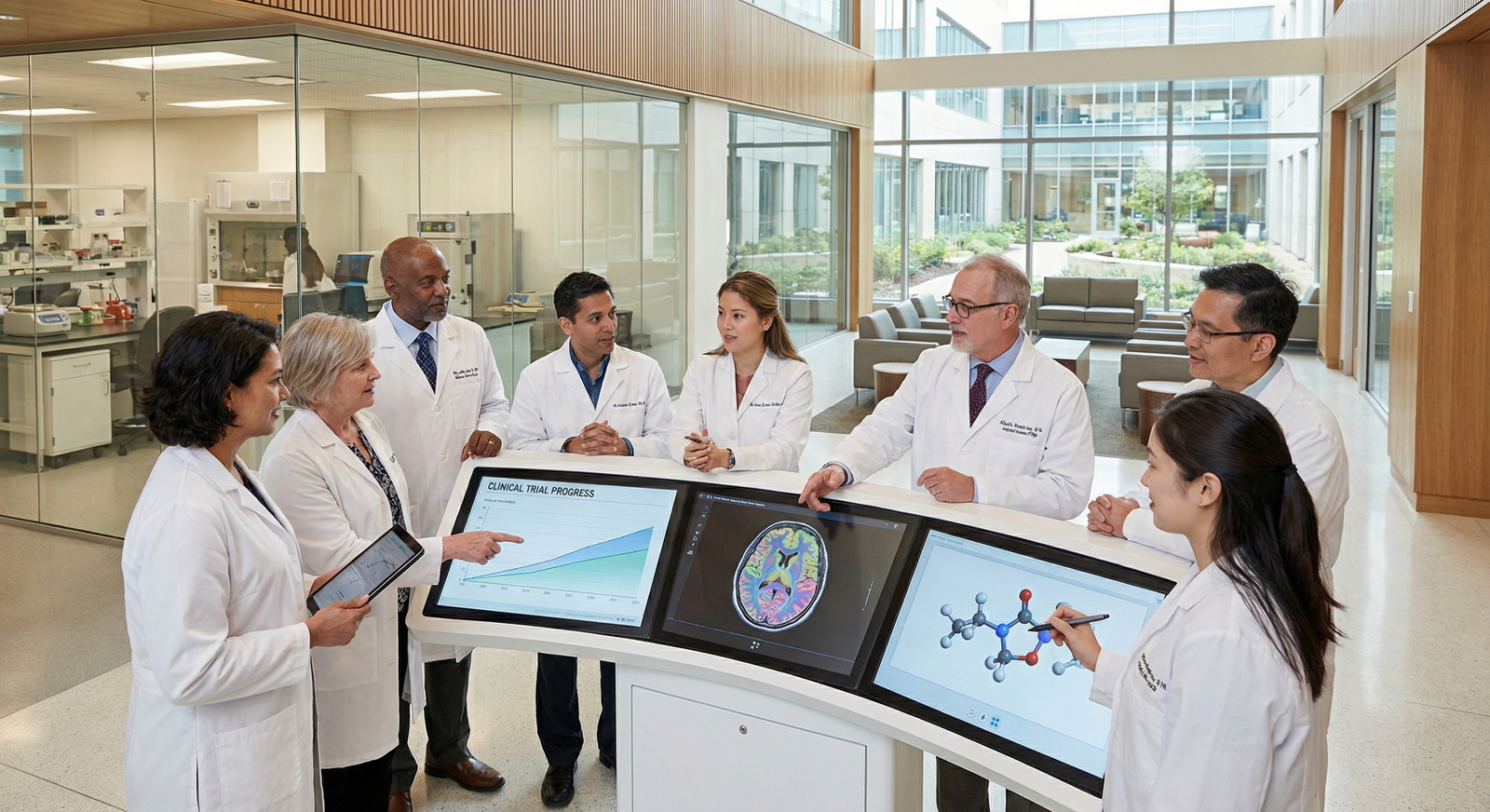
Understanding the Role of Research in Cardiothoracic Surgery Residency
For a US citizen IMG (American studying abroad or already graduated from a foreign medical school), research during residency is not just another box to check—it is a strategic lever that can shape your entire cardiothoracic surgery career. In such a highly competitive specialty, research is closely tied to:
- Matching into an integrated cardiothoracic surgery residency or traditional general surgery → CT fellowship pathway
- Access to prestigious institutions and mentors
- Positioning yourself for academic versus community practice
- Future leadership roles, innovation, and subspecialization (e.g., structural heart, transplant, congenital)
Residency is your first real opportunity to develop a sustainable research identity in the US academic system. For a US citizen IMG, it is also your best chance to combat implicit bias around being “internationally trained” by producing visible, high-impact work.
When cardiothoracic surgery program directors see an applicant with:
- Solid clinical performance
- Sustained research activity during residency
- Concrete outputs (publications, presentations, QI projects)
they see someone who is already thinking like a future academic surgeon. Even if you are not fully committed to an academic career, demonstrating research competence signals maturity, curiosity, and the ability to contribute to innovation in heart surgery training and practice.
How Research During Residency Benefits a US Citizen IMG in CT Surgery
Residency is demanding; adding research can feel overwhelming. But for an American studying abroad who wants cardiothoracic surgery, the benefits are substantial and often career-defining.
1. Strengthening Your CT Surgery Application
Whether you’re aiming for:
- Integrated cardiothoracic surgery residency (I-6), or
- Traditional pathway (5 years general surgery + 2–3 years cardiothoracic surgery)
research helps in several concrete ways:
a. Differentiation in a competitive field
Program directors see many applicants with:
- Strong exam scores
- Good letters
- Solid clinical grades
Fewer have meaningful, sustained, and relevant research. Even small projects that are well executed, presented, and written up can set you apart.
b. Credibility as a US citizen IMG
As a US citizen IMG, you may already be competitive on paper, but some programs may still question:
- How you will adapt to the US academic environment
- Whether you can compete with peers from US allopathic schools
- Your long-term academic potential
Research during residency—especially at your US training institution—directly counters these concerns. It shows you can:
- Function in US research infrastructure
- Collaborate with American faculty
- Navigate IRB processes, databases, and manuscript submission
- Contribute to resident research projects in a meaningful, team-based way
c. Building a coherent “academic story”
Programs look for coherence. Your application is stronger if your experiences align with a realistic narrative. For example:
“I am a US citizen IMG who became interested in cardiothoracic surgery during medical school abroad, sought out early CT shadowing, and now, as a general surgery resident, I have focused my research on postoperative outcomes for cardiac surgery, with an interest in quality improvement and health equity. My goal is an academic cardiothoracic surgery career with both clinical and research responsibilities.”
That story is more persuasive if you can back it with:
- Publications in cardiothoracic or surgical journals
- Abstracts at CTSNet/STS/AATS or regional thoracic meetings
- QI projects related to cardiac or thoracic pathways
2. Expanding Career Options: Academic vs Community Practice
Not everyone will end up on a purely academic residency track, but research keeps that door open.
Academic residency track / academic career
Research is almost essential if you plan to:- Work at a university medical center
- Run a lab or outcomes research group
- Compete for NIH or foundation funding
- Hold leadership roles at large institutions
Hybrid or community-based practice
Many surgeons work in community programs but:- Participate in multicenter trials
- Co-author guidelines
- Lead quality improvement initiatives
Your early exposure to research during residency helps you understand evidence generation and evaluation, which improves your clinical decision-making regardless of setting.
3. Skill Development Beyond Publications
Research is not just about adding lines to your CV; it builds transferable skills essential for cardiothoracic surgery:
Critical appraisal of literature
You’ll learn to evaluate studies on new bypass techniques, TAVR outcomes, lung resection approaches, ECMO management, and more.Data literacy
Understanding:- Survival curves
- Hazard ratios
- Risk adjustment models
- Propensity matching
is crucial in interpreting outcome studies and new technologies in heart surgery training.
Project management
Balancing data collection, scheduling meetings, and hitting deadlines while on busy services builds the same discipline you’ll need for OR efficiency and patient care leadership.Communication skills
Writing manuscripts, presenting at conferences, and defending your methods in Q&A make you a better educator, team leader, and advocate for your patients.
4. Mentorship and Networking
Research connects you to people who can significantly impact your career trajectory:
Cardiothoracic surgeons who publish regularly
They are more likely to:- Write strong letters
- Introduce you to fellowship directors
- Recommend you for academic or research tracks
Biostatisticians, epidemiologists, and PhD collaborators
These collaborators:- Teach you structured thinking around data
- Help elevate your resident research projects to publishable work
- May continue to collaborate with you long-term
For a US citizen IMG, this network is especially valuable because:
- It creates visibility within the US academic system
- It builds advocates who understand your background and can speak to your strengths beyond test scores

Types of Research Opportunities for CT Surgery–Bound Residents
You do not need a basic science lab or a PhD to be a productive researcher in cardiothoracic surgery. As a resident, especially early on, certain types of projects are more accessible and realistic.
1. Clinical Outcomes Research
This is the most common and often most practical form of research during residency:
Examples in cardiothoracic surgery:
- Outcomes of minimally invasive vs sternotomy coronary artery bypass
- Predictors of prolonged ventilation after valve surgery
- Readmission rates after lung lobectomy and associated risk factors
- Impact of enhanced recovery after surgery (ERAS) protocols in thoracic surgery
- Long-term survival after LVAD implantation vs transplant in specific populations
Why it’s ideal for residents:
- Uses existing clinical databases (institutional, STS, or registry data)
- Does not typically require bench lab time
- Can often be worked on during lighter rotations or research blocks
- Strongly aligned with resident research projects expectations at many programs
2. Quality Improvement (QI) and Patient Safety Projects
For a busy resident, QI-based research is often the most feasible entry point.
Examples:
- Reducing postoperative atrial fibrillation after CABG through a standardized prophylaxis protocol
- Implementing a structured chest tube management pathway to reduce complications
- Developing standardized postoperative pain protocols to reduce opioid use after thoracotomy
- Improving handoff communication in the CT ICU and measuring impact on errors or near-misses
These projects often:
- Require less statistical complexity
- Directly involve interprofessional teams (nurses, pharmacists, anesthesiologists)
- Can be presented at local, regional, or national conferences
- Show that you care about practical patient care outcomes, not just academic metrics
3. Database and Registry Studies
Many cardiothoracic programs use:
- STS Adult Cardiac Database
- STS General Thoracic Database
- Institutional surgical registries
As a resident, you may be able to:
- Extract variables relevant to your question
- Work with a statistician
- Conduct a retrospective cohort or case-control study
This type of work is common in academic residency track environments and is highly valued by fellowship programs.
4. Basic Science and Translational Research
For some residents, especially those at large academic centers, there are opportunities for:
- Myocardial ischemia-reperfusion models
- Graft biology and tissue engineering
- Mechanical circulatory support device development
- Translational work in lung injury, ARDS, and ECMO
These projects often require:
- More protected research time (sometimes a dedicated 1–2 year research fellowship during residency)
- An established lab with funding
- Strong long-term mentorship
As a US citizen IMG, if you are at an institution with this infrastructure and you are serious about a high-level academic career, pursuing translational work can significantly boost your profile. However, it is not mandatory for every future cardiothoracic surgeon.
5. Education, Simulation, and Curriculum Research
Cardiothoracic surgery is gradually expanding its focus on:
- Simulation training (e.g., coronary anastomosis simulators, thoracoscopic trainers)
- Curriculum development for heart surgery training
- Assessment of resident skill acquisition
You can get involved by:
- Studying the effectiveness of a new simulator-based training module
- Measuring performance metrics (time, error rates, quality scores)
- Evaluating new curricula for PGY1–PGY3 residents interested in CT surgery
These projects align well if you see yourself eventually having an academic role focused on education or residency program leadership.

Finding and Securing Research Opportunities as a US Citizen IMG
One of the biggest challenges is not interest—it’s access. As a US citizen IMG, especially if you are early in residency or at a smaller program, you may need to be more proactive.
1. Start with Your Own Institution
Most residents underestimate the number of ongoing projects around them.
Steps:
Identify cardiothoracic faculty who publish regularly
- Browse your institution’s website and PubMed
- Look for CT surgeons with several publications in the past 3–5 years
Ask about ongoing projects
Email or speak after conference with something like:“I’m a PGY-1 in general surgery and very interested in cardiothoracic surgery. I’d love to get involved in research, particularly in outcomes or QI work. Are there any ongoing projects where I could help with data collection or manuscript preparation?”
Leverage conferences and M&M
- Every complication, interesting case, or unusual outcome discussed in M&M can become a project:
- Case series
- Retrospective review
- Protocol development
- Every complication, interesting case, or unusual outcome discussed in M&M can become a project:
2. Make a Strong First Impression
Faculty are more likely to trust and invest in residents who:
- Show up on time to meetings
- Deliver what they promise, or communicate early if they hit obstacles
- Ask clarifying questions rather than waiting silently and then disappearing
As a US citizen IMG, this professionalism is doubly important. It counters any unconscious biases about training background and quickly reframes you in your mentors’ minds as reliable and driven.
3. Start Small, Then Build
Aim for an early “win,” such as:
- A case report accepted to a CT journal
- A poster at a regional thoracic meeting
- A small QI project in your CT ICU
Once you complete one project effectively:
- Mentors are more likely to bring you into larger or more complex studies
- You become seen as a “go-to” resident for research during residency
4. Use Institutional Resources
Ask about:
- Resident research offices or internal grant programs
- Access to biostatistics support
- Protected research time on specific rotations
- Required or optional resident research projects (some programs mandate at least one project during training)
If your program has an academic residency track, clarify:
- Criteria for joining
- Expectations for research productivity
- Available mentorship and dedicated time
5. Collaborate Beyond Your Institution (When Appropriate)
If your home program has limited CT research capacity, you may:
- Connect with CT surgeons at affiliated academic centers
- Reach out to CT faculty you meet at conferences
- Collaborate remotely on multicenter or registry studies
However, always be transparent with your program leadership. You want collaboration, not perceived disloyalty or conflict.
Balancing Clinical Duties and Research: Practical Strategies
One of the biggest concerns about research during residency is simple: time. Cardiothoracic surgery–bound residents often gravitate to busy services, long cases, and demanding call schedules.
Here’s how to realistically incorporate research into that lifestyle.
1. Choose Projects That Match Your Bandwidth
Early in residency:
- Prefer retrospective chart reviews, QI projects, and database studies
- Avoid projects that require you to be physically in a lab for long stretches while on a heavy rotation
During lighter rotations or a research block:
- Consider more complex projects that require:
- IRB applications
- Advanced statistical analyses
- Multiple manuscript drafts
2. Create a Simple System
Treat your research time like a standing clinic or OR block:
- Set aside consistent weekly time (e.g., Sunday morning, one post-call afternoon)
- Use a task manager or spreadsheet listing:
- Projects
- Collaborators
- Deadlines
- Next actionable step (e.g., “Extract data for 10 more patients” vs “Work on project”)
3. Communicate Expectations Early
When joining a project, ask:
- Who is the primary mentor?
- Who handles stats?
- What is the target journal or conference?
- What is the expected timeline?
- What exactly is your role (data collection, drafting methods, preparing figures)?
Clear expectations prevent misunderstandings, authorship conflicts, and burnout.
4. Use Clinical Work to Inspire Research Questions
While on CT rotations, keep a small notebook (physical or digital) and jot down:
- Complications that seem recurrent
- Variations in practice among surgeons
- Patients or cases that raise unanswered questions
Later, discuss these with a mentor:
“I’ve noticed quite a few patients develop postoperative delirium after complex valve surgery. Are we tracking this? Could we design a QI project or retrospective review to understand risk factors?”
This approach ensures your projects are:
- Clinically relevant
- Easier to justify and present
- More likely to gain faculty buy-in
5. Protect Your Wellness
Research should enhance—not destroy—your residency experience. Watch for signs you are overcommitted:
- Chronic exhaustion beyond normal residency fatigue
- Missing critical clinical responsibilities due to research
- Strained relationships with co-residents due to perceived imbalance in workload
If needed:
- Scale back to 1–2 active projects at a time
- Ask your mentor to help prioritize which projects have the most impact for your career goals
Strategically Using Research to Shape Your Cardiothoracic Surgery Career
Research is most powerful when aligned with a broader vision for your future in CT surgery.
1. Clarify Your Long-Term Interests
Ask yourself:
- Are you more drawn to adult cardiac, general thoracic, congenital, or transplant/MCS?
- Do you see yourself in an academic center, hybrid practice, or primarily community-based setting?
- Do you enjoy data and outcomes, basic/translational science, or teaching and simulation?
Then, gradually nudge your research portfolio in that direction. You don’t have to specialize immediately, but some thematic consistency looks strong on fellowship applications.
2. Build a Track Record, Not One-Off Efforts
Try to create clusters of related work, for example:
- A series of projects on:
- Postoperative AF in CABG
- Outcomes after mitral repair vs replacement
- ERAS implementation in thoracic surgery
Over time, this pattern lets you say:
“My primary research interest has been improving perioperative outcomes in adult cardiac surgery, with particular emphasis on postoperative arrhythmias and recovery pathways.”
That narrative is compelling to cardiothoracic surgery selection committees.
3. Translate Research into Presentations and Leadership
Whenever possible:
- Present at local surgery Grand Rounds or CT conferences
- Submit abstracts to:
- STS (Society of Thoracic Surgeons)
- AATS (American Association for Thoracic Surgery)
- ACS (American College of Surgeons)
- Regional thoracic or cardiology meetings
As a US citizen IMG, visible presentations at high-profile meetings help you:
- Expand your national network
- Meet potential future colleagues and mentors
- Demonstrate confidence and communication skills in front of CT audiences
4. Prepare to Discuss Your Work Intelligently in Interviews
Residency and fellowship interviewers are less interested in the number of your publications than in your ability to:
- Clearly explain your research question
- Justify your methods
- Interpret your results
- Honestly critique limitations
- Describe next steps or what you learned
Before interviews:
- For each project, prepare a 60–90 second overview:
- Question
- Methods
- Key findings
- Impact or takeaway
This shows that your research is not just “CV padding” but a genuine intellectual pursuit.
FAQs: Research During Residency for US Citizen IMG in Cardiothoracic Surgery
1. Do I need a huge number of publications to match into cardiothoracic surgery as a US citizen IMG?
No. Quality and relevance are more important than raw numbers. A few well-executed projects directly tied to cardiothoracic surgery or perioperative care can be more impactful than many unrelated case reports. Sustained involvement, strong letters from research mentors, and the ability to talk about your work thoughtfully often matter more than sheer volume.
2. Is basic science research required for an academic cardiothoracic surgery career?
Not necessarily. Many successful academic cardiothoracic surgeons focus on clinical outcomes, QI, and health services research rather than bench science. Basic or translational research can be a powerful differentiator if you enjoy it and have access to strong mentorship and funding, but it is not mandatory. Choose the research type that best matches your interests, skills, and institutional resources.
3. How early in residency should I start research if I’m interested in cardiothoracic surgery?
Ideally, begin exploring opportunities in your PGY-1 or early PGY-2 year. Start small—case reports, QI projects, or simple retrospective reviews—then scale up as you learn the process and prove yourself reliable. Early involvement gives you time to see projects through to completion before you apply for integrated CT positions or fellowships.
4. What if my program has limited cardiothoracic surgery research opportunities?
You still have options. Focus on broad surgical or critical care topics that are relevant to CT patients (e.g., sepsis, ICU outcomes, perioperative complications). Seek out any CT faculty who are interested in starting projects, and consider collaborations with nearby academic centers or mentors you meet at conferences. Be transparent with your program leadership, and use institutional resources like biostatistics support or resident research offices to elevate smaller projects into publishable work.
By approaching research during residency deliberately—aligning projects with your interests, being proactive as a US citizen IMG, and building strong mentorship relationships—you can significantly strengthen your candidacy for cardiothoracic surgery residency and shape a rewarding, impactful career in this demanding specialty.