Why Research During Residency Matters for US Citizen IMGs in Interventional Radiology
For a US citizen IMG (American studying abroad) entering interventional radiology (IR), research during residency is more than an optional academic hobby. It is one of the strongest ways to:
- Differentiate yourself in a competitive field
- Build a credible academic profile as a non‑US medical graduate
- Open doors to fellowships, faculty positions, and leadership roles
- Shape the future scope of interventional radiology practice
IR is a rapidly evolving, technology‑driven specialty. Programs expect residents and integrated IR/DR trainees to understand evidence generation, quality improvement, and how to interpret (and eventually produce) high‑impact data. For an American studying abroad who may have had limited research exposure during medical school, the residency years are a high‑yield window to catch up and even excel.
This article breaks down how to approach resident research projects strategically as a US citizen IMG in interventional radiology, how to leverage them for an academic residency track or IR match goals (if you’re still transitioning), and how to position yourself for long‑term success.
Understanding the Role of Research in Interventional Radiology Training
Why IR Is Especially Research‑Intensive
Interventional radiology sits at the intersection of imaging, minimally invasive procedures, and innovation. That inherently makes the specialty research‑heavy:
- New devices and techniques are constantly emerging (e.g., novel embolic agents, ablation technologies, image‑guided therapies).
- Clinical outcomes data drive practice patterns (e.g., TACE vs. Y‑90, endovascular vs. open surgery, new thrombectomy devices).
- Registries and large databases shape guidelines and reimbursement.
Being comfortable with clinical research and data interpretation is part of being a modern IR physician.
Why It’s Especially Important for US Citizen IMGs
As a US citizen IMG, you are evaluated with the same expectations as US MD/DO graduates—but you often must overcome assumptions about training quality or research exposure. Strong research during residency helps you:
- Demonstrate that you can perform at or above the level of US grads
- Show commitment to the field of interventional radiology
- Build relationships and a reputation with academic IR faculty
- Offset weaker aspects of your application (e.g., if Step scores are average or your medical school had limited research infrastructure)
If you are still in the IR match pipeline (e.g., doing a transitional year, TY/Prelim, or DR residency prior to applying integrated IR/DR or ESIR), resident research projects can materially strengthen your IR match application.
Types of Research Opportunities During IR Residency
You do not need a PhD or extensive pre‑med research to be productive. Many impactful projects for resident research in IR are realistic within residency constraints.

1. Retrospective Chart Reviews
These are often the most accessible starting point:
- What they are: Studies using existing patient data from the electronic medical record (EMR) to evaluate outcomes, complications, procedural time, radiation dose, etc.
- Examples in IR:
- Outcomes of patients undergoing Y‑90 radioembolization for HCC
- Complication rates of tunneled dialysis catheters placed by IR vs surgery
- Radiation dose comparison pre‑ and post‑implementation of a new protocol
Why they’re ideal for residents:
They don’t require prospective patient enrollment, are easier to obtain IRB approval for, and can be done with flexible time (nights/weekends).
2. Case Reports and Case Series
These can be valuable entry points, especially for US citizen IMGs building their CVs:
- Case reports: Unique or rare presentations or novel uses of IR techniques
- Case series: Several similar cases demonstrating a pattern or outcome
Examples:
- Unusual vascular anomaly encountered during TIPS
- Novel combined IR/surgical approach for complex trauma
- Early experience with a new thrombectomy device
These may not always be “high‑impact,” but they help you learn the publication process, present at conferences, and start building your name.
3. Prospective Clinical Studies
More demanding but very valuable:
- Require prospective patient enrollment, consent, and formal data collection
- May involve randomization or comparison groups
- Often more suitable for residents in programs with strong research infrastructure
IR examples:
- Randomized comparison of two embolic materials in uterine fibroid embolization
- Prospective registry of complications and outcomes of IR trauma interventions
For an American studying abroad who wants an academic residency track, this type of project can be a powerful centerpiece of your CV—especially if you are first author or co‑PI under supervision.
4. Quality Improvement (QI) Projects
Not all scholarly work must be a classic clinical trial:
- Process‑focused projects to improve safety, efficiency, or outcomes
- May or may not require IRB, depending on institutional policies
- Often easier to implement within residency time constraints
Sample QI projects in IR:
- Reducing contrast volume in patients with CKD during IR procedures
- Implementing a radiation‑dose reduction protocol and tracking impact
- Improving pre‑procedure patient education to reduce same‑day cancellations
QI projects can generate posters, abstracts, and sometimes peer‑reviewed publications, especially if you collect robust pre‑ and post‑intervention data.
5. Basic Science / Translational Research
Less common during residency but possible in certain institutions:
- Work in animal models, device testing, or imaging physics
- Often part of a structured research year or academic track
- High value if you’re aiming for a heavily academic career or NIH‑funded pathway
As a US citizen IMG, this can particularly help overcome bias by showing you can compete at the highest scientific level.
Getting Started: Building a Research Plan as a US Citizen IMG
Step 1: Clarify Your Career Goals Early
Before you say “yes” to every project, think strategically:
- Do you see yourself in pure private practice IR?
- Are you aiming for an academic residency track and later a faculty role?
- Do you envision a niche (e.g., interventional oncology, neurointerventional, PAD)?
Your answer guides how deeply you should commit to research during residency.
If your goal is academic IR:
- Aim for multiple peer‑reviewed publications, ideally as first author
- Seek involvement in multicenter trials, registries, or prospective studies
- Consider a dedicated research block or research year, if your program offers it
If your goal is high‑quality private practice:
- Focus on resident research projects that build practical skills:
- Understanding outcomes and complications
- Learning database and statistical basics
- Completing a few solid retrospective or QI projects
Step 2: Choose the Right Environment and Mentors
For US citizen IMGs, mentorship is critical—both for scholarly productivity and for advocacy.
Identify:
- IR faculty with a track record of publications and active projects
- Program leadership supportive of resident research (e.g., protected time, access to data analysts, IRB support)
- Fellows or senior residents who can guide you through the institution‑specific process
Practical tips:
- Early in PGY‑2 or PGY‑3, request a brief meeting with the IR research director.
- Ask, “Which ongoing projects need a motivated resident?” and “How can I contribute meaningfully in the next 6–12 months?”
- Be honest that you are a US citizen IMG and want to build a strong research portfolio; many academic mentors appreciate that level of transparency and drive.
Step 3: Start with One or Two Feasible Projects
Avoid overcommitting. Many residents—especially driven IMGs—say yes to too many ideas and end up with half‑finished manuscripts.
Instead:
- Select 1 primary project (e.g., a retrospective outcomes study) where you are the main driver and likely first author.
- Add 1 simpler project, such as a case report or small QI initiative, to get early wins (acceptance to a conference or a quick submission).
Step 4: Learn the Basics of Study Design and Statistics
You don’t need to be a statistician, but you do need to understand:
- Study types: retrospective vs prospective, cohort vs case‑control vs cross‑sectional
- Common pitfalls: confounding, bias, underpowered sample size
- Basic statistics: t‑tests, chi‑square, odds ratios, hazard ratios, confidence intervals
Useful resources:
- Online free courses (Coursera/EdX) on clinical research methods
- Stat consulting services offered by your institution
- Review articles in journals like JVIR and CVIR as templates
For a US citizen IMG, developing comfort with research language helps you stand out in conferences, fellowship interviews, and (if still relevant) the IR match process.
Executing Resident Research Projects in IR: A Practical Roadmap
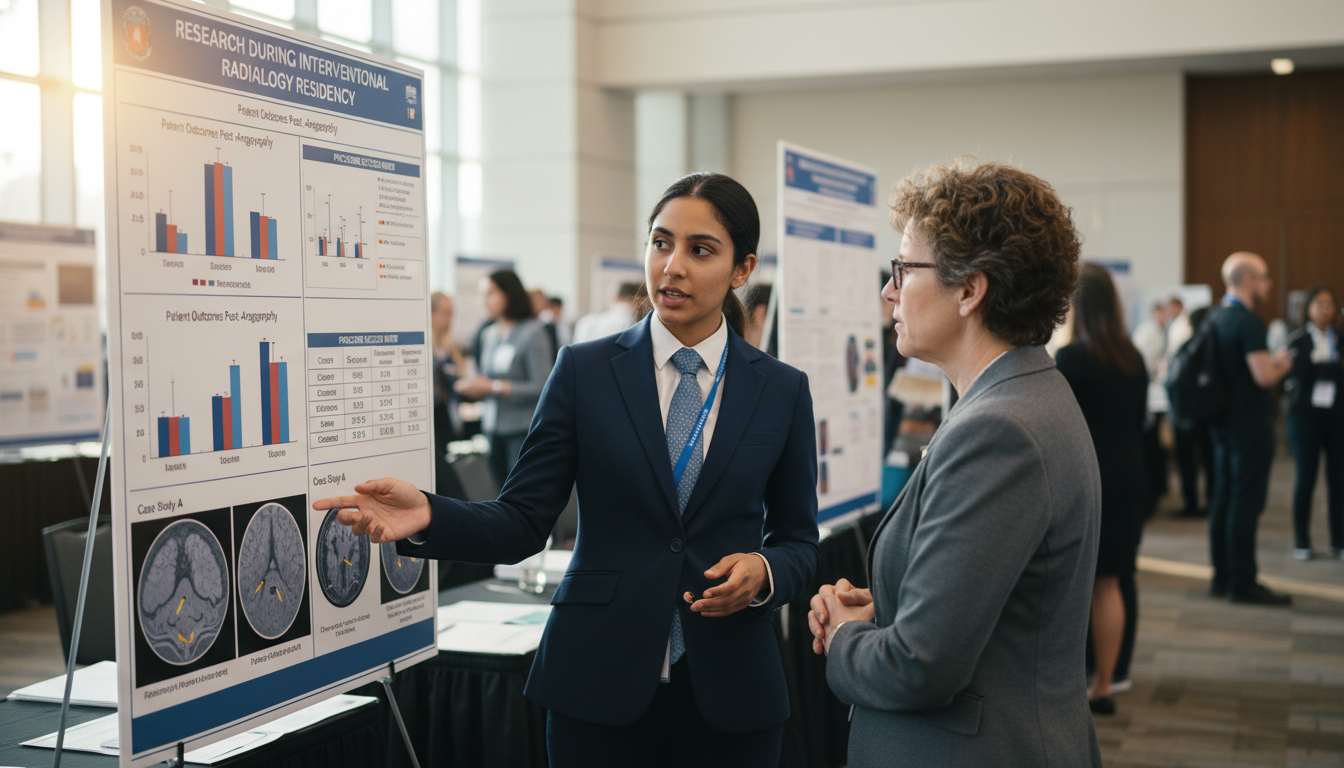
1. From Idea to Proposal
Sources of ideas:
- Recurring clinical questions from your IR rotation
- Complications or difficult cases that made the team say, “We should study this”
- Gaps you notice while reading guidelines or recent IR literature
Converting an idea to a workable project:
Use a simple framework:
- Population: Who are the patients? (e.g., adults with HCC undergoing Y‑90)
- Intervention / Exposure: What is being evaluated?
- Comparison: Is there a control or comparison group?
- Outcome: What are you measuring? (survival, complications, length of stay, etc.)
- Time frame: Over what period?
Once you outline this, draft a short concept sheet (1–2 pages) and run it by your mentor before investing too much time.
2. IRB and Institutional Approvals
Resident research almost always requires some level of institutional oversight:
- Retrospective chart reviews: Typically require expedited IRB review or exemption
- Prospective studies: Usually full IRB review + consent forms
- QI projects: Sometimes exempt from IRB but check with your institution’s QI/research office
As a US citizen IMG, getting comfortable with US regulatory frameworks (HIPAA, IRB processes, protected health information rules) is valuable, especially if your medical school abroad used a different regulatory system.
Tips:
- Ask your mentor for a prior IRB template for a similar study.
- Identify the research coordinator or IRB liaison who supports the IR division.
- Be proactive with deadlines—IRB can take weeks to months.
3. Data Collection and Management
This is where many resident projects stall. Plan data collection realistically:
- Define variables clearly (e.g., how will you define “major complication”?)
- Create a data dictionary with standardized definitions
- Use secure platforms approved by your institution (e.g., REDCap)
- Train anyone helping you (e.g., medical students) to ensure consistency
For a busy interventional radiology resident:
- Block regular short intervals (e.g., one hour twice a week) for data entry
- Consider batching: extract data for 5–10 patients at a time
- Keep meticulous logs so you can resume after busy service months
4. Analysis and Interpretation
Work closely with:
- A statistician (if available)
- Your mentor (who understands the clinical significance)
Key tasks:
- Decide on appropriate statistical tests
- Check assumptions (e.g., distribution, sample size adequacy)
- Interpret not just p‑values, but effect sizes and confidence intervals
As a US citizen IMG, understanding and explaining your analysis confidently will stand out in presentations and interviews.
5. Writing and Submission
Aim for a clear, structured manuscript:
- Introduction: Define the clinical problem, gap in the literature, and objective
- Methods: Study design, inclusion/exclusion criteria, data collection, and statistical analysis
- Results: Tables, figures, and concise description of key findings
- Discussion: Interpret results, compare with prior literature, discuss limitations and implications
Target journals in IR and radiology:
- Journal of Vascular and Interventional Radiology (JVIR)
- Cardiovascular and Interventional Radiology (CVIR)
- General radiology or specialty journals (e.g., oncology, hepatology, vascular surgery) for cross‑disciplinary topics
If a full paper is not yet ready, aim for:
- Abstract submissions to major meetings:
- SIR (Society of Interventional Radiology)
- RSNA
- CIRSE (if international)
- Poster or oral presentations are powerful CV items for an IR resident, especially for an IMG.
Balancing Research With Clinical Training and IR Match/Career Goals
Protected Time vs. “Nights and Weekends”
Not all programs are equal. Some academic IR residencies offer:
- Scheduled research blocks (2–4 weeks or more)
- A dedicated research year between PGY‑3 and PGY‑4 or later
- Access to biostatistics, coordinators, and grant offices
Others may provide no formal protected time. As a US citizen IMG, factor this into your choice of program if research is central to your long‑term goals.
If you lack protected time:
- Work on retrospective or QI projects with defined endpoints
- Use lighter rotations (e.g., elective, outpatient) to push projects forward
- Collaborate with medical students who can help gather data under your supervision
Staying Productive as an Early‑Stage Resident
Especially in PGY‑2/PGY‑3:
- Start small but finish something—an accepted abstract or case report builds momentum.
- Keep a simple research tracker (spreadsheet) for each project’s status (idea, IRB, data collection, analysis, manuscript, submission).
- Communicate regularly with mentors—brief emails with specific questions are more effective than long gaps of silence.
How Resident Research Helps if You’re Still Targeting the IR Match
Some US citizen IMGs enter:
- A preliminary intern year or transitional year
- A diagnostic radiology residency aiming for ESIR or independent IR training
- A late entry into IR after initial training in another specialty
In all these paths, research during residency can:
- Strengthen your IR match application (for integrated IR/DR or independent IR)
- Provide IR‑specific letters of recommendation from academic faculty
- Demonstrate sustained commitment to the field
For the IR match, emphasize:
- IR‑focused projects (even if small)
- Presentations at IR‑related meetings
- Any leadership roles in research (first‑author status, project coordination)
Leveraging Research for an Academic Residency Track and Beyond
Signaling an Academic Career Trajectory
If you foresee an academic IR career:
- Seek co‑authorship in multiple projects within your program
- Ask mentors to connect you with multicenter registries or national studies
- Attend research meetings or journal clubs regularly
- Volunteer to help with reviewing manuscripts or abstracts once you gain experience
Programs often have formal academic residency tracks or scholarly concentrations. As a US citizen IMG, getting into such a track during residency provides:
- More protected time
- Access to internal funding
- Priority for advanced projects and institutional support
Building a Research “Brand” in a Sub‑Niche
As your training progresses (PGY‑4 and beyond):
- Identify a niche—e.g., interventional oncology, trauma IR, venous disease, women’s health, PAD, portal hypertension.
- Focus several projects within that area to build coherent expertise.
- Present repeatedly on the same theme; this builds recognition and consistency.
When you apply for fellowships or academic jobs, having a consistent narrative—“I’ve focused on interventional oncology outcomes and registry work”—is compelling, especially if you started as an IMG who had to build everything from scratch.
Long‑Term Payoff
Resident research projects can lead to:
- Fellowship opportunities at top IR centers
- Early faculty positions after training
- Participation in industry‑sponsored trials or device development
- Opportunities to speak at national and international conferences
For a US citizen IMG, this trajectory can be both professionally rewarding and a powerful demonstration that your path—though non‑traditional—was a strength rather than a weakness.
Common Pitfalls and How to Avoid Them
Overcommitting and Under‑Delivering
Symptom: You’re listed on six projects but none are finished.
Solution:
- Prioritize 1–2 primary projects.
- Be honest with mentors about realistic timelines.
- Set concrete monthly goals (e.g., “Complete IRB by end of month,” “Finish data collection for 50% of cohort”).
Lack of Clear Mentorship
Symptom: You’re unsure who is guiding the project, and feedback is slow.
Solution:
- Identify a single primary mentor responsible for the project’s success.
- Clarify roles early: Who handles IRB, data extraction, stats, writing, submission?
- If a mentor is unresponsive, consider re‑aligning with another faculty member.
Not Thinking About Authorship Early
Authorship can be sensitive.
- Discuss expectations at project initiation:
- Who is first author?
- Who is corresponding author?
- On what conditions will authorship be granted?
- Document agreements informally in an email to avoid confusion later.
FAQs: Research During Residency for US Citizen IMGs in Interventional Radiology
1. I’m a US citizen IMG with limited research from medical school. Is it “too late” to build a strong research profile during residency?
No. Residency is a prime time to establish yourself. Many successful IR physicians began research careers during PGY‑2–3. Focus on:
- Getting involved early
- Completing 1–2 solid projects
- Presenting at meetings like SIR or RSNA
Consistent output over a few years can fully compensate for a sparse medical school research record.
2. How many research projects or publications do I “need” for competitive IR fellowships or academic jobs?
There’s no magic number, but for an aspiring academic IR:
- Aim for several abstracts/posters over residency and IR training
- Target multiple peer‑reviewed publications, with at least one where you are first author
Quality and relevance to interventional radiology matter more than sheer quantity. A focused portfolio in a sub‑niche can be more persuasive than a long list of unrelated minor projects.
3. Can quality improvement projects and case reports really help my CV as much as traditional clinical studies?
They serve different purposes:
- Case reports: Great for early wins and learning the submission process
- QI projects: Show real‑world impact on patient safety and workflow
- Retrospective/prospective clinical studies: Typically have higher academic weight
For a US citizen IMG, a combination works best: use case reports and QI for momentum while you contribute to at least one more robust clinical study.
4. How do I talk about my resident research in interviews for IR residency, ESIR, or fellowships?
Frame your work clearly and confidently:
- Briefly describe the clinical question, your role, and the study design
- Highlight what you learned (methods, IR concepts, patient care implications)
- Be prepared to discuss limitations and next steps
For example:
“In residency, I led a retrospective study on outcomes of Y‑90 for HCC at our center. I designed the data collection tool, worked with our statistician on the analysis, and presented our findings at SIR. This project taught me how to handle large clinical datasets and critically evaluate our own IR outcomes.”
By approaching research during residency with purpose and structure, a US citizen IMG in interventional radiology can transform potential disadvantages into a compelling academic narrative. Whether your goal is a competitive IR match, an academic residency track, or a future as an IR innovator, resident research projects—chosen and executed wisely—are among the most powerful tools you have.