Understanding the Role of Research During Residency for US Citizen IMGs
For a US citizen IMG who is American studying abroad and aiming for a hematology-oncology (heme onc) fellowship, research during residency can be the single biggest differentiator in the oncology fellowship match. Strong clinical performance and solid board scores matter, but hematology-oncology is fundamentally an academic, research-driven specialty. Program directors look specifically for evidence that you can engage in scholarly work, think critically about data, and contribute to the field.
As a US citizen IMG, you already know you must overcome several structural disadvantages: fewer home-institution connections, less established US-based research, and sometimes bias in selection. Intentionally building a strong portfolio of resident research projects during your internal medicine residency can offset many of these challenges.
In this guide, you’ll learn:
- Why research matters so much for heme onc fellowship
- How to position yourself in residency to access research opportunities
- The types of projects that are realistic and productive for busy residents
- How to build an “academic residency track” even if your program doesn’t formally offer one
- Concrete steps for US citizen IMGs to stand out in the oncology fellowship match
Why Research Matters So Much for Heme Onc Fellowship
Hematology-oncology is one of the most research-intensive subspecialties in internal medicine. Cancer care rapidly evolves based on clinical trials, molecular profiling, and translational science. Fellowship program directors are selecting future colleagues who can:
- Interpret and apply emerging data in practice
- Contribute to clinical trials or quality improvement
- Collaborate across disciplines (pathology, radiation oncology, surgery, basic science)
- Potentially build academic careers supported by grants and publications
How Fellowship Programs Evaluate Research Experience
When reviewing applications, heme onc fellowship programs typically look for:
- Evidence of sustained research involvement (not a one-off project)
- First- or second-author publications or abstracts, especially in oncology or related internal medicine fields
- Presentations at regional or national conferences (ASH, ASCO, institutional research days)
- Clear mentorship relationships with academic faculty
- A coherent story in your personal statement and CV showing a real interest in hematology-oncology
For a US citizen IMG, strong research during residency signals several key things:
You can function in the US academic system.
You know how to navigate IRB approval, data collection, and collaboration in a US hospital.You can compete at the same level as US grads.
Well-structured resident research projects with concrete outcomes (posters, manuscripts) demonstrate parity.You are serious about an academic career path.
Even if you plan on community practice, heme onc training is heavily academic. Demonstrating comfort with research reassures PDs.You’re more likely to succeed in fellowship.
Many heme onc fellowships have required scholarly activity or research blocks. Prior success reduces their risk.
Laying the Groundwork: Before and Early in Residency
You should start planning your research strategy for heme onc fellowship well before your first day of internship, especially as an American studying abroad who may have fewer local connections.
1. Clarify Your Long-Term Goal
Be explicit: “I want to match into a hematology-oncology fellowship.” This clarity guides decisions about:
- Program selection (academic vs. community)
- Electives (oncology, bone marrow transplant, palliative care)
- How you spend limited free time (research vs. moonlighting or non-career activities)
- Networking priorities
Even if your residency program has no formal “academic residency track,” you can create one informally by consistently directing your activities toward scholarship.
2. Choose Residency Programs with Realistic Research Infrastructure
If you are still applying or ranking programs, consider:
- Presence of a dedicated heme onc division with fellowship training
- Track record of resident publications or conference presentations
- Access to a clinical trials office, biostatistics support, or research coordinators
- Protected research time (even 1-2 half-days per month can help)
- Mentors with strong publication records in hematology or oncology
As a US citizen IMG, an “academic residency track” label is nice, but outcomes matter more. Even a community-based program affiliated with a university cancer center can offer excellent research opportunities if you are proactive.
3. Map Out a Rough 3-Year Research Plan
Doing this early creates structure:
PGY-1 (Intern Year)
- Learn the hospital systems and EMR
- Identify potential mentors in hematology-oncology
- Join 1–2 ongoing projects (retrospective study, QI project, registry)
- Aim for at least one conference abstract by the end of PGY-1
PGY-2
- Take on more responsibility: lead a project, develop your own idea
- Start something that can realistically become a manuscript
- Target regional/national meeting presentations
- Build continuity with 1–2 key mentors
Early PGY-3
- Finalize manuscripts and submit them
- Focus on heme onc fellowship applications and interviews
- Use publications and presentations to tell a coherent story about your interest in oncology
This framework helps you make tradeoffs: what to say yes/no to, and how to use electives strategically.

Finding and Building Research Opportunities in Residency
Many residents, especially US citizen IMGs, feel they have “no research” because their program isn’t a top academic center. In reality, almost any residency can support meaningful resident research projects if you understand the landscape and think strategically.
1. Types of Research Projects Feasible During Residency
Given limited time, some project types are more realistic than others:
a. Retrospective Chart Reviews (Clinical Outcomes Studies)
- Use existing patient data from your institution’s EMR
- Ask focused questions: outcomes, complications, adherence to guidelines
- Examples in heme onc:
- Outcomes of older adults with diffuse large B-cell lymphoma at your center
- Real-world toxicity profile of a specific chemotherapy regimen
- Time to treatment initiation for acute leukemia and associated outcomes
b. Quality Improvement (QI) Projects
These are particularly attractive because they overlap with ACGME requirements:
- Examples:
- Increasing adherence to VTE prophylaxis in hospitalized oncology patients
- Reducing central line-associated bloodstream infections in neutropenic patients
- Improving appropriate transfusion practices in hematology inpatients
QI projects often move faster than full research studies and can still lead to abstracts, posters, or even publications in QI-focused journals.
c. Case Reports and Case Series
These are entry points for residents with minimal prior experience:
- Look for unusual or educational cases during rotations:
- Rare hematologic malignancies
- Uncommon complications of chemotherapy or immunotherapy
- Novel drug responses or adverse effects
- Talk to attendings when you find an interesting case; many will be open to co-authoring a case report with you.
d. Secondary Analyses or Database Studies
If your institution has access to large datasets or collaborates with national registries:
- SEER, NCDB, or institutional cancer registry data can support more robust analyses
- These projects often require biostatistical support, but can produce high-impact publications
e. Basic or Translational Research (Selected Settings)
If you are at a research-intensive institution, lab work is possible but time-consuming. You must:
- Be realistic about your schedule
- Align with a mentor who understands resident time constraints
- Focus on discrete, well-defined components (e.g., data analysis, specific experiments)
For most US citizen IMGs, clinical and QI research during residency is more practical and directly relevant to fellowship applications.
2. Identifying Good Mentors in Heme Onc
The right mentor matters more than the “perfect” project idea. Look for:
- Hematology-oncology attendings or faculty who:
- Have recent publications (PubMed search their name)
- Attend or present at major meetings (ASH, ASCO)
- Are known to work with residents or fellows
- Faculty who respond reliably to email and meet deadlines
- People whose working style fits your personality and schedule
How to approach potential mentors:
Send a concise email:
- Introduce yourself as a US citizen IMG and internal medicine resident
- State your career goal (heme onc fellowship)
- Mention any prior research experience or skills (statistics, coding, literature review)
- Ask if they have ongoing projects you could join, or whether they would be willing to brainstorm a feasible project together
Attach a brief CV and, if applicable, an example of prior work (abstract, poster, or manuscript).
3. Leveraging an Academic Residency Track (or Creating Your Own)
If your program has a formal academic residency track, use it:
- Enroll early, understand expectations, and take advantage of protected time
- Seek structured mentorship and research seminars
- Use track-related resources (biostats, writing support, IRB assistance)
If your program does not:
- Informally carve out an “academic track” by:
- Choosing heme onc and research electives
- Negotiating for periodic half-days dedicated to research
- Participating in institutional research committees or resident research forums
- Document your activity (e.g., log hours spent, meetings, deliverables) to demonstrate a serious academic trajectory when applying for fellowship.
Time Management and Execution: Making Research Work with a Resident Schedule
Time is your scarcest resource. A realistic plan tailored to the resident lifestyle is essential.
1. Start Small and Build Momentum
Rather than waiting for the “perfect” large project:
- Begin with a case report or small QI project in PGY-1
- Learn the mechanics: IRB basics, data collection, literature search, writing structure
- Use this early win to build confidence and show future mentors that you can execute
2. Break Projects Into Micro-Tasks
Your schedule is fragmented—use it:
- 15–20 minute tasks:
- Skim key papers
- Format references
- Update your literature matrix
- 30–60 minute tasks:
- Draft one section of a manuscript
- Clean a dataset
- Prepare 3–4 slides for a lab or divisional meeting
Use a simple project management approach:
- Keep a running list of active projects (ideally 1–3, not 10)
- Track for each: next step, responsible person, self-imposed deadline
3. Build a Small Research Team
Collaboration increases output and accountability:
- Partner with co-residents who share interest in oncology
- Include medical students (especially American studying abroad who rotate through your hospital and want experience) for data collection and literature review
- Lean on fellows for project refinement and feedback
This division of labor helps you progress even during intense rotations.
4. Use Elective Time Strategically
As a US citizen IMG targeting heme onc fellowship, don’t let elective blocks be random:
- Allocate at least one elective to an oncology research block
- Be physically present with your mentor’s team (clinic, tumor board, meetings)
- Use the block to:
- Finalize data
- Draft the bulk of a manuscript
- Prepare abstract submissions
If your program doesn’t list “research” as a formal elective, propose a structured plan to your program director with clear goals and faculty supervision.
Turning Research into Tangible Outcomes for the Oncology Fellowship Match
Research only helps your heme onc fellowship application if it translates into visible, verifiable output.
1. Prioritizing Projects with a Clear Path to Completion
Consider each potential project:
- Is the research question clearly defined?
- Are the required data accessible?
- Does your mentor have a track record of publishing similar work?
- Can this produce at least an abstract or poster within 6–12 months?
As a US citizen IMG, avoid spreading yourself thin across many projects that never finish. It’s better to have:
- 1–3 completed projects with abstracts/posters/manuscripts
than - 7 half-finished ideas that you can’t list as scholarly products.
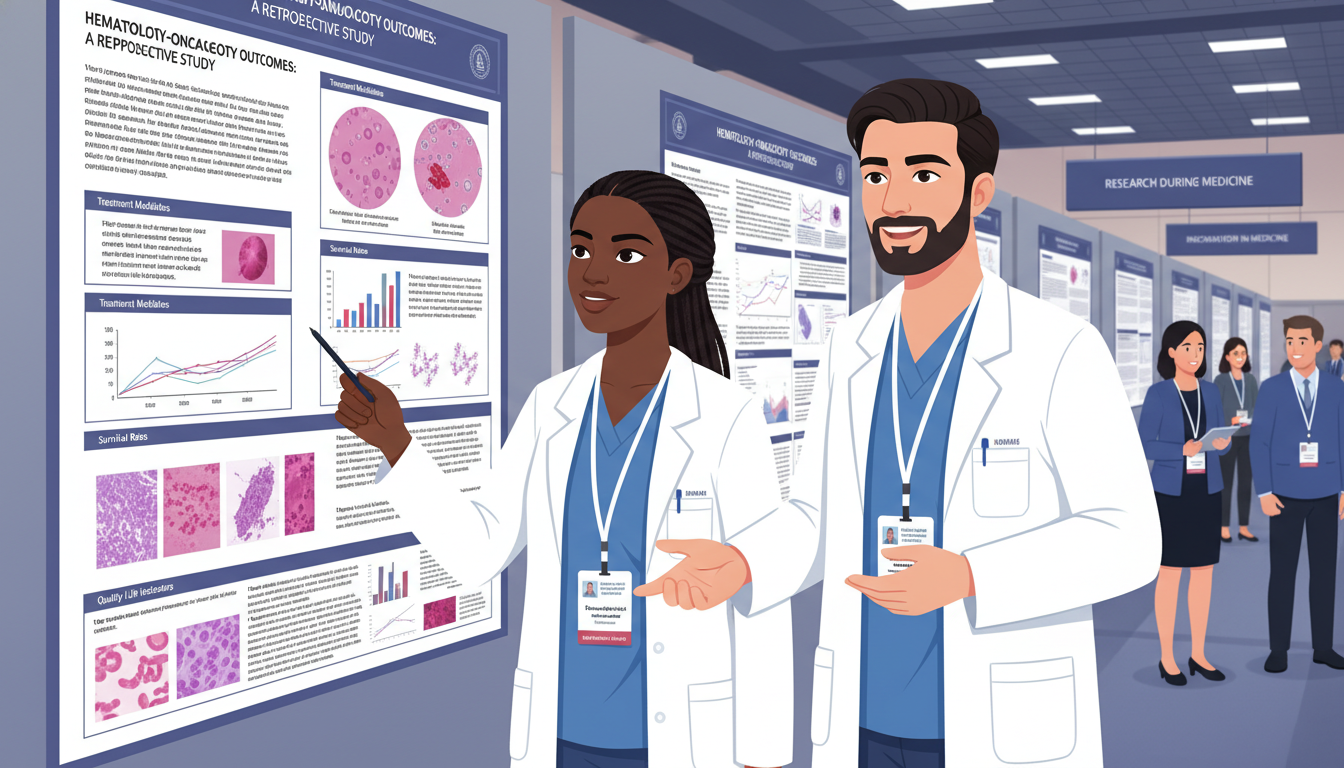
2. Abstracts, Posters, and Presentations
These are highly valuable, especially if you lack time for multiple manuscripts:
- Target institutional research days first—higher acceptance and rapid feedback
- Then aim for:
- ASH (American Society of Hematology)
- ASCO (American Society of Clinical Oncology)
- Smaller specialty meetings (e.g., regional oncology societies)
For each presentation:
- Put your name as first author when appropriate
- Keep copies of acceptance letters and final posters
- Practice a clear 1-minute explanation of the project and findings—this often comes up in interviews
3. Manuscripts: Quality Over Quantity
For heme onc fellowship, even one solid first-author publication in an oncology-related area can be a major asset. Relevant journals might include:
- Disease-specific oncology journals
- General internal medicine journals with oncology sections
- QI or hospital medicine journals if your project focuses on oncology care processes
Collaborate with your mentor on:
- Selecting a realistic target journal
- Understanding formatting and submission requirements
- Responding to reviewer feedback
Remember, even “in press” or “under review” manuscripts are worth listing, clearly labeled as such.
4. Telling a Coherent Story in Your Application
Your research portfolio should reinforce your narrative as a future hematologist-oncologist:
- In your personal statement:
- Describe how specific resident research projects deepened your interest in hematology-oncology
- Highlight what you learned about patient care, data interpretation, and multidisciplinary collaboration
- In your CV:
- Group oncology-related activities (rotations, research, presentations)
- Use clear titles that show relevance (e.g., “Outcomes of Induction Chemotherapy in Elderly AML Patients at a Community Hospital”)
During interviews, be ready to discuss:
- Your role in each project
- Key findings and clinical implications
- Challenges you faced as a resident (time, data access)
- How these experiences prepared you for an academic heme onc career
This is where research during residency shifts from “a bullet point” to a compelling demonstration of your commitment and capability.
Specific Tips for US Citizen IMGs and Americans Studying Abroad
Your background as a US citizen IMG gives you unique strengths—and unique hurdles. Tailoring your approach can maximize your chances in the oncology fellowship match.
1. Bridge Your International and US Experiences
If you did research abroad during medical school:
- Highlight transferable skills:
- Study design, data collection methods
- Literature review, writing manuscripts
- Collaborating with international teams
- Use residency research to show you can operate in the US system:
- IRB processes
- HIPAA-compliant data handling
- Working within US academic timelines and expectations
This combination can be very attractive to programs that value global perspectives.
2. Compensate for Potential Perceptions of Disadvantage
Program directors may worry that IMGs have less exposure to US academic norms. You can counter this by:
- Having consistent, longitudinal involvement in 1–2 heme onc projects during residency
- Seeking letters of recommendation that explicitly comment on your research performance, initiative, and scholarly potential
- Demonstrating comfort with critical appraisal of literature during interviews (e.g., discussing landmark trials in lymphoma, breast cancer, or immunotherapy)
3. Network Intentionally in Hematology-Oncology
Academic medicine is relationship-driven. Use research as an entry point:
- Present at meetings and introduce yourself to faculty whose work you admire
- If you are an American studying abroad who returns to the US for residency, connect with alumni from your medical school who are now in oncology
- Ask your mentors to:
- Introduce you to colleagues at other institutions
- Suggest heme onc fellowship programs where your profile might be a good fit
Networking can open doors to multi-institutional projects, away rotations, or informal mentorship that can strengthen your oncology fellowship match prospects.
4. Be Transparent About Your Career Goals Early
Tell your residency program director and heme onc faculty from the start that you’re aiming for hematology-oncology:
- They are more likely to:
- Steer promising oncology-related cases and projects your way
- Offer you early or repeat oncology electives
- Advocate for you when external faculty inquire about strong candidates
Your goal is to become “the resident who is clearly going into heme onc,” both clinically and academically.
FAQs: Research During Residency for US Citizen IMG in Hematology-Oncology
Q1: How much research do I need to be competitive for heme onc fellowship as a US citizen IMG?
There is no fixed number, but a strong profile typically includes:
- At least 1–2 oncology-related abstracts or posters, ideally at regional or national meetings
- At least one first-author publication or well-advanced manuscript (oncology or closely related internal medicine topic)
- Evidence of sustained involvement in research during residency (not just a single case report in PGY-3)
Quality, relevance, and your ability to articulate what you learned matter more than sheer volume.
Q2: My residency program is community-based with limited research. Do I still have a chance?
Yes, but you must be proactive:
- Identify any affiliated academic centers or cancer programs and seek cross-institution collaboration
- Focus on feasible projects: retrospective chart reviews, QI in oncology patients, case reports
- Use institutional resources like IRB staff or quality improvement offices
- Document your initiative and outcomes; fellowship programs respect applicants who create opportunities where few exist.
Q3: Is non-oncology research helpful if I can’t find heme onc projects?
Yes, especially in the first year or two:
- Any rigorous clinical or QI research shows you can complete projects and work in academic teams
- Try to pivot toward oncology as early as feasible, even if that means starting with general IM projects and later focusing on cancer-related topics
- When applying, emphasize the research skills you developed and how you plan to apply them to hematology-oncology.
Q4: I have prior research from medical school abroad. Will fellowship programs value it?
They can, particularly if:
- You had meaningful roles (design, data analysis, writing)
- The work resulted in peer-reviewed publications or conference presentations
- You can clearly explain the project and your contribution
However, fellowship programs also want to see US-based research during residency to ensure you can function in the American academic environment. Use residency to complement your international background, not replace it.
By treating research during residency as a deliberate, structured component of your career path—not an optional extra—you can significantly strengthen your chances in the oncology fellowship match. As a US citizen IMG aiming for hematology-oncology, thoughtful resident research projects and an “academic residency track” mindset will help you stand out, demonstrate your commitment, and prepare you for a meaningful, impactful career in heme onc.