Introduction: Why Research Is the Engine of Modern Healthcare
Healthcare is in constant motion. New diseases emerge, technologies evolve, and patient expectations change. At the center of this evolution is Healthcare Research—the systematic pursuit of knowledge that shapes how we diagnose, treat, and prevent disease.
For premed students and medical trainees, understanding the role of research is not just “nice to have”; it is foundational to practicing Evidence-Based Practice and improving Patient Outcomes. Research transforms questions at the bedside into answers that change guidelines, policies, and lives.
This article explores how research converts ideas into real-world impact, focusing on:
- How research generates evidence and guides clinical decisions
- The role of research in reducing Health Disparities
- How Innovative Treatments and technologies emerge from decades of scientific inquiry
- The step-by-step process of transforming a research idea into measurable impact
- Real-world examples that illustrate research-driven change in healthcare
By the end, you’ll see how engaging in research—at any training level—positions you not only as a clinician, but as a contributor to the future of medicine.
The Core Importance of Research in Healthcare
Generating Reliable Knowledge for Evidence-Based Practice
At its heart, research is about asking structured questions and using rigorous methods to answer them. This generates the evidence needed for Evidence-Based Practice (EBP)—the integration of the best available research, clinical expertise, and patient preferences.
Common research designs include:
- Randomized Controlled Trials (RCTs): Gold standard for testing interventions
- Observational Studies: Cohort, case-control, and cross-sectional studies to explore associations
- Systematic Reviews and Meta-Analyses: Synthesize multiple studies to provide higher-level evidence
- Qualitative Research: Explores patient experiences, behaviors, and system-level issues
When clinicians use research-backed guidelines—for example, American Heart Association guidelines for heart failure, or ADA guidelines for diabetes—they are applying the cumulative results of decades of clinical research.
Case Study: The SOLIDARITY Trial and Rapid Evidence in a Crisis
The SOLIDARITY Trial, led by the World Health Organization (WHO) during the COVID-19 pandemic, illustrated the power of large-scale, collaborative research:
- Goal: Rapidly test multiple potential COVID-19 treatments (e.g., remdesivir, hydroxychloroquine, lopinavir/ritonavir) across many countries
- Design: Adaptive, pragmatic RCT conducted in real-world settings
- Impact:
- Provided timely evidence on which drugs were ineffective or marginally beneficial
- Helped phase out low-value or harmful treatments
- Informed evolving national and institutional treatment protocols worldwide
For trainees, SOLIDARITY is a model of how methodologically strong, multinational studies can accelerate clinical decision-making and directly influence Patient Outcomes on a global scale.
Illuminating and Addressing Health Disparities
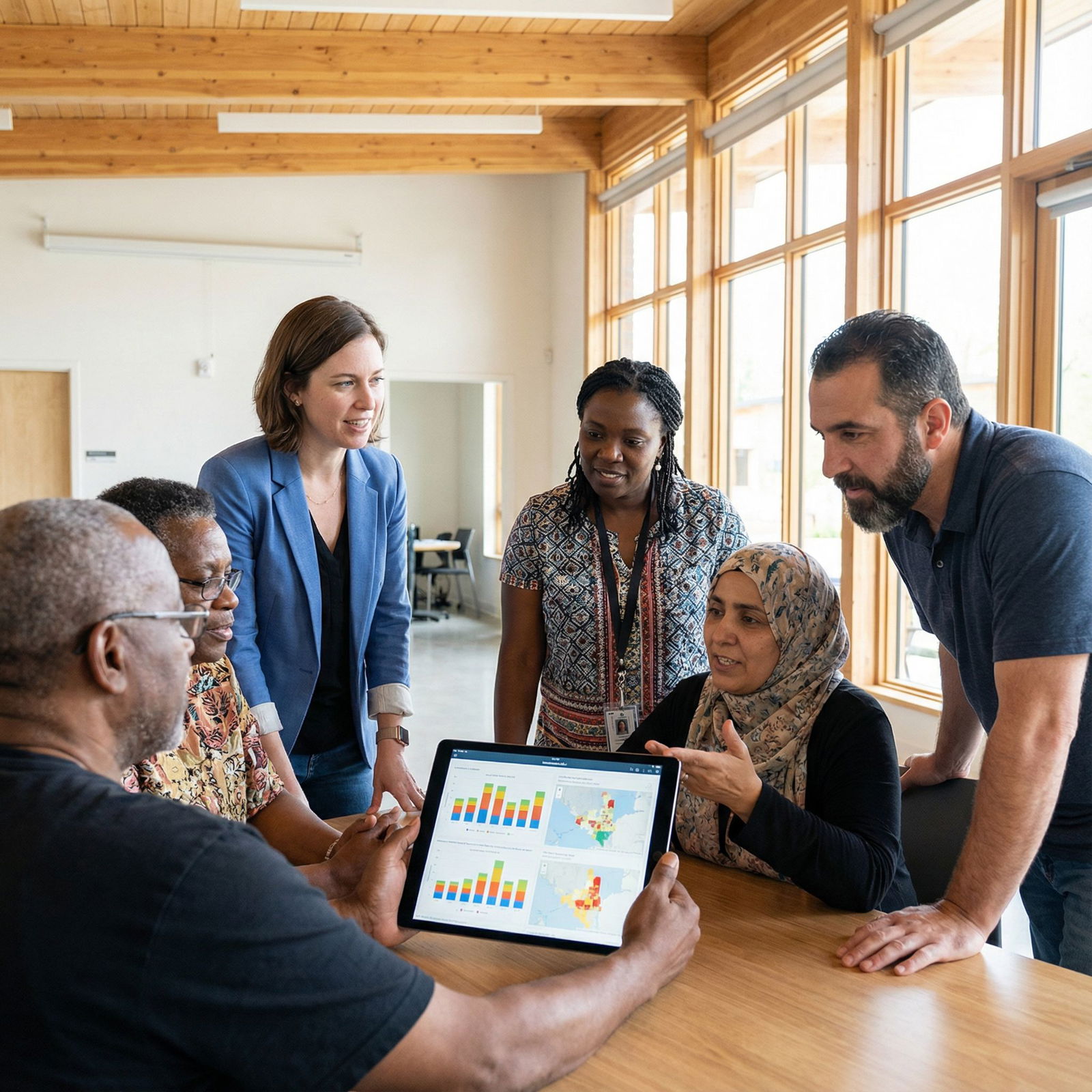
A major role of healthcare research is revealing who is being left behind. Health Disparities—preventable differences in health outcomes among populations defined by race, ethnicity, socioeconomic status, geography, gender identity, or other factors—are often invisible until systematically studied.
Research examining social determinants of health (SDOH) can identify:
- Geographic “hotspots” of poor outcomes (e.g., higher maternal mortality in rural or marginalized communities)
- Structural barriers to care (e.g., lack of transportation, insurance coverage gaps)
- Differences in access to screening, preventive care, or high-quality specialists
Case Study: NIH Community Engagement and Participatory Research
The National Institutes of Health (NIH) has invested heavily in Community-Based Participatory Research (CBPR) and community engagement:
- Core principle: Research should be done with communities, not on them
- Example programs:
- NIH Community Engagement Program and Clinical and Translational Science Awards (CTSA) hubs
- Partnerships with faith-based organizations, community health centers, tribal communities, and local coalitions
Outcomes include:
- Culturally tailored interventions (e.g., community health worker–led diabetes management programs)
- Improved recruitment and retention of underrepresented populations in clinical trials
- Policies and health services redesigned based on real community needs
For medical students and residents, participating in community-engaged research is a powerful way to understand population health, structural inequities, and how to improve Patient Outcomes beyond the hospital walls.
Driving Innovative Treatments and Technologies
Behind every “new” treatment or technology is usually years—often decades—of basic, translational, and clinical research. From Innovative Treatments for cancer to AI-driven diagnostic tools, research underpins progress.
Types of innovation driven by healthcare research include:
- Pharmacologic innovations: Targeted therapies, biologics, immunotherapies
- Diagnostic technologies: High-resolution imaging, molecular diagnostics, AI algorithms
- Procedural advances: Minimally invasive surgeries, catheter-based interventions
- Digital health tools: Remote monitoring, telemedicine, wearable devices, clinical decision support
Case Study: The Long Road to mRNA Vaccines
The rapid rollout of mRNA vaccines for COVID-19 might look like an overnight success, but it rested on decades of prior Healthcare Research:
- Basic science: Understanding of mRNA stability, delivery systems (e.g., lipid nanoparticles), and immune responses
- Translational research: Early-phase tests for cancer vaccines and other infectious diseases
- Clinical trials: Prior safety and dosing studies in humans
When SARS-CoV-2 emerged:
- Platforms from companies like Moderna and Pfizer-BioNTech could be rapidly adapted
- Phase I–III trials were executed at unprecedented speed, yet maintained rigorous safety monitoring
- Post-marketing surveillance (pharmacovigilance) continued to track adverse events in real time
Outcome: Hundreds of millions of lives saved or severe disease averted—an extraordinary demonstration of how sustained investment in research can enable a rapid, life-saving response in a global emergency.
From Question to Change: The Process of Transforming Ideas into Impact
Step 1: Ideation – Asking the Right Clinical Question
Every impactful study begins with a question:
- Why do some patients with the same diagnosis have vastly different outcomes?
- Is this new treatment truly better than the standard of care?
- How can we reduce readmissions or improve adherence?
- Why is this community experiencing worse health than others?
For trainees, a strong research idea typically emerges from:
- Clinical experiences that highlight unmet needs
- Gaps in existing guidelines or evidence
- Observed patterns in patient care or outcomes
- Known Health Disparities that remain unaddressed
A well-structured research question often follows frameworks like PICO (Population, Intervention, Comparison, Outcome), which guide study design and feasibility.
Step 2: Securing Research Funding and Support
Even the best ideas need resources—time, infrastructure, and often money.
Key funding sources include:
- National Institutes of Health (NIH): A leading global funder of biomedical research
- Foundations and societies: AHA, ACS, ASCO, and others
- Institutional grants: Medical school, hospital, or department-level funding
- Industry sponsorship: Particularly for drug and device trials (with careful attention to conflicts of interest)
Example: NIH Grants as Catalysts for Breakthroughs
NIH provides:
- R-series grants (e.g., R01): Support large, investigator-initiated projects
- K awards: Career development grants for early-career investigators
- F and T awards: Training and fellowship funding for predoctoral and postdoctoral trainees
Grant applications require:
- A clear, impactful research question
- Strong methodological plan
- Feasibility and realistic timelines
- Preliminary data for larger grants
For medical students and residents, joining projects funded by NIH or other agencies is a valuable way to learn research design, budgeting, and regulatory processes.
Step 3: Study Design, Ethics, and Implementation
Once funding and mentorship are secured, the next phase is turning the idea into a rigorous, ethical study.
Key components include:
- Research protocol: Explicit details of objectives, methods, sample size, analysis plan
- Ethical review: Institutional Review Board (IRB) approval to protect human subjects
- Informed consent: Transparent communication of risks, benefits, and alternatives
- Data management plan: Ensuring quality, security, and reproducibility of data
For example, a trial testing an Innovative Treatment for heart failure must define:
- Inclusion/exclusion criteria
- Primary and secondary outcomes (e.g., mortality, hospitalization rates, quality of life)
- Safety monitoring procedures
- Stopping rules if harms or overwhelming benefits emerge
Clinical implementation may involve:
- Training staff and clinicians
- Standardizing procedures across sites
- Ensuring adherence to protocols
Step 4: Data Analysis, Interpretation, and Critical Appraisal
Data alone do not change practice; the insight drawn from data does.
Researchers use:
- Descriptive statistics: Summarize baseline characteristics and outcomes
- Inferential statistics: Test hypotheses, assess effect sizes, and estimate confidence intervals
- Advanced methods: Regression, survival analysis, mixed models, machine learning
But numerical significance (p-values) is not enough. Interpretation must consider:
- Clinical significance (Is the difference meaningful for patients?)
- Bias and confounding
- External validity (Can the results be applied to other populations?)
- Consistency with prior evidence
Trainees need strong skills in biostatistics and critical appraisal to distinguish robust evidence from flawed or overstated conclusions—core to Evidence-Based Practice.
Step 5: Dissemination – Turning Findings into Shared Knowledge
A study that never leaves a hard drive has no impact. Dissemination pathways include:
- Peer-reviewed journals: Primary mechanism for sharing validated findings
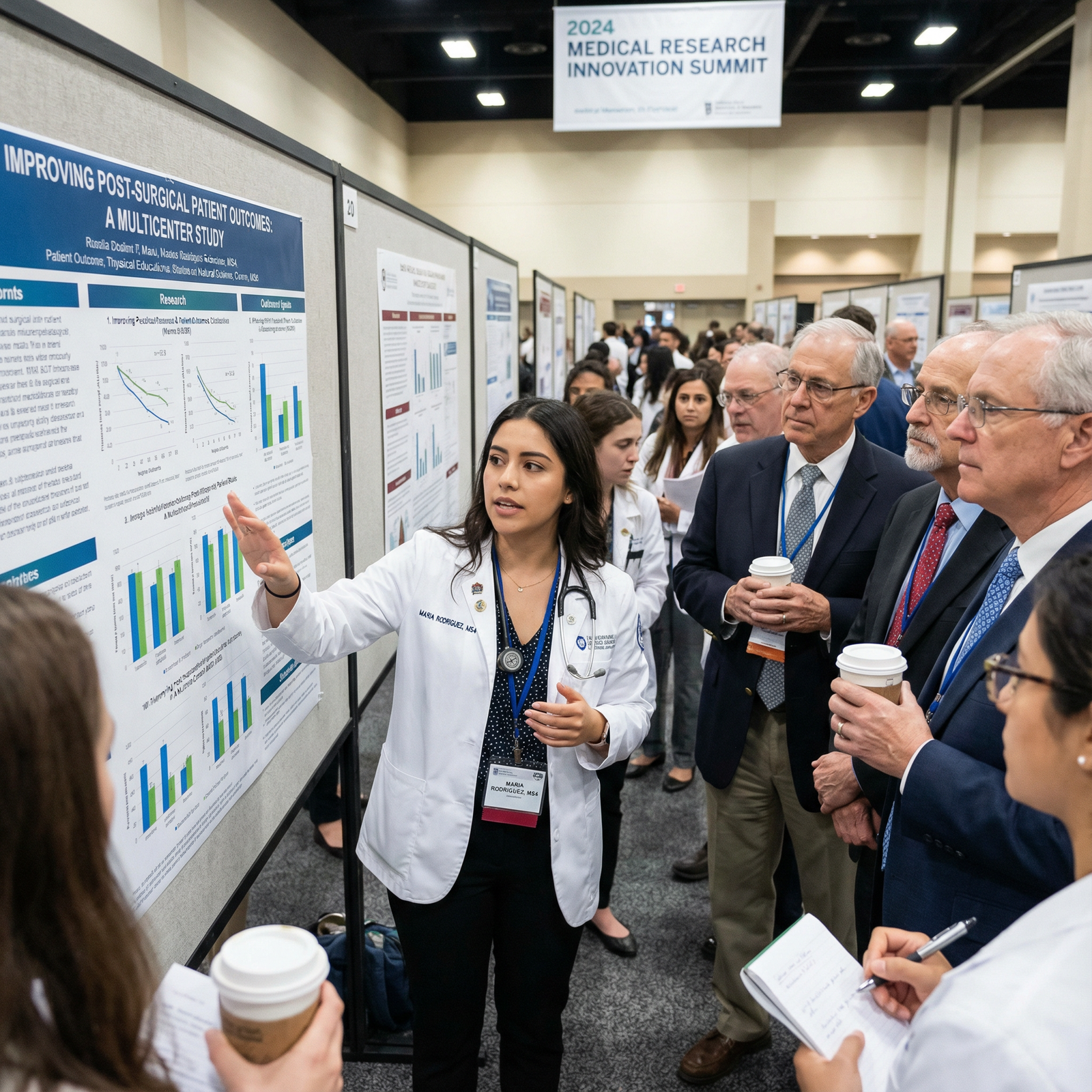
- Scientific conferences: Rapid exchange of new data, networking, and collaboration
- Clinical guidelines: Professional societies translating evidence into actionable recommendations
- Public health messaging and policy briefs: For policymakers and broader communities
Effective dissemination also increasingly includes:
- Open-access publishing
- Data sharing repositories
- Visual abstracts and social media for rapid uptake among clinicians
For research that reveals critical Health Disparities or effective new interventions, timely and broad dissemination is essential to improving Patient Outcomes at scale.
Real-World Applications: How Research Reshapes Healthcare Practice
Research-Driven Health Policies for Population Impact
Robust Healthcare Research informs policies that can shift disease patterns across entire populations.
Case Study: Tobacco Control Policies Guided by Evidence
Decades of research have shown:
- Strong links between smoking and cancers, cardiovascular disease, and COPD
- Effectiveness of price increases, advertising bans, and smoke-free laws
As a result, many countries have adopted:
- Higher tobacco taxes
- Restrictions on marketing and packaging (e.g., graphic warning labels)
- Bans on indoor smoking in workplaces and public spaces
- Smoking cessation support integrated into health systems
These evidence-based policies have:
- Reduced smoking prevalence
- Lowered rates of myocardial infarction, stroke, and lung cancer
- Improved overall population health and reduced healthcare costs
For future clinicians, understanding how research shapes policy equips you to advocate for changes that extend far beyond individual patients.
Enhancing Patient Safety Through Evidence and Systems Research
Patient safety research investigates why errors occur and how systems can be redesigned to prevent harm.
Common domains include:
- Preventing healthcare-associated infections (HAIs)
- Improving medication safety
- Reducing surgical and procedural complications
- Enhancing communication and handoffs among care teams
Example: The Comprehensive Unit-Based Safety Program (CUSP)
The Agency for Healthcare Research and Quality (AHRQ) developed CUSP as a structured approach to improve safety culture and reduce harm:
- Combines frontline staff engagement with evidence-based safety tools
- Commonly applied to reduce central line–associated bloodstream infections (CLABSIs), ventilator-associated events, and other HAIs
- Incorporates teamwork training, checklists, and continuous feedback loops
Outcomes in many hospitals include:
- Dramatic reductions in infection rates
- Improved safety culture scores
- Better Patient Outcomes and fewer preventable complications
Trainees can often participate in quality improvement (QI) projects aligned with CUSP and related initiatives—an accessible entry point into research and implementation science.
Training the Next Generation: Research as a Core Component of Medical Education
For premed students, medical students, and residents, engagement in research offers multiple benefits:
- Critical thinking: Learning to question assumptions and evaluate evidence
- Literature literacy: Being able to navigate and interpret complex research
- Professional development: Building CVs, presenting at conferences, and forming mentorship networks
- Career differentiation: Competitive edge for residency and fellowship applications
Example: Evidence-Based Medicine (EBM) Training in Curricula
Many medical schools and residency programs now formally integrate EBM:
- Journal clubs teaching critical appraisal skills
- Assignments to develop clinical questions and search for best evidence
- OSCEs and assessments incorporating interpretation of research data
- Required scholarly projects or theses
For trainees, developing comfort with EBM ensures that clinical decisions are grounded in high-quality Healthcare Research rather than habit or anecdote—directly improving Patient Outcomes and aligning care with the latest Innovative Treatments and best practices.
Practical Tips for Students and Trainees Interested in Healthcare Research
How to Get Started
- Identify your interests: Clinical specialty, public health, basic science, health policy, or health disparities.
- Seek mentors: Ask faculty, residents, or fellows about ongoing projects; attend research seminars or grand rounds.
- Start small: Case reports, retrospective chart reviews, or QI projects can be excellent entry points.
- Learn core skills: Basic statistics, study design, and how to read and write scientific papers.
Choosing Meaningful Projects
When evaluating a project opportunity, consider:
- Relevance to Patient Outcomes or Health Disparities
- Feasibility within your available time
- Opportunity for authorship or conference presentation
- Quality of mentorship and team support
Building a Long-Term Research Trajectory
For those envisioning a career that integrates research and clinical practice:
- Consider research tracks in residency or MD/PhD pathways
- Apply for research scholarships or fellowships
- Aim to develop expertise in a focused area (e.g., disparities in maternal health, AI in imaging, outcomes research in oncology)
- Learn about grant writing and career development awards (e.g., NIH K awards)
FAQ: Research in Healthcare for Aspiring and Current Clinicians
Q1: Why is research essential for modern healthcare practice?
Research provides the evidence base that underpins Evidence-Based Practice. It clarifies what works, for whom, and under what conditions. Without rigorous Healthcare Research, clinical decisions would rely primarily on tradition, anecdote, or personal preference—often leading to variable care and suboptimal Patient Outcomes.
Q2: How does healthcare research help reduce health disparities?
Research identifies where Health Disparities exist, why they occur, and which interventions successfully close those gaps. By studying social determinants of health, structural racism, access barriers, and cultural factors, researchers can:
- Design targeted interventions (e.g., culturally tailored education programs)
- Inform policies that expand access to preventive and specialty care
- Advocate for resource redistribution and system-level reforms
Community-engaged research ensures that solutions are acceptable, feasible, and effective within the populations they aim to serve.
Q3: What role do grants and funding play in healthcare research?
Most meaningful research requires resources: personnel, equipment, data management, and time. Grants from agencies like the NIH, foundations, and professional societies:
- Enable investigators to pursue innovative, high-risk/high-reward ideas
- Support trainees and early-career researchers
- Fund large trials that can shift national or global practice
For students and residents, participating in funded projects offers exposure to high-quality research environments and can be a stepping stone to independent funding later in your career.
Q4: How do research findings become part of clinical practice and policy?
The translation process typically follows these steps:
- Publication in peer-reviewed journals
- Replication and validation by other groups
- Synthesis in systematic reviews and meta-analyses
- Inclusion in clinical practice guidelines and consensus statements
- Implementation through local protocols, education, and quality improvement initiatives
- Policy adoption when relevant for public health or reimbursement decisions
Implementation science research then studies how best to integrate these changes into real-world practice, ensuring that proven interventions are delivered reliably and equitably.
Q5: How can I, as a premed or medical student, contribute meaningfully to healthcare research?
You do not need to be a principal investigator to make a real contribution. As a student or trainee, you can:
- Join ongoing projects and take responsibility for data collection, analysis, or literature reviews
- Write case reports or participate in QI initiatives that address real clinical problems
- Present at local, regional, or national conferences
- Learn and apply EBM skills on clinical rotations, sharing key findings with your teams
Over time, these experiences build the foundation for you to design and lead your own projects—helping to shape the future of Innovative Treatments, policies, and Patient Outcomes.
By understanding and engaging with healthcare research early in your training, you position yourself not just as a user of medical knowledge, but as a creator of it—transforming ideas into impact for patients, communities, and the healthcare system as a whole.