
Why Research During OB GYN Residency Matters for US Citizen IMGs
For a US citizen IMG in Obstetrics & Gynecology, research during residency is more than a checkbox. It can:
- Strengthen your fellowship applications (MFM, Gyn Onc, REI, FPMRS, etc.)
- Open doors to academic positions and leadership roles
- Improve your clinical decision-making and comfort with evidence-based medicine
- Help you stand out as an “American studying abroad” who brings added value to a program
Most OB GYN residencies—especially university and academic residency track programs—expect residents to engage in research. Some require at least one completed resident research project before graduation. As a US citizen IMG, how you approach this can significantly influence your trajectory after the obstetrics match and during your early career.
This article breaks down:
- What research during residency realistically looks like in OB GYN
- How US citizen IMGs can leverage their background
- Step‑by‑step strategies to choose, start, and finish projects
- Ways to balance research with heavy clinical duties
- How to translate research into long‑term career advantage
Understanding Research Expectations in OB GYN Residency
The Landscape: What Programs Actually Require
Most OB GYN programs—especially those with an academic residency track—have formal expectations:
Resident research project requirement
- Typically 1–2 projects completed by graduation
- Presentation at a departmental Resident Research Day
- Often expectation of at least an abstract submission to a regional or national meeting (ACOG, SMFM, SGO, etc.)
Protected research time (varies widely)
- Some academic programs offer a dedicated research block (2–8 weeks)
- Others embed research time into lighter rotations (MFM clinic, ultrasound, ambulatory, or elective blocks)
- Community programs may have minimal protected time, but still expect a project
Scholarship beyond classic research
Many programs accept broader “scholarly activity,” such as:- Quality improvement (QI) initiatives (e.g., improving postpartum hemorrhage protocols)
- Educational projects (e.g., new simulation curriculum for shoulder dystocia)
- Retrospective chart reviews or database analyses
For a US citizen IMG, visibility and reliability matter: showing that you can navigate a US academic system, complete IRB processes, and bring a project from idea to output reassures faculty that they can trust you with larger responsibilities.
Types of OB GYN Resident Research Projects
You don’t need to be a basic scientist. Most resident research projects in OB GYN are pragmatic and clinically oriented. Common types:
Retrospective chart review
- Example: Comparing outcomes of inductions vs. expectant management for isolated polyhydramnios
- Advantage: Feasible, uses existing data, fits residency timelines
Quality improvement (QI) projects
- Example: Reducing time to administration of magnesium sulfate for severe preeclampsia
- Advantage: Direct impact on patient care; often less IRB-intensive
Prospective observational studies
- Example: Collecting patient-reported outcomes after minimally invasive hysterectomy vs. abdominal hysterectomy
- Advantage: Stronger data but requires more time and coordination
Educational research
- Example: Evaluating a new simulation-based curriculum for postpartum hemorrhage and its effect on resident performance
- Advantage: Aligns well if you think you may pursue education leadership
Systematic reviews / meta-analyses
- Example: Reviewing literature on induction methods in VBAC candidates
- Advantage: Can be done from a computer with flexible timing; especially good if clinical data access is limited

Leveraging Your IMG Background: Advantages and Challenges
Unique Strengths of a US Citizen IMG
Being a US citizen IMG or an American studying abroad is often framed as a disadvantage in the OB GYN match, but for research during residency, it can be a powerful asset:
Global perspective on women’s health
- Experience with different health systems, cultural practices, and resource limitations
- Useful for comparative or global women’s health research, health equity, and access-to-care projects
Language and cross-cultural communication
- Bilingual or multilingual skills can support patient recruitment and consent processes in diverse communities
- Particularly valuable in research on disparities in prenatal care, contraception counseling, or cancer screening
Adaptability and resilience
- You’ve already navigated multiple systems and expectations
- Research requires persistence through rejection (IRB revisions, abstract rejections, manuscript revisions), where this resilience is invaluable
Common Challenges and How to Address Them
Less prior research exposure
Many US citizen IMGs report fewer structured research opportunities during medical school abroad.- Solution:
- Be upfront with mentors: “I’m highly motivated but relatively new to research. I’d appreciate guidance on design and statistics.”
- Start with more structured projects (retrospective review with established protocol, or a pre-defined QI project).
- Use free online resources (e.g., Coursera courses on biostatistics, CONSORT/STROBE guidelines).
- Solution:
Limited US-based publications before residency
Some co-residents may have US medical school research networks and publications.- Solution:
- Use residency to “reset the narrative.” Aim for 1–2 solid, completed resident research projects with your name in strong author positions.
- Start early in PGY-1 to allow time for abstract/poster submissions and possible manuscripts.
- Solution:
Perception of being less connected to US academic culture
Faculty may not know what your medical school abroad offered.- Solution:
- Demonstrate professionalism: meet deadlines, communicate clearly, and come prepared to meetings.
- Seek visible roles—present at conference, volunteer to write first draft of abstract or manuscript.
- Solution:
The goal is not to make up for your IMG status; it’s to show that your path has given you distinctive strengths that enrich an academic residency track and the broader OB GYN community.
Choosing the Right Research Project in OB GYN
Step 1: Clarify Your Long-Term Goals
Your research during residency should align with where you might want to go:
Interested in a competitive fellowship (MFM, Gyn Onc, REI)?
- Aim for projects in that subspecialty
- Target mentors who are well-connected and publish regularly
Considering an academic career?
- Seek projects that are likely to lead to publications and presentations
- Involve yourself in multiple resident research projects over time
Leaning toward community practice but want to stand out?
- QI or practice improvement projects can be especially relevant
- Focus on research that directly improves everyday OB or GYN workflows
As a US citizen IMG, having a clear research narrative (“I focus on hypertensive disorders in pregnancy,” or “I’m interested in disparities in gynecologic cancer care”) is particularly useful when applying to fellowships or first jobs.
Step 2: Find the Right Mentor
A strong mentor is often more important than the “perfect” topic. Look for:
- Active scholarly output (recent publications, conference presentations)
- Clear involvement with resident research projects
- A track record of helping residents publish or present
During early PGY-1 (or even during your sub-I if you already matched), approach multiple potential mentors:
- “I’m very interested in research during residency, especially in [MFM/gynecologic oncology/REI]. I’d love to hear about any ongoing resident research projects I might join or start under your guidance.”
Red flags:
- Mentor is chronically overcommitted and non-responsive
- No history of resident publications or completed projects
- Vague timelines or expectations
Green flags:
- Specific project ideas and feasible scope
- Clear direction on next steps (IRB, chart pull, literature review)
- Willingness to involve you as first author when appropriate
Step 3: Scope a Project That Fits Residency Life
A good resident research project in OB GYN:
- Can realistically be initiated in PGY-1/early PGY-2
- Can yield at least a poster/abstract by PGY-2/PGY-3
- Has a plausible path to manuscript submission by PGY-3/PGY-4
Example:
- Too big: Multi-center randomized trial on a novel labor induction agent
- Appropriate scope: Single-center retrospective comparison of induction outcomes before and after implementation of a new protocol
Questions to ask yourself and your mentor:
- Is the data accessible within our institution?
- How much IRB work is required, and who will help?
- Do we need a statistician, and is that support available?
- What’s the minimal “publishable unit” of this idea?
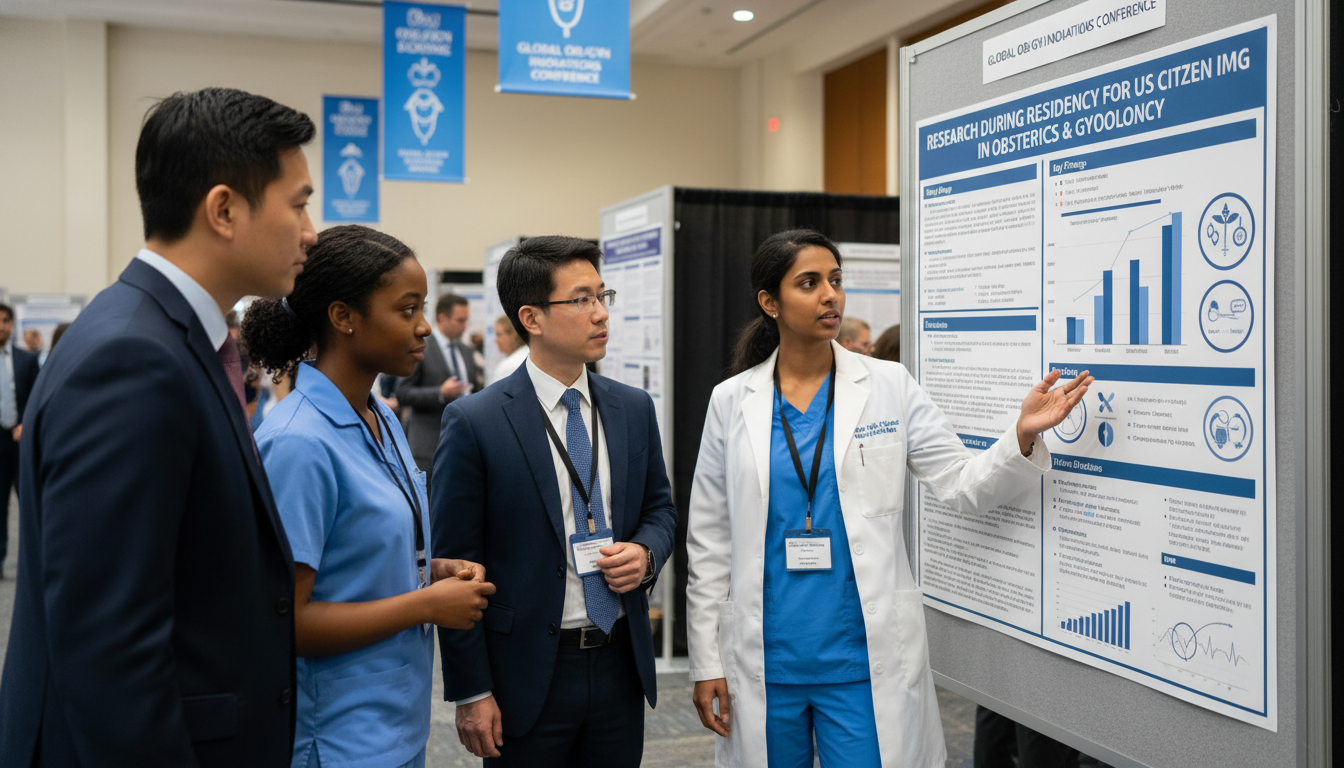
Making It Work: Practical Strategies to Do Research During Residency
Integrating Research into a Busy OB GYN Schedule
OB GYN residency is demanding—24‑hour calls, night float, OR days, L&D. To succeed with research during residency:
Use natural downtimes
- Night float: short lulls between admissions for reading or drafting sections of a paper
- Post-call afternoons (when safe and rested enough) for small tasks like citation management or simple data entry
- Clinic no-shows, if your program allows: quiet time for literature review
Break projects into micro-tasks
Instead of “write introduction,” define:- Find and download 10 key articles
- Read and highlight 3 articles
- Draft 2–3 paragraphs of background
- Create a bullet-point outline of primary and secondary outcomes
Block recurring research time
- Even 1–2 hours/week consistently can move a project forward
- Put it in your calendar as an appointment with yourself
Leverage digital tools
- Reference managers: Zotero, EndNote, Mendeley
- Cloud storage: Shared drives for collaborative writing
- Task management: Trello, Notion, or a simple shared Google Doc task list
Navigating IRB and Data Access
For many US citizen IMGs, the IRB process in the US is new:
Early engagement
- Ask your mentor for previous successful IRB examples
- Use your institution’s IRB templates and standard language for retrospective studies or QI
Clarify study type
- Retrospective chart review vs. QI can significantly affect IRB requirements
- Some QI projects may be exempt from formal IRB but still need a review or letter
Build a relationship with the research coordinator
- Many OB GYN departments have someone who helps residents navigate IRB and data pulls
- Introduce yourself; they can save you months of frustration
Working With Data and Statistics
You don’t need to be a statistician, but you should:
- Understand basic concepts: p-values, confidence intervals, primary vs. secondary outcomes
- Know when to ask for help: logistic regression, survival analysis, time series, etc.
- Be honest about your level: “I’m comfortable describing what we want to measure, but will need guidance on the specific tests.”
Actionable tips:
- Ask your mentor: “Who typically helps with data analysis for resident projects?”
- Attend institution-sponsored workshops on biostatistics or research design
- For simple analyses, learn basic SPSS, R, or Stata—or use a statistician to validate your work
Turning Resident Research Projects into Long-Term Career Capital
Building a Coherent Research Story
Fellowship directors and academic hiring committees look for patterns, not just isolated projects. As a US citizen IMG, a coherent research story can be particularly powerful.
Examples:
Maternal-fetal medicine trajectory
- PGY-1: QI project on improving adherence to preeclampsia management protocols
- PGY-2/3: Retrospective study on outcomes of early-onset preeclampsia
- PGY-3/4: Prospective or secondary data analysis project on prediction models for severe features
- Result: “My research has focused on hypertensive disorders of pregnancy and optimizing systems-level care.”
Gynecologic oncology trajectory
- PGY-1: Case series of rare ovarian tumors
- PGY-2: Retrospective review of surgical outcomes in endometrial cancer patients
- PGY-3/4: Disparities-focused project on time to diagnosis in cervical cancer among different populations
- Result: “I focus on improving oncologic outcomes and addressing disparities in gynecologic cancers.”
Maximizing Visibility: Presentations and Publications
Your resident research projects are most valuable when they are visible:
Local/Regional
- Departmental Research Day
- Hospital or health system research symposium
- State ACOG district meetings
National/International
- ACOG Annual Clinical & Scientific Meeting
- SMFM, SGO, AAGL, SREI, AUGS, depending on your focus
- Global women’s health conferences (if your project fits)
Tactical tips:
- Always aim to submit an abstract once you have preliminary data
- Ask your mentor about meeting priorities: “Which conference would be most strategic for this project?”
- Volunteer to be the one to draft the abstract and poster; you’ll learn the structure and build ownership
For manuscripts:
- Set a realistic timeline:
- 1–3 months to draft
- 1–2 months of revisions
- Several months for peer review and possible resubmission
- Even “in preparation” or “submitted” can be listed on CVs (clearly labeled) by late PGY-3/PGY-4 for fellowship applications.
Exploring an Academic Residency Track or Academic Career
An academic residency track within OB GYN (if your program has one) often offers:
- Additional protected time for research
- Enhanced mentorship and structured research curricula
- Opportunities to co-teach, design curricula, or engage in departmental initiatives
For a US citizen IMG who is an American studying abroad during medical school, this can be a strong path to show commitment to academic medicine in the US.
To pursue this:
- Ask early in PGY-1: “Does our program have an academic track or additional research experiences for interested residents?”
- Demonstrate your interest with early productivity: an abstract, quality improvement project, or active participation in a faculty member’s ongoing study.
- Express long-term goals clearly: “I’m interested in MFM and an academic career; I’d like to build a consistent research portfolio.”
Frequently Asked Questions (FAQ)
1. I’m a US citizen IMG with no prior publications. Will that hurt my chances for research during residency and beyond?
Lack of prior publications does not prevent you from doing meaningful research during residency. Many residents—IMG and non-IMG—start publishing only once they have stable access to mentors, patients, and institutional support. What matters most:
- Starting early in PGY-1 or PGY-2
- Choosing feasible, well-mentored projects
- Demonstrating follow-through (completed resident research projects, abstracts, posters, and ideally at least one manuscript by PGY-3/4)
Fellowship directors will weigh what you did with the opportunities you had, not just your starting point.
2. How many research projects should I try to complete in OB GYN residency?
Quality and completion count more than raw numbers. A reasonable benchmark:
- Minimum: At least one solid, completed project with a presentation and, ideally, a manuscript
- Strong profile (especially for academic or fellowship goals):
- 2–3 completed projects over four years
- 1–2 national conference presentations
- 1+ peer-reviewed publications (or manuscripts under review)
As a US citizen IMG, having 2–3 coherent projects in your chosen area (MFM, Gyn Onc, etc.) can be a major asset in competitive fellowship applications.
3. Is quality improvement (QI) considered “real” research for residency requirements?
In many OB GYN programs, yes—QI is accepted as valid scholarly activity, especially when:
- It uses structured methods (e.g., Plan-Do-Study-Act cycles)
- It has clear outcomes (e.g., reduction in postpartum hemorrhage, improved adherence to screening guidelines)
- Results are presented at a research day or conference and possibly written up for publication
QI can be particularly attractive for residents with heavy clinical loads because it aligns directly with workflow and patient care.
4. How can I stand out as a US citizen IMG when applying for OB GYN fellowships with my research profile?
To stand out:
- Build a focused research theme (e.g., hypertensive disorders in pregnancy, minimally invasive surgery outcomes, gynecologic cancer disparities)
- Show progression over time: from smaller projects to more sophisticated or impactful work
- Highlight authorship roles where you were first author or had major responsibility
- Emphasize how your background as an American studying abroad gives you a global and systems-level view of women’s health
- Obtain strong letters of recommendation from research mentors who can speak to your independence, reliability, and potential as an academic physician
By thoughtfully engaging in research during residency, you transform your status as a US citizen IMG into a strength—demonstrating initiative, adaptability, and a sustained commitment to improving women’s health through evidence and inquiry.