
Hook: The 30-Second Pause That Could Save Your Sign-Out
It's 6:48 PM. You've been on your feet for twelve hours, your pager is still buzzing about a pending troponin on bed 12, and the night team is already logging into the EHR. You rattle off the list: "Room 4 is stable, Room 7's family wants an update, Room 9 might need a fluid bolus if the urine output drops." You think you covered everything. You didn't.
Four hours later, the night resident finds Room 9 hypotensive with a urine bag that's been dry since your shift. Nobody knew the bolus threshold was 0.3 ml/kg/hr, not 0.5. Nobody knew nephrology wanted a call before any fluids. The patient spends three days in the unit. Root cause analysis? "Communication failure during handoff." Translation: you were fried, rushed, and never hit pause.
I've sat in those M&M conferences. The mistake wasn't a knowledge gap. It was a cognitive one. Tunnel vision, fatigue-driven omissions, and that lethal assumption that the next team will just figure it out. So here's the question I want to put in front of you: can a deliberate 30-second mindfulness pause, right before you open your mouth to sign out, actually prevent that kind of miss? And just as important, what's the mistake of expecting a deep breath to fix what a broken system set up to fail? This article isn't about turning sign-out into a meditation retreat. It's about a protective habit. A micro-reset. And knowing exactly when it's not enough.
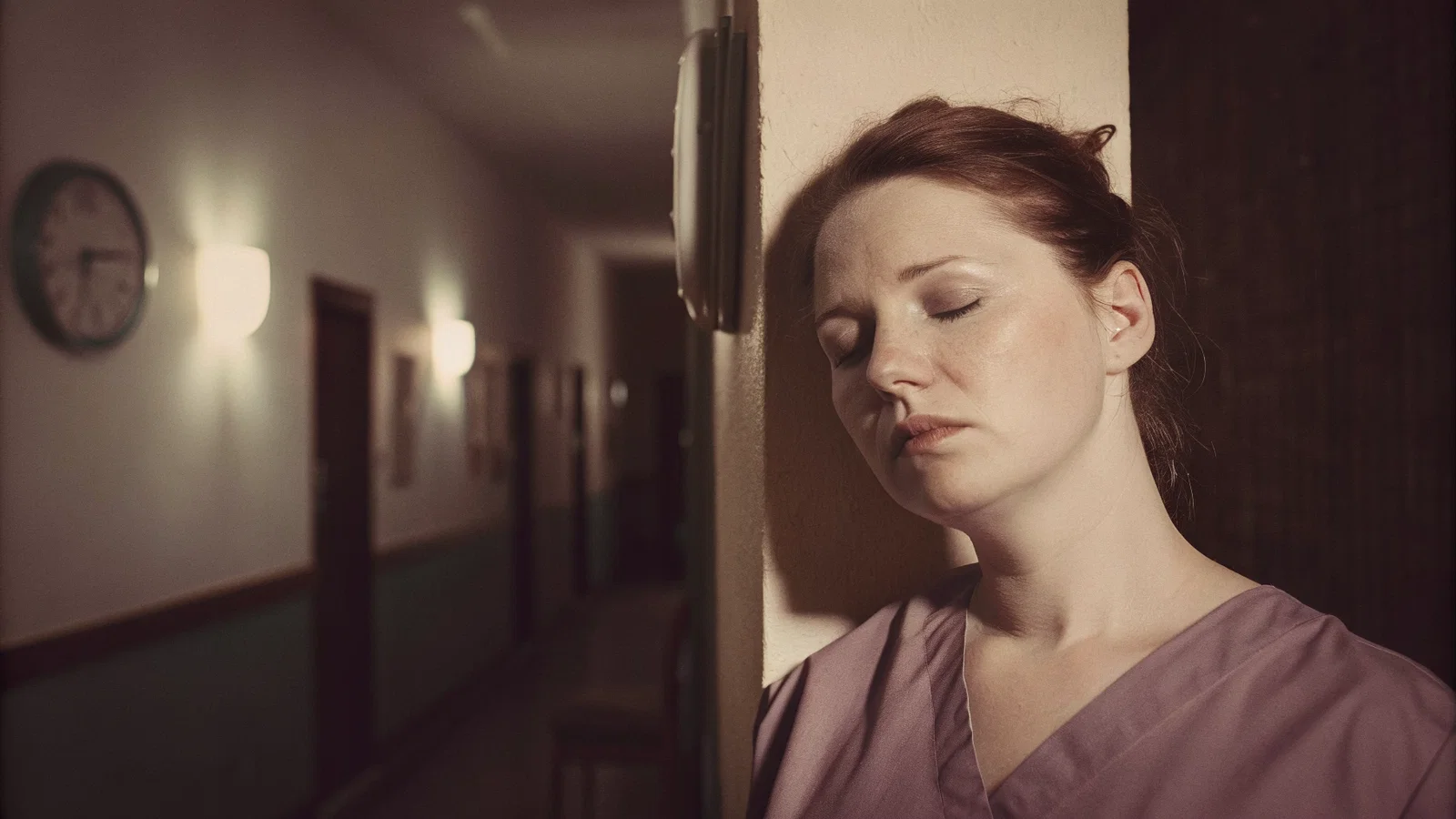
What Mindfulness Can Do, and the Mistake of Expecting Too Much
Here's the cognitive trap nobody warns you about in orientation. When you're overloaded and racing to leave, your attention doesn't just narrow, it calcifies. You lock onto the loudest problems: the active GI bleed, the pending discharge, the family meeting that went sideways. Meanwhile, the quieter risks, the slowly downtrending platelet count, the antibiotic due at midnight, the consult note you meant to read, slide off the radar completely. Omission errors, not commission errors, are what kill patients during transitions of care. And omission errors love a rushed mind.
A 30-second pause interrupts that spiral. Not by solving the problems. By resetting your attentional aperture. What you're actually doing, neurobiologically, is stepping out of sympathetic overdrive just long enough for your prefrontal cortex to re-engage. That's the part of your brain that holds "what am I forgetting?" and "what's the worst thing that could happen to this patient overnight?" When it goes offline, and it does, under fatigue and time pressure, you default to pattern-matching and reflexive scripts. You sign out what's familiar, not what's critical.
I've watched residents take ten seconds of quiet before handoff and suddenly remember: "Wait, the K on room 6 was 5.9 and we never rechecked it." That's not magic. That's giving your working memory enough space to surface what was buried under adrenaline.
But here's the mistake I see everywhere. People treat mindfulness like a vague, feel-good intervention. Take a deep breath, think calm thoughts, and the sign-out will somehow fix itself. That's magical thinking, and it's dangerous. A mindfulness pause that isn't structured, that doesn't anchor to specific patient risks and contingency plans, is just closing your eyes for half a minute while the same chaos sits waiting. It becomes a ritual instead of a reset. Worse, it can give you the illusion of preparedness, I paused, so I must be thorough, without actually verifying anything. The pause is a tool, not a talisman.
Where Sign-Out Mistakes Happen: Common Failure Points to Watch For
If you don't know where the cracks are, no amount of pausing will save you. The pause works by directing attention to known failure points. So let's name them.
Interruptions are the number one killer of sign-out integrity. A phone rings, a nurse taps your shoulder, a consult team pages back about a patient who isn't even on your list anymore, and suddenly the thread you were holding about Room 12's insulin drip just evaporates. Handoffs are cognitively fragile. They require holding multiple patient narratives in parallel and transferring them coherently. Interruptions fracture that narrative, and the person receiving sign-out may never know what got dropped.
Fatigue is the obvious one, but the specific danger isn't just sleepiness. It's the willingness to accept incomplete information as complete. A tired brain stops asking "what else?" It takes the first satisfactory answer and moves on. This is how active problems get described as "stable" when they're actually "stable until the one lab result comes back that changes everything."
Multitasking during sign-out, charting while listening, reviewing imaging while supposedly covering contingencies, is a red flag that the receiver isn't actually receiving. Sign-out isn't a data dump. It's a risk transfer. If both parties aren't mentally present for that transfer, risk falls into the gap between them.
Unclear ownership is the mistake that makes M&M committee chairs lose sleep. When a sign-out ends with "and nephrology is following," but nobody knows whether nephrology will see the patient tonight or tomorrow, you've created an accountability vacuum. The night team assumes someone else is watching. Nobody watches. The patient crumps.
The absence of a sick-plan is a hard stop for me. If you're signing out a patient with any clinical instability, even mild, even improving, and you haven't explicitly said "if X happens, do Y, and if Y fails, call Z," you've handed off a ticking box without instructions. Similarly, unresolved pending tests need granular contingency language. Not "follow up the CT." That's useless. Say: "CT abdomen is pending. If it shows free air, call surgery immediately and don't wait for the read. If it's negative, advance diet." That's a transfer of decision-making, not just information.
Ambiguous escalation instructions are the final nail. "Call me if you're worried" is not a safety plan. It's an emotional reassurance that dissolves at 2 AM when the covering resident doesn't know your threshold for worry. Explicit triggers, vital sign parameters, lab thresholds, specific clinical changes, are what keep patients safe when the person who knows them best is walking out the door.

A Safer 30-Second Mindfulness Pause: Simple, Structured, and Brief
This isn't a meditation exercise. It's a micro-routine that serves as a cognitive gate before you transfer responsibility for human beings. Here's what I teach and what I've watched actually work on busy services.
First, stop. Literally. Stop talking. Stop typing. Stop scrolling through the list. Give yourself permission to not do anything for thirty seconds. That permission is harder than it sounds. The internal pressure to keep moving is immense.
Second, take three slow breaths. Not deep, dramatic breaths that make your colleagues stare at you. Just slow. The physiology here matters: slowing exhalation relative to inhalation shifts autonomic tone toward parasympathetic dominance. You don't need to know the science to use it. You just need to exhale longer than you inhale, three times.
Third, and this is where structure saves you, run a rapid mental scan of the top risks across your patients, not the top problems. Problems are things you already know. Risks are things you might have forgotten. I use a quick internal checklist: Which patient has pending labs that could change management overnight? Which patient has a family member who might escalate? Which patient has a tenuous airway, marginal vitals, or a consultant who hasn't weighed in yet? Who is getting anticoagulated at 10 PM? Which discharge tomorrow depends on a result I haven't checked?
Fourth, before you speak, verify the next step for the highest-risk patient you just identified. Not all patients. Just the one your gut says could deteriorate. Confirm the contingency. If that patient's hemoglobin drops by 2 grams, what exactly should the night team do? If you don't know the answer, you're not ready to sign them out.
This whole sequence, stop, breathe, scan risks, verify the next step, takes thirty seconds. If you stretch it to two minutes, you've missed the point. This is a cockpit-style crosscheck, not a wellness break. Pair it with your written sign-out template. When I've seen this integrated well, residents literally add a small checkbox column labeled "P30" next to each patient. Check the box when you've mentally re-scanned that patient's risks. It sounds mechanical. Good. Safety is mechanical. The mindfulness piece is what makes the mechanical check actually function when you're exhausted.
When Mindfulness Fails: Don't Use It to Cover a Broken System
I need to be blunt here, because this is where the mistake-avoider mindset becomes genuinely protective. A 30-second pause cannot fix a system that is actively harming you and your patients.
If your service is chronically understaffed, if you're covering forty patients and signing out in ten minutes because the night team is already drowning, no amount of personal mindfulness will make that safe. If your EMR requires seven clicks to find a pending lab result and the sign-out note auto-populates outdated information, your attention isn't the bottleneck, the interface is. If your institution has no standardized handoff format, no expectation of a written sick-plan, and no culture of protected sign-out time, the problem isn't that you forgot to breathe.
The mistake I want you to avoid is internalizing system failures as personal failures. I've watched good residents blame themselves for sign-out misses when the real issue was that they were on their twenty-eighth consecutive hour, covering cross-cover pagers, and doing handoff in a hallway during a code. A mindfulness pause in that scenario is practically insulting to ask of someone. It's like offering a bandage for a hemorrhage.
Call this out. If sign-out conditions are consistently unsafe, interruptions every night, no time allocated, fatigue that makes 30 seconds laughable, escalate it. Not as a complaint. As a patient safety concern with specific, documented examples. "On three occasions this week, handoff was interrupted by emergency pages to the same resident covering both teams. We need a cross-cover redesign or we will miss a sick patient." That's the language systems respond to. Individual mindfulness is a layer of defense. It is never the whole defense. When the walls are crumbling, don't just paint yourself calmer.
Action Steps: Build the Pause Into Your Sign-Out Routine
So here's how you operationalize this, starting your next call shift.
Script it. Before every handoff, run the same 30-second sequence: pause, breathe, identify the highest-risk patient, confirm you've articulated the contingency, then speak. Don't adapt it. Don't optimize it. Repeat it until it's motor memory. The consistency is what makes it stick when you're too tired to think creatively about safety.
Embed the pause into your physical workflow. If you do a pre-rounding huddle, add thirty seconds of quiet before anyone starts talking. If you're ending a call shift, make the pause the bridge between finishing your last note and opening the sign-out document. Stop treating the transition as seamless. Build a deliberate seam. A seam catches what continuity misses.
Integrate it into your templates. Every sign-out tool worth using has a sick-plan field and a contingency field. If yours doesn't, fix it. Next to those fields, or in your own mental model, add "Pause and re-verify" as a step. The pause isn't a separate wellness activity. It's part of the handoff checklist, exactly like confirming code status or allergies.
And here's the protective warning I want you to carry: if you are too rushed to pause, you are probably too rushed to sign out safely. I mean that literally. When you feel the pressure to skip it, just get the list out, just get out the door, that pressure is data. It's telling you the system is overloaded. Listen to it. Don't override it and call it efficiency. The thirty seconds you save by skipping the pause is borrowed against the hours you or someone else will spend fixing the miss you didn't catch.
Sign-out is the single highest-risk communication event in hospital medicine. You're transferring not just information, but the responsibility to recognize deterioration and act correctly, often in the middle of the night, often with less context. A 30-second pause won't make you perfect. It will make you less likely to hand off a catastrophe with a shrug. That's not mindfulness as wellness theater. That's mindfulness as a hard clinical safety habit. Treat it accordingly.


