
The usual advice about “just breathe more on call” is useless. You don’t need vibes. You need a clock and a map of the night.
You’re not going to turn call into a spa day. But you can carve out a handful of 60‑second mindfulness pauses that radically change how you think, chart, and talk to patients at 3:47 a.m. That’s the point here: precise, time‑stamped spots in a call shift where one minute of deliberate awareness actually fits.
This is a chronological guide. From pre‑call to post‑call. I’ll walk you through where to put those micro‑pauses, what to do in them, and how to keep it realistic when the pager will not shut up.
Big Picture: How Many Pauses, Where, and Why
Before we go hour‑by‑hour, you need a skeleton plan.
For a typical 24‑hour call (say 7 a.m.–7 a.m.), the sweet spot is 8–12 micro‑pauses, each 30–90 seconds, anchored to things you already do: sign‑out, before entering a room, after a code, before calling a family, before driving home.
Think of them as safety checks for your nervous system.
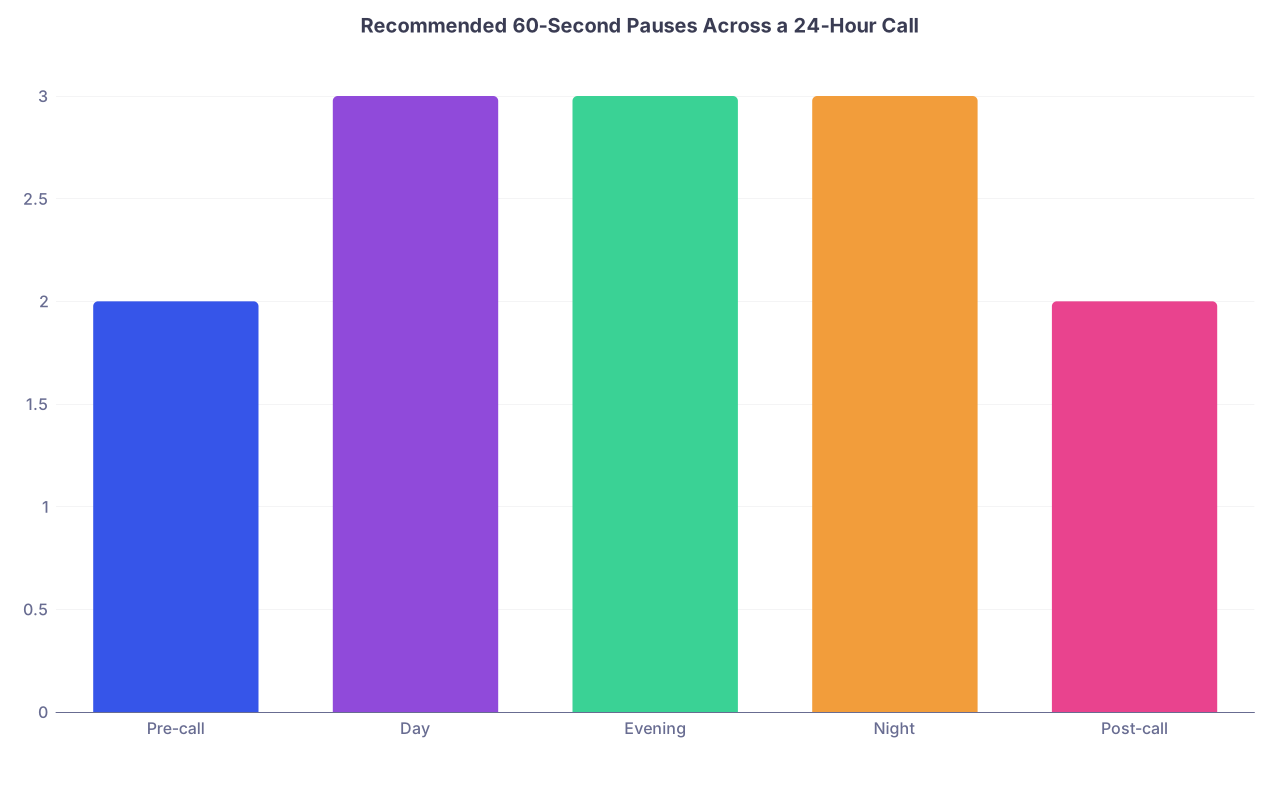
| Category | Value |
|---|---|
| Pre-call | 2 |
| Day | 3 |
| Evening | 3 |
| Night | 3 |
| Post-call | 2 |
These pauses are not about being “calm.” They’re about:
- Sharpening attention when you’re slipping
- Interrupting autopilot before you say or order something dumb
- Re‑anchoring to your ethical center when you’re exhausted and cynical
Now let’s walk the shift.
T‑30 Minutes to Call Start: Pre‑Call Grounding
At this point, you haven’t started yet. This is where you buy yourself a little buffer before chaos.
1) At Locker / Call Room Door (2–3 minutes before sign‑in)
What you’re likely doing: Tossing your bag in the call room, checking your phone, skimming overnight admits.
Where to insert the pause:
- Put your bag down
- Close the door if you can
- Stand or sit, feet solid on the floor
60‑second practice (body + breath scan):
- Feel your feet in your shoes. Literally notice pressure.
- Notice one spot of contact: back against chair, hands on thighs.
- Take 3 slow breaths:
- In through the nose for ~4 seconds
- Gentle pause
- Out for ~6 seconds (longer exhale)
- Silently label your state: “Tired,” “anxious,” “fine,” whatever.
Ethics angle: You’re acknowledging you’re a person, not a machine, before you take responsibility for other humans. That matters.
2) Right Before Walking Into Sign‑Out Room
You’re about to absorb a ton of information. This is prime “miss something critical” territory.
Quick 30–45 second pause in the hallway:
- One slow breath in, one slow breath out
- Mentally set your intention: “For the next 20 minutes, my job is just to listen clearly.”
- Drop your shoulders away from your ears. That’s all.
07:00–12:00 – Early Day: Rounds, Orders, Fires
Mornings are structured but hectic. You can’t disappear for 5 minutes, but you can steal 60 seconds at very specific transitions.
3) Before the First Patient on Rounds
You’re often rushing from sign‑out to the first door on rounds. Here’s where most teams start the day already buzzing.
At the first patient’s door:
- Hand on door handle, pause for 30–60 seconds
- One round of “3–3–3”:
- Notice 3 things you see (badge lanyard, door sign, floor pattern)
- 3 things you feel (stethoscope on neck, pen in pocket, fabric on wrist)
- 3 sounds (HVAC, hallway beeps, someone talking)
Then silently: “This is a person, not a task.” Then you walk in.
That single line prevents 8 a.m. dehumanization.
4) After a Difficult Conversation on Rounds
This might be a new cancer diagnosis, worsening prognosis, or a patient yelling at you because they’ve been NPO since yesterday.
As soon as you leave the room and the team moves ahead:
- Let the attending/upper go to the next room
- You hang back 30–60 seconds in the hallway
Micro‑pause:
- One hand lightly on your chest or abdomen (yes, under the white coat, you have 5 seconds)
- 3 slow breaths, feeling the rise and fall
- Name the emotion: “Guilt,” “frustrated,” “sad,” “numb”
- Brief ethical check: “Given how I feel, what do I want to protect in my next patient interaction?” (e.g., not snapping, not rushing)
Catch up with the team. You didn’t disappear for 5 minutes. You just prevented emotional bleed‑through to the next patient.
12:00–18:00 – Early Afternoon to Pre‑Evening: Admissions and Admin
The midday stretch is where fatigue creeps in and mistakes get made. This is where mindfulness pauses protect cognition.
5) Before Starting a New Admission (Especially Complex Ones)
You pick up a new ED admit: septic, hypotensive, maybe unclear goals of care. Your natural instinct is: run.
Do this instead:
- Before you open the chart fully or call the ED, stop for 60 seconds.
Practice: the “ABC” micro‑reset.
- A – Acknowledge: “I feel rushed / behind / annoyed / interested.”
- B – Breath: 5 gentle breaths, letting the exhale be just a bit longer than inhale.
- C – Choose: One priority for the first 5 minutes of the admit.
- Example: “First, is this patient safe to leave the ED?” or “First, I’m just going to clarify the story.”
Ethically, this avoids shotgun ordering to soothe your anxiety. The pause makes space for rational, not fear‑driven medicine.
6) Mid‑Afternoon Charting Block (15:00–16:00)
At some point, you get 20–30 minutes to chart and call consults. This is the hidden danger zone for unconscious bias and sloppy reasoning.
Insert a 60‑second pause at the halfway point of that block:
- Set a timer for 10–12 minutes. When it dings:
- Take your hands off the keyboard.
- Close your eyes (if safe) or soften your gaze.
Simple practice:
- Count 5 breaths, labeling silently: “In…one. Out…one. In…two. Out…two.”
- Then ask yourself one question: “Is there any patient whose story I’m oversimplifying in my notes?”
If someone pops into your mind (the “non‑compliant” one, the “frequent flyer”), flag that chart for a careful re‑read. This is mindfulness as an ethical safeguard.
18:00–22:00 – Early Night: Cross‑Cover, Handoffs, Family Calls
This is where call really starts to feel like call. More cross‑cover, more family updates, more pager noise.
7) Post‑Sign‑Out to Night Resident (or After You Take Over)
Once you receive night sign‑out, you’re the one holding the bag. Dangerous moment. Easy to feel flooded.
Immediately after sign‑out ends:
- Step out of the room or stand at the back as people leave
- One 60‑second grounding scan from head to toe:
- Notice jaw → unclench
- Drop shoulders
- Soften belly (yes, you’re clenching it)
- Feel your feet again
Ask yourself: “What are the top 3 actual risks tonight?” Not 20. Three. This gives your mind a priority map instead of free‑floating dread.
8) Before a High‑Stakes Family Phone Call (Goals of Care, Bad News)
If you only ever use mindfulness once per shift, use it here.
Right before you dial:
- Sit if possible
- Both feet on the floor
- Phone in your hand, screen dark for 60 seconds
Practice:
- 5 slow breaths
- On each exhale, silently repeat: “Be clear. Be kind.”
- Visualize yourself listening more than talking for the first minute of the call.
That tiny pause shifts you from “get this done” mode to “I’m talking to a scared human being” mode. Ethically non‑optional in my book.
22:00–02:00 – Deep Night Phase 1: Codes, Cross‑Cover Storm
This is where most people delete themselves. You’re tired, pager is constant, and mistakes multiply.
9) After a Code or Acute Event (Within 5 Minutes if Possible)
You’ve just finished a rapid response, code blue, or airway. Maybe you’re sweating through your scrubs.
You cannot “process” it fully. You can do 60 seconds so it doesn’t bury itself and leak out sideways later.
Find a corner, empty room, or even a bathroom stall. 60‑second “triage pause”:
- One hand on a stable surface (wall, counter) to feel physical support.
- 3–5 deeper breaths, not exaggerated, just intentional.
- Name what happened in one sentence in your head:
- “We had a code, and the patient died.”
- “We transferred them to ICU and they’re still unstable.”
- One self‑statement:
- “I did what I could in this moment,” or
- “I will review what we did later with clear eyes.”
This is basic emotional first aid. It makes moral injury less likely to calcify.
10) During a Pager Storm: The 90‑Second Queue Reset
It’s 00:30, you’ve had six pages in 3 minutes, and you’re triaging cross‑cover issues. This is exactly where people make errors from panic.
At some point in the middle of the storm (ideally early), take 60–90 seconds:
- Silence the pager sound (keep vibrate) for that one minute
- Pull up your task list or a scrap of paper
Micro‑workflow + mindfulness:
- 3 breaths, eyes up from the screen.
- Write down the next 3 tasks only. Not 10. Just 3.
- Ask: “Which one is actually time‑critical?” Circle it.
- One more breath. Then move.
This is mindfulness as cognitive triage. You’re anchoring attention instead of letting anxiety set the order.
02:00–06:00 – Deep Night Phase 2: The Zombie Zone
This is the ethically dangerous window. You’re cognitively impaired whether you admit it or not. Micro‑pauses here are non‑negotiable.
11) Before Writing or Verbalizing Any New Order After 02:00
At this point, I don’t trust my autopilot. Neither should you.
Rule for yourself: before placing any non‑trivial order (new antibiotic, rate change, imaging, code status entry), you do a 20–30 second “micro‑check.”
What it looks like:
- Hands off keyboard or phone.
- One breath in, one out, slow.
- Silently ask:
- “What is the clinical question I am answering with this order?”
- “Is there a simpler or safer thing I should do first?”
If the answer feels fuzzy, call someone (senior, nurse, RT) and say it out loud. The pause is what lets you notice the fuzziness.
12) 04:00–05:00 Micro‑Reset (Even If You’re “Fine”)
This is usually pre‑lab, pre‑prep time. Insert a deliberate one‑minute sit.
If you’re sitting at a workstation:
- Put both feet flat, lean back slightly.
- Set a 60‑second timer on your watch/phone.
Practice: “Body inventory.”
- Start at the top: forehead, eyes, jaw
- Move down: neck, shoulders, chest, stomach, hips, legs, feet
- You’re simply asking: “Tight or loose?” and letting each spot drop 5–10% of its tension.
Then one question: “Where can I be 5% more careful for the rest of the night?” Not heroic. Just 5%.
06:00–08:00 – Pre‑Dawn to Post‑Call: Handing Back the Patients
You’re almost done. This is where people get sloppy in notes, impatient with families, and unsafe driving home.
13) Before Morning Sign‑Out (You Handing Off)
Right before you present overnight events to the day team:
- Stand outside the sign‑out room for 30–60 seconds
- One slow inhale, slow exhale
Silently:
- “What is the single most important thing I need them to remember about tonight?” (the crashing patient, the unstable vent settings, the family conflict)
- Commit to leading with that, not burying it.
This is mindfulness as communication ethics: protect your patients from your exhaustion.
14) After You Walk Out of the Hospital – Before You Drive
You step outside. Sun is up. Your brain is mush. This is the most underrated safety pause of the whole shift.
At your car or bus stop:
- Do not unlock the car yet
- Stand or sit for 60–90 seconds
Practice:
- 5 slow breaths, eyes open, just looking at something non‑hospital (tree, sky, random building)
- Name 3 things from the night you’re carrying: “Worried about the GI bleeder,” “sad about the code,” “annoyed at that consult.”
- Say (out loud if you can, or silently): “I will not solve these on the drive. I’ll rest first.”
Then drive. This is mindfulness as harm reduction—for you and everyone else on the road.
Weekly and Monthly: Where the Real Change Locks In
If you try to invent these pauses from scratch every call, you’ll fail. You need pre‑planned anchors and occasional review.
Build Your Personal Call‑Night Pause Map
Take 10 minutes on a day off and make a simple template:
| Phase | Trigger Event | Pause Type |
|---|---|---|
| Pre-call | At locker | Body + breath scan |
| Morning | First patient door | 3–3–3 sensory check |
| Afternoon | New admission | ABC micro-reset |
| Evening | Before big family call | Intentional breathing |
| Night (early) | After code/rapid | Triage pause |
| Night (late) | Before new orders after 02:00 | Micro-check |
Print it. Screenshot it. Put it as the first note in your phone. You want this to be as automatic as checking vitals.
Short Weekly Debrief (10 Minutes)
Once a week, on a non‑call day:
- Look back at your last 1–2 calls
- Ask:
- “Which pauses did I actually do?”
- “Did any moment feel less reactive or less ethically sketchy because I paused?”
- “Where did I wish I had paused but didn’t?”
Then adjust your map. You’re iterating like you would on a QI project.
Visual Timeline: One Call With Anchored Pauses
Here’s the whole night laid out so you can see the pattern.
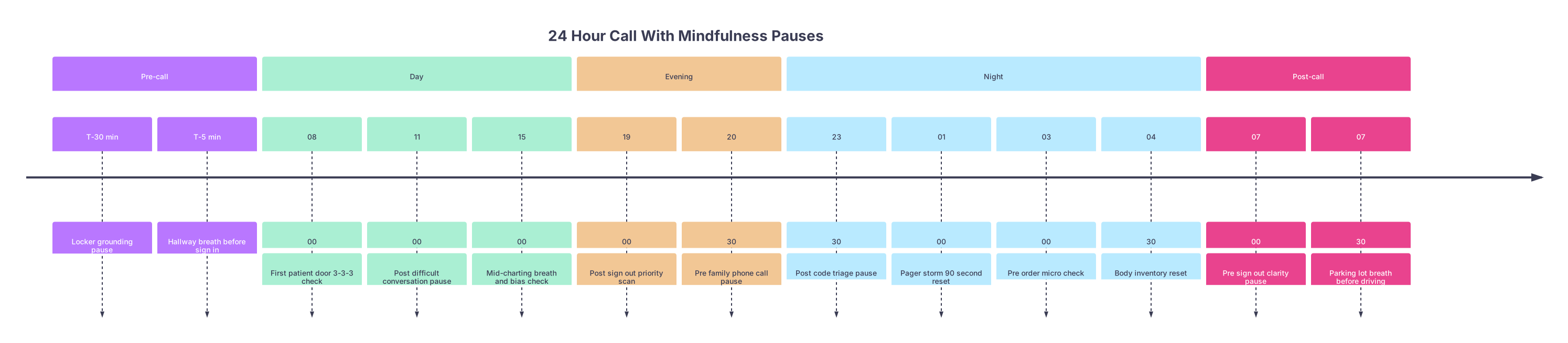
| Period | Event |
|---|---|
| Pre-call - T-30 min | Locker grounding pause |
| Pre-call - T-5 min | Hallway breath before sign in |
| Day - 08 | 00 |
| Day - 11 | 00 |
| Day - 15 | 00 |
| Evening - 19 | 00 |
| Evening - 20 | 30 |
| Night - 23 | 30 |
| Night - 01 | 00 |
| Night - 03 | 00 |
| Night - 04 | 30 |
| Post-call - 07 | 00 |
| Post-call - 07 | 30 |
How to Keep This From Becoming Annoying Fluff
Let me be blunt: if these pauses feel like extra work, you won’t do them. They have to be obviously useful.
Two rules:
Attach every pause to a trigger you already have.
Door handle. Phone screen before dialing. Pager storm. Car door.Give every pause a job.
Not “relax.” That’s vague. Instead:- Prevent a sloppy order
- Keep bias out of a note
- Reset before talking to a grieving family
- Drive home without drifting lanes
When mindfulness serves your clinical brain and your ethical standards, it sticks.



If You Remember Nothing Else
- Anchor 60‑second pauses to specific, repeatable moments on call—door handles, phone calls, sign‑outs, codes, pre‑drive.
- Use each pause for a clear job: sharpen attention, check bias, stabilize emotions, or prevent unsafe decisions.
- Treat these micro‑mindfulness moments as part of your professional ethics toolkit, not wellness decoration.