
The way most clinicians “transition” into and out of shifts is wrong. You do email until the last second, rush in, white‑knuckled through the day, then collapse into your car and scroll your phone. That’s not resilience. That’s slow self‑erosion.
You need bookends. Deliberate, repeatable, 15‑minute routines before and after each shift that protect your attention, your ethics, and your sanity.
Below is a concrete, time‑stamped routine: minute by minute, before and after shift. This is written for real hospital life—pager chaos, late discharges, code browns—not for a silent retreat.
The Big Picture: Your Daily Bookend Timeline
At this point you should stop thinking “mindfulness = 30‑minute meditation app” and start thinking in 15‑minute blocks pinned to your schedule.
Here’s the skeleton:
| Block | Time | Focus |
|---|---|---|
| Pre-Shift | -15 to 0 min | Arrive, settle, orient, commit |
| Post-Shift | 0 to +15 min | Release, reflect, reset |
And here’s how those 30 minutes actually stack across a workday:
T‑15 to T‑10 (pre‑shift) – Arrive and physically anchor
T‑10 to T‑5 – Breath + body + values alignment
T‑5 to T‑0 – Intention and ethical commitment
T+0 to T+5 (post‑shift) – Decompress and downshift your nervous system
T+5 to T+10 – Reflect and reframe ethically
T+10 to T+15 – Contain the day and deliberately transition
If you run 10–12 hour shifts, this is the most leverage you’ll get for 30 minutes of your day. It will also quietly improve your professionalism, reduce errors, and keep you from turning cynical at year three.
Let’s walk through it chronologically, like you’re walking from the parking garage to your car.
Pre‑Shift: 15 Minutes Before You Badge In
Rule #1: You arrive 15 minutes earlier than you “need” to.
If you’re already thinking “But I can’t,” that’s exactly why your stress ceiling is so low. Protect these 15 minutes like you protect your DEA number.
T‑15 to T‑10: Physical Arrival and Separation
Your only job here: move from “rest of life” into “clinical mode” on purpose.
What you should do at this point:
Stop the digital bleed.
- Put your phone on Do Not Disturb or work‑only mode.
- No email. No inbox. No chart review yet.
- If you must check pager, just confirm it’s functional—don’t engage.
Walk mindfully from your entry point to a consistent spot.
- Same bench. Same quiet hallway. Same empty conference room.
- This predictability becomes a cue—your nervous system learns it.
Two‑minute grounding scan while walking (eyes open, normal pace).
- Notice:
- 5 things you see (e.g., “blue scrubs,” “elevator doors,” “flu poster”)
- 4 things you feel (footsteps in shoes, badge against chest, bag on shoulder, air on your face)
- 3 sounds (distant monitor beeps, voices, ventilation hum)
- No judgment. Just labeling: “seeing,” “hearing,” “feeling.”
- Notice:
This is not “woo.” It’s a pre‑shift reset of your sensory bandwidth so you’re not starting the day half‑distracted and already flooded.
T‑10 to T‑5: Breath, Body, and Nervous System Reset
Now you’re at your consistent spot. Door closed if possible. This is where you downshift into clinical focus.
What you should do at this point (5 minutes):
90 seconds: Posture + body check.
- Sit or stand with:
- Feet flat
- Shoulders dropped
- Jaw unclenched
- Brief scan from head to toe:
- “Jaw tight – relax.”
- “Neck stiff – soften.”
- “Stomach knotted – notice and allow.”
- You’re not fixing everything. You’re noticing tension before it hijacks you later.
- Sit or stand with:
3 minutes: Structured breathing. Use 4‑6 breathing (inhale 4, exhale 6) or adjust slightly as needed.
- Inhale through nose: 4 seconds
- Tiny pause
- Exhale through mouth: 6 seconds
- Repeat for 10–12 breaths
Keep attention on three anchors:
- The feeling of air at your nostrils
- Your chest or belly moving
- The length of the exhale
When your mind jumps to “admissions,” “Q3 call,” or “that surgeon,” label it—“planning,” “worrying”—and come back to breath. Quickly. Without drama.
30 seconds: Name your internal state.
- Literally put words to it:
- “I feel keyed up and a little resentful.”
- “I feel tired but steady.”
- “I feel anxious and underprepared.”
- That’s emotional triage. What’s unspoken will leak into your tone with patients and nurses.
- Literally put words to it:
T‑5 to T‑0: Intention and Ethics Check
This part most people skip. This is also where your professionalism lives or dies.
At this point you should be doing three things:
Choose one intention for the shift (90 seconds). Keep it brutally simple:
- “Be curious instead of annoyed.”
- “Communicate clearly with nurses.”
- “Protect patients from my fatigue.”
- “Slow down at decision points.”
Say it quietly to yourself. Once. Twice. Then anchor it to something physical—your pager, your stethoscope, your ID badge.
Ethical alignment: 2‑minute vows.
Yes, vows. Out loud if you can, under your breath if you must:- “I will treat every patient as a person, not a problem list.”
- “I will check myself for bias—especially with frequent flyers, non‑English speakers, and people with substance use.”
- “I will admit uncertainty when I have it.”
- “I will not cut ethical corners just because I am rushed.”
Pick two lines that hit you. Repeat them daily for a week. Then adjust. This is your personal micro‑ethics curriculum.
15–30 seconds: Visualize your first 10 minutes on the unit.
- Walking in
- Saying hello to the charge nurse by name
- Reviewing sign‑out calmly
- Asking one clarifying question before firing off orders
You’re not imagining the whole shift. Just a clean, competent start.
Now you badge in.
During Shift: Micro‑Pauses to Support the Bookends
You didn’t ask for this, but if you only bookend and never touch mindfulness mid‑shift, the effect is weaker. So I’ll keep this tight.
Sprinkle in these 30–60 second micro‑pauses:
- Between patients: One slow breath at the door. Silently: “New patient, fresh start.”
- Before serious conversations (goals of care, bad news):
One in‑and‑out breath with deliberate shoulder drop. Brief internal check: “Am I present?” - After an emotional hit (code, complaint, humiliation on rounds):
- Feel your feet.
- Name the emotion: “Anger,” “shame,” “grief.”
- One self‑compassion line: “Of course this is hard. Anyone would feel this.”
These micro‑habits plug directly into your pre‑ and post‑shift work.
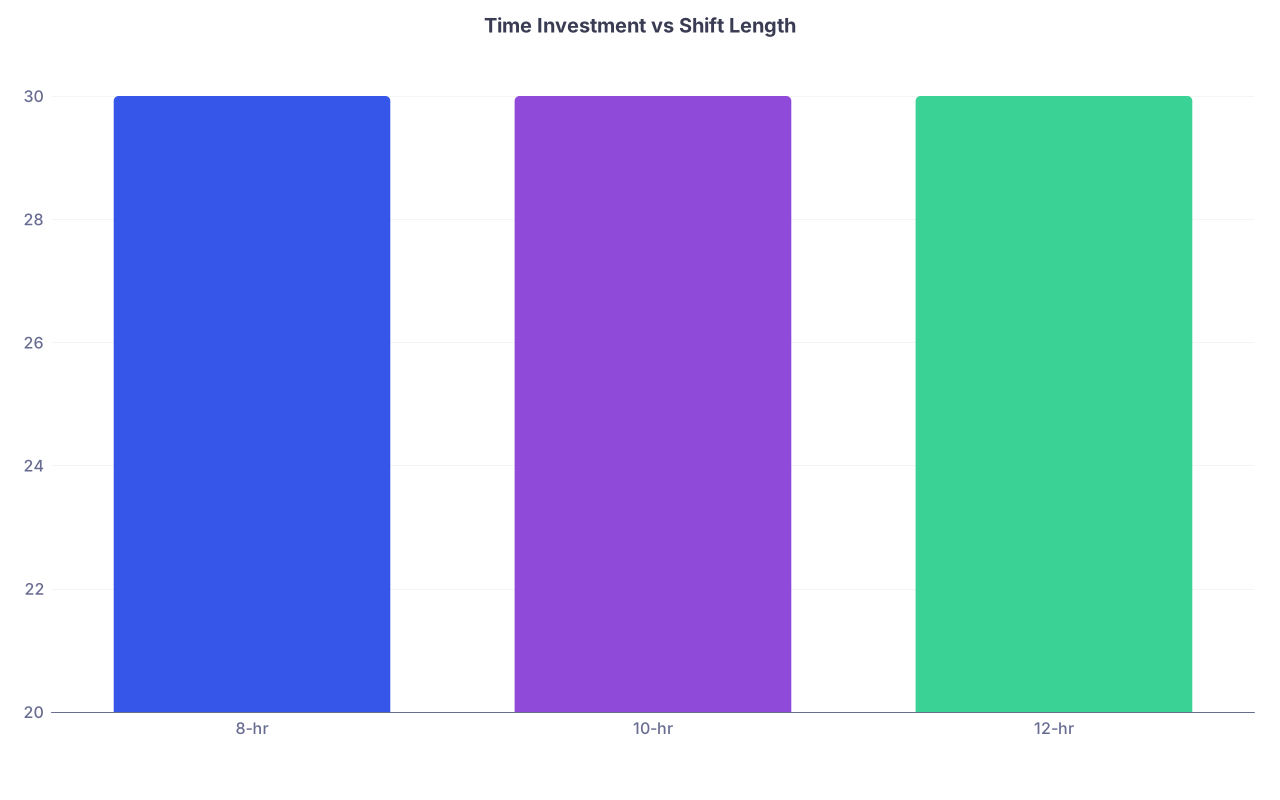
| Category | Value |
|---|---|
| 8-hr | 30 |
| 10-hr | 30 |
| 12-hr | 30 |
You’re spending the same 30 minutes whether your day is 8, 10, or 12 hours. The longer the shift, the more valuable those 30 minutes become.
Post‑Shift: 15 Minutes Before You Re‑Enter Your Life
This is where most clinicians blow it. They walk out, dive into their phone, carry the hospital home, then wonder why they’re snapping at family or staring at the wall at 2 a.m.
Post‑shift is non‑negotiable if you care about moral injury and burnout.
T+0 to T+5: Decompress and Downshift
The goal here: tell your body you are no longer in an acute care environment.
At this point you should:
Physically leave clinical space.
- Out of the unit.
- Away from monitors and overhead announcements.
- Ideal: car, bench outside, quiet stairwell, or empty room.
Two‑minute sensory reset.
- Sight: Soft gaze on something neutral—tree, wall, skyline.
- Sound: Listen for the farthest sound you can hear, then the closest.
- Touch: Hands on thighs or steering wheel, feel the texture and temperature.
Three‑minute breath + posture reset. Use Box breathing if you’re still jacked up:
- Inhale 4 seconds
- Hold 4 seconds
- Exhale 4 seconds
- Hold (lungs empty) 4 seconds
- 6–8 cycles
Or go back to 4‑6 breathing if Box makes you more anxious.
Notice what you’re carrying:
- “Still replaying that procedure.”
- “Still angry at consultant.”
- “Still worried about that septic kid.”
Do not fix it yet. Just see it.
T+5 to T+10: Reflect and Reframe (Ethical Debrief)
This is where the day either becomes fuel for learning…or scar tissue.
At this point you should walk through a 5‑minute structured reflection:
60 seconds: One win. Ask yourself:
- “Where did I act in line with the physician I want to be?” Examples:
- “I apologized instead of getting defensive.”
- “I caught a med error before it reached the patient.”
- “I took 30 seconds to sit at the bedside.”
Write it down if you can. On your phone, scrap paper, whatever. One line only.
90 seconds: One friction point.
- Identify one thing that felt ethically or emotionally rough:
- Snapped at a nurse.
- Rushed consent.
- Ignored uncomfortable bias.
- Name it clearly: “I dismissed that patient because I judged their choices.”
You don’t spiral. You name.
- Identify one thing that felt ethically or emotionally rough:
2–3 minutes: Brief ethical processing. Use a simple three‑question loop:
- What actually happened? (Just facts, 2–3 sentences.)
- What was going on inside me? (Fear, fatigue, pressure, ego.)
- What would “my best clinician self” have done?
Then one sentence of forward learning:
- “Next time I’ll pause and ask one more question before judging.”
- “Next time I’ll ask the nurse’s perspective before pushing back.”
- “Next time I’ll say, ‘I’m not sure; let me think this through.’”
You’re not writing a novel. You’re doing 5 minutes of moral calibration to avoid building resentment and shame layers.

T+10 to T+15: Closure and Transition Home
Last phase. This is how you prevent “living at the hospital in your head” all evening.
At this point you should:
Create a mental “parking lot” (2 minutes).
- List 3–5 items you’re tempted to ruminate about:
- “Mrs. R’s CT results.”
- “That consult note I didn’t finish.”
- “How my attending saw me on rounds.”
Put them physically somewhere:
- Small notebook titled “Next Shift.”
- Notes app with a specific tag.
- Voice memo in your own words.
Your line to yourself:
“These belong to Future Me, on duty. Off‑duty me is not responsible right now.”- List 3–5 items you’re tempted to ruminate about:
60–90 seconds: Deliberate release ritual. Pick one and do it every day:
- Take your badge off slowly, say (in your head or quietly):
“I’m off now. My job for today is done.” - Wash your hands one last time, imagining the day washing off.
- Step out of the building and take one deep breath facing away from it.
Sounds small. It’s not. Your brain links these physical cues to “work mode off.”
- Take your badge off slowly, say (in your head or quietly):
Final 2–3 minutes: Intention for home life. Just like pre‑shift, but for the rest of your day:
- “When I walk in, I’ll give my partner 5 minutes of full attention.”
- “I’ll be honest if I’m exhausted instead of silently resentful.”
- “I’ll do one small thing that’s not medicine: music, book, 10‑minute walk.”
One intention. Not five.
Then, and only then, unlock your phone for personal messages, podcasts, etc.
Weekly Calibration: Tightening the Routine
You’re in medicine. You know better than to start a new protocol and never review it.
Once a week—day off, post‑call afternoon, whatever—you should take 10–15 minutes to zoom out and ask: “Is this working?”
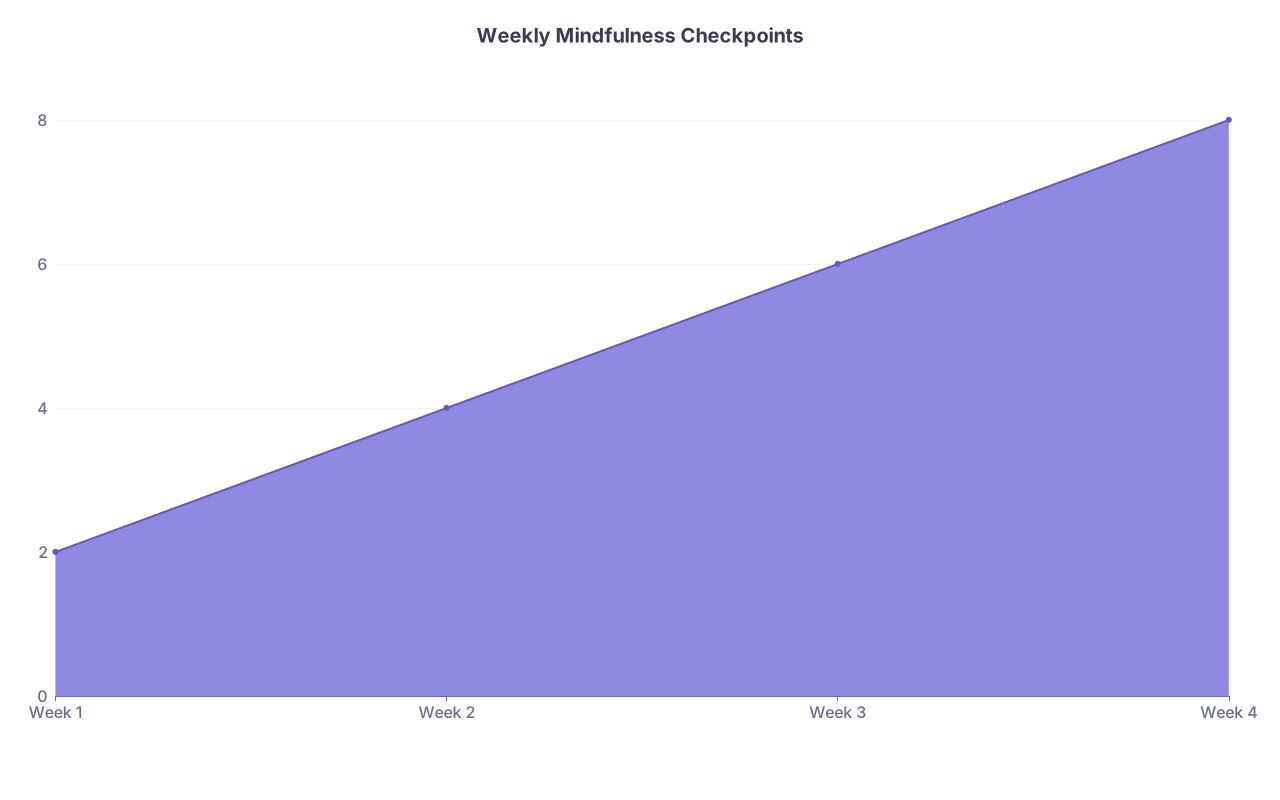
| Category | Value |
|---|---|
| Week 1 | 2 |
| Week 2 | 4 |
| Week 3 | 6 |
| Week 4 | 8 |
(For example, number of shifts where you completed both pre‑ and post‑bookends.)
Here’s the timeline for your first month:
Week 1: Basic Compliance
At this point you’re just trying to do it at all.
- Pre‑shift:
- 2‑minute breath
- 1 intention
- Post‑shift:
- 2‑minute breath
- 1 “win”
If you get 50% of shifts with any form of this, that’s a win. Don’t chase perfection on week one.
Week 2: Full 15 + 15 on At Least Half Your Shifts
Now you aim for the full structure on 2–3 shifts this week:
- All three pre‑shift steps
- All three post‑shift steps
Watch for:
- Slightly smoother transitions
- Less emotional hangover at 10 p.m.
- More awareness when you’re about to snap
Week 3–4: Refinement and Personalization
By this point you should be:
- Dropping what feels fake.
- Doubling down on what clearly helps.
- Tweaking language to sound like you, not some script.
Examples:
- If spoken “vows” feel cheesy, turn them into a written line you glance at in your badge pocket.
- If 4‑6 breathing makes you dizzy, use 3‑5 or just slow, natural breathing with longer exhale.
The rule: keep the timeline structure (arrival, breath, intention; breath, reflection, release), even if the ingredients evolve.
Common Sabotages and How to Handle Them
I’ve watched residents and attendings try this and abandon it. The failures are predictable.
Sabotage 1: “I don’t have 15 minutes.”
Translation: “I’m used to rolling in hot.”
Fix: Start with 5 minutes each side. Same sequence, compressed. Once you feel the difference, you’ll make the 15.
Sabotage 2: “This feels performative.”
Then stop performing. Use blunt, stripped‑down language:
- “Don’t be a jerk.”
- “Do your job well.”
- “Patients are people.”
No incense required.
Sabotage 3: “I forget when I’m tired.”
Use environmental cues:
- Sticky note in your locker: “2 minutes before, 2 minutes after.”
- Calendar reminder at shift start and end.
- Physical anchor: as soon as you touch your badge, that’s the start of pre‑shift.
How This Protects Your Ethics, Not Just Your Mood
Let me be clear: this is not just about “feeling calm.”
These bookends:
Slow your thinking at key decision points
So you’re less likely to sign off on a half‑read med list or blow past a subtle red flag.Make your values explicit, daily
That’s the antidote to “I didn’t notice when I stopped caring.” You’ll see drift as it happens.Contain moral distress
Post‑shift reflection keeps ethically painful cases from becoming vague, corrosive shame. You’ll process them while they’re small.
Three Things to Remember
- Lock in the timing first—T‑15 and T+15—then perfect the content later.
- Keep each step short and concrete: breath, one intention, one win, one friction point, one release ritual.
- This is not a luxury add‑on. It’s a professional hygiene routine for your mind and your ethics—same status as hand‑washing and sign‑out.