
The idea that mindfulness practice should be “steady and the same all year” is wrong. In medical training, your internal load spikes and crashes with a rhythm as predictable as the academic calendar. Your mindfulness practice needs to follow that rhythm—or it will quietly fall apart.
Below is your Academic Year Map: when to intensify, when to scale back, and what that actually looks like week‑by‑week.
Big-Picture Map: How Your Year Should Feel
At this point you should stop thinking in vague terms like “I should meditate more” and start thinking in seasons:
| Season / Phase | Typical Months | Mindfulness Intensity | Main Focus |
|---|---|---|---|
| Foundation / Build | Aug–Sep | Medium | Habits, skills, baseline |
| Ramp-Up / Exams | Oct–Nov | High but efficient | Stress buffering, focus |
| Peak Stress / Finals | Dec (and May–Jun) | High but brief | Acute regulation, sleep |
| Reset / Reflection | Jan and Summer break | Medium–High, flexible | Depth, ethics, values |
| Clinical Transition | Clerkship start dates | High, targeted | Emotional processing, ethics |
You are not trying to be a monk. You are trying to be a functioning, ethical clinician-in-training. That means minimum viable practice on bad weeks, deeper work on lighter ones.
Pre-Year Setup: 2–4 Weeks Before Classes Start
At this point you should treat mindfulness like pre-reading for your own mind.
Goals:
- Establish a minimal daily habit.
- Test what formats actually work for you.
- Set ethical and personal “guardrails” before the chaos begins.
Weekly focus:
Weeks −4 to −3: Experiment and choose your core practice
- Try 3–4 formats on different days:
- 5–10 minutes of breath-focused sitting.
- 10 minutes of walking mindfulness between two landmarks.
- A body scan in bed before sleep.
- 3-minute “STOP” check-in between tasks.
- By the end of week −3, you should choose:
- One primary practice (e.g., 10 minutes sitting after breakfast).
- One backup micro-practice (e.g., 3 breaths at every handwashing or log‑in screen).
Week −2: Lock the routine, add simple tracking
- Fix a time and trigger:
- “After breakfast before opening my laptop.”
- “As soon as I get into the library before I start Anki.”
- Use the simplest tracking:
- A box in your planner.
- A calendar dot.
- A habit app if you are that person, but do not overbuild this.
- Start a 1-sentence reflection after practice:
- “Today: anxious about anatomy, noticed jaw clench.”
- “Felt bored, mind wandered to social media 20 times.”
Week −1: Lay ethical groundwork
At this point you should connect mindfulness to how you want to show up with patients and colleagues.
- Draft a short personal intention:
- “I practice to notice stress before I dump it on patients, classmates, or nurses.”
- “I want to pause before reacting, especially when tired or frustrated.”
- Pick one ethical anchor to revisit monthly:
- Autonomy: “Am I really listening before I decide what is best?”
- Nonmaleficence: “Am I noticing when fatigue is making me sloppy?”
- Justice: “Do I pay attention differently to ‘difficult’ patients?”
This is where mindfulness moves from “self-care trick” to a professional discipline.
Months 1–2: Foundation / Build (August–September)
At this point you should be building automaticity, not heroics.
Target intensity:
- 10–15 minutes, 5–6 days per week, plus micro‑practices.
Month 1 (First 4 weeks of classes):
Weeks 1–2: Get reps, not insight
- Non-negotiable: Sit for your chosen length, even if the session “sucks.”
- Label basic experiences:
- “Thinking.”
- “Planning.”
- “Worried.”
- You are training the muscle of noticing and returning, not having mystical experiences.
Weeks 3–4: Add context-specific practice
- Before lectures: 1 minute of centering—feel feet on floor, one slow breath.
- After anatomy lab or simulations: 2-minute debrief:
- “What did I feel? Where in the body?”
- “Any moment I ignored unease or an ethical twinge?”
By the end of Month 1, your question is not “Does mindfulness help?” It is: “On what days did I drop it, and why?”
Month 2: Stabilize and shorten (without losing quality)
Stress starts rising. Workload ramps. This is where many people quit. Do not.
- Baseline practice:
- Keep 10–15 minutes on at least 4 days/week.
- On truly brutal days, drop to 5 minutes. Never to zero.
- Add one weekly “long” session (20–25 minutes)
- Use it to notice patterns in stress, not to chase calm:
- “What triggers self-criticism this week?”
- “Where do I feel performance anxiety?”
- Use it to notice patterns in stress, not to chase calm:
You are building an early warning system for burnout, not a sedative.
Months 3–4: Ramp-Up / Midterms and Rising Demands (October–November)
At this point you should shift from building capacity to using it under pressure.
Target intensity:
- Same weekly total minutes, but split into shorter, more surgical doses.
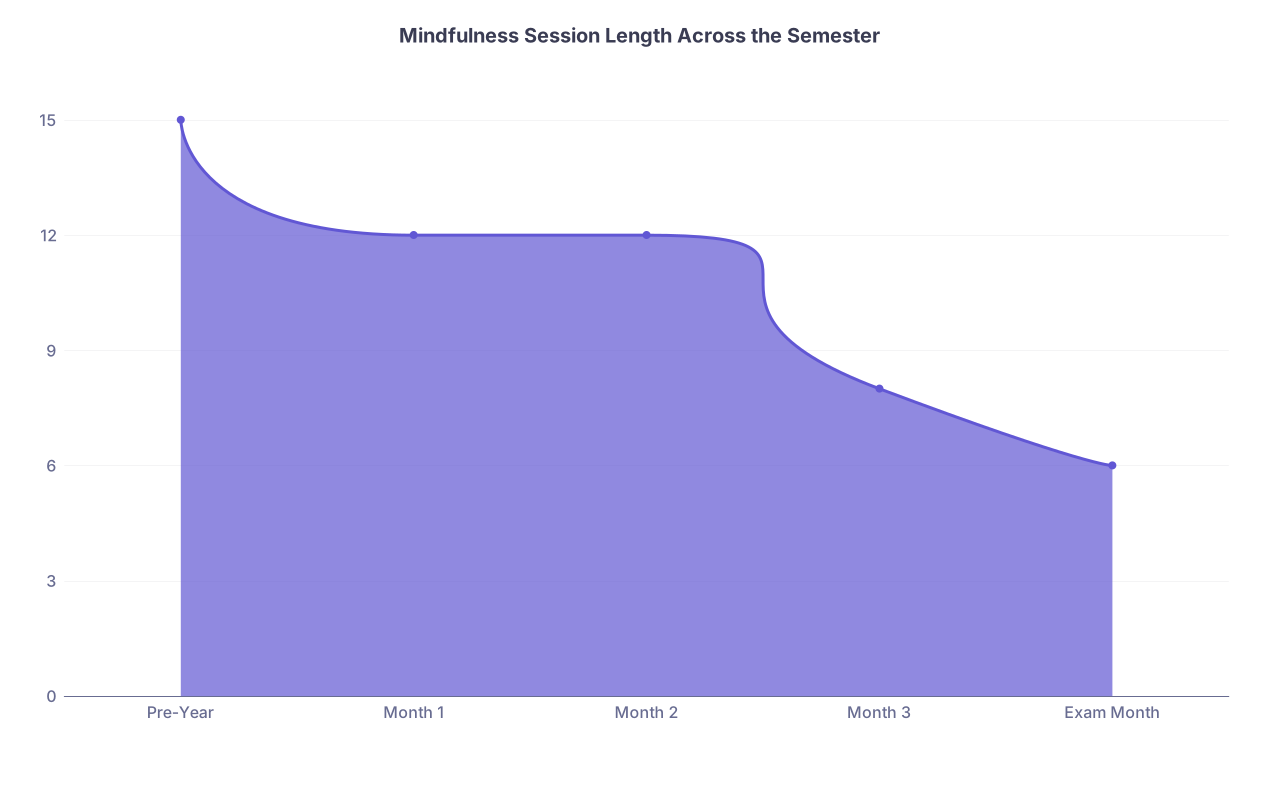
| Category | Value |
|---|---|
| Pre-Year | 15 |
| Month 1 | 12 |
| Month 2 | 12 |
| Month 3 | 8 |
| Exam Month | 6 |
Month 3: Cognitive load and comparison
- Common reality:
- You enter the “everyone is doing more than me” spiral.
- Sleep starts to erode if you are not careful.
- Response:
- Keep 5–10 minute sittings most days.
- Add 3–5 micro-practices baked into your day:
- Before opening practice questions.
- Before responding to any message/email that spikes your heart rate.
- At every bathroom break: feel your hands under water, notice the temperature, one conscious breath.
- Start “exam preview” practice once per week:
- 5 minutes sitting + 5 minutes imagining walking into the exam while noticing anxiety in the body and staying with it.
Month 4: Ethics and relationships under strain
You will snap at someone if you run on empty long enough. That can be a classmate, a standardized patient, a nurse, or your attending later on. This month is practice for preventing that.
- Once a week, after a stressful interaction, do a 5–10 minute replay:
- Re-run the scene in your mind.
- Notice:
- Where did defensiveness appear? (chest tightness, throat, heat in face)
- Where did you override your own discomfort to “look good”?
- Connect this to ethical questions:
- “Did I listen fully?” (respect)
- “Did I rush?” (nonmaleficence—rushing leads to mistakes)
- Keep baseline daily practice short if needed:
- On packed days: 5 minutes before bed, even if tired and mildly annoyed at doing it.
Month 5: Peak Stress / Finals (December)
At this point you should scale back duration, not frequency. Consistency beats length.
Target intensity:
- Daily practice: 5–8 minutes.
- Micro-practices integrated into study and exam days.
Week-by-week structure:
Week 1 (content crush):
- 5 minutes before your first study block.
- Choose one anchor:
- Feeling the breath at the nostrils.
- Or just repeating “here” on each exhale.
- During study:
- Every 50 minutes, stand up, 1 minute walking with awareness of feet.
Week 2–3 (mock exams and panic spikes):
- Before each practice exam:
- 2–3 minutes: feel the chair; feel both feet; notice heart rate; do nothing to change it.
- Quietly note: “Anxiety welcome. You can ride with me while I answer questions.”
- After practice exams:
- 3 minutes sitting: notice the impulse to immediately check score, spin stories. Watch that urge physically before you act.
- Before each practice exam:
Finals week:
- Non-negotiable: 5 minutes on waking. Even if you cut it from other things.
- Night before each exam:
- 5 minutes of gentle breathing.
- 5 minutes body scan in bed to cue sleep, not perfection.
Do not “take a break from mindfulness because exams.” That is like taking a break from handwashing because flu season.
Winter Break: Reset and Deepen (Late December–January)
Here you should increase depth and reflection. You finally have time.
Target intensity:
- 15–25 minutes, 4–5 days per week, flexible timing.
Use this period for three things:
Decompression
- First week of break: let sessions be messy.
- Notice accumulated tension, exhaustion, emotional residue from the term.
Values and ethics review
- Once per week, combine:
- 15 minutes sitting.
- 10 minutes journaling with prompts:
- “Where did I act out of fear this term?”
- “Where did I ignore discomfort about something that felt ethically off?”
- “Which patient or simulated encounter stayed in my mind, and why?”
- Consider how you want to show up differently next term.
- Once per week, combine:
Experiment with formats
- Try:
- Longer walking meditations (20–30 minutes).
- Loving-kindness (metta) directed to:
- Self (when you failed an exam or OSCE).
- A patient or role-play who was difficult.
- A faculty member you find intimidating.
- Try:
You are re-aligning your internal compass before the next sprint.
Spring Semester: Repeat the Arc With Slight Upgrades (January–April)
The pattern is the same, but the stakes and complexity increase. More clinical exposure, more ethical gray zones.
At this point you should avoid the trap of “I already know how to do this, I can coast.” You cannot.
January–February: Rebuild routine quickly
- By end of January:
- You should be back to 10–15 minutes, 5 days/week.
- Add one weekly “clinical ethics sit”:
- Reflect on:
- Times you were tempted to cut corners.
- Times you noticed bias (who you felt more sympathy for, who annoyed you faster).
- You do not fix it in one session. You train yourself to see it.
- Reflect on:
March–April: Pre-clerkship or early clinical prep
If you are transitioning to rotations soon, mindfulness stops being optional.
You will need it for:
- Standing in rooms where real suffering is happening.
- Watching team dynamics that are not always kind or just.
- Feeling out of your depth 10 times a day.
Practice adjustments:
- Shorten sittings to what you can sustain during busy weeks:
- 8–12 minutes, same time daily.
- Start “transition practices”:
- At the door before entering a patient room (actual or simulated):
- Pause.
- One breath.
- Silently: “This is a person, not a task.”
- Leaving the room:
- Quick body check: what are you carrying out emotionally? Acknowledge it.
- At the door before entering a patient room (actual or simulated):
Exam Month #2: May–June Finals and/or Step Prep
The pattern from December repeats, but fatigue is higher and stakes can feel existential.
At this point you should think in minimum effective doses and non-collapse planning.
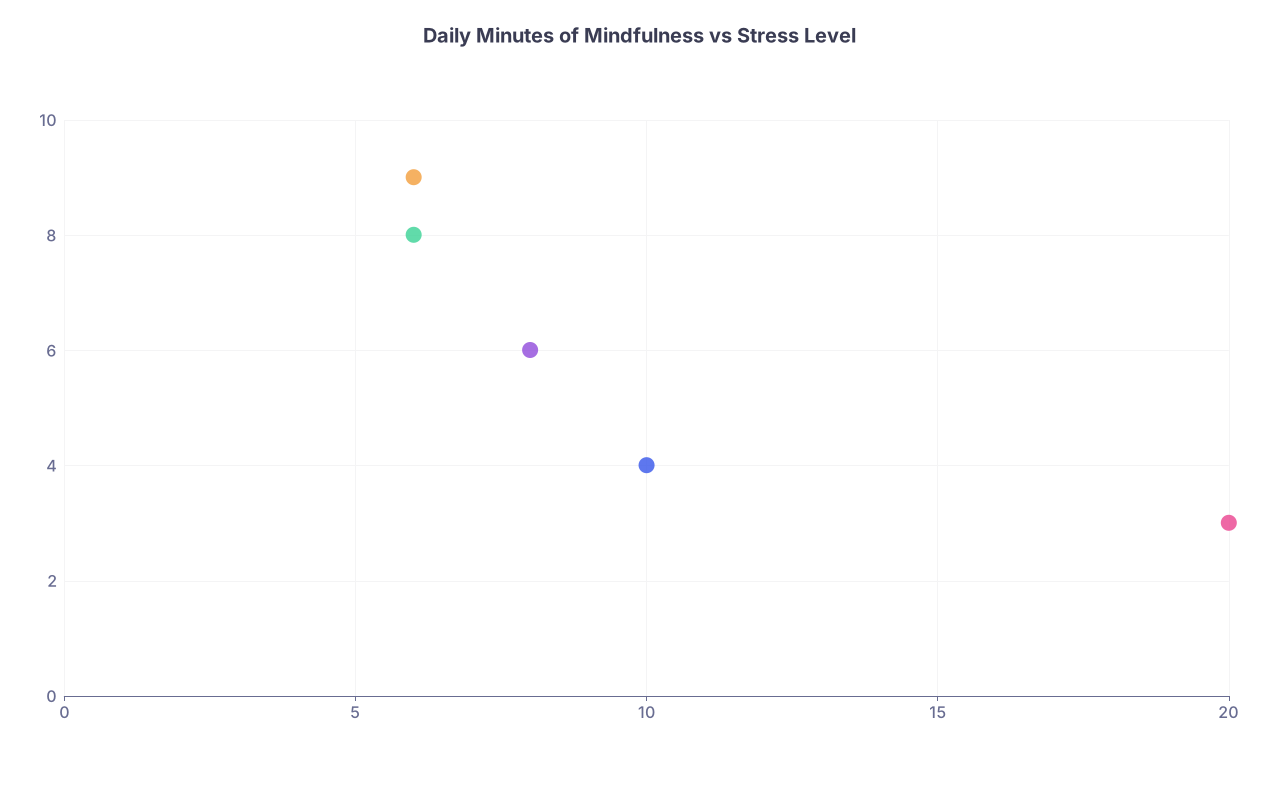
| Category | Value |
|---|---|
| Baseline | 10,4 |
| Midterms | 8,6 |
| Finals | 6,8 |
| Step Prep | 6,9 |
| Break | 20,3 |
During intense board prep or cumulative finals:
- Daily:
- 5–10 minutes on waking.
- 1–3 one-minute pauses during the day.
- Weekly:
- One slightly longer session (15–20 minutes) purely to let the nervous system unwind:
- Notice how exhausted you are.
- Do nothing about it for that window.
- One slightly longer session (15–20 minutes) purely to let the nervous system unwind:
- Ethics angle:
- Notice how performance pressure affects your attitude:
- Toward yourself (self-contempt, overidentification with scores).
- Toward patients (do they become props in your studying?).
- Sit with that discomfort. That is part of professional formation.
- Notice how performance pressure affects your attitude:
Summer: Integration, Repair, and Optional Deep Dive
If you have a lighter summer (research, elective, or actual break), this is prime time to level up.
At this point you should ask: “Do I want mindfulness to be a real part of my practice as a physician, or just a coping gadget I dust off in crisis?”
Option A: Maintain and rest
- 10–15 minutes most days.
- More outdoor walking mindfulness.
- Occasional longer sits when you feel like it.
Option B: Deliberate deepening (highly recommended if feasible)
- One 30–40 minute session weekly.
- Join:
- A local or online mindfulness course specifically for healthcare professionals if you can find one.
- Focus areas:
- Compassion fatigue.
- Moral distress: notice when you are stuck between “system reality” and “what feels right for the patient.”
This is where you can actually enjoy the practice instead of just using it as a damage-control tool.
Micro-Timeline: What a Single High-Stress Week Should Look Like
Let’s zoom in. Exam or tough rotation week. Here is how to not drop the ball.
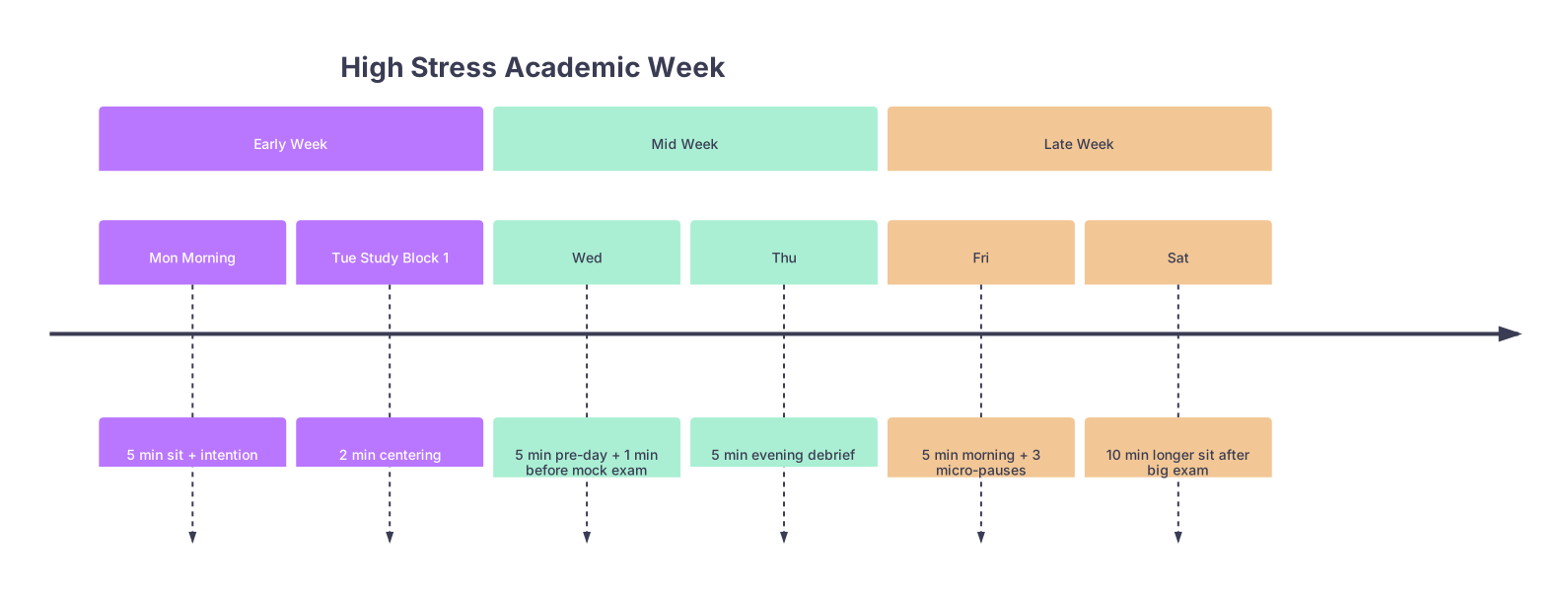
| Period | Event |
|---|---|
| Early Week - Mon Morning | 5 min sit + intention |
| Early Week - Tue Study Block 1 | 2 min centering |
| Mid Week - Wed | 5 min pre-day + 1 min before mock exam |
| Mid Week - Thu | 5 min evening debrief |
| Late Week - Fri | 5 min morning + 3 micro-pauses |
| Late Week - Sat | 10 min longer sit after big exam |
Daily skeleton for that week:
- Morning:
- 5 minutes sitting before phone, laptop, or email.
- During day:
- Before any task that spikes anxiety (exam, presentation, difficult patient): 1–2 minutes of breath or body awareness.
- Evening:
- 3–5 minutes “download”:
- What was the hardest moment?
- Where do I still feel it in my body?
- 3–5 minutes “download”:
You are not chasing calm. You are proving to yourself you can stay in contact with your own experience even when everything is on fire.
When To Intensify vs Scale Back: Simple Rules
Use these as quick checks during the year.
Intensify (longer or more frequent practice) when:
- You notice early warning signs of cynicism or dehumanization.
- You are entering:
- New rotations.
- First encounters with death or serious bad news.
- OSCEs with heavy communication or ethics components.
- You have a break week or lighter schedule. That is the time to build capacity, not to drop the habit completely.
Scale back (shorter, but not zero) when:
- You are in peak exam periods.
- Sleep is clearly at risk.
- You notice resentment toward the practice itself (“I hate this, it is another task”)—cut minutes, keep the ritual.
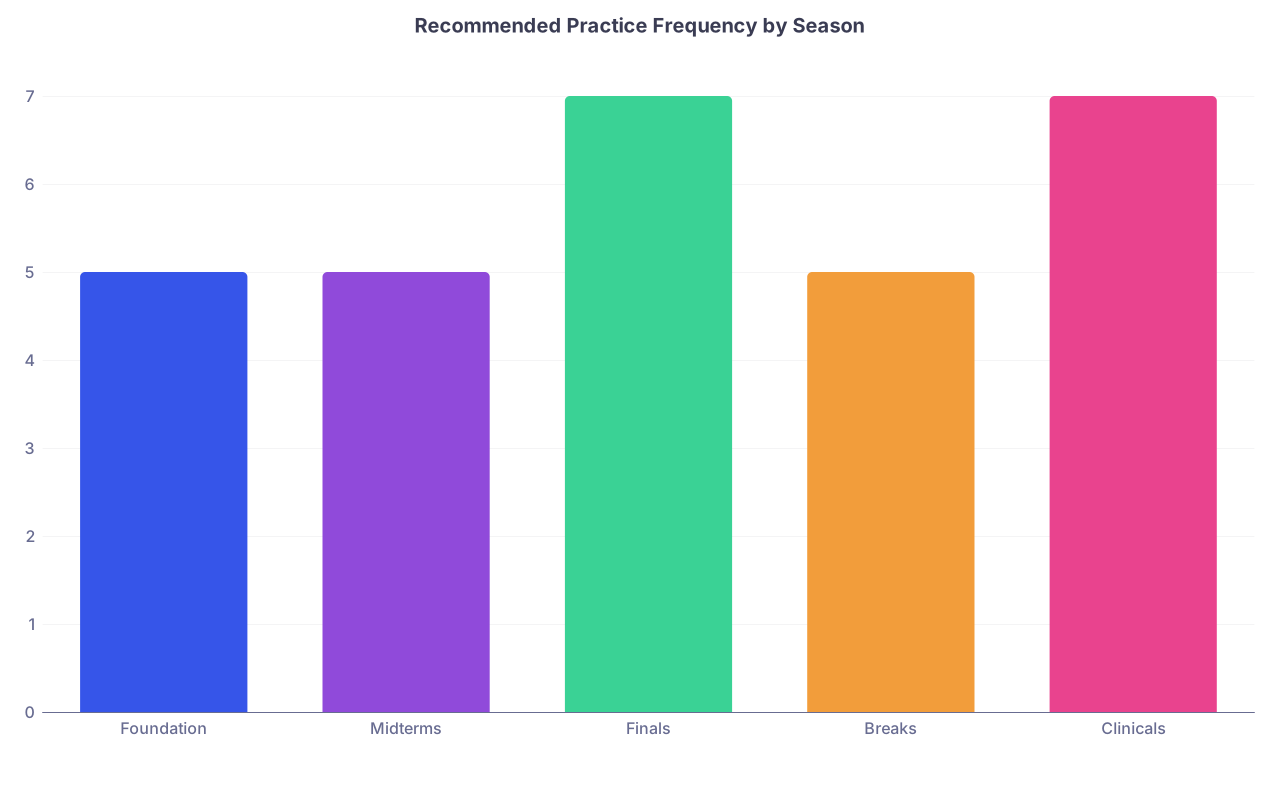
| Category | Value |
|---|---|
| Foundation | 5 |
| Midterms | 5 |
| Finals | 7 |
| Breaks | 5 |
| Clinicals | 7 |
The line you must not cross: do not let it disappear entirely for more than 3–4 days. Restart with 3 minutes if you have to.
Quick Ethical Checkpoints Across the Year
Sprinkle these once a month at minimum. They are where mindfulness and medical ethics actually touch.
- Early fall:
- “When am I more focused on performance than on people?”
- Late fall:
- “Where did fear of evaluation distort my behavior with patients or peers?”
- Winter break:
- “Which moments of the term felt ethically off, and what did I do with that?”
- Mid-spring:
- “Do I notice any groups of patients I instinctively avoid or dismiss?”
- End of year:
- “Looking back, when did mindfulness help me act more like the kind of physician I want to be?”
Do these after a 10–15 minute sit. Let the body calm a bit first. Then be uncomfortably honest.
FAQs
1. What if I miss a week entirely—have I basically failed?
No. You have not failed; you just lost continuity. At that point you should restart with 3–5 minutes a day for 3 days, at a fixed time, and ignore any urge to “catch up” with long sessions. Treat it like returning to the gym after an illness: light, consistent, non-dramatic.
2. Is it better to do one long session weekly or short dailies?
For medical trainees, short dailies win almost every time. You do not have a stable schedule, and long sessions are the first to be sacrificed. Aim for 5–15 minutes most days, then add a longer weekly session only if reality allows. If you can do both, great. But build from daily up, not from long down.
3. Can mindfulness backfire during exams by making me too relaxed or slow?
If you are doing it correctly, no. You are not trying to sedate yourself; you are training focus and reducing unhelpful rumination. Done briefly before an exam (2–5 minutes), it sharpens attention rather than dulling it. If you feel sleepy or spacey, shorten the session and shift to standing or walking practice.
4. How does this actually make me more ethical, not just calmer?
Because you cannot act ethically on what you do not notice. Mindfulness increases your chance of catching micro-moments: the wince when you rush consent, the tightening when you stereotype a patient, the heat when an attending bullies a nurse. Those body flashes are early data. If you see them, you have a shot at choosing a different response. Without that awareness, you are on autopilot—and autopilot in medicine is where harm happens.
Key points:
- Match your mindfulness intensity to the academic season: short and frequent in exam weeks, deeper and longer in breaks.
- Never drop to zero; reduce minutes, keep the ritual alive.
- Use practice not just for stress, but to sharpen ethical awareness and how you actually treat people when the pressure is on.