
The way most students “prepare” for Step is cognitively reckless. Endless question blocks, zero recovery strategy, and then surprise when their brain starts misfiring three weeks before test day.
You are not just building knowledge. You are building a brain that can perform, on demand, for eight brutal hours. That requires a planned mindfulness schedule, not random Headspace use when you are already burned out.
Below is a concrete, time‑stamped plan: how to layer daily mindfulness blocks into a serious Step study schedule so your focus does not fall apart when it matters.
12 Weeks Out: Install the Habit Before You Need It
At this point you should not be in crisis. You are setting up infrastructure. Like getting your Anki decks in order, you are getting your nervous system in order.
Weekly Targets (Weeks −12 to −9)
- Mindfulness: 7–10 minutes, once daily
- Goal: Consistency, not depth. You are teaching your brain, “We do this every day.”
Week −12: Simple Baseline
Days 1–7:
- Morning (before any study):
- 7 minutes of basic breath-focused practice
- Sit, eyes closed or soft gaze
- 4‑second inhale, 6‑second exhale
- Notice the breath; when your mind wanders, gently return. No drama.
- 7 minutes of basic breath-focused practice
- No mid‑day or evening blocks yet. Just prove that you can show up every day.
At this point you should:
- Track it in your calendar or habit app. If it is not tracked, it will vanish.
- Treat it exactly like a class you cannot skip.
Week −11: Attach to Your Study Session
Days 8–14:
- Pre‑study (right before first block):
- 7–8 minutes of breath-focused mindfulness
- End of day:
- 2–3 minutes of “mental download”
- Sit quietly and name 3 thoughts about your studying that day (e.g., “I felt stupid with neuro,” “I avoided micro,” “I finished more than I expected”).
- No fixing, no analysis. Just notice.
- 2–3 minutes of “mental download”
You are now linking mindfulness to studying, not just mornings.
Week −10: Introduce Micro‑Pauses
At this point you should still be in content review and early questions. You do not “feel busy” yet. Good. Build the system now.
Days 15–21:
- Pre‑study: 8–10 minutes mindfulness
- During study:
- After every 90–120 minutes of work:
- 1 minute of “eyes‑soft, feel your feet” break
- Stand up or sit back. Close your eyes. Feel your feet on the floor, chair under you, breath in your chest. That is it.
- After every 90–120 minutes of work:
- End of day:
- 3 minutes of gratitude / ethics reflection
- Ask: “How did I show up as the kind of physician I want to become today?”
- One sentence is enough.
- 3 minutes of gratitude / ethics reflection
You are not doing this because it is spiritual and nice. You are doing it because this is how you train attention like a muscle.
8 Weeks Out: Build a Daily Mindfulness Skeleton Around Qbank Work
By now, most serious Step prep schedules are running full UWorld blocks. Cognitive load is up. This is where most people start to fray around the edges. You will not.
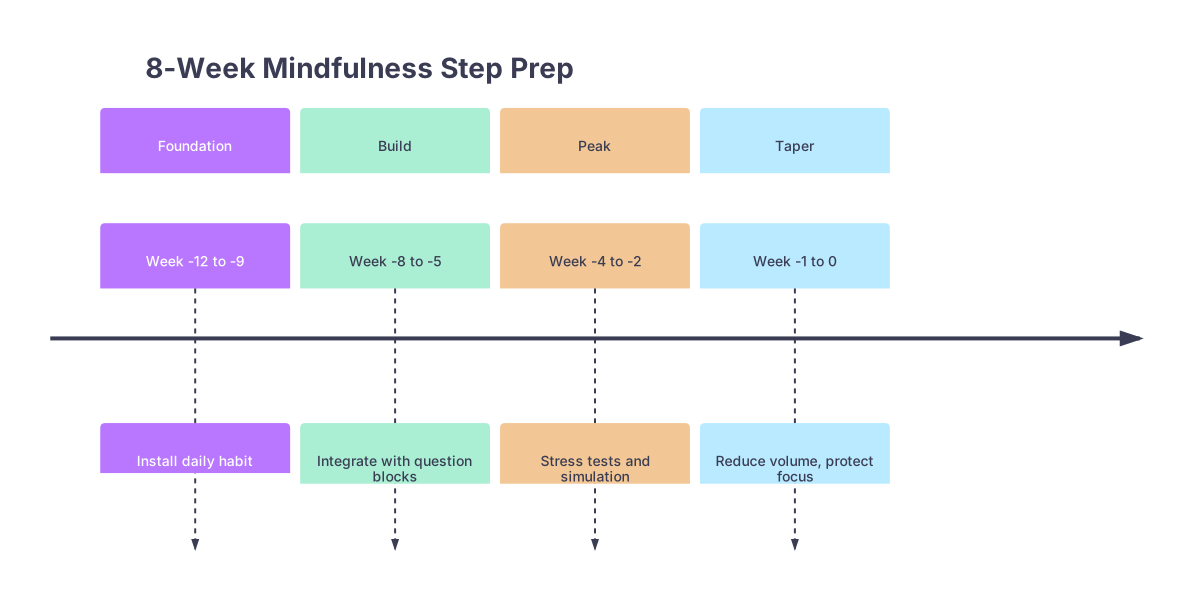
| Period | Event |
|---|---|
| Foundation - Week -12 to -9 | Install daily habit |
| Build - Week -8 to -5 | Integrate with question blocks |
| Peak - Week -4 to -2 | Stress tests and simulation |
| Taper - Week -1 to 0 | Reduce volume, protect focus |
Standard Study Day Structure (Weeks −8 to −5)
Assume a typical “full” study day:
- 2–3 question blocks (40 Qs each)
- 4–6 hours of review
- 1–2 hours of Anki / content
You are going to pin mindfulness blocks onto specific anchors.

Daily Schedule Template (Weeks −8 to −5)
07:15 – 07:25 — Morning Reset (10 minutes)
At this point you should not check your phone.
- 2 minutes: Notice body sensations (weight on the chair, tension in shoulders)
- 8 minutes: Breath-focused practice
- When planning thoughts about your schedule intrude, label them “planning” and come back to breath.
09:00 – 09:03 — Pre‑Block Centering (3 minutes)
Right before starting a question block:
- Sit back from your screen.
- 6 slow breaths with extended exhale (4 in, 6–8 out).
- Silently set an intention: “Single-task this block.”
Then you hit “Start.” Not before.
Mid‑Morning 15‑Second Micro‑Blocks (X2)
After every ~10 questions where you catch yourself zoning out:
- Look away from the screen for 15 seconds.
- One slow breath in, long breath out.
- Notice “mind wandering → redirect” once, then continue.
This is not optional. This is attention training.
11:00 – 11:05 — Post‑Block Debrief (5 minutes)
Immediately after a question block, before checking your percentage:
- 1 minute: Feel your physical state (heart rate, jaw, shoulders).
- 2 minutes: Notice emotional state (annoyed, anxious, proud). Name it once.
- 2 minutes: Brief grounding — focus on breath or on sounds in the room.
Then you look at your score. That separation between performance and reaction is the skill you are going to need on test day when you hit a weird block.
14:00 – 14:05 — Midday Reset (5 minutes)
After lunch, before your next heavy block or long review:
- 5 minutes of open monitoring:
- Instead of breath, let attention rest on whatever arises: sounds, body, thoughts.
- You are practicing not grabbing each thought and following it.
21:30 – 21:38 — Evening Unwind (8 minutes)
At this point you should be done studying.
- 3 minutes: Body scan
- Start at the top of your head, move slowly down: forehead, jaw, neck, shoulders, chest, abdomen, hips, legs, feet.
- 5 minutes: Brief ethics / identity reflection
- Ask: “If a patient saw how I treated myself today, would I be proud?”
- One or two sentences in a notebook.
Weekly Adjustments in This Phase
Week −8: Stick to the template. No heroics.
Week −7: Increase pre‑block centering to 4–5 minutes if you find yourself anxious before starting blocks.
Week −6: Add one 2–3 minute “between-subject reset” when switching topics (e.g., after cardio review, before neuro). Eyes closed, three slow breaths, mental note “new topic.”
Week −5: Do a mini “simulation day” once:
- 2 full blocks back‑to‑back with only a 5 minute mindful break in between.
- Purpose: test if your mind can recover quickly with deliberate practice, not Instagram.
4 Weeks Out: Stress Test Your Focus Like You Stress Test Your Knowledge
This is where people start doing full‑length practice exams. They also start doom‑scrolling their friends’ scores and losing sleep. That is preventable, but only if you treat mindfulness as a non‑negotiable performance block.
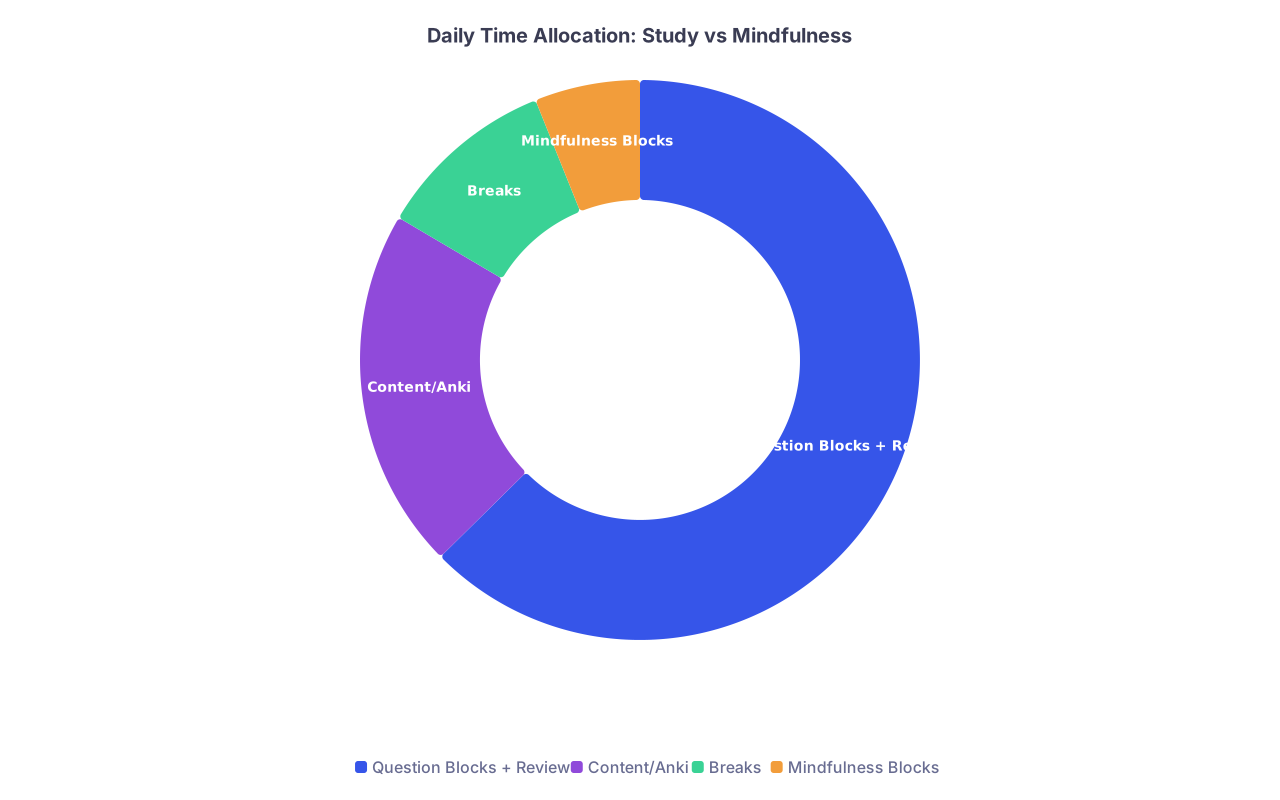
| Category | Value |
|---|---|
| Question Blocks + Review | 360 |
| Content/Anki | 120 |
| Breaks | 60 |
| Mindfulness Blocks | 35 |
Week −4: First Full Length with Mindfulness Integrated
Full-Length Practice Day Skeleton
07:00 – 07:12 — Extended Morning Reset (12 minutes)
- 5 minutes breath, 5 minutes body scan, 2 minutes repeating a simple phrase:
- “One block at a time. One question at a time.”
- 5 minutes breath, 5 minutes body scan, 2 minutes repeating a simple phrase:
08:00 – 12:00 — Blocks 1–4 (exam conditions)
- Before Block 1: 3 minutes centering
- Breaks: Use the first 60–90 seconds of each break as a micro mindfulness block:
- Stand, feel feet, 4 slow breaths, notice surroundings.
- Only then bathroom/snack.
12:00 – 12:40 — Lunch + 10 minutes walking mindfulness
- Walk slowly, attention on sensation of feet and legs.
- No phone, no checking score.
13:00 – 17:00 — Blocks 5–7 (or 8)
- Same micro‑blocks at start of each block and during breaks.
21:30 – 21:40 — 10‑minute decompression
- 5 minutes breath, 5 minutes naming thoughts about your performance and letting them pass.
At this point you should notice: your ability to reset between blocks is either present or not. If your mind is still spinning during breaks, you are under‑training mindfulness.
Week −3: Daily Rotation of Emphasis
You will keep the same basic daily schedule, but each day has a “mindfulness emphasis.”
Monday: Pre‑block strength
- Add 2 extra minutes to each pre‑block centering.
Tuesday: Micro‑pause strength
- Commit to a 15–30 second mindful pause every 15 questions, no exceptions.
Wednesday: Evening recovery
- Extend evening unwind to 15 minutes (more body scan).
Thursday: Ethics / identity
- Evening: 10 minutes journaling on one prompt:
- “What kind of physician do I refuse to become, even under pressure?”
- Tie this directly to how you treat yourself during prep.
- Evening: 10 minutes journaling on one prompt:
Friday: Compassion practice (yes, really)
- 5 minutes: bring to mind someone struggling (classmate, patient from rotation, yourself last year).
- Repeat silently: “May you find strength. May you be safe. May you be at ease.”
- This sounds soft. It is actually a buffer against the self‑disgust spiral when a UWorld block goes badly.
Weekend: One full‑length or two half‑days of blocks, using the same integrated micro‑blocks you practiced.
Final 2 Weeks: Taper the Volume, Guard the Mind
At this point you should stop pretending you can “cram” your way out of focus problems. Volume drops. Precision rises. That includes how you use your attention.
Week −2: Protect Sleep and Baseline Calm
Target:
- 30–35 minutes total mindfulness per day, but in shorter chunks
Daily Outline
Morning (10–12 minutes)
- 5 minutes breath
- 5–7 minutes body scan
Pre‑Study (5 minutes)
- Intention + 4–6 breaths
Midday (5–7 minutes)
- Open monitoring, acknowledging anxiety about scores, logistics, etc.
Evening (10–12 minutes)
- Longer body scan or gentle movement with awareness (slow stretching, attention on muscles and breath).
You should:
- Reduce social media dramatically; noticing the urge to scroll is itself a mindfulness cue.
- When anxiety spikes, timebox it:
- 3 minutes “worry practice”: set a timer, let the mind list every fear about the exam, then when the timer ends, shift to 3 minutes breath-focused practice. Train the off‑switch.
Week −1: Shift from Performance to Trust
This week is exam‑adjacent. You are not trying to “get better at tests.” You are trying not to sabotage yourself.
| Week | Primary Focus | Total Daily Mindfulness |
|---|---|---|
| -12 to -9 | Install habit | 7–15 minutes |
| -8 to -5 | Support heavy Qbank days | 20–30 minutes |
| -4 to -2 | Simulate exam demands | 25–35 minutes |
| -1 | Protect sleep and calm | 30–35 minutes |
| Exam week | Short, sharp resets | 15–25 minutes |
Day −7 to −4
- Keep morning + evening blocks at 10–12 minutes.
- Question volume: moderate, mostly review and targeted practice.
- Each time you catch yourself mentally re‑taking the exam in your head, use a 60‑second redirect:
- Name it (“rehearsing,” “catastrophizing”).
- Feel your feet.
- 4 slow breaths.
Day −3
At this point you should stop full‑length exams.
- Morning: 12–15 minutes mindfulness (body scan + breath).
- Study: light review only.
- Afternoon: 5 minutes walking mindfulness.
- Evening: 10 minutes compassion practice directed at “future me on test day.”
Day −2
- Total study: 3–4 hours max. No new material.
- Mindfulness: maintain morning (10 min), midday (5 min), evening (10 min).
- Explicitly practice the exam‑morning routine you will use (same breakfast, same timing).
Day −1
This is where many people panic and abandon every good habit. Do not.
- Morning: 10 minutes breath and intention: “Tomorrow I will do one question at a time.”
- Study: 1–2 hours of light review, maybe formula sheet glance. Stop by mid‑afternoon.
- Afternoon: 10 minutes gentle walk without phone.
- Evening: 10–12 minutes body scan in bed. Earlier bedtime.
Exam Day: Micro Mindfulness Wins, Not Heroic Meditations
You are not doing a 30‑minute sit on exam morning. You are executing small, precise moves.

| Step | Description |
|---|---|
| Step 1 | Wake up |
| Step 2 | 10 min morning practice |
| Step 3 | Travel to center |
| Step 4 | Pre check in 2 min breath |
| Step 5 | Block 1 |
| Step 6 | Break micro practice |
| Step 7 | Next blocks |
| Step 8 | Final block |
| Step 9 | Post exam decompression 10 min |
Morning of the Exam
- 10 minutes total:
- 5 minutes breath-focused sitting
- 3 minutes body scan (head to feet)
- 2 minutes setting intention:
- “Some questions will feel impossible. I will move on anyway.”
On the way to the test center:
- If you are on public transit or in an Uber, spend at least 3 minutes with eyes soft, attention on breath and physical sensations, not on last‑minute facts.
At the Testing Center
Right before Block 1:
- 2–3 minutes eyes closed, hands on thighs
- 5–6 slow breaths
- Notice feet on the floor, back on the chair.
- Repeat once: “First question only.”
Before each subsequent block:
- Sit down, do not immediately start.
- 60–90 seconds: 4 slow breaths, silent cue word: “Reset.”
During blocks:
- When you hit a “what is this?” question and feel your heart rate climb:
- Take one slow inhale, longer exhale, relax jaw deliberately.
- Decide: “I give this 60 seconds of honest effort, then move on.”
- That decision is a mindfulness act — choosing your response instead of reflexively freezing.
Breaks:
- Use the first minute as a micro‑practice:
- Stand. Feel feet. One slow breath.
- Ask: “What block is next?” Only that. No review of past blocks.
After the final block:
- Before checking your phone, find a quiet corner, sit for 5 minutes:
- Notice physical sensations and emotions. Let them be messy.
- Focus lightly on breath. No autopsy of answers yet.
A Quick Reality Check: What This Actually Changes
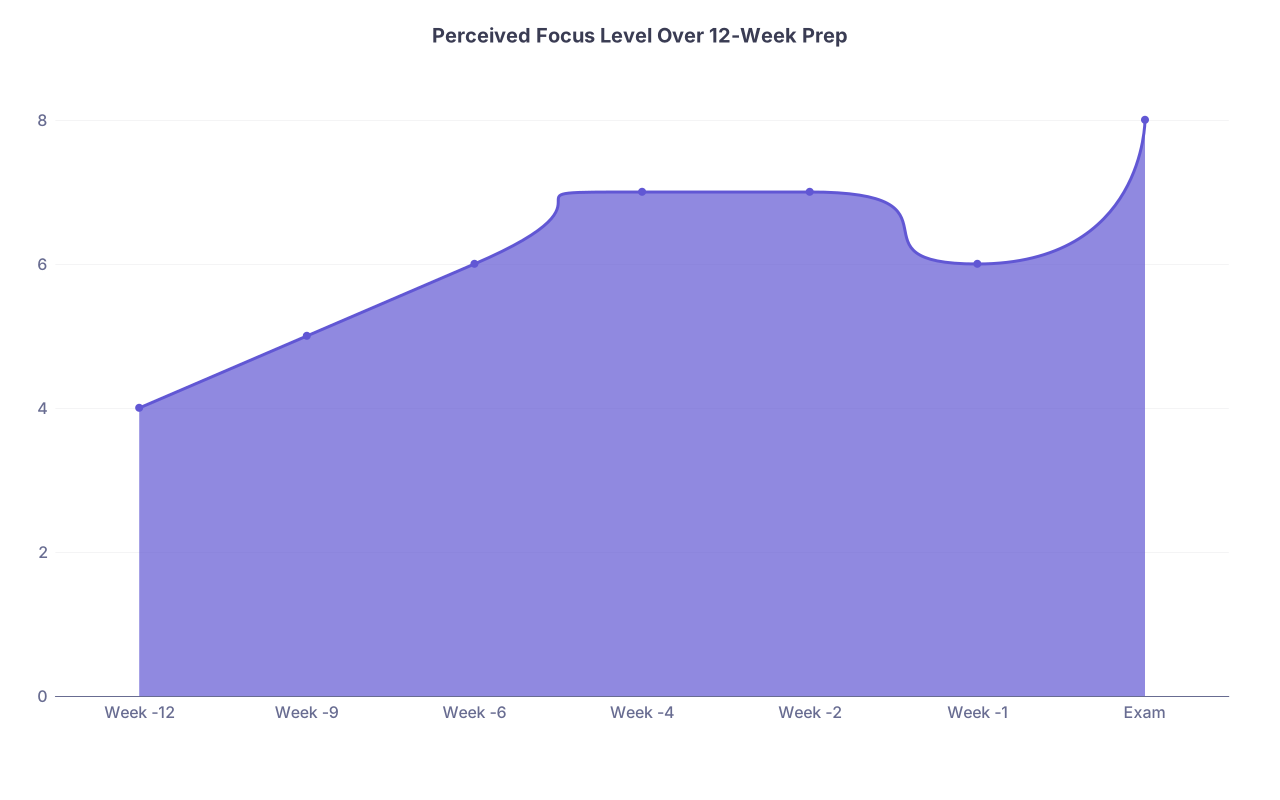
| Category | Value |
|---|---|
| Week -12 | 4 |
| Week -9 | 5 |
| Week -6 | 6 |
| Week -4 | 7 |
| Week -2 | 7 |
| Week -1 | 6 |
| Exam | 8 |
What I have seen repeatedly:
- Students who build these blocks early do not magically stop feeling anxious. They just stop obeying their anxiety.
- Their practice exams trend more stable; they do not have the random 20‑point crash two weeks before test day.
- On exam day, they recover faster from that one insane question cluster in cardiology instead of losing the entire block.
Is this “mindfulness for wellness?” Not really. This is mindfulness as a cognitive tool and, bluntly, as an ethical stance: you will not grind yourself into a worse version of the physician you set out to become.
Core Takeaways
- At each phase of prep, you should pair your study load with explicit, time‑bound mindfulness blocks that train attention and recovery — not rely on vague “I’ll try to be mindful.”
- Short, consistent practices tied to concrete anchors (pre‑block, breaks, bedtime) do more for your Step performance and long‑term professional integrity than sporadic long meditations.
- Treat this schedule as seriously as your Qbank schedule; you are training the instrument that takes the test, not just loading it with information.