
It’s Sunday morning, day 1 of your vacation week. Your badge is on the dresser. Your pager is off for the first time in months. But your brain? Still on sign-out, still running through differential diagnoses, still replaying that one interaction with the attending that made your stomach drop.
You’ve got 7–14 days before you’re back on the wards. This is where most residents blow it. They treat vacation like an escape, not a reset. They come back “rested” but just as reactive, burned out, and checked out as before.
You’re not doing that this time.
This is a day-by-day, structured mindfulness reset plan specifically for vacation weeks. Focused on:
- Nervous system downshift
- Real reflection (not self-flagellation disguised as reflection)
- Ethical recalibration before you’re back in front of patients
Follow it roughly in order. Adjust for a 1-week or 2-week vacation. But keep the sequence.
Big Picture Timeline
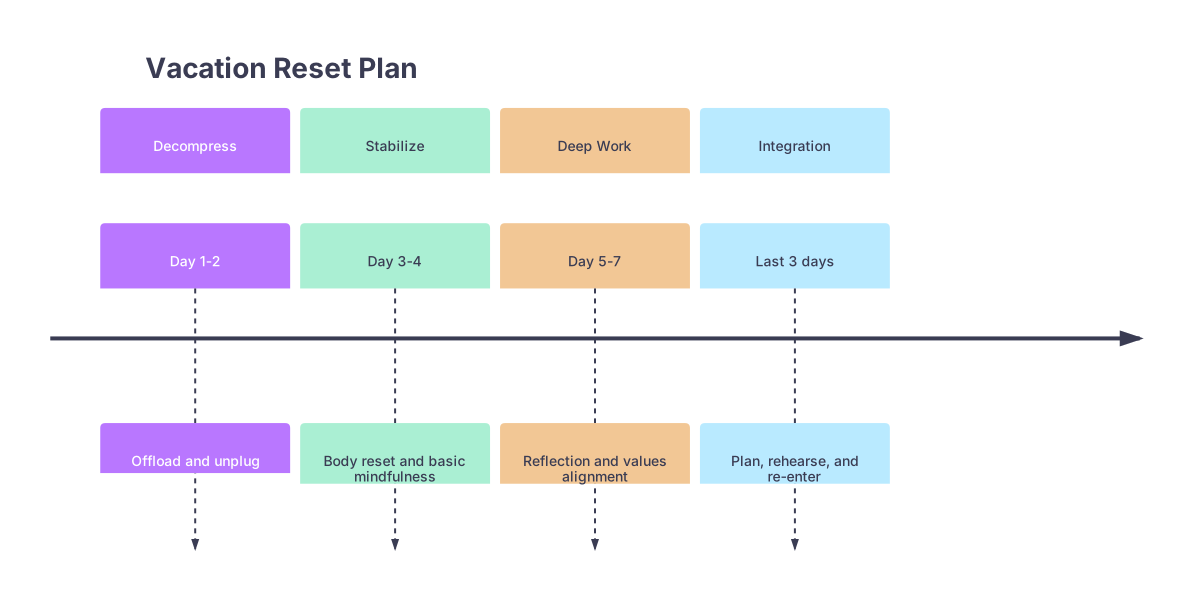
| Period | Event |
|---|---|
| Decompress - Day 1-2 | Offload and unplug |
| Stabilize - Day 3-4 | Body reset and basic mindfulness |
| Deep Work - Day 5-7 | Reflection and values alignment |
| Integration - Last 3 days | Plan, rehearse, and re-enter |
Think of it in four phases:
- Decompress – Get out of “code mode” and stop the mental noise.
- Stabilize – Sleep, body, basic mindfulness practices.
- Deep Work – Reflection on the year and your ethics as a clinician.
- Integration – Convert insights into actual habits for when you’re back.
Phase 1: Days 1–2 – Hard Stop and Decompression
At this point you should not be trying to “improve yourself.” Your nervous system is still on call.
Day 1: Full System Shutdown
Your only job: flip from hospital brain to human brain.
Morning
- Turn off hospital notifications:
- Pager off or handed over
- Email alerts and EMR app notifications disabled
- Do a 10-minute “mental dump”:
- Open a blank page and write every loose thread in your head: patients you’re worried about, things you think you messed up, lingering tasks
- No editing, no structure. Just empty the cache.
Then walk. No podcast, no audiobook, no “catching up.” Just walk 20–30 minutes, ideally outside.
Afternoon
- Set a tech boundary for vacation:
- Max social media time per day (e.g., 30–45 minutes)
- No medical Twitter/Reddit doomscrolling
- Pick one deliberately non-medical activity for the afternoon:
- Long shower and nap
- Cooking something from scratch
- Sitting in a café with a book that has nothing to do with medicine
Evening
- One simple grounding practice:
- 5 minutes of box breathing: inhale 4 sec → hold 4 sec → exhale 4 sec → hold 4 sec
- Zero thinking about “how to be better on wards.” That comes later. Day 1 is for discharge from mental ICU.
Day 2: Reclaim Your Body Clock
At this point you should focus on physical reset. Your cognition follows your physiology.
Morning
- Sleep in naturally if you can. No 5 a.m. “I’ll use vacation to be productive” nonsense.
- Light movement:
- 20–30 minutes: yoga, stretching, or a walk with a slight sweat
- Eat an actual breakfast. Sitting down. No charting, no phone.
Midday
- Short body scan meditation (10–15 minutes):
- Lie down, close your eyes
- Move your attention from toes to head, noticing tension
- Do not “fix” anything, just observe
- Notice what your body actually feels like without adrenaline:
- Jaw? Neck? Upper back? Gut?
Evening
- Start a tiny mindfulness anchor for the week:
- Pick one:
- 5 mindful breaths before each meal
- 2 minutes of eyes-closed breathing before bed
- That’s it. Keep it insultingly easy so you will stick to it.
- Pick one:
You’re not “doing it wrong” if you feel restless. That’s withdrawal from constant urgency, not failure at mindfulness.
Phase 2: Days 3–4 – Gentle Mindfulness and Stabilization
Now your brain is a little quieter. This is the window where real practice starts to land.
Day 3: Basic Mindfulness Boot-Up
At this point you should start formal but brief mindfulness practice.
Morning (10–15 minutes total)
- Pick a mindfulness practice:
- Breath-focused meditation – count breaths up to 10, then back to 1
- Or “sound meditation” – focus only on sounds, labeling them “hearing”
- Set a timer for 8–10 minutes:
- Sit somewhere comfortable
- Every time your mind goes to the wards (it will), label it:
- “Planning”
- “Worrying”
- “Self-critique”
- Then bring attention back to breath or sound
Noticing and returning is the practice. Not “staying present 100%.”
Afternoon – One Mindful Activity
Choose one daily-life thing to do with full attention:
- Washing dishes
- Taking a shower
- Drinking tea or coffee
During the activity, keep attention on:
- Physical sensations (water, warmth, taste)
- When your mind jumps away, pull it back, no commentary
Evening – Micro Reflection (10 minutes)
Journal on three prompts:
- What actually feels different in my body after two days off?
- What habits from the last rotation do I not want to bring back?
- When was the last time I felt like a good physician? What was I doing?
Bullet points, not essays.
Day 4: Introduce Values and Ethics Gently
You’re still stabilizing. Now you start turning toward the ethical part without spiraling.
Morning Practice (10–15 minutes)
Same mindfulness session as Day 3. Keep it boring and predictable.
Late Morning – Values Scan (20–30 minutes)
Grab a notebook. Answer these in writing:
- Why did I choose medicine in the first place? (no personal statement fluff; be honest)
- In the last 6–12 months, which of these feels eroded:
- Compassion
- Patience
- Curiosity
- Honesty with patients
- Respect for nurses / staff / colleagues
- Circle the top 2 you want to reclaim or protect.
This is not self-indictment. It’s triage.
Evening – One Tiny Ethical Commitment
Pick one specific behavior you will test when you return:
Examples:
- “I will sit down for at least 30 seconds with one patient per day, no laptop.”
- “I will learn and use the preferred name of every patient on my list.”
- “I will thank at least one nurse or RT by name every day, out loud.”
Write it somewhere visible. This is your first micro-ethics experiment.
Phase 3: Days 5–7 – Deep Reflection and Ethical Reset
At this point you should be slightly less fried. This is the part that actually changes how you practice.
Day 5: Review the Hard Stuff – Without Self-Destruction
Today is about looking back at the year (or last few months) with structure.
Morning – Containment First (5–10 minutes)
Do your now-familiar 8–10 minute mindfulness sit.
Then, set a timer for a 30–40 minute reflection block later in the day. Not all day. You don’t get to ruminate endlessly.
Afternoon – Clinical and Ethical Debrief (30–40 minutes)
Divide a page into 3 columns:
| Column | Focus | Example Entry |
|---|---|---|
| Event | What happened | Family meeting that went badly |
| My Reaction | Thoughts/feelings | Felt defensive and rushed |
| Ethical Question | What was at stake | Did I respect autonomy? |
Work through 3–5 cases from the last year that still sit in your chest:
- The patient you think you missed something on
- The code that haunts you
- The consult note you phoned in
- The family you rushed or snapped at
For each:
- Event – Just the facts, 3–4 sentences.
- My reaction – Emotions, body sensations, internal storyline.
- Ethical question – What was really in play?
- Autonomy, beneficence, non-maleficence, justice, honesty, respect, humility, etc.
Then ask: If I had that moment again, what’s one thing I’d do differently?
Write exactly one behavior, not a personality transplant.
Evening – Let it Land
Short grounding practice:
- 5 minutes of slow breathing
- One sentence aloud:
- “I did the best I could with the bandwidth I had.”
- Or, “I’m allowed to learn from this without hating myself.”
You’re not here to be found guilty. You’re here to get sharper and kinder.
Day 6: Re-Align With Who You Want to Be on the Wards
At this point you should translate values into concrete actions.
Morning – Compassion Practice (10–15 minutes)
Try a very simple loving-kindness (metta) meditation:
- Bring to mind someone you genuinely like (not a patient); repeat silently:
- “May you be safe. May you be healthy. May you live with ease.”
- Then yourself:
- “May I be safe. May I be steady. May I meet suffering with clarity.”
- Then a generic patient:
- “May you be cared for. May you find relief. May you be treated with respect.”
You’re training your default emotional stance. This pays off at 3 a.m.
Midday – Define Your “Ethical Baseline”
Use this to build a one-page ethical playbook for yourself:
Sections:
Who I want to be as a clinician (3–4 bullet points)
- Example:
- I attend fully to at least one patient each day.
- I speak honestly even when it’s uncomfortable.
- I do not vent about patients in dehumanizing ways.
- Example:
Red lines I won’t cross
- Examples:
- I will not lie about having done an exam I did not perform.
- I will not chart something I know is false just to appease an attending.
- I will not make jokes about patients that I wouldn’t make in front of them.
- Examples:
Recovery moves for when I screw up
- Apologize quickly, specifically
- Debrief with a trusted co-resident or mentor within 24–48 hours
- Do one small repair action if possible
Write it physically. This becomes your internal attending.
Evening – Social Reset
Spend time with non-medical people if possible. Let them remind you you’re a person, not a walking progress note.
Day 7: Test-Run Your Future Self
Now you should start rehearsing behaviors you’ll use back on service.
Morning – Scenario Practice (15–20 minutes)
Pick 2–3 recurring stressful scenarios:
- A family asking, “Is she going to die?”
- An attending dismissing your concern on rounds
- A patient angry about wait times
For each scenario, write:
- What I usually do (and don’t like)
- How I want to respond next time – exact words or actions
Example:
- Scenario: Attending cuts you off, dismisses your plan.
- Usual: Shut down, say “okay,” feel resentful.
- Planned: “I hear you. I’m worried about X specifically—would you be open to reconsidering Y?”
You’re not scripting perfection. You’re building a default you can fall back on when you’re tired.
Afternoon – Practice in Real Life (Light Version)
You’re on vacation, so you don’t get high-stakes reps. But you can test:
- Speaking more clearly and slowly when ordering food
- Holding eye contact and pausing 2 seconds before responding in conversation
- Not talking over people when you’re excited or defending a point
These are surprisingly transferable to ward rounds and family meetings.
Evening – Mid-Vacation Checkpoint
Journal quick:
- What’s one change I already feel from this week?
- Which new habit feels realistic to maintain on service?
- What’s one support I’ll need (buddy, reminder, boundary) to make it stick?
If your vacation is only 1 week, skip ahead to the integration phase now. If you’ve got 2 weeks, you get more breathing room.
Phase 4: Last 3 Days – Integration and Re-Entry Plan
At this point you should be moving from “reset” to implementation.
3 Days Before Return: Design Your First Week Back
Morning – Mindfulness + Intention (15–20 minutes)
Do your now-standard 10-minute mindfulness session. Then write one sentence intention for your first week back:
- “This week, I will prioritize presence over speed at least once per day.”
Not “be present all the time.” You’re still human.
Midday – Practical Re-Entry Checklist
Look at your actual schedule. Put this in your calendar:
- One 10-minute quiet break block each day (even if it’s aspirational)
- A reminder at lunch: “3 mindful breaths before eating”
- End-of-day 5-minute debrief reminder:
- “What did I do today that matched my values? Where did I drift?”
Also decide now:
- Who is your accountability person? Another resident, partner, friend?
- Tell them: “I’m trying to do X differently when I go back.”
- Ask them to check in once mid-week.
2 Days Before Return: Rehearse Boundaries and Self-Protection
At this point you should lock in boundaries to prevent immediate re-burnout.
Morning – Boundary Script Practice
List 3–5 boundaries you need:
- “I will not check email in bed at night.”
- “I will ask for help when my list is unsafe.”
- “I will not stay 90 minutes late every single day just to impress someone.”
For each, write a short script you can use:
- “I’m worried this list is unsafe as it stands—can we redistribute or get support?”
- “I need 5 minutes to eat; I’ll be back to see the next patient right after.”
Say them out loud once. Yes, this feels silly. It also makes it 10x more likely you’ll use them.
Afternoon – Logistics That Support Mindfulness
Prepare physically:
- Pack snacks and water so you’re not running on cortisol and coffee only
- Lay out your badge, scrubs, and a small notebook for micro-reflections
- Put a sticky note inside your work bag:
- “Pause. Breathe. Then respond.”
Evening – Gratitude That Isn’t Instagram-Ready
No performative gratitude here.
Write down 3 things you’re quietly grateful for related to medicine that aren’t prestige:
- A nurse who taught you something last month
- A patient who trusted you with something hard
- The fact that you still, somehow, care
Last Day Before Return: Short, Grounded, No Dramatics
This is where people panic and try to cram in All The Rest. Don’t.
Morning – Minimalist Practice (10–15 minutes)
- 8–10 minutes sitting
- Then 5 slow breaths while imagining walking back onto the unit:
- Smell, sounds, sights
- See yourself doing 1–2 of your new micro-habits
Midday – No Heavy Reflection
Light, pleasant activity. Eat decently. Move your body. That’s it.
Evening – Close the Vacation Loop (15–20 minutes)
One last journal page:
- What did I learn about myself when I wasn’t constantly on call?
- What’s one thing I’m bringing back with me—mindset, practice, or boundary?
- What’s one thing from pre-vacation life I’m leaving behind?
Then pick exactly one of your new habits as “non-negotiable” for week 1. Not five. One.
Examples:
- 3 mindful breaths before walking into the hospital each morning
- One genuine, undistracted patient interaction per day
- 5-minute values check at the end of each shift
Go to bed without a war council in your head.
If You Only Have 5–7 Days Off
You compress, you don’t panic.
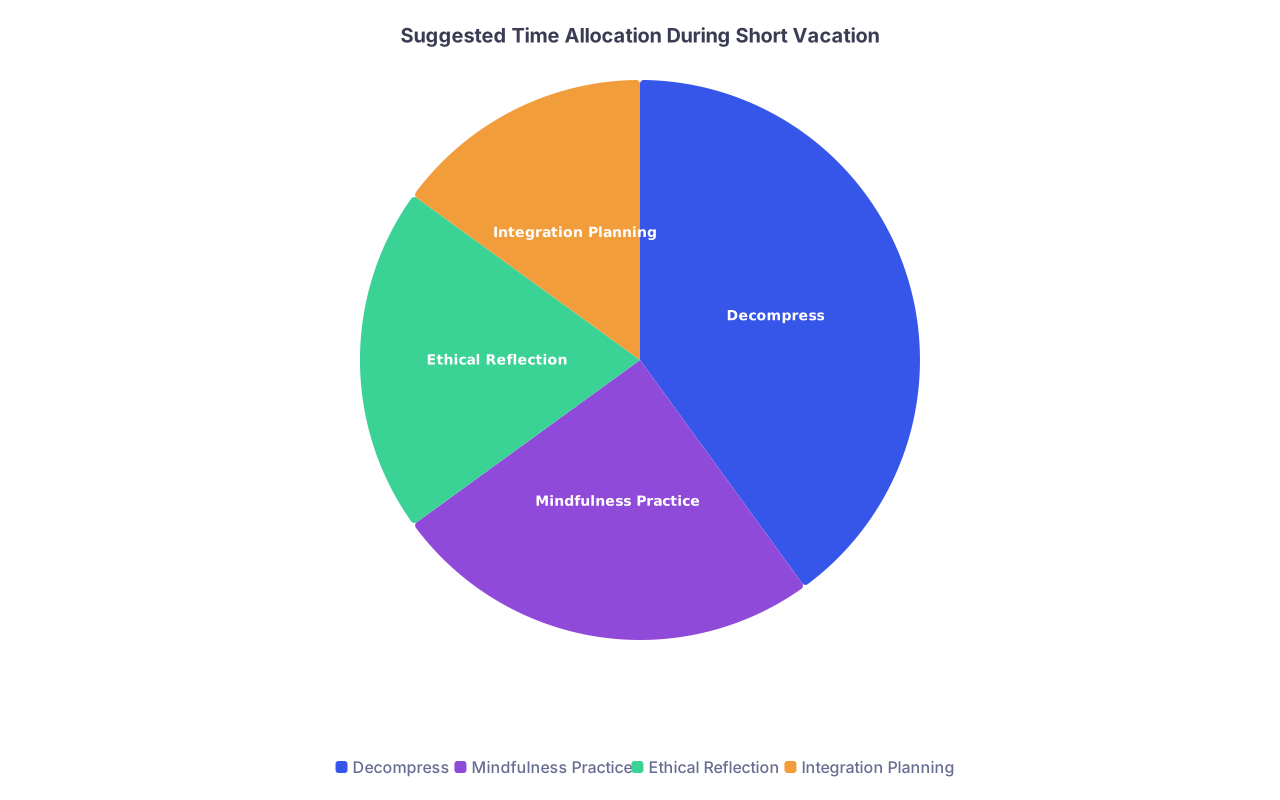
| Category | Value |
|---|---|
| Decompress | 40 |
| Mindfulness Practice | 25 |
| Ethical Reflection | 20 |
| Integration Planning | 15 |
- Day 1–2: Decompress + body reset
- Day 3–4: Basic mindfulness + 1–2 key ethical reflections
- Day 5: Values and ethical baseline
- Day 6–7: Integration and re-entry plan
You’re aiming for direction, not completeness.
Visual Summary of Micro-Habits to Bring Back

| Moment | Habit | Time Cost |
|---|---|---|
| Entering hospital | 3 slow breaths at door | 20–30 sec |
| Before first patient | Read their name and pause | 15 sec |
| Mid-shift | 5 breaths in stairwell or bathroom | 30–40 sec |
| After hard encounter | Label feeling + 1 note in notebook | 1–2 min |
| Post-shift | 1 question: What matched my values today? | 2–3 min |

Putting It All Together
By the time you walk back onto the wards, you’re aiming for three things:
- Your nervous system is down a notch. You’re less likely to snap, shut down, or dissociate when things get messy.
- You’re carrying a clear, personal ethical baseline—what you stand for as a physician, even when the system pushes the other way.
- You’ve chosen a few tiny, realistic mindfulness habits, so your vacation reset actually shows up at the bedside instead of dying in your journal.
You do not need to come back as a new person. You just need to come back 5–10% more awake, more aligned, and a little kinder—to patients, colleagues, and yourself. That compound interest is where burnout either grows—or doesn’t.