
The worst thing you can do after a code is just “power through it.”
That macho ICU culture of shrugging, joking, and moving on without processing the hit you just took? It burns people out. It corrodes judgment. It makes you dangerous over a 28‑hour call.
You need a timed, deliberate recovery sequence from the moment someone calls the code to the moment you sign out. Not vague “remember self‑care” nonsense. Actual minute‑by‑minute and hour‑by‑hour steps that fit inside your workflow and respect the reality of ICU chaos.
That is what this guide is: a post‑code to sign‑out mindfulness protocol designed for ICU residents, grounded in what actually works on the unit floor.
0–5 Minutes After the Code: The Micro‑Reset While Still in the Room
At this point you are still surrounded by noise: alarms, RT wrapping up, nurses documenting, family maybe crying down the hall. You cannot leave. But you can stop the emotional hemorrhage.
Goal for this phase: Re‑anchor your nervous system enough that you do not carry raw adrenaline into the next room.
Step 1: The 30‑Second Grounding Pause (Before You Leave the Bedside)
As soon as the code is officially called (time of death announced, or ROSC and transition to stabilization):
- Step back one physical step from the bed.
- Place one hand on something solid:
- Bed rail
- Counter
- Wall
- Take three slow breaths:
- In through the nose for a count of 4
- Hold for 2
- Out through pursed lips for a count of 6
In your head, label it clearly: “Reset breath one. Reset breath two. Reset breath three.”
This is not spiritual. It is physiologic. You are down‑regulating a sympathetic surge so you do not snap at a nurse, miss a lab, or write a sloppy order.
Step 2: One Clear Sentence of Reality‑Checking
Before you turn away from the bed, silently tell yourself one neutral, factual sentence:
- “A patient just died despite appropriate care.”
- “We had ROSC after prolonged CPR; the prognosis is uncertain.”
Avoid the junk phrases I hear all the time: “I messed that up,” “I killed them,” “I have no idea what I am doing.” Those may be feelings. They are not accurate summaries.
This one sentence is your anchor. Reality first, narrative later.
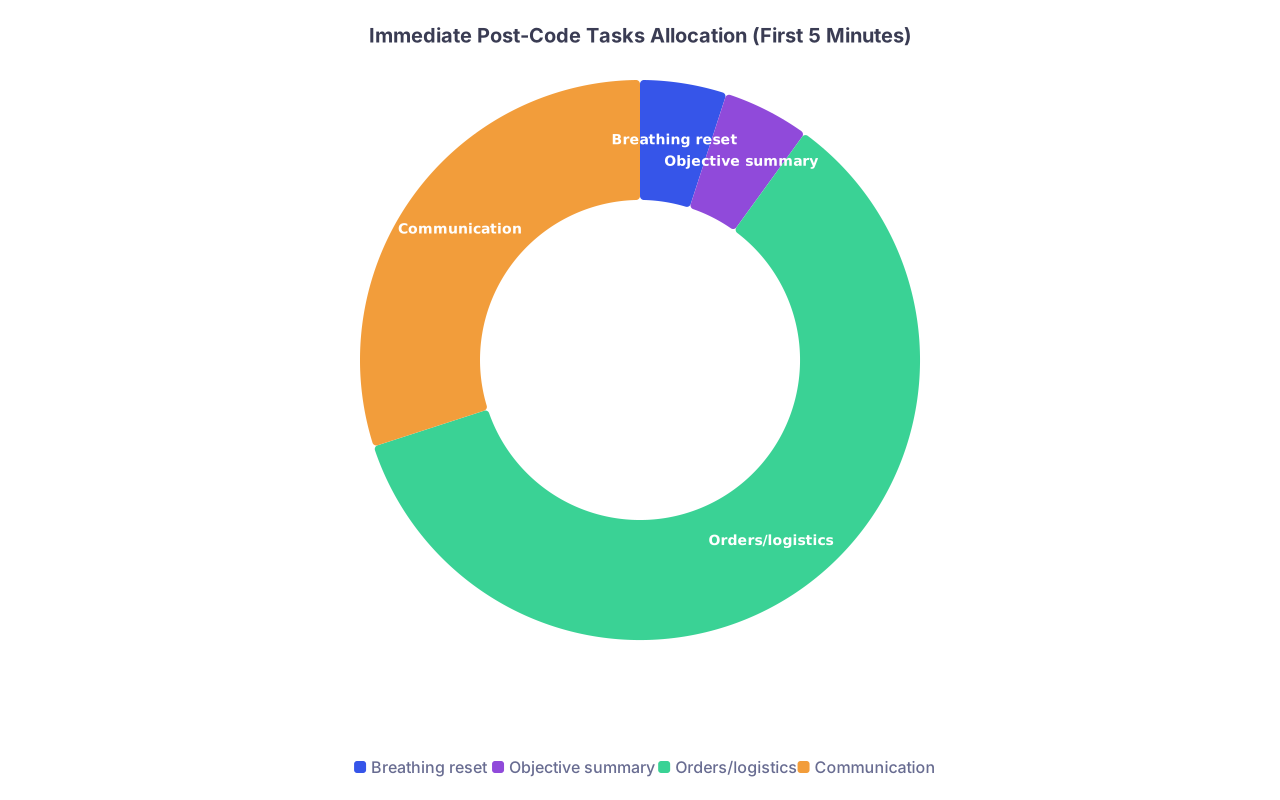
| Category | Value |
|---|---|
| Breathing reset | 5 |
| Objective summary | 5 |
| Orders/logistics | 60 |
| Communication | 30 |
5–20 Minutes After the Code: Structured Debrief and Ethical Check
At this point you should be out of the room, or at least transitioning to the computer or hallway. The code is over. Your brain is not.
Goal for this phase: Do a focused, time‑limited debrief that supports learning, ethics, and emotional containment. Not a 45‑minute therapy session in the hallway.
Minute 5–10: The Two‑Minute Clinical Debrief
Grab whoever was central:
- Bedside nurse
- RT
- Fellow or attending if nearby
Say out loud: “Let’s do a two‑minute debrief.”
Hit four beats, very quickly:
Facts (30–45 seconds)
- Initial rhythm
- Major interventions (intubation, shocks, epi doses, important drugs)
- Outcome
What went well (30 seconds)
Force at least one specific example:- “We got high‑quality compressions immediately.”
- “Airway was in quickly and cleanly.”
What could we improve next time (30–45 seconds)
One or two items. Not a beat‑up session.- “Compressor rotation could be more frequent.”
- “We need a clearer call‑out of time intervals.”
Action item (10 seconds)
- “Next code, I will explicitly assign a timekeeper at the start.”
Then stop. Do not spiral into blame or long storytelling.
Minute 10–15: Ethical Mini‑Check (Especially on “Futile” or Borderline Codes)
This is where a lot of moral injury festers if you skip it.
Find 60–90 seconds alone or with your fellow/attending:
Ask yourself three questions:
- Was the code consistent with the patient’s known wishes and documented goals of care?
- If the answer is genuinely unclear, note: “Clarify code status/goals with family/primary team within 2 hours.”
- Did we do anything that felt like it crossed my personal ethical line?
Example:- Continuing compressions for someone with advanced metastatic disease and repeated prior conversations about comfort only, because “the default is full code in our hospital.”
- If yes, what is one specific step to address that?
- Page the attending and say, “That code did not sit right with me. Can we talk briefly later?”
- Flag the chart for an ethics consult or family meeting tomorrow.
This is not moral perfectionism. It is damage control so your values and your actions do not drift too far apart.

Minute 15–20: Micro‑Mindfulness Check‑In
Before you dive into the next admission, do a quick 3‑point scan:
Silently label:
- Body – “Heart racing 7/10, shoulders tight, jaw clenched.”
- Emotion – “Frustrated and sad.”
- Thought – “I keep replaying the last epi dose.”
Then one line to yourself:
“All of this is a normal response to an abnormal moment. I am allowed to feel this and still keep working.”
Then move. Physically walk to the next task. You are not shoving the feelings away; you are parking them.
20–60 Minutes After the Code: Re‑Stabilize Your Shift
At this point you are back in the ICU workflow: pages, orders, families, notes. This is where residents usually pretend nothing happened and start making sloppy mistakes.
Goal for this phase: Put your cognitive house back in order.
Minute 20–30: The “Next Three Tasks Only” Rule
Your executive function is impaired. Accept that.
For the next 10 minutes, you only think in blocks of three:
- “Next three tasks:
- Complete death note or post‑code note.
- Check vent changes in Bed 5.
- Return page from ED about new admit.”
Write them down if needed. Scratch them off. Then next three.
Why this matters: after a code, your brain wants to replay the event or scatter everywhere. You corral it with small, concrete sequences.
Minute 30–40: Brief Chart Reflection (2–3 Minutes, Tightly Timed)
Set a time limit: maximum 3 minutes reviewing that patient’s chart after the code.
You are looking for:
- Any missed critical information (recent labs, goals of care notes, oncology notes) that might change your understanding of what just happened.
- Any documentation you need to add now while details are fresh.
This is not rumination disguised as “review.” When the 3 minutes are up, you close the chart.
| Time From Code | Primary Focus | Max Duration |
|---|---|---|
| 0–5 minutes | Physiologic reset | 3 minutes |
| 5–20 minutes | Debrief + ethics | 15 minutes |
| 20–40 minutes | Task triage + chart | 20 minutes |
| 40–60 minutes | Family + brief break | 20 minutes |
Minute 40–60: Family Communication and a Real Break
If you have not already:
Family update
- Be direct. “We did everything indicated. We were not able to get his heart beating again.”
- Allow silence. It will feel long. Let it.
- Answer questions briefly; do not over‑explain to soothe your own discomfort.
Mandatory 3‑Minute Solitary Break
As soon as clinically feasible (no crashing patients, no emergent pages):- Go to a quietish space (stairwell, empty consult room, supply closet if you have to).
- Set a timer for 3 minutes. Non‑negotiable.
- For those 3 minutes, do:
- 30 seconds of slow breathing (4‑2‑6 again).
- 90 seconds of open awareness:
- Notice sounds, bodily sensations, any images popping up.
- No analyzing, just noticing.
- Last 60 seconds: repeat to yourself, slowly:
“I acted with the information and skills I had. I am still responsible for learning. I am not required to be perfect.”
Residents who actually do this instead of “I don’t have time” consistently crash less by 3 a.m. I have watched it for years.
The Rest of the Shift: 1–8 Hours Post‑Code
Now you are back on the train, but the code is riding along with you.
Goal for this phase: Prevent delayed emotional whiplash and moral injury while still functioning as the ICU doctor.
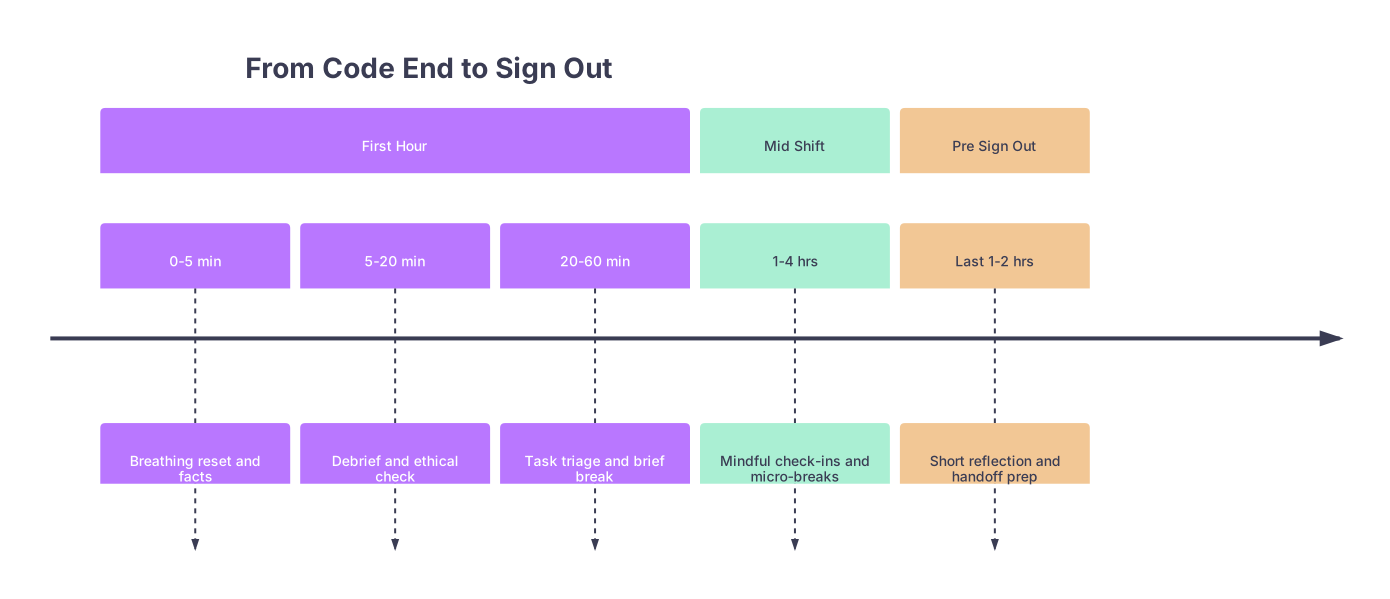
| Period | Event |
|---|---|
| First Hour - 0-5 min | Breathing reset and facts |
| First Hour - 5-20 min | Debrief and ethical check |
| First Hour - 20-60 min | Task triage and brief break |
| Mid Shift - 1-4 hrs | Mindful check-ins and micro-breaks |
| Pre Sign Out - Last 1-2 hrs | Short reflection and handoff prep |
Hour 1–3 Post‑Code: Scheduled Micro‑Check‑Ins
Set one specific anchor: every time you log into the EMR or every time you sanitize your hands at a new room, do a 5‑second internal check:
Ask yourself:
- “Where is my attention right now?”
- Past (rehashing code)
- Present (current patient)
- Future (imagined disaster)
If it is stuck in past/future, intentionally bring it back:
- “Right now, I am in Bed 7’s room. My job is to reassess their pressor needs.”
One clear sentence naming this patient and this task. Then act.
Hour 2–4 Post‑Code: Watch for the Three Bad Coping Moves
Residents default to three predictable patterns after a hard code. You need to catch them early.
Aggression/irritability
- Snapping at nurses.
- Over‑ordering tests to “cover everything” after feeling helpless.
Withdrawal
- Hiding at the computer, avoiding rooms.
- Letting the fellow or attending do all the talking to families.
Overcompensation heroics
- Staying an extra hour in one patient’s room, micromanaging everything as if that will erase what just happened.
When you catch yourself in one of these, label it plainly:
- “I am over‑ordering CTs because I feel guilty about the code.”
- “I am avoiding that family because I do not want to face another upset person.”
Then pick one small corrective action:
- Ask the nurse, “Are these orders actually helpful or am I overdoing it?”
- Walk into the room you are avoiding and start with: “How are you doing right now?”
You are aligning behavior with values, not feelings.
Last 1–2 Hours Before Sign‑Out: Consolidate and Contain
At this point you should be transitioning mentally from “doing” to “handing off.”
Goal for this phase: Package the event in a way that is honest, contained, and teachable — for you and the night team.
90–60 Minutes Before Sign‑Out: Five‑Sentence Reflection
Find a 5‑minute window. Open a blank note on your phone (HIPAA‑safe, no identifiers) or a small notebook you keep in your bag.
Write exactly five sentences:
- One sentence on what happened.
- “Middle‑aged patient with septic shock arrested in PEA despite guideline‑based management.”
- One sentence on what went well.
- One sentence on what you learned or want to learn.
- One sentence on what emotionally lingers.
- “I keep hearing the spouse’s question about whether we did enough.”
- One sentence on what you will do next time.
- “Next time I will clarify goals of care with family earlier in the course.”
Stop there. Close it.
This is not a diary. It is a mental index card you can revisit later (in supervision, therapy, or just on a quieter day).
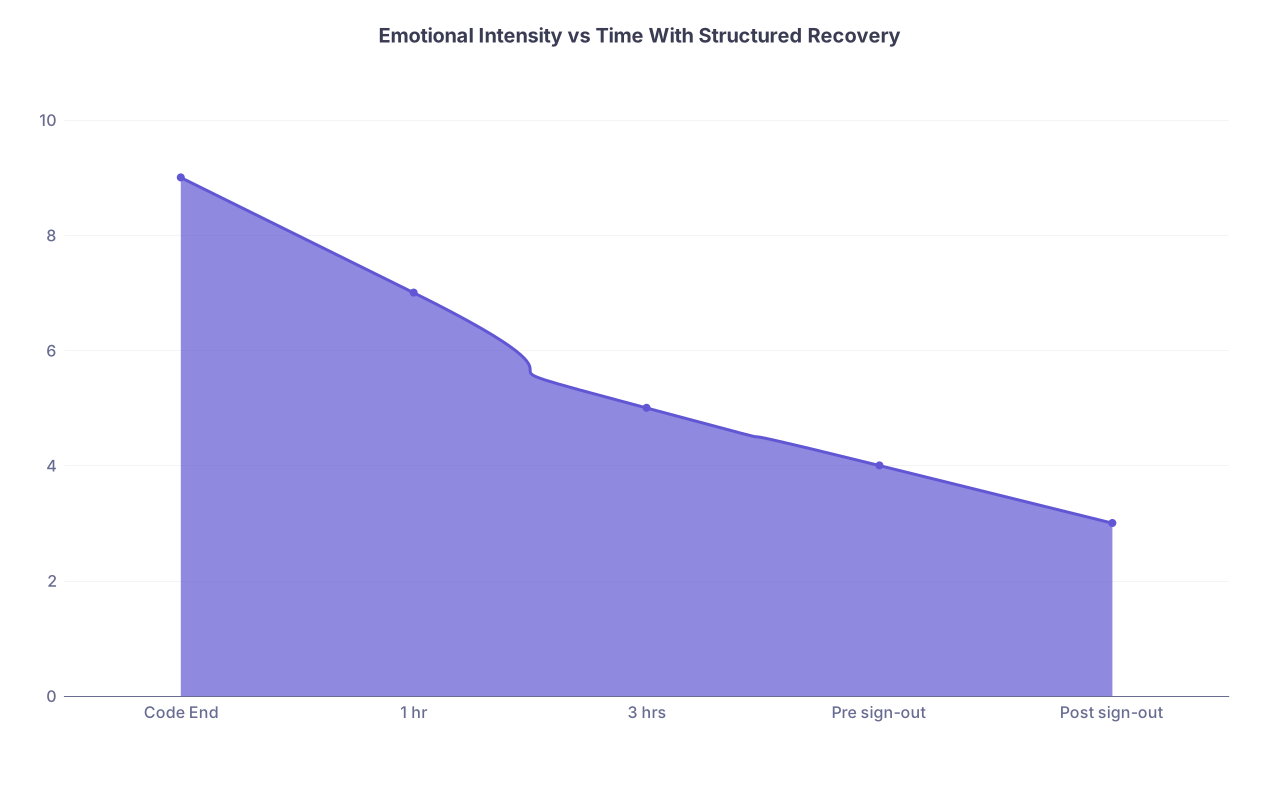
| Category | Value |
|---|---|
| Code End | 9 |
| 1 hr | 7 |
| 3 hrs | 5 |
| Pre sign-out | 4 |
| Post sign-out | 3 |
45–30 Minutes Before Sign‑Out: Craft the Handoff Narrative
For the patient who died or coded, your sign‑out should be clear, concise, and non‑dramatic. You are modeling professional processing for interns and students.
Include:
- Clinical summary: “He was admitted with septic shock from pneumonia, progressed despite maximal support, arrested in PEA, no ROSC after 25 minutes.”
- Family status: “Family was at bedside during/after code, they understand the situation, they have gone home for the night / are still in the family room and may need another touch base.”
- Loose ends:
- “Primary team and oncology not yet updated, please ensure they are notified in the morning.”
- “Consider palliative consult for the neighboring patient whose spouse watched part of the code and is now very anxious.”
You are not downloading your emotional burden onto night float, but you are naming where emotional work will be needed.
30–0 Minutes Before Sign‑Out: Boundary‑Setting Ritual
You are almost done. This is where bad nights either haunt you all the way home or stay mostly at the hospital.
Create a tiny, consistent ritual you do every single post‑code shift right before sign‑out:
Examples I have seen work:
- Washing hands slowly for 20 seconds while mentally saying:
- “Shift is ending. Responsibility is transferring. I did what I could.”
- Touching the unit doorframe when you walk out and thinking:
- “What happened here stays mostly here. I am allowed to go home.”
- A final 3‑breath reset in the call room before walking to sign‑out.
It will feel slightly corny the first few times. Then it becomes powerful. Your brain learns: this action = I can start to let go.
0–2 Hours After Sign‑Out: Off‑Duty, Not Off‑Human
You are signed out. You are “off.” Clinically, yes. Ethically and emotionally, not instantly.
Goal for this phase: Allow some processing without letting it swallow your entire evening.
Immediately After Leaving the Hospital
On your commute:
- No instant autopilot escape. Give yourself the first 5–10 minutes without podcasts or music.
- Notice:
- What memories are replaying?
- What phrases from the team or family are sticking?
Pick one of these and say out loud (quietly is fine):
- “That was hard, and I am still learning how to do this work.”
Then, and only then, turn on music, podcast, or silence — your choice.
Within 2 Hours of Getting Home
One brief grounding practice:
- 5 minutes of anything that roots you in your non‑doctor identity:
- Shower with deliberate attention to sensation.
- Cooking something simple and actually smelling the food.
- Petting your dog or cat and noticing their warmth and breathing.
If you live with someone and they ask “How was your shift?” have a default script ready:
- “Rough case, but I have processed what I can for tonight. I would rather focus on being home now.”
- Or: “Rough case, I need 5 minutes to talk it out and then I want to change the subject.”
You control the spigot. Not them, not the case.
When Codes Pile Up: Weekly Repair, Not Just Nightly Survival
If you have had multiple codes in a week — common in some ICUs — the daily rituals are not enough.
At this point you should:
- Schedule one protected 20–30 minute block on your next day off:
- Pull up those five‑sentence reflections if you wrote them.
- Notice patterns: same ethical tension? Same technical worry? Same emotional theme?
- Decide on one concrete follow‑up:
- Ask your attending for a 10‑minute teaching session on a specific ACLS nuance.
- Email ethics or palliative care to ask about better aligning code status discussions earlier in admissions.
- Set up a session with counseling/mental health if you are finding the images intrusive or sleep is breaking.
This is where “personal development and medical ethics” becomes more than a slogan. You are using codes to sharpen your practice, not just survive them.
Open your call schedule right now and look at your next ICU shift.
Block off three specific times in your mind:
- The first 5 minutes after any code (for the breath and factual sentence).
- The first hour after (for debrief and a 3‑minute break).
- The last hour before sign‑out (for the five‑sentence reflection and handoff prep).
Decide today how you will use those windows. Then, when the next code inevitably comes, you are not improvising your recovery plan while exhausted — you are executing it.