
The worst time to start learning mindfulness is the week you begin intern year.
You will be sleep‑deprived, flooded with pages, and living on cold coffee and discharge summaries. If you wait until then, mindfulness will feel like another task on your to‑do list. Not a lifeline.
You have four weeks. That is enough time to build a real habit—something sturdy enough to survive night float, bad attendings, and your first patient death. But only if you structure it.
Below is a 4‑week, day‑by‑day onboarding plan. Think of it as your “pre‑intern year boot camp” for your nervous system.
Overview: Your 4‑Week Mindfulness Onboarding Roadmap
At this point, you should understand the shape of the month before you start.
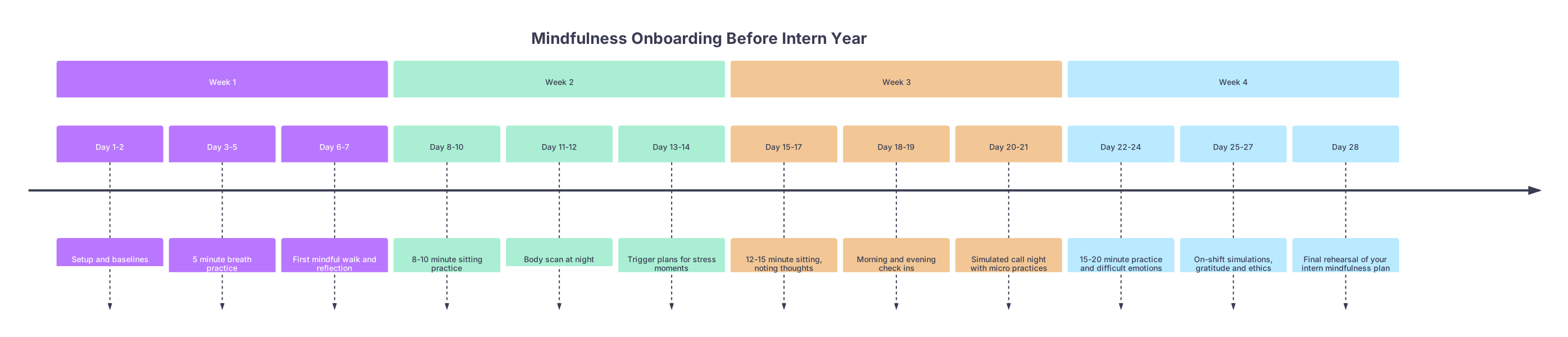
| Period | Event |
|---|---|
| Week 1 - Day 1-2 | Setup and baselines |
| Week 1 - Day 3-5 | 5 minute breath practice |
| Week 1 - Day 6-7 | First mindful walk and reflection |
| Week 2 - Day 8-10 | 8-10 minute sitting practice |
| Week 2 - Day 11-12 | Body scan at night |
| Week 2 - Day 13-14 | Trigger plans for stress moments |
| Week 3 - Day 15-17 | 12-15 minute sitting, noting thoughts |
| Week 3 - Day 18-19 | Morning and evening check ins |
| Week 3 - Day 20-21 | Simulated call night with micro practices |
| Week 4 - Day 22-24 | 15-20 minute practice and difficult emotions |
| Week 4 - Day 25-27 | On-shift simulations, gratitude and ethics |
| Week 4 - Day 28 | Final rehearsal of your intern mindfulness plan |
The structure is simple:
- Week 1 – Install the basics
- Week 2 – Extend and stabilize
- Week 3 – Stress‑test in “intern‑like” conditions
- Week 4 – Integrate into your actual workday rhythm
You are not “doing mindfulness.” You are training three very specific skills you will use on the wards:
- Attention control – Not getting yanked around by every alarm, thought, and emotion.
- Body awareness – Noticing tension, fatigue, and overload before you crash or snap at a nurse.
- Non‑reactive awareness – Seeing fear, shame, or anger without instantly acting from them. This is the backbone of ethical behavior under pressure.
Week 1: Install the Basics (5 Minutes at a Time)
Goal this week: go from zero to a consistent 5‑minute daily practice and link it to one fixed anchor in your day.
At this point, you are building identity, not endurance. “I am a person who sits for 5 minutes” is the win.
Day 1–2: Set Up Your System
Day 1 – Baseline and logistics
Pick your anchor time:
- Option A: Immediately after waking, before you touch your phone.
- Option B: Right after lunch.
- Option C: Right after brushing teeth at night.
Pick one and commit for the full 4 weeks. No random switching.
Choose your spot:
- A specific chair, corner of your room, or yoga mat.
- Minimal distractions. Phone in another room or on airplane mode.
- This matters more than you think. Same place, same posture = less friction.
Download one serious app or set up audio:
- Headspace, Waking Up, Insight Timer, or free MBSR tracks.
- Turn off every unnecessary notification except the daily reminder.
Baseline check‑in (3 minutes):
- Ask yourself: “On a 0–10 scale, how reactive am I lately?”
- Note your current sleep pattern, fatigue, and stress level. Just write one or two bullet points in a notes app.
Day 2 – First guided 5 minutes
At your anchor time:
- Sit in your spot, set a 5‑minute timer or use a short guided meditation.
- Simple breath practice:
- Feel the breath at your nostrils or chest.
- When you notice your mind wandering, label it silently “thinking” or “planning,” then return to breath.
- After: jot one line—how it felt, short and honest (“mind all over the place,” “sleepy,” “surprisingly OK”).
That is it. Do not “make up” more time later if you skip. Just show up tomorrow.
Day 3–5: Lock the Habit (5 Minutes Daily)
From Day 3–5 you repeat the same structure:
- Same time.
- Same spot.
- Same length (5 minutes).
At this point you should:
- Notice how fast your mind jumps to your internship anxieties.
- Start to catch specific recurring themes (“I will fail,” “Everyone else is more prepared”). Do nothing with them right now. Just note “worry” and come back to breath.
Add one small refinement each day:
- Day 3: Add a gentle posture cue – sit upright, shoulders relaxed. Notice tension.
- Day 4: For one minute, shift focus from breath to sounds in the room. Just hearing without labeling.
- Day 5: At the end, ask: “What is one thing my body is telling me right now?” Tight jaw? Racing heart? Write it down.
Day 6–7: First Mindful Walk + Reflection
Intern year will not give you a meditation cushion. It will give you corridors and stairwells.
Day 6 – 5‑minute mindful walk
- Keep your 5‑minute sit. Do not drop it.
- Later in the day, do a 5‑minute walk:
- No phone.
- Walk at normal pace.
- Attention on the sensations in your feet and legs. Every time your mind goes to “to‑do list,” say “thinking” and return to walking.
Day 7 – Week 1 review (10–15 minutes total)
- Do your sit. Then take 5–10 minutes to review:
- How many days did you practice?
- When were you most resistant?
- What excuse came up most often? (“Too tired,” “Too busy,” “This is not helping.”)
Write this down. You are mapping your personal resistance pattern before work gets intense.
Week 2: Extend and Stabilize (8–10 Minutes, Two Modalities)
Now you raise the stakes slightly. At this point, you should already be sitting almost on autopilot.
Goal this week: 8–10 minutes daily + add body awareness at night.
Day 8–10: Longer Sits, Same Simplicity
Increase your daily sit to 8–10 minutes. Do not jump to 20. That is rookie bravado and it fails.
Practice:
- First 5 minutes: breath focus as before.
- Remaining minutes: open awareness:
- Notice thoughts, sounds, sensations.
- Label gently (“sound,” “planning,” “worry”) and come back to breath or body.
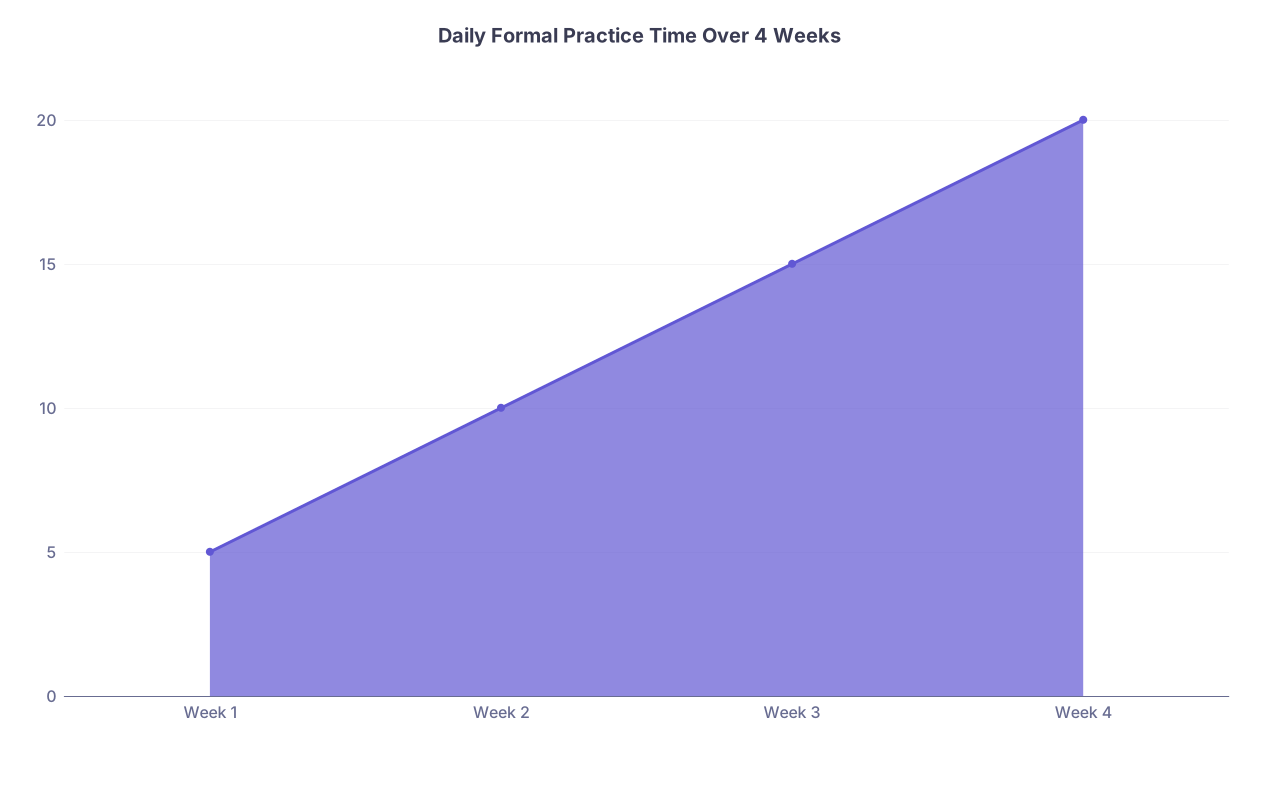
| Category | Value |
|---|---|
| Week 1 | 5 |
| Week 2 | 10 |
| Week 3 | 15 |
| Week 4 | 20 |
That graph is what you are aiming roughly toward: gradual, boring progression. Not heroics.
Day 11–12: Add Nightly Body Scan (5–7 Minutes)
Now layer in a second, very short practice: lying down body scan before sleep.
- After you get in bed:
- Start at the toes, move attention slowly up the body.
- At each region: notice sensations (tingling, pressure, nothing).
- No need to relax anything. Just notice. If you fall asleep mid‑scan, fine.
Structure these two days:
- Morning or midday: 8–10 minute sit.
- Night: 5–7 minute body scan (guided track is fine).
You are teaching your system: “We bookend the day with awareness.”
Day 13–14: Create “Trigger Plans” for Intern‑Level Stress
This is where you stop treating mindfulness as separate from medicine.
Pick 3 intern‑specific triggers that you know are coming:
- Being paged three times while already in a room.
- A nurse asking you to clarify an order when you are not sure what to do.
- Getting called about a deteriorating patient at 3 a.m.
For each trigger, write a micro‑practice script (literally in your notes app):
- “When I hear three pages in a row, I will:
- Exhale slowly once.
- Feel my feet on the floor.
- Say silently: ‘One thing at a time.’
Then I will call back.”
You are pre‑wiring your response instead of hoping you will “remember to be mindful” when you are drowning. You will not. Scripts save you.
Week 3: Stress‑Test the Habit (Intern‑Like Conditions)
By now, daily practice should feel expected. Not special.
Week 3 goal: 12–15 minutes daily, plus micro‑practices during simulated stress.
Day 15–17: Introduce “Noting” for Thoughts and Emotions
Increase your daily formal sit to 12–15 minutes:
- First 5 minutes: breath or body anchor.
- Next 5–10 minutes: noting practice:
- When a thought or emotion arises, label it with a one‑word tag:
- “Worry”
- “Planning”
- “Judging”
- “Fear”
- Then return to anchor.
- When a thought or emotion arises, label it with a one‑word tag:
This matters ethically. The intern who can silently note “anger” without sending the snarky message in the chart is the intern people trust.
Concrete drill for one of these days:
- For 1 minute, try to think of nothing. Watch how impossible it is.
- Then shift to noticing thoughts as they appear, labeling them, and letting them go.
- This gives you direct evidence that you are not your thoughts, which is handy when your mind is screaming “You are incompetent.”
Day 18–19: Morning and Evening Check‑Ins
At this point you should be able to drop into awareness quickly.
Add two 2‑minute check‑ins to your day:
Morning (after waking, before phone):
- Sit or stand.
- Ask, “What is the tone of my mind right now?” Stressed, calm, dull, wired?
- One slow breath. Done.
Evening (before bed, before body scan):
- Recall one stressful moment from the day.
- Replay just the body sensations (tight chest, hot face), not the story.
- Note: “Ah, that is what ‘shame’ or ‘fear’ feels like in my body.”
This is emotional pattern recognition. It will keep you from unloading your unprocessed day onto a partner or co‑resident.
Day 20–21: Simulated Call Night with Micro‑Practices
You cannot fully simulate call, but you can do a cheap version at home.
Pick one evening (Day 20 or 21):
- Set a 2‑hour window (e.g., 7–9 p.m.).
- During that window:
- Set a timer to beep randomly every 7–10 minutes (use an interval app).
- At each beep:
- Pause what you are doing.
- Take one conscious breath.
- Name your current state in one word (“tired,” “annoyed,” “fine”).
This is exactly what you will need when a pager cuts into your charting 20 times per hour.
End that night with:
- 10–12 minute sit.
- 5‑minute body scan if you have anything left in the tank.
Week 4: Integrate into Real‑World Intern Rhythms
This is the “dress rehearsal” week.
Goal: settle into 15–20 minute formal practice most days and tightly couple mindfulness to the realities of hospital work.
Day 22–24: Work Explicitly with Difficult Emotions
Increase to 15–20 minutes for at least 2 of these 3 days.
During the middle 5–10 minutes of your sit, deliberately bring to mind:
- A recent situation where you felt:
- Inadequate
- Embarrassed
- Irritated at a superior or a nurse
Do not obsess over the story. Instead:
- Notice where this shows up in the body (jaw, gut, chest).
- Label the emotion (“shame,” “anger”).
- Say, silently: “This is what shame/anger feels like.”
- Allow it to be there for a few breaths without trying to fix or argue with it.
You are building tolerance for moral distress. You will see things this year that bother you ethically. Your ability to stay present with that discomfort, instead of shutting down or rationalizing, is what keeps your moral compass intact.

Day 25–27: Simulate On‑Shift Use – Ethical and Practical
Now you blend skills into realistic scenarios.
Day 25 – The “pre‑shift ritual”
Design a 3‑minute ritual you will use before every real shift:
- Step 1 (60 seconds): Feel your feet on the floor, one slow breath.
- Step 2 (60–90 seconds): Set an intention in one line:
- “Today I will prioritize safety over speed.”
- “Today I will treat every patient like they are someone’s parent.”
- Step 3 (30 seconds): Visualize one stressor (angry family, critical lab) and see yourself pausing for a breath before responding.
Practice this ritual today as if you were about to start a 7 a.m. ward shift.
Day 26 – “In‑shift” micro‑practices
Create a mock ward block at home for 60–90 minutes:
- Make a list of 5 “tasks” (they can be chores: laundry, emails, studying, ordering groceries, writing a note).
- Move quickly from task to task. Set 10–15 minute timers.
- Every time you switch tasks:
- One conscious breath.
- Name your internal state.
- Briefly check posture and drop your shoulders.
Feels trivial. It is not. This is how you stop the snowball effect where by noon you are hunched, clenching, and not listening.
Day 27 – Ethics and debrief practice
You will face ethically murky cases: aggressive family wanting “everything” for a dying patient, attending dismissing a patient’s pain, pressure to cut corners.
Sit for 15 minutes, then:
- Spend 5–10 minutes journaling:
- “In what situations am I most likely to abandon my values because I am tired, scared, or rushed?”
- “What will my 1‑minute pause look like in those moments?”
Example 1‑minute ethical pause on the wards:
- Step out of the room or to the computer.
- Feel your feet, take 2 slow breaths.
- Ask: “If I were fully awake and not exhausted, what would I think is right here?”
- Then decide or seek help.
This tiny pause is often the difference between following the herd and acting like the physician you meant to become.
| Practice Type | Duration | When Used |
|---|---|---|
| Sitting meditation | 15–20 min | Daily at anchor time |
| Body scan | 5–10 min | Most nights before sleep |
| Pre‑shift ritual | 3 min | Before every shift |
| Task‑switch breath | 5–10 sec | When changing tasks or after pages |
| Ethical pause | 1 min | Before high‑stakes or value‑conflict decisions |
Day 28: Final Rehearsal – Your Intern Mindfulness Plan
Last day before you launch this into real hospital chaos.
At this point, you should:
- Have a realistic sense of your attention span.
- Know your top 3 emotional triggers.
- Have at least 2–3 micro‑practices that feel natural, not forced.
Morning (20–25 minutes total):
15‑minute sit (breath + open awareness + some noting).
Immediately after, write your Intern Mindfulness Playbook (just bullet points):
Anchor practice:
- Time: “After waking / after lunch / after work.”
- Length: “10–15 minutes on normal days, 5 minutes on call days.”
On‑shift micro‑practices:
- One breath before answering pages.
- 3‑minute pre‑shift ritual in the stairwell or bathroom.
- One 60‑second body check at midday (jaw, shoulders, breath).
Red‑flag signs you are losing it:
- Snapping at nurses.
- Racing thoughts and sloppy charting.
- Avoiding patient rooms because you feel guilty or ashamed.
Emergency protocol when red flags appear:
- Step out.
- 3 slow breaths.
- Label what is happening (“overwhelmed,” “ashamed”).
- Decide the next one task. Not ten.
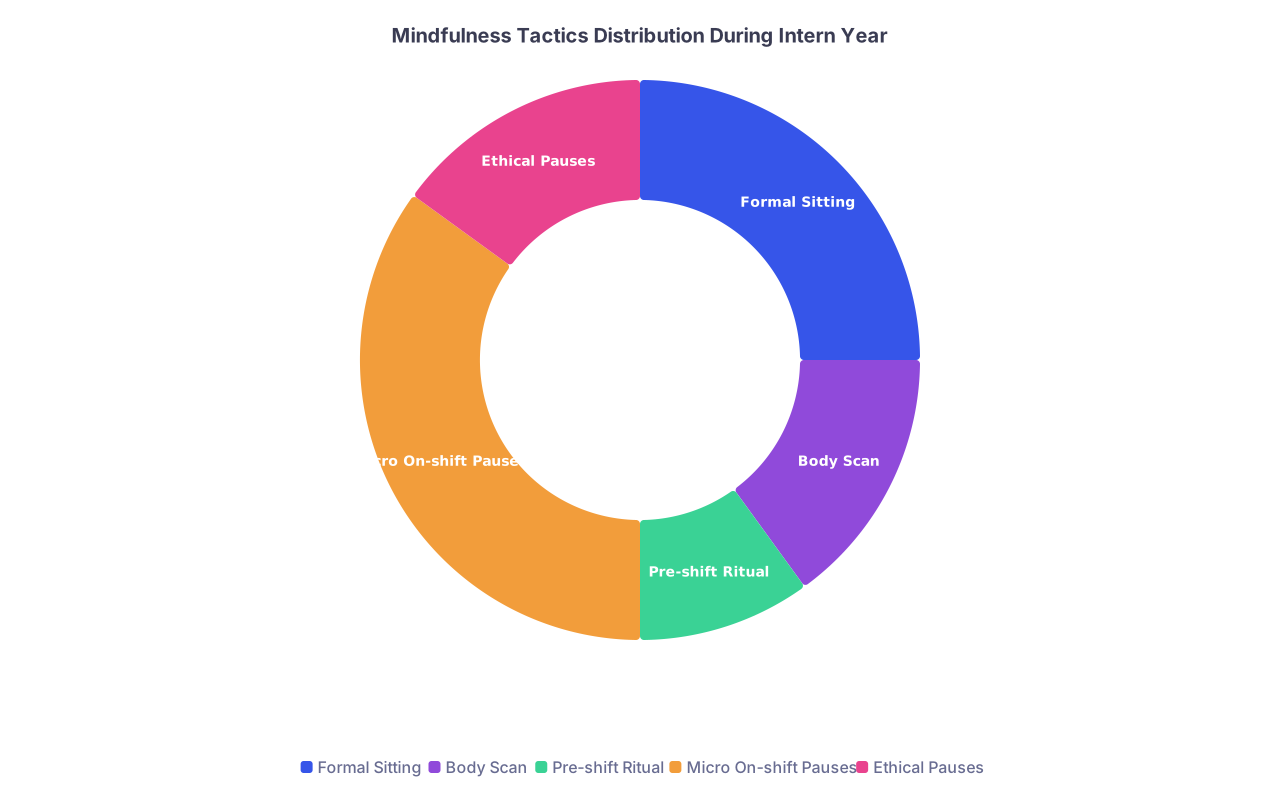
| Category | Value |
|---|---|
| Formal Sitting | 25 |
| Body Scan | 15 |
| Pre-shift Ritual | 10 |
| Micro On-shift Pauses | 35 |
| Ethical Pauses | 15 |
That doughnut is what mature practice looks like in residency: a big slice of micro‑pauses, anchored by a modest core of formal practice.
Evening:
- Do a final 10–15 minute body scan or gentle sit.
- Read your Playbook once. Save it somewhere you will actually see on day 1 (phone lock screen note, printed in your white coat).

Final Thoughts: What Should Stick After These 4 Weeks
By the end of this 4‑week onboarding, you are aiming for three concrete outcomes:
- A non‑negotiable daily anchor practice of 10–20 minutes that survives ordinary chaos.
- Automatic micro‑practices tied to real intern triggers—pages, task switching, ethical dilemmas—so you do not have to “remember to be mindful.”
- A written Intern Mindfulness Playbook that makes your values and coping strategies explicit, before the system starts pulling you away from them.
You will still get overwhelmed. You will still mess up. But you will not be improvising your inner life on top of 80‑hour weeks. You will have a practiced rhythm, already loaded, before you write your first admission note.