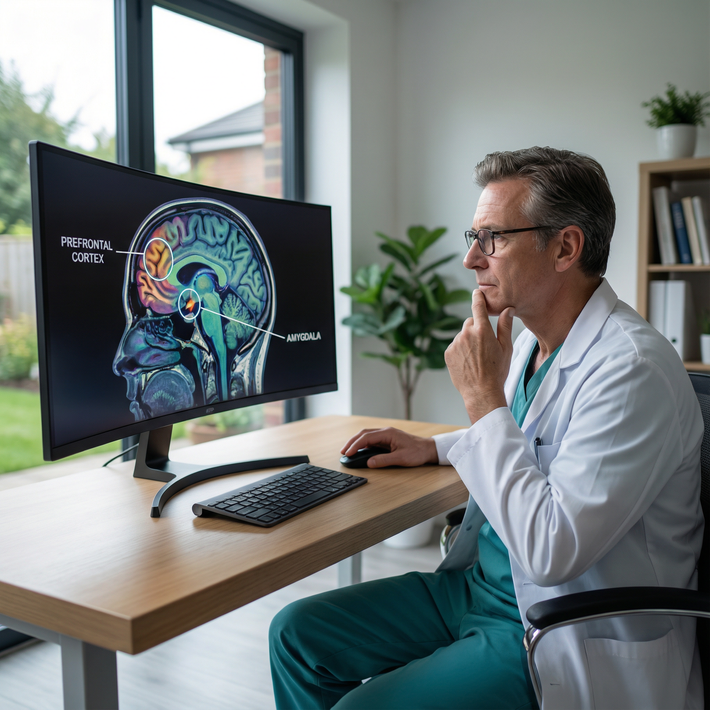
Most residents are doing pre‑rounds in a mild state of panic—and it shows up in their thinking, their notes, and their ethics.
Let me be specific: on a 24‑patient general medicine service with cross‑cover issues from overnight, most interns are cognitively overloaded before they hit room three. They are not “multitasking.” They are partially task‑switching, partially catastrophizing, and partially dissociating.
You do not fix that with a 30‑minute body scan. You fix it with 20–90 second “micro‑mindfulness” inserts welded directly into the architecture of pre‑rounding.
That is what I am going to walk you through: tiny, surgical mindfulness techniques you can actually use on a large, high‑acuity service without getting destroyed by time pressure or looking like you are doing yoga in the hallway.
Why Pre‑Rounding Is a Perfect Storm (And Why You Need Micro, Not Macro)
Pre‑rounding on big services has a very specific cognitive profile:
- You are sleep‑deprived.
- You have incomplete data (overnight events not fully clarified).
- You are managing a mental list of 20–30 patients.
- You are trying to hit a non‑negotiable time cutoff (team rounds).
- You are already anticipating being judged—by attendings, seniors, nurses, and families.
Result: your attentional bandwidth narrows. You default to:
- Anchoring on yesterday’s plan.
- Missing subtle but ethically important things (capacity changes, distress, DNR confusion).
- Treating patients as “rooms” and “problems,” not persons, because your brain is in pure throughput mode.
This is not about being “a bad person.” It is about running the human brain at the edge of its design limits.
Micro‑mindfulness is built for this environment:
- 20–90 second interventions.
- Embedded in actions you already do (walking, logging in, foaming in).
- Aimed at stabilizing cognitive control and restoring just enough presence to maintain clinical quality and ethical clarity.
You are not becoming a monk. You are trying to think clearly enough not to hurt people or yourself.
Core Micro‑Mindfulness Principles for Fast Pre‑Rounding
Before we get tactical, lock in a few design rules. Because if you violate these, you will stop using the techniques by day three.
Zero net time increase.
If a practice adds time, it will die. Micro‑mindfulness must piggy‑back on things you already do: walking, elevator rides, hand hygiene, computer log‑ins.Single‑task “micro‑sprints,” not general calm.
You are not aiming for bliss. You are aiming for 15–60 seconds of focused intent that reset your mental state: attention, emotion, or ethical orientation.Scripted, not improvisational.
At 5:10 a.m. your brain does not want “choose from 15 options.” You want: “On elevator = do X. Before door handle = do Y.” We are going to hard‑code these.Ethical anchoring, not just stress relief.
Mindfulness in medicine is not just about feeling better. It is about seeing people clearly enough to respect autonomy, recognize suffering, and avoid lazy decisions. Rapid ethical orientation has to sit inside these micro‑moments.
The Pre‑Rounding Timeline: Where Micro‑Mindfulness Actually Fits
Let me map this onto a real morning.
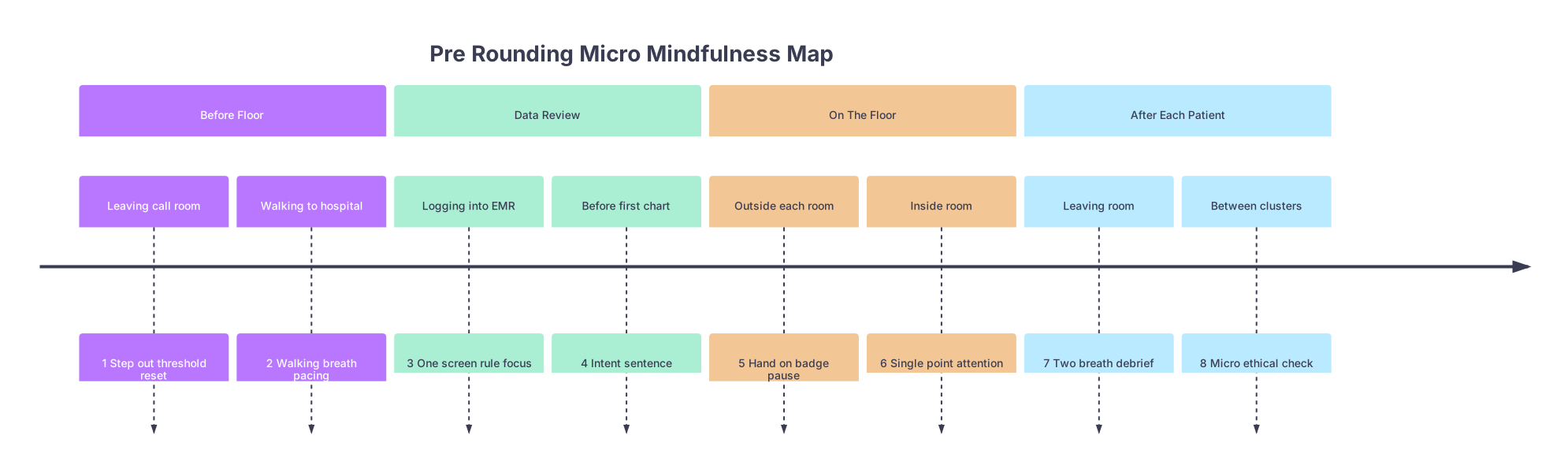
| Period | Event |
|---|---|
| Before Floor - Leaving call room | 1 Step out threshold reset |
| Before Floor - Walking to hospital | 2 Walking breath pacing |
| Data Review - Logging into EMR | 3 One screen rule focus |
| Data Review - Before first chart | 4 Intent sentence |
| On The Floor - Outside each room | 5 Hand on badge pause |
| On The Floor - Inside room | 6 Single point attention |
| After Each Patient - Leaving room | 7 Two breath debrief |
| After Each Patient - Between clusters | 8 Micro ethical check |
We will attach specific techniques to each of these anchor points.
Phase 1: Leaving the Call Room – The 30‑Second Reset
This is where you decide if your brain will run the show, or your anxiety will. It takes 30–45 seconds, total.
Technique 1: Threshold Reset (20–30 seconds)
At the literal physical threshold of your call room door.
- Hand on doorknob. Do not move yet.
- Inhale for a slow count of 4.
- Hold for a count of 2.
- Exhale for a count of 6–8.
- Repeat twice.
While you do this, use a single sentence:
- “I am transitioning into doctor mode with a clear, steady mind.”
Clinical effect: mild vagal activation, slight reduction in sympathetic surge, and—more importantly—a deliberate mental switch from “person who is exhausted and annoyed” to “physician responsible for 20 humans.”
Ethical overlay: you are acknowledging role responsibility. You do not have to feel like being a doctor. You have to act like one for the next few hours.
Phase 2: Walking to the Floor – Breath‑Paced Task Priming
The walk is usually a garbage zone mentally: future‑tripping about attendings, replaying yesterday’s mistakes, fantasizing about quitting. You can convert it into a very efficient micro‑practice.
Technique 2: 10‑Step Breath Pacing (60–90 seconds embedded in walking)
Pick any hallway segment or stairwell. You will not do this the whole way. You will do one focused “set.”
- Inhale over 4 steps.
- Exhale over 6 steps.
- Repeat for 10–12 cycles.
While doing this, keep one phrase in mind:
- “One step, one breath, one patient at a time.”
This sounds cheesy. It is also neurobiologically sound: you are binding attention to interoception (breath) and proprioception (steps). That stabilizes your default mode network and reduces ruminative looping.
You are not losing time. You were going to walk anyway. You are just choosing what your brain does while you walk.
Phase 3: Pre‑Rounding Data Review – Micro‑Focus in the EMR Chaos
Most cognitive damage happens here. You open the EMR, see 20 flags, and your brain becomes a pinball machine. This is where I see interns burning 25 minutes re‑checking irrelevant labs because they cannot prioritize.

Technique 3: The “One Screen Rule” (applied all morning)
Before you touch the keyboard:
One breath + one sentence:
- Inhale for 4, exhale for 6.
- Then say silently: “One patient, one screen, one question at a time.”
Then enforce this strict rule:
You are allowed to consciously hold exactly one clinical question per patient while reviewing data.
For example, not: “What happened overnight + why creatinine up + are they in fluid overload + did they get blood + what did overnight note say?”
Pick one primary question:
- “Did this patient get worse in the last 24 hours?” or
- “Is my current working diagnosis still plausible?” or
- “Is there any new information that changes management?”
You structure your EMR review around that.
This is micro‑mindfulness because:
- You are mindfully selecting a cognitive target.
- You are guarding attention from being shredded by random alerts.
- You are aware of your own tendency to chase noise.
Technique 4: Three‑Number Snap Check (10–20 seconds per patient)
For high‑volume services, I have residents pull three quick anchors before they read narratives:
- Latest vitals summary.
- Overnight intake/output or net fluid.
- Most critical lab trend (for that patient: creatinine, WBC, Hgb, troponin—pre‑decide).
Then, one question in your mind:
- “Does anything in these three numbers make this patient unsafe right now?”
If yes, you mark them mentally as a priority room. That is it. You do not deep dive yet. You are creating a triage‑oriented, mindful view.
| Patient Type | Lab Anchor | Key Vital | Extra Anchor |
|---|---|---|---|
| CHF Exacerbation | Creatinine | O2 sat | Net fluid |
| Neutropenic Sepsis | WBC | MAP | Lactate |
| GI Bleed | Hgb | HR | Last transfusion |
| DKA | Bicarb | RR | Anion gap |
Technique 5: 5‑Second Ethical Check Per Chart
Right before you close each chart, ask one very specific question:
- “Is there anything here that touches goals of care, consent, or capacity?”
You are not doing a bioethics seminar. You are scanning for:
- Code status changes.
- Conflicting notes about family wishes.
- New intubation, pressors, transfer to ICU.
- Repeated refusals of critical care (dialysis, blood, etc).
If something flags, you mark that mentally as “must address in person, not just in the note.”
That 5‑second question is micro‑mindfulness targeting ethical blindness. On busy services, this is where poor communication and lazy assumptions hurt people.
Phase 4: Outside the Room – Hand on Badge, Brain Online
This is the most underrated micro‑moment in the entire morning: that 3–5 seconds while you foam in, adjust your stethoscope, or touch your badge to the reader.
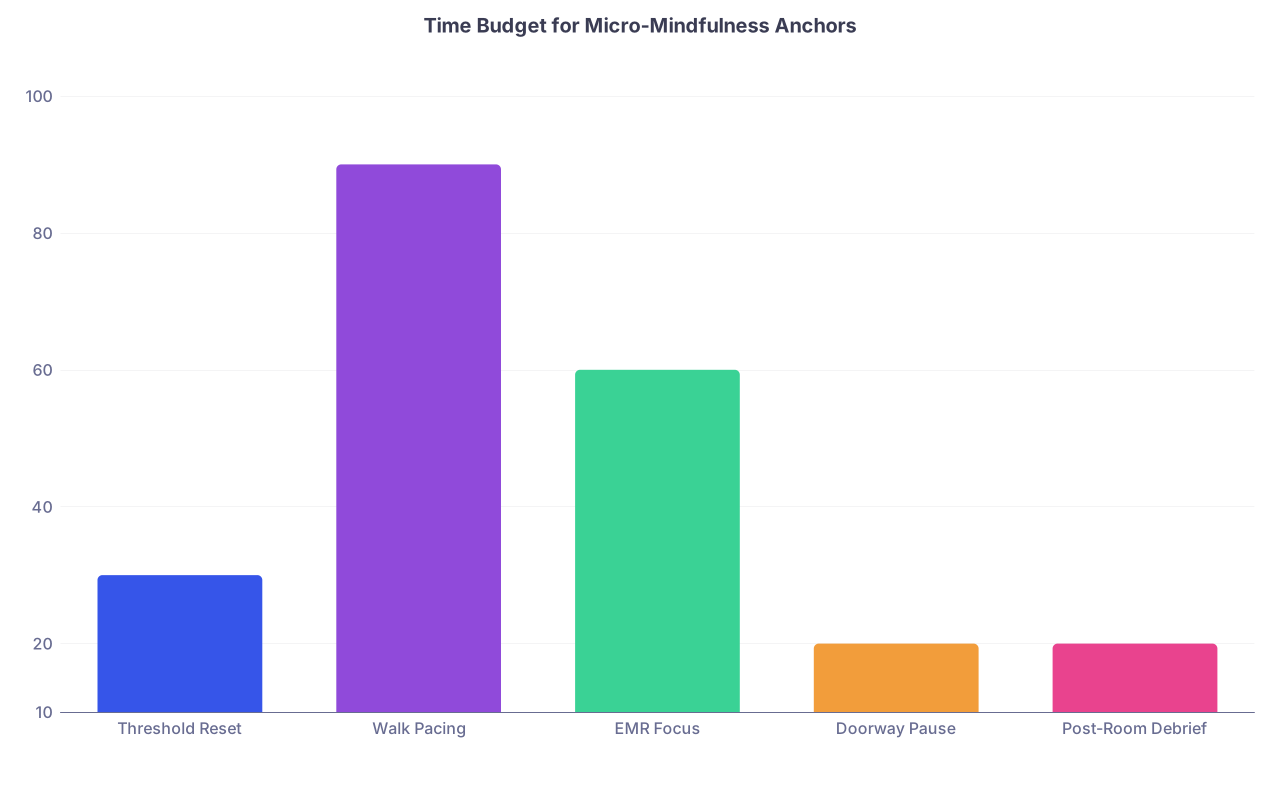
| Category | Value |
|---|---|
| Threshold Reset | 30 |
| Walk Pacing | 90 |
| EMR Focus | 60 |
| Doorway Pause | 20 |
| Post-Room Debrief | 20 |
Technique 6: Doorway Pause (10–15 seconds, zero added time)
Steps:
- Foam in or sanitize, as usual.
- While rubbing hands, do one slow inhale and exhale (4 in, 6 out).
- Look at the door and silently name:
- The patient’s name.
- One human detail you remember (teacher, veteran, raised three kids, hates needles).
- Then think one brief intention:
- “For the next 90 seconds, this person has my full attention.”
You are already standing there waiting the few seconds for hand sanitizer to dry. You are not adding time. You are reclaiming those seconds from autopilot.
Why this matters:
- You are countering depersonalization.
- You are anchoring the patient as a person, which directly affects how you speak, how you touch, and how seriously you take subtle distress.
- Nurses notice when you enter a room like this. Families notice. It shifts the tone.
Phase 5: In the Room – Single‑Point Attention in a 90‑Second Exam
You are not doing a 15‑minute psychotherapy. For most stable patients, you are in there under 2 minutes. Mindfulness here must be brutal in its efficiency.

Technique 7: One Sensory Anchor Per Patient (during exam, not before)
While you do your focused exam, you choose exactly one sensory channel to keep 10–20% of your attention on:
- The feeling of your stethoscope diaphragm on the skin.
- The sound of the patient’s breathing.
- The sensation of your own feet on the floor.
Everything else runs as usual: you ask questions, you inspect, you palpate. But you let one simple, present‑moment sensory cue be your anchor against total cognitive fragmentation.
What this does:
- Reduces the “talking head” effect where you are already halfway down the hall mentally.
- Increases your ability to notice real‑time cues—grimacing, hesitation, fear—because you are not totally in your head composing the presentation.
Technique 8: The 5‑Word Check‑In
You want something you can do with every patient, even if all you do is peek in to see they are breathing.
Ask one of these five‑word questions (pick a standard one for yourself):
- “What feels worst right now?”
- “Anything scaring you today?”
- “What do you need most?”
You listen for one sentence. You do not argue, you do not fix. You just log it.
Ethically, this is massive. Many trainees do a flawless physical exam and have no clue the patient is terrified about code status, or confused about why they are NPO. This 5‑word opening gives you a chance to correct course without adding a full counseling session.
Phase 6: Leaving the Room – Two‑Breath Debrief
If you do not deliberately close the mental “file” on a patient, you will carry half‑finished thoughts down the hall and into the next room. That is how errors propagate.
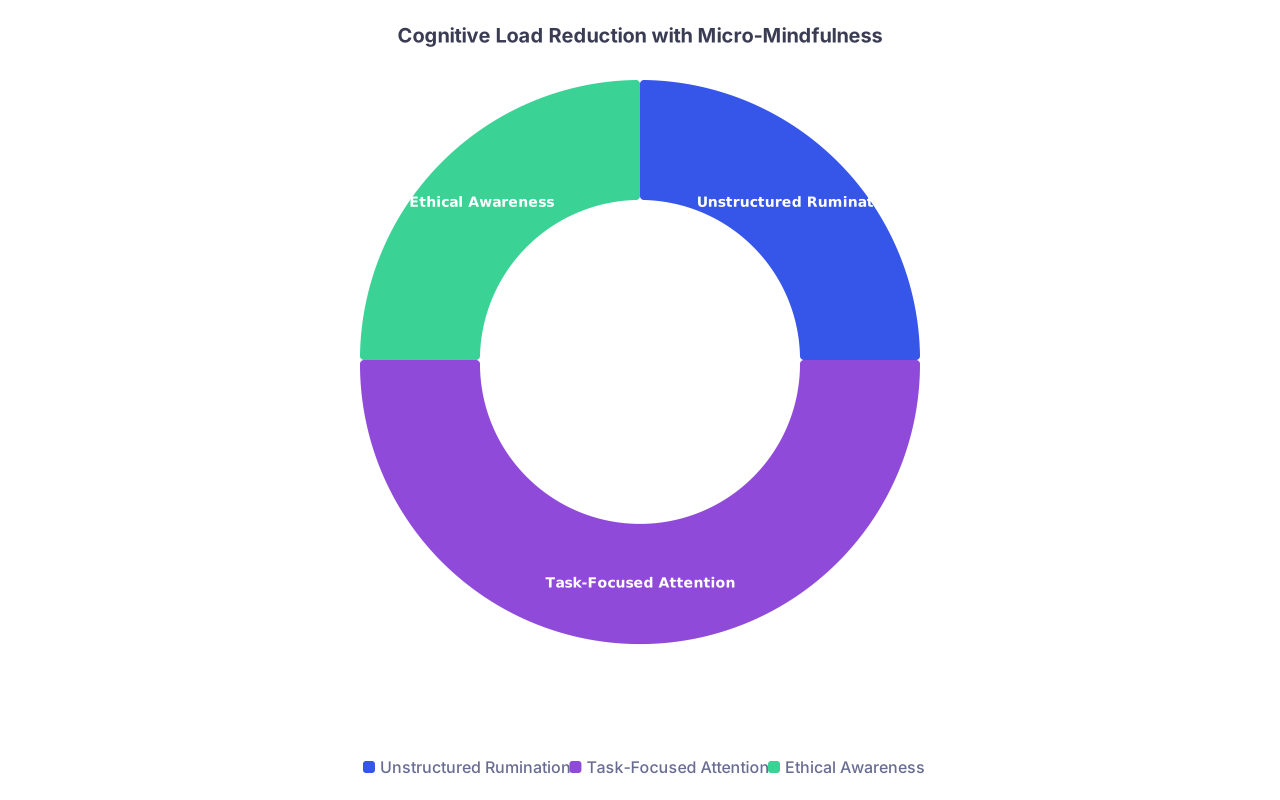
| Category | Value |
|---|---|
| Unstructured Rumination | 25 |
| Task-Focused Attention | 50 |
| Ethical Awareness | 25 |
Technique 9: Two‑Breath Compression (10–15 seconds)
As you step out and foam out, before you look at your list:
First breath out: silently name the one key clinical update for that patient.
- “Pain better, needs PT re‑eval.”
- “More short of breath, lungs worse.”
- “Stable, no acute change.”
Second breath out: silently name one next action.
- “Page nephrology about rising creatinine.”
- “Clarify code status with daughter.”
- “Order chest X‑ray.”
Then—and this is the crucial part—imagine putting that into a mental “folder” and closing it. You will open it later during documentation and plan writing, but right now you let it rest.
This is micro‑mindfulness as working‑memory hygiene. You are not juggling 10 incomplete threads while you walk. You are serially encoding and releasing.
Phase 7: Between Clusters of Patients – Rapid Ethical Re‑Orientation
Large services often get geographically clustered: three on this hallway, four in that pod, two in ICU. Use those natural breaks.
Technique 10: 20‑Second “Am I Missing Anything Big?” Scan
At the end of a cluster (say, you have just finished rooms 410–414), stop physically for 15–20 seconds. Do not walk and think; just stand.
Ask yourself three questions, in order:
- “Is anyone I just saw sicker than I am emotionally acknowledging?”
- “Did I see any signs of distress or confusion that deserve actual time later?”
- “Is there any patient here who might not understand what we are doing to them today?”
If the answer to any of these is “yes,” put a tiny mark on your list beside the room number. That is a flag for you to slow down with them on attending rounds or to circle back.
This is where ethical mindfulness lives in big services: not in grand lectures, but in those 20‑second checks that prevent you from steamrolling over the vulnerable.
Integrating It All: A Micro‑Mindfulness Pre‑Rounding Protocol
Here is what a realistic, fully loaded morning might look like if you actually apply this.
| Step | Micro-Technique | Time Cost |
|---|---|---|
| Leave call room | Threshold reset | ~30 sec |
| Walk to floor | 10-step breath pacing set | 0 extra |
| Open EMR | One screen rule + intent breath | ~15 sec |
| Per patient chart review | 3-number snap + 5-sec ethical | ~20 sec |
| At each doorway | Doorway pause + name detail | 0 extra |
| In each room | Single sensory anchor + 5-word | 0 extra |
| Leaving each room | Two-breath compression | ~15 sec |
| After each cluster of rooms | 3-question ethical scan | ~20 sec |
If you add this up, the explicit breathing and mini‑pauses might cost you 3–5 minutes total, spread across an hour of pre‑rounding. You will earn that back three times over by:
- Making fewer “oh I forgot to…” hallway U‑turns.
- Catching clinical deterioration earlier.
- Avoiding ethically messy miscommunications that explode later into 30‑minute family meetings.
How This Ties Directly Into Professionalism And Ethics
Let me be blunt: a lot of unprofessional behavior on rounds is not malice. It is cognitive collapse.
Micro‑mindfulness supports ethics on large services in three concrete ways:
Respect for persons.
Doorway pauses and 5‑word check‑ins counteract the “room 12, CHF” mentality. Patients experience you as present and responsive, not as a harried functionary.Non‑maleficence and beneficence.
The 3‑number snap check and two‑breath compression reduce diagnostic anchoring and missed deterioration. You are less likely to unintentionally harm by omission.Justice and fairness.
On big services, quiet or “easy” patients get less attention. Micro ethical scans at cluster breaks help you notice who has been silently drifting to the bottom of your mental priority list.
This is why I push micro‑mindfulness as an ethical tool, not just a wellness gadget. Your attention is a moral resource. How you allocate it under pressure determines who gets safe, humane care—and who gets algorithmic, sloppy care.
Practical Barriers (And How to Not Sabotage Yourself)
You are going to run into the same three problems everyone does.
1. “I Forget To Do It After Two Days”
So do not rely on memory.
- Put a tiny dot with a pen next to every 3rd patient on your list. For those three patients, you must do doorway pause + two‑breath compression. That is your minimum viable habit.
- Use the EMR login screen as your single global trigger: one slow breath, one sentence of intent, every single time.
Consistency beats perfection. I would rather you do three clean micro‑practices every day than 12 practices once a week.
2. “I Feel Silly Doing This”
Good. That means you are actually doing something different.
Reframe: you are not “being spiritual.” You are:
- Reducing work‑induced cognitive error.
- Keeping your prefrontal cortex functional.
- Preventing ethical blindness.
If an attending walked by and asked what you were doing with your eyes closed at a doorway, you can say, “Taking one slow breath before I see the patient so I do not miss anything.” No one will argue with that.
3. “I’m Too Tired for Extra Steps”
That is exactly why these are micro‑steps.
You are too tired for 20‑minute meditation apps at 4:45 a.m. You are not too tired to extend your exhale during the elevator ride.
The mental resistance is mostly because you are in habit‑energy mode. Once your brain associates, “Foam in = one slow breath + say patient name,” it will run on autopilot like everything else.
Measuring Whether This Is Actually Helping
You are a clinician; you like data. Fair.
For one week, track three things:
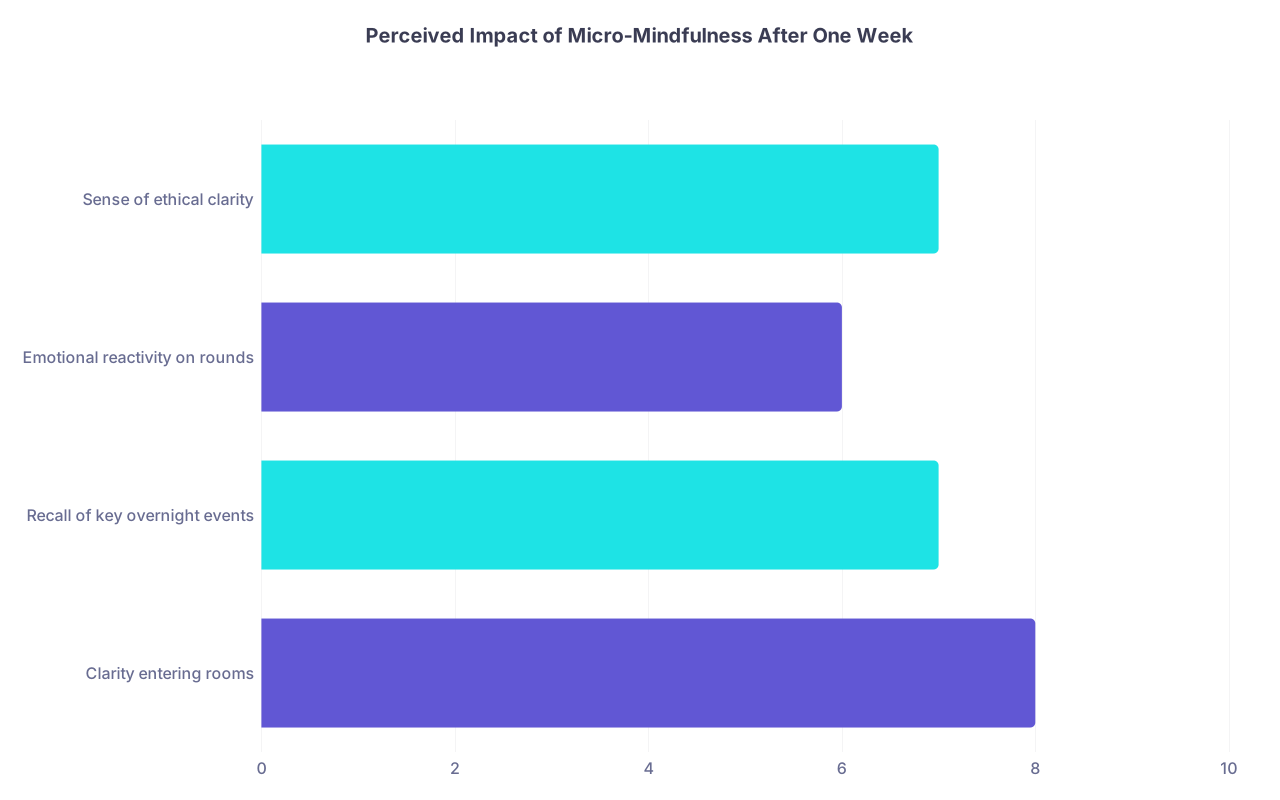
| Category | Value |
|---|---|
| Clarity entering rooms | 8 |
| Recall of key overnight events | 7 |
| Emotional reactivity on rounds | 6 |
| Sense of ethical clarity | 7 |
Use a 0–10 scale at the end of each day:
- Clarity entering first 5 rooms.
- Recall of key overnight changes for each patient.
- Emotional reactivity (how triggered you got by pages, comments, or family questions).
- Sense of ethical clarity (how often you felt “I know the right thing, even if it is hard”).
You are not publishing this. You are just seeing whether five days of micro‑mindfulness shifts those numbers even by 1–2 points. If it does, that is clinically meaningful in your actual life.
FAQs
1. Can I do micro‑mindfulness if my attending or senior is breathing down my neck for speed?
Yes, and you probably need it more. All the core techniques are invisible or socially neutral:
- Extending your exhale in the hallway.
- Naming a patient’s human detail silently at the door.
- Doing the two‑breath compression while you sanitize.
You are not kneeling in the corridor doing sun salutations. No one can reasonably complain that you took one extra breath before walking into a room.
2. What if I am on a surgical service with 40+ pre‑ops and post‑ops?
Then you simplify even further:
- Use only three anchors: threshold reset, doorway pause, two‑breath compression.
- For rapid “check wounds / check vitals / move on” encounters, your 5‑word question might be as brief as “Anything worrying you today?” while you examine the incision.
You do not have to use every technique on every service. You scale the number of micro‑practices to the time reality.
3. How do I keep this from feeling like another performance metric to fail?
You treat it as an experiment, not a religion.
Pick one technique—say, doorway pause—and do it consistently for one week for 50% of your patients. If you miss one, you do not beat yourself up. You simply do the next one.
Micro‑mindfulness is there to give you agency in an environment that strips it away, not to create another layer of self‑criticism.
4. Does any of this actually change patient outcomes, or is it just for me?
There is growing evidence (outside the scope of this article but very real) that clinician presence and cognitive clarity affect:
- Detection of subtle deterioration.
- Adherence to best practices (timely antibiotics, appropriate consults).
- Patient perceptions of being heard and respected, which influences cooperation and disclosure.
No one trial will isolate “two‑breath compression outside rooms” as the magic bullet, but the broader literature on attentional control and error reduction supports this approach. I have personally watched residents miss fewer obvious mistakes once they adopt structured, mindful check‑ins.
5. How do I teach this to students or interns without sounding preachy?
You model it first.
- They see you pause outside a difficult room, hand on badge, one breath.
- After, you say a single, non‑mystical line: “I take one breath before I go in so I do not snap or miss something.”
If they show interest, you give them one technique, not ten. Threshold reset or doorway pause. You tie it directly to survivability on large services: “This is how you keep your brain from frying during 25‑patient pre‑rounds.”
If you remember nothing else:
- You can insert genuine mindfulness into pre‑rounding in 20–90 second chunks without losing speed.
- The right micro‑practices do not just calm you; they protect your clinical reasoning and your ethics under pressure.
- Consistency with one or two techniques beats dabbling in ten. Anchor them to things you already do—doorways, sanitizer, EMR—and let them quietly change how you move through the service.