
You are on hour 9 of a 12‑hour call. It is 3:17 a.m. The ED just paged for a hypotensive GI bleeder. Your pager will not shut up. Your head feels full of cotton, hands a little shaky, jaw clenched so hard you can feel it in your ears.
And the thought that runs through your mind is not “I need to be more mindful.”
It is: “I cannot screw this up.”
Let me be direct: if your “mindfulness practice” cannot survive a rapid response, it is decoration, not a tool. We are going to talk about breathwork patterns that are built for 12‑hour call shifts. Not yoga retreat nonsense. Patterns that work when you are on your feet, gloved, masked, and moving.
1. The Physiology You Actually Need To Know
You already know the buzzwords: sympathetic, parasympathetic, vagus nerve. But on call, you need a map, not a textbook.
Think in three knobs you can turn:
- Rate – breaths per minute
- Ratio – inhale vs exhale length
- Hold – pauses after inhale or exhale
Different breath patterns hit different systems.
- Fast, forceful inhale focus → sympathetic activation, alertness
- Slow, longer exhale focus → parasympathetic tilt, calming
- Brief breath holds → transient CO₂ rise, can sharpen focus but also trigger discomfort in the anxious
There are two practical physiological targets that matter on a shift:
- Rapid down‑shift from red‑line sympathetic to functional calm (not sleepy, just less flooded).
- Sustainable regulation to keep your baseline lower over hours, so the peaks do not fry you.
We are not trying to turn you into a monk in the ICU. We are trying to create micro‑interventions that fit into a 10‑second hand‑wash or the elevator ride up to the code.
2. Core Breathwork “Modules” to Plug Into a 12‑Hour Shift
Think of these as small building blocks you can slot into specific moments on call. Different patterns, different use‑cases.
| Pattern | Main Effect | Time Needed | Best Use Case |
|---|---|---|---|
| Physiological Sigh | Acute de‑stress | 5–20 sec | Right after intense encounter |
| 4:6 Box Variant | Calm + stable | 30–90 sec | Before critical decisions |
| 4:4 Alert Maintenance | Steady + awake | 20–60 sec | Mid‑shift reset |
| 4:7:8 Wind‑Down Mod | Pre‑nap / post‑call | 1–4 min | Quick sleep or off‑ramp |
| 2:1 Exhale Walk | Moving reset | 30–120 sec | Hallway between patients |
| Nasal Switching | Focus redirect | 20–60 sec | Cognitive “tab change” |
Let me break each one down with exact instructions and where they belong on a call.
2.1 Physiological Sigh – Your 10‑Second Panic Brake
This one comes straight out of basic respiratory physiology and has good evidence behind it.
Pattern:
- 1st inhale: Slow nasal inhale to ~70% lung capacity
- 2nd inhale: Tiny top‑off sniff through the nose
- Long exhale: Slow, unforced mouth exhale until lungs feel comfortably empty
That is 1 cycle. Do 1–3 cycles, that is it.
Why it works (in plain English):
That double inhale re‑inflates collapsed alveoli, improves gas exchange, and gives a sharp decrease in sympathetic tone. The long exhale engages vagal pathways and tends to drop heart rate. You feel “pressure off the chest” very quickly.
Use it:
- After a near‑miss med error you caught in time
- Right after a code, before you write the note
- When your hands are actually trembling on the keyboard at 4 a.m.
How to do it without looking weird:
You can do it while looking at the EMR. Small, quiet inhales, slow exhale through pursed lips like you are just concentrating. Nobody will care. They are all drowning in their own cortisol anyway.
2.2 Box Breathing – But Modified For Medicine
Classic box breathing is 4–4–4–4: inhale 4, hold 4, exhale 4, hold 4.
That is decent, but the long holds can feel suffocating when you are already anxious.
I prefer a 4:6 calm box variant and a 4:4 stable alert variant for call.
A. 4:6 “Calm Box” Variant – Pre‑Critical Decision
Pattern:
- Inhale through the nose: 4 seconds
- Hold: 2 seconds
- Exhale through nose or pursed lips: 6 seconds
- Hold at bottom: 2 seconds
Repeat 4–6 cycles (about 1–2 minutes).
This slightly longer exhale tilts you parasympathetic, the brief holds stabilize your chemoreceptor response without feeling like suffocation.
Use it:
- Before you call the attending with a change‑in‑status
- Sitting at a computer before entering high‑risk orders (pressors, anticoagulants)
- Right before family meetings where you need to be composed
B. 4:4 “Stable Alert” Box – Mid‑Shift Reset
Pattern:
- Inhale 4
- Hold 4
- Exhale 4
- Hold 4
Do 3–5 cycles.
This pattern is neutral: it does not sedate, it just smooths jitter. Good when you are tired and wired and still need to think.
Use it:
- Elevator rides
- Waiting for labs to load
- Walking from ED back to the unit (sync with your steps if you want)
2.3 4:7:8 (Modified) – For Power Naps and Post‑Call Off‑Ramps
Standard 4:7:8 (4 inhale, 7 hold, 8 exhale) is potent but not great when you are already on edge. Long breath holds can spike anxiety. So you need variants.
A. Classic 4:7:8 – Only For When You Are Lying Down
Use this only when you are relatively safe to get sleepy: nap in a call room, post‑call in bed, or trying to sleep between night shifts.
Pattern:
- Inhale through nose: 4 seconds
- Hold: 7 seconds
- Exhale through mouth: 8 seconds
- Repeat 4–8 cycles
You will feel drowsy quickly. Great. That is the point. Just never use this standing in an ICU with three pressors running.
B. Short‑Hold Version – For Transitioning After A Hard Shift
Pattern:
- Inhale 4
- Hold 4
- Exhale 8
Do 6–10 cycles once you are post‑shift and safe (ride‑share home, couch, etc). This helps peel your nervous system out of “scanning for alarms” mode before you do something dumb like rage‑text someone or binge through your day off.
2.4 2:1 Exhale Walking Pattern – The Hallway Reset
You will not always be able to sit down. Often you have 40 seconds between rooms and that is all you get.
Here is a pattern that works on the move.
Pattern (step‑based):
- Inhale through the nose over 3 steps
- Exhale through nose or pursed lips over 6 steps
Ratio is 1:2. Duration of each step depends on your pace, but the ratio holds.
You can adapt:
- Fast walk: inhale 2 steps, exhale 4
- Slow walk: inhale 3–4, exhale 6–8
Do this consistently for 30–120 seconds when moving between units.
Use it:
- Walking from ED to radiology or ICU
- Long hospital corridors between consults
- After a difficult patient / family interaction as you exit the room
This builds a subtle, almost invisible breath rhythm that gradually lowers baseline arousal without sedating you.
2.5 Alternate Nostril Lite – Task Switching For Your Brain
Full yogic alternate‑nostril breathing is way too elaborate to do between admissions. But a stripped‑down form helps with cognitive switching—like going from procedure mindset to empathy‑heavy family talk.
Quick pattern:
- Gently press the right side of your nose shut with a finger.
- Inhale slowly through the left nostril for 4 seconds.
- Release right, press left side, exhale through right for 6 seconds.
- Inhale through right for 4 seconds.
- Switch again, exhale through left for 6 seconds.
That is 1 full cycle (L in → R out, R in → L out). Do 2–3 cycles. Takes ~60 seconds.
Use it:
- Before walking into a family meeting after running a code
- Before switching from notes/admin to a procedure
- After a conflict with a nurse or consultant when you feel mentally “stuck”
This is subtle enough that in an empty hallway or call room, nobody will care that a finger briefly touches your nose. And if they do, they probably need it more than you.
3. Plugging Breathwork Into a 12‑Hour Call – Concrete Scenarios
Let us map real moments in a typical 12‑hour shift and what pattern actually fits.
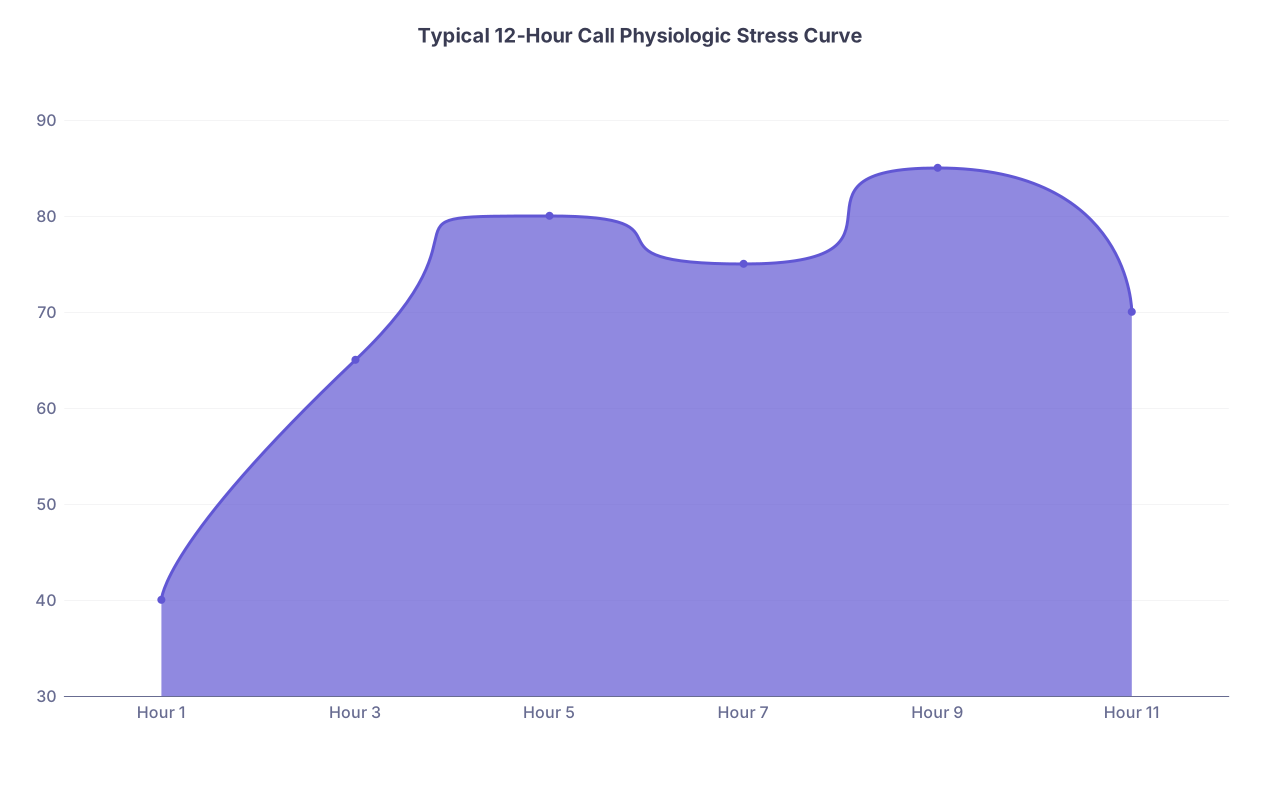
| Category | Value |
|---|---|
| Hour 1 | 40 |
| Hour 3 | 65 |
| Hour 5 | 80 |
| Hour 7 | 75 |
| Hour 9 | 85 |
| Hour 11 | 70 |
3.1 Start of Shift (Hour 0–2): Pre‑Load Your System
You feel relatively fine. Some anticipatory anxiety, but cognitively intact.
What to do:
- 3–4 cycles of 4:4 box breathing at your workstation before you log in.
- 1–2 physiological sighs if you are starting already clenched (argued with your partner, running late, etc).
This is about setting a baseline rhythm before the onslaught.
3.2 First Cluster of Admissions (Hour 2–5): Between Patients
You are getting paged from triage and the floor, juggling admits and cross‑cover calls.
Micro‑patterns:
- Leaving room of a challenging patient → 1 physiological sigh discreetly in the hall.
- Walking from ED bed 3 to CT → 2:1 exhale walking pattern for the whole corridor.
- Before calling the attending with your plan → 1 minute of 4:6 calm box while looking at the chart.
Time cost: 10–60 seconds each. That is it. You are not doing a 10‑minute meditation. You are running live, tiny updates on your nervous system.
3.3 Mid‑Shift Slump (Hour 5–8): Fatigue + Jitter
This is where most residents start making dumb charting errors and miss subtle exam findings. You are not catastrophically tired yet, but you are frayed.
Here is what I have watched work well:
- Sit down for 60–90 seconds.
- Eyes can stay open, lightly unfocused on the screen.
- Do 4 cycles of 4:4 box, followed by 1–2 physiological sighs.
If you have 3–5 minutes and a chair:
- Add short‑hold 4:4:8 (inhale 4, hold 4, exhale 8) for 4 cycles.
- Then stand, quick stretch, go back.
This is the closest you will get to a “mini reboot” on call without caffeine or a nap.
3.4 Acute Crisis (Code, Rapid Response, Massive Bleed)
During the crisis itself, forget patterns. Your body will breathe however it needs to move oxygen while you push epi and hang blood. Trying to “be mindful” mid‑compression is pointless.
The window that matters is immediately after:
You step out of the room. You are about to chart, call family, or re‑enter another patient room.
Do not just power through.
- Stand still for 10–20 seconds in the hallway or dictation space.
- 1–3 physiological sighs. That is it.
If anyone asks what you are doing, you can say “just catching my breath.” Which is true.
This 10–20 seconds reduces the “carry‑over” sympathetic spike that otherwise infects your next interaction. That affects your tone with nurses, your empathy with family, and your ability to think clearly.
3.5 Late‑Shift Tunnel Vision (Hour 9–12)
You know this feeling: narrowed attention, micro‑headaches, near‑automatic charting. Danger zone for cognitive errors, irritability, and ethically sloppy decisions (“I will just leave this for dayshift”).
Drop in very small doses of breathwork:
- Every time your pager goes off, before reading it → 1 slow nose inhale, 1 slow mouth exhale (mini sigh, not full physiological).
- Before signing any order set with high‑risk meds → 3 cycles of 4:4 box.
- Walking to your last consult → 2:1 exhale walking pattern until you hit the room.
You are not “fixing” fatigue here. You are sharpening enough to avoid stupid mistakes.
4. Breathwork, Moral Distress, and Ethical Clarity
This is the part people skip, but it matters.
On long calls, you hit moral friction:
- Family insisting on full code in a frail, bedbound, end‑stage patient.
- Bed control pressuring early discharge that feels unsafe.
- Attending ignoring your concern about a borderline decision.
Breathwork will not fix institutional problems. But it can keep your frontal cortex online long enough for you to act like the physician you intend to be.
Where breathwork intersects ethics
Impulse vs considered response
The moment you feel an urge to snap at a nurse, blow off a family question, or “just sign it and move on,” you are in impulse mode. Thirty seconds of structured breathing is not about calm. It is about buying cognitive time.
Example:
Before you reply to an angry consultant message, do 4 cycles of 4:6 calm box. Then answer. I guarantee the email will look different.Empathy access
When your sympathetic system is maxed, empathy becomes expensive. Patients become “work.” Families become “obstacles.” That is where bad medicine starts.
Simple rule:
Before entering a room where you know there will be conflict or grief, do 2 physiological sighs + 30 seconds of 2:1 exhale walking if you are moving. You show up slightly less armored. That matters.-
After a death, a code on a child, or a traumatic resus, you will be tempted to shove it down and see the next patient. That is how people end up numb five years later.
You may not have time for a debrief. But you almost always have 60 seconds in a stairwell.
Use:
- 4 cycles of 4:6 calm box
- 1–2 physiological sighs
- Name the event in one simple sentence to yourself: “Teen MVC, we did everything, did not survive.”
Breath gives the body a cue that the event has a boundary. That you are not still in it, even as you keep working.
5. Building a Breathwork “System” That Actually Sticks
If you treat this like a New Year’s resolution, you will abandon it by your third brutal weekend.
Treat it like procedural training instead.

| Step | Description |
|---|---|
| Step 1 | Baseline Practice |
| Step 2 | Pre Shift Prep |
| Step 3 | In Shift Micro Moments |
| Step 4 | Acute Crisis Aftercare |
| Step 5 | Post Shift Off Ramp |
| Step 6 | Reflection and Adjust |
5.1 Baseline Practice: 5 Minutes, Not 50
On non‑call days, run through:
- 2 minutes of 4:4 box
- 2 minutes of 4:6 calm box
- 1 minute of physiological sighs spaced out (1 every 15–20 seconds)
That is it. 5 minutes. The purpose is to make these patterns so familiar that on call they are automatic, not one more “thing to remember.”
5.2 Environmental Anchors
Tie specific breath patterns to fixed events:
- Hand sanitizer → 1 slow nose inhale, 1 slow mouth exhale as you rub hands.
- Elevator doors closing → 2 cycles of 4:4 box, always.
- Logging in to EMR → 1 physiological sigh if the login wheel spins.
You are training a habit stack. The externals cue the breathing so you do not rely on willpower.
5.3 Tracking Without Being Obnoxious
You do not need a wellness app. Keep it brutally simple:
- Small mark on your signout sheet when you use a pattern (e.g., “P” for physio sigh, “B” for box).
- Glance at it end of shift: did you use them 0 times, 3 times, 10 times?
Over 2–3 weeks, you will see patterns: more breathwork on bad shifts tends to correlate with less end‑of‑shift emotional fallout. I have seen residents notice this and become much more serious about using it.
6. Guardrails: When Breathwork Is The Wrong Tool
Breathwork is not magic. Misused, it can be irritating or even counterproductive.
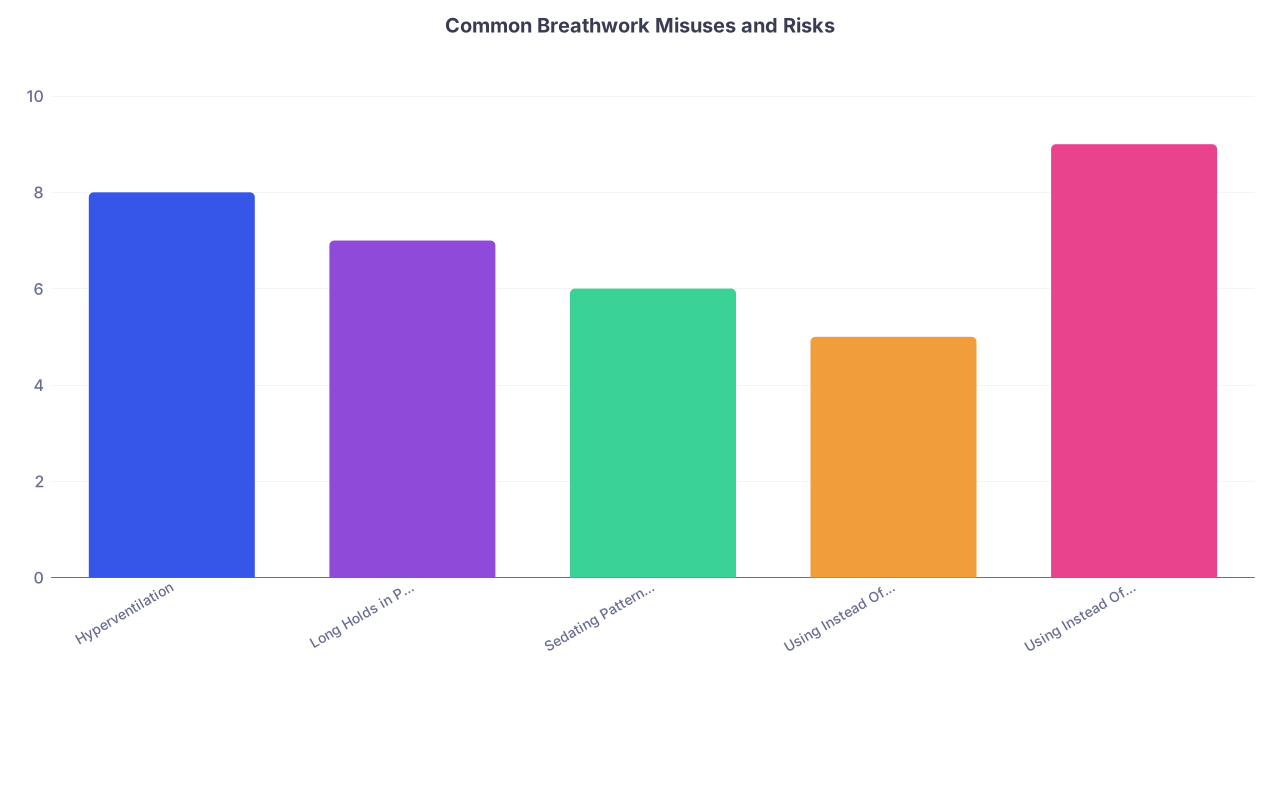
| Category | Value |
|---|---|
| Hyperventilation | 8 |
| Long Holds in Panic | 7 |
| Sedating Patterns On Duty | 6 |
| Using Instead Of Eating | 5 |
| Using Instead Of Speaking Up | 9 |
Here is where people screw this up:
Hyperventilating in the name of “breathwork”
Fast deep breathing (e.g., some “Wim Hof”‑type patterns) on shift is a bad idea. Lightheadedness, tingling, and emotional volatility are not your friends in the ICU.
Long breath holds when already panicked
If you are in mid‑panic, 7–10 second breath holds can make you feel like you are suffocating. Skip the holds, go for gentle physiological sighs or simple 1:2 inhale‑exhale ratios.
Sedating patterns when you must be fully alert
4:7:8, especially repeated, will make you sleepy. Use it for naps or post‑call, not while cross‑covering a fresh GI bleed.
Using breathwork instead of food, water, or bathroom breaks
You are not a martyr. You are a clinician responsible for your own functioning. Breathwork is a supplement, not a replacement for basic physiology.
Using breathwork instead of speaking up
If an attending’s decision feels unsafe, the answer is not “breathe until you are okay with it.” Take a breath so you can speak clearly, then speak. If you are using breath techniques to tolerate policies that violate patient safety, that is not resilience. That is complicity.
7. Sample 12‑Hour Call Breathwork Map
Here is a concrete “script” for one typical 7 p.m.–7 a.m. call. Adjust as your service demands.
| Time | Situation | Pattern Used |
|---|---|---|
| 18:55 | Pre shift at workstation | 4 cycles of 4:4 box |
| 20:30 | First 2 admits done | 2 physio sighs in hallway |
| 22:00 | Walking from ED to floor | 2:1 exhale walking (60 sec) |
| 00:15 | Before calling attending | 1 min of 4:6 calm box |
| 02:45 | Post rapid response | 2 physio sighs |
| 04:00 | Mid shift slump | 4 cycles 4:4 box + 2 sighs |
| 05:30 | Difficult family conversation | 1 min 4:6 calm box |
| 06:30 | Writing signout | 3 cycles 4:4 box |
That whole “regimen” costs you maybe 7–8 minutes spread over the night. Less than the time you will lose fixing chart errors if you are cognitively flooded.
FAQ (Exactly 6 Questions)
1. I already feel like I never stop moving on call. How am I realistically supposed to fit this in?
You are not adding a separate “breathing block.” You are weaving micro‑patterns into things you already do: walking down halls, waiting for the computer, standing in an elevator. Most useful interventions take 10–60 seconds. If you truly cannot spare 10 seconds in a 12‑hour shift, the problem is not breathwork, it is staffing and system design.
2. Can I teach these patterns to patients during my shift as well?
Yes, but separate your goals. For yourself, you are using ultra‑short, stealth patterns. For patients, you may have five minutes to teach something like simple 4‑6 breathing or a physiological sigh. Do not dump esoteric techniques on a dyspneic COPD patient. Use the simplest, least threatening pattern that matches their capacity.
3. What if breathwork makes me more aware of how anxious or exhausted I am, and that feels worse?
That happens, especially early on. You have been using speed and dissociation as coping. When you slow your breath, the backlog shows up. If that is intense, shorten the practices: one breath at a time, no long sits. If you consistently feel flooded when you pause, that is a sign to get actual support—supervision, therapy, or peer debriefing—not just more technique.
4. Are there any contraindications? Who should avoid certain patterns?
If you have uncontrolled asthma, severe obstructive lung disease, or a history of syncope with hyperventilation, avoid aggressive deep or fast breathing and long breath holds. Stick to gentle 1:2 inhale‑exhale ratios and short, comfortable holds if any. Also, if you have active PTSD with panic, very long holds can be destabilizing; stay with physiological sighs and 4:6 patterns.
5. Does the evidence really support this, or is it just wellness fashion?
Physiological sighing and slow controlled breathing with extended exhalation have decent data behind them: reductions in heart rate, blood pressure, and self‑reported anxiety, plus improved HRV (a proxy for vagal tone). Is the literature perfect? No. But it is far stronger than most of the “resilience” fluff hospitals push. And the risk is near zero if used appropriately.
6. If I can only remember one pattern on a brutal night, which should it be?
The physiological sigh. One or two double‑inhale, long‑exhale breaths, done quietly, can be dropped anywhere—hallway, workstation, stairwell—without time cost. Pair it with a very simple rule: every time you step out of a room after something stressful, you do 1–2 sighs before the next task. That single habit will shift your whole call experience over time.
Key takeaways:
First, treat breathwork as a clinical tool you deploy in seconds, not a lifestyle ideology. Second, match the pattern to the moment: short, exhale‑heavy breaths for down‑shifting, box patterns for steady focus, sedating ratios only when you are off duty or napping. Third, use breath not to tolerate bad systems, but to keep your judgment, empathy, and ethics online when the system around you is doing its best to burn them out of you.