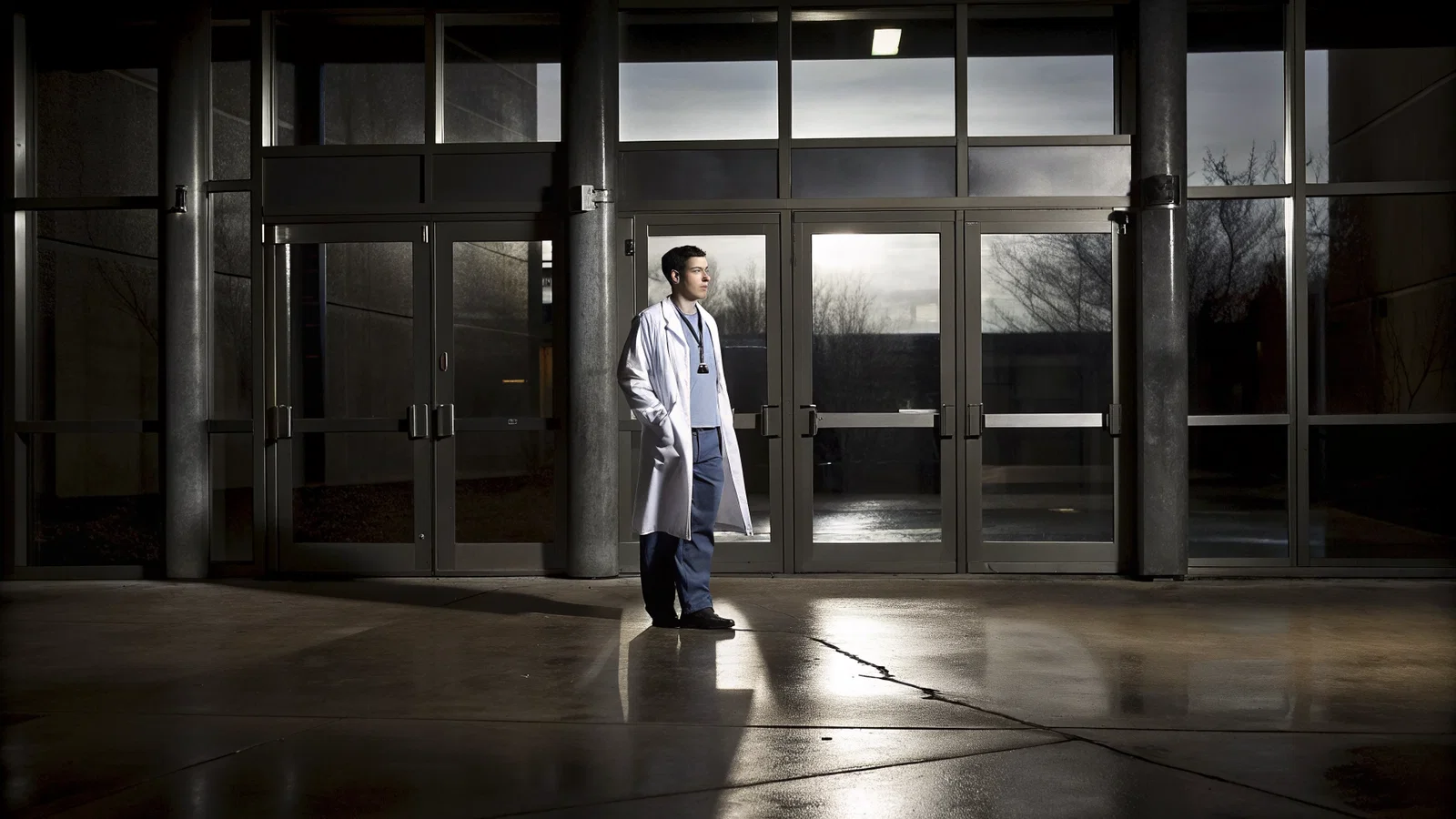
You walk toward the hospital doors already half-spooked. Heart rate climbs before you even smell the disinfectant. Palms damp. Shoulders locked. That is not "just nerves." That is your sympathetic nervous system firing an anticipatory stress response the second the building appears on the skyline. I have watched this hit brand-new interns and twenty-year attendings with equal force. The body does not care about your credentials. It only knows the next twelve hours will demand everything.
The Pre-Shift Awakening: Why You Spook Yourself Before Touching a Chart
The panic starts earlier than most of us admit. Sixty minutes out, still in the car or on the train, your brain begins rehearsing worst-case scenarios. The parking garage echo becomes a threat cue. The badge in your pocket feels heavier. By the time you reach the sidewalk, cortisol is already climbing and your prefrontal cortex is quietly shutting down non-essential calm.
I break the final hour the way I break any clinical timeline, because loose "try to relax" advice is useless.
- T-minus 60 to 40: residual home friction still looping (the argument you left unfinished, the unpaid bill, the kid's fever you keep checking your phone about).
- T-minus 40 to 20: pure anticipatory dread. You start inventing the crash that will greet you at sign-out.
- T-minus 20 to badge-swipe: full physiological activation. Pupils dilate. Breathing shallows. You are now walking into the building as a threat-detection machine rather than a clinician.
Medical trainees and seasoned clinicians both fall for this. The difference is only volume. Residents get the double hit of evaluation anxiety plus patient acuity. Attendings carry the weight of knowing exactly how bad a night can go. Either way, you arrive already depleted. That is the wrong starting line.
The fix is not more coffee or a longer pep talk. You need a hard, timed boundary. Three minutes. Structured. Non-negotiable. Think of it as the mental equivalent of gowning and gloving, except you do it before the doors, not after.
Minute One (T-minus 10): Resetting the Sympathetic Nervous System
At this point you should step away from the chaotic parking lot or transit hub. Find a quiet pocket, loading dock edge, side alley, even the far corner of the garage. You are not meditating. You are forcing a physiological downshift.
Use the physiological sigh. Two quick inhales through the nose (the second one stacked on top of the first to fully inflate the lungs), then one long, slow exhale through the mouth that lasts twice as long. Do it three times. No more. This is the fastest known manual override for the autonomic nervous system. It dumps CO₂, resets the vagal brake, and tells your amygdala the immediate threat has passed.
While you exhale, deliberately shed the identity of the anxious commuter. You are not the person who just sat in traffic. You are not the parent who left a sick kid at home. That skin comes off here. In its place you put on clinical armor, intentionally, not by default. Stand taller. Unclench the jaw. Drop the shoulders. This is not theater. This is role assumption under pressure, the same way you step into a code.
I have run this exact sequence outside Level-1 trauma centers at 6:45 a.m. when the night team's chaos was already leaking through the doors. It works. Skip it and you carry the parking-lot adrenaline straight onto the floor. That is how you start the shift already behind.
Minute Two (T-minus 7): Cognitive Decompression and Mental Dumping
At this point you should take out your notepad, or the notes app you actually use, for a rapid brain-dump. Sixty seconds maximum. Write the external noise first: the unfinished conversation, the money worry, the personal friction still buzzing. Get it out of working memory so it stops competing for bandwidth.
Next line: separate that external life friction from internal clinical readiness. Literally draw a line. Above the line is personal. Below the line is the shift. This sounds crude. It is crude. It also works because the brain loves containers.
Finally, acknowledge lingering fears from the last shift without carrying them forward. One sentence only. "Yesterday's missed central line still stings, and I am not bringing that hesitation into today's first procedure." Name it. Release it. If you skip this step you will reenact yesterday's near-miss on today's patient without realizing why your hands are suddenly clumsy.
I have seen residents walk in still fighting the previous night's attending. Their first three decisions were contaminated by residual resentment. A thirty-second dump would have cleared it. Do not romanticize "pushing through." That is just poor cognitive hygiene.

Minute Three (T-minus 5): Setting the Anchor and Stepping Through the Doors
At this point you should select your primary focus word or intention for the next twelve hours. One word. Not a paragraph. "Clarity." "Presence." "Precision." "Steady." Say it once out loud if you are alone. This becomes the cognitive anchor you return to when the board lights up and three pagers fire at once.
Then visualize the first patient encounter with absolute neutrality and calm. Not heroic. Not catastrophic. Just clean. You walk in. You introduce yourself. You listen. You examine. No soundtrack. No imaginary complications. This is mental rehearsal of the baseline, not the highlight reel. It primes the nervous system for competence instead of crisis.
Final checklist before the badge touches the turnstile scanner:
- Breathing is slow and low in the belly.
- Personal noise is written down and left outside.
- Focus word is locked.
- First encounter is already played once in calm mode.
- Phone is on silent or do-not-disturb for the first hour if your role allows it.
Then swipe. Walk in. You are no longer the spooked version of yourself that almost entered five minutes earlier.
The difference shows up immediately in heart rate and subjective stress. People who skip the warm-up start the shift already elevated. People who run it arrive closer to baseline and stay there longer.
Summary: Own the Threshold
At this point you should recognize that entering the hospital without a mental buffer triggers an automatic fight-or-flight response. The 3-minute pre-shift warm-up acts as a hard physiological and psychological boundary between your personal life and clinical duty. Executing a structured timeline of breathing, brain-dumping, and intentional anchoring transforms you from reactive to proactive.
You will still have hard shifts. Codes will still come. Families will still break your heart. But you will meet those moments as the clinician who chose the door, not the one who stumbled through it already spooked. Three minutes. Every shift. No exceptions. That is how you stop giving the hospital your nervous system for free.