
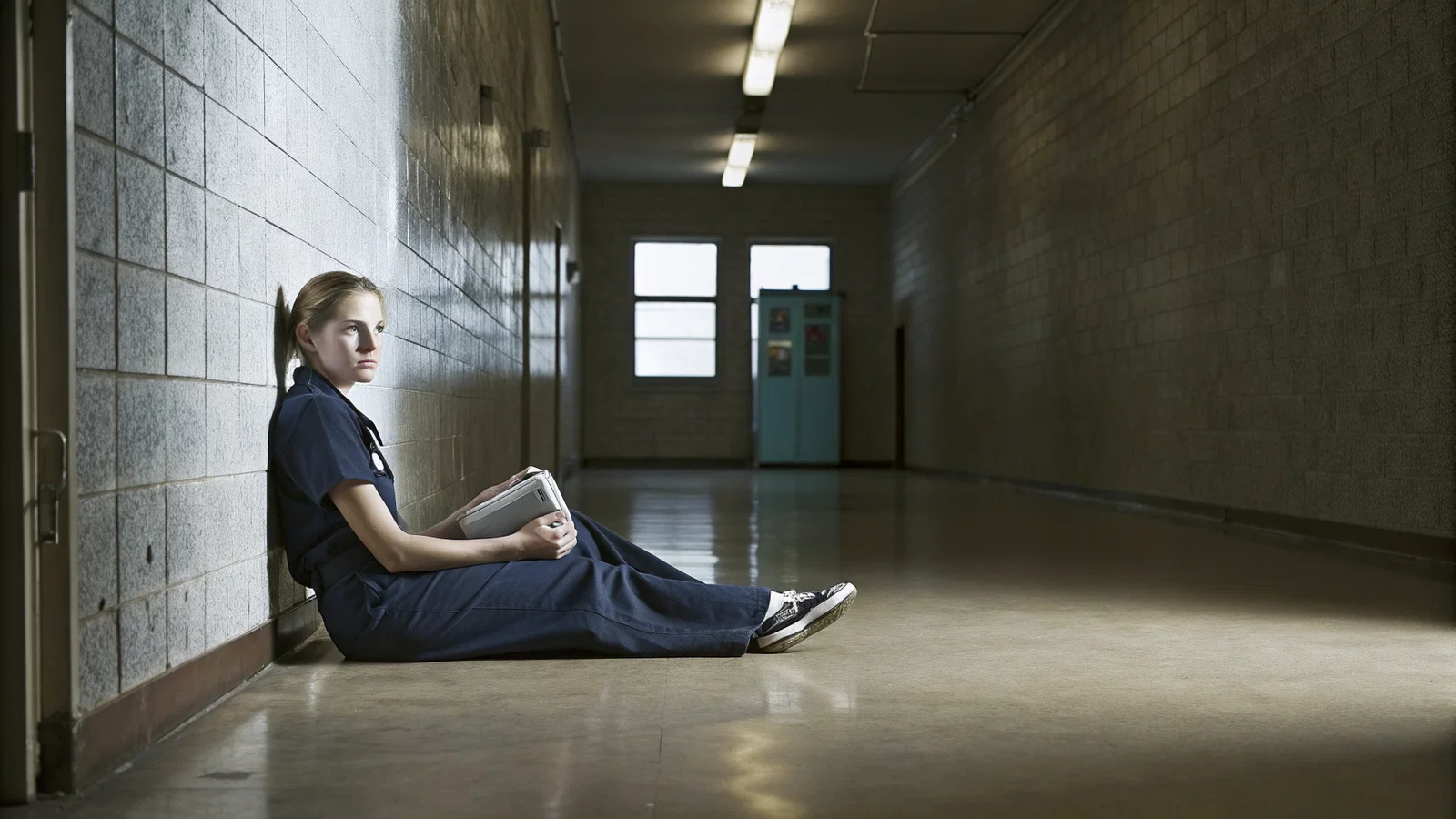
You're three hours into a 12-hour night shift. The call light won't stop. Your charting is behind. And you feel it, that weird fizz behind your left eye, the slight nausea, the light suddenly too sharp. That's not just being tired. That's a migraine coming.
You can't call out. You can't leave 30 patients with two nurses. So if you're in this situation, migraine prodrome at 2:14 AM and you're stuck on the floor, here's what you actually do.
Way 1: The Pre-Shift Preparation, Stock Your Station Before the Aura Hits
If you get migraines, night shift is rigged against you. Fluorescents that never turn off, no real meals, dehydration because you haven't peed in six hours, and your sleep is already garbage. If you know that, you prepare for it. Every time.
I keep a ziplock bag with sumatriptan, a cold pack, and a dark beanie in my locker, I grab it every shift. You need your own version. Not tomorrow. Tonight.
Build a real kit, not a vague idea of a kit:
- Your actual rescue meds. Not at home. On you. Triptan, gepant, whatever your neuro prescribed. If you use OTC, ibuprofen 400mg packets, not a rattling bottle.
- Electrolytes + caffeine. Two Liquid IV or nuun tablets and a small cold brew or 5-hour Energy. Trust me, you will not want to walk to the cafeteria when you're nauseous.
- Light blockers. Amber blue-blocker glasses (the $15 ones on Amazon work) and a black cotton beanie you can pull low. Looks dumb. Works.
- Cold. One instant squeeze cold pack and one stick-on forehead patch. Lockers don't have freezers.
For a deeper look at common mistakes, see Common Coping Strategies on Night Shift That Actually Backfire.
Here's the move that saves you: If you feel prodrome, yawning, irritability, craving carbs, neck stiff, that floaty visual edge, tell your charge immediately. Not when you're vomiting in the med room. Now.
Say this: "I'm getting a migraine aura. I have my meds. I'm going to take them now and work from Room 14 charting station where it's darker for the next 20 minutes. Can you keep an ear on my Team 2 call lights?"
You're not asking to leave. You're managing it early while you can still function. Nurses who wait until pain is an 8/10 are the ones who end up in the ED stretcher at 4 AM.
Way 2: The Caffeine-Electrolyte Triage Protocol
There's a window. Maybe 20-30 minutes after that first throb. Hit it right and you can abort a mild migraine completely. Miss it and you're white-knuckling until 7 AM.
If you're also studying for boards, check out Night Shifts While Studying for Boards: How to Protect Both Performance Levels.
If you're in this situation, early headache, pain 2-3/10, no major aura yet, do the caffeine-electrolyte hit.
Don't sip a giant gas station coffee. That's how you get tachycardic, more nauseous, and a rebound headache tomorrow.
Measured approach:
- Caffeine: 100-150 mg max. One 8oz coffee. One 5-hour Energy. One Excedrin Migraine is 65mg caffeine + acetaminophen + aspirin if you tolerate it.
- Plus electrolytes, not instead of. 16-20 oz of water with a full electrolyte packet. Cold. Not Gatorade sugar water. Pedialyte, LMNT, nuun.
- Same time as your abortive med. Don't wait to "see if caffeine works first." Take them together.
Why both? Caffeine constricts those dilated vessels and helps your triptan absorb faster. Electrolytes fix the dehydration and low magnesium that are literally part of migraine pathophysiology on nights. One without the other is half a treatment.
If nausea is already there, flip the order. Small sips of ice water first. Then a ginger chew, like Prince of Peace ginger chews from the gift shop, then half your caffeine. Chug and you'll vomit and lose your meds.
I've tracked this on my own shifts. Nothing done = worse every hour. Caffeine alone takes the edge off. Caffeine + electrolytes actually bends the curve down.
Set a timer. At 30 minutes, reassess. If you're not at least 30% better, escalate to Way 3 and 5. Don't just repeat caffeine.
Way 3: Strategic Blackout and Blue-Blocking, Manage Your Visual Environment
The floor is a light torture chamber during a migraine. Every computer screen, every fluorescent panel, every bedside monitor is pounding your occipital lobe. You cannot tough out photophobia. You have to engineer around it.
If you have an aura, zigzags, blind spot, floaters, you have about 10-15 minutes to get dark before the pain tsunami hits. Use it.
Move. Now. Medication room with the light off. Supply closet. Empty patient room. I have literally sat on the floor of the clean linen room with the light off for 12 minutes. No shame. It works. Cold pack on the back of the neck, eyes closed.
If you're past aura and into throbbing pain but still have to be at the nurses' station, gear up:
- Put on the amber blue-blockers. Not clear, not pretty. Amber/orange that actually filters 450-500nm. That is the wavelength that triggers photophobia worst.
- Dim everything. Monitor brightness to 20%. Turn on night mode/night shift on Epic, Voalte, your personal phone. Tape a piece of paper over that obnoxiously bright telemetry monitor if you have to.
- Ditch overheads. Get a small headlamp with a RED light setting. $12 on Amazon. Clips to your badge. You can assess a patient, hang a bag, check a wound with red light. Patients actually prefer it, they can stay asleep.
Here's the decision tree I run in my head:
The point isn't to hide. It's to stay functional without blasting your brain with light. You can chart in a dark room. You can answer call lights wearing orange glasses. Nobody cares if you look weird at 3 AM.
Way 4: The 15-Minute Power Nap Strategy (With a Wingman)
This is the one people feel guilty about. Don't. A controlled 15-minute nap with coverage is safer than pushing through with a migraine so bad you miss a critical order.
If you can get coverage, and you usually can at night if you ask right, take it. Coordination is everything.
Script that works: "Hey, I'm about to blow a migraine and I know if I don't reset for 15 I won't be safe for the rest of our shift. Can you cover my call lights and any vitals in 12 and 13? I'll set my alarm for exactly 15 and I'm in the break room with my phone on vibrate. I'll owe you and bring coffee at 5."
Rules:
- 15 minutes. Maybe 20 max. No more. Longer than 20 and you get sleep inertia, that groggy, cognitively slow hell that makes you more dangerous than the migraine.
- Make it truly dark and quiet. Sleep mask. Foam earplugs. Phone on vibrate in your hand, not loud alarm that wakes the whole unit. Crack the break room door so your wingman can tap you.
- Pre-position. Water, meds already taken, cold pack on forehead before you lie down.
I've seen nurses try to be heroes and skip this. They end up making a med error at 5 AM. A 15-minute covered nap is not abandoning patients. It's protecting them.
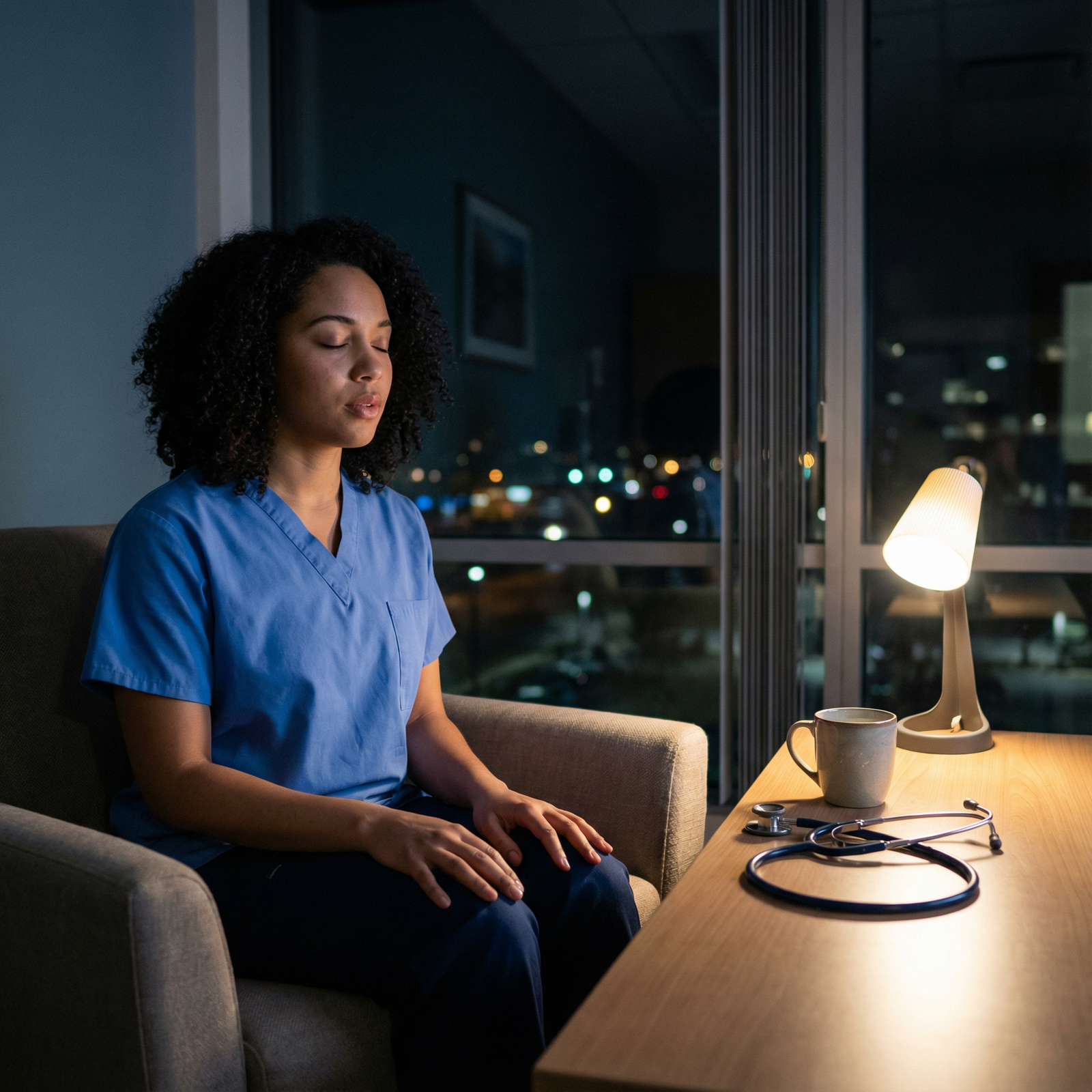
Can't get coverage? You still have options. Do micro-rests. Find a corner of the nourishment room, sit, feet flat, eyes closed, slow box breathing, inhale 4, hold 4, exhale 4, hold 4, for 5 full minutes. It's not sleep but it drops sympathetic overdrive enough to let your abortive work.
Way 5: Symptom-Specific Pharmacologic Pouch, What to Reach For When the Floor Is Still Calling
You are not a bad nurse for medicating yourself on shift. You are responsible. Waiting to see if it gets worse is how you end up unable to see.
Keep a small pouch in your scrub pocket. Not in your locker. On you.
What goes in it:
- Abortive: Your triptan, gepant (Nurtec/Zavzpret), or 2x naproxen 220mg if that's what you have. If you have sumatriptan vials and can self-inject, even better, it bypasses your nauseous gut.
- Anti-nausea: Zofran ODT 4mg melts on the tongue. You can borrow one from the Pyxis, most floors stock it for intractable nausea and hyperemesis. It's faster than waiting for your system to absorb a pill you might vomit. Ginger chews as backup.
- Physical: One stick-on menthol cold patch and that instant cold pack.
Take it at breakthrough. First sign of escalation. Not "when I can't stand it anymore." That old-school advice is wrong and it costs you shifts.
If you can't swallow, dissolve or inject. ODT, nasal spray, subcut. That's why those formulations exist. Popping a solid pill while actively vomiting is nonsense.
After you dose, log it in your personal phone notes, time, what you took, pain 0-10, trigger you suspect. Not for charting. For your own pattern tracking. And for protecting yourself if occ health asks.
Finally, know when to tap out. If after one full cycle (meds + caffeine/electrolyte + 15-minute dark break + glasses) you're still 7/10, visual disturbance not clearing, vomiting more than once, or you feel unsafe, then it's professionally responsible to tell charge you need coverage to go home. That is not weakness. That is judgment. Staying when you can't safely assess a patient is what puts your license at risk.
If you have a migraine tonight, do this right now:
- Grab your kit from your locker or make a bare-bones version before the pain peaks.
- Take your abortive + caffeine 100mg + electrolytes early. Time-stamp it.
- Get dark for 10-15 minutes and put on those amber glasses before you go back out.
- Ask your most trusted coworker for a 15-minute cover. You'll return the favor next week when they're in your shoes.
- If nausea hits, get a Zofran ODT from the med room, don't white-knuckle it and lose your meds.
You can finish a night shift with a migraine. I've done it too many times. But you need a system before the aura makes decisions for you.


