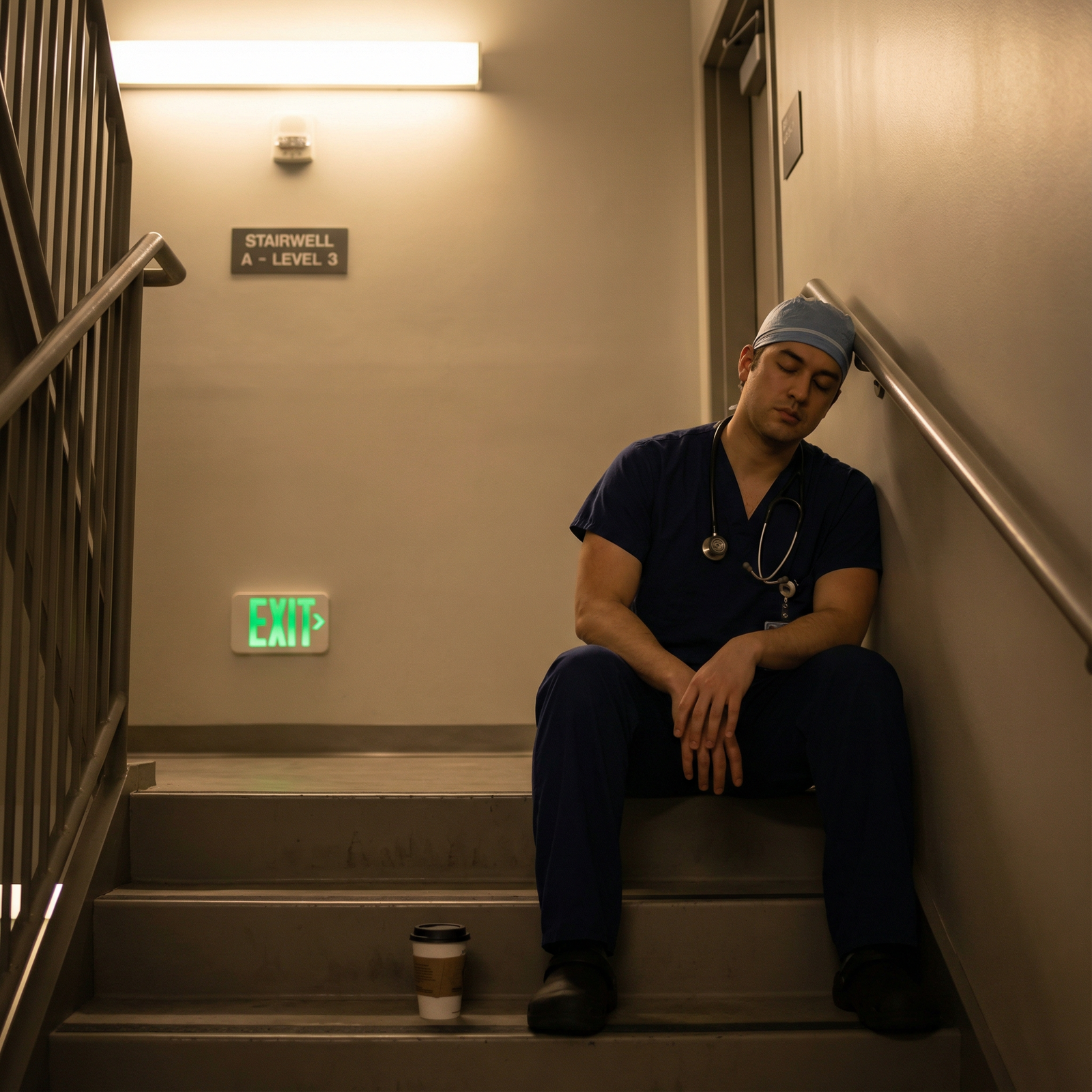
What if the very things getting you through night shift are the same things that are slowly breaking you?
Let me be blunt: most residents do not crash on nights because of the work. They crash because of the way they try to cope with the work.
You already know nights are brutal: flipped circadian rhythm, fewer resources, more responsibility, more code blues at 3 a.m. But the quiet killer is not the schedule. It is the “survival tactics” everyone casually passes down like sacred wisdom:
“Just power through without sleeping so you can flip back faster.”
“Pound coffee at 3 a.m. – whatever keeps you awake.”
“Don’t eat; it will make you sleepy.”
“Just doomscroll between pages. You deserve a break.”
This is how people go from “I am tired” to “I feel broken” in three blocks.
Let me walk through the common coping strategies I see residents use on night shift that feel smart in the moment but absolutely backfire – cognitively, physically, and professionally.
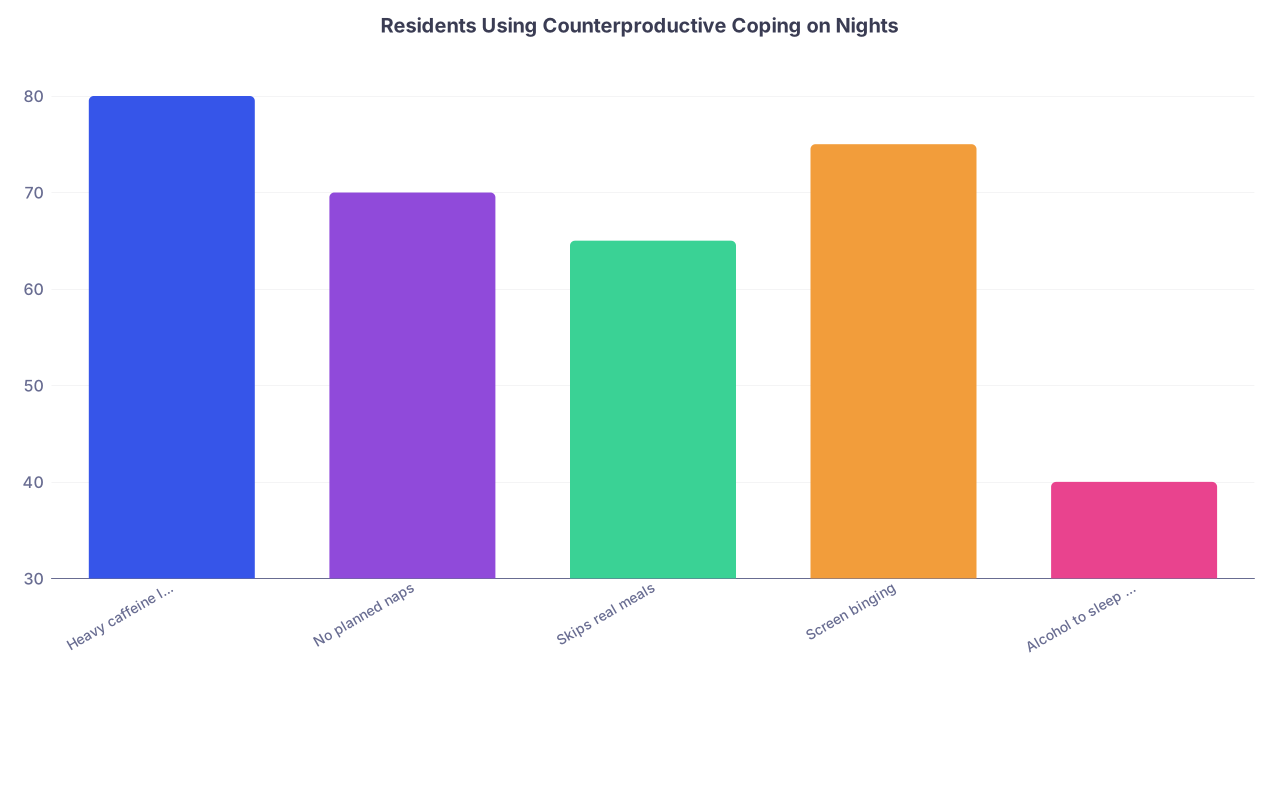
| Category | Value |
|---|---|
| Heavy caffeine late | 80 |
| No planned naps | 70 |
| Skips real meals | 65 |
| Screen binging | 75 |
| Alcohol to sleep post‑call | 40 |
1. The “Caffeine as Life Support” Trap
If you are slamming coffee at 2–4 a.m. because “it is that or fall asleep standing,” you are already behind.
The mistake
You front-load caffeine late into the shift, or you just drink it continuously “as needed”:
- Venti coffee starting at midnight
- Energy drinks at 3 a.m. “for sign-out”
- Last cup at 5–6 a.m. “so I can safely drive home”
Feels responsible, right? You are staying awake. You are protecting your patients.
Except that is not what actually happens.
Why it backfires
You destroy your post-call sleep window.
Caffeine has a half-life of about 5–7 hours in many people. That 3 a.m. energy drink? Still around when you lie down at 9–10 a.m. You do not sleep deeply. You sleep shallow, wake up repeatedly, and then drag yourself back to your next shift even more wrecked.You mask fatigue instead of managing it.
Caffeine makes you feel alert but does not restore reaction time or working memory. You think you are sharp when you are not. That is how medication errors slip in. I have watched residents click “OK” on a dangerous EHR default because they were wired and exhausted at the same time.You set up the crash.
The caffeine spike drops. Hard. Often in that 3–5 a.m. window when bad things happen – sepsis, hypotension, delirium meltdowns. You want your brain to be stable then, not bouncing off a biochemical cliff.
What to do instead (and not screw this up)
You do not need to quit caffeine. You need to stop using it like a fire extinguisher.
Use it like a scheduled medication:
- One moderate dose near the start of your shift
- Maybe a second lighter dose before midnight
- Then cut it off
If you are so tired at 4 a.m. you need a triple espresso to chart safely, the problem is not “too little caffeine.” The problem is sleep debt and lack of planned rest (more on that below).
2. “I’ll Just Power Through Without Sleeping”
This is the macho favorite. Surgery residents love this one. So do anxious interns who are terrified of being “caught sleeping.”
The mistake
You decide real sleep is not possible on nights, so you:
- Do back-to-back night shifts with zero daytime sleep: “I can sleep on my golden weekend.”
- Avoid resting during lulls because “something might happen.”
- Refuse naps post-call so you can “flip back” to a daytime schedule faster.
People brag about this. Like it is a flex.
It is not a flex. It is a liability.
Why it backfires
Your cognitive function drops to legally drunk levels.
After about 17–18 hours awake, your performance is roughly equivalent to a blood alcohol level of 0.05%. Keep going and it climbs. You would never accept a drunk resident writing your chemo orders. Yet people accept themselves doing the equivalent because “I’m just tired.”You start making quiet, invisible mistakes.
Not the dramatic ones. The silent ones:- Confusing similar drugs (cefepime vs ceftriaxone)
- Missing a subtle vital sign trend
- Forgetting to follow up a critical lab that came back at 5 a.m.
These never show up in morbidity and mortality labeled as “fatigue,” but everyone who has worked nights knows.
You accumulate sleep debt that does not pay back cleanly.
There is this myth: “I will just crash 14 hours after this block.” No, you will fragment sleep, get headaches, feel hungover, and then still be off for days. During which you are short-tempered, emotionally flat, and prone to bad decisions.
The smarter approach: controlled, intentional rest
This is where people get nervous: “I cannot nap; I will sleep through a code.” That is a systems problem. You address it with structure:
- Plan brief, strategic naps (20–30 minutes) if your rotation and coverage allow.
- Coordinate with your co-resident: one person lies down while the other has the pager, then switch.
- If your program “unofficially” shames sleeping, you still need micro-rest: eyes closed 5–10 minutes between tasks, even sitting up.
The real mistake is not “napping on nights.” The mistake is pretending your brain is immune to biology.
3. Skipping Real Food and Living on Vending Machines
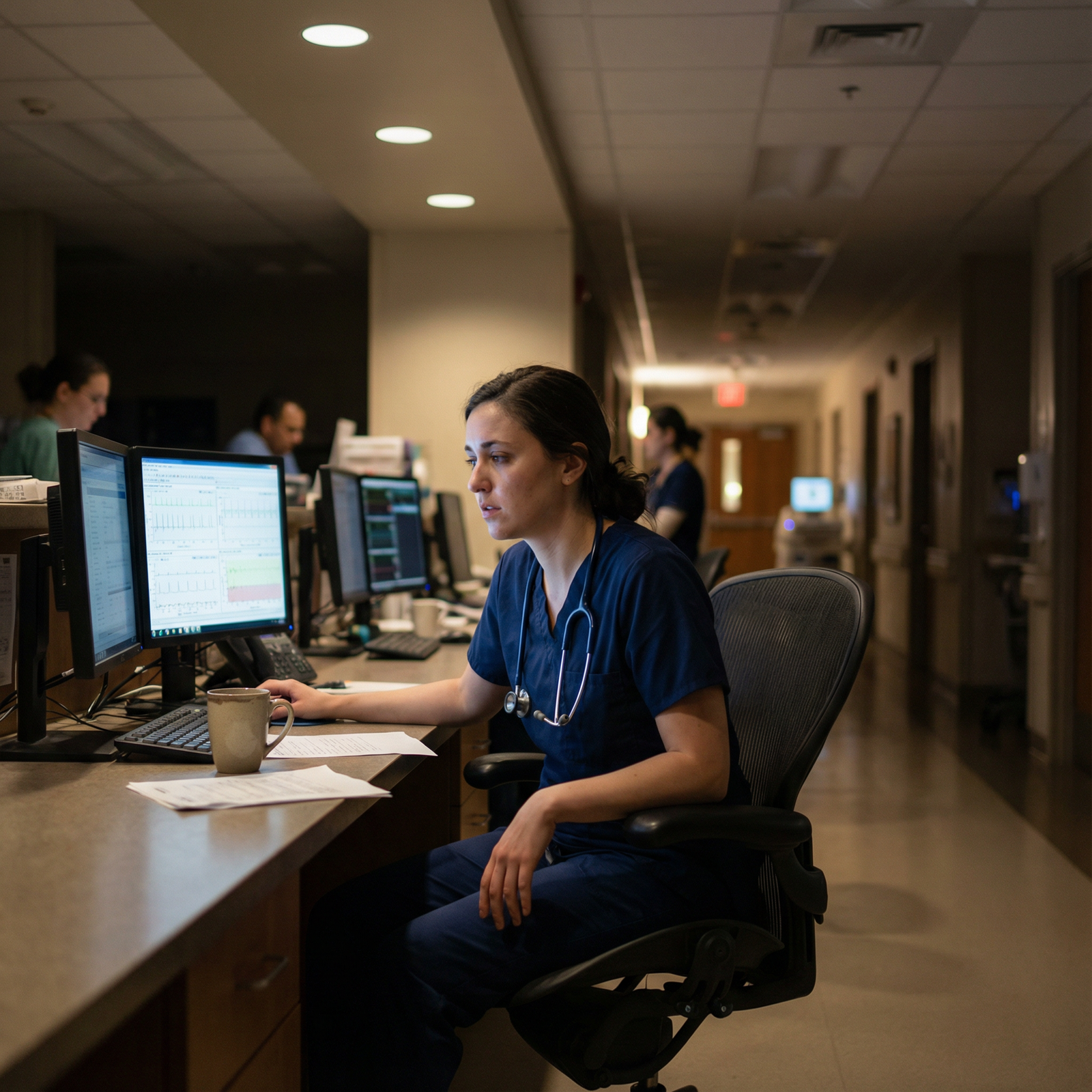
I have watched interns go an entire 12-hour night shift on:
- One coffee
- Half a muffin
- Two granola bars
- Maybe yogurt if someone brought “sign-out snacks”
Then at 4 a.m., they are nauseated, shaky, and mentally fogged – and they think this is “just night shift.”
The mistake
You think:
- “Eating a real meal will make me sleepy.”
- “I am not hungry; my stomach is off.”
- “It is too busy to sit and eat.”
- “The cafeteria is closed; vending machine is fine.”
So you graze on sugar and simple carbs when you remember, or you do not eat at all until 6–7 a.m. and then inhale something terrible from the only open place.
Why it backfires
You end up on a glucose roller coaster.
High-sugar snacks spike then crash your blood sugar. That 2 a.m. cookie pile feels good for 20 minutes. Then your brain slows, you get irritable, and your ability to concentrate tanks.You misread bodily signals.
Anxiety, hunger, and fatigue blend. I have seen residents think they are “panicking” about a complex patient when part of it was simply: you have not eaten in 10 hours and your brain is running on fumes.Your long-term resilience erodes.
String enough of these shifts together and it is not just about one night. You get GI issues, heartburn, headaches, and baseline fatigue that does not lift. Then you start leaning harder on caffeine and sugar and the loop tightens.
The fix: predictable, boring, deliberate nutrition
You do not need to meal-prep like an Instagram influencer. You just need to stop trusting the hospital to feed you at night. That is how you get trapped.
Think “defensive eating”:
- Pack one real meal: protein + complex carb + some fat (chicken and rice, lentils and pita, even a decent sandwich).
- Pack one smaller thing you can eat in 5 minutes: nuts, cheese + crackers, hummus + veggies, yogurt + granola.
- Decide before the shift when you are going to eat (ex: sometime between 11–1 and again around 3–4 a.m.) rather than waiting until you are starving.
The mistake is not eating “unhealthy food.” The mistake is eating reactively and erratically while expecting your brain to function at attending level.
| Approach | What It Looks Like | Likely Result |
|---|---|---|
| Planned meals | Brought from home, eaten at set windows | More stable energy, fewer crashes |
| Vending-only | Chips, cookies, soda at random times | Glucose swings, brain fog |
| “I’ll just snack” | Random bites when remembered | Under-fueling, irritability |
| No food | Coffee only “to suppress appetite” | Shakiness, poor decisions, crash post-shift |
4. Doomscrolling and Binge-Watching to “Stay Awake”
This one is sneaky because it feels harmless. You are between admits. Your patients are relatively stable. The workroom is quiet. So you:
- Open Instagram, TikTok, Reddit
- Let Netflix run in the background
- Start scrolling news or residency forums
“I am just staying awake. If I go lie down, I’ll fall asleep and miss something.”
The mistake
You confuse stimulation with alertness. You pour blue light and random content into a sleep-deprived brain and expect it to make you more functional.
Why it backfires
It shatters your focus.
Bouncing between a code status discussion and TikTok is like doing interval sprints with your attention. You make your brain constantly switch contexts: dopamine hit, serious task, dopamine hit. Over a shift, this depletes your mental stamina. You feel more scattered near the end – not less sleepy, just more fried.It worsens your post-shift insomnia.
Blue light exposure and emotional stimulation (even stupid videos) in the hours before you try to sleep make it much harder to wind down. Your brain stays keyed up. Then you lie in bed at 9 a.m. exhausted yet wired, replaying everything you saw.It encourages emotional numbing.
A lot of doomscrolling is not about “staying awake.” It is about avoiding your own thoughts. The difficult family conversation, the mistake you may have made, the patient who is circling the drain. You numb out with your phone, which works temporarily, but then the emotional load stacks up shift after shift until it breaks through as full-blown burnout.
A better way to “fill the gaps”
You do not need to be a monk. Phone use is not evil. The mistake is using chaotic, high-stimulation content as your main coping strategy.
Safer options between tasks:
- Low-stimulation reading: a paper book, a low-drama ebook, a printed article you have wanted to read
- Brief, structured journaling (2–3 minutes): what went well, what felt hard, one thing to follow up
- Short, guided audio relaxation or breathing exercise (no screen, just audio)
The goal is to protect your attention, not annihilate it.

5. “I’ll Drink to Knock Myself Out After Nights”
This one does not get talked about enough because people are ashamed, or they normalize it.
I have heard this exact sentence on more than one rotation:
“Only way I can sleep after nights is a beer or two. Otherwise I just lie there.”
The mistake
You use alcohol (or sometimes benzos, inappropriately obtained) as a “sleep aid” after night shifts:
- A glass or two of wine after driving home
- A couple beers “to take the edge off” before crashing at 9–10 a.m.
- Occasional sleeping pills shared by a co-resident, used without supervision
It feels efficient: you are desperate to sleep, this makes you sleepy. Problem solved, right?
Wrong.
Why it backfires
You destroy sleep quality.
Alcohol might help you fall asleep faster, but it fragments sleep and suppresses REM. You wake up feeling unrefreshed, even if you were technically “asleep” for several hours. Then you need more on subsequent days to get the same sedating effect.You start a quiet dependency pattern.
It does not look like stereotypical addiction. It looks like:- “I sleep badly without it.”
- “It is just for night shifts.”
- “I only use it when I am really wired.”
Then nights become more frequent. Stress increases. Your brain starts to associate every hard sleep with substances. That is a nasty trap to climb out of mid-residency.
You add another cognitive depressant on top of sleep deprivation.
Your brain is already impaired by circadian disruption. Now you throw in a CNS depressant that lingers into your “day.” Faster burnout. More mood swings. Slower processing.
The more boring, more effective tools
You will not like this answer because it is not magic.
- Consistent post-shift routine: same sequence every time (small snack, hot shower, blackout room, same audio or fan noise).
- Environmental control: blackout curtains, eye mask, earplugs or white noise.
- If persistent insomnia is wrecking you, see an actual doctor and talk about it. Do not free-style your own sedative regimen with beer and borrowed pills.
The mistake is pretending self-medicating is just “adult coping.” In residency, it is self-sabotage in a white coat.
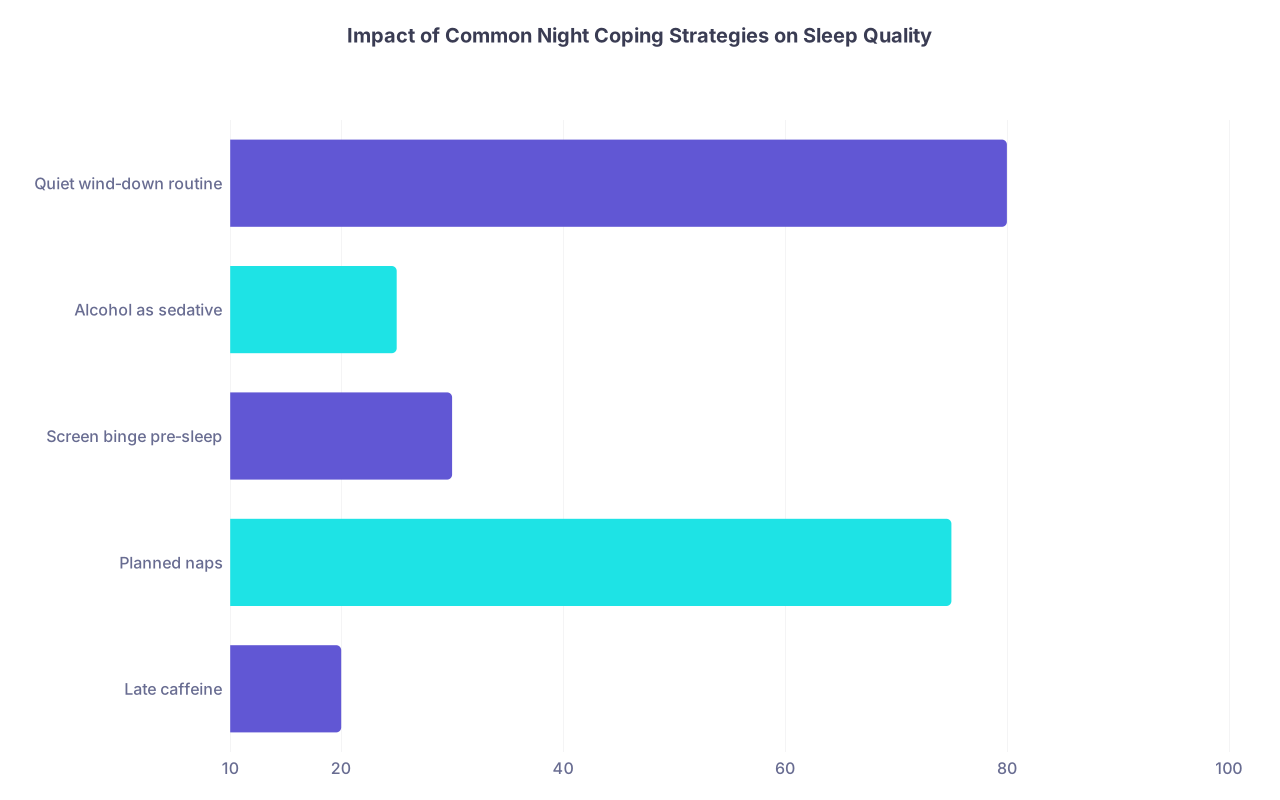
| Category | Value |
|---|---|
| Late caffeine | 20 |
| Planned naps | 75 |
| Screen binge pre‑sleep | 30 |
| Alcohol as sedative | 25 |
| Quiet wind‑down routine | 80 |
6. Overworking to “Earn” Rest (and Never Feeling Caught Up)
Another common pattern: you feel guilty relaxing on nights.
So you fill every quiet moment with:
- Inbox clean-up
- Note perfection
- Pre-charting for tomorrow’s clinic
- Reading multiple review articles at 3 a.m. “while I have time”
Sounds admirable, right? This is what “good residents” do.
Until it is not.
The mistake
You decide you must be constantly productive to justify being on nights. Any moment not spent working is “wasted.” You do not allow real mental downshifts. You treat nights like a performance test instead of a physiological assault.
Why it backfires
You never let your brain truly downshift.
There is a difference between active reading about heart failure management and letting your brain idle. You need both. If all you allow is medium-to-high intensity effort, your fatigue compounds.You tie your self-worth to output, not safety.
You start thinking: “If I am not doing extra work, I am lazy.” So you stay late post-call to “finish everything.” You sacrifice recovery for optics. Over months, this is how people slide into severe burnout while everyone praises their “work ethic.”Your error risk rises as your insight drops.
Fatigued people are worse at noticing how fatigued they are. It is not just that your error rate increases; your insight into that risk decreases. Overworking into exhaustion is arrogant in disguise. It assumes your brain is special.
A healthier boundary: “Enough” work on nights
You are there to:
- Keep patients safe
- Respond promptly to changes
- Complete necessary notes and orders
- Learn sustainably
You are not there to completely overhaul your clinic templates at 4 a.m. or read an entire NEJM issue in one sitting.
Build in protected low-output time. That is not laziness. It is harm reduction.
7. Isolating Yourself because “Everyone Hates Nights Anyway”
On nights, the hospital can feel like a different planet. Fewer attendings. Skeleton crews. The day teams log off, group chats go quiet, and you are alone with your pager and your thoughts.
Many residents respond by withdrawing completely:
- Leaving group chats and avoiding social interaction because “no one gets how tired I am.”
- Skipping check-ins with co-residents, just doing their own admissions and disappearing into rooms.
- Keeping struggles to themselves: “Everyone else seems fine; I am just weak.”
The mistake
You assume suffering alone is the default. You do not share what nights are doing to your mind and body until it explodes as a meltdown, an outburst, or a resignation email drafted at 5 a.m. in the call room.
Why it backfires
You lose reality checks.
When you are exhausted, your thoughts get distorted:- “I am terrible at this.”
- “Everyone thinks I am incompetent.”
- “This is not survivable.”
A 30-second reality check from another tired human can cut through that. In isolation, those thoughts harden into beliefs.
You miss practical hacks.
Every senior has figured out small things that make nights bearable on that particular service: which nurse will text you if your pager fails, which room is quietest at 3 a.m., how to batch certain tasks. If you isolate, you do not learn the local tricks. You just suffer.You normalize misery as “just residency.”
You start thinking everyone else feels this way and is simply tougher than you. That is how people drift into serious depression without seeking help.
Minimum connection to prevent the spiral
You do not need to be social. You do need not be alone in a bunker.
- Say out loud to at least one colleague per shift: “Nights are hitting me hard this week.”
- If a co-resident looks wrecked, name it and invite honesty: “You look how I feel. You ok?”
- If you are having real dark thoughts (hopelessness, passive suicidality), that is not “normal night fatigue.” That is a red flag. Talk to someone with actual power to help: chief resident, program director, physician health service.
Isolation feels like protection. It is not. It removes your lifelines.
8. The Hidden Meta-Mistake: Treating Nights as a Short-Term Problem
The biggest mistake? Acting like night shifts are a temporary glitch you can brute force your way through.
For some specialties (EM, ICU, hospitalist), nights are not a “phase.” They are the job. For others, night float blocks repeat for years. You cannot sprint a marathon and call it strategy.
Nights demand systems, not heroics.
If you remember nothing else, remember this:
The coping strategies that feel the easiest in the moment – late caffeine, skipped sleep, vending machine dinners, doomscrolling, “just one drink” to knock out – quietly undercut your vigilance, judgment, and long-term stability.
Your brain will not reward you for ignoring biology. Planned rest, real food, and true mental downtime are not luxuries on nights. They are the only things keeping you from becoming a dangerous version of yourself in a white coat.
Do not do nights alone. Compare notes, call out bad advice, and build small, boring systems that keep you safe. Heroics look impressive for a block. Systems keep you functioning for a career.