
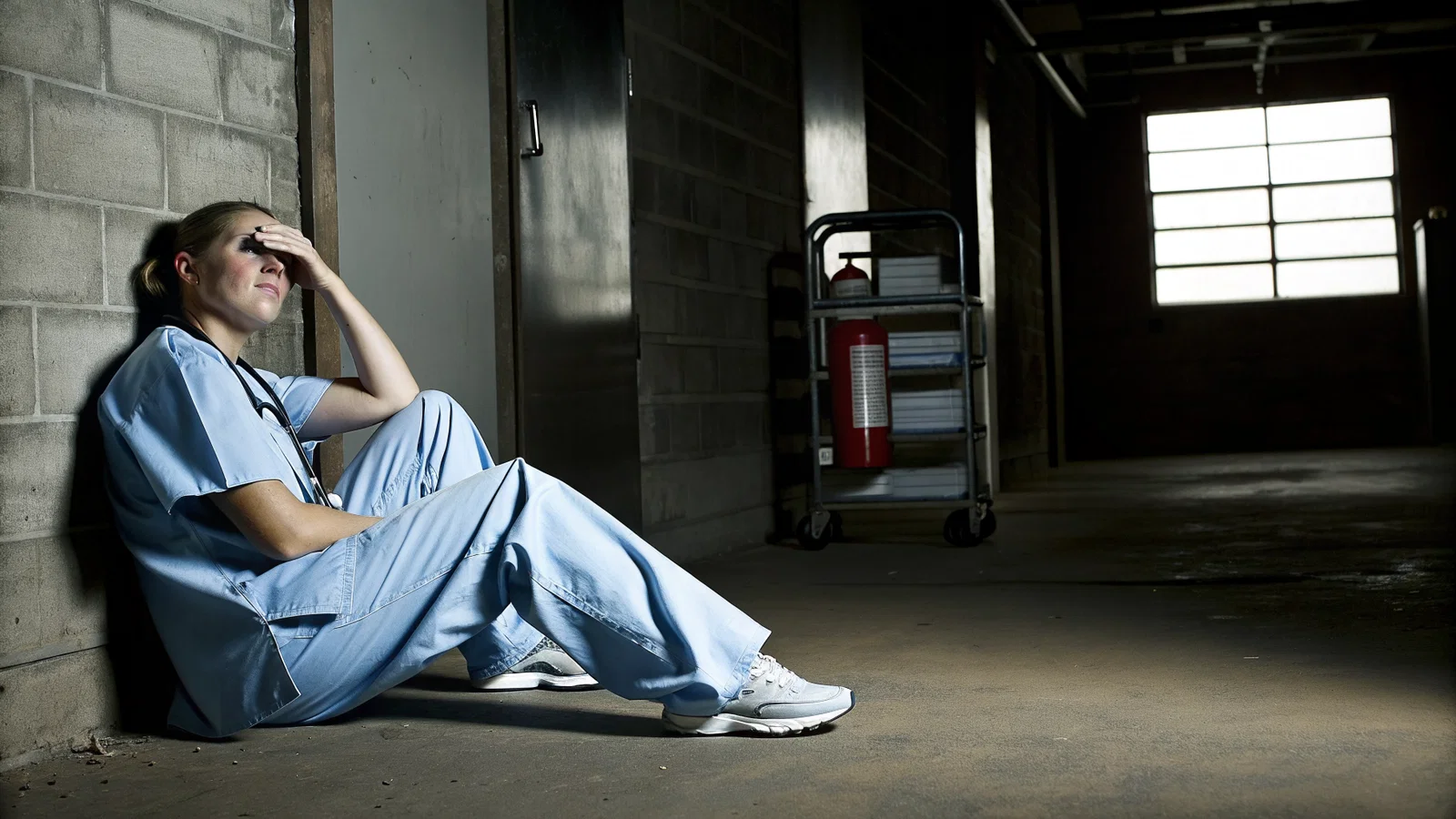
The Night Float Nightmare: Why Every Minute of Sleep Matters
You know the exact moment it happens. It's 3:15 AM. The hospital is eerily quiet except for the hum of the HVAC and the intermittent beep of an IV pump down the hall. You're staring at a patient's chart, and the words literally start to blur. Your brain feels like it's packed in wet cotton. This is the night float wall, and hitting it is one of the most terrifying experiences in residency.
For more on the broader relationship between night shift work and medical errors, see how sleep deprivation contributes to (Night Shift Cognitive Errors: Anchoring, Fatigue, and How to Counteract)(https://residencyadvisor.com/resources/night-shift-survival/night-shift-cognitive-errors-anchoring-fatigue-and-how-to-counteract).
I lie awake before my night float blocks wondering if I'm going to be the resident who makes a fatal mistake just because I was too tired to notice a subtle EKG change or a slightly altered mental status. The grueling night float schedule completely wrecks your circadian rhythm. You're fighting millions of years of human evolution that tells your brain to shut down when it's dark. The cognitive impact isn't just about feeling groggy; it's a profound degradation of your executive function, working memory, and reaction time.
The statistics are what really keep me up at night. Studies on sleep-deprived residents show a massive spike in medical errors during night shifts. We're talking about a 36% increase in serious medical errors and a 56% increase in non-intercepted serious errors when residents are working extended duration shifts. That's not just a number. That's a missed allergy. That's a tenfold medication overdose. That's a delayed diagnosis of a ruptured appendix.
This brings us to the central dilemma that tears at every exhausted resident: do you take a structured nap, or do you push through with no nap?
The culture of medicine has a toxic relationship with sleep. We are implicitly, and sometimes explicitly, taught that sleeping on shift is a sign of weakness. If you nap, you're lazy. If you nap, you're not dedicated. But if you don't nap, you are statistically more likely to harm a patient. It's a lose-lose scenario that breeds intense anxiety. I constantly oscillate between the fear of looking like a slacker to my attending and the visceral, stomach-dropping fear of killing someone because my eyes were too heavy to stay open. Every single minute of sleep matters, but knowing how to get it without sabotaging your career or your patients is a tightrope walk.
The Case for No Napping: Willpower or Disaster?
There is always that one senior resident or attending who swears by the "no nap" rule. Their rationale is built on pure grit. They'll tell you to just power through with caffeine, adrenaline, and sheer willpower. "Drink a Red Bull, do some jumping jacks, and get back to work," they say.
Let's be brutally honest: pushing through on caffeine alone is a disaster waiting to happen.
The scientific evidence completely dismantles the "willpower" argument. When you deprive your brain of sleep, no amount of espresso can restore your impaired decision-making or fix your delayed reaction times. Caffeine just masks the sleepiness; it doesn't reverse the cognitive deficit. You might feel wired, but your brain is still misfiring. Error rates skyrocket. You start experiencing microsleeps, those terrifying two-to-three-second windows where your brain literally goes offline while your eyes are open.
My biggest personal anxiety? What if I nod off during a critical procedure? Imagine placing a central line or doing a lumbar puncture at 4 AM, and your hand slips because a microsleep hijacked your motor cortex. The thought makes my chest tight. It's a worst-case scenario that plays on a loop in my head.
When we look at the hard data, the no-nap strategy fails miserably compared to nap-based strategies. The difference in patient safety outcomes is stark.
As the data shows, residents who refuse to nap and try to white-knuckle it through a 12-hour night shift have an error rate more than double those who use a structured nap. Relying on willpower isn't a badge of honor. It's a patient safety hazard. If you aren't napping, you aren't being tough; you're being reckless.
Structured Napping: The Evidence-Based Safety Net
So, if powering through is a recipe for disaster, what's the alternative? Structured napping. This isn't about curling up under a desk for three hours and abandoning your team. It's a highly calculated, evidence-based safety net designed to restore cognitive function without triggering the dreaded sleep inertia.
The magic number for a structured nap is 20 to 30 minutes. This specific duration is critical. If you sleep for 20 minutes, you stay in the lighter stages of sleep (Stage 1 and Stage 2). You get the restorative benefits, improved vigilance, better memory consolidation, and faster reaction times, without entering slow-wave deep sleep. If you nap for 45 minutes or an hour, you plunge into deep sleep. Waking up from deep sleep causes severe sleep inertia, leaving you feeling groggy, disoriented, and arguably more dangerous than before you closed your eyes.
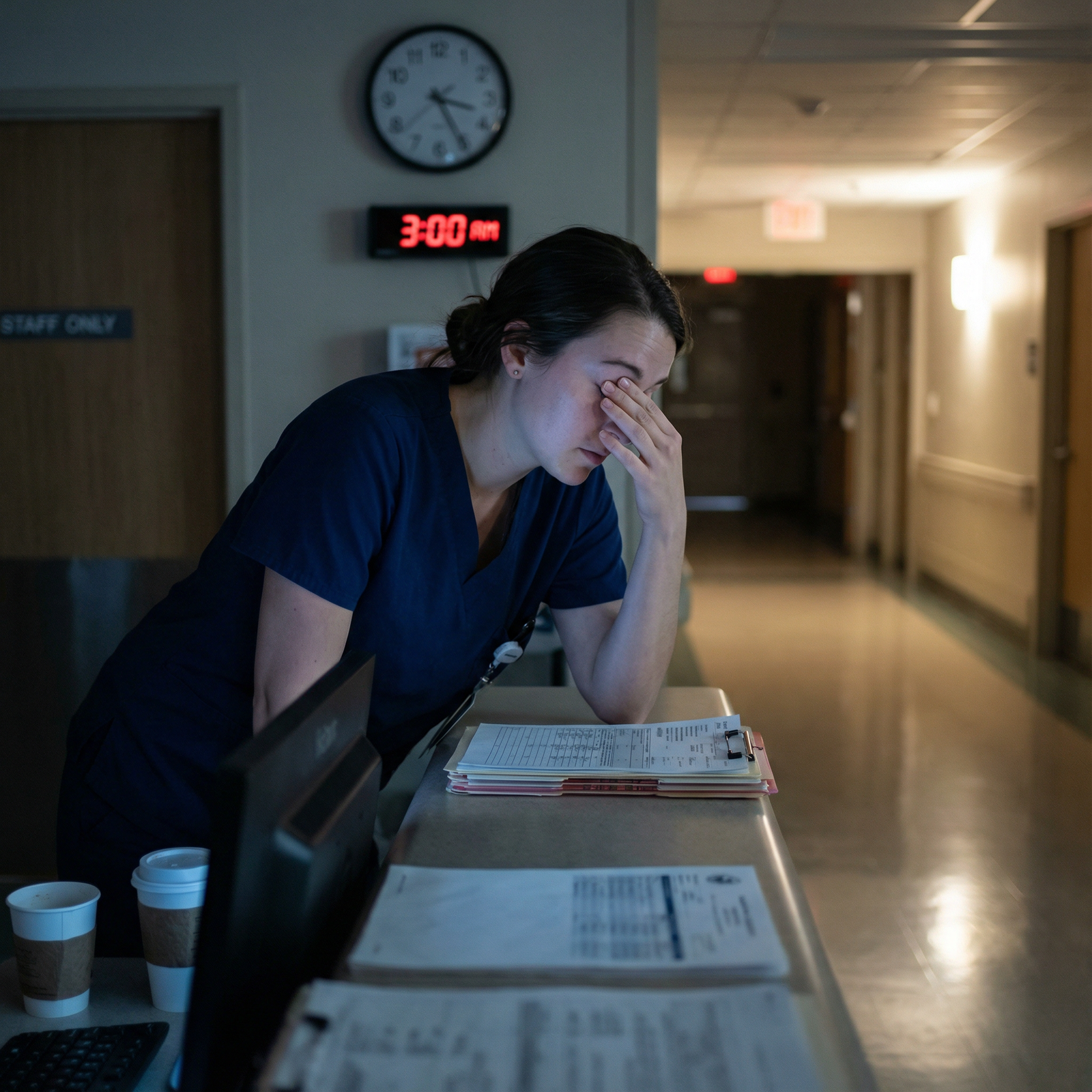
Timing is everything. The best time to schedule your nap is during the circadian nadir, usually between 2 AM and 4 AM, or right after you've finished your heaviest admission burst and before the morning rush begins. Studies consistently show that a planned 20-minute nap significantly reduces errors and improves vigilance for the remaining hours of the shift. It's a biological reset button.
But I know the fears that creep in. What if I can't fall asleep? What if I wake up groggy and miss a page? These are valid, anxiety-inducing what-ifs. If you can't fall asleep, just lying still in a dark, quiet room with your eyes closed still reduces sensory input and lowers your heart rate. It's still rest. As for waking up groggy, sticking strictly to the 20-30 minute rule and using a jarring, loud alarm prevents you from oversleeping. You might feel a tiny bit of grogginess for the first five minutes, but it dissipates quickly, leaving you sharp for the rest of the night.
Creating Your Personal Night Float Sleep Plan
You can't just wing it. If you don't have a plan, the chaos of the hospital will eat your sleep time alive. You need a step-by-step strategy to integrate structured naps into your night float routine.
First, secure your environment. Find a quiet space, a call room, an empty patient room, or even your car if it's safe and accessible. Earplugs and an eye mask are non-negotiable. They signal to your brain that it's time to shut down and block out the inevitable hospital noise.
Second, manage your caffeine intake strategically. Try the "caffeine nap" trick. Drink a cup of coffee right before you lay down for your 20-minute nap. Caffeine takes about 20 to 30 minutes to cross the blood-brain barrier and take effect. By the time your alarm goes off, the caffeine is just kicking in, effectively canceling out any mild sleep inertia and giving you a double boost of alertness.
What if the ward is too busy and you absolutely cannot nap? You need alternative strategies to minimize errors. Use cognitive offloading. Write everything down. Do not rely on your sleep-deprived memory. Double-check all high-risk medication doses with a pharmacist or a colleague. Slow down. When you are exhausted, your brain wants to take shortcuts. Force yourself to go through every step of your clinical reasoning out loud.
Prioritize your sleep. Protect your patients, and protect yourself. You are no good to anyone if you are running on fumes and making preventable errors. Take the nap.
Key Takeaways
- Structured naps reduce night float errors by up to 40% compared to no napping.
- Even a 20-minute nap improves reaction time and vigilance for several hours.
- Avoid sleep inertia by limiting naps to 30 minutes and waking with an alarm.


