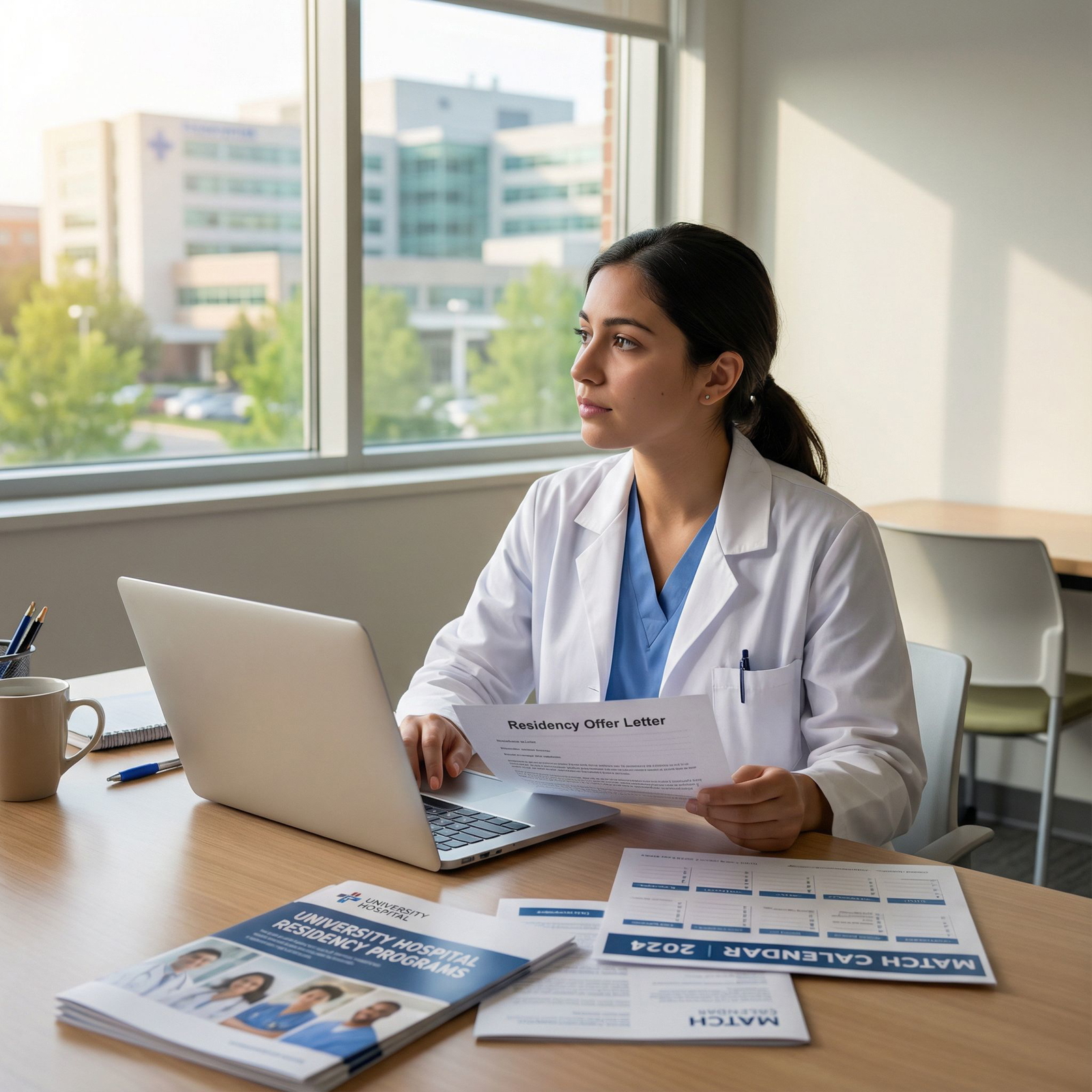
Pre-match communication is one of the most confusing—and emotionally charged—parts of applying to plastic surgery residency, especially for a DO graduate. Between rumors about “secret” deals, unclear rules around pre-match offers and early commitment, and anxiety about program communication before Match Day, it’s easy to feel uncertain about what’s allowed and what’s wise.
This guide breaks down how pre-match communication really works for osteopathic applicants in plastic surgery, how to navigate integrated plastics match dynamics, and how to protect yourself ethically and strategically.
Understanding Pre-Match Communication in Plastic Surgery
What “Pre-Match Communication” Actually Means
In the context of plastic surgery residency, pre-match communication includes any contact between you and a program that occurs after interviews open but before the Match is finalized, such as:
- Thank-you emails after interviews
- Update letters (new publications, Step/COMLEX scores, honors, etc.)
- Interest statements (“You are my top choice,” etc.)
- Clarifying emails about ranking or program fit
- Informal signals from faculty or residents about your status
- Rarely, explicit or implied pre-match offers or early commitment discussions (where allowed)
For a DO graduate, understanding the difference between acceptable communication and NRMP or ERAS violations is critical—especially in a high-stakes specialty like plastic surgery.
The Rules: NRMP, ERAS, and Program Policies
Most integrated plastic surgery residencies participate in the NRMP Match, which has clear rules:
- Programs cannot require you to disclose your rank list.
- You cannot ask programs where you are ranked.
- Both sides may express interest but may not make or solicit commitments that violate the Match agreement.
- Coercive behavior (e.g., “If you don’t tell us we’re #1, we will not rank you”) is prohibited.
Some osteopathic programs or independent positions may operate differently (and historically some DO programs did not participate in NRMP), but this landscape has largely consolidated. Still, you may encounter:
- Programs outside the NRMP offering direct contracts
- Informal “we will rank you high” signals
- Old-school “pre-match culture” at certain hospitals
As a DO applicant to plastic surgery, assume the NRMP Code of Conduct applies unless a program explicitly states they are outside the Match—and verify that independently.
Unique Challenges and Opportunities for DO Graduates in Plastic Surgery
Realities of Being a DO in the Integrated Plastics Match
Plastic surgery remains one of the most competitive specialties. For DO graduates, the osteopathic residency match in plastics is highly constrained, as most positions are part of the integrated plastics match through NRMP, historically dominated by MDs.
Challenges you may face:
- Fewer DO role models or mentors in plastic surgery
- Persistent bias in some programs that rarely rank DO applicants
- Higher expectations for board scores, research, and letters to “offset” DO status
- Limited knowledge of how to interpret DO transcripts and COMLEX scores (though this is improving)
That said, many programs are now more open to DO graduates—especially those who:
- Take and score well on USMLE Step 1/2 in addition to COMLEX
- Have strong research in plastic surgery
- Have away rotations at academic plastics departments
- Demonstrate interpersonal strengths and professionalism
Pre-match communication becomes a strategic tool for you to:
- Reinforce your serious commitment to plastic surgery
- Show that your osteopathic background is an asset (holistic care, MSK expertise, patient-centered ethos)
- Keep yourself on the program’s radar among a very crowded field
When Your DO Background Helps Your Message
In communications, you can subtly highlight strengths tied to your osteopathic training:
- Emphasis on whole-person care, especially in reconstructive and craniofacial work
- Strong understanding of musculoskeletal anatomy and function
- High level of comfort with hands-on examination and procedural work
- Adaptability from often training in resource-variable environments
Example framing in a post-interview email:
“As a DO graduate, I’ve been trained to focus on the patient as a whole person, and I see that philosophy strongly reflected in your program’s reconstructive and global surgery work. I would be honored to contribute that background to your team.”
Used sparingly and authentically, this can differentiate you without sounding defensive.
Types of Pre-Match Communication and How to Use Them Strategically

1. Thank-You Emails: The Baseline Professional Courtesy
When to send: Within 24–72 hours after each interview.
Purpose:
- Reinforce professionalism and interest
- Highlight a memorable moment or connection
- Briefly restate fit without sounding like a canned message
Key tips for DO plastic surgery applicants:
- Personalize for each program: mention a resident interaction, case discussion, or research alignment.
- Subtly address perceived DO bias by underscoring your readiness for academic surgery (research, exam scores, away rotations).
Example structure:
- Brief thanks for time and hospitality
- One specific detail from the interview day
- One line on why the program aligns with your goals
- Optional mention of unique strengths (research, DO background, etc.)
- Professional closing
Avoid:
- Explicit rank statements (“I will rank you #1”) this early
- Lengthy biographies or rehashing your entire CV
2. Update Letters: When Something Meaningful Changes
Good reasons to send an update before the integrated plastics match:
- New first- or second-author publication in a relevant journal
- Major national presentation (e.g., ASPS, AAPS, ACAPS)
- Significant award or honor (Alpha Omega Alpha, research prize)
- Updated USMLE Step 2 / COMLEX Level 2 score, if strong
- Notable plastic surgery experience (new project, mission trip, quality improvement)
Bad reasons:
- Minor shadowing hours
- Generic “still interested” messages with no new content
- Repeated emails with no substantial update
As a DO graduate, targeted, high-yield updates can help keep you competitive with MD applicants who may have stronger research infrastructures. Prioritize:
- Quality over quantity: a few strong updates > frequent weak ones
- Relevance to plastic surgery: reconstructive, craniofacial, microsurgery, outcomes research
3. Letters of Intent and “Top Choice” Statements
This is one of the most confusing parts of pre-match communication.
Letter of Intent = a message explicitly stating that a program is your first choice and that you intend to rank them #1.
What’s allowed:
You may:
- Tell a program that they are your “top choice” or that you “intend to rank them first.”
- Express strong interest in matching there.
You may not:
- Ask them to promise to rank you in a specific position.
- Imply any exchange of favors for ranking.
Risks to consider as a DO applicant in plastic surgery:
- Overcommitting too early: You will likely interview at a limited number of integrated plastics programs. Your perception can change after later interviews.
- Sending “top choice” emails to more than one program is widely viewed as unethical if discovered.
- Some programs place little weight on such letters; others take them quite seriously.
When a Letter of Intent may make sense:
- After you have completed all or most of your interviews
- You have reflected carefully and truly know your #1 choice
- You believe the program might be debating whether to rank you high enough to match
Sample language that is clear but not coercive:
“After completing my interviews, [Program] is my clear first choice, and I intend to rank your program #1. I would be honored to complete my plastic surgery residency training with your team.”
Send this once, directly to the program director (and optionally CC the coordinator). Do not repeatedly restate it.
4. Interest Signals to Multiple Programs (Without Overpromising)
You can still signal strong interest in more than one program without misrepresenting your rank list:
- “Your program is among my very top choices.”
- “I will be ranking your program very highly.”
- “I can easily see myself thriving at [Program].”
This allows you to:
- Maintain relationships at several places
- Remain honest about your intentions
- Avoid burning bridges in a small specialty like plastic surgery
5. Responding to Program Communication Before Match
You may receive messages from programs such as:
- “We were very impressed with you and plan to rank you highly.”
- “You would be a great fit here; we hope to see you in July.”
- Occasional direct or indirect hints about ranking.
Interpret these with caution:
- They often reflect genuine enthusiasm—but not a guarantee.
- Programs over-interview and over-rank due to the competitiveness of integrated plastics.
- Applicants commonly receive warm messages from programs that ultimately do not match them.
Your response should always be:
- Grateful
- Professional
- Noncommittal about rank order unless you are truly certain and intend to send a clear statement
Example:
“Thank you very much for your kind note. I truly enjoyed learning about your program and can see an excellent fit with my goals in academic plastic surgery. I will be ranking your program highly.”
Pre-Match Offers, Early Commitment, and Ethical Pitfalls

What Is a Pre-Match Offer?
A pre-match offer is any explicit or implied commitment to place you in a residency spot outside of or prior to the formal Match process. This may involve:
- A contract offered by a program not participating in NRMP
- A “guaranteed” position if you commit not to interview elsewhere
- Informal “If you say we’re your top choice, the spot is yours” discussions
In plastic surgery, these are increasingly rare for integrated programs, but you may still encounter:
- Pre-match style offers from independent or non-NRMP positions
- “Handshake agreements” at smaller institutions
As a DO graduate, you might feel pressured to accept any early commitment because positions are scarce. That’s understandable, but you must weigh:
- Legality and NRMP contract implications
- Ethics
- Long-term fit and training quality
NRMP-Participating Programs: Red Lines
If the program participates in the NRMP Match, you generally should not:
- Sign a contract for a PGY-1 integrated plastics position outside the Match
- Enter any agreement that conflicts with your NRMP Applicant Agreement
- Let yourself be coerced into disclosing rank position or promising rank order in exchange for preferential ranking
If you feel pushed into something that sounds like a violation, you can:
- Politely redirect the conversation
- Seek advice from a trusted mentor or your dean’s office
- Reference the NRMP rules if needed
Example response to a concerning conversation:
“I really appreciate your confidence in me and your enthusiasm. Because I am participating in the NRMP Match, my understanding is that both applicants and programs are expected not to make binding commitments outside the Match. I’m very interested in your program and plan to rank it highly, but I want to ensure we follow NRMP guidelines.”
Non-NRMP Programs and True Early Commitments
If a bona fide non-NRMP plastic surgery or surgical prelim year position offers you a contract:
- Verify status: Check NRMP lists, program website, and ask directly.
- Clarify terms: Is this a prelim-only year, or a guaranteed categorical / integrated pathway?
- Understand consequences: Signing a contract may:
- Remove you from participation in NRMP for that year
- Tie you to a program that may have fewer resources or weaker case volumes
- Affect your ability to re-enter the integrated plastics match later
As a DO graduate in a hyper-competitive specialty, this can be tempting as a safety net, but consider:
- Will this position truly advance your goal of plastic surgery board certification?
- Are there better options through a traditional integrated plastics match or later independent pathway?
- Are you accepting out of fear rather than strategy?
How to Protect Yourself
- Know the NRMP rules before interview season.
- Keep written records of any unusual communication.
- Never feel pressured to make on-the-spot commitments.
- Ask mentors (especially DO plastic surgeons, if possible) to review any contract language.
- Remember: your reputation in a small specialty matters. Act ethically even if others do not.
Practical Strategies and Email Templates for DO Plastics Applicants
Overall Communication Strategy
As a DO graduate aiming for plastic surgery:
Before interviews:
- Confirm which programs have a track record of interviewing or matching DOs.
- Arrange away rotations at integrated plastics programs open to DOs.
- Start building relationships with faculty and residents.
During interview season:
- Send tailored thank-you emails to all programs.
- Track notes after each interview: culture, training, location, your gut feeling.
After interviews:
- Send targeted updates only when significant.
- Closer to rank list deadline, consider one Letter of Intent to your true #1.
- For other highly desired programs, send brief reaffirmation of interest without overpromising.
If approached about pre-match or early commitment:
- Clarify whether the program is NRMP-participating.
- Consult mentors, advisors, and possibly your school’s legal or GME office.
- Make sure any decision supports your long-term plastic surgery goals.
Example Templates
1. Post-Interview Thank-You (Program Director)
Subject: Thank You – [Your Name], [Interview Date]
Dear Dr. [Last Name],
Thank you for the opportunity to interview with the [Program Name] Plastic Surgery Residency on [date]. I especially appreciated our discussion about your program’s commitment to resident autonomy in reconstructive cases and the longitudinal microsurgery experience.
As a DO graduate with a strong interest in academic plastic surgery, I was excited to see how your program combines rigorous operative training with meaningful research mentorship. I would be thrilled to train at [Program Name] and contribute to your team.
Thank you again for your time and consideration.
Sincerely,
[Your Name], DO
2. Substantive Update Letter
Subject: Application Update – [Your Name], Plastic Surgery Applicant
Dear Dr. [Last Name],
I hope you are well. I wanted to share a brief update since my interview with [Program Name] on [date].
I was recently notified that my abstract, “[Title],” has been accepted for podium presentation at [Conference Name], and the corresponding manuscript has been accepted for publication in [Journal Name]. This project focuses on [brief link to plastic surgery relevance].
My positive impression of [Program Name] has only grown since interview day, and I remain highly interested in the opportunity to train with your faculty and residents.
Thank you again for your consideration.
Sincerely,
[Your Name], DO
3. Letter of Intent to #1 Program
Subject: [Program Name] – My First Choice
Dear Dr. [Last Name],
After completing my interviews and reflecting carefully on my goals in plastic surgery, I have decided that [Program Name] is my clear first choice. I intend to rank your program #1 on my rank list.
I am particularly drawn to your program’s strengths in [specific areas – microsurgery, craniofacial, hand, research, etc.] and the supportive, collegial culture I observed among your residents. I believe that my background as a DO graduate, my commitment to academic plastic surgery, and my clinical and research experiences would allow me to contribute meaningfully to your team.
Thank you again for the opportunity to interview, and for considering my application.
Sincerely,
[Your Name], DO
Use these as starting points; customize heavily to reflect your genuine voice and experiences.
FAQs: Pre-Match Communication for DO Applicants in Plastic Surgery
1. As a DO graduate, should I send more emails to compensate for fewer interview offers?
Not necessarily. Volume does not equal effectiveness. Focus on:
- One thoughtful thank-you email per interview
- Occasional substantive updates (publications, scores, major awards)
- A carefully considered Letter of Intent to your true #1
- Brief interest affirmations for other top programs
Over-emailing can backfire and make you appear anxious or unprofessional. Aim for high-yield, well-timed communication instead.
2. Do programs care if I send a Letter of Intent, or is it just noise?
It varies. Some plastic surgery programs take Letters of Intent seriously; others view them as “background noise” because so many applicants send them. Still, if you are sincere and targeted—especially as a DO applicant—your letter can:
- Reinforce that you are not just “interested,” but fully committed
- Nudge a borderline ranking decision in your favor
What matters most is honesty: only tell one program they are your #1 and truly intend to rank them first.
3. Can a program tell me they will rank me to match? Should I believe them?
Programs can say they will rank you highly or even “to match,” but:
- They often say this to multiple applicants.
- They cannot fully predict how others will rank them.
- Verbal statements are not guarantees.
Be grateful, but do not alter your rank list based on perceived “safety.” Rank programs in the order you genuinely prefer, regardless of messages you receive.
4. If I get a pre-match offer or early commitment option, should I take it as a DO applicant?
Only after careful consideration of:
- Whether the program truly sits outside the NRMP
- How strong the training environment and case volume are
- Whether this route aligns with your long-term goal of becoming a board-certified plastic surgeon
- The risk of closing off other integrated plastics match opportunities
Discuss the offer with:
- A trusted plastic surgery mentor
- Your dean’s office or career advisor
- If needed, a legal or GME expert
Avoid decisions based purely on fear. A poor-fit early commitment can be worse than not matching and reapplying with a stronger profile.
Thoughtful, ethical pre-match communication can enhance your chances in the integrated plastics match—especially as a DO graduate—without compromising your integrity or violating NRMP rules. Approach each interaction as an opportunity to demonstrate maturity, professionalism, and genuine passion for plastic surgery, and build a reputation you’ll be proud to carry into your residency and beyond.