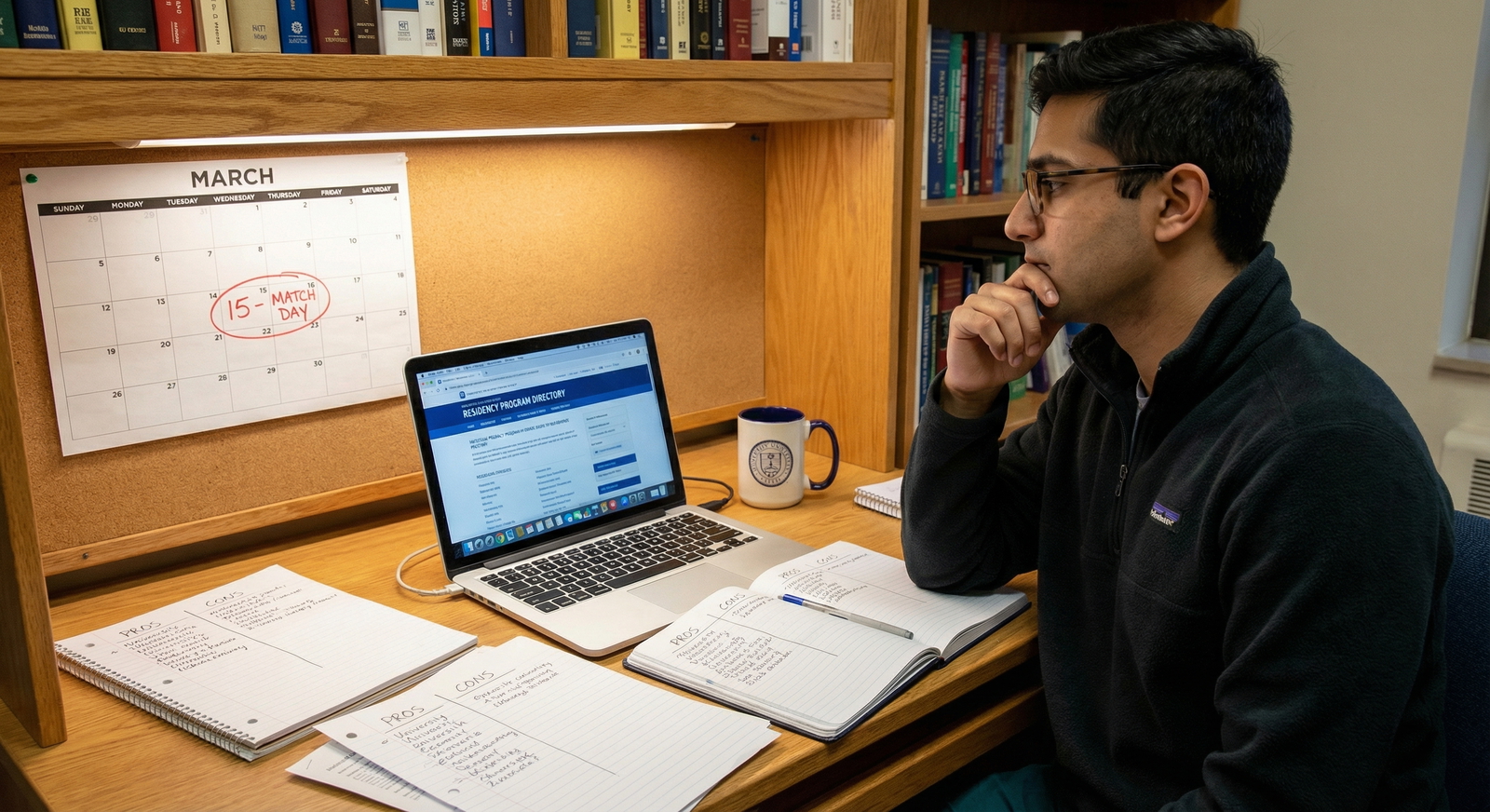
Understanding Pre-Match Communication as a DO Graduate in Global Health
For a DO graduate pursuing a global health–focused residency, pre-match communication can feel like a high‑stakes gray zone: essential for success, but full of unspoken rules. You may be wondering:
- How assertive can I be without seeming pushy?
- Are pre-match offers or early commitment common in global health pathways?
- Does being a DO graduate change how programs perceive strong interest?
- What is appropriate “program communication before match” under NRMP rules?
This guide is designed specifically for DO graduates targeting global health or international medicine–oriented residency tracks, with practical, step‑by‑step strategies to communicate professionally and ethically before Match Day.
1. The Landscape: Pre-Match Communication, Global Health, and DO Graduates
1.1 What is “pre-match communication” in residency?
“Pre-match communication” broadly refers to all interactions between you and residency programs from the time you submit your application until rank lists are certified. It includes:
- Application and supplemental ERAS content
- Thank-you and interest emails
- Clarification questions about the program
- Virtual and in‑person second looks
- Phone calls or Zoom meetings beyond formal interviews
- Responses to “love letters” or “you are ranked highly” messages
For DO graduates, this phase is a critical opportunity to:
- Highlight your osteopathic training as an asset in global health (whole-person care, hands-on skills, flexibility)
- Demonstrate long-term commitment to international medicine and underserved populations
- Strategically navigate program communication before match while staying compliant with NRMP and institutional policies
1.2 Where do pre-match offers and early commitment fit in?
In the current environment, the term “pre-match offers” or “early commitment” can mean different things:
- Formal pre-match contracts: Relatively rare now in NRMP-participating programs, more historically common in some specialties or non-NRMP positions.
- Non-NRMP global health positions: Some international fellowships or non-accredited global health year positions may use early offers.
- Informal signals: “We intend to rank you highly” or “You are a competitive candidate for our global health residency track.”
For NRMP-participating categorical and global health residency tracks (e.g., Internal Medicine with a global health residency track, Family Medicine with international medicine pathways):
- Programs cannot ask you to commit to ranking them first.
- Programs cannot make binding pre-match offers that circumvent the Match.
- You cannot ethically or legally agree to a binding early commitment that conflicts with NRMP rules.
However, non-NRMP global health opportunities (e.g., research fellowships, post-match global health positions at international sites) may use true early commitment models, so you must confirm whether each program participates in the Match.
1.3 The DO graduate angle: How does osteopathic training intersect with global health?
As a DO graduate, you bring unique strengths to a global health–oriented training path:
- Strong background in whole-person, biopsychosocial care, which aligns with community-based global health.
- Training in osteopathic manipulative treatment (OMT) that can be valuable in low-resource settings lacking access to imaging or procedures.
- Often, more clinical exposure in community hospitals and federally qualified health centers, mirroring global and underserved environments.
Some allopathic programs may still have limited experience with DO graduates, especially in smaller or newer global health residency track programs. Pre-match communication is your chance to:
- Clarify your COMLEX/USMLE status.
- Educate programs on your osteopathic skillset.
- Show how your background increases your fit for international medicine focused training.
2. Rules, Ethics, and Boundaries in Program Communication Before the Match
2.1 NRMP guidelines you must respect
If a residency program participates in the NRMP Match, both you and the program must follow NRMP rules, including:
- No soliciting commitments to rank a program or applicant in a particular order.
- No agreements contingent on ranking decisions (e.g., “We will rank you highly if you promise to rank us #1”).
- No binding pre-match offers for positions that will be filled through the Match.
You are allowed to:
- Communicate genuine interest in a program.
- Volunteer that you plan to rank a program highly or even first (though not required).
- Ask about program structure, global health tracks, visa/COMLEX policies, and training environment.
- Provide requested updates (new publications, Step 2 / COMLEX scores, new global health projects).
Programs are allowed to:
- Tell you that you are a competitive applicant or that they are “ranking you highly.”
- Offer non-binding expressions of interest.
- Ask if you have questions or want more information.
They are not allowed to:
- Ask, “Will we be your #1 choice?”
- Pressure you to make a verbal early commitment.
- Condition your selection on any specific ranking behavior.
When in doubt, refer to the NRMP’s “Communication Code of Conduct” and your school’s GME office.
2.2 “Pre-match offers” and early commitment in global health contexts
In global health and international medicine, you may encounter specific scenarios:
NRMP-participating residency with a global health track
- Example: Internal Medicine residency that offers a formal global health residency track beginning PGY-2.
- Pre-match communication: Mostly about competitiveness and fit. Any “offer” to join the track cannot be binding pre-match.
Standalone global health fellowships/postgraduate programs (often after residency)
- These may use early commitment, interviews outside the Match, and direct offers.
- If you’re applying for these during intern year or later, the communication norms are different and not governed by NRMP.
Combined residency–fellowship pathways in international medicine
- Some institutions have integrated pathways but still follow the Match for the residency portion.
- Clarify which parts are NRMP-governed and which are not.
You should always ask directly (politely) if a program uses the Match for the specific position you’re applying for, especially if the language used sounds like a pre-match offer.
3. Strategy: How to Plan Your Pre-Match Communication as a DO Interested in Global Health

3.1 Set clear goals for communication
Before emails and calls start flying, define what you want your communication to accomplish:
- Signal interest in specific programs that align with your global health priorities.
- Clarify any DO-related concerns (board exams, osteopathic recognition, use of OMT, attitudes toward DO graduates).
- Highlight your global health experience and future plans beyond what’s in ERAS.
- Maintain a professional, low-drama presence that programs remember positively.
3.2 Build a program-specific communication plan
Create a simple spreadsheet with columns such as:
- Program name & location
- Global health / international medicine features
- DO-friendly notes (DO grads on roster, osteopathic recognition, COMLEX accepted, etc.)
- Interview status (invited, waitlisted, declined)
- Communication log:
- Date of thank-you email
- Date of update email(s)
- Notes from any additional calls or conversations
- Rank list provisional priority (low/medium/high)
This will help you avoid over-communicating with some programs and neglecting others.
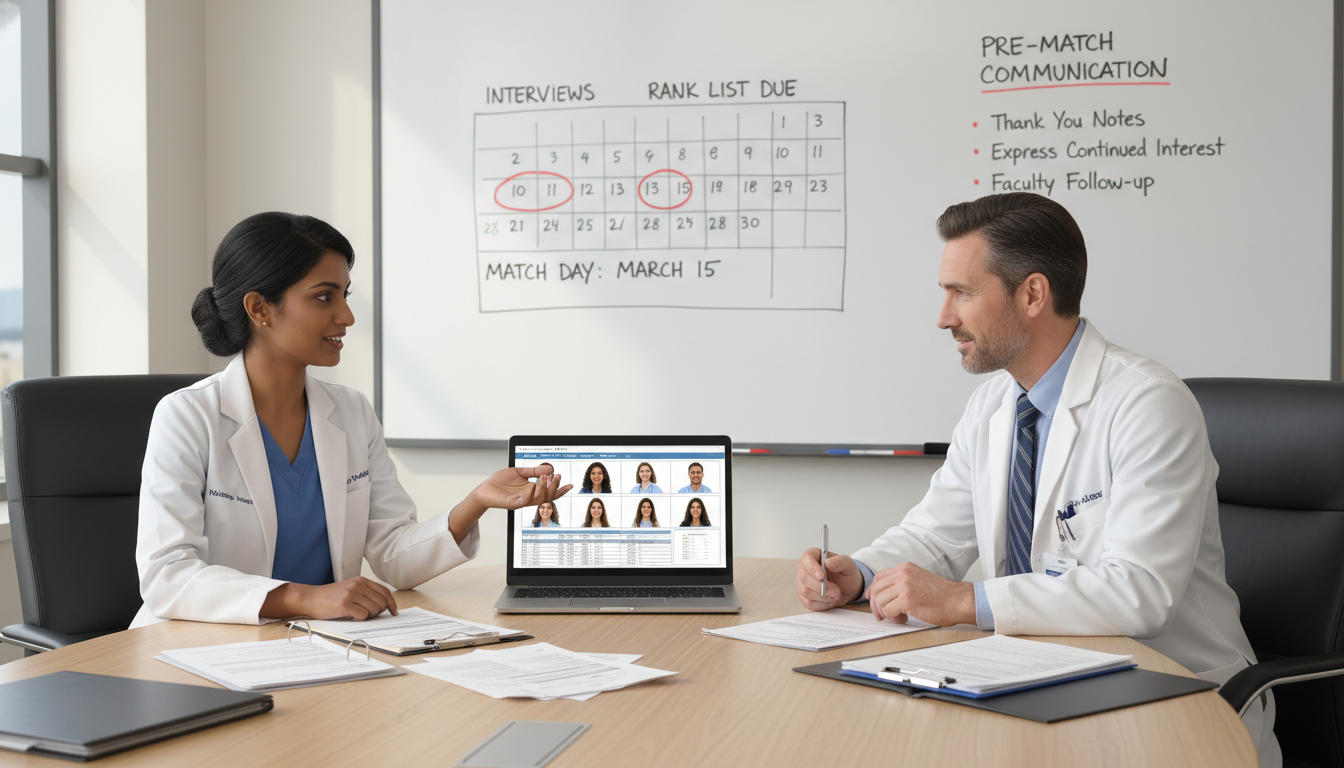
3.3 Timing your messages
Typical communication timeline:
After interview (within 24–72 hours):
- Personalized thank-you email to program director (PD) and key interviewers.
- Reinforce your specific interest in their global health residency track or international medicine initiatives.
Mid-season (4–6 weeks after interviews, or after major updates):
- One targeted update letter for top-choice programs.
- Add new global health publications, leadership roles, or rotation experiences.
- Clarify any DO-specific questions (if not previously discussed).
Late-season (before rank list certification):
- optional “letter of intent” to your true #1 program (if you choose to send one).
- A more general “still very interested” note to a small number of additional programs.
Aim to limit yourself to:
- 1–2 substantive emails per program (beyond basic thank-yous), unless the program invites further contact.
4. Crafting High-Impact Messages: Examples and Templates
4.1 Post-interview thank-you for a global health–oriented program (DO graduate)
Subject: Thank you for the opportunity to interview – [Your Name], DO
Dear Dr. [Last Name],
Thank you for the opportunity to interview with the [Program Name] [Specialty] Residency on [date]. I appreciated hearing how your global health residency track integrates longitudinal work with [specific partner country/underserved community] and structured training in health systems and implementation science.
As a DO graduate with clinical experience in resource-limited community hospitals and an interest in international medicine, I was especially drawn to your emphasis on team-based, patient-centered care and the opportunity for residents to participate in [specific elective / global health project mentioned during interview]. I can see myself growing in an environment that values both rigorous clinical training and sustainable global partnerships.
Thank you again for your time and for considering my application. Please let me know if I can provide any additional information.
Sincerely,
[Your Full Name], DO
AAMC ID: [#######]
ERAS ID: [#######]
4.2 Update email highlighting DO and global health assets
Subject: Application Update – [Your Name], DO – [Program Name] [Specialty] Residency
Dear Dr. [Last Name],
I hope this message finds you well. I wanted to share a brief update relevant to my application to the [Program Name] [Specialty] Residency, particularly as it relates to your global health residency track.
Since we last spoke, I have:
- Completed an elective in international medicine at [site or institution], working with migrant and refugee populations and participating in community health needs assessments.
- Submitted a manuscript on [brief topic] for publication, focusing on [a global or underserved health angle, if applicable].
- Taken on a leadership role as [role title] with [global health or underserved care organization].
These experiences have reinforced my desire to pursue residency training that emphasizes global health equity, primary care for underserved populations, and longitudinal international partnerships—all of which I saw modeled at your institution.
As a DO graduate, I continue to find that the osteopathic focus on holistic, relationship-centered care is particularly relevant to global health practice. I would be honored to bring that perspective to your residency.
Thank you for your consideration, and please don’t hesitate to reach out if you need additional information.
Sincerely,
[Your Full Name], DO
4.3 “Letter of intent” to your true top choice (optional)
Use cautiously and honestly. Send to only one program if you choose to do so.
Subject: [Program Name] as my top choice – [Your Name], DO
Dear Dr. [Last Name],
I am writing to share that, after completing my interviews and reflecting on my priorities, [Program Name] is my top choice for residency training, and I intend to rank your program first on my NRMP rank list.
The reasons are clear to me:
- Your global health residency track offers structured longitudinal engagement in [geographic region/partner site], with a strong emphasis on sustainable, bidirectional partnerships.
- The patient population and focus on underserved communities align with my long-term goal of combining domestic safety-net practice with international medicine.
- The supportive and diverse environment I observed during interview day, and in speaking with current residents, convinced me this is a place where I would thrive.
As a DO graduate committed to holistic, community-based care, I feel that [Program Name] is uniquely suited to help me grow into a physician-leader in global health.
I understand that both parties must make independent ranking decisions, and I share this information only to express my sincere enthusiasm and commitment to your program.
Thank you again for the opportunity to interview and for considering my application.
Warm regards,
[Your Full Name], DO
5. Special Considerations for DO Graduates Targeting Global Health
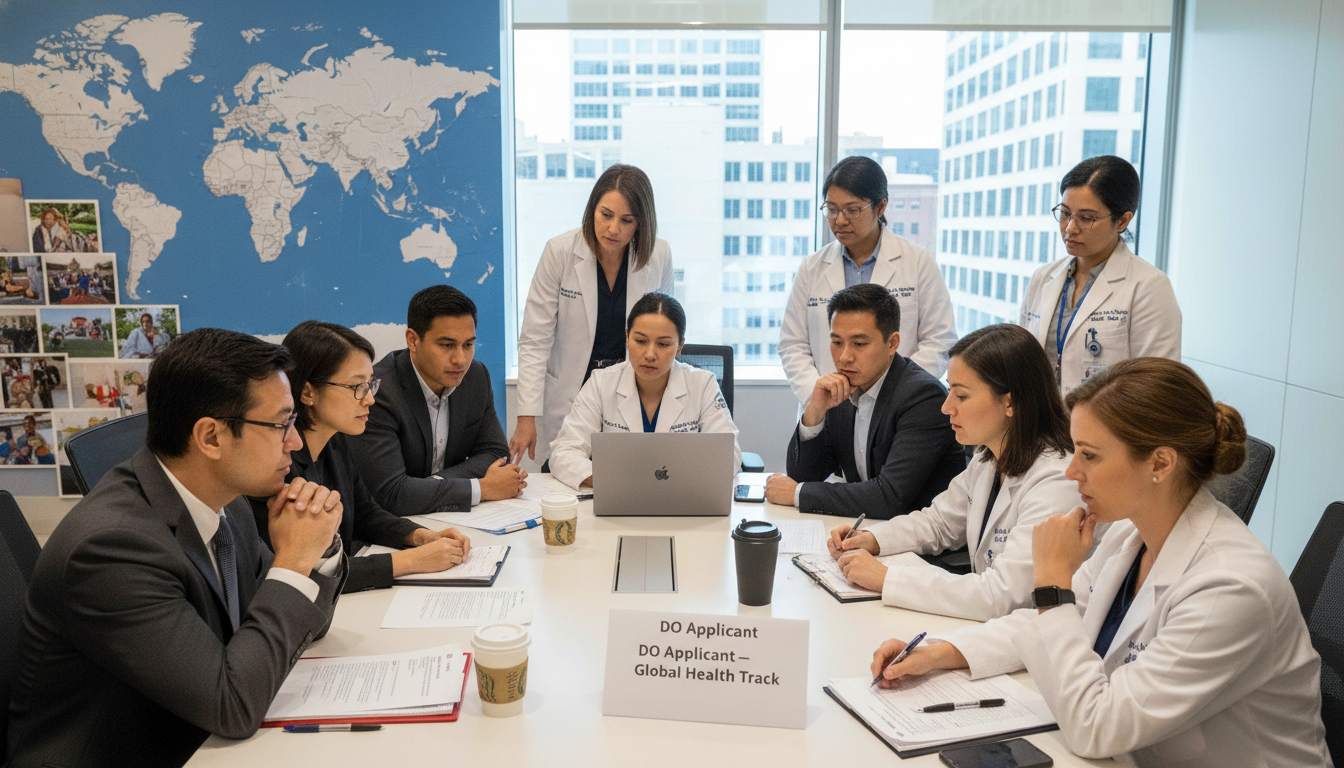
5.1 Addressing COMLEX vs. USMLE and DO-specific concerns
Some global health–oriented residencies are highly academic and may have historically favored MD applicants. Your pre-match communication can proactively address this:
- Clarify whether you’ve taken USMLE in addition to COMLEX.
- If only COMLEX, highlight your strong clinical evaluations, research, and global health experience.
- If the program’s website is unclear about DOs, you can ask tactfully:
“As a DO graduate (COMLEX only), I wanted to confirm whether your program has any specific board exam preferences or experiences with DO residents, particularly within the global health track.”
This is reasonable and professional to clarify, especially for programs with limited DO representation historically.
5.2 Showcasing osteopathic skills as global health assets
In emails or conversations, you can briefly frame how osteopathic principles support global health:
- Emphasize whole-person care, recognizing social determinants of health.
- Mention that OMT can be useful in low-resource settings, particularly for musculoskeletal pain where advanced imaging or subspecialty access is limited.
- Highlight experiences where you applied osteopathic thinking (even if not performing OMT) in cross-cultural or resource-limited environments.
Keep the emphasis on alignment with the program’s mission, rather than on OMT alone.
5.3 Discussing global health realistically (and avoiding red flags)
Programs often worry about applicants interested in global health for romanticized reasons (travel, “mission trips”) rather than sustainable, ethical, equity-focused work.
In pre-match communication:
- Use language like “partnership,” “capacity building,” “health systems,” “equity,” “social determinants,” “bidirectional learning.”
- Avoid framing global health solely as short-term travel or “helping the poor abroad.”
- Connect your interest in international medicine with:
- Caring for immigrants, refugees, and underserved communities locally.
- Long-term career plans that include teaching, research, and policy.
You might write:
“My long-term goal is to practice in a safety-net system in the U.S. while maintaining a longitudinal partnership with a global health site, focusing on capacity building and health systems strengthening.”
That signals serious, mature commitment, which weighs heavily in how programs rank you.
6. Handling “Signals,” Pressure, and Ambiguous Pre-Match Offers
6.1 When a program seems to be offering an early commitment
Sometimes language is carefully worded but feels like a pre-match offer or pressure:
- “We are very interested in you and would rank you highly if you were to indicate that we are your top choice.”
- “If you can let us know that you plan to rank us #1, that would help us make our list.”
How to respond:
Stay within NRMP rules
Avoid explicit agreements about ranking order.Express enthusiasm without committing (if you’re not sure they’re #1):
“Thank you so much for your kind words. I’m very excited about your program, particularly the global health track and your partnerships in [region]. I plan to rank programs based on where I believe I would thrive most, and your program is certainly among those I’m strongly considering.”
- If they truly are your #1 and you’re late in the season, you can say:
“I appreciate your message and the opportunity to interview with your program. After significant reflection, I can share that your program is currently my top choice, and I will be strongly considering ranking it first. I understand we both must finalize our lists independently in accordance with NRMP policies.”
This approach:
- Signals strong interest.
- Avoids any explicit quid pro quo or binding language.
6.2 When you feel pressured or uncomfortable
If a program attempts explicit pressure:
- Document the interaction (time, date, content).
- Politely decline to make binding statements.
- Consult your medical school’s GME office or advisor if needed.
- Remember: Your rank list is confidential; you do not owe anyone your final ordering.
6.3 When (and how) to “silence” communication
After a certain point (typically once your rank list is finalized), it’s reasonable to step back:
- You do not need to update every program of your final ranking.
- If you receive late messages from programs:
- You may respond briefly and politely.
- Or not respond at all, especially if no clear reply is requested.
Do not let late-season anxiety drive you to over-email or send inconsistent messages to multiple programs.
FAQs: Pre-Match Communication for DO Graduates in Global Health
1. As a DO graduate, should I explicitly say I will rank a program #1?
You do not have to, and you should not say this to more than one program. If there is a true top choice and you believe a letter of intent will help, it is acceptable to say you “intend to rank them first”, while acknowledging that both parties must adhere to NRMP rules. Never imply a binding agreement, and do not tell multiple programs the same thing.
2. How often should I email programs about my interest in their global health residency track?
For most programs:
- 1 post-interview thank-you email.
- 1 update email later in the season if you have substantial new achievements or to reiterate interest.
- Optionally, 1 letter of intent to your single top choice.
More frequent emails risk appearing pushy or anxious. Focus on quality and specificity, not quantity.
3. Is it appropriate to ask directly about DO friendliness or COMLEX acceptance in pre-match communication?
Yes. It is reasonable and professional to clarify:
- Whether they accept COMLEX-only scores.
- Whether they have had DO residents in the past.
- How osteopathic training and skills might fit in, especially in their global health track.
Frame your questions respectfully and link them to your interest in being a good fit for the program.
4. Are pre-match offers common in global health–oriented residency programs?
In NRMP-participating residency programs, true binding pre-match offers or early commitments are uncommon and not allowed for positions offered through the Match. You may encounter strong expressions of interest or ambiguous language, but any offers to secure your spot before Match Day for an NRMP-covered position are problematic. Be particularly careful in distinguishing:
- Residency positions governed by the NRMP (no early commitment).
- Non-NRMP global health opportunities (fellowships, research years, NGO-sponsored programs) that may legitimately use early offers.
When unsure, ask whether the position itself participates in the Match and seek guidance from your dean’s office or advisor.
By approaching pre-match communication strategically, ethically, and confidently, you can leverage your DO background and global health passion as major assets. Thoughtful, well-timed messages that emphasize alignment with a program’s global health residency track and mission will help you stand out—without crossing any lines—on your path to a fulfilling career in international medicine and health equity.