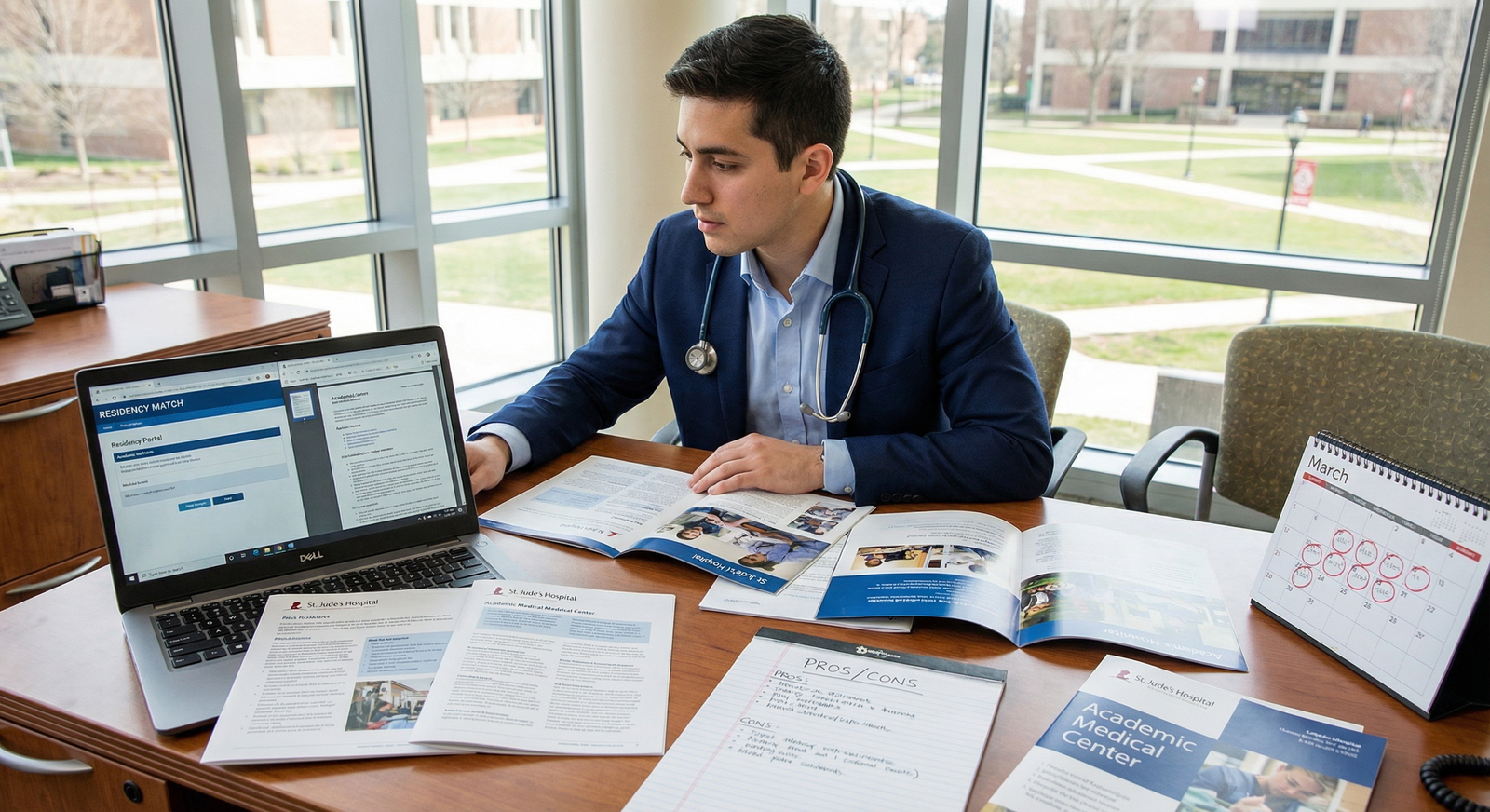
What Your Gut Feeling Can Tell You About Pre-Match Offers
Entering the world of medical residency is one of the most consequential transitions in a physician’s career. You’ve spent years preparing: acing exams, building your CV, gathering letters, and navigating interviews. Amid all the data, rankings, and advice, you may suddenly face something much less concrete—but just as powerful: a pre-match offer and a strong gut feeling about it.
That quiet internal signal—your intuition—can be easy to dismiss in a process that seems to reward only scores and metrics. Yet in high-stakes medical residency decisions, your gut feeling can be a valuable form of intuitive insight, synthesizing years of experience, values, and subtle cues that are hard to fully articulate.
This guide explores how to understand, interpret, and integrate your gut feeling into decision-making about pre-match offers, without ignoring objective data. The goal is not to tell you to “just trust your gut,” but to show you how to use intuition as a structured, thoughtful part of your career guidance process.
Understanding Pre-Match Offers in Medical Residency
Before relying on intuition, you need a clear framework for what you’re actually deciding about.
What Are Pre-Match Offers?
Pre-match offers are residency positions offered to applicants before the official Match process concludes. While the specific rules vary by region and specialty, the core idea is the same: a program identifies you as someone they strongly want and extends an offer early, often with a deadline for response.
Depending on your system and specialty, pre-match-style offers may occur in:
- Certain specialties or regions where pre-match is still permitted
- Non-NRMP or non-ERAS positions (e.g., some preliminary, transitional year, military, or independent programs)
- Off-cycle or special situations (e.g., new programs, unfilled spots, institutional contracts)
Pre-match offers can feel like a shortcut to security—you lock in a residency slot without waiting for Match Day. But because the decision often comes under time pressure, there’s greater risk of acting from fear, flattery, or anxiety rather than a balanced evaluation.
The Emotional Landscape of Pre-Match Offers
Receiving a pre-match offer can trigger a swirl of emotions:
- Validation: “They really want me—I must be a strong candidate.”
- Relief: “I won’t have to worry about going unmatched.”
- Pressure: “If I say no, what if I don’t match anywhere else?”
- Confusion: “I liked the program, but something felt off…am I overthinking it?”
These feelings are normal. But when emotions are intense, it can become difficult to distinguish anxiety from authentic intuition. That’s where learning how to work with your gut feeling—carefully and deliberately—becomes valuable.

The Science and Psychology Behind Gut Feelings
What Is a Gut Feeling in the Residency Context?
A “gut feeling” is not magic or guesswork. In cognitive science, intuition refers to fast, automatic judgments that arise from accumulated experience and pattern recognition. In medical residency decisions, your gut feeling draws from:
- Years of clinical rotations and exposure to different working environments
- Observations of attendings, residents, and workplace cultures
- Personal experiences of burnout, support, mentorship, and team dynamics
- Deeply held values about patient care, lifestyle, and professional identity
By the time you’re applying for residency, your brain has built a huge library of experiences and emotional impressions. When you step into a program, how you feel—energized, uneasy, inspired, dismissed—is often based on subtle signals you’ve learned to notice without consciously analyzing them.
How Gut Feelings Function in High-Stakes Decisions
There are three key components of intuition that matter when evaluating pre-match offers:
1. Emotional and Physical Signals
Your body often reacts before your rational brain catches up. Watch for:
- Positive signals: a sense of calm, excitement, or “I could see myself here”
- Negative signals: heaviness, dread, tightness in your chest or stomach
- Ambivalent signals: alternating moments of enthusiasm and discomfort
These physical sensations are often your brain’s rapid assessment of psychological safety, fit, and past experiences with similar environments.
2. Pattern Recognition
Your intuition flags patterns you’ve seen before, such as:
- Leadership styles that resemble places where you thrived—or burned out
- Schedules, call demands, or program structures similar to rotations you loved or hated
- Cultural cues (how residents talk about their wellness, how staff treat each other) that resemble either healthy teams or toxic ones
If a pre-match program reminds you strongly of a prior environment—good or bad—your gut may be telling you, “You’ve been here before; pay attention.”
3. Stress and Threat Detection
Sometimes, your gut feeling is not about the program at all but about fear:
- Fear of not matching
- Fear of disappointing family or mentors
- Fear of choosing a “less prestigious” option
Your stress response may push you toward safety (accepting quickly) or avoidance (rejecting anything unfamiliar). Learning to differentiate fear-driven reactions from value-driven intuition is essential.
How to Use Intuition Effectively in Pre-Match Decision-Making
Intuition on its own is not enough. Nor is pure logic. The strongest residency decisions come from integrating both.
Step 1: Clarify Your Values and Long-Term Goals
Your intuition has less to work with if you’re unclear about what truly matters to you. Before responding to a pre-match offer, ground yourself in the big picture.
Reflect on Core Career Priorities
Ask yourself:
- Clinical interests: Does this program support your likely specialty or subspecialty interests (or keep doors open if you’re unsure)?
- Training environment: Do you prefer a large academic center, community hospital, hybrid setting, or rural program?
- Procedural vs. cognitive: Do you want heavy procedural exposure, complex medicine, outpatient continuity, or research emphasis?
Write your answers down. Your gut feelings will be more meaningful when you can compare them to clearly defined priorities.
Clarify Life and Wellness Considerations
Medical residency is demanding; ignoring lifestyle and personal needs often leads to regret. Consider:
- Geography: Proximity to partner, family, support system
- Cost of living and financial stress
- Availability of childcare, support services, or community
- Schedule intensity and culture around wellness and time off
If your body feels anxious when you imagine moving to a certain city or working those hours, that signal is worth exploring.
Step 2: Deconstruct Your Gut Reaction
When you think about the pre-match program, notice your immediate internal response. Then, systematically unpack it.
Ask:
- What exactly felt good about this place? (Supportive residents? Diverse patient population? Strong mentorship?)
- What exactly felt off? (A dismissive PD? Tired, unhappy residents? Vague answers about work hours?)
- Am I more drawn to the security of the offer or the substance of the training?
- If I had guaranteed matches at three programs I like equally, would I still choose this one?
Assign words to your intuition. Turning “I have a bad feeling” into “I noticed residents were hesitant to speak honestly about workload” transforms vague gut discomfort into actionable data.
Step 3: Use Structured Tools to Support Your Intuition
To avoid overreacting to either fear or excitement, pair your gut feelings with structured analysis.
Create a Detailed Pros and Cons List
For the pre-match offer, list:
Pros:
- Training quality (case volume, board pass rates, fellowship matches)
- Culture (resident camaraderie, faculty support, psychological safety)
- Location and lifestyle
- Unique strengths (research, global health, niche tracks)
Cons:
- Red flags (high burnout, opaque leadership, poor communication)
- Personal misalignments (far from family, cost of living, poor schedule fit)
- Structural issues (limited subspecialties, weak program support)
Then add a third column: “Emotional Weight / Gut Rating” for each item (e.g., low, moderate, high impact). This allows you to honor your intuition without letting a single emotional factor overshadow everything else.
Scenario Planning
Imagine two to three realistic future paths:
- You accept the pre-match offer and don’t apply elsewhere.
- You decline and enter the main Match, with the risk of not matching at your top choices.
- You negotiate (if appropriate and ethical in your setting) for more information or time and then decide.
For each scenario, ask:
- How do I feel when I imagine waking up on July 1 to start residency there?
- What would “future me” in 2–3 years thank me for?
- Which path aligns best with my long-term identity as a physician?
Step 4: Engage Trusted Advisors—Without Outsourcing Your Decision
Mentors are vital for residency decision-making and career guidance, but they don’t live your life or work your call shifts. Use them wisely.
Who to Consult
- Specialty advisors who understand your field’s landscape
- Faculty or residents who know both your strengths and your stress points
- Peers who are also going through the process (for emotional calibration, not final answers)
- Family/partners, especially for geography and lifestyle impacts
How to Frame the Conversation
Instead of simply asking, “What should I do?”, try:
- “Here’s what I value most in a program. Here’s what my gut is telling me about this offer. Does anything I’m missing come to mind?”
- “When you listen to me describe this place vs. others, do you notice a difference in my energy or enthusiasm?”
- “Based on what you know about me (stress tolerance, interests, personality), do you see any misalignments with this program?”
Mentors can help you distinguish between intuition informed by experience and fear driven by cognitive distortions (“I’ll never match anywhere else”).
Navigating Conflicting Feelings About Pre-Match Offers
It’s extremely common to feel pulled in opposite directions: your gut says one thing, your brain another—or different parts of your gut say different things.
Distinguish Fear From Intuition
Fear-based thoughts often sound like:
- “If I don’t take this, everything will fall apart.”
- “Everyone else probably has better options; I should be grateful.”
- “This is the only prestigious program that will ever want me.”
Value-based intuition sounds more like:
- “The residents seemed exhausted and unsupported; I can’t see myself thriving here.”
- “Something about the leadership dynamics felt unsafe, even though the name is big.”
- “This program was less famous, but I felt respected, energized, and at home.”
When in doubt, ask: Is this thought coming from scarcity and panic, or from alignment with who I want to become?
Identify Specific Triggers and Red Flags
If your gut is uneasy, pinpoint triggers:
- Did you observe contradictions between what the program said and what residents hinted at?
- Were there microaggressions or dismissive comments that made you question inclusivity?
- Did you feel talked over or rushed during your interview day?
- Were questions about wellness, parental leave, or support answered vaguely or defensively?
These are not minor details; they are critical data about the environment you’ll inhabit for years.
On the flip side, if your rational brain is worried (“It’s not as prestigious”), but your gut feels safe, welcome, and excited, that’s also important. Prestige does not compensate for toxic culture or poor fit.
Balancing Intuition and Rational Analysis
Ultimately, you want a convergent decision—one where both your thoughtful analysis and your internal sense align, or at least can be reconciled.
A simple framework:
- If your head and gut both say “yes” → Strong candidate for accepting the offer.
- If your head and gut both say “no” → Strong candidate for declining.
- If your gut says “no” but your head says “yes” → Investigate the source of discomfort; don’t ignore it.
- If your gut says “yes” but your head says “no” → Check for blind spots and gather more objective data.
When there is persistent misalignment, give yourself time (if possible) to gather more information—speak with additional residents, review program outcomes, revisit your values. Most pre-match decisions benefit from a structured overnight pause rather than an on-the-spot response.

Practical Tips for Making a Final Decision on a Pre-Match Offer
1. Know the Rules and Ethical Boundaries
Before accepting or rejecting any pre-match offer:
- Review applicable Match or institutional rules for your system (NRMP, CaRMS, regional match rules, or local agreements).
- Understand whether acceptance is binding and what obligations you’re taking on.
- Avoid accepting multiple binding offers—this can have serious ethical and professional repercussions.
If unclear, ask your dean’s office, student affairs, or a trusted mentor for clarification.
2. Use a Decision Deadline Strategically
If the program sets a deadline:
- Avoid last-minute panic; give yourself a structured timeline (e.g., 48–72 hours of focused reflection if possible).
- Prioritize conversations with mentors early in that window.
- If needed and appropriate, you may politely ask for a brief extension, explaining that you take the decision seriously and want to ensure the best mutual fit.
Programs that refuse reasonable, brief extensions are not necessarily bad, but notice how their communication style makes you feel—pressured, supported, or respected.
3. Visualize Your Daily Life at the Program
Instead of only thinking abstractly about rankings and prestige, mentally walk through:
- Your typical week on wards or in clinic
- How it feels coming home post-call in that city/environment
- The colleagues you’d be working with and how they treated you on interview day
- Your opportunity to rest, grow, and sustain your passion for medicine
If that mental simulation evokes dread more than excitement (even if “on paper” the program looks impressive), take your intuition seriously.
4. Accept That No Program Is Perfect
Your gut may be searching for a 100% certainty that doesn’t exist. Every program has trade-offs:
- Strong operative experience but heavier call
- Great lifestyle but less research infrastructure
- Top-name institution but competitive culture
The goal isn’t to find perfection; it’s to find a good enough fit where you can grow into the physician you want to be while protecting your health and integrity.
5. After the Decision: Reflect, Don’t Ruminate
Once you’ve made a decision:
- Commit to it and avoid endless “what if” spirals.
- Reflect on what you learned about your values, stress responses, and intuitive signals.
- Use that self-knowledge for future career turning points: fellowship, job offers, leadership roles.
Over time, you’ll get better at interpreting your intuitive insights and integrating them with rational decision-making.
FAQs About Gut Feelings and Pre-Match Residency Offers
1. How important should my gut feeling be compared to objective factors when evaluating a pre-match offer?
Your gut feeling should be one major data point, not the only one. Objective factors—case volume, board pass rates, fellowship matches, program structure—are critical. But if your gut strongly signals misalignment or safety concerns, that deserves serious attention, even if the program is strong on paper. Aim for decisions where data and intuition support each other, or at least where you can clearly articulate why you’re overriding one with the other.
2. What are practical signs that my negative gut feeling about a program is worth heeding?
Be especially cautious if your discomfort is tied to concrete observations, such as:
- Residents appearing consistently exhausted, disengaged, or afraid to speak candidly
- Program leadership or faculty dismissing questions about wellness, diversity, or support
- Vague or evasive answers about duty hours, backup systems, or grievance processes
- A personal sense of being disrespected, ignored, or stereotyped during the interview
When your intuition is anchored in specific, observable issues, it’s often signaling a real problem, not just nerves.
3. I feel pressured to accept a pre-match offer because I’m afraid of not matching. How can I think clearly?
Acknowledge the fear—it’s valid. Then:
- Revisit past data (your grades, scores, feedback) and honest input from mentors regarding your competitiveness.
- Run realistic scenarios: Could you reasonably match elsewhere, even if not at “dream” programs?
- Ask yourself: “If fear weren’t in the driver’s seat, would I still choose this?”
If your only reason to accept is “I’m terrified,” and major red flags are present, it may be worth reconsidering with mentor guidance.
4. Can I change my mind after accepting a pre-match offer?
This depends heavily on your match system’s rules, the contract language, and professional ethics. In many systems, accepting a pre-match or outside-the-Match position is binding and withdrawing can have serious consequences. Before accepting:
- Clarify the nature of the commitment (verbal vs written, contractual vs non-binding).
- Seek institutional or legal advice if the terms are unclear.
- Never assume you can “back out later” without repercussions.
5. How can I strengthen my decision-making skills for future career choices beyond residency?
Skills you develop now will serve you at every transition—fellowship, attending jobs, leadership roles. To build strong decision-making habits:
- Practice structured reflection after major experiences (rotations, interviews).
- Pay attention to your physical and emotional responses to different environments.
- Seek regular feedback from mentors about your strengths, vulnerabilities, and blind spots.
- Use both quantitative metrics and qualitative impressions when assessing opportunities.
Over time, you’ll develop a more finely tuned, trustworthy intuition that works hand-in-hand with careful analysis—an invaluable asset throughout your medical career.
Trusting your gut about pre-match offers doesn’t mean ignoring logic or data. It means recognizing that your internal signals are the distilled wisdom of your experiences, values, and aspirations. When you align that intuitive insight with thoughtful, structured decision-making, you give yourself the best chance of choosing a residency where you can thrive—not just survive.