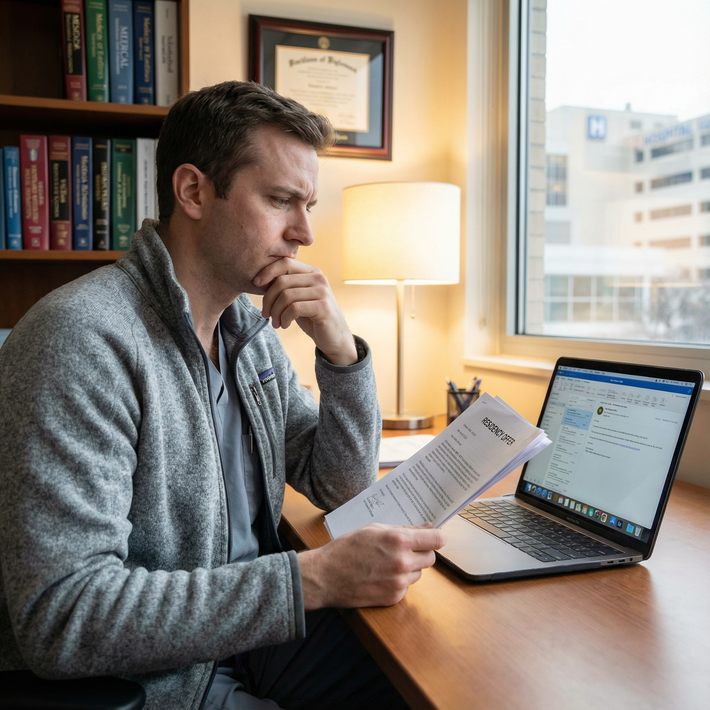
Understanding Pre-Match Communication in Nuclear Medicine for IMGs
Pre-match communication is everything that happens between you and a nuclear medicine residency program before rank lists are certified (for NRMP-participating programs) or before a contract is signed (for non-NRMP spots). For an international medical graduate, this period can feel confusing and high-stakes—especially with mixed messages about what is allowed, what is ethical, and what can actually help your chances in the nuclear medicine match.
This IMG residency guide will walk you through how to communicate with programs strategically, professionally, and confidently—without crossing NRMP rules or appearing pushy. We’ll focus specifically on nuclear medicine residency, where programs are small, faculty talk to each other, and each email or call can have an outsized impact.
You’ll learn:
- What pre-match communication really is (and what it’s not)
- How to contact programs before and after interviews
- How to handle pre-match offers and early commitment situations
- How to phrase interest and intent without violating match rules
- How to stand out as an international medical graduate in a niche field
1. The Landscape: Nuclear Medicine Residency and the Role of Pre-Match Communication
Nuclear medicine is a relatively small specialty, with:
- Limited number of residency positions
- Many programs integrated within radiology departments
- Strong interest in candidates who demonstrate clear dedication to imaging and molecular medicine
For an international medical graduate, this can be an advantage: many programs are quite open to IMGs who show strong US clinical experience, research, and a genuine interest in the field.
1.1 What Counts as “Pre-Match Communication”?
In the context of the nuclear medicine match, pre-match communication includes:
- Emails you send to programs before they offer interviews
- Thank-you and follow-up emails after interviews
- Phone calls or Zoom meetings with program directors (PDs) or faculty
- Updates about new publications, exam scores, or visas
- Any discussion about ranking, intent, or early commitment
- Direct non-NRMP contracts (for programs that do not participate in the match)
Pre-match communication does not include:
- Submitting ERAS applications
- Information exchanged during formal interviews
- Routine logistical emails from the coordinator (scheduling, Zoom links, travel details)
1.2 NRMP Rules You Must Respect
Most nuclear medicine residencies in the US participate in the NRMP Main Match or in the Radiology match structures, but some non-ACGME or special pathways may not. For NRMP-participating programs, the rules are clear:
You cannot:
- Ask a program: “Where will you rank me?”
- Tell a program: “I will rank you No. 1 if you rank me highly” (conditional statements tied to ranking)
- Demand or participate in any contract or early commitment that bypasses the match for a match-participating program
You can:
- Freely express your level of interest (including that a program is your top choice)
- Ask about program culture, training, call structure, and support for IMGs
- Update programs with new achievements
- Clarify visa sponsorship details
Your communications should always be honest, consistent, and respectful of NRMP guidelines. Misleading a program about your rank list (for example, telling multiple programs they are your “number one”) is not illegal, but it is strongly discouraged and risks your reputation.
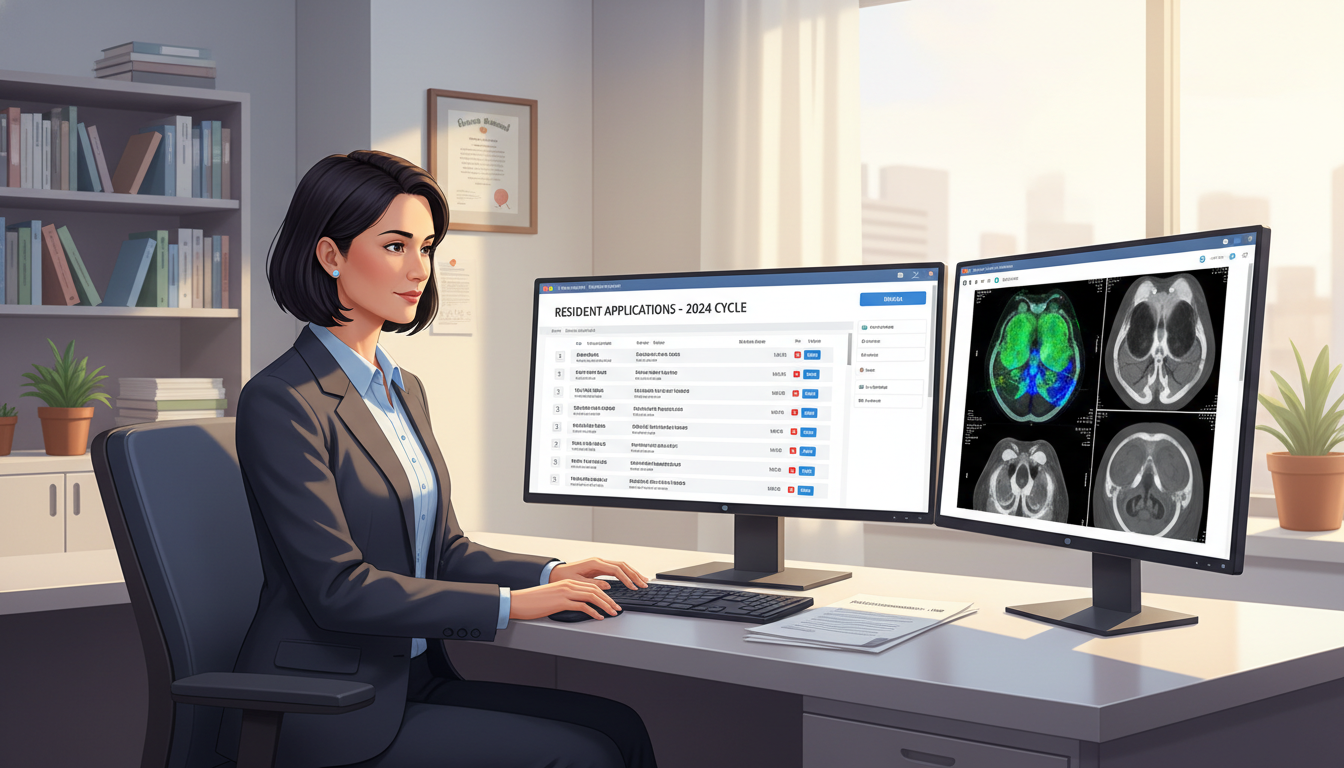
2. Strategic Communication Before the Interview
Before interviews are even offered, your goal is to (1) get noticed, (2) clarify your fit as an international medical graduate, and (3) minimize any concerns about visas, training background, or nuclear medicine exposure.
2.1 When Is It Appropriate to Contact a Program?
For nuclear medicine residency, early outreach can be very helpful when:
- You have a strong, documented interest in nuclear medicine (research, electives, case reports, electives in PET/CT or theranostics).
- You are an IMG with a non-traditional path and want to explain your trajectory.
- You are applying late or after ERAS opens and want to make sure your application is reviewed.
- You have a strong geographic or institutional connection (former observer, researcher, or visiting scholar at that institution).
Appropriate times to send an email:
- Shortly after ERAS opens and your application is submitted
- When you receive a new publication, step score, or visa update
- After a significant nuclear medicine-related achievement (poster at SNMMI, EANM, etc.)
Avoid:
- Mass generic emails to every program
- Multiple reminder emails within a short period
- Aggressive follow-up like “why haven’t I received an interview?”
2.2 Sample Pre-Interview Outreach Email (IMG Focused)
Use this template as a reference and personalize it:
Subject: Application Inquiry – Nuclear Medicine Residency (IMG Applicant)
Dear Dr. [Program Director Last Name],
My name is [Your Name], an international medical graduate from [Your Medical School, Country], and an applicant to the [Year] Nuclear Medicine Residency Match. I am writing to briefly introduce myself and express my strong interest in your program at [Institution Name].
I have developed a focused interest in nuclear medicine through [briefly mention: dedicated rotations, research in PET/CT or theranostics, SNMMI presentations, prior radiology training, etc.]. My recent work includes [1–2 specific examples: a project on PSMA PET imaging, a case report on thyroid cancer imaging, etc.].
As an IMG, I am particularly drawn to your program because of [2–3 concrete reasons: strong theranostics program, structured teaching, prior IMGs in the program, supportive visa policy, geographic factors]. I believe my background in [relevant skills: image interpretation, basic science research, radiopharmacy exposure] and my commitment to academic productivity would align well with the goals of your department.
My ERAS AAMC ID is [ID]. I would be very grateful if you could consider reviewing my application. I am happy to provide any additional information if needed.
Thank you for your time and consideration.
Sincerely,
[Your Full Name]
[Email] | [Phone] | [ERAS AAMC ID]
This type of email is appropriate, respectful, and clearly communicates your interest without being demanding.
2.3 Addressing IMG-Specific Concerns Early
In your pre-interview communication and application materials, anticipate common IMG questions:
- Visa: Clearly state whether you need J-1 or H-1B, and whether you already hold any US visa (F-1, J research, etc.).
- US Clinical Experience: Highlight nuclear medicine- or radiology-focused USCE, if available.
- Gaps: Briefly frame any gaps as times for research, family responsibility, or standardized test preparation.
- Prior Training: If you have completed radiology, internal medicine, or another specialty abroad, emphasize how this background enriches your nuclear medicine training.
Proactively addressing these topics reduces the risk that your application is quietly screened out before an interview.
3. Communication After the Interview: Interest, Updates, and Professionalism
After you’ve interviewed, your approach to program communication before match day becomes more sensitive. This is where many IMGs worry about saying too much or too little.
3.1 Immediate Post-Interview Follow-Up
Within 24–72 hours, send a brief thank-you email:
- To the program director
- Optionally to key faculty interviewers (who gave you their contact)
- Sometimes to the coordinator (for logistical help)
Example:
Subject: Thank You – Nuclear Medicine Interview on [Date]
Dear Dr. [Last Name],
Thank you for the opportunity to interview with the Nuclear Medicine Residency Program at [Institution] on [date]. I enjoyed learning about your department’s strengths in [e.g., PET/CT in oncology, theranostics program, research opportunities], and I especially appreciated our discussion about [specific topic you discussed].
Our conversation reinforced my strong interest in your program. I would be honored to train at [Institution] and contribute to your team’s clinical and academic mission.
Thank you again for your time and consideration.
Best regards,
[Your Name]
Key points:
- Be specific—reference a detail from your conversation.
- Reaffirm interest without mentioning rank order.
- Keep it short and professional.
3.2 Ongoing Updates Before Rank Lists
If a few weeks pass between your interview and the time rank lists are due, it is often appropriate to send one targeted update email in the following situations:
- You have a new nuclear medicine publication or poster
- You pass a major exam (e.g., USMLE Step 3)
- You obtain a visa change or approval that improves your eligibility
- You receive a relevant award or take on a significant research role
Your email should:
- Clearly identify yourself and your interview date
- State the update succinctly
- Re-express interest in the program
- Avoid asking directly about ranking decisions
3.3 Expressing Genuine Interest vs. Overpromising
Programs appreciate clarity. As an international medical graduate, it can help your nuclear medicine match chances to declare a true top choice—but do it carefully:
Ethically acceptable:
- “Your program is my top choice, and I plan to rank it first.”
- “I would be thrilled to match at [Institution]; it is my number one choice.”
To avoid:
- Telling multiple programs they are your “No. 1”
- Writing inconsistent statements that could lead to confusion if faculty talk
- Making conditional promises: “If you rank me highly, I will rank you first.”
Make sure:
- You only send a “top choice” message to one program.
- Your statement is honest and reflects your final intent.
- You are prepared to actually rank that program first.

4. Pre-Match Offers, Early Commitment, and Non-NRMP Pathways
In some specialties, especially outside the NRMP, pre-match offers and early commitment are common. Nuclear medicine is mostly NRMP-based but includes special pathways and non-ACGME positions where early commitments may be possible.
As an IMG, you must be absolutely clear about:
- Whether a program participates in the NRMP
- Whether an offer is conditional, written, or informal
- The implications of accepting an early commitment on your ability to participate in the match
4.1 Understanding Pre-Match Offers
A pre-match offer is usually:
- A direct offer of a residency position before the match
- Sometimes accompanied by a contract or letter of intent
- More common at non-NRMP programs, transitional pathways, or institutions filling outside the match
For an IMG, pre-match offers can be attractive because they provide:
- Security (you know you have a position)
- Visa sponsorship clarity
- Reduced stress from the match process
However, risks include:
- Committing too early to a program that may not be your best fit
- Losing the chance to match at a stronger or better-aligned nuclear medicine residency
- Complexities if you already registered for the NRMP match (depending on rules and jurisdiction)
4.2 How to Respond to a Potential Pre-Match Offer
If a program seems to be hinting at early commitment or pre-match options, respond thoughtfully:
Clarify the status
- Ask: “Does your nuclear medicine residency participate in the NRMP match?”
- If they do: any binding offer outside the match would likely be inappropriate.
- If they do not: they may be able to offer you a position directly.
Request details in writing
- Position start date
- Duration and level (PGY-2, PGY-3, direct entry, fellowship-type)
- Visa type and sponsorship
- Stipend and benefits
Ask for time, if needed
- Many programs will give you a short window (e.g., 1–2 weeks) to decide.
- Use this time to consult mentors, review other interviews, and consider your goals.
Example response:
Thank you very much for considering me for a position in your Nuclear Medicine Residency Program. I am very interested in this opportunity.
To make an informed decision, may I please confirm whether this position is offered outside of the NRMP match, and whether it represents a firm, contract-based offer? I would also appreciate any written details you can share regarding start date, visa sponsorship, and training level.
I am enthusiastic about your program and want to be sure I fully understand the terms and timeline before making a commitment.
4.3 When Saying “Yes” Early Makes Sense
Early commitment can be reasonable if:
- The program does not participate in the NRMP and you have clear documentation
- You have limited interview invitations and this is a solid, supportive environment
- Visa issues make securing any stable training position a high priority
- The training content (theranostics exposure, PET/CT volume, multidisciplinary conferences) aligns well with your long-term plans
It may be better to wait if:
- The program is clearly a weaker fit than others where you interviewed
- You have strong interviews at top nuclear medicine or radiology programs
- The offer seems vague, rushed, or not properly documented
- You suspect the program is uncertain about their NRMP obligations
When in doubt, seek advice from:
- A faculty mentor in nuclear medicine or radiology
- An advisor familiar with IMG residency placement
- Your institution’s graduate medical education (GME) office, if you are currently in the US
5. Best Practices for Professional, High-Impact Communication
Communication before match is as much about how you interact as what you say. Programs are evaluating your reliability, professionalism, and ability to function in an academic medical environment.
5.1 Email Etiquette for IMGs in the Nuclear Medicine Match
- Use a professional email address with your name.
- Keep subject lines clear: “Update from [Your Name] – Nuclear Medicine Applicant”
- Limit emails: usually 1–3 messages per program across the season (intro, thank you, important update).
- Check grammar and tone carefully; ask a colleague to review if English is not your first language.
- Always include your ERAS AAMC ID and interview date when relevant.
5.2 Phone Calls and Direct Messages
Phone calls to PDs or coordinators are usually not necessary unless:
- Specifically invited to call
- Clarifying a time-sensitive matter (e.g., interview scheduling conflict)
- Addressing a major visa or contract issue
Avoid:
- Cold-calling PDs to “ask for an interview”
- Using WhatsApp or social media messages for official program communication
- Messaging multiple residents aggressively to lobby for your candidacy
However, appropriately contacting current residents by email or LinkedIn—for genuine questions about training and culture—is perfectly acceptable and often helpful.
5.3 Demonstrating Nuclear Medicine–Specific Passion
Because nuclear medicine is a focused specialty, use your communications to highlight:
- Specific modalities: PET/CT, SPECT, cardiac nuclear imaging, radionuclide therapy
- Conferences attended: SNMMI, EANM, RSNA sessions on molecular imaging
- Projects: theranostics research, novel tracers, dosimetry, quantitative imaging
- Collaboration: tumor board participation, multidisciplinary experiences
A short sentence like:
“I am particularly excited about the growth of theranostics and have been involved in a project on Lu-177 PSMA therapy outcomes.”
signals authentic dedication more than generic statements like:
“I am very interested in radiology and imaging.”
6. Putting It All Together: A Step-by-Step Communication Plan for IMGs
Here is a practical roadmap you can follow across the season:
6.1 Before ERAS Submission
- Clarify your visa needs and eligibility.
- Gather nuclear medicine–focused experiences and documents.
- Prepare a polished CV and personal statement emphasizing nuclear medicine.
- List programs: note which are NRMP-participating, visa types accepted, and prior IMG track record.
6.2 Early Season (ERAS Submitted, Before Interviews)
- Identify 5–10 programs where you have strong reasons to be a good fit.
- Send targeted intro emails to those programs, especially if you have a connection or strong nuclear medicine background.
- Avoid blasting every program with a generic message.
6.3 During Interview Season
- Attend interviews well-prepared with knowledge of each program’s nuclear medicine services.
- Ask thoughtful questions about theranostics, physics teaching, interdisciplinary work, and prior IMG experiences.
- Within 2–3 days of each interview, send a personalized thank-you email.
6.4 Between Interviews and Rank List Deadline
- Send one important update email to selected programs if you have substantial new information.
- Decide honestly if there is a true top choice program.
- If appropriate and ethical, send a single “you are my top choice” email to that program.
6.5 When Offered an Early Commitment or Pre-Match Position
- Confirm whether the program is NRMP-participating.
- Request written details of the offer.
- Assess your other options and long-term goals.
- Make an informed decision, ideally in consultation with mentors.
Throughout this process, remember that professional, respectful, and clear communication can only help you—if done within NRMP rules and grounded in honesty.
FAQ: Pre-Match Communication for IMGs in Nuclear Medicine
1. As an IMG, should I tell a nuclear medicine program it is my “number one” choice?
Yes, but only if:
- You are truly certain it will be ranked first on your list
- You say this to only one program
- You do not make conditional promises that depend on how they rank you
Programs appreciate genuine interest, but misusing “number one” statements can harm your credibility.
2. How often can I email a program without being annoying?
A reasonable pattern for an IMG in the nuclear medicine match is:
- 0–1 email before interview invitations (only if you have something meaningful to convey)
- 1 thank-you email after the interview
- 0–1 update email before rank lists, if you have significant new information
More than this may be perceived as excessive, unless the program specifically invites ongoing communication.
3. Are pre-match offers common in nuclear medicine?
Most ACGME-accredited nuclear medicine residency programs participate in the NRMP, where formal pre-match offers are not appropriate. However, non-ACGME positions, research-heavy tracks, or some special pathways may recruit outside the match and extend early commitment offers. Always confirm participation in NRMP and get any offer in writing before deciding.
4. How can I stand out as an IMG in program communication?
Focus on:
- Demonstrating authentic nuclear medicine interest (research, electives, conferences)
- Clearly addressing visa feasibility
- Highlighting any prior imaging or radiology training
- Communicating concisely, professionally, and with excellent written English
- Showing that you understand the specific strengths of each program (theranostics, PET/MR, oncology focus, etc.)
By combining genuine interest in nuclear medicine with polished, rule-compliant program communication before match, you significantly improve your chances of securing a strong residency position as an international medical graduate.