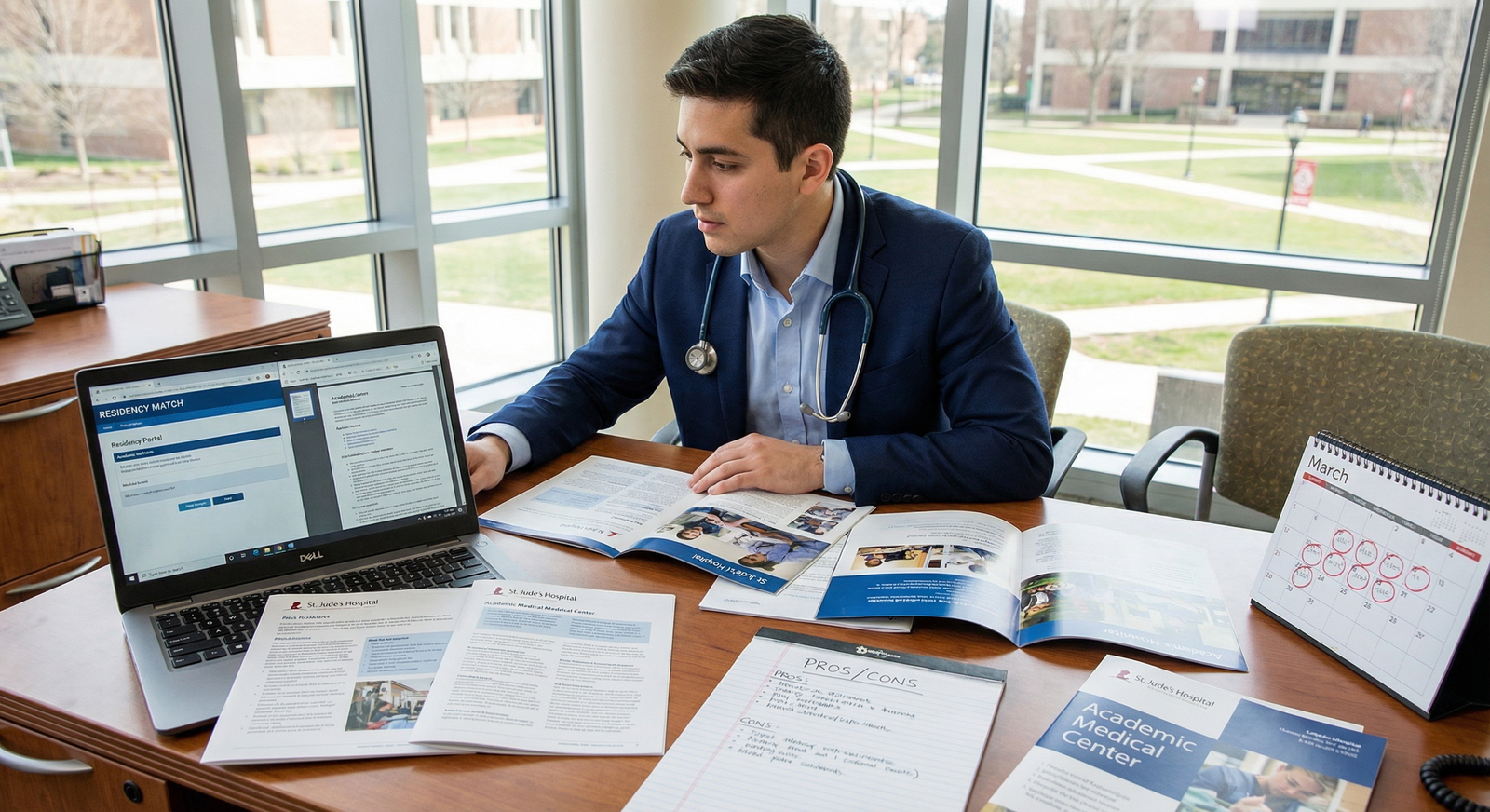
Pre-match communication is one of the most misunderstood—and high‑stakes—parts of the U.S. residency pathway, especially for an international medical graduate (IMG) pursuing a preliminary surgery year. Done well, it can open doors, clarify your chances, and even help set up a strong prelim surgery residency that leads to a categorical position later. Done poorly, it can raise red flags, violate NRMP rules, or close off opportunities.
This IMG residency guide focuses on how to approach program communication before Match specifically for preliminary surgery applicants, with an emphasis on ethics, strategy, and practical templates you can actually use.
Understanding Pre-Match Communication in Preliminary Surgery
Before you send that “thank you” or “update” email, you must understand the framework you are operating within.
1. What is “Pre-Match Communication”?
In this context, pre-match communication means any program-related communication that occurs after you submit your ERAS application and before Match Day, including:
- Emails to/from:
- Program Directors (PDs)
- Associate Program Directors (APDs)
- Program Coordinators
- Residents or faculty you met during interviews
- Phone calls or virtual meetings
- In-person conversations at conferences or away rotations
- Any discussion of:
- Your ranking plans
- The program’s ranking plans
- Possible pre-match offers or early commitment language
- Fit, interest, and updates
For preliminary surgery, these communications may feel lower stakes than categorical surgery, but programs still evaluate professionalism, judgment, and communication style very closely.
2. How Are Preliminary Surgery Positions Different?
Key distinctions for a preliminary surgery year:
- One-year positions: Most prelim surgery residency positions are 1-year, often used by:
- IMGs seeking U.S. clinical experience
- Applicants aiming to re-apply for categorical surgery or another specialty
- Those in transition (e.g., applying to anesthesia, radiology, urology, etc.)
- Varying program priorities: Some prelim positions are:
- Designed for strong clinical service and call coverage
- Specifically aimed at IMGs or re-applicants
- Linked/unlinked with categorical positions
- Different pressure on “fit”: Programs may prioritize:
- Reliability
- Work ethic
- Operative safety and professionalism
- Ability to function in a demanding environment with minimal supervision
Your pre-match communication should therefore highlight:
- Professionalism and maturity
- Clear understanding of the prelim year role
- Long-term goals and how a preliminary surgery year fits those goals
3. NRMP Rules and What Programs/Applicants Can Say
Most ACGME-accredited surgery programs participate in the NRMP Match. That means both programs and applicants are bound by NRMP’s Code of Conduct.
Key principles (simplified):
No binding commitments before the Match
- Programs cannot ask you for a binding promise to rank them first.
- You cannot require a program to commit to ranking you in a specific position.
Verbal statements of interest are allowed but not binding
- You may say things like, “I intend to rank your program highly” or “I plan to rank your program first.”
- A program may say, “You are a competitive applicant” or “We plan to rank you highly.”
- None of these statements are legally binding in the NRMP system.
Misrepresentation is prohibited
- You must not lie about your ranking intentions.
- Programs must not intentionally mislead applicants about their ranking status or chances.
For IMGs—especially those unfamiliar with U.S. culture—this gray zone between “allowed but non-binding” and “unethical pressure” can be confusing. When in doubt, keep your communication:
- Truthful
- Non-coercive
- Focused on fit rather than ranking negotiations
Strategic Goals of Pre-Match Communication for IMGs in Prelim Surgery
Instead of thinking, “How do I convince them to give me a spot?” focus on, “How can I use pre-match communication to achieve these four goals?”
1. Signal Genuine Interest and Fit
Programs care deeply about whether you:
- Understand what a preliminary surgery year involves
- Accept that it may not guarantee a categorical spot
- Are ready for the workload, culture, and expectations
You want your emails and conversations to demonstrate:
- Professional reliability: You respond promptly and clearly.
- Maturity: You understand the realities of a prelim year and do not sound entitled.
- Self-awareness: You know why this specific program is a good match for your goals.
2. Clarify Program Expectations and Opportunities
Use program communication before Match to get answers to critical questions:
- Are there internal pathways for strong prelims to be considered for categorical spots (surgery or other specialties)?
- How often have previous prelims:
- Matched into categorical surgery?
- Switched to other specialties (e.g., anesthesia, radiology, IM)?
- What’s the balance between:
- OR time
- Floor/ICU responsibilities
- Night float vs traditional calls
Well-phrased questions show that you are serious and informed, not naive.
3. Provide Professional Updates that Strengthen Your File
For many IMGs, the timeline is tight:
- Exam scores may be finalized after ERAS submission
- Research or manuscripts may be accepted during interview season
- New U.S. clinical experiences may conclude after November
Thoughtful updates can:
- Move your application from “maybe” to “interview invite”
- Reassure programs about your US clinical exposure
- Show ongoing scholarly productivity, especially relevant for academic surgery programs
4. Maintain Relationships Without Crossing Ethical Lines
Residency is a small community. A PD you email today might:
- Be on the faculty of another institution later
- Be a reference or informal supporter
- Remember your professionalism (or lack of it) years later
Your objective is to create a positive, respectful impression, regardless of whether you match with that program.

Types of Pre-Match Communication and When to Use Them
There are several specific forms of pre-match communication you should master as an IMG applying to a prelim surgery residency.
1. Initial Interest Emails (Before Interviews)
Use initial interest emails strategically when:
- You are a strong contextual fit (e.g., ties to that region, prior observership, mentor connection).
- You are trying to convert a “silent” program into an interview invitation.
- Your application has some late-arriving strength (e.g., fresh U.S. LoRs, improved exam status, ECFMG certification).
Key principles:
- Keep it short (8–12 sentences).
- Personalize it to that specific program.
- Attach an updated CV (if notably different from ERAS).
Example framework:
- 1–2 sentences: Who you are (IMG, graduation year, scores, current location).
- 2–3 sentences: Why this program (geographic ties, academic interests, patient population).
- 2–3 sentences: New update or strength (US clinical experience, research, ECFMG certification).
- 1–2 sentences: Polite expression of interest.
2. Post-Interview Thank-You Emails
These are standard in U.S. culture and serve two purposes:
- Show professionalism and gratitude
- Reinforce specific elements of fit and interest
For a preliminary surgery interview, consider emphasizing:
- Appreciation for transparent discussion about the prelim year role
- Positive impressions of resident camaraderie and OR teaching
- Alignment between your goals (e.g., re-apply to categorical surgery, pursue other surgical subspecialty) and the program structure
Send them:
- Within 24–72 hours after the interview
- To:
- Program Director
- Any faculty you had a meaningful 1:1 conversation with
- Occasionally, the Program Coordinator (more logistic-focused thanks)
3. Pre-Rank List Communication (“Love Letters”)
These are the classic “I intend to rank you highly” or “You are my first choice” letters.
Use with extreme honesty and care:
- Do not tell multiple programs they are your “number one.”
- If you say, “I plan to rank you first,” you should actually do so.
- You can still express strong interest using softer language:
- “I will rank your program very highly.”
- “Your program is among my top choices.”
For a prelim surgery applicant, especially an IMG:
- Programs know you may have parallel plans (e.g., applying to multiple specialties, pursuing categorical spots later).
- Honesty about your long-term goals, while still emphasizing how much you value the prelim year opportunity, is usually respected.
4. Update Letters
Use update letters:
After a significant milestone, such as:
- ECFMG certification granted
- Manuscript accepted in a peer-reviewed journal
- Completion of a substantial U.S. clinical experience
- A new strong U.S. letter of recommendation
To programs:
- That have already interviewed you (to strengthen their impression)
- Where you are highly interested, but haven’t heard about interview offers yet
Keep them:
- Focused and factual
- No more than 1 page
- Not more frequent than once per 4–6 weeks per program, unless you have a major update (e.g., passing a required Step exam)
5. Clarification/Information-Seeking Emails
These are underused but extremely valuable, especially for IMGs trying to understand how a prelim surgery year fits long-term.
Examples of appropriate questions:
- “Historically, what proportion of your preliminary surgery residents have gone on to categorical surgery positions, either at your institution or elsewhere?”
- “Are there structured opportunities for preliminary residents to be considered for open categorical positions?”
- “How do you support preliminary residents who plan to re-apply to categorical surgery or another specialty?”
These emails:
- Signal maturity and insight
- Help you prioritize programs realistically on your rank list
- Show that you are not blindly applying; you understand the system
What You Should Not Say or Do in Pre-Match Communication
Certain behaviors damage your chances more than they help—especially under the ethical and cultural lens U.S. PDs use.
1. Do Not Pressure for Pre-Match Offers or Guarantees
While pre-match offers and early commitment are not typical in NRMP-participating surgery programs, you might still encounter:
- Vague language like, “If you rank us #1, we’ll look very favorably on you.”
- Questions that feel like pressure, e.g., “Where will you rank us?”
You should not:
- Ask directly, “Will you rank me to match if I rank you first?”
- Hint that you expect a guarantee: “If I rank you first, can you assure me I’ll match?”
- Attempt to negotiate some side agreement or informal contract.
Instead, you can respond to pressure with:
- “Your program is one of my top choices, and I’m very interested in training there. I will finalize my rank list after completing all my interviews and reflecting carefully, as recommended by NRMP guidelines.”
This demonstrates professionalism and knowledge of the rules.
2. Avoid Overly Frequent or Desperate Messaging
Program coordinators and PDs are overwhelmed. Common red flags:
- Multiple emails per week asking for updates
- Repeating the same information
- Emotional language about “needing” the spot more than others
Try to limit to:
- One focused, professional message for each logical reason (thank-you, major update, pre-rank communication).
- Only re-email if:
- A time-sensitive issue arises (visa changes, exam results)
- You have not received a response to a necessary logistics question after 7–10 business days
3. Don’t Overshare Personal or Financial Stress
While it is understandable that many IMGs face financial, visa, and family pressures, pre-match communication is primarily professional.
Avoid:
- Long narratives about personal hardship (unless briefly and strategically framed as resilience).
- Emotional appeals like “Please help me; you are my only chance.”
- Blaming previous programs, mentors, or systems.
Your communication should give the impression of a future colleague—reliable, balanced, and composed under stress.
4. Do Not Criticize Other Programs or Applicants
Never:
- Compare programs negatively (“Your program is better than X because…”).
- Speak badly about other residents, applicants, or institutions.
- Forward private emails from other programs to try to “bargain” your way into a position.
Residency is a small world; unprofessional behavior travels quickly.

Sample Email Templates Tailored for IMGs in Prelim Surgery
Use these as starting points and customize for your own voice and circumstances.
1. Initial Interest Email (Pre-Interview)
Subject: Interest in Preliminary Surgery Position – [Your Name], IMG Applicant
Dear Dr. [Last Name] and Residency Selection Committee,
My name is [Full Name], an international medical graduate from [Medical School, Country, Graduation Year], currently [in clinical observership at X Hospital / completing research at Y / based in Z]. I am writing to express my strong interest in the Preliminary Surgery residency position at [Program Name].
I am particularly drawn to your program because of [2–3 specific reasons: high operative volume, strong ICU training, history of mentoring IMGs, research in trauma/critical care, etc.]. As someone who intends to [re-apply to categorical general surgery / pursue a surgical subspecialty / gain robust U.S. surgical experience], your program’s focus on [specific aspect you learned from website, talk, or mentor] aligns closely with my goals.
Since submitting my ERAS application, I have [brief update: completed an additional U.S. surgery rotation at ___, obtained a new letter from Dr. ___, received ECFMG certification, had a manuscript accepted in ___]. I have attached my updated CV for your reference.
I would be honored to be considered for an interview for the preliminary surgery position at [Program Name]. Thank you very much for your time and consideration.
Sincerely,
[Full Name], MD
AAMC ID: [#]
Email: [email] | Phone: [phone]
2. Post-Interview Thank-You Email
Subject: Thank You – Preliminary Surgery Interview on [Date]
Dear Dr. [Last Name],
Thank you very much for the opportunity to interview for the Preliminary Surgery position at [Program Name] on [interview date]. I appreciated your candid discussion about the structure of the prelim year, including the balance between OR experience, ICU rotations, and night call.
I was particularly impressed by [specific point: the support your faculty provide to preliminary residents who plan to re-apply for categorical positions, the success of recent prelim graduates in matching into categorical surgery, the collegial atmosphere among residents, etc.]. As an international medical graduate seeking a rigorous surgical foundation in the U.S., I believe your program offers exactly the environment I need to grow clinically and professionally.
I remain very enthusiastic about the possibility of training at [Program Name] and would be honored to join your team.
Thank you again for your time and consideration.
Sincerely,
[Full Name], MD
AAMC ID: [#]
3. Update Letter (Post-Interview or Pre-Interview)
Subject: Application Update – Preliminary Surgery Applicant [Your Name]
Dear Dr. [Last Name] and Residency Selection Committee,
I hope this message finds you well. I am writing to provide a brief update on my application for the Preliminary Surgery position at [Program Name].
Since we last corresponded / Since submitting my ERAS application, I have:
- [Example] Obtained ECFMG certification as of [date].
- [Example] Completed a four-week General Surgery observership at [Institution], during which I participated in [clinic, OR observations, M&M conferences, etc.].
- [Example] Had our manuscript on [topic] accepted for publication in [journal].
These experiences have further strengthened my desire to pursue a career in surgery and have reinforced my interest in your program, especially given its emphasis on [specific element of program].
Thank you again for your time and for considering my application.
Respectfully,
[Full Name], MD
AAMC ID: [#]
4. Pre-Rank List Communication (“Strong Interest” Email)
Subject: Ranking Intent – Preliminary Surgery Applicant [Your Name]
Dear Dr. [Last Name],
As I prepare my NRMP rank list, I wanted to reiterate my strong interest in the Preliminary Surgery residency at [Program Name]. After completing all my interviews and reflecting on my goals as an international medical graduate, I am confident that your program offers the best environment for me to develop as a safe, hardworking, and teachable surgical resident.
The combination of [examples: operative exposure, ICU training, culture of mentorship, support for preliminary residents pursuing categorical positions] makes [Program Name] stand out among the programs I visited. I am planning to rank your program very highly on my list.
Regardless of the Match outcome, I am grateful for the opportunity to interview at [Program Name] and for the time you and your faculty invested in getting to know me.
Sincerely,
[Full Name], MD
AAMC ID: [#]
(If you truly intend to rank a program #1 and feel culturally comfortable stating this, you could replace “very highly” with “first,” but only if it is 100% true.)
Special Considerations for IMGs: Visas, Gaps, and Cultural Nuances
1. Addressing Visa Questions
Programs often have strict visa policies; misunderstandings can waste time for both parties.
- Check the program’s website for:
- J-1 vs H-1B sponsorship
- Minimum Step score requirements for H-1B
- ECFMG certification timing
You can phrase visa clarifications professionally:
“I am currently eligible for a J-1 visa and anticipate ECFMG certification by [month, year]. May I ask whether your program sponsors J-1 visas for preliminary surgery residents?”
This is practical and appropriate.
2. Explaining Gaps or Non-Linear Paths
Many IMGs have:
- Gaps after graduation
- Years spent in research, observerships, or other specialties
Pre-match communication allows brief, clear explanations, especially during interviews and follow-up emails, focusing on:
- Skills gained (research methods, clinical communication, quality improvement)
- Persistence and resilience
- Renewed commitment to surgery
Avoid lengthy justifications in emails; save deeper explanations for live conversations.
3. Navigating Cultural Differences in Tone
In some cultures, very formal or deferential language is standard; in others, direct “I want X” statements are the norm. U.S. PDs typically appreciate:
- Polite but concise messaging
- Clear structure and purpose in each email
- Avoidance of overly humble or self-deprecating language
For instance, instead of:
“I beg you to kindly consider my humble application.”
Prefer:
“I would be grateful for the opportunity to be considered for an interview at your program.”
This sounds confident yet respectful.
FAQs: Pre-Match Communication for IMGs in Preliminary Surgery
1. Should I tell a program they are my first choice?
You may, but only if it is 100% true. Misrepresenting your ranking intentions can be considered unethical. If you are not certain, you can still show strong interest by saying:
- “I plan to rank your program very highly.”
- “Your program is among my top choices.”
Programs understand that IMGs often apply broadly and weigh multiple factors.
2. Can pre-match communication actually change my chances of matching?
Yes, within limits. Thoughtful communication can:
- Earn an interview invite when you are on the borderline
- Move you slightly up (or down) a program’s list based on perceived professionalism and interest
- Clarify for PDs that you understand and value a preliminary surgery year
However, it cannot compensate for major deficits (e.g., inability to meet visa requirements, missing exams) and does not guarantee a spot.
3. Is it appropriate to ask about internal transition from prelim to categorical?
Yes—and it is often wise. For a prelim surgery residency, this is a key issue.
You might ask:
“Could you share how often preliminary residents are considered for open categorical positions in your program, and what factors are most important in that decision?”
This shows strategic thinking and realistic planning.
4. How many emails are too many to the same program?
As a general guide:
- 1 initial interest email (optional)
- 1 thank-you email post-interview
- 1–2 update emails if you have significant new information
- 1 pre-rank communication email if you feel it is appropriate
More than this, without compelling reasons, risks being perceived as excessive. Always ensure each message has clear purpose and new content.
Navigating program communication before Match as an international medical graduate applying to a preliminary surgery year requires a balance of ambition, honesty, and cultural awareness. If you use each email and conversation to demonstrate professionalism, clarify expectations, and express genuine interest, you not only improve your odds for this Match cycle—you also build a reputation that can support your long-term surgical career in the U.S.