Understanding Pre-Match Communication in Diagnostic Radiology
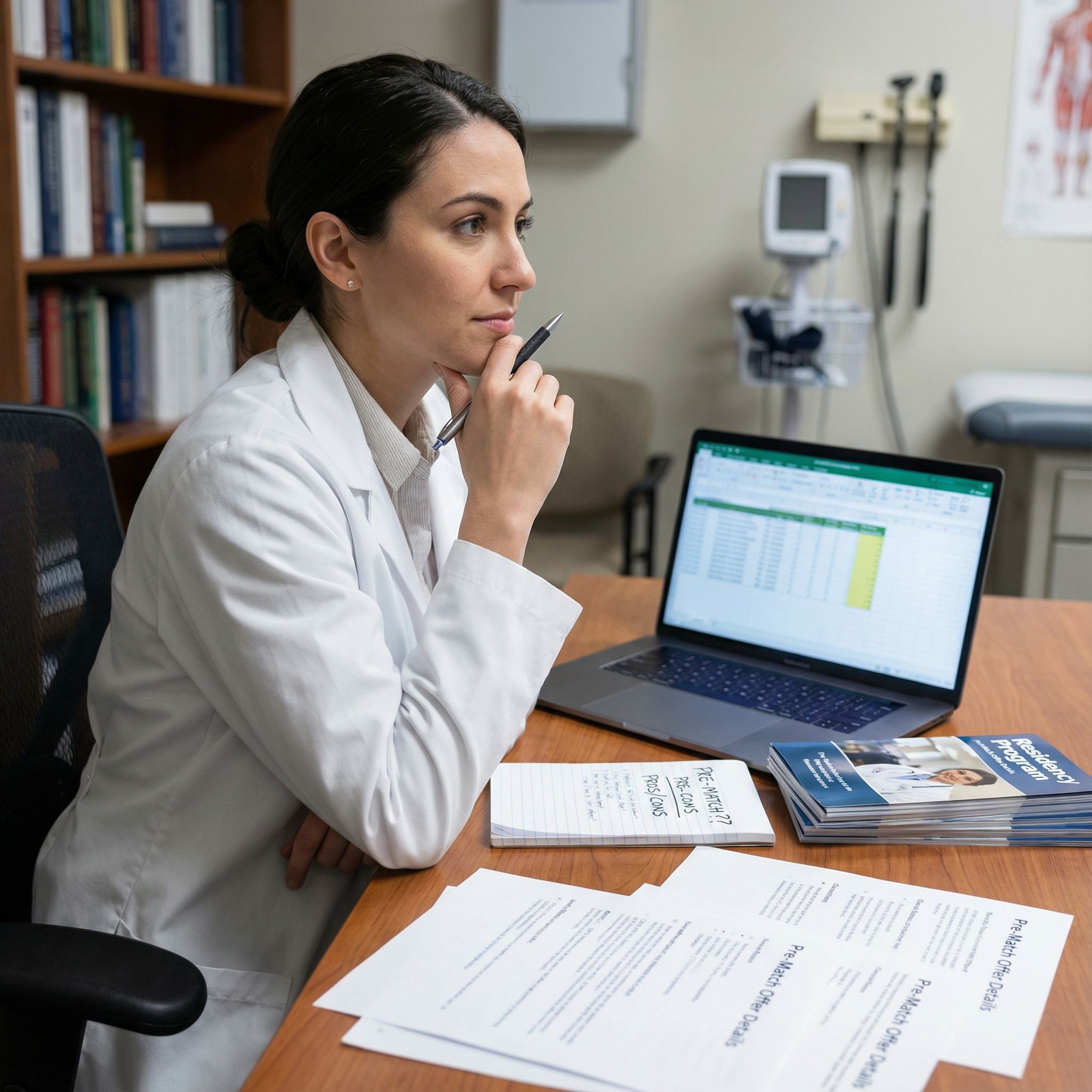
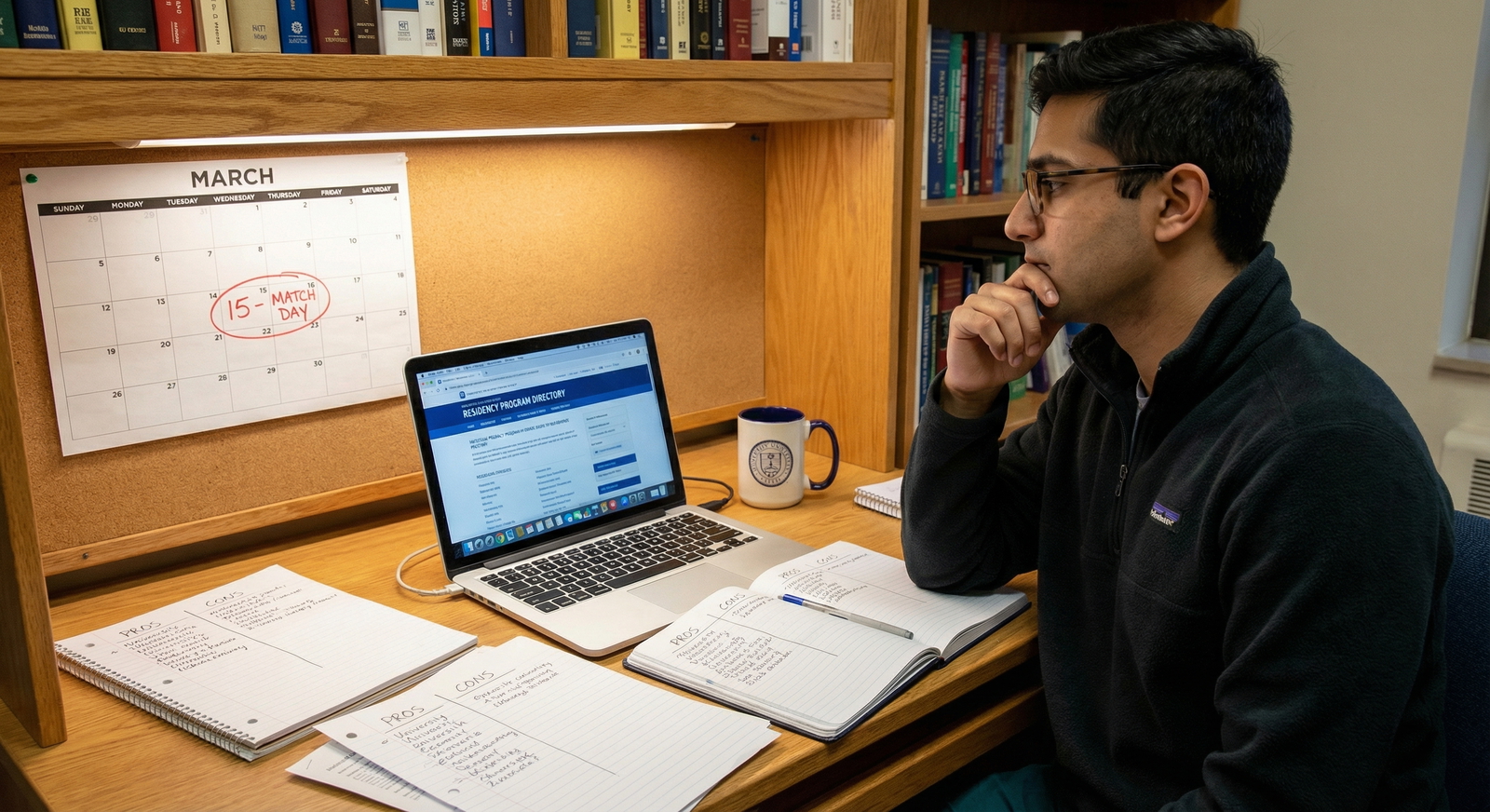
Pre-match communication is one of the most confusing and anxiety‑provoking parts of the residency application process—especially for a non-US citizen IMG aiming for a diagnostic radiology residency. You are balancing visa concerns, limited interview invitations, and the reality that radiology is a moderately competitive specialty, all while trying to navigate what is allowed (and wise) in terms of early commitment and program communication before the Match.
This article is written specifically for the non-US citizen IMG (foreign national medical graduate) interested in Diagnostic Radiology, with a focus on:
- What “pre-match communication” actually means in the NRMP era
- How it intersects with pre-match offers and early commitment pressure
- How to communicate with programs professionally and ethically
- Common scenarios and recommended responses
- Practical email templates and strategy
The goal is to help you communicate confidently without violating rules or harming your chances in the diagnostic radiology match.
1. The Rules and Realities: What Counts as Pre-Match Communication?
Before discussing strategy, you need a clear view of the rulebook and how it applies to a non-US citizen IMG targeting radiology residency.
1.1. Key Terms: Match, SOAP, and “Pre-Match”
- NRMP Match: The centralized algorithmic process that pairs applicants and residency programs based on rank lists. Diagnostic radiology (DR) positions in the US are almost all in the Match.
- Categorical vs Advanced: Many DR spots are advanced positions (PGY‑2 start), requiring a separate preliminary or transitional year (PGY‑1). Some institutions now offer categorical radiology positions (PGY‑1 + DR bundled).
- Pre-Match: Historically, some specialties/programs (especially in Texas or certain fields like family medicine) offered contracts outside the Match. In radiology, this is now uncommon; nearly all ACGME-accredited DR programs participate in NRMP.
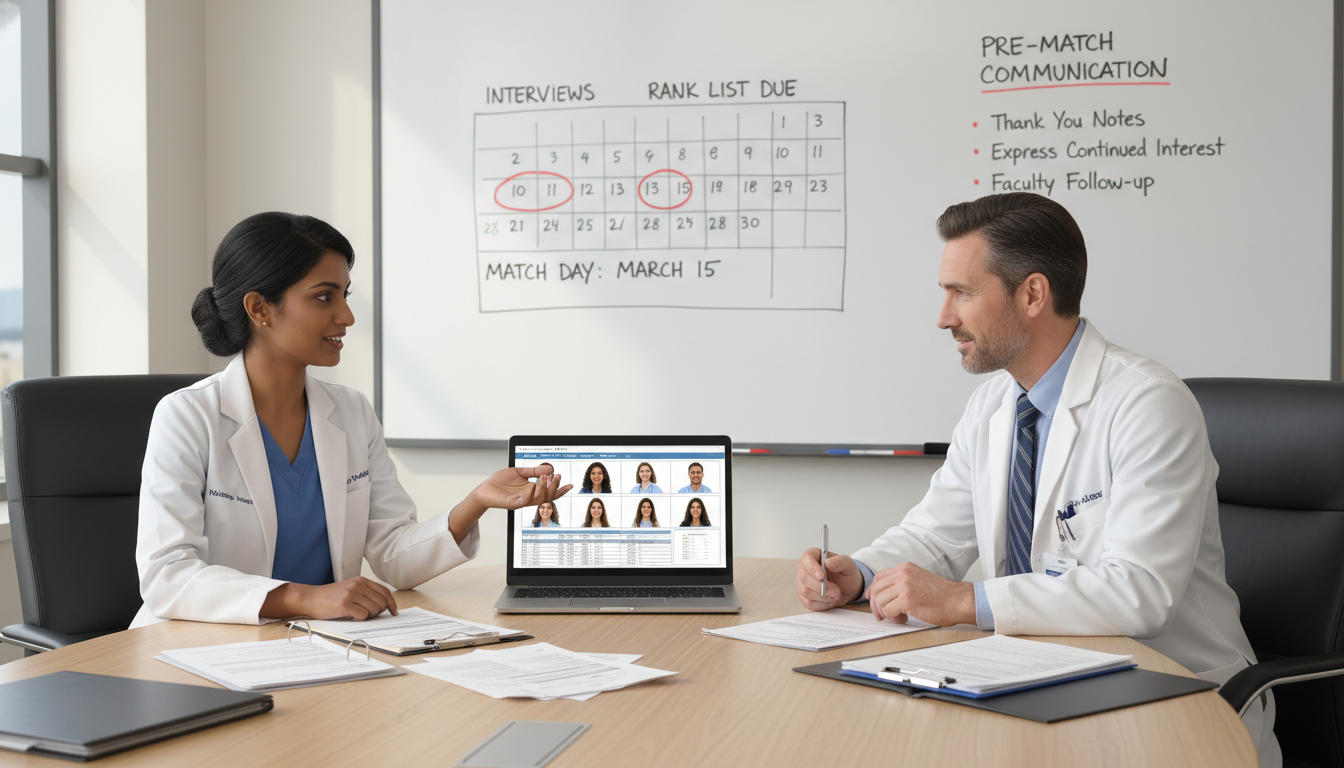
- Pre-Match Communication: All emails, phone calls, Zooms, in-person conversations before rank order lists are due that are not strictly part of formal interview logistics. This includes thank-you emails, expressing interest, asking for status updates, and discussing visa support or early-commitment preferences.
As a foreign national medical graduate, your situation adds layers: visa sponsorship, limited US clinical experience, sometimes fewer interview invitations. You may feel pressure to “do more” through communication—but not all extra communication is helpful.
1.2. NRMP and AAMC Guidelines You Must Know
The NRMP and AAMC have clear policies intended to maintain a fair Match. The most relevant points:
- No coercion: Programs cannot require or pressure you to reveal your rank list or to commit to a program.
- No guarantees: Programs should not promise you a position. You should not interpret encouraging comments as guarantees.
- Non-binding interest: You may express your interest (e.g., “I will rank your program highly”), but you must still build an honest rank list according to your true preferences. No email is legally binding.
- Match Participation Agreement: If both you and the program participate in the Main Match, any side agreement or pre-match offer is not allowed. Violations can have serious consequences.
In diagnostic radiology, the standard is: almost everything goes through the Match. That means talk of “pre-match offers” in DR usually refers not to formal contracts, but to strongly encouraging communication or pressure to rank highly.
2. Strategic Goals of Pre-Match Communication for Non-US Citizen IMGs
Not all communication is equal. To be effective and safe, clarify what you want each interaction to achieve.
2.1. Your Main Objectives
As a non-US citizen IMG applying to diagnostic radiology, your pre-match communication should aim to:
Demonstrate professionalism and maturity
- Programs worry about visa/transition issues, readiness for US training, and communication skills. Your emails are part of the “professionalism exam.”
Clarify visa and eligibility questions
- Many radiology programs limit sponsorship to certain visas (often J‑1 only). You must understand each program’s policies and ensure they know your status accurately and early.
Highlight genuine interest (“signal” intent)
- Especially if you have geographic ties or a strong reason to choose that program, expressing interest can help the program differentiate between passive and highly motivated applicants.
Maintain visibility after interviews
- A thoughtful thank-you note and one well-timed post-interview update can keep you on a program’s radar without being intrusive.
Avoid ethical pitfalls and rule violations
- You want to build your career in a small specialty. Radiology is tight-knit. Don’t be the applicant associated with manipulative or unprofessional communication.
2.2. What Pre-Match Communication Cannot Do
It’s critical to understand what this communication cannot realistically accomplish:
- It cannot override a weak application or a poor interview.
- It usually cannot create an interview offer out of nowhere at highly selective radiology programs.
- It will not guarantee a match, no matter how “strong” the response.
- It will not change a program’s visa capability (if they legally or administratively cannot sponsor H‑1B, your email won’t fix that).
Pre-match communication is about optimizing the margins, not transforming the entire game.

3. Before, During, and After the Interview: Communication Roadmap
Organizing your communication by timeline helps you avoid both silence and over-contact.
3.1. Before the Interview: Reaching Out Without Overstepping
Common reasons to email before an interview:
- Clarifying visa sponsorship
- Expressing targeted interest at a program that aligns strongly with your background
- Addressing unique circumstances (e.g., late USMLE scores, recent publication)
3.1.1. Visa-Related Pre-Interview Email
Diagnostic radiology programs are often cautious with visas due to long training duration and fellowship plans. A non-US citizen IMG should verify:
- Does the program sponsor J‑1, H‑1B, or both?
- Are there historic patterns of matching IMGs and sponsoring visas?
A short, precise pre-interview email could be:
Subject: Clarification on Visa Sponsorship – Diagnostic Radiology Applicant
Dear Dr. [Program Director Name],
I hope this message finds you well. My name is [Your Name], and I recently applied to the Diagnostic Radiology residency program at [Institution] via ERAS. I am a non-US citizen IMG currently requiring [J‑1 / H‑1B] visa sponsorship.
I wanted to kindly confirm whether your program is able to sponsor [J‑1/H‑1B] visas for incoming residents. I remain very interested in [specific features of the program—e.g., strong oncologic imaging, structured teaching curriculum, or research opportunities].
Thank you for your time and consideration.
Sincerely,
[Name], MD
AAMC ID: [XXXXXXX]
When is this appropriate?
- When a program’s website is unclear or contradictory
- When you already applied and want to avoid wasted interview spots due to ineligibility
When to avoid?
- Sending this same email to 60 programs without personalization
- Asking for an interview directly in the first line (this feels pushy)
3.1.2. Interest/Update Email Prior to Receiving an Interview
If you have a genuine institutional tie or a substantive update (new US publication in radiology, new US LOR), a single, concise pre-interview email may be reasonable:
Subject: Update to Application and Continued Interest – Diagnostic Radiology
Dear Dr. [Program Director Name],
My name is [Your Name], a non-US citizen IMG from [Medical School/Country], and an applicant to your Diagnostic Radiology program this season. I wanted to briefly share an update to my application: I recently [published a first-author paper in abdominal MRI in Journal X / began a radiology observership at Institution Y].
I remain strongly interested in [Program Name] because of [specific reasons—e.g., case volume, structured early exposure to interventional radiology, teaching culture]. I would be deeply grateful if you would keep my application in consideration for an interview if positions become available.
Thank you for your time.
Sincerely,
[Name], MD
AAMC ID: [XXXXXXX]
Use this sparingly—no more than once per program, and only for programs where you have a clear, defensible reason to reach out.
3.2. During the Interview Season: Real-Time Communication
Once you receive an interview, your primary focus should be:
- Preparing thoroughly for the interview day
- Communicating clearly and professionally with the coordinator and faculty
- Avoiding any hint of trying to “negotiate” your rank status
3.2.1. Thank-You Emails After Radiology Interviews
Diagnostic radiology culture varies: some programs explicitly say thank-you emails are not necessary, others expect or appreciate them.
General guidelines:
- Send thank-you emails within 24–48 hours.
- Keep them short and specific.
- Reference one or two topics discussed (e.g., resident teaching, case mix, a research interest).
Example:
Dear Dr. [Interviewer Name],
Thank you for the opportunity to interview with the Diagnostic Radiology residency at [Institution] on [date]. I truly enjoyed learning more about your program’s [e.g., structured physics teaching, early exposure to breast imaging, or resident-led case conferences].
Our discussion about [specific topic you discussed—e.g., your work in AI applications in thoracic imaging] was particularly inspiring and aligned closely with my long-term goal of pursuing [related area].
I appreciate your time and consideration.
Sincerely,
[Name]
You may also send a brief overall thank-you to the Program Director and Coordinator.
3.2.2. Clarifying Visa and Logistics During or Immediately After the Interview
If visa sponsorship is not addressed during the interview day, you must clarify it. As a foreign national medical graduate, assumptions are dangerous.
- It is acceptable to ask the PD or coordinator:
- “Does the program sponsor H‑1B visas for diagnostic radiology residents?”
- “Have you previously matched non-US citizen IMGs on J‑1 visas?”
If left unanswered during the day, send a calm follow-up:
Dear [Coordinator/PD Name],
Thank you again for organizing the interview day on [date]. I realized I did not have a chance to clarify one important detail related to my eligibility. As a non-US citizen IMG, I will require [J‑1/H‑1B] sponsorship. May I please confirm whether your program is able to sponsor this visa type for incoming residents?
I appreciate your guidance and your time.
Sincerely,
[Name]
This is not aggressive or “demanding”; it’s necessary clarity.
3.3. After Interviews: Interest Statements, Updates, and Early Commitment Pressure
This is where program communication before the Match can become sensitive.
3.3.1. Post-Interview “Love Letters”: What’s Appropriate?
Programs vary in how much they weigh post-interview interest. In radiology, many PDs say:
- Excessive or formulaic emails don’t help.
- One sincere, specific email can be meaningful.
You must obey NRMP rules: you may express interest, and you may tell a single program that it is your “first choice”, provided it is true. You must not demand or expect reciprocity.
Example of a “first choice” email (only send to one program):
Dear Dr. [Program Director Name],
I wanted to express my sincere appreciation for the opportunity to interview at [Program Name] and for the warm welcome from your residents and faculty.
After reflecting on all of my interviews, I have decided that [Program Name] is my first choice for Diagnostic Radiology training. The combination of [e.g., strong case diversity, resident camaraderie, support for research, and your track record of supporting non-US citizen IMGs on J‑1 visas] aligns exactly with what I am seeking in a residency.
Regardless of the outcome of the Match, I am grateful for the chance to learn more about your department.
Sincerely,
[Name]
Important:
- Only write this if it’s absolutely true.
- You must then rank that program #1 on your rank list.
You may also send general interest emails (no rank order claims) to a few top programs:
Dear Dr. [PD],
I remain very enthusiastic about the possibility of joining [Program Name]. My interview day confirmed how well your program fits my goals in Diagnostic Radiology, particularly [specific aspects]. I will be ranking [Program Name] among my top choices.
Thank you again for your time and consideration.
Sincerely,
[Name]
Use phrases like “among my top choices” unless you truly intend to rank them #1.

4. Pre-Match Offers, Early Commitment Pressure, and Red Flags
Although genuine pre-match offers (binding contracts outside the Match) are rare in diagnostic radiology, early commitment pressure and ambiguous encouragement still appear.
4.1. How Programs May Signal Interest
You might hear things like:
- “We were very impressed with you; you will be ranked highly.”
- “You are exactly the kind of resident we want.”
- “We hope to work with you next year.”
These statements are not guarantees and not binding. Response:
- Be appreciative.
- Do not ask, “Where will I be on your rank list?”
- Do not reveal your specific rank list in detail.
You could respond:
Thank you very much for your kind words and for considering my application so favorably. I greatly enjoyed meeting your team and will be thinking carefully as I finalize my rank list.
4.2. Explicit or Implicit Early Commitment Requests
Less commonly, a program might edge close to NRMP violations, for example:
- “If you tell us we are your first choice, we will rank you to match.”
- “We would like your assurance that you will rank us #1.”
- “We need to know your rank intentions to consider you seriously.”
As a non-US citizen IMG worried about matching and visas, this can feel extremely tempting. But:
- This kind of request is problematic under NRMP guidelines.
- You should not make multiple “first choice” promises to different programs.
- You are not required to disclose your rank list.
A reasonable, non-committal answer:
I appreciate your enthusiasm about my application and the opportunity to interview. I am still in the process of reflecting on all my interviews and gathering information. I will create my rank list based on my true preferences, and I am grateful that [Program Name] is under strong consideration.
If you genuinely decide they are #1, you can later send a truthful “first choice” email as described earlier, but never as a trade (“I’ll promise if you do X”).
4.3. True Pre-Match Offers Outside NRMP (Rare in DR)
If any diagnostic radiology program offers:
- A contract outside the Match,
- Conditional upon withdrawing from NRMP, or
- A guarantee that bypasses Match rules,
You must be extremely cautious:
- Confirm whether the program actually participates in the NRMP Match for DR.
- If they do and still propose this, they may be proposing an NRMP violation.
- As a non-US citizen IMG, consider the long-term consequences:
- Programs with a pattern of sidestepping rules may have other systemic issues.
- Being involved in a Match violation can jeopardize future opportunities.
In most cases, for radiology:
- Stick with the Match.
- Seek advice from a trusted mentor, advisor, or institutional GME office if this occurs.
5. Communication Pitfalls to Avoid as a Non-US Citizen IMG
Certain behaviors can quietly hurt your standing with programs—even if your application is strong.
5.1. Over-Emailing or Generic Mass Emails
Red flags for programs:
- Multiple “checking in” emails with no new information
- Clearly copy-pasted text sent to different programs without personalization
- Long, emotional emails describing desperation to match
Better approach:
- Limit yourself to 1–2 purposeful emails per program (pre-interview update, post-interview thank you/interest).
- Keep each email under 250–300 words.
- Ensure every email requires no more than 30 seconds to read.
5.2. Inaccurate or Misleading Statements
Never:
- Claim a program is your “first choice” if you do not intend to rank it #1.
- Misrepresent visa eligibility or status.
- Imply you have other offers or guarantees to manipulate interest.
Radiology is small. PDs talk to each other, especially about unusual or concerning applicant behaviors.
5.3. Cultural and Language Considerations
As a foreign national medical graduate, you might worry about:
- Tone (too formal vs. too casual)
- Directness (in some cultures, direct statements to authority figures feel uncomfortable)
Guidelines:
- Use polite, moderate formality: “Dear Dr. [Last Name]” / “Sincerely”.
- Be direct but respectful; avoid overly apologetic or self-deprecating language.
- If in doubt, shorter is safer—clarity is more important than elegance.
5.4. Involving Residents and Faculty via Informal Channels
Networking is important, but:
- Do not message 10 residents from the same program via social media.
- LinkedIn or professional email is fine; Instagram/WhatsApp DMs can feel intrusive unless invited.
- Keep any contact information-seeking, not pressure-based:
I’m an IMG applicant interested in DR and your program. If you have a few minutes, I would really appreciate any insight about the resident culture or advice for someone in my situation.
Never ask residents:
- “Can you tell me my chances?”
- “Can you tell the PD to rank me highly?”
6. Step-by-Step Pre-Match Communication Strategy for Non-US Citizen IMGs in DR
To bring it all together, here is a practical timeline and checklist.
6.1. Before ERAS Submission
- Clarify your visa needs (J‑1 vs H‑1B).
- Research which radiology programs sponsor your visa type and historically consider IMGs.
- Prepare polished email templates for:
- Visa clarification
- Application updates
- Post-interview thank-you and interest
6.2. After ERAS Submission, Before Interview Invitations
For programs of highest interest or those with unclear visa policies:
- Send a brief visa clarification email if needed.
- Consider one update/interest email only if you have a genuine update (USCE, US LOR, publications).
Track all communication in a simple spreadsheet:
- Date, Program, Contact, Type of Email, Response.
6.3. During Interview Season
- Respond promptly and professionally to all coordinator emails.
- Send targeted thank-you emails after interviews.
- Clarify visa sponsorship if not already clear.
- Maintain a journal of impressions for each program to help later with rank list decisions and authentic interest emails.
6.4. After Interviews, Before Rank List Deadline
Decide on your true #1 program and a clear, honest ranking of others.
Send:
- One “first choice” email (if you choose to do so) to your #1 only.
- 1–3 “high interest” emails to other top programs, without promising rank positions.
Avoid:
- Multiple emails to the same program with no new information.
- Direct questions about your ranking (“Am I ranked to match?”).
- Any implication that you’ll change your rank list for a promise.
6.5. Finalizing the Rank List
- Rank programs in your true order of preference, not based on perceived interest or informal promises.
- As a non-US citizen IMG, you may weigh:
- Visa sponsorship stability
- Past history of IMGs in the program
- Institutional support and inclusiveness
Trust the Match: your best chance comes from an honest ranking, not from trying to “game” the system with communication.
FAQs: Pre-Match Communication for Non-US Citizen IMGs in Diagnostic Radiology
1. As a non-US citizen IMG, should I tell a diagnostic radiology program they are my first choice?
You may, but only if it is absolutely true and you will rank them #1. This can be done via a single, clear email to the Program Director. It does not guarantee a match but may reinforce your commitment. Never send such a statement to more than one program; that is unethical and risky.
2. Can pre-match communication help me get a diagnostic radiology interview if I have not been invited?
Sometimes, but only at the margins. A brief, well-written email with a real update (US publication in radiology, new US LOR, completion of radiology observership) might prompt a second look. Mass, generic “please consider my application” emails are usually ignored and may hurt your image.
3. How many times should I email a program during the season?
For most programs:
- 0–1 emails pre-interview (only if truly needed)
- 1 thank-you email post-interview
- 0–1 final interest/update email after interviews
So typically 1–3 emails total per program, spaced appropriately. More than that, especially without new information, can be viewed as excessive.
4. Is it safe to ask about visa sponsorship directly?
Yes—and as a non-US citizen IMG, it is essential. Asking early and clearly about whether a diagnostic radiology residency can sponsor J‑1 or H‑1B visas is professional and expected. Programs understand that your ability to join them depends on this. Just keep the email concise and polite, and avoid emotional language.
By approaching pre-match communication with clarity, honesty, and restraint, you can maximize your chances as a non-US citizen IMG in the diagnostic radiology match—without crossing ethical lines or damaging your professional reputation.