
Understanding Pre-Match Communication for Caribbean IMGs in Diagnostic Radiology
For a Caribbean IMG interested in diagnostic radiology, pre-match communication can feel like a confusing gray zone: programs email you, residents connect on LinkedIn, a faculty member says, “We’d love to see you here next year,” and you’re left wondering—does this mean anything for my diagnostic radiology match? Is this a pre-match offer? Can they even offer that?
To navigate this well, you need to understand three distinct—but related—concepts:
- Pre-match communication – Any contact with a program (emails, phone calls, social media, post-interview thank-you notes, second looks) that occurs before rank lists are certified.
- Pre-match offers / early commitment – Explicit or implicit promises of a spot outside of the NRMP Match, or pressure to commit to a certain rank order.
- Program communication before match – The broader, often benign, communication strategies programs use to maintain applicant interest or gather more information.
As a Caribbean medical school graduate (or senior) aiming for a competitive field like radiology residency, you’re likely aware of how critical every interaction can be. Many Caribbean schools—like SGU, AUC, and Ross—publish data on SGU residency match and other outcomes, and you’ll notice diagnostic radiology is attainable, but highly selective. That raises the stakes on each email, call, and thank-you note.
This article breaks down what pre-match communication means for a Caribbean IMG in diagnostic radiology, how to approach it strategically and ethically, and how to protect yourself from misinterpretation or NRMP violations—while still advocating strongly for your candidacy.
The Rules and Realities: What Counts as “Pre-Match” and What’s Allowed
Understanding the rules is the foundation to using pre-match communication effectively and safely.
1. The NRMP Match Framework
Most U.S. diagnostic radiology residency programs participate fully in the NRMP Match. That means:
- They cannot require you to commit to them before the Match.
- They cannot offer you a guaranteed position outside the Match (with very rare, specifically exempted situations).
- You are not allowed to solicit or offer a commitment such as, “If you rank me first, I will rank you first,” in a binding way.
The NRMP Match Participation Agreement and Codes of Conduct govern both pre-match offers and all program communication before match.
Key points for you as an applicant:
- You may express interest and even tell a program they are your “top choice”.
- You may not ask for or give a binding commitment (“I promise I will rank you #1 if you promise to rank me highly”).
- Programs may not pressure you, ask how you will rank them, or condition consideration on your answer.
2. How Diagnostic Radiology Programs Typically Communicate
Radiology as a specialty tends to be polite and cautious with communication but practices vary widely:
- Some programs send no post-interview communication at all due to fear of NRMP violations.
- Others send:
- Generic thank-you emails after interviews
- Continued interest notes (“We enjoyed meeting you…”)
- Updates (“Our program will be adding a new IR rotation…”)
- Invitations for second looks (virtual or in-person, if allowed by cycle policies)
For a Caribbean IMG in diagnostic radiology, this variability can be confusing. Lack of communication often does not mean disinterest; it may reflect program policy. Conversely, warm communication does not guarantee a strong rank position.
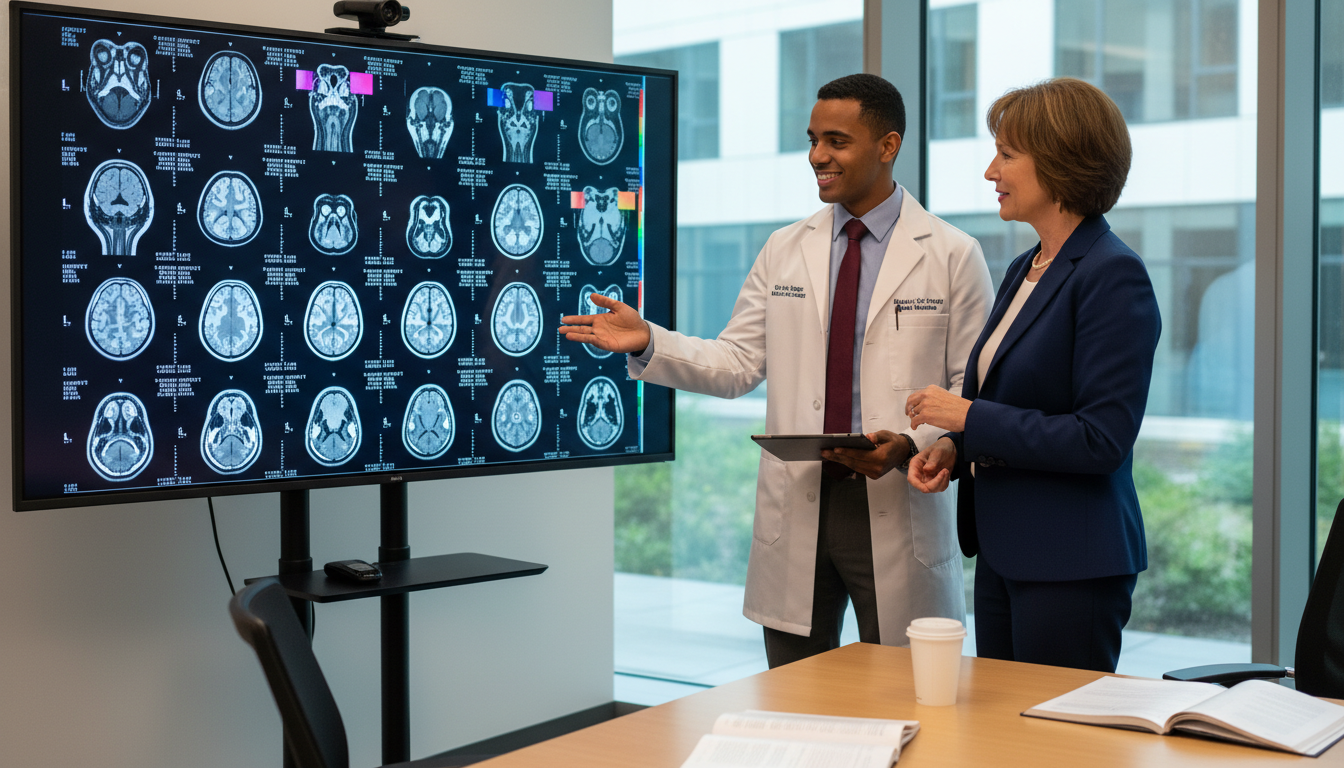
Strategic Pre-Match Communication: Before, During, and After Interviews
Your goal is to use pre-match communication to:
- Signal serious interest and professionalism
- Clarify fit with the program
- Avoid NRMP violations or misinterpretation
- Stand out in a crowded pool where many programs are cautious about Caribbean IMG applicants
Below is a phase-by-phase approach tailored for a Caribbean IMG targeting radiology residency.
A. Before Interviews: Building Visibility and Credibility
Many Caribbean IMG applicants feel invisible at the application stage, especially in a competitive specialty like diagnostic radiology. Thoughtful, restrained pre-interview communication can help.
1. Appropriate, well-timed pre-interview emails
Appropriate scenarios to email before an interview:
- You have a genuine connection (did an away rotation, know faculty, research collaboration).
- You have a major update relevant to radiology (new publication in imaging, high Step score released, new radiology research poster).
- You’re geographically or mission-aligned (from the region, spouse job constraints, long-term plans in that city).
Example email (concise and compliant):
Subject: Application Update – Diagnostic Radiology Applicant (ERAS AAMC ID XXXXXXXX)
Dear Dr. [Program Director Last Name],
I hope this message finds you well. My name is [Name], a final-year student at [Caribbean Medical School], applying to your diagnostic radiology residency this cycle. I wanted to briefly share an update since submitting my ERAS application:
• Our abstract on “CT Radiomics in Pancreatic Lesions” was accepted for oral presentation at [Conference].
• I recently completed a radiology elective at [U.S. institution], which further confirmed my interest in diagnostic radiology and in training at an academic program like yours.I remain very interested in [Program Name] for its strong case volume and emphasis on resident teaching. Thank you for considering my application.
Sincerely,
[Name], [Medical School]
ERAS AAMC ID: XXXXXXXX
Key tips:
- Keep it short, specific, and professional.
- Do not ask: “Will I get an interview?” or “Where am I on your list?”
- For Caribbean medical school residency applicants, avoid over-emailing. One well-crafted message per program is enough unless there is a major new development.
2. Using networks wisely
If you rotated at a U.S. hospital or know faculty who trained in radiology:
- Ask if they would be willing to send a professional note of support to a few specific programs.
- Be clear you are not asking for special favors, only for them to highlight your strengths if they genuinely feel comfortable doing so.
Programs are well aware that Caribbean IMG candidates often face systemic challenges. A sincere endorsement from a respected U.S. radiology faculty member can help mitigate bias.
B. During Interview Season: Real-Time Communication and Signals
Once you receive diagnostic radiology interviews, pre-match communication becomes about reinforcing your fit and responding to program outreach.
1. Post-interview thank-you notes
These are rarely decisive, but they can help distinguish you as attentive and mature—especially important when some evaluators may be less familiar with Caribbean training environments.
Best practices:
- Send within 24–72 hours.
- One email per program is enough (you may copy all interviewers on a single note, or send 1–2 targeted emails to key faculty).
- Keep the tone genuine and specific.
Example:
Dear Dr. [Last Name],
Thank you again for the opportunity to interview with [Program Name] on [date]. I especially appreciated our discussion about the structured teaching during read-out and the early exposure to ER and neuroimaging.
As a Caribbean IMG who has sought out additional radiology electives in the U.S., it was encouraging to see how your program supports residents in developing strong fundamentals early in training. I would be excited to contribute to your resident cohort and to learn from such diverse pathology and faculty expertise.
Sincerely,
[Name]
2. Responding to “interest” messages from programs
Programs may send:
- “We enjoyed meeting you and think you’d be a good fit.”
- “You would be an asset to our residency.”
- “We hope to see you here next year.”
These are not pre-match offers in diagnostic radiology. In most cases, they are:
- Expressions of sincere interest, but
- Not binding and not predictive of rank list position.
How to respond:
- Acknowledge the message, reiterate your interest, avoid any language implying a binding commitment.
Example response:
Dear Dr. [Last Name],
Thank you for your kind note. I truly enjoyed meeting you and the residents, and I remain very interested in [Program Name]. I was particularly impressed by [specific detail].
I appreciate your time and consideration during this application season.
Best regards,
[Name]
Do not reply with:
- “You are my #1, and I promise to rank you first if you rank me highly.”
- “If you can guarantee me a spot, I will withdraw from other programs.”
Those kinds of statements can cross into NRMP violation territory and create ethical and practical problems.
C. After Interviews: Interest Letters, Ranking Strategy, and Early Commitment Pressure
The post-interview, pre-rank period is where many Caribbean IMGs feel anxious and tempted to over-communicate. For a radiology residency applicant, this period may determine whether you signal enough interest to be noticed—but not so much that you raise red flags.
1. “Love letters” or letters of strong interest
Some applicants send one program a letter stating it is their top choice. For Caribbean IMG applicants in a competitive diagnostic radiology match, this can be useful if done very carefully.
Consider doing this if:
- You are genuinely prepared to rank that program #1.
- You have clear, concrete reasons why that program is your best fit (geography, training style, family, mission).
- The program has not explicitly discouraged such communication.
Example of appropriate “top choice” language:
Dear Dr. [Program Director],
I wanted to express my sincere appreciation once again for my interview at [Program Name]. After completing all of my interviews and reflecting on my priorities, I have decided that [Program Name] is my top choice for diagnostic radiology residency.
Your program’s strength in [e.g., emergency radiology and abdominal imaging], the collegial resident culture, and the commitment to teaching align closely with my goals. As a Caribbean IMG, I am particularly drawn to the supportive environment and the opportunity to build a strong foundation in a high-volume academic center.
Regardless of the outcome, it was a privilege to interview with your team. Thank you again for your time and consideration.
Sincerely,
[Name]
Important:
- You must actually rank them #1 if you say this. Otherwise, you risk being unethical and damaging your reputation.
- Use “top choice” language only once per cycle.
For other programs where you are very interested, you can say:
- “Your program is among my top choices.”
- “I remain highly interested in training at [Program Name].”
2. When a program seems to pressure you
Occasionally, a program—especially outside the main NRMP pathway or in special tracks—may hint at pre-match offers or early commitment expectations:
- “If you tell us we’re your #1, that will significantly influence how we rank you.”
- “We want to be sure you’ll come here if we rank you highly.”
How to respond:
- Stay calm, stay professional, and do not agree to any binding commitments.
- You may reassure them of your strong interest without promising anything binding.
Example response in conversation or email:
I appreciate your interest in me as an applicant and I am very interested in your program. I understand the NRMP guidelines and want to follow them carefully, so I will be finalizing my rank list after I’ve reflected on all my interviews. I can say that your program is one of the places I am strongly considering.
If the pressure feels significant or clearly violates NRMP policy, document it and consider:
- Discussing it confidentially with an advisor or your Dean’s office.
- Contacting NRMP if you feel there is a clear violation (they typically allow confidential reporting).

Unique Considerations for Caribbean IMGs in the Diagnostic Radiology Match
Caribbean IMG status shapes how your pre-match communication is perceived and how you should strategize.
1. Acknowledge the context without apologizing for it
Programs know that Caribbean medical school residency pathways are different:
- Clinical rotations may be at multiple affiliate hospitals.
- Traditional U.S. letter writers may be fewer.
- Step attempts or exam delays might be more common.
You do not need to over-explain your educational path in every email, but it can be helpful to show how you’ve proactively compensated:
- Extra radiology electives at U.S. teaching hospitals
- Research involvement in imaging-related projects
- Strong letters from U.S.-trained radiologists
- High Step 2 CK scores if Step 1 is pass/fail or lower
When you communicate with programs, subtly weave this narrative of initiative and resilience rather than defensiveness.
2. Leveraging an SGU residency match or similar Caribbean match outcomes
If you’re from SGU or another well-known Caribbean school, published SGU residency match numbers can work in your favor:
- Some radiology programs are used to SGU graduates and recognize their strong preparation.
- When talking or emailing with alumni or faculty who know your school, you can highlight:
- Prior graduates in diagnostic radiology match
- Established pipelines to academic centers
Example in conversation or email:
I’ve been fortunate to attend [School], where previous graduates have successfully matched into diagnostic radiology, including at [Institution, if public]. Seeing their trajectory encouraged me to pursue additional imaging electives and research to prepare for a rigorous radiology residency.
This reassures programs that:
- You understand the competitiveness of radiology.
- You have realistic expectations and have prepared accordingly.
3. Communication volume and tone: avoiding the “desperate” impression
Because you may have fewer “automatic” advantages compared with U.S. MD applicants, you might feel tempted to compensate with more emails, calls, or social media outreach.
Avoid:
- Repeatedly emailing a program director to “check in” about your status.
- Trying to connect with numerous residents and faculty on LinkedIn and then messaging all of them.
- Sending long, emotional “please rank me” letters.
Aim for:
- High-yield, low-frequency communication.
- Clear, confident tone—interested, but not needy.
- Demonstrating understanding of the program’s values and how you’d contribute.
Practical Communication Scenarios and How to Handle Them
Below are realistic scenarios a Caribbean IMG in diagnostic radiology might face, with suggested responses.
Scenario 1: “We loved you; you’re ranked to match”
A program emails you after the interview:
“We were very impressed with you and have ranked you to match.”
Interpretation:
- This is technically discouraged by NRMP because it can be misleading.
- It does not guarantee anything; rank lists are relative and other applicants’ behavior matters.
Recommended response:
Dear Dr. [Last Name],
Thank you very much for your message and for your kind words. I truly enjoyed meeting the residents and faculty at [Program Name], and I remain very interested in training with your team.
I appreciate your time and consideration in this process.
Sincerely,
[Name]
Do:
- Feel encouraged.
- Still rank programs in your true preference order.
Don’t:
- Change your rank list based solely on this message.
- Assume matching there is guaranteed.
Scenario 2: Program asks directly, “Where will you rank us?”
This is not appropriate per NRMP guidelines, but it still happens, especially in phone calls or informal conversations.
You might answer:
I’m still in the process of finalizing my rank list, but I can say I’m very interested in your program and it’s one of the places I’m strongly considering near the top of my list. I also want to be careful to follow the NRMP guidelines, so I’m basing my list on my honest preferences after I’ve reflected on all my interviews.
This protects you, stays honest, and maintains a positive relationship.
Scenario 3: Another specialty (e.g., preliminary medicine) hints at a pre-match to “secure” your radiology future
Many diagnostic radiology positions require a separate preliminary or transitional year. Occasionally:
- A preliminary medicine program (especially community-based) may suggest they can “guarantee” you a spot if you commit early, possibly outside the Match or via some “informal” agreement.
Be very cautious:
- Most legitimate categorical diagnostic radiology programs expect you to adhere fully to NRMP rules.
- Accepting an early, off-Match commitment in another specialty can undermine your ability to fully enter the diagnostic radiology match.
If you’re unclear, discuss:
- With your Dean or advising office
- With a trusted radiology mentor
- With NRMP directly (for clarity on policy)
Putting It All Together: A Communication Checklist for Caribbean IMGs in Radiology
Use this as a quick guide throughout the season.
Before Interviews
- Send at most one concise, targeted pre-interview email per high-priority program, if you have a genuine update or connection.
- Make sure your ERAS and CV already clearly explain your radiology interest and U.S. clinical exposure.
- Line up mentors (especially radiologists) who can, if appropriate, send supportive notes or respond to reference calls.
During Interviews
- Send brief, specific thank-you emails within 24–72 hours.
- Be consistent in your narrative: why radiology, why this program type, how you’ve prepared as a Caribbean IMG.
- Avoid any statements implying binding promises.
After Interviews, Before Rank Submission
- Decide if you will send one “top choice” letter to a single program (only if fully honest).
- For a few other priority programs, consider a short email reaffirming strong interest.
- Maintain professionalism and avoid over-communicating.
- Rank programs in your true preference order, regardless of any flattering messages.
FAQs: Pre-Match Communication for Caribbean IMG in Diagnostic Radiology
1. Can diagnostic radiology programs still offer true pre-match positions to Caribbean IMGs?
For most ACGME-accredited diagnostic radiology residency programs that participate in the main NRMP Match, true pre-match offers are not allowed. Historically, some non-NRMP pathways or special institutional agreements existed, but these are now rare. If someone appears to be offering you a guaranteed position outside the Match, you should assume it may conflict with NRMP rules and seek clarification from your Dean or NRMP.
2. Will not emailing programs after interviews hurt my chances as a Caribbean IMG?
Probably not. Many radiology programs either do not expect post-interview communication or treat it as neutral. A polite thank-you note can help reinforce your professionalism, but failing to send one is unlikely to be the reason you don’t match. More important are your application strength, interview performance, and genuine fit. Do not feel pressured to send multiple “update” or “please rank me” emails.
3. How much does telling a program they are my “top choice” actually help?
For some programs and some faculty, a sincere “top choice” statement may nudge you slightly higher on their list, especially if they were already inclined to rank you well. However, it is not a guarantee of a diagnostic radiology match there. Use this strategy sparingly and ethically: only tell one program they are your top choice, and only if you will truly rank them #1.
4. As a Caribbean IMG, should I be more aggressive in pre-match communication than U.S. MDs?
No. Being “more aggressive” (frequent emails, lobbying multiple faculty, emotionally charged messages) often backfires and reinforces negative stereotypes. Instead, focus on being strategic and professional:
- One or two high-yield messages per program at key points.
- Clear evidence of your preparation for radiology (research, electives, letters).
- Calm, confident tone that shows maturity and insight.
Used this way, pre-match communication becomes a tool to highlight your strengths—not a desperate attempt to overcome being a Caribbean IMG.
Handled thoughtfully, pre-match communication can support your journey from Caribbean medical school to a successful diagnostic radiology residency. Know the rules, be honest, be strategic, and let your preparation and professionalism speak as loudly as your words.