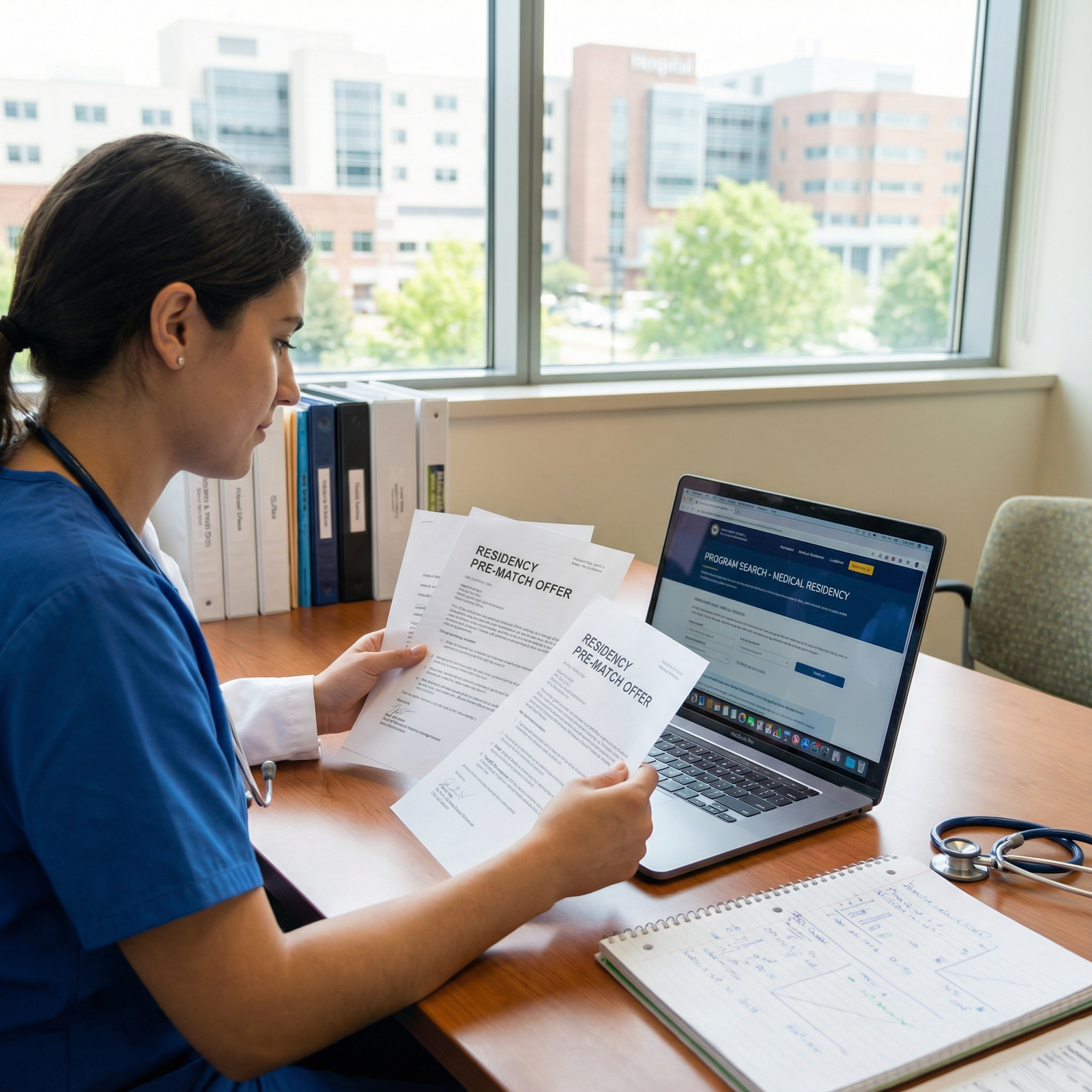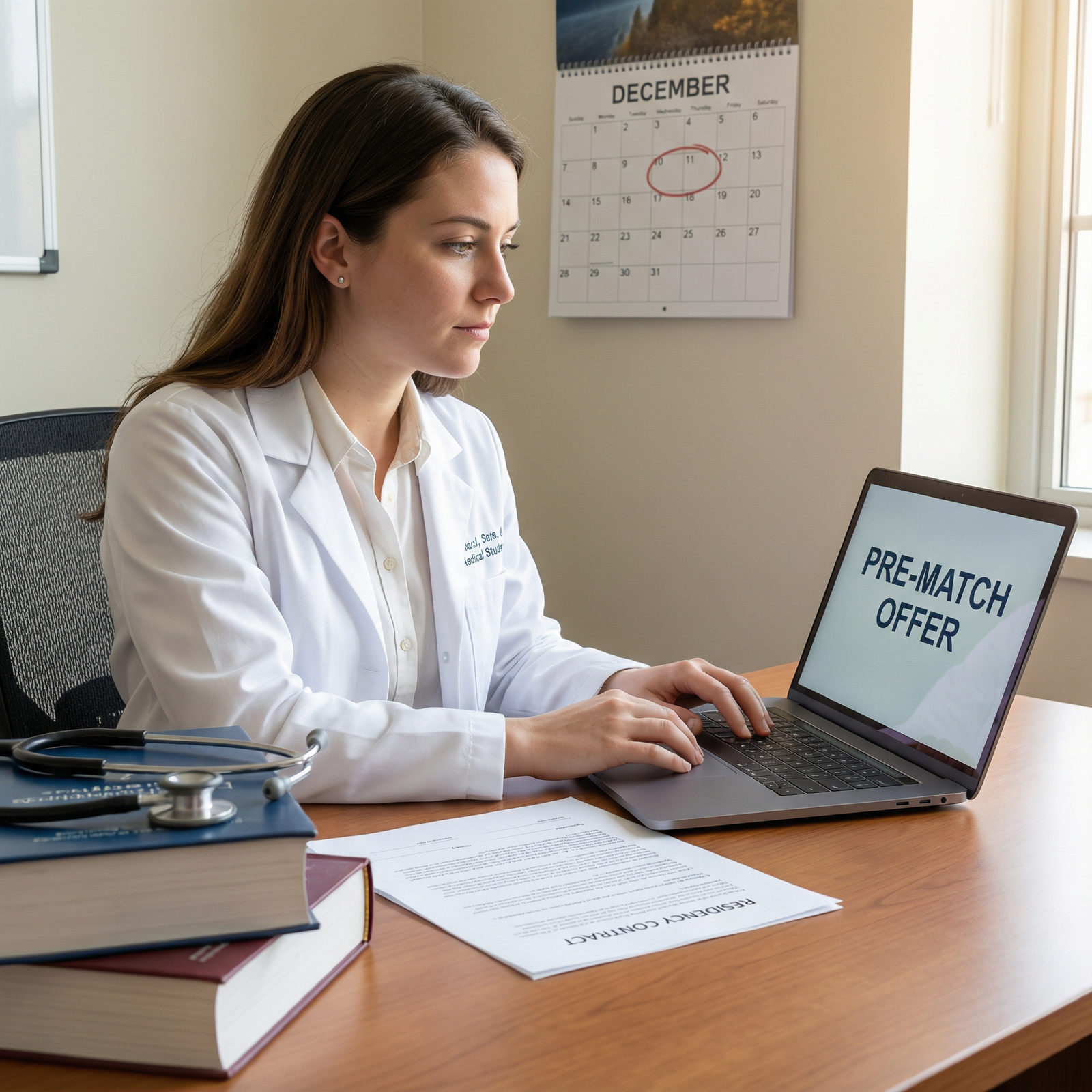
Understanding Pre-Match Communication as a DO Applicant in Orthopedic Surgery
For a DO graduate pursuing orthopedic surgery, pre-match communication can feel like walking a tightrope: you want to show strong interest without crossing ethical or NRMP boundaries, advocate for yourself without appearing desperate, and interpret program messages that are often vague by design. This is especially true in a competitive field like orthopedic surgery residency, where every interaction with a program may feel high stakes.
This article breaks down how to navigate pre-match communication as a DO graduate in orthopedic surgery—what it is, why it matters, how it differs from pre-match offers or early commitment, and how to use it strategically and professionally to improve your ortho match chances.
1. The Landscape: DO Graduates, Orthopedic Surgery, and the Match
The unique position of DO graduates
As a DO graduate entering the orthopedic surgery residency match, you sit at a unique intersection:
- Historically fewer DOs matched into orthopedic surgery compared with MDs, though this continues to improve post–single accreditation.
- Many programs now value osteopathic training and OMM/OMT background, especially for musculoskeletal care.
- Some programs, however, still show preference patterns—often indirect—based on school type, test type, or prior resident background.
You are not only applying in a competitive specialty; you are also working to ensure that your DO credentials are understood and respected. Pre-match communication is one of the few areas where you can actively shape programs’ perception of you.
Clarifying terminology: communication vs. offers
It’s critical to distinguish several related but different concepts:
Pre-match communication:
Any contact between you and a program before rank lists are finalized—emails, thank-you notes, phone calls, second looks, “interest” updates, or informal check-ins.Pre-match offers / early commitment:
Programs offering a position outside of the NRMP Match in non-NRMP or specialty-specific processes (more common historically in some specialties or non-Match positions). In standard ACGME orthopedic surgery residency, this is generally not allowed for NRMP-participating programs.Program communication before Match:
This includes signals like “we’re ranking you highly,” “you are very competitive,” or “we’d be excited to train you.” These comments can be genuine, but they are not binding and often given to multiple applicants.
Your job is to use pre-match communication strategically and ethically—not to chase promises or read too much into ambiguous language.
2. Rules, Ethics, and Reality: What’s Allowed and What Actually Happens
NRMP rules relevant to pre-match communication
If you’re participating in the NRMP Match, both you and programs must follow certain rules:
- Neither side can solicit or require a commitment to rank in a particular way.
- Neither side can ask for or require you to disclose your rank order list.
- Programs are not allowed to make binding pre-match offers for NRMP-participating positions.
- You are allowed to express interest and even tell a program they are your top choice.
- Programs are allowed to express strong interest, but they cannot guarantee you a position outside the Match.
Remember:
The Match algorithm favors the applicant. Rank programs in your true order of preference, not based on perceived promises.
What programs really do (behind the scenes)
Within these rules, there is a wide spectrum of behavior:
- Some programs send no post-interview communication at all.
- Others send general updates (“we enjoyed meeting you”) to all interviewees.
- Some programs will call or email top candidates with stronger language:
- “We will be ranking you very highly.”
- “You are in the top group of our list.”
- “We are very excited about you joining us.”
These messages are encouraging but not binding. Many applicants receive such notes and still do not match at those programs.
For an orthopedic surgery applicant, these messages can be particularly anxiety-provoking because of the specialty’s competitiveness and relatively small number of positions.
DO-specific realities in ortho match communication
As a DO graduate:
- You may receive fewer interviews overall, but those interviews are often more meaningful.
- Some programs with a strong DO presence or history may be more open and warm in their communication.
- You may have to be more proactive in program communication before Match to clarify your interest and update programs on your achievements.
The key: Use communication to reduce uncertainty and emphasize fit, not to fish for promises.
3. Building a Professional Pre-Match Communication Strategy
Step 1: Clarify your goals
Your pre-match communication should aim to:
- Express authentic interest in specific orthopedic surgery programs.
- Differentiate yourself as a DO applicant with unique strengths (e.g., manual medicine skills, holistic approach, community orientation).
- Provide relevant updates after your application submission and interviews.
- Maintain and strengthen relationships with faculty and residents who can advocate for you.
Step 2: Plan your communication timeline
A reasonable high-level timeline might look like this:
- Application submission to first interview offer:
- Targeted initial interest emails (if you have a genuine connection or update).
- After interview invitations but before interview day:
- Brief confirmation and expression of enthusiasm (optional).
- Immediately after each interview:
- Thank-you emails to interviewers and program coordinator.
- 1–3 weeks after interviews (or after a major update):
- Update letters: new publications, rotations, honors, board scores.
- Late season (close to rank list deadlines):
- A carefully worded “top choice” or “very high interest” letter to one (or very few) programs.
Avoid excessive emailing or anything that feels like pressure.

Step 3: Crafting effective, concise emails
Your emails should be:
- Short (5–10 sentences)
- Specific and personalized
- Professional, polished, and free of errors
- Honest about your level of interest
- Respectful of NRMP policies
Example: Initial interest email (before or after interview invite)
Subject: Interest in [Program Name] Orthopedic Surgery Residency
Dear Dr. [Last Name] / Dear Program Director,
My name is [Your Name], a DO graduate from [Your COM] applying to orthopedic surgery this cycle. I am writing to express my sincere interest in the [Program Name] Orthopedic Surgery Residency.
As someone who trained in [region/setting] and has strong interests in [e.g., sports medicine, trauma, community orthopedics], I am especially drawn to your program’s [specific features—case volume, DO-friendly culture, early operative exposure, research, mentorship]. I was particularly impressed by [specific detail from website, rotation experience, or interaction with your residents/faculty].
As a DO, I bring a strong musculoskeletal and manual medicine background along with [1–2 key strengths: research in orthopedics, leadership, sub-I performance, Step/COMLEX scores]. I would be honored to interview and learn more about how I might contribute to your residency.
Thank you for your time and consideration.
Sincerely,
[Full Name], DO
AAMC ID / ERAS ID: [ID]
[Phone] | [Email]
Step 4: Thank-you emails that reinforce your fit
Thank-you emails after interviews are standard and can subtly support your candidacy.
Example: Post-interview thank-you email
Subject: Thank You – Orthopedic Surgery Interview on [Date]
Dear Dr. [Last Name],
Thank you for the opportunity to interview with the [Program Name] Orthopedic Surgery Residency on [date]. I appreciated our discussion about [specific topic you discussed—resident autonomy, trauma exposure, DO representation, research opportunities].
The combination of [2–3 specific program strengths] and the collegial culture I observed during the interview day confirmed that [Program Name] is a strong fit for my goals. I would be excited to train as an orthopedic surgeon in your program and contribute as a hard-working, team-oriented resident.
Thank you again for your time and consideration.
Best regards,
[Full Name], DO
4. Advanced Tactics: Updates, Top-Choice Letters, and Interpreting Program Signals
When and how to send update letters
Update letters are especially important if:
- You are a DO applicant trying to show sustained interest.
- You have new achievements after applications went out:
- Accepted or published orthopedic research
- New leadership roles
- Honors in orthopedic surgery rotations or sub-internships
- Improved or released board scores (e.g., USMLE Step 2 / COMLEX Level 2)
Example: Post-interview update email
Subject: Application Update – [Your Name], Orthopedic Surgery Applicant
Dear Dr. [Last Name] / Dear Program Director,
I hope you are doing well. I interviewed with your orthopedic surgery residency on [date] and wanted to share a brief update on my application.
Since our interview, [briefly describe updates—e.g., “my manuscript on outcomes after rotator cuff repair has been accepted for publication in [Journal Name],” or “I received honors in my orthopedic surgery acting internship at [Institution].”]
My experience meeting your residents and faculty confirmed that [Program Name] remains one of my top choices for residency. I continue to be particularly drawn to [1–2 program strengths or values you share].
Thank you again for your time and for considering my application.
Sincerely,
[Full Name], DO
The “top choice” / “intent” letter: Use sparingly and honestly
A “top choice” or “I will rank you #1” letter can be powerful if used honestly and sparingly.
- Only send this kind of message to one program (or, at most, be extremely cautious if you communicate similar strength to more than one).
- Be sure that if you say you will rank them #1, you actually do so.
- Understand this is still not a contract; it communicates your intent, not a guarantee of matching.
Example: Top-choice letter (ethical version)
Subject: Strong Interest in [Program Name] Orthopedic Surgery Residency
Dear Dr. [Last Name],
I wanted to thank you again for the opportunity to interview with the [Program Name] Orthopedic Surgery Residency on [date]. After completing all of my interviews and reflecting on my priorities and goals, I wanted to share that I intend to rank [Program Name] as my first choice.
The combination of [key reasons—case mix, DO representation, mentorship, culture, geographic location, specific faculty or subspecialty interests] makes your program the best fit for my training and professional development as an orthopedic surgeon.
I am very grateful for your consideration and would be thrilled to train at [Program Name].
Sincerely,
[Full Name], DO
This is program communication before Match used at its strongest; reserve it for your true top choice.
Interpreting program language: Reading between the lines
Programs may use different phrasing that can sound promising but mean different things:
- “We will rank you highly.”
- Encouraging, but could apply to many applicants. Not a guarantee.
- “You are one of our top candidates.”
- Stronger, but still not definitive—especially if said to many applicants.
- “We hope you strongly consider ranking us highly.”
- Signals they like you but stops short of specific promises.
- Silence or generic messages.
- Does not necessarily mean you are low on the list; some programs simply do not engage in individualized communication.
Best practice:
Use any positive message as emotional reassurance, not strategic certainty. Continue to rank programs in your true order of preference.

5. Handling Pre-Match Offers and Early Commitment Questions
Are pre-match offers a thing in orthopedic surgery?
In the context of ACGME-accredited orthopedic surgery programs participating in the NRMP, explicit pre-match offers (e.g., “We’ll give you a spot if you commit now”) should not occur.
However, you may encounter:
- Non-NRMP positions (rare in ortho PGY-1/PGY-2, more common in research fellowships or prelim years).
- Informal pressure like:
- “If you rank us #1, you will have an excellent chance of matching here.”
- “We’d like to know if you would seriously consider committing to us.”
These are not official pre-match offers but may feel like early-commitment pressure.
If you get a “pre-match style” communication
If a program hints at early commitment or asks how you’ll rank them:
- Stay within NRMP rules.
You can express strong interest but are not required to disclose your exact rank order. - Be honest without overcommitting.
- Appropriate: “You are one of my top choices,” “I am very interested in your program.”
- Risky if untrue: “I will definitely rank you #1.”
- Document any blatantly coercive language.
If a program requests a binding promise or pressures you to reveal your full rank list, they may be in NRMP violation.
You can say:
“I’m very enthusiastic about your program and plan to rank programs in the order that best aligns with my training goals. At this stage, I can say that your program is among those I am strongly considering at the top of my list.”
This statement keeps you honest, respectful, and compliant.
6. Practical Tips and Common Pitfalls for DO Orthopedic Applicants
Highlighting your DO background in communication
Use pre-match communication to subtly reinforce what makes you unique as a DO:
- Emphasize your strength in musculoskeletal and manual medicine.
- Mention osteopathic principles in the context of function, biomechanics, and holistic care.
- Share experiences where OMT or osteopathic philosophy improved patient care in orthopedic or sports settings.
- If their current or past residents include DOs, mention that you relate to their pathways and are encouraged by their success.
Example phrase:
“As a DO with strong training in musculoskeletal medicine and functional biomechanics, I am excited about the opportunity to apply this background in the operative and non-operative management of orthopedic patients.”
Managing anxiety and expectations
- Do not interpret silence as rejection; many ortho programs avoid post-interview communication entirely.
- Avoid over-reading subtle wording differences between programs.
- Expect that some programs will communicate heavily, others almost not at all.
Set boundaries:
- Limit how often you check email.
- Plan specific times for communication and then step away.
Common mistakes to avoid
- Mass, generic emails to dozens of programs.
- They look insincere and clutter program inboxes.
- Long, emotional messages.
- Keep your writing professional and concise.
- Contradictory statements.
- Telling multiple programs they’re your “#1” when that’s not true.
- Aggressive or demanding tone.
- Never ask, “Where will I be on your rank list?” or “Can you guarantee I’ll match?”
- Forgetting the coordinator.
- Program coordinators often have a strong voice in the process and appreciate courtesy and clarity.
Example: Professional inquiry when worried about silence
If there’s been a long silence after an interview and you have a legitimate update:
Subject: Application Update and Continued Interest – [Your Name]
Dear [Program Coordinator Name] / Dr. [Last Name],
I hope you are doing well. I wanted to briefly share an update on my application and reiterate my interest in the [Program Name] Orthopedic Surgery Residency.
Since my interview on [date], [share short, concrete update]. I remain very enthusiastic about your program, particularly because of [1–2 specific reasons].
Thank you again for your time and consideration.
Best regards,
[Full Name], DO
This is polite, concise, and allows you to maintain contact without overstepping.
FAQs: Pre-Match Communication for DO Applicants in Orthopedic Surgery
1. As a DO, should I communicate differently with programs than MD applicants?
The fundamental principles are the same: be professional, concise, honest, and respectful. However, as a DO applicant you can use communication to:
- Explicitly highlight the value of your osteopathic training for musculoskeletal care.
- Reassure programs about your performance on USMLE/COMLEX and in allopathic environments (e.g., sub-Is at MD institutions).
- Signal extra interest in programs known to be more DO-friendly or with a history of taking DO residents.
Otherwise, your emails, timing, and style should mirror best practices for all applicants.
2. Will sending more emails improve my chances of matching in orthopedic surgery?
Volume rarely helps. Quality, timing, and sincerity matter much more. A few well-crafted messages—initial interest, post-interview thank-you, and possibly one or two updates—are usually enough. Excessive messages can be a red flag and create the perception that you are needy or lack judgment, which is risky in a high-stakes specialty like orthopedic surgery.
3. Is it okay to tell more than one program that they are my “top choice”?
This is strongly discouraged. While not technically policed, it is ethically problematic and can damage your reputation if discovered, especially in a small community like orthopedic surgery where faculty and program directors know each other well. If multiple programs are near the top of your list:
- Use softer but still positive language: “one of my top choices,” “a program I am very strongly considering.”
- Reserve the explicit #1 commitment for the single program that truly is your first choice.
4. What if a program says they will rank me highly—should I rank them #1 to be safe?
No. Always rank programs in your true order of preference. The Match algorithm is designed to favor applicants. A program telling you they will rank you highly is encouraging, but not a guarantee. If you prefer another program more, rank that one higher. You should not sacrifice your preferences based on non-binding statements.
Thoughtful, ethical pre-match communication can’t guarantee an orthopedic surgery residency position, but it can significantly improve how programs perceive you, highlight your strengths as a DO graduate, and help you advocate for the training environment you want. Use each interaction to show that you are professional, self-aware, and genuinely interested in becoming the kind of orthopedic surgeon any program would be proud to train.