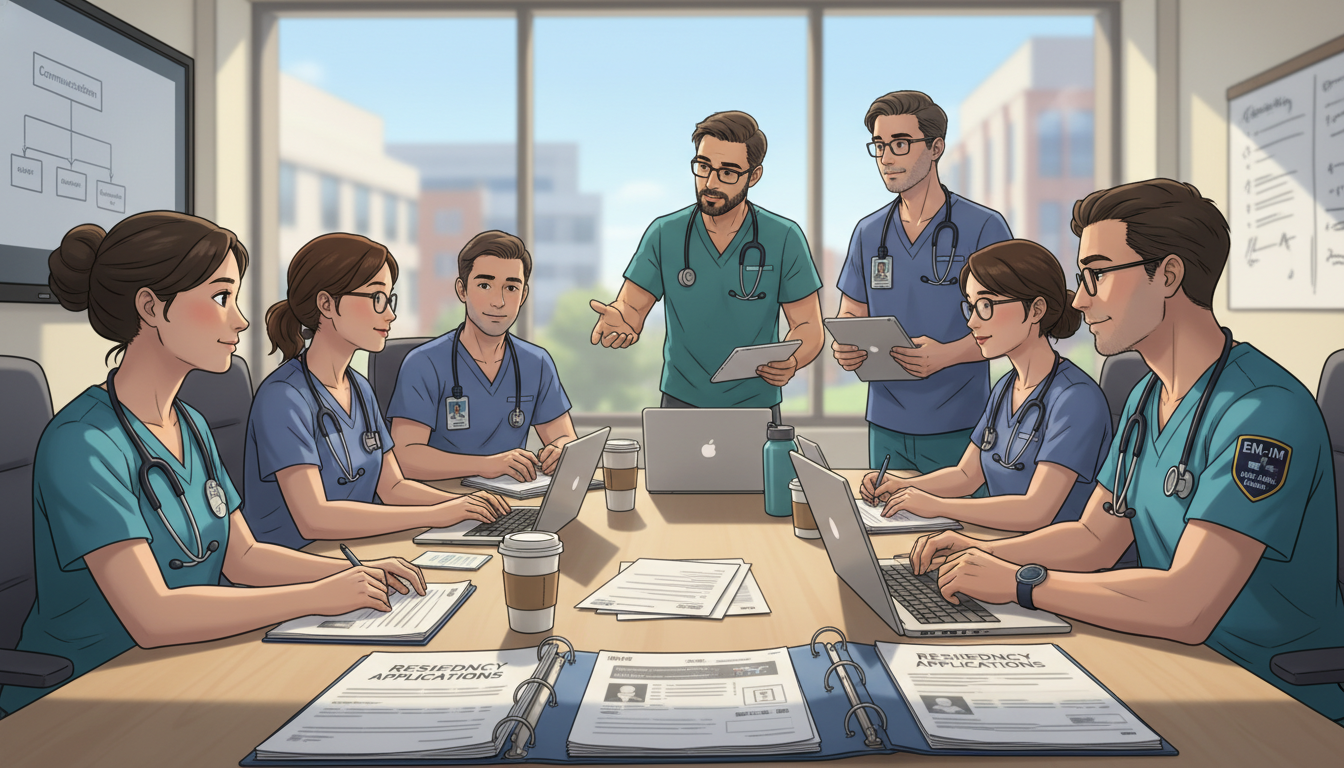
Understanding Pre-Match Communication as a DO Graduate in Nuclear Medicine
For a DO graduate aiming for a nuclear medicine residency, pre-match communication can be the difference between a generic application and a memorable candidate profile. While the actual nuclear medicine match is strictly regulated, the conversations you have with programs before rank lists finalize—emails, calls, networking at conferences, and virtual visits—can strongly influence how programs perceive you.
This article is written specifically for DO graduates considering or applying to nuclear medicine residency programs. We’ll focus on how to communicate effectively with program leadership, navigate the gray zone around pre-match offers and early commitment, and maintain professionalism and integrity in all program communication before match.
We’ll cover:
- How the match and pre-match dynamics typically work in nuclear medicine
- Unique considerations for DO graduates in an historically MD-heavy field
- What to say (and not say) in emails, calls, and post-interview notes
- How to interpret program signals without crossing ethical lines
- Example templates you can adapt immediately
1. The Landscape: Match, Pre-Match, and Nuclear Medicine
1.1 How the nuclear medicine match typically works
Most ACGME-accredited nuclear medicine residency programs participate in the NRMP Match. Nuclear medicine is often a small specialty, with:
- Fewer programs than large fields such as internal medicine or pediatrics
- Tight-knit faculty communities where reputations (yours and your school’s) travel quickly
- Significant variation in structure: some programs are dedicated nuclear medicine; others are integrated or combined (e.g., nuclear radiology tracks, radiology-to-nuclear medicine pathways)
For most DO graduates, the pathway is:
- Complete an ACGME-accredited preliminary year or diagnostic radiology year (depending on program requirements).
- Apply to nuclear medicine residency via ERAS.
- Interview, then enter the NRMP nuclear medicine residency match.
1.2 What “pre-match communication” actually means
“Pre-match communication” includes any contact with a program that happens:
- Before you apply (informational emails, networking, away rotations)
- After you submit your application but before interviews
- Between the interview and the NRMP Rank Order List deadline
It does not necessarily mean “pre-match offer.” In most NRMP-participating specialties, true pre-match offers—binding or semi-binding agreements to rank each other #1—are strongly discouraged and often clearly unethical if they imply something binding outside the Match.
Pre-match communication typically involves:
- Expressing interest or intent
- Asking for clarification about program structure or requirements
- Updating programs on new achievements
- Following up after interviews to reaffirm enthusiasm
All of these are allowed—if done with tact and adherence to NRMP rules.
1.3 Where pre-match offers and early commitment come in
Historically, some specialties or non-NRMP positions have offered:
- Pre-match offers: Agreements to accept a position outside the match
- Early commitment: Agreements that pre-date the official match timeline
For ACGME-accredited nuclear medicine programs that participate in NRMP, these practices are generally not allowed. Instead, what you’ll see are:
- Non-binding expressions of interest from you (e.g., “I plan to rank your program highly”)
- Non-binding signals of interest from programs (e.g., “We were impressed and hope to work with you in the future”)
As a DO graduate, it’s essential to recognize that you may feel pressure to secure something early, especially if you worry about MD preference. But your professionalism in how you handle this pressure is something programs genuinely notice and respect.
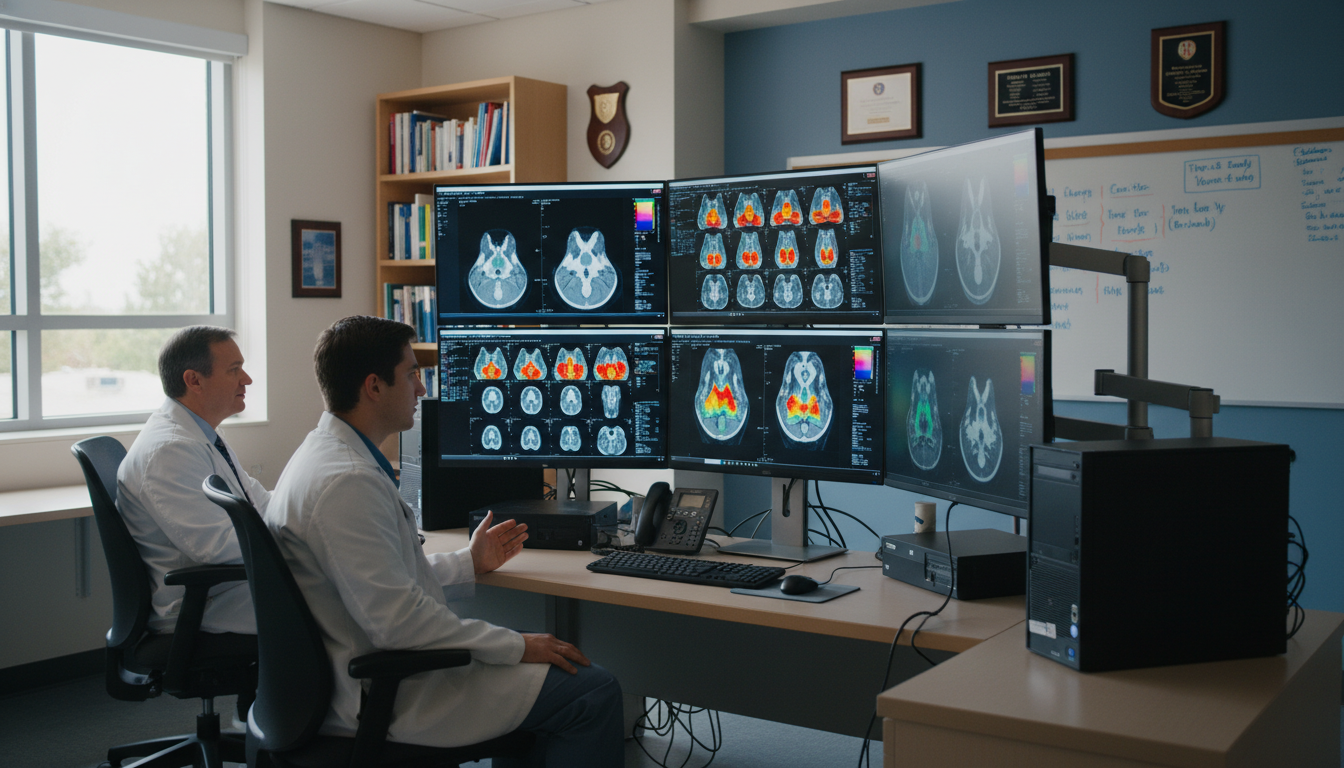
2. DO Graduate-Specific Considerations in Pre-Match Communication
2.1 Addressing DO-related bias thoughtfully
While nuclear medicine tends to be more open than some ultra-competitive fields, there can still be subtle MD–DO bias, especially at historically academic centers. Strategic pre-match communication helps you:
- Introduce your osteopathic background as an asset (holistic view of patient care, strong physical diagnosis skills, systems thinking).
- Clarify any concerns about your preparation (e.g., USMLE vs COMLEX scores, radiology exposure, research experience).
- Demonstrate that you understand and can succeed in an imaging-heavy, physics-informed field.
You might briefly address:
- Whether you took USMLE in addition to COMLEX (and how you performed)
- Your radiology or nuclear medicine rotations and mentors
- Any physics, imaging, or quantitative coursework that complements your DO training
But do this in context, not as a defensive monologue. Focus on what makes you ready, not on perceived deficits.
2.2 Using communication to emphasize nuclear medicine commitment
Many applicants treat nuclear medicine as a “backup” if diagnostic radiology does not work out. As a DO graduate, you can stand out by:
- Clearly articulating why nuclear medicine is your primary interest, not an afterthought
- Connecting your osteopathic focus (whole-patient care, functional physiology) with nuclear medicine’s emphasis on physiology and function over structure
- Highlighting early, consistent exposure: shadowing, electives, research, case reports, or QI projects in nuclear medicine
Programs are particularly sensitive to who is genuinely committed to the specialty. Thoughtful pre-match communication is your opportunity to show that.
2.3 Examples of DO-centered positioning in your outreach
In pre-match emails or conversation, consider:
“As an osteopathic graduate, my training has emphasized understanding the functional relationships within the body. That’s part of what drew me to nuclear medicine—its ability to visualize physiology and cellular processes, not just anatomy.”
or
“During my osteopathic training, I found that functional imaging often clarified complex cases we struggled with clinically. Those experiences, combined with my rotation in nuclear medicine, confirmed that this is where I want to build my career.”
This reframes your DO background as a natural fit for nuclear medicine.
3. Strategic Communication Before, During, and After Interviews
3.1 Before interviews: initiating contact without overstepping
Prior to interview invitations, target your communication to:
- Programs where DOs have historically matched
- Departments where you have some connection (research, mentors, conference contacts)
- Locations where you have geographic ties or a strong reason to be (family, long-term plans)
A pre-interview email may be appropriate if:
- You have a significant new update (publication, poster, new nuclear medicine rotation)
- You’ve had direct contact with program faculty (e.g., at SNMMI or ARRS)
- You’re from a DO school that may not be well known to that program
Pre-Interview Interest Email Example
Subject: DO Applicant with Strong Interest in [Program Name] Nuclear Medicine Residency
Dear Dr. [Program Director Last Name],
I hope this message finds you well. My name is [Your Name], a DO graduate from [Your COM], currently completing a [prelim year/type of training] at [Institution]. I recently applied to the [Program Name] Nuclear Medicine Residency via ERAS and wanted to briefly express my sincere interest in your program.
My exposure to nuclear medicine began during [specific rotation or experience], where I was especially drawn to [e.g., theranostics, PET/CT for oncology, molecular imaging]. Since then, I have [list a concrete step: completed an elective, joined a research project, presented a case at SNMMI, etc.], which has reinforced my desire to pursue a career in nuclear medicine.
I am particularly interested in your program because of [1–2 specific program features—research emphasis, theranostic service, teaching environment, collaboration with radiology/oncology]. I believe my osteopathic background, combined with my experiences in [relevant clinical or research areas], would allow me to contribute meaningfully to your team.
Thank you for considering my application. I would be grateful for the opportunity to interview and learn more about your program.
Sincerely,
[Your Name], DO
AAMC ID: [XXXXXXX]
Contact: [email/phone]
Keep it short, specific, and professional. This is not a negotiation; it’s an introduction.
3.2 During interviews: clarifying expectations and fit
Interviews are part evaluation, part two-way communication. Thoughtful questions signal your genuine interest and maturity.
Examples of questions that relate to pre-match communication topics:
- “How do you view residents’ early commitment to nuclear medicine versus those who may have been considering diagnostic radiology primarily?”
- “For DO graduates, are there particular knowledge gaps or transitions that you’ve seen, and how do you help bridge them?”
- “How does your program typically communicate with applicants after interviews, before the match list is due?”
Avoid questions that imply you’re fishing for pre-match offers or trying to circumvent the match:
- “Do you ever make early commitments outside the match?”
- “If I tell you I’ll rank you #1, will you rank me highly?”
These can raise red flags about your understanding of professional and ethical norms.
3.3 After interviews: targeted, ethical follow-up
After you interview, a concise thank-you that reaffirms your interest is appropriate and expected at many programs.
Post-Interview Thank You/Interest Email Example
Subject: Thank You – [Your Name], [Interview Date]
Dear Dr. [Program Director Last Name],
Thank you again for the opportunity to interview for the Nuclear Medicine Residency position at [Program Name] on [date]. I greatly appreciated learning more about your program, particularly [mention 1–2 specific aspects: theranostic clinic, interdisciplinary tumor boards, resident teaching roles, call structure, etc.].
Our conversations with you and the residents reinforced my conviction that [Program Name] would be an outstanding environment for my training. I am especially enthusiastic about [specific feature] and feel that my background in [mention DO, current training, research, or clinical strengths] aligns well with your program’s mission and needs.
I remain very interested in your program and would be excited to contribute to your team. Thank you again for your time and consideration.
Warm regards,
[Your Name], DO
If you truly have a clear #1 program after seeing all your interviews, a later, single, honest communication expressing that (without seeking a reciprocal promise) can be appropriate, as long as it does not violate NRMP rules or any program-specific guidance.

4. Ethical Boundaries: What You Can and Cannot Say Before the Match
4.1 NRMP rules and the spirit of the Match
NRMP rules are designed to:
- Prevent coercion (programs pressuring applicants to commit early)
- Maintain fairness (no “secret” pre-match positions in participating programs)
- Protect honest ranking (both sides rank in their true order of preference)
For nuclear medicine residency programs in the Match, this means:
- No binding pre-match offers or contracts outside the Match
- No requirement that you state how you will rank programs
- No statements that imply you must rank the program first to be considered
As a DO graduate, respecting these norms demonstrates professionalism and awareness of national standards.
4.2 What is acceptable communication?
Generally acceptable:
- Stating strong or very high interest in a program
- Indicating that a program is your top choice or will be ranked highly, as long as you are truthful
- Asking clarifying questions about curriculum, call, research, and support for DO graduates
- Updating programs about major accomplishments (e.g., new publication, honors, degree)
Example: Truthful “Top Choice” Communication
Subject: Continued Strong Interest in [Program Name]
Dear Dr. [Last Name],
I wanted to briefly express my continued strong interest in the [Program Name] Nuclear Medicine Residency. After completing my interviews, your program remains my top choice for training. The combination of [specific features] and your supportive culture align closely with what I am seeking in a residency.
Thank you again for your time and consideration.
Sincerely,
[Your Name], DO
Important: Only send this type of email to one program if you’re saying “top choice” or “#1.” Dishonesty can (and does) circulate informally, especially in a small specialty like nuclear medicine.
4.3 What crosses the line?
Generally unacceptable:
- Asking programs directly how they will rank you
- Pressuring programs to make any form of early commitment
- Suggesting or agreeing to any arrangement that bypasses the match in an NRMP-participating program
- Saying “I will rank you #1” to multiple programs
Avoid phrases like:
- “If you promise to rank me highly, I will rank you #1.”
- “Can you tell me what position I am on your rank list?”
- “Will you take me outside the match if I commit now?”
These undermine your credibility and can make program directors question your judgment.
4.4 Interpreting program signals
Programs may send:
- Generic emails: “Thank you for interviewing; we enjoyed meeting you.”
- Mildly positive notes: “You will be ranked on our list.”
- Stronger but non-binding signals: “We were very impressed and hope you’ll strongly consider training with us.”
None of these are binding guarantees. Your best strategy:
- Assume every program can change its list at any time before the NRMP deadline
- Rank programs based on honest preference, not on perceived “promises”
- Use communication only to convey your own position, not to decode theirs
5. Practical Strategies to Maximize Your Pre-Match Communication
5.1 Build relationships early (especially as a DO graduate)
Months before you apply:
- Connect with nuclear medicine faculty at your home or regional institutions
- Attend local or national conferences (SNMMI, ARRS, RSNA—it often includes nuclear medicine tracks)
- Ask about informational interviews or brief Zoom meetings with attendings in programs of interest
This type of early networking:
- Makes later program communication before match more natural
- Helps faculty remember you when your application appears
- Can yield letters of recommendation, research opportunities, or informal advocacy
5.2 Use updates strategically
As a DO applicant, you might have achievements arriving throughout the application season:
- A new research abstract accepted at SNMMI
- A first-author case report on a nuclear medicine case
- Leadership in imaging-related student or resident organizations
Send brief updates only for significant news—ideally grouped (one or two updates total) rather than many small emails.
Update Email Example:
Subject: Application Update – [Your Name], DO
Dear Dr. [Last Name],
I hope you are doing well. I wanted to share a brief update regarding my application to the [Program Name] Nuclear Medicine Residency. Since we last communicated, I have:
- Had a case report on [topic] accepted for presentation at [meeting]
- Completed an additional elective in nuclear medicine at [institution], where I gained further experience in [e.g., PET/CT interpretation, theranostic clinic, cardiac SPECT]
These experiences have further confirmed my commitment to a career in nuclear medicine, and I remain very interested in your program.
Thank you for your time and consideration.
Best regards,
[Your Name], DO
5.3 Tone, timing, and volume of your communication
- Tone: Professional, concise, and respectful. Avoid overfamiliarity.
- Timing:
- Pre-interview: a one-time interest email (if appropriate)
- Post-interview: a thank-you within 1 week
- Pre-rank list deadline: optional single “top choice” note to one program
- Occasional update if there’s truly important new information
- Volume: Err on the side of less. Too many emails feel like pressure and can backfire.
5.4 Leveraging mentors and advocates
As a DO graduate, mentors can be powerful allies:
- Ask your nuclear medicine or radiology mentors if they would be comfortable contacting programs informally on your behalf.
- A short, direct email from a respected faculty member can carry more weight than multiple emails from you.
For example, a mentor might say:
“I’m writing about Dr. [Your Name], a DO graduate with strong interest in nuclear medicine. I’ve worked with them closely on [project/rotation], and I believe they would excel in your program.”
You can explicitly—and appropriately—ask:
“Would you feel comfortable reaching out to [Program]’s PD to support my application?”
6. Putting It All Together: A DO Graduate’s Pre-Match Game Plan in Nuclear Medicine
For a DO graduate aiming at the osteopathic residency match landscape but targeting nuclear medicine specifically, a cohesive plan could look like this:
6–12 months before application
- Seek nuclear medicine electives/rotations.
- Get involved in at least one imaging research or QI activity.
- Identify 1–2 nuclear medicine or radiology mentors who support DOs.
Application season
- Apply broadly, including a mix of academic and community-based programs.
- Send targeted pre-interview interest emails to a small number of high-priority programs where you have a logical tie or alignment.
- Make it clear in your personal statement and interviews that nuclear medicine is a primary career choice, not just a backup to diagnostic radiology.
Interview period
- Ask thoughtful, program-specific questions.
- Use interviews to highlight how your osteopathic training gives you a unique lens on functional imaging and whole-patient care.
- Avoid any language that sounds like you are seeking pre-match offers or trying to negotiate early commitment.
Post-interview → Rank list deadline
- Send professional thank-yous within a week of each interview.
- Consider one honest “top choice” communication to the program you genuinely plan to rank #1.
- Use one or two brief updates for major new accomplishments only.
- Lean on mentors to communicate informally with programs where you are a particularly good fit.
Ranking
- Rank programs in the true order of your preference, not based on perceived program interest alone.
- Remember that the Match algorithm is applicant-favoring; your honest preferences matter more than interpretation of ambiguous program signals.
Executed well, pre-match communication becomes a strategic amplifier of your application, particularly as a DO graduate entering a smaller, highly specialized field like nuclear medicine. It won’t magically overcome every limitation, but it can make sure that programs understand your commitment, see your strengths clearly, and remember you when constructing their rank lists.
FAQs: Pre-Match Communication for DO Graduates in Nuclear Medicine
1. As a DO graduate, should I mention that I’ll rank a nuclear medicine program #1?
You may tell one program that they are your top choice if it is completely truthful and you do not ask for any promise in return. Phrase it as a statement of your preference, not a negotiation tactic. Never tell more than one program they are your #1, and never suggest any binding commitment outside the Match.
2. Do nuclear medicine residency programs ever give true pre-match offers?
ACGME-accredited nuclear medicine residency programs that participate in the NRMP are expected to fill positions through the Match, not through pre-match offers or early commitment agreements. If a program suggests a path to bypass the Match, seek clarification and review NRMP rules carefully. In most cases, your safest and most professional course is to participate fully in the Match.
3. How can I overcome DO bias in nuclear medicine through communication?
Use your communication to:
- Highlight your exposure to nuclear medicine (rotations, electives, research).
- Show comfort with imaging, physics, and analytic thinking.
- Connect osteopathic principles—whole-person care, functional understanding of disease—to nuclear medicine’s focus on physiology and molecular processes.
Professional, concise, and enthusiastic communication reinforces that you are well-prepared and strongly committed to the specialty.
4. How often should I email programs before the match?
Keep it limited and purposeful:
- Possibly one pre-interview interest email for high-priority programs
- One thank-you email after each interview
- One update email if you have a major new achievement
- Optional single “top choice” email to the program you will truly rank #1
More than this can feel excessive. Strong content, honesty, and timing matter far more than the number of emails you send.